
We live with the invisible gorilla.
- Understand the fundamental reasons for perception differences arising from culture, generation, and psychology.
- Identify the impact of the ‘invisible gorilla’ phenomenon on our everyday communication.
- Learn effective communication strategies that respect our differences and transform them into the strength of ‘diversity’.
Did you see the gorilla in front of you?
There is a one-minute video of six students frantically passing a basketball. Your task is to count the number of passes made by the white team. When the video ends and you shout out the answer, you receive an unexpected question: “Did you see the gorilla?” This question serves as the starting point for exploring the essence of perception differences.
Upon watching the video again, you see a person in a gorilla suit walk into the center of the screen, pound their chest, and walk away. However, half of the participants in the experiment did not notice this at all. This famous ‘Invisible Gorilla’ experiment illustrates the limits of human cognition known as ‘inattentional blindness’. We do not see the world as it is; instead, we selectively perceive only the information our brains deem important.
If we can miss the gorilla right in front of us, how much are we missing in our daily lives? This article embarks on a journey to explore the cultural, generational, and psychological differences that create our perception filters, pondering why your world and my world are different and how we can bridge that gap.

1. Cultural Perception Differences: The Hidden Meaning Behind “Have You Eaten?”
A Korean YouTuber shared an experience where he asked his American friend Brian, “Did you have breakfast?” and received a simple “No” in response, feeling disappointed when Brian went off to buy bread alone. This is not just a simple incident but a perfect example of the clash between high-context and low-context cultures, as defined by cultural anthropologist Edward Hall.
High-context and Low-context: Two Worlds of Communication
In high-context cultures (like Korea and Japan), the context in which a conversation occurs—such as the ‘situation’, ‘relationship’, and ’non-verbal signals’—constitutes a large part of the message. “Have you eaten?” is not just a simple question; it carries a relational message of “I care about you.”
In contrast, in low-context cultures (like the U.S. and Germany), the message must be clear and direct in the language itself. Asking Brian, “Did you have breakfast?” was merely a factual inquiry without any deeper meaning. If he wanted to eat bread together, he should have directly said, “Shall we buy some together?”
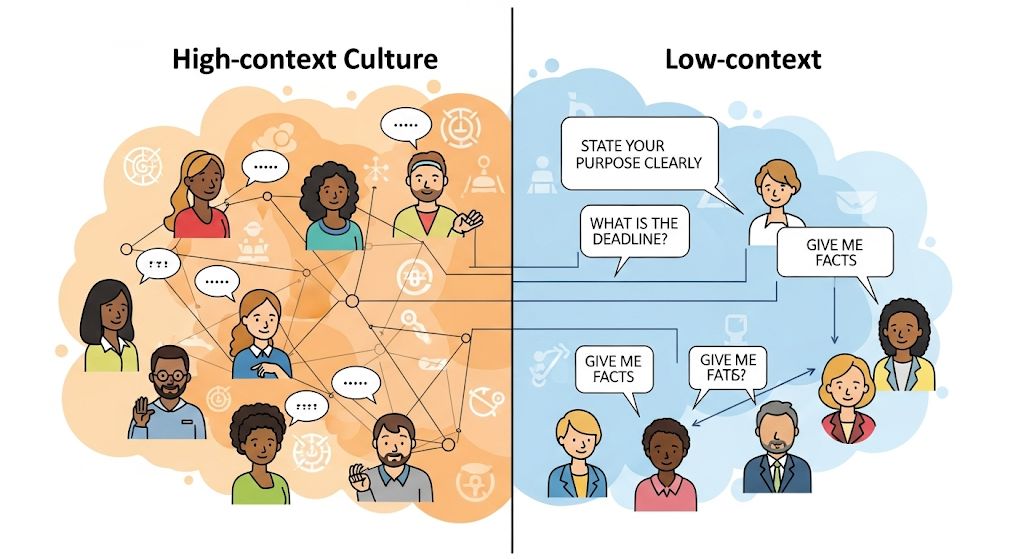
These cultural perception differences also manifest in ways of rejecting, the use of emoticons (Eastern ^_^ vs Western :-)), and even in how nostalgia is described.
Roots of Communication Styles: Who Am I?
Why do these differences occur? Professor Choi In-cheol finds the root in the difference of ‘self-concept’.
- Independent Self: In Western cultures, ‘I’ is seen as a unique entity separate from others. The purpose of communication is to express one’s thoughts clearly, leading to the development of low-context communication.
- Interdependent Self: In Eastern cultures, ‘I’ is defined in relation to others. The goal of communication is to maintain harmony within the group, leading to the development of indirect high-context communication.
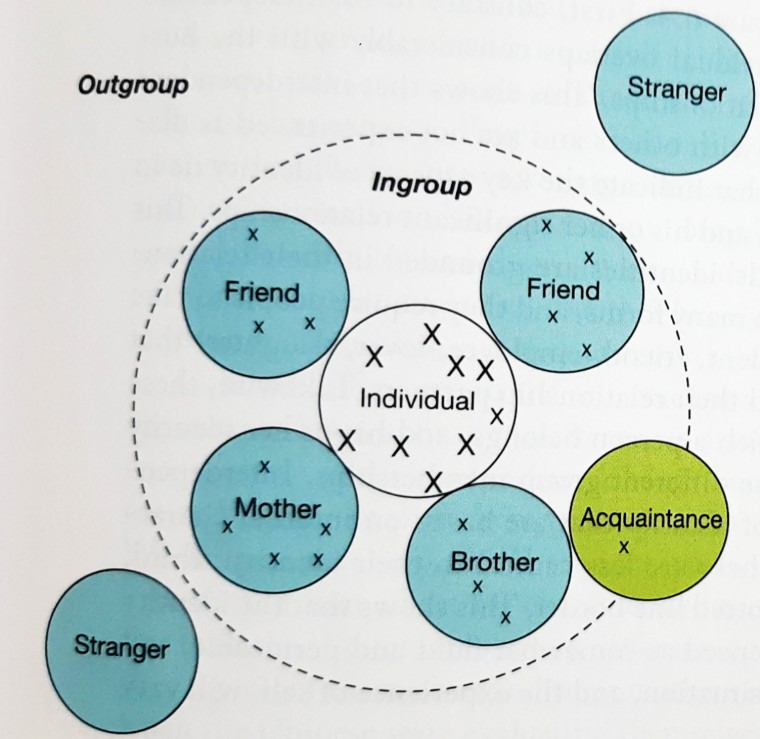
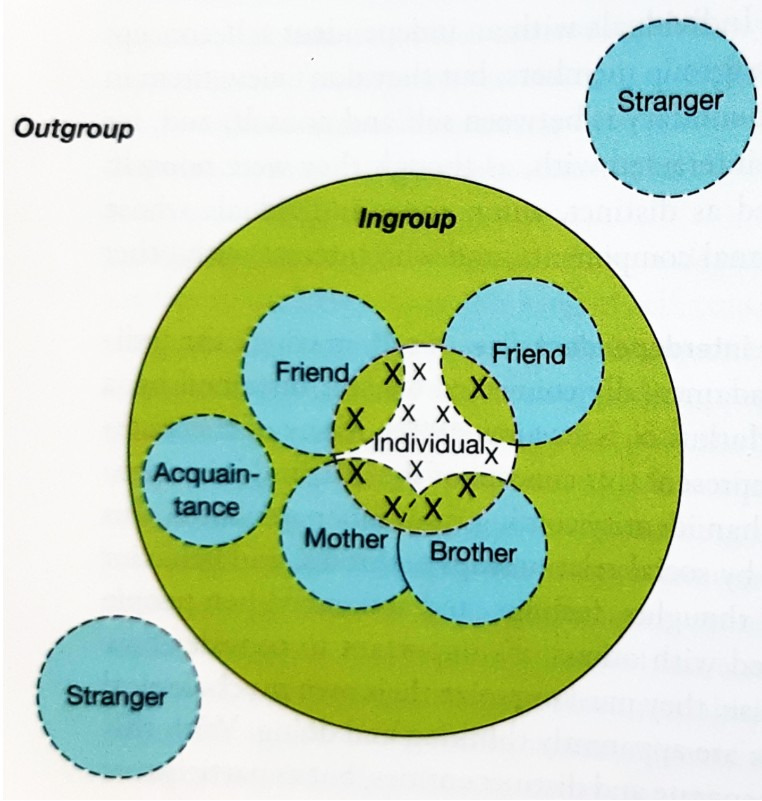
Neuroscience research shows that when Chinese individuals think of ‘I’ and ‘mother’, the activated areas of their brains overlap, while Americans clearly distinguish between the two. Ultimately, the way we communicate is deeply connected to the cultural answers to the fundamental question of ‘Who am I?’
2. Generational Perception Differences: ‘Quiet Quitting’ and ‘Hustle Culture’
In societies like Korea that have experienced rapid growth, distinct generational perception differences emerge even within the same organization. Today’s workplaces are the most dynamic arenas where cultures from different eras collide.
One Office, Two Work Ethic Perspectives
For the older generation, Manager Kim views the company as a community where one can “bury their bones” and sees ‘hustle culture’ as a given. The growth of the company equated to personal growth, and working late and company dinners symbolized dedication and camaraderie.
In contrast, the MZ generation, represented by Assistant Lee, holds a new work ethic characterized by ‘quiet quitting’. This attitude means fulfilling only the defined scope of work without additional investment. For them, the workplace is not everything in life but rather a ‘contractual relationship’ where they provide labor and receive compensation.

In a survey, 78.1% of those in their 20s agreed with the notion of “I should only work as much as I am paid,” while only 40.1% of those over 50 agreed, highlighting a stark perception gap. Ultimately, generational conflict in the workplace can be seen as a social growing pain where traditional collectivism (high-context) clashes with the newly emerging individualism (low-context).
Generational Cultural Decoding Table
To understand these generational perception differences, a table summarizing the core values and communication styles of each generation can serve as a useful compass.
| Category | Baby Boomer Generation | Generation X | MZ Generation |
|---|---|---|---|
| Core Values | Collectivism, Dedication, Stability | Pragmatism, Individualism, Work-life Balance | Personal Growth, Efficiency, Fairness |
| Work Ethic | Lifetime Employment, Commitment to Organization | Beginning of ‘Work-life Balance’ Concept | ‘Quiet Quitting’, Contractual Relationship |
| Preferred Communication | Face-to-face Reporting, Phone Calls | Emails, Face-to-face Meetings | Messengers, Slack/Notion, Remote |
| Representative Language | “Are we not in this together?” | “Back in my day…” | “Is this part of my job?” |
3. Psychological Perception Differences: Why Do We Not Help and Seek Types?
Beyond culture and generation, there exists a common psychological mechanism deep within humans that deals with uncertain situations. This sometimes leads our social behavior in unexpected directions.
Bystander Effect: Deconstructing Myths and Finding Deeper Truths
The 1964 murder of Kitty Genovese in New York became a symbol of the ‘bystander effect’, where the presence of many witnesses diffuses responsibility, leading to inaction.
However, recent revelations tell a different story. The witnesses at the time were unsure about the clarity of the situation and did not have confidence that it was truly an emergency. When no one around them acted, they fell into a state of ‘pluralistic ignorance’, concluding that it must not be a big deal. At least two people did call for help, and one woman stayed with her until the end.

The real lesson from this incident is not that ‘humans are selfish’ but rather that ‘humans fear uncertainty’. Therefore, the solution is to eliminate uncertainty. Instead of saying, “Someone help!”, clearly pointing and specifying actions, such as “You in the blue hat, please call 119!”, dramatically increases the likelihood of action.
The MBTI Craze: Finding ‘Me’ in an Uncertain World
The desire to reduce uncertainty and understand the world is also reflected in the MBTI craze. Despite criticisms regarding its scientific validity, why do we enthusiastically classify ourselves and others into 16 types?
I too occasionally feel the temptation to hide behind my MBTI type to find answers in complex relationships. MBTI serves as a ‘social cheat sheet’, clearly defining the complex ‘me’ and reducing the uncertainties that arise in relationships with others. By finding similar types, it provides a sense of belonging to ‘us’, offering psychological stability.
At the root of all these phenomena lies ‘heuristics’, the brain’s tendency to use mental shortcuts to understand a complex world. While this is efficient, it can also lead to errors that cause us to miss the gorilla right in front of us.
Four Communication Principles to Understand Differences
What specific actions can we take to narrow the perception differences arising from cultural, generational, and psychological factors and transform ‘difference’ into the synergy of ‘diversity’?
- Acknowledge My Filter: Realizing that my perspective is not the only truth is the starting point of all communication. Acknowledge that I too can miss the ‘invisible gorilla’.
- Communicate in Low-context When in Doubt: In environments with people from diverse backgrounds, using a ’low-context’ communication strategy that conveys intentions clearly, directly, and specifically reduces misunderstandings.
- Listen Actively and Empathize: Strive to understand the ‘why’ hidden behind the other person’s words. Asking, “Why do you think that?” breaks down walls of judgment and opens doors to empathy.
- Move Towards Common Goals: Even if communication styles or values differ, diversity shines when a common goal is shared. Set a shared goal of ‘our team’s success’ and move forward together.

Conclusion
Through the ‘Invisible Gorilla’ experiment, we have confirmed how differently our worlds are constructed through various filters. The key takeaways from this journey are:
- Our perception is a subjective filter: Cultural, generational, and psychological factors determine how we view the world, and absolute objectivity is difficult to achieve.
- ‘Difference’ is not ‘wrong’: Efforts to understand the background behind the other person’s behavior are the first steps to reducing misunderstandings and conflicts.
- Communication is a bridge-building skill: Clear communication and empathetic listening can connect different worlds and transform differences into the synergy of diversity.
We all live in slightly different worlds through our own filters. However, the effort to understand why and how we are different will serve as the strongest bridge connecting those different worlds.
Today, why not ask a colleague or family member who you feel is different from you, “Why do you think that?” once more?
References
- [Lee Jin-soon Column] The Appeal of Invisible Gorillas Hankyoreh
- Defining Inattentional Blindness, The Invisible Gorilla Experiment VISLA Magazine
- Why Didn’t Brian Share Bread with Me? (Understanding High-context vs Low-context Communication Culture) YouTube
- High-context and Low-context Culture Wikipedia
- Only Work as Much as You Are Paid! MZ Generation’s ‘Quiet Quitting’ No Cut News
- 52 Years Ago, the Bystander Effect: The Motivating Incident Was Distorted by the New York Times Hankyoreh
- (20 minutes) Why Are Koreans Particularly Obsessed with MBTI? YouTube
- Deepening Generational Conflict in the Workplace: How Woowa Brothers and Hyundai Resolved It Reading Newspaper