
Imagine two friends. A says to B, “The weather looks iffy today — maybe take an umbrella?” B glances at the sky and confidently answers, “Nah, those clouds won’t bring rain.”
The result? Of course, an hour later both are soaked by a pouring downpour. At that moment B (as always) shouts in an exasperated tone, “See? I told you it would rain today!”
Sound familiar? This everyday, often embarrassing moment is a perfect example of the “knew-it-all-along” effect.
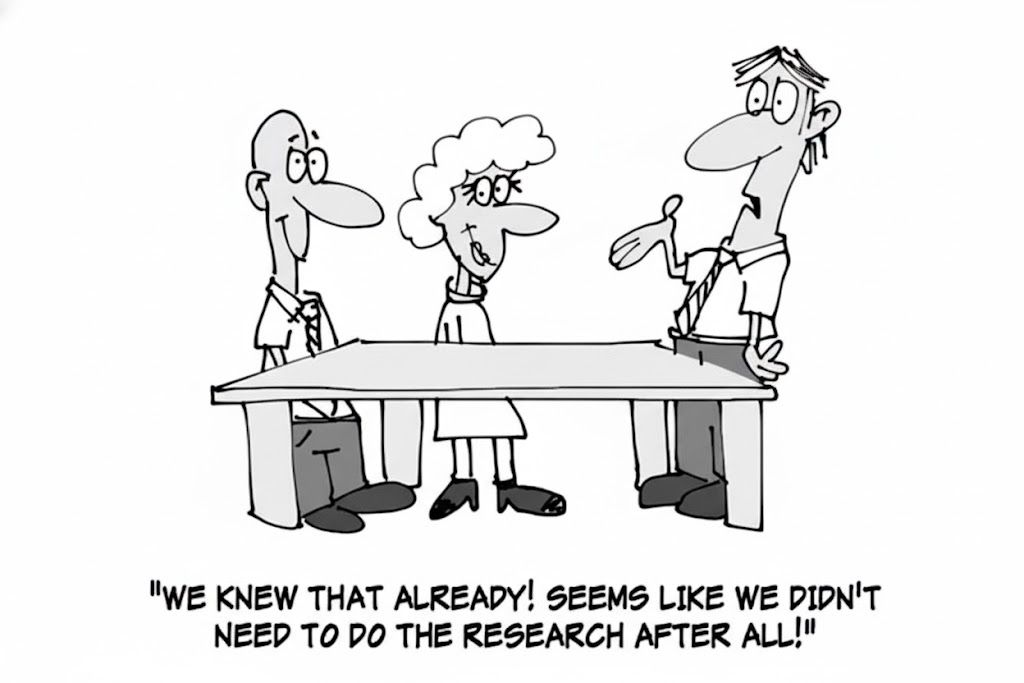
But does this experience stop at weather forecasts? Think about an investor sighing, “I knew that stock would crash someday” only after the plunge; the Monday-morning pundit replaying yesterday’s game and saying, “Why did the coach pull that player? I would never have done that” (guilty as charged sometimes), or the political commentator, after an election, fluently explaining why the outcome was “inevitable.” Our world is full of such hindsight sages.
In psychology this phenomenon is called hindsight bias, or more colorfully ‘creeping determinism’. The interesting thing is that this is not some personal defect — it’s a cognitive illusion built into all our brains.
So the goal of this piece is to unmask this powerful bias. We’ll dig into how it subtly shaped some of history’s greatest failures, from Pearl Harbor to corporate collapses and tragic social disasters. And (most importantly) I’ll give you practical tools to escape this swamp of illusion and cultivate genuine foresight.
Part 1: Anatomy of Deception — Unmasking Hindsight Bias
The original experiment: a time travel to 1975
Every story has a beginning. Our understanding of hindsight bias starts with a groundbreaking experiment by a young psychologist, Baruch Fischhoff, in 1975. His study design was surprisingly… simple and elegant.
- Foresight Group: The researchers described real historical events (e.g., President Richard Nixon’s visit to China) and asked participants, “There are several possible outcomes from this visit — what percentage chance would you assign to each?”
- Hindsight Group: This group heard the exact same description, but with one crucial difference: they were told which outcome actually occurred. Then the researchers made a sly request: “Now ignore the actual result and tell us how you would have predicted the probabilities had you not known the outcome.”
The result? Yes, it was striking. Participants who knew the “correct” outcome consistently and markedly overestimated the probability they would have assigned to that outcome beforehand — saying things like, “I probably would have put it at 70%.” (When in reality the true prior probability might have been well under 30%.)
Even more astonishing, most participants were completely unaware that knowing the outcome had distorted their judgments. They truly believed they had predicted it all along.
The psychological engine: how does this trick work?
So how does hindsight bias so thoroughly fool our minds? Two powerful psychological mechanisms lie at its core.
First is what Fischhoff named ‘creeping determinism.’ Knowledge of an outcome seeps into our retrospective understanding like ink dispersing in water. The result feels more inevitable and predictable in retrospect. Our brain reconstructs past pieces into a coherent story that makes the observed outcome seem natural and obvious.
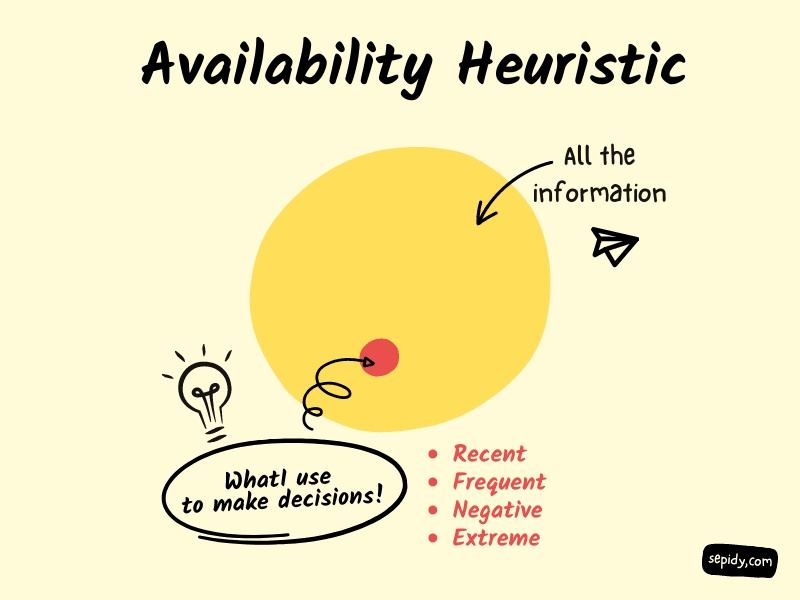
Second is the availability heuristic — how easily something comes to mind. Once we know an outcome, it becomes much easier to imagine the causal chain leading to it. Our minds prefer tidy narratives: “A happened, which led to B, which led to C.” Scenarios that support the known outcome pop up readily (this is called high cognitive fluency), while alternative possibilities like “what if Z had happened instead of B?” fade into the background. We therefore find it hard to imagine that things could have unfolded differently.
Two major dangers of hindsight bias
This cognitive illusion is more than a trivial misremembering of the past; it creates two serious hazards.
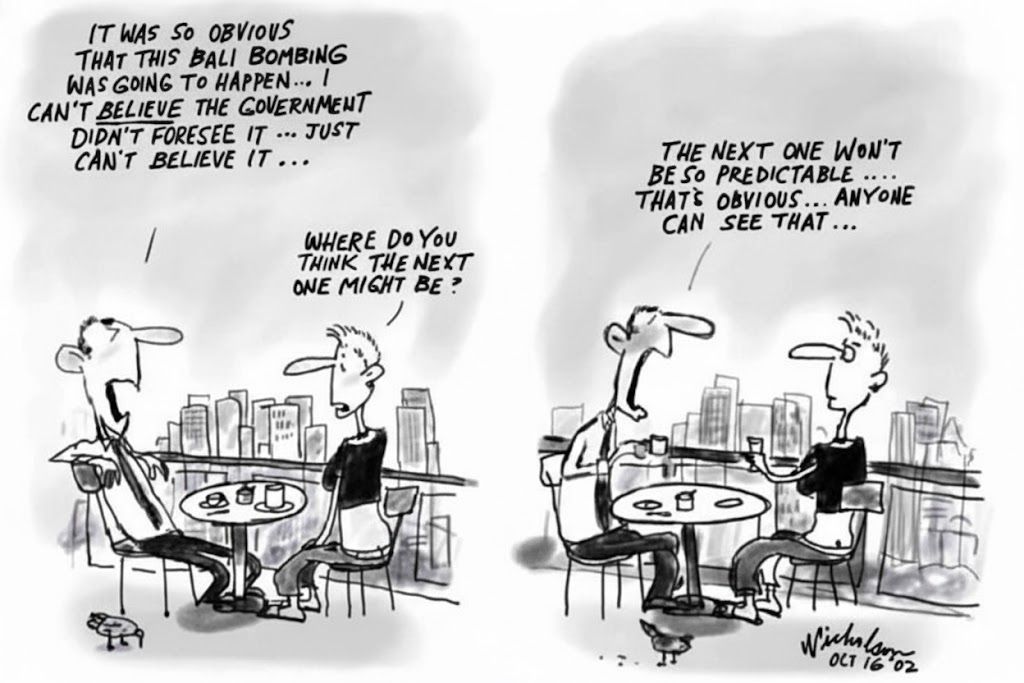
First, unfair evaluations of others. Hindsight bias leads us to judge past decision-makers far more harshly. We say, “It’s so obvious now — why didn’t they foresee it?” This is especially dangerous in domains like malpractice litigation, intelligence analysis, or disaster response reviews.
Second — and this is truly pernicious — it breeds deadly overconfidence in ourselves. By distorting our memory of past uncertainty, hindsight bias inflates our confidence in our ability to predict the future. We fail to learn from shocking events because, in hindsight, they no longer seem surprising.
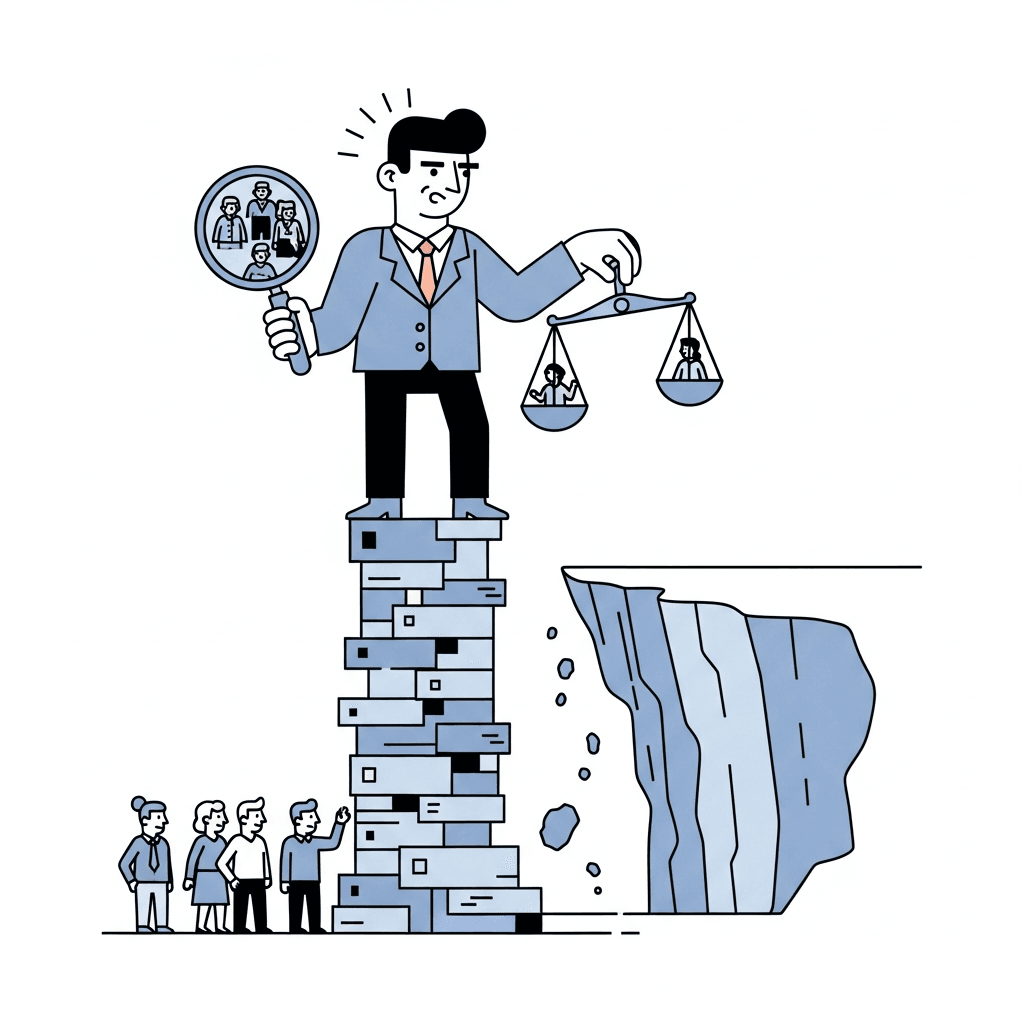
The core process by which this bias warps our judgment runs like this:
- Knowledge of the outcome seeps into memory and makes the past look inevitable.
- If the past appears inevitable, any prior surprise or uncertainty is erased from memory.
- We come to believe, “I knew more at the time than I actually did.”
- Believing our predictions were more accurate than they were prevents us from receiving corrective negative feedback.
- As a result, we fail to learn from mistakes and lose opportunities to correct our future judgments.
This breeds overconfidence, leads to worse future decisions, and sets up a vicious cycle where hindsight bias hides the new mistakes we make — a terrible loop.
In short, hindsight bias is a cognitive mechanism that actively thwarts learning.
Of course, science is an ongoing conversation. A replication study from Brazil, slated for publication in 2025, reports lower reproducibility of Fischhoff’s original findings in certain contexts — suggesting the effect may be more subtle than originally thought. Worth keeping such updates in mind.
Part 2: Echoes of Disaster — Case studies of erroneous retrospective judgment
2.1. Intelligence failures and the “signal vs. noise” problem
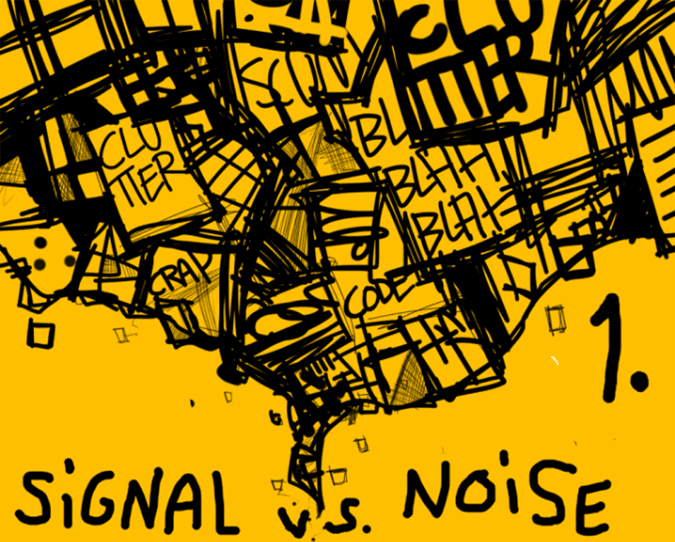
After intelligence failures like Pearl Harbor or 9/11, people inevitably say, “All the signs were there — they just failed to connect the dots.” This is the classic hindsight narrative.
But one person who really penetrated this issue was Roberta Wohlstetter, a RAND researcher. Her 1962 book Pearl Harbor: Warning and Decision remains foundational. Instead of the simple “connect-the-dots” metaphor, she offered the more sophisticated concept of signal vs. noise.
Her argument: before an event, decisive “signals” (useful clues) are buried in a roaring sea of “noise” — irrelevant data, misleading information, false alarms, and deliberate deception by adversaries.
Case study: Pearl Harbor (December 7, 1941)
In hindsight, the signals seem obvious: decoded Japanese messages, unusual fleet movements, suspicious activity at the Japanese embassy in Washington.
But Wohlstetter reconstructs the overwhelming noise of the time. U.S. analysts were drowning in information. They knew Japan might strike somewhere, but many analysts were fairly sure the target would be the Philippines or the Malay Peninsula, not Hawaii. Why? Japan needed resources, and Southeast Asia with its oil supplies looked strategically plausible. Signals pointing to Pearl Harbor were few, ambiguous, and drowned out by far more plausible but ultimately incorrect scenarios. The dots only formed a clear picture the moment bombs began to fall over Pearl Harbor.
Case study: 9/11 (September 11, 2001)
9/11 is similar. The famous commission report concluded there was a failure to connect the dots. But through Wohlstetter’s lens, one sees how massive the noise was.
U.S. agencies were still thinking in Cold War terms — nation-state conflict — not in terms of non-state actors like al-Qaeda. Intelligence was siloed across CIA, FBI, NSA. There were signals — e.g., Middle Eastern men registering at flight schools but only taking cockpit training — but FBI field reports were sometimes ignored by higher-ups. The idea of using civilian airliners as missiles was, for many analysts, almost inconceivable. Warnings from foreign services (e.g., Mossad) were buried in a tsunami of daily travel and bureaucratic inertia.
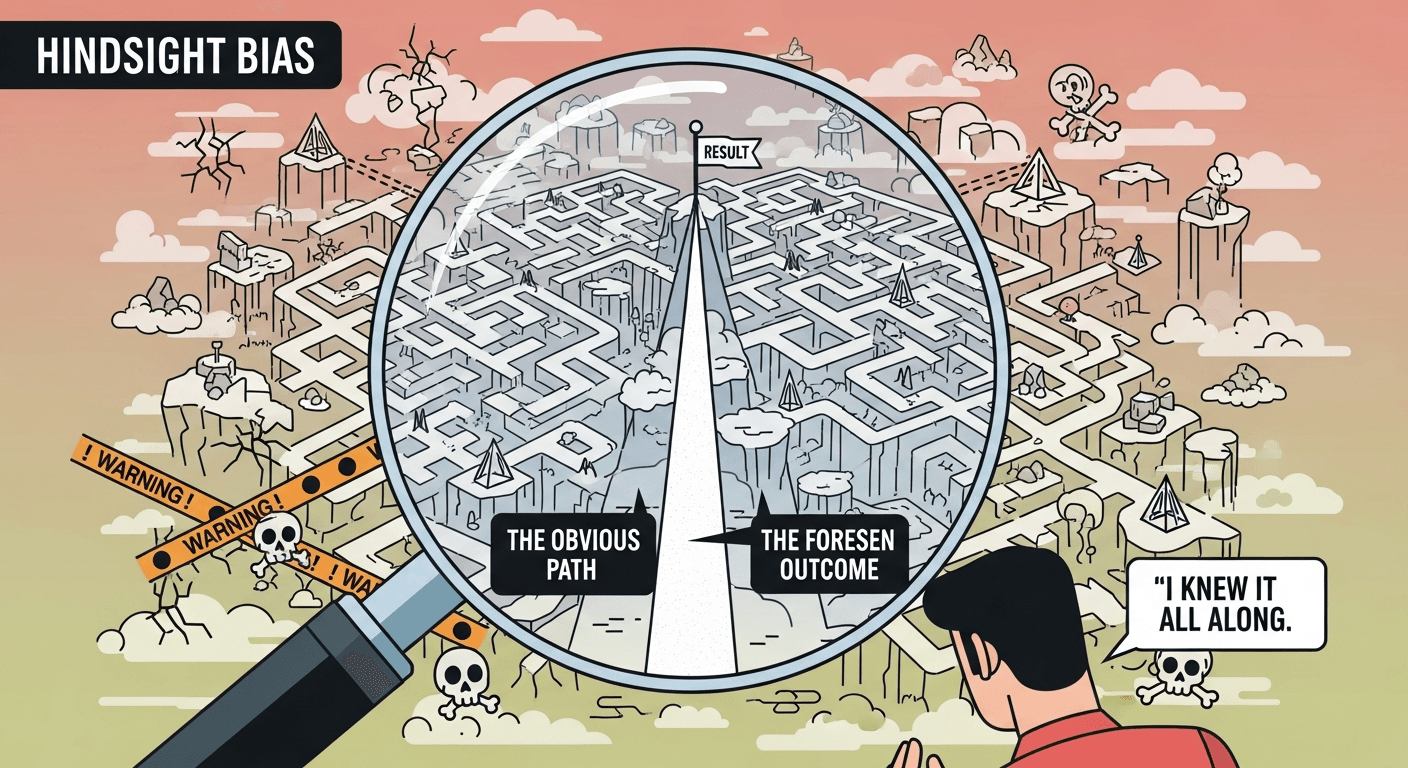
Thus the post-hoc claim that dots weren’t connected becomes a dangerous oversimplification produced by hindsight bias. After disasters like 9/11, the bias highlights the small set of signals that pointed to the event and erases the enormous background noise of other threats that did not occur.
Politicians and the public, swept up by the bias, demand explanations: “Why didn’t they connect those obvious dots?” That often leads to reforms — creating new bureaucratic bodies (e.g., the Office of the Director of National Intelligence) to better “connect” information. But such reforms address the post-hoc symptom (disconnected information) rather than the root causes (lack of real-time ability to distinguish signal from noise, organizational imagination limits). Cognitive biases, ingrained assumptions, and the sheer volume of information remain. Those deeper problems can produce a false sense of security and leave us vulnerable to the next novel surprise.
2.2. The ghosts of Kodak and Nokia: when giants forget the future
Seen from the present, it’s bewildering: Kodak, the company that first invented the digital camera, filed for bankruptcy in 2012; Nokia, which commanded 50% of the global mobile phone market in 2007, collapsed within a few years. How could they miss the future so badly?
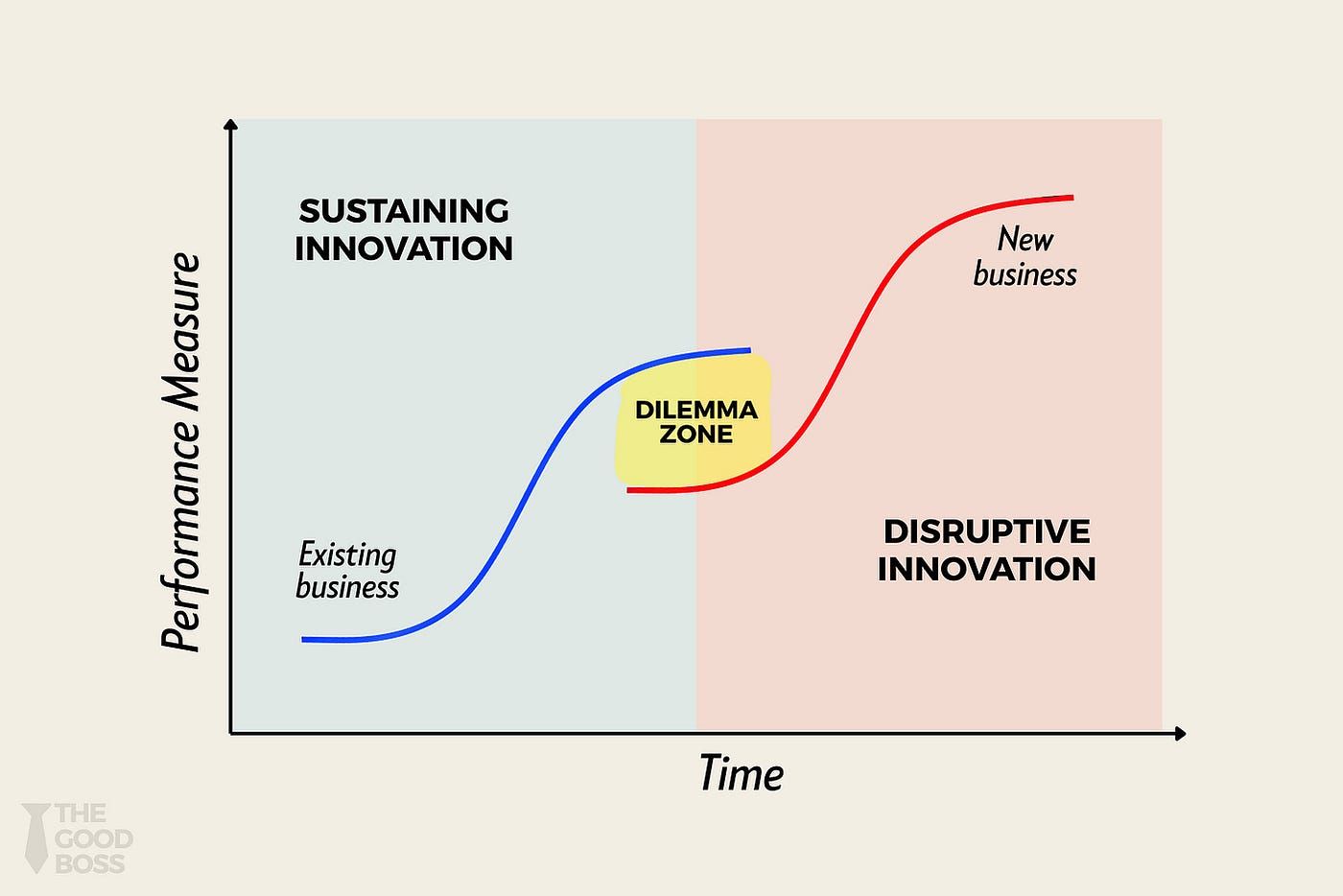
Case study: Kodak and the “Innovator’s Dilemma”
The story goes back to 1975. A young Kodak engineer, Steven Sasson, built a toaster-size device that took the first digital photograph. When he showed it to management, did they say, “Amazing!”? Not at all. They told him, “Don’t tell anyone about this.”
Now it looks like a colossal blunder.
But look closely at Kodak’s context: their decision stemmed from a very rational short-term fear of cannibalizing a highly lucrative film business. Their business model was like Gillette’s — sell the camera cheaply but make profits on consumables: film, paper, chemicals. Digital cameras eliminated the recurring “blade” revenue. Importantly, they weren’t blind to digital’s potential; they were too aware of how digital threatened their golden goose. They made choices to maximize short-term profits within a framework that had produced massive success.
Case study: Nokia’s fortress of hubris
Nokia’s case is similar. In the mid-2000s Nokia seemed unbeatable: phones that were durable, long-lasting batteries, and strong design. Their strategic failures sprang from this success.
First, they suffered from software myopia. When the iPhone launched in 2007, Nokia’s leadership dismissed it. They underestimated the importance of iOS and Android’s developer ecosystems and user-friendly touch interfaces. They clung to the clunky, developer-unfriendly Symbian OS.
Second, they were trapped by brand overconfidence. Entering the smartphone era late, they assumed the Nokia name alone would carry consumers.
Third, massive success fostered a top-down internal culture that suppressed innovation and encouraged inter-departmental turf battles. Great engineers’ ideas were often stifled in the rigid bureaucracy.
Hindsight bias reduces these complex strategic dilemmas to a moral tale of “incompetence” or “stupidity.”
I think the real lesson is different. Kodak and Nokia’s successes created tightly integrated ecosystems — one based on film consumables, the other on brand and hardware dominance — that optimized for protecting the core business. When disruptive technologies like digital photography or the smartphone emerged, those internal structures perceived a threat rather than an opportunity. What now looks irrational (Kodak’s neglect of digital, Nokia’s loyalty to Symbian) were partially rational choices inside successful frameworks. Hindsight bias erases that context and leads to the sloppy conclusion, “They were idiots.” That prevents current leaders from recognizing how their own success might blind them to the next disruptive change. The true lesson is not simply to avoid obvious mistakes but to manage the “paradox of success.” We must learn how success can itself become a trap.

2.3. The blame game: how society judges disasters
When tragedies occur, the media almost always deploy the powerful frame of a “preventable disaster.” This frame suggests the catastrophe was not random but the result of someone’s negligence or oversight that made it foreseeable and avoidable.
Case study: the 2008 global financial crisis
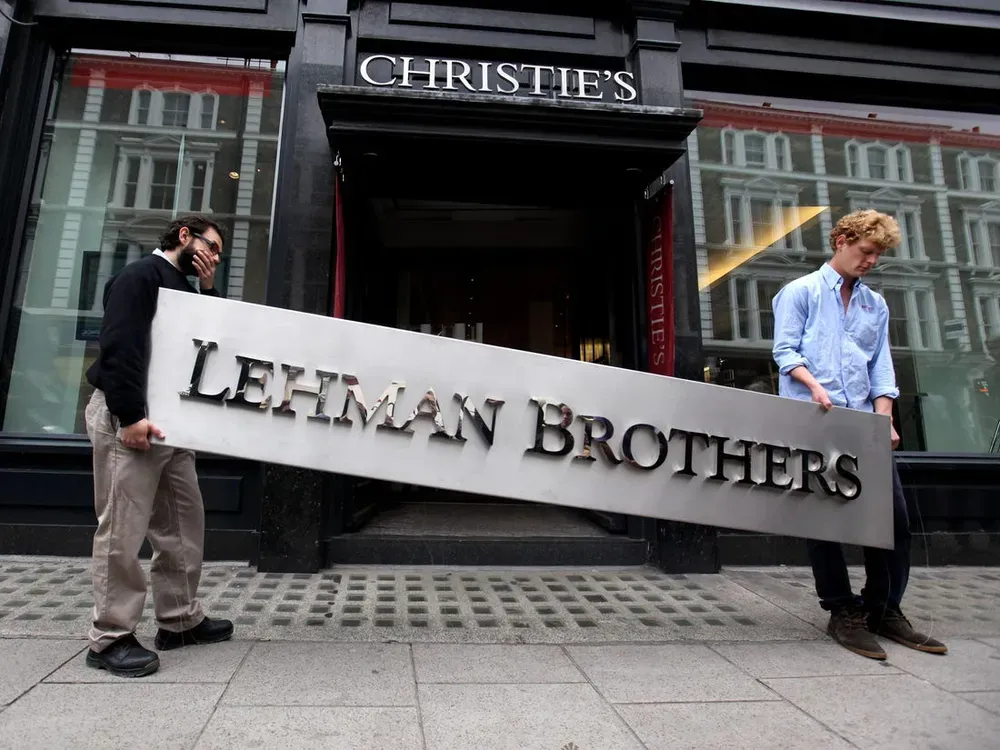
After Lehman Brothers collapsed and the world slid into financial turmoil in 2008, the causes now seem glaring: a massive housing bubble, predatory subprime lending, opaque and poorly understood derivatives (CDOs, CDS), and lax regulation. Experts, politicians, and the media insisted this crisis could have been foreseen. But was the pre-crisis reality really that clear? As the film The Big Short shows, the people who predicted the collapse and bet against it were treated as outliers — almost crazy.
The noise then included the “Great Moderation,” a long period of macro stability that lulled financial institutions into complacency and the belief that “this time is different.” Additionally, global savings gluts and a firm belief in ever-rising U.S. housing prices masked systemic risks behind complexity and opacity.
Case study: the Itaewon tragedy (October 29, 2022)
We must also mention the Itaewon disaster. After the horrific crowd crush during Halloween, media coverage quickly constructed a narrative of “a preventable tragedy.” Reports highlighted narrow alleys, inadequate crowd control, and cited simulations and international best practices. The immediate focus shifted to assigning blame.
Yet a study analyzing media coverage before the event found a shocking result: in the two weeks prior to the tragedy there were no articles warning of safety incidents due to overcrowding. The noise before the event centered on Halloween marketing promotions and police attention on drug enforcement. The grave risk we now find so obvious (dense crowds in narrow alleys) simply did not exist in the public, media, or authorities’ consciousness at the time. Similar patterns emerged after the Sewol ferry disaster, where post-event media framed it as “preventable” despite systemic issues being buried beforehand.
When chaotic disasters occur, people feel immense anxiety and have a strong desire to understand why. Hindsight bias then simplifies complex causal webs into a straight story: “Someone failed to do A, so B happened.” The media both responds to and amplifies public sentiment by focusing on “what could have been done” — producing a comforting narrative that identifies specific culprits whose punishment will prevent recurrence.
But pinning blame narrowly on individuals can block the harder, necessary reflection on systemic root causes — budget shortfalls, cultural practices, economic pressures, regulatory gaps, and pervasive complacency. We end up treating symptoms instead of the disease.
Part 3: Training foresight — practical tools for clearer thinking
Enough with the frustrating diagnosis. Are we doomed to fall for this mental trap?
Of course not.
Now we turn to practical, preventative solutions. The goal is not to become a fortune-teller who gets the future 100% right, but to improve the processes by which we judge and decide.
3.1. Pre-mortem: imagine failure to prevent it
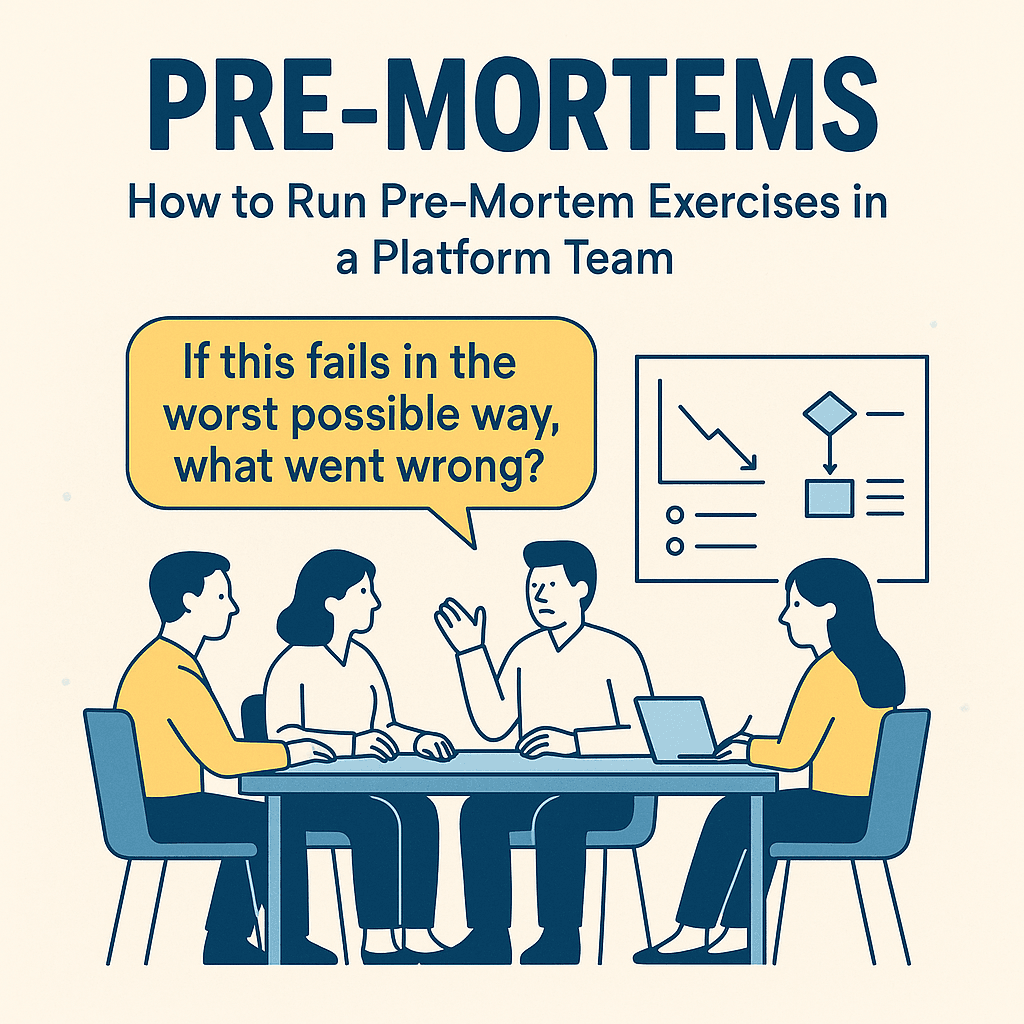
Cognitive psychologist Gary Klein developed this technique, which cleverly flips the usual post-mortem (“what went wrong after a project ends?”).
A pre-mortem gathers team members before a project starts and asks: “Imagine it’s six months from now and this project is a total disaster. What went wrong?”
Why is this powerful? Because it legitimizes dissent and breaks groupthink. In a room where everyone is cheerfully saying, “This plan is perfect,” it’s hard for someone to raise objections. A pre-mortem explicitly grants permission — even duty — to articulate potential failures. “Your job is to find reasons this will fail!” It systematically draws out collective worries and hidden knowledge.
Here’s a simple pre-mortem session guide based on Gary Klein’s method:
- Preparation: Brief the team on the final plan.
- Set the premise (most important!): The facilitator declares, “It’s now six months later and our project has failed disastrously. For the next 10 minutes, quietly write down every reason you can think of for why it failed.”
- Brainstorming: Each person shares one reason in turn; record every reason on a whiteboard (no criticism allowed during this phase).
- Prioritization: Team members vote on the most likely and most critical risks.
- Action plan: Return to the original plan and strengthen it to address the top risks. (“What should we add to prevent this risk?”)
3.2. Decision journal: a personal antidote to memory distortion
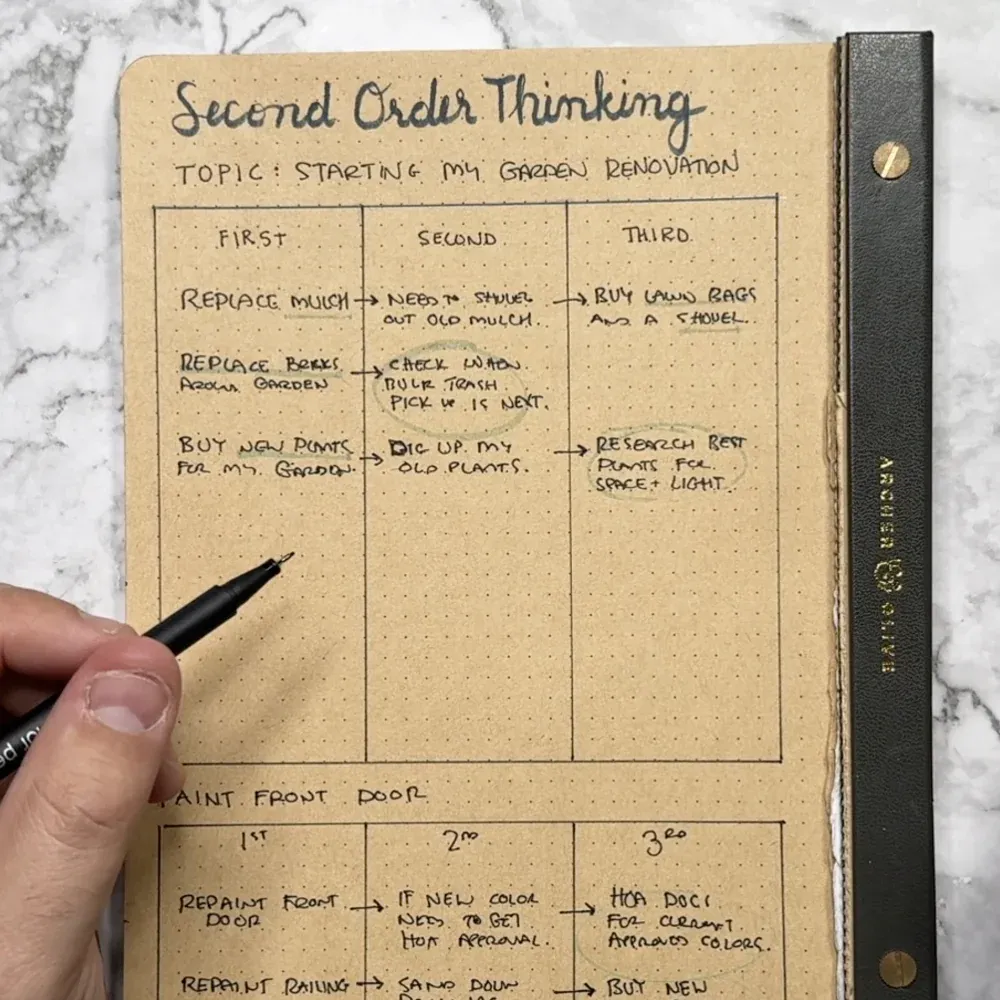
We said hindsight bias corrupts our memory of what we actually believed before an outcome. A decision journal blocks this by creating an immutable record of your prior reasoning.
Not for trivial choices (“what to eat for lunch”), but for consequential decisions — career moves, investments, important relationships. The aim is to capture the decision context and reasoning before outcomes are known.
Here’s a simple, effective template I use:
- Date:
- Decision: (What specific choice am I making? e.g., accept Company A’s job offer.)
- Context and alternatives: (What situation am I in? What other options did I consider? e.g., stay at current job, apply to Company B.)
- Expected outcome(s) and probabilities (crucial): (What do I expect will happen and why? How confident am I? e.g., 1 year later: 20% salary increase and new skills; probability 70%)
- My psychological state: (How do I feel? e.g., excited but anxious, slightly rushed.)
The real value comes when you review the journal in 3 or 6 months, or at the end of a quarter with a cup of coffee. That review exposes wiped-out memories of uncertainty, reveals patterns and blind spots, and provides honest feedback on your decision-making.
3.3. Consider the opposite: a simple habit of the masters

This is perhaps the simplest and, I believe, one of the most powerful debiasing strategies. Research shows it reduces confirmation bias, anchoring, and hindsight bias.
The method is straightforward. When you reach a judgment or conclusion, pause and deliberately ask yourself probing questions:
“If my initial judgment were completely wrong, what could explain that?”
“How might the exact opposite outcome occur? Let’s construct that scenario.”
This forces your brain to go beyond the easiest or most comfortable explanation and actively seek alternatives and refutations. It breaks the cognitive tunnel vision where biases thrive.
One caveat: trying to invent too many counter-arguments can backfire. If generating alternatives becomes hard, your mind may interpret the difficulty itself as evidence that your initial view is correct. Research suggests aiming for 2 to 10 reasons; practically, generating 3 to 5 plausible alternative scenarios is most effective.
| Technique | Core principle | Good situations | First step to apply |
|---|---|---|---|
| Pre-mortem | Predictive post-mortem: assume failure to surface hidden risks | Team projects, major strategic plans, product launches | Schedule a 1-hour meeting. Ask the team, “Imagine we failed spectacularly in a year. Why?” |
| Decision Journal | Objective record: document your reasoning before outcomes to prevent memory distortion | Important personal/professional choices (job change, major investment, hiring) | Create a simple 5-line template. Fill it out before the next big decision and review in 3 months. |
| Consider the Opposite | Active falsification: deliberately seek evidence or scenarios that contradict your view | Everyday judgments, opinion formation, proposal evaluations | Before finalizing, pause and ask, “What are three plausible reasons I could be wrong?” |
Conclusion: from hindsight to wisdom
Hindsight bias: powerful, pervasive, and often invisible. It deceptively simplifies complex, uncertain pasts and makes our predictive abilities look deceptively impressive.
But knowing about this bias is not a call to cynicism. Rather, it’s the first step toward intellectual humility and empathy.
With this awareness we can analyze past failures more subtly: instead of blaming decision-makers on the basis of what we know now, we evaluate the processes they followed given the imperfect information and overwhelming noise they faced at the time.
We may never fully change the brain’s default wiring, so we might not be able to eliminate this bias entirely. But by intentionally adopting preventive practices like pre-mortems, decision journals, and considering the opposite (even if a bit inconvenient), we can stop being passive victims of cognitive illusion.
We can become more thoughtful, cautious, and wiser architects of our future.