'Nudge's Two Faces: Design That Helps You vs Deceptive Traps
phoue
•21 min read•--
The whole story, believe it or not, began in the men’s restroom at Amsterdam Schiphol Airport in the Netherlands.
At the time, the airport managers were struggling with a chronic problem: men missing the urinal and splashing urine outside. Beyond the cleaning costs, it was just too messy. They tried putting up warning signs and increasing the cleaning frequency, but as you might expect, none of that worked very well.
Then an economist came up with a brilliant idea: just stick a black fly-shaped sticker near the center drain of the urinal.
What happened? Oh, it was astonishing. Men began to almost unconsciously “aim” at that fly, and the amount of urine splashed outside the urinal decreased by as much as 80%. No coercion, no fines, no rewards. A single small sticker dramatically changed people’s behavior.
Choice Architecture
This anecdote became the most emblematic example used by behavioral economists Richard Thaler and Cass Sunstein to explain ’nudge’, literally the idea of giving a little nudge.
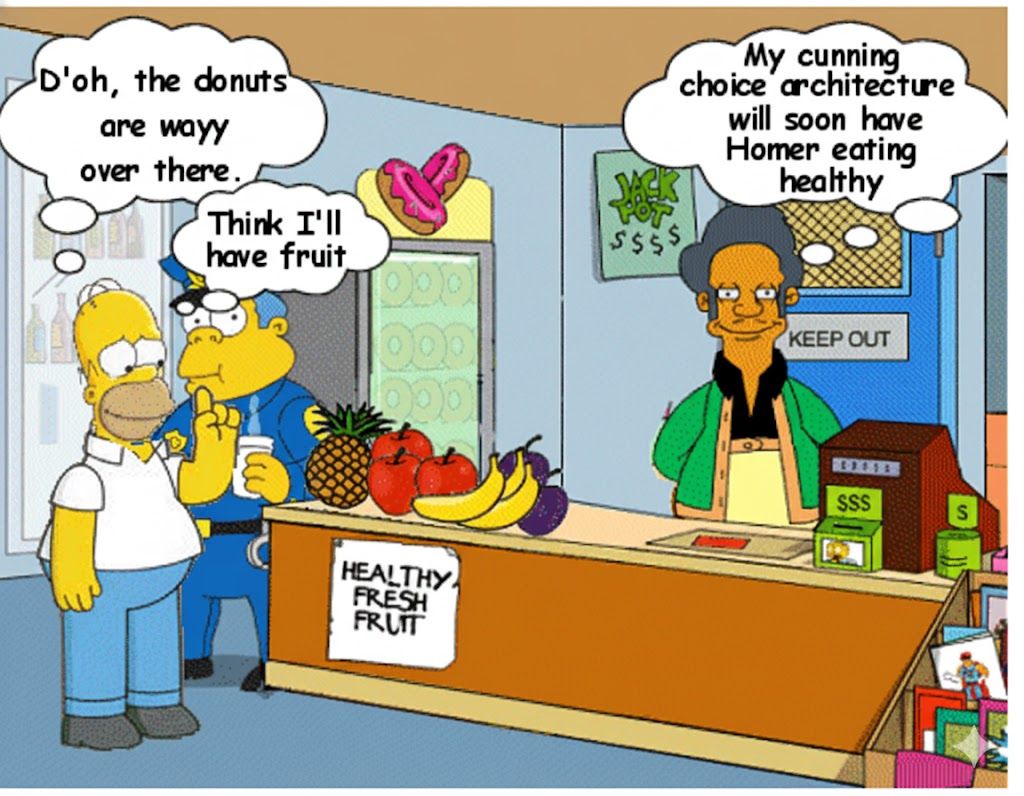
The core of a nudge is ‘Choice Architecture’. Sounds a bit technical, right? Simply put, it’s about gently designing the ‘background’ or ‘context’ in which people make decisions. By putting the fly sticker, the airport manager became a choice architect for restroom users.
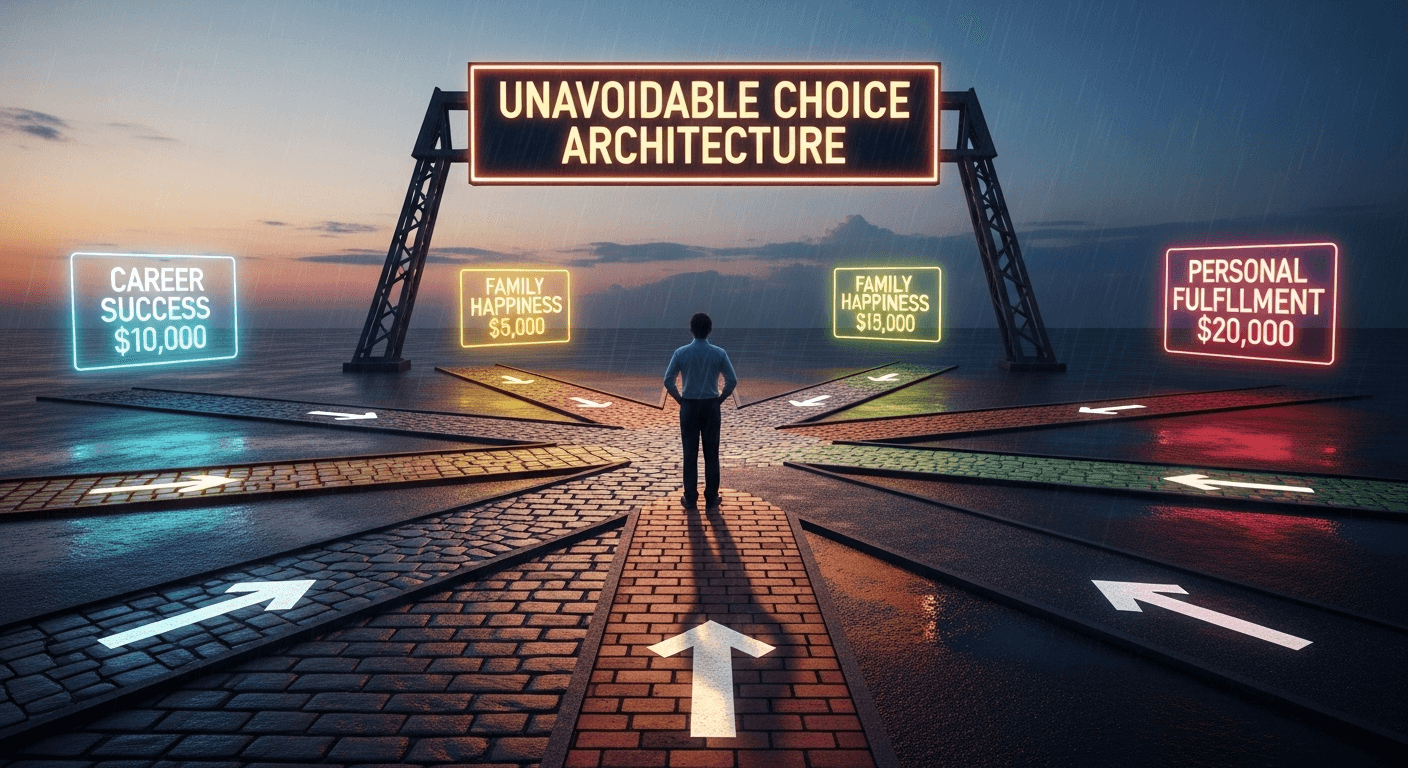
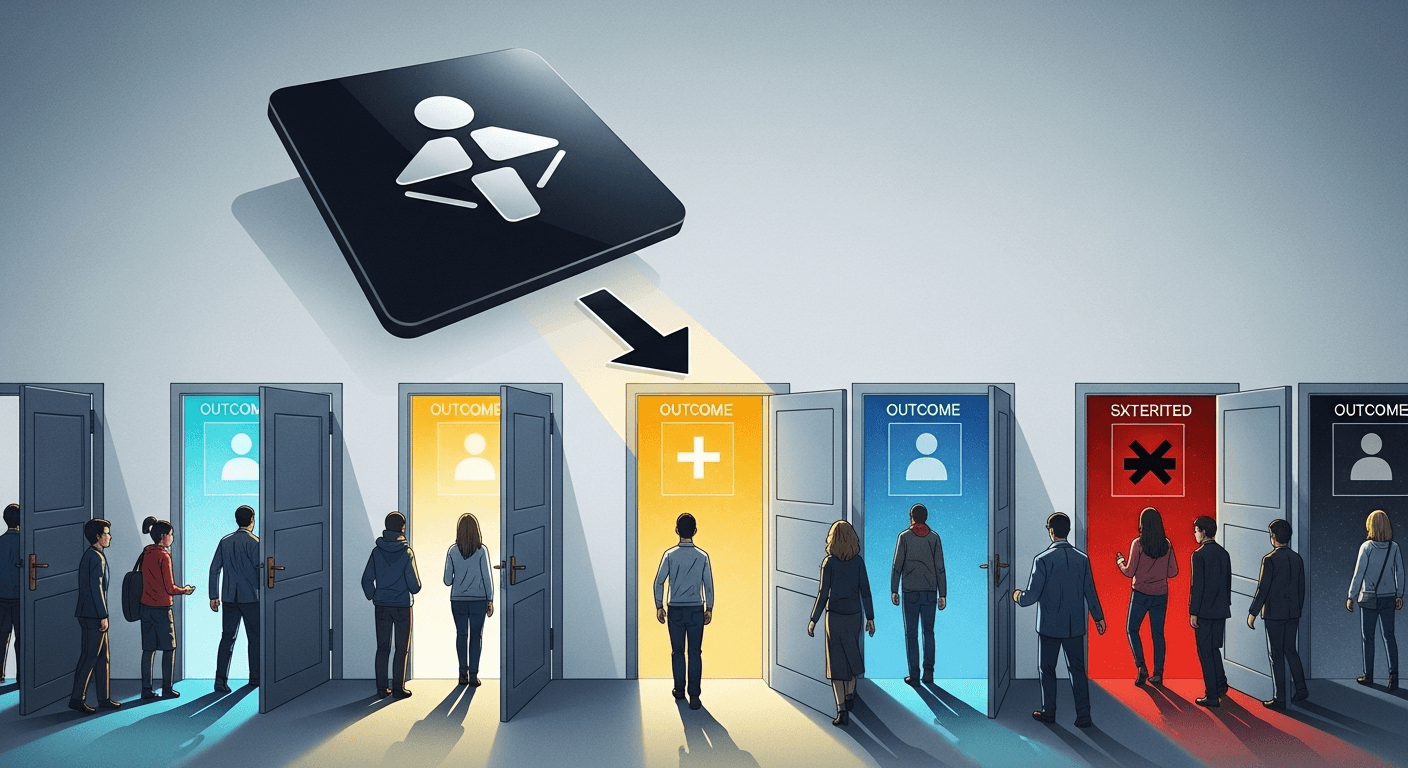
Importantly, this choice architecture is unavoidable. From the arrangement of dishes on a restaurant menu, to the location of buttons on a website, to the default settings in a form — we live constantly making choices within a world someone else designed.Inevitable choice architecture
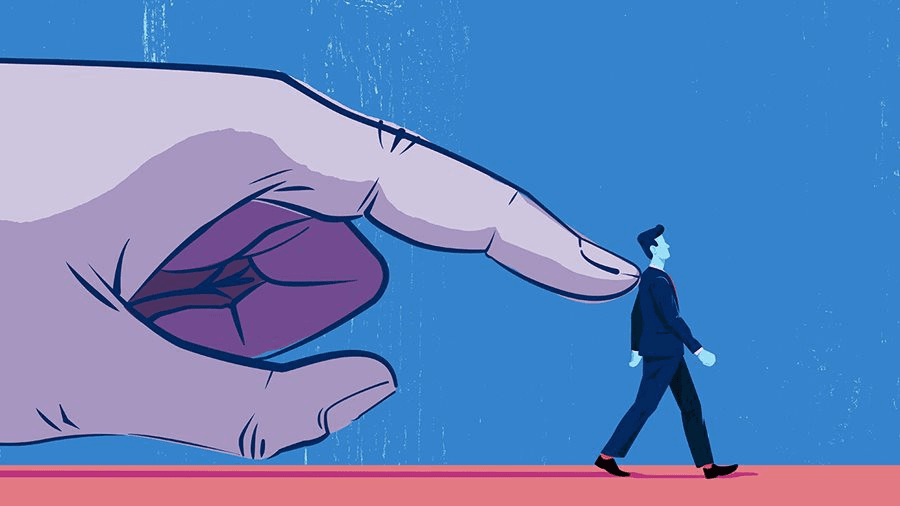
Thaler and Sunstein argued that such interventions can respect individual freedom while guiding people toward better outcomes, and they gave it the name **‘Libertarian Paternalism’**. Honestly, that term is somewhat contradictory and not my favorite phrasing, but the idea is this: it is ’libertarian’ because it preserves choice, and ‘paternalistic’ because it helps people make better choices.Libertarian Paternalism
In this piece, I want to follow the path that began with that little fly at Schiphol Airport. We’ll look at why nudges are useful, how our minds work, and how nudges have produced powerful outcomes in public health and finance.
But the story doesn’t end there. The power of nudge is a double-edged sword. We’ll examine how the same psychological principles have been corrupted into exploitative **‘dark patterns’** (Chapter 3), and how the marriage of AI and big data has produced ‘algorithmic nudges’ that raise ethical concerns. Finally, we’ll address the reality that nudge theory has faced a **‘replication crisis’** — “is the scientific evidence strong enough?” — and discuss the future of nudging.
This article aims to provide a comprehensive insight into how nudge has changed our understanding of human behavior, and what risks we should be wary of.
Chapter 1. Why Are We So ‘Predictably’ Irrational?
Econ Perfect Being
Nudge theory began by asking a fundamental question of classical economics’ core premise that “humans act rationally.” Classical economics pictured humans as perfect beings called ‘Econs’ — robots who perform complex calculations effortlessly, are not swayed by emotions, and always make choices that maximize their self-interest.
But let’s be honest. Are we really like that?
We often make mistakes in systematic and surprisingly predictable ways. Daniel Kahneman, a pioneer of behavioral economics and Nobel laureate, offered a powerful framework for explaining human irrationality, and that framework is central to understanding why nudges work.
Two minds inside us: System 1 and System 2
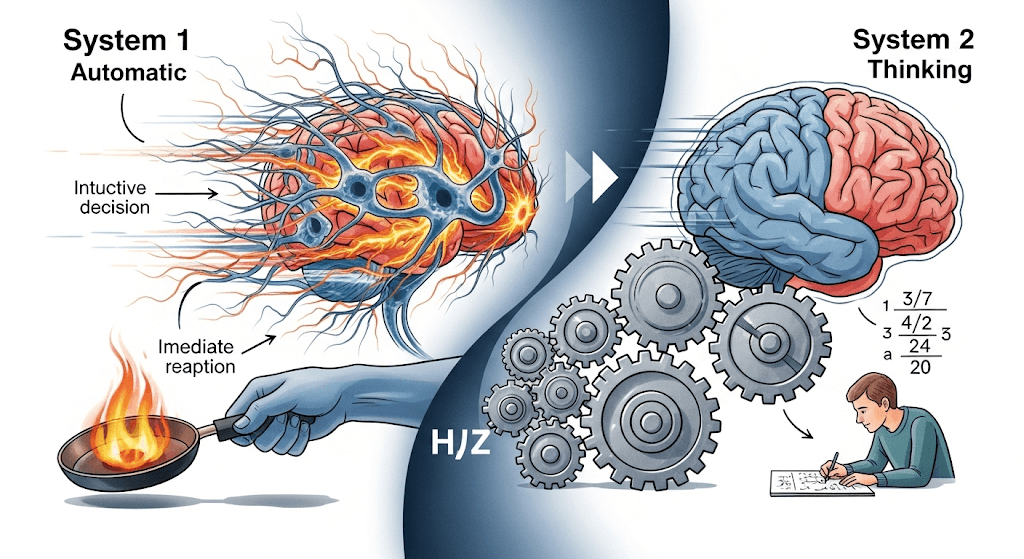
Kahneman explains that two systems coexist in our minds.
System 1 and System 2
System 1 (the automatic system): Very fast, intuitive, and emotional. It takes almost no effort. Recognizing a friend’s face, dodging a flying ball, or completing the phrase “bread and…” with “butter” — these are System 1 tasks. Hearing an angry tone and sensing someone’s mood is also System 1. It operates almost automatically.
System 2 (the deliberative system): Conversely, it’s slow, conscious, and analytical. It requires significant mental effort. Solving a complex math problem, parking in a tight spot, or comparing the pros and cons of two insurance plans — these require System 2. It oversees System 1’s impulsive suggestions and handles careful judgment and decision-making.
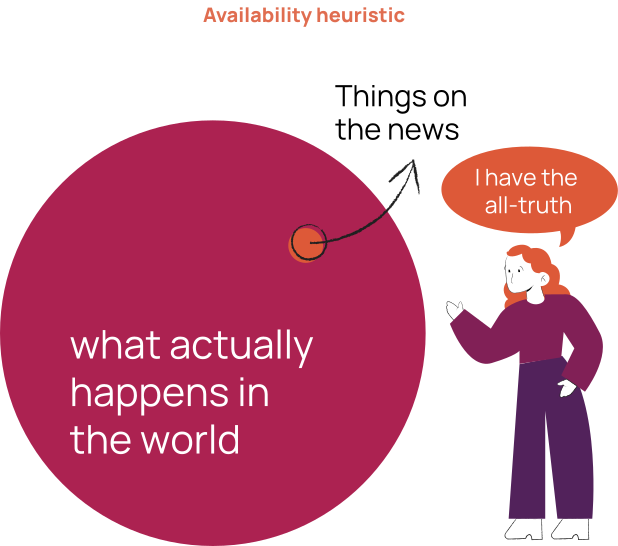
The key is that System 2 is an enormous **‘slacker’**. It consumes a lot of energy, so we avoid using it when we can. As a result, we rely on System 1 for over 90% of everyday judgments. System 1 uses simple rules built from experience — so-called ‘heuristics’ — to make quick judgments.
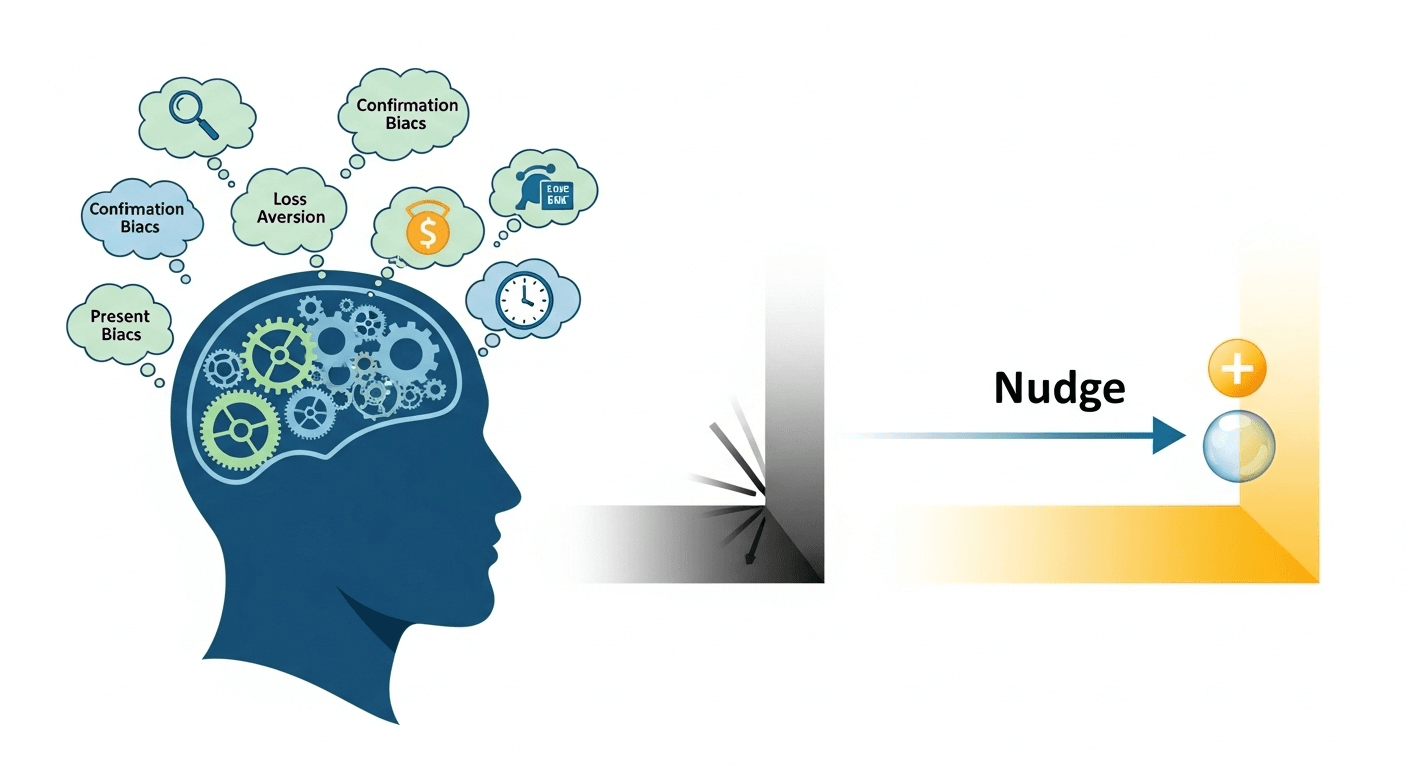
These heuristics are mostly efficient, but in certain situations they produce systematic errors, or ‘biases.’ Nudges exploit precisely this point. Rather than presenting complex information to persuade the lazy System 2, nudges gently address the fast, intuitive System 1.
Heuristics and bias
Key biases that cloud our judgment
The errors we make — biases — are diverse. Understanding a few core biases that underpin nudging helps explain why we respond so readily to nudges.
1. Endowment Effect: Value soars once something becomes ‘mine’
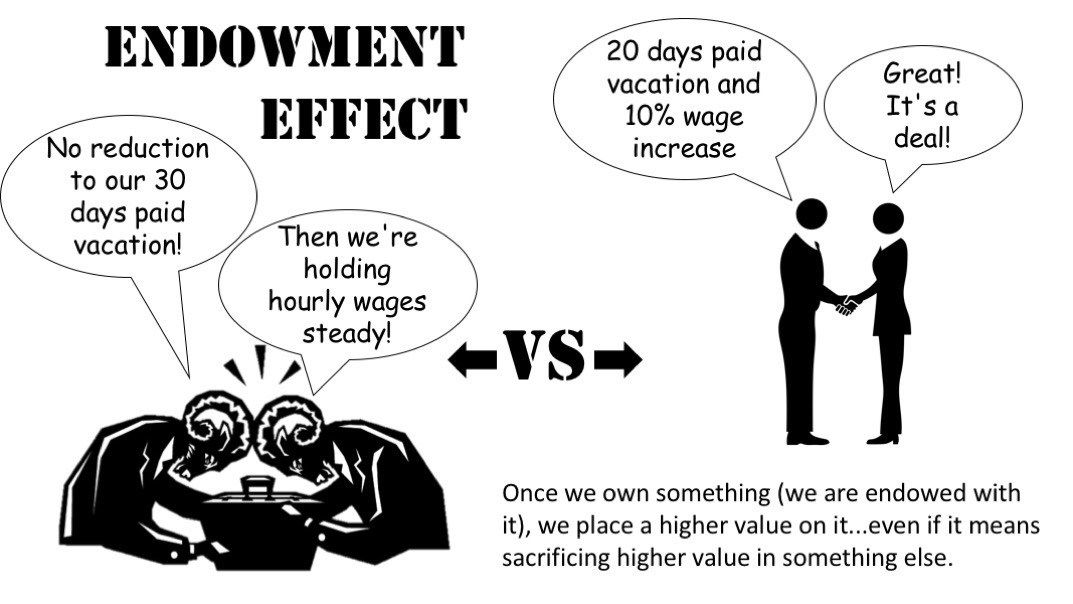
Endowment Effect
People assign a much higher value to things they own than to identical things they don’t own. This is the famous ‘mug experiment.’
Students were split into two groups: Group A was given a free mug with the school logo and asked “What’s the minimum you’d accept to sell this mug?” Group B wasn’t given the mug and was asked “What’s the maximum you’d pay to buy this mug?”
The results were shocking. Group A, who received the mug, demanded an average of $5.25 to sell it, while Group B was only willing to pay an average of $2.75. Just a few minutes of ownership nearly doubled the perceived value.
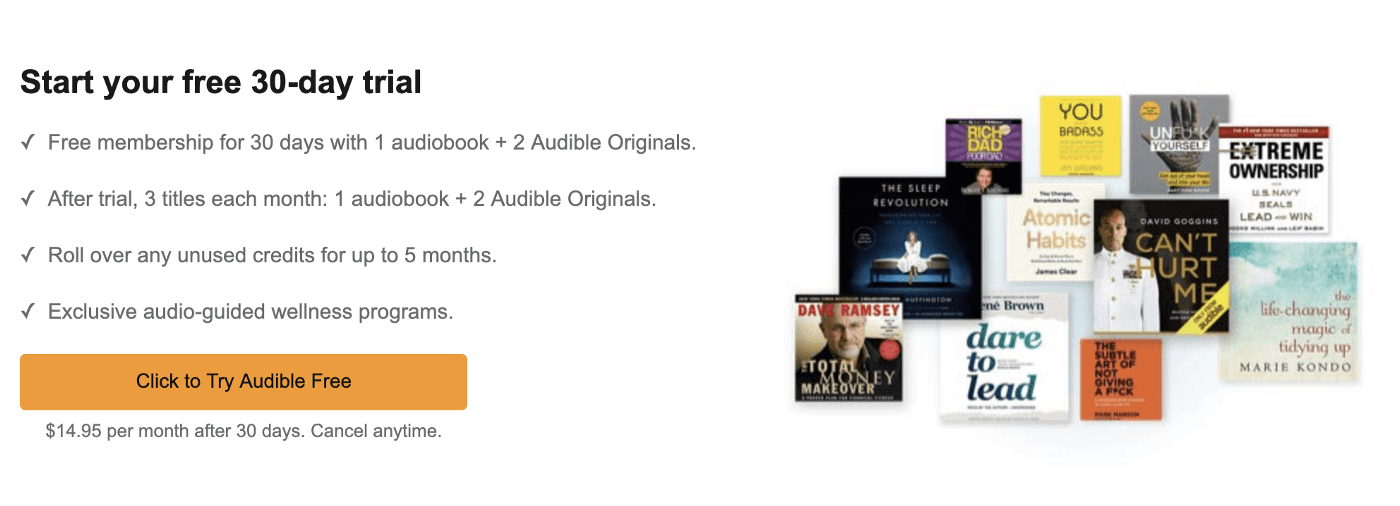
This effect is everywhere in daily life: “Try it risk-free with a 100% refund!” or ‘30-day free trials.’ Once I start a 30-day free trial… oh, canceling it is so bothersome. That’s because ownership feels like a loss if you give it up — the endowment effect.
2. Status Quo Bias: Change is a hassle, so leave things as they are
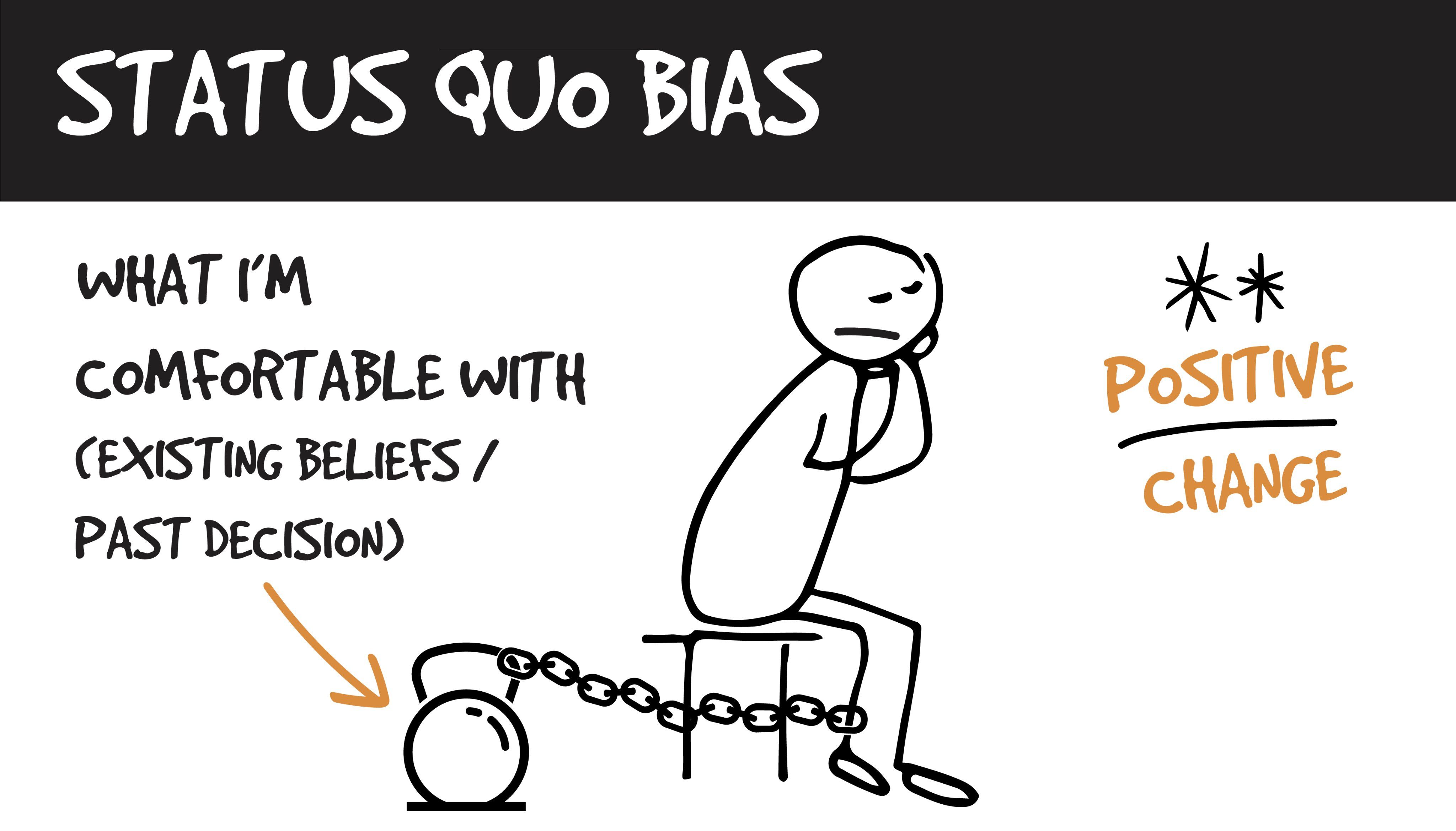
Status Quo Bias
People have a strong tendency to stick with the current state unless they have a good reason to change. They feel potential losses from change more strongly than the prospective gains.
The most dramatic example is organ donation systems.
Countries with an ‘opt-in’ system (e.g., Germany), where you must explicitly consent to donate, have very low consent rates.
Conversely, countries with an ‘opt-out’ system (e.g., Austria, France), where everyone is considered a potential donor unless they refuse, have consent rates well above 90%.
Isn’t that an enormous difference? It’s not that people are strongly opposed to organ donation; it’s that people prefer to avoid the effort of changing the default setting, so the default drives huge differences.
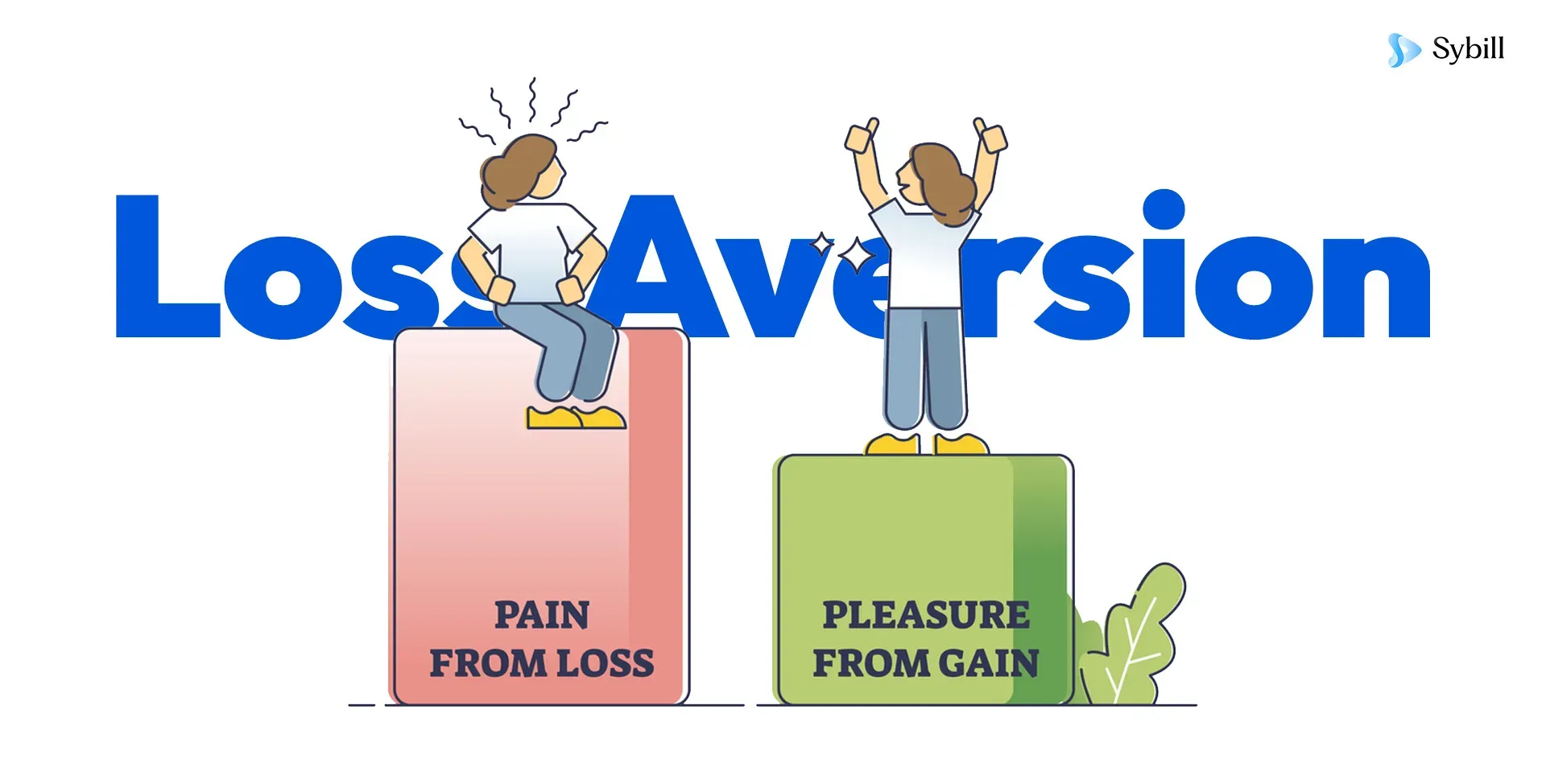
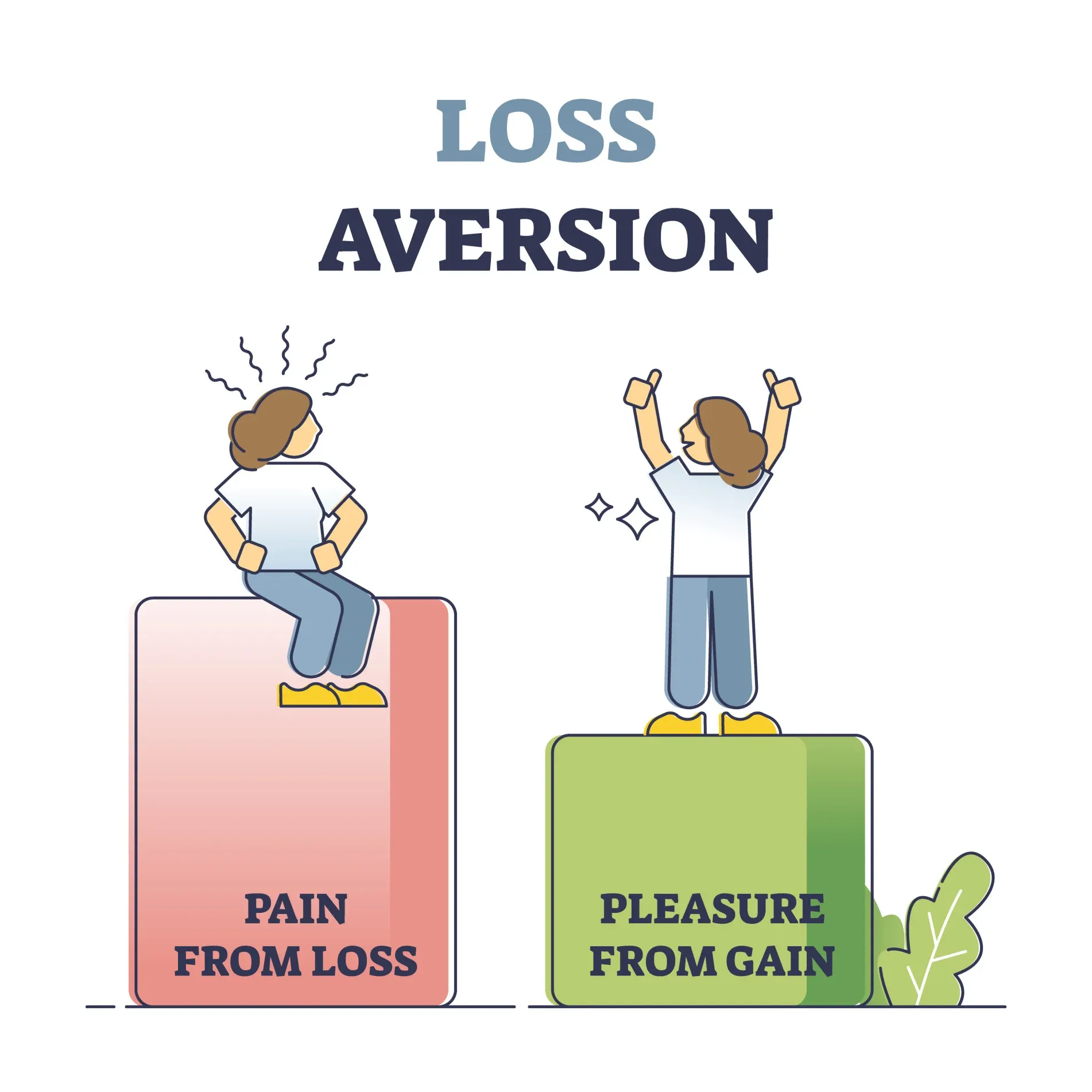
3. Loss Aversion: Losses hurt about twice as much as gains pleaseLoss Aversion
When faced with equal-sized gains and losses, people feel the pain of losses much more than the pleasure of gains. Kahneman’s research suggested that losses are about 2 to 2.5 times more painful than equivalent gains are pleasurable.
For example, many people would forgo a gamble to win $150 because of the fear of losing $100. The pain of potential loss overwhelms the prospect of gain.
Loss aversion is actually the emotional engine behind the other two biases. The endowment effect exists because selling my mug feels like a loss, and status quo bias exists because changing the status quo is perceived as risking potential loss.
So our minds are not perfect calculators but predictably biased beings. Nudges cleverly exploit these human tendencies to gently guide us toward better choices.
Nudges exploit human nature to gently guide us toward better choices
The fact that we are irrational in predictable ways paradoxically gives us opportunities to create a better society. When choice architects understand how our minds work and use that knowledge positively, nudges can solve complex social problems without coercion or regulation.
Public health: Smaller plates reduce meal sizes
Changing people’s health habits is really hard. Smoking, overeating, and lack of exercise deliver immediate satisfaction while consequences are far in the future. Nudges help make healthier choices easier.
Google’s cafeterias are literally ’nudge labs.’ When obesity rose among employees, Google didn’t ban junk food — it subtly changed the choice environment.
First, they reduced plate sizes. People tend to perceive the same portion on a smaller plate as more, so their intake fell naturally.
They placed salads and fruit where they were most visible, while candies and chocolates were put in opaque containers out of sight.
Soda was placed lower, and bottled water at eye level.
These small changes didn’t restrict choice but made healthy options easier to pick. Clever, right?
Finance: “Save More Tomorrow”
We feel utterly helpless in complex financial decisions. Because of ‘present bias’ — favoring immediate small pleasures over larger future benefits — long-term saving for retirement is especially difficult.
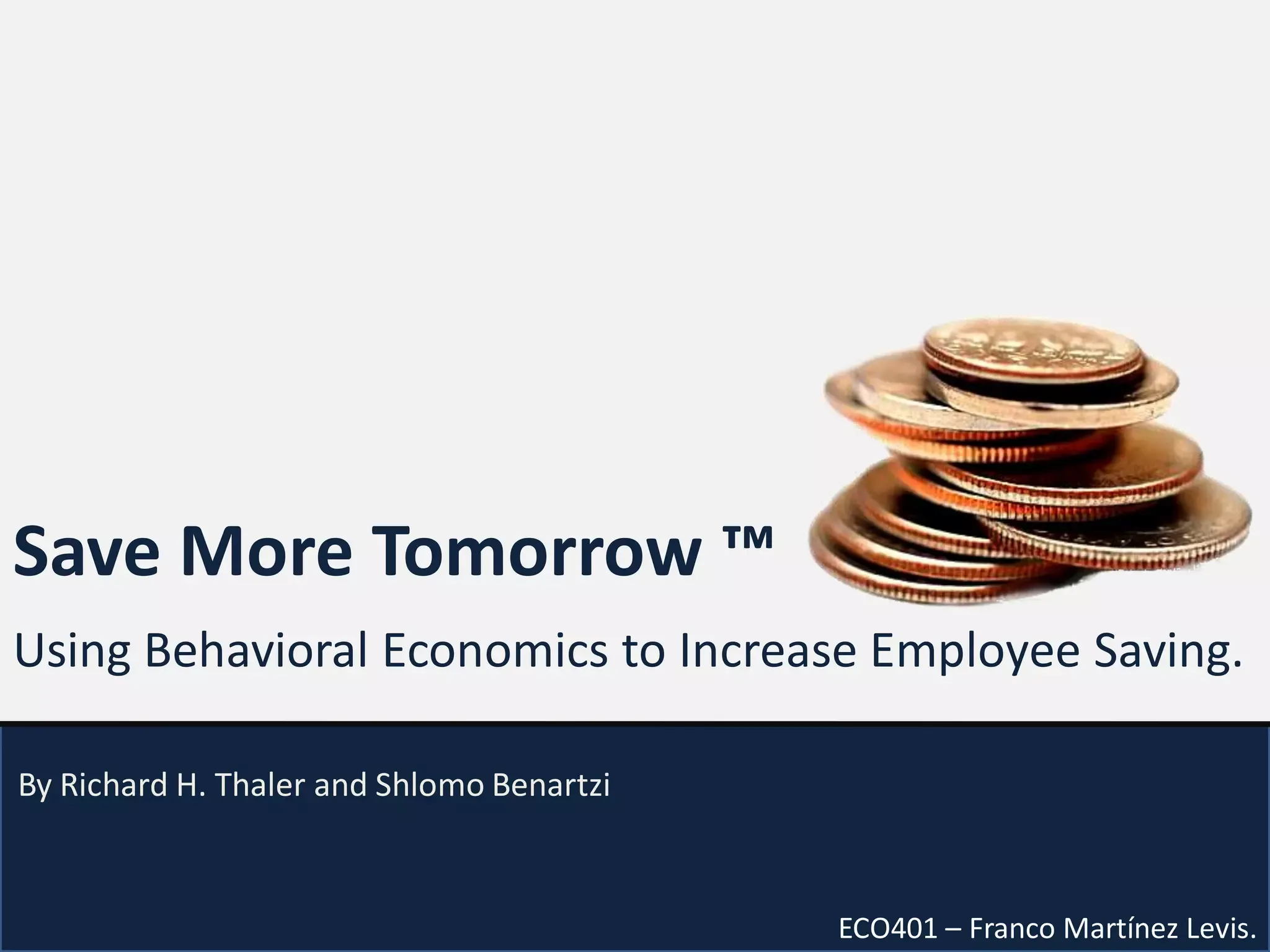
Richard Thaler’s ‘Save More Tomorrow’ program is brilliant. Instead of asking employees to increase savings today, it asks: “Would you agree to increase your savings rate from future salary raises?”
This design cleverly bypasses psychological barriers.
Save More Tomorrow
It’s framed as a future task, so present bias resistance is low.
The increase comes from the ‘raise’ portion of salary, so it doesn’t feel like a take from current pay and thus doesn’t trigger loss aversion.
Once joined, saves increase automatically, so status quo bias works in favor of saving.
This program dramatically increased savings rates for millions in the U.S.
Civic behavior: “Most of your neighbors have already paid their taxes”
The UK’s Behavioural Insights Team (BIT), aka the ‘Nudge Unit,’ applied this approach brilliantly to policy. Their work is impressive.
One famous case involved increasing tax compliance. They added a single sentence to tax reminder letters:
“90% of UK citizens pay their taxes on time.”
Or: “Most people in your area have already paid their taxes.”
This leverages the **‘social norm’** to create the psychological pressure of “Am I the only one not paying?” That simple line noticeably increased tax collection rates — at far lower cost than enforcement.
Environment: Changing a printer’s ‘default’ can make a big difference
Even massive issues like climate change can be tackled with nudges.
A U.S. utility company added to electricity bills not only the household’s usage but also the ‘average usage of neighbors’ and ‘usage of energy-efficient homes.’ People who learned they used more electricity than neighbors voluntarily reduced consumption. Social comparison worked.
A simple but powerful nudge is setting corporate or public printers to default to ‘double-sided printing.’ Because of status quo bias, most people accept defaults, so this can save huge amounts of paper.
Nudges can be gentle but powerful designs that translate people’s good intentions into action without imposing burdens.
Chapter 3. Nudge’s Betrayal: The Trap of Sludge and Dark Patterns
But is this powerful force always used for good? Absolutely not.
When techniques that exploit human irrationality meet commercial interests, nudges’ dark twins emerge: ‘sludge’ and ‘dark patterns.’
Sludge and Dark Pattern
If a nudge is the lubricant that makes good choices easy,
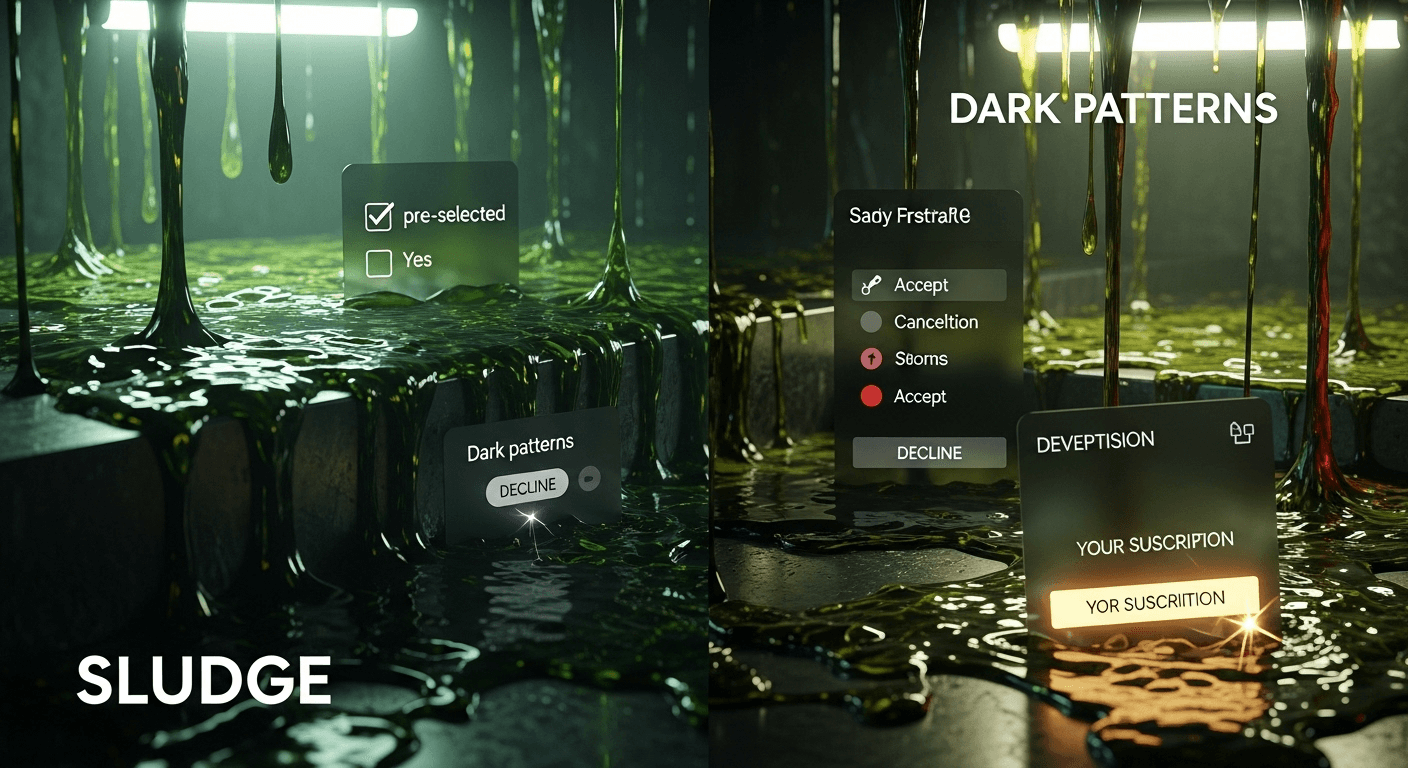
sludge is the opposite: friction. It is intentional ‘annoyance.’ Sludge deliberately makes it difficult and tedious to exercise consumer rights — such as applying for subsidies, canceling services, or requesting refunds — so people give up.
Dark patterns are more malicious. They are designed traps that deceive users into taking actions they don’t want.
Both nudges and dark patterns exploit the same psychology, but their blades point in opposite directions. One helps; the other exploits.
Taxonomy of digital deception: You’ve been hit by these 100%common-dark-patterns
The digital environment is perfect soil for dark patterns. A Korea Consumer Agency survey found dark patterns in 97% of 100 Korean mobile apps — that says it all. You’ve experienced them all.
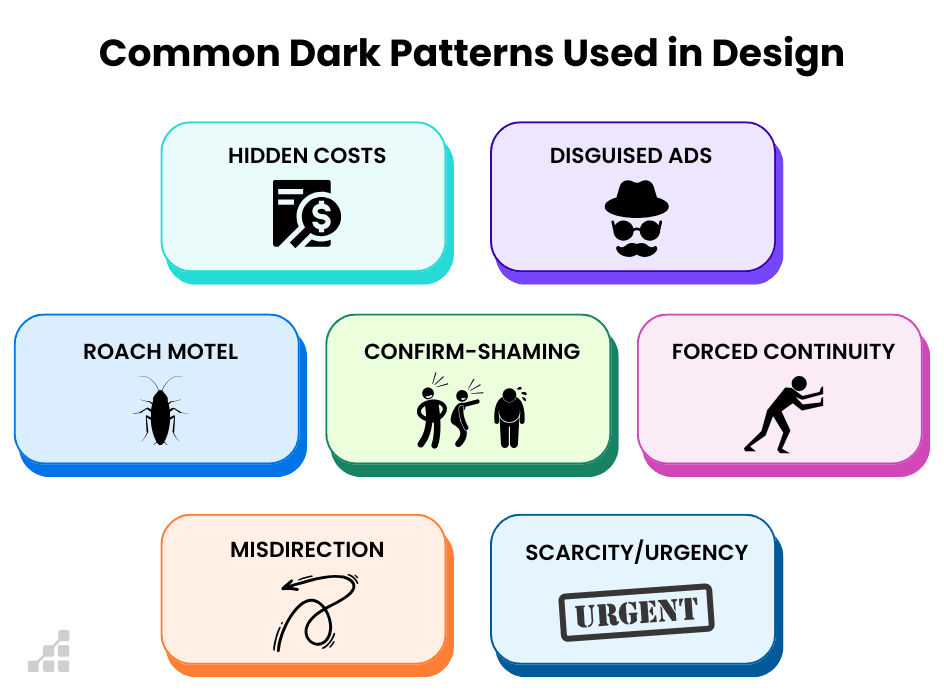
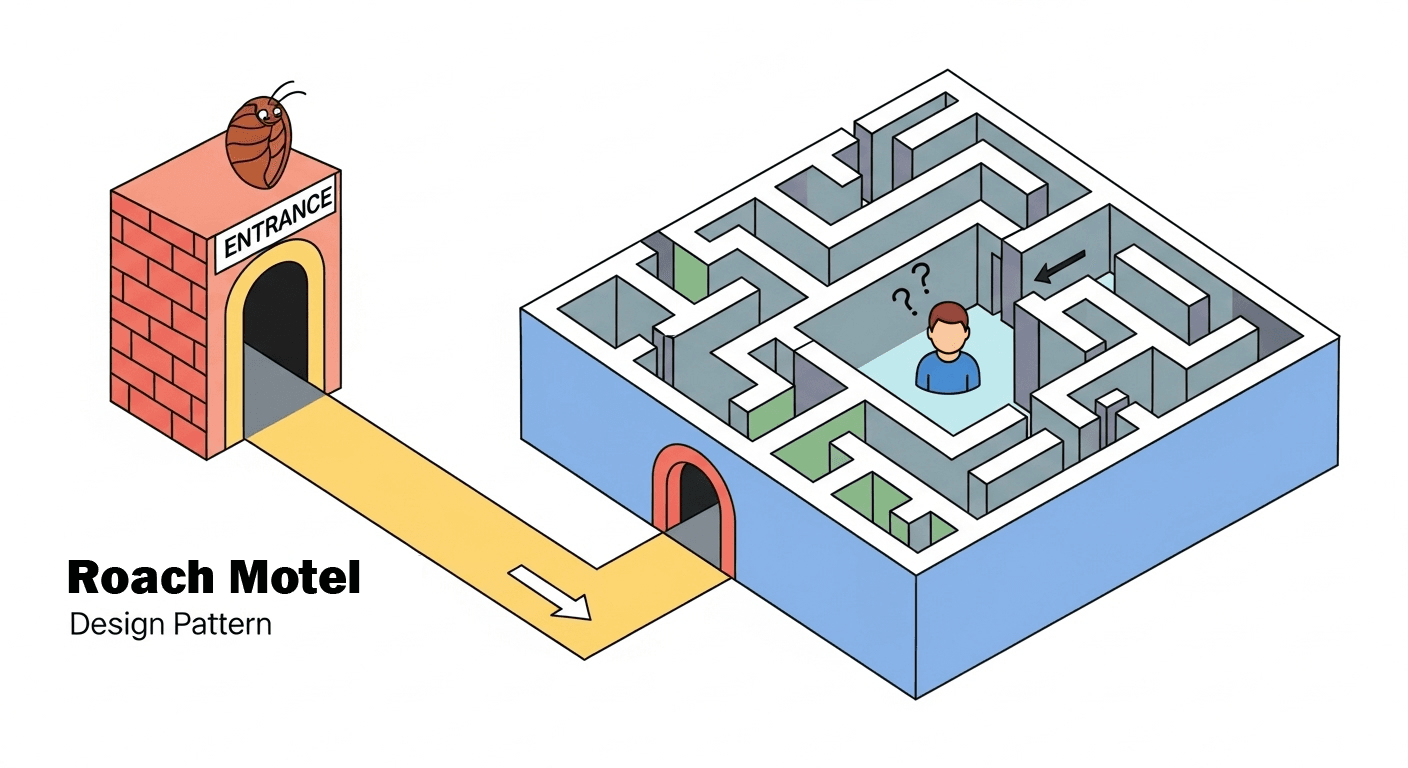
Roach Motel: Nice name, right? Easy to sign up, hell to leave. Cancellation requires navigating countless pages or calling customer service. (Exploits status quo bias)Roach motel
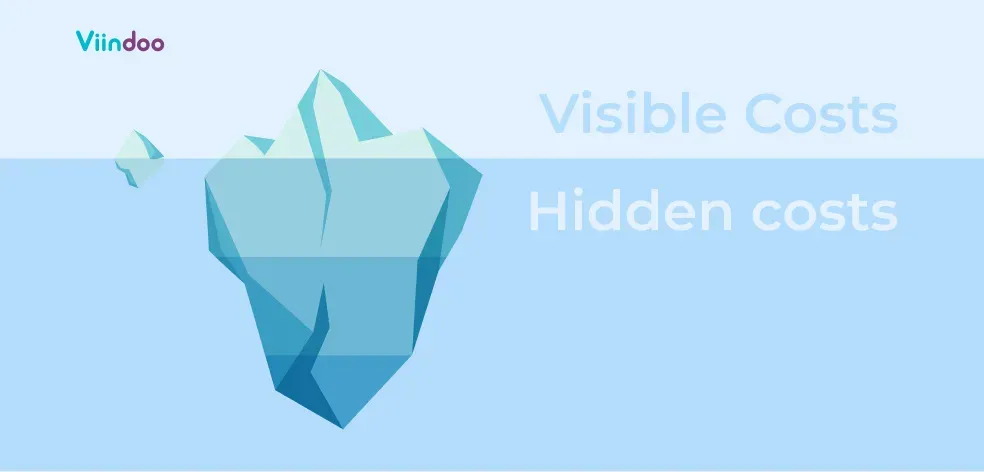
Hidden Costs: Annoying indeed. When booking flights or hotels, the initial price looks cheap, but taxes, fees, and surcharges pile on at the final checkout. (Exploits anchoring bias)Hidden Cost
Forced Continuity: You sign up for a ‘1-month free trial’ and then it automatically converts to a paid subscription without clear notice. We’ve all experienced this. (Exploits status quo bias and inattention)Forced Continuity
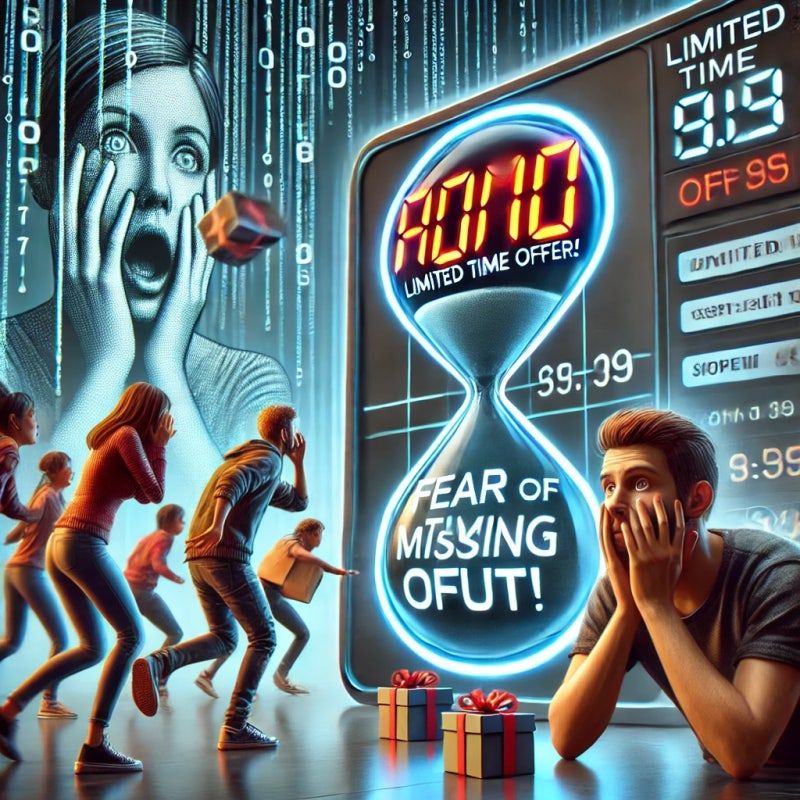
False Urgency/Scarcity: “Only 5 minutes left on the flash sale!” or “Only 2 items left!” — when in reality it’s a perpetual discount accompanied by countdown timers to pressure immediate purchase. (Exploits loss aversion)False urgency scarcity
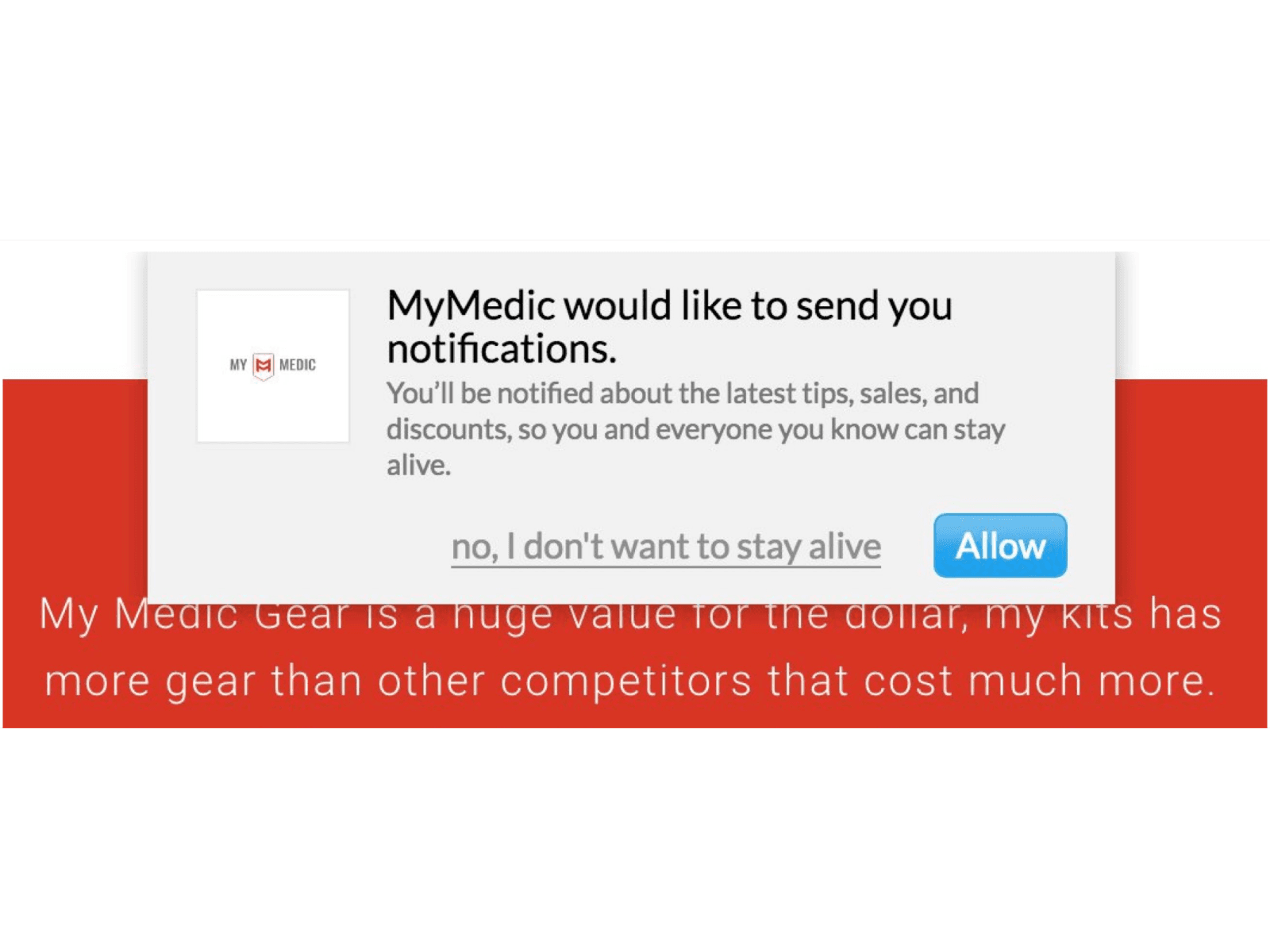
Confirmshaming: Companies use language that makes you feel guilty or ashamed for not choosing what they want. Ever seen a newsletter unsubscribe button that says, “No thanks, I don’t want to be smarter”? It’s despicable.Confirmshaming
Misleading Hierarchy: On a cancellation page, the ‘Cancel subscription’ button is small and faint gray, while the ‘Keep benefits’ button is large and colorful, prompting mistakes.Misleading hierarchy
The regulatory blade moves
Fortunately, as deceptive practices crossed a line, regulators worldwide have started to act. This is no longer just “clever marketing” but outright deception.
The U.S. Federal Trade Commission (FTC) sued Amazon for allegedly making users unknowingly subscribe to ‘Amazon Prime’ and for making cancellation procedures labyrinthine. The European Union (EU) explicitly bans dark patterns in its Digital Services Act (DSA).
Korea’s Fair Trade Commission has also moved similarly. They’ve been cracking down on automatic payments and cancellation obstructions in OTT and music streaming subscription services. The message to companies is clear: “Don’t make money by deceiving consumers.”
Chapter 4. Algorithmic Nudges: The Temptation of AI That Knows Me Better Than I Do
If earlier nudges felt like public architecture applied uniformly, things have changed completely because nudges have met big data and artificial intelligence.
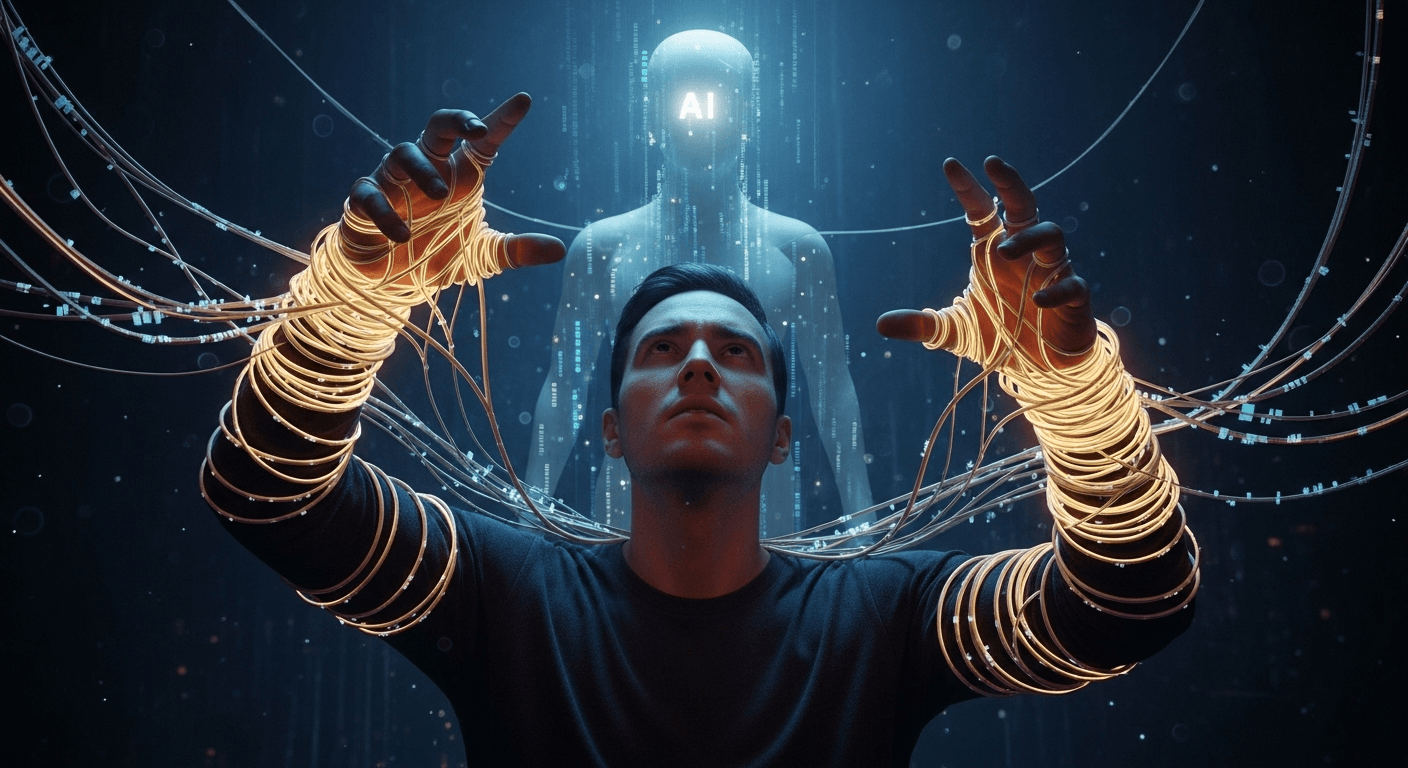
‘Algorithmic nudges’ analyze personal data, behavior patterns, and even psychological vulnerabilities in real time to deliver interventions tailored to the single individual. This is not gentle guidance — it’s close to ‘private manipulation.’
How platforms keep us hooked
We already live inside giant platforms’ nudges.
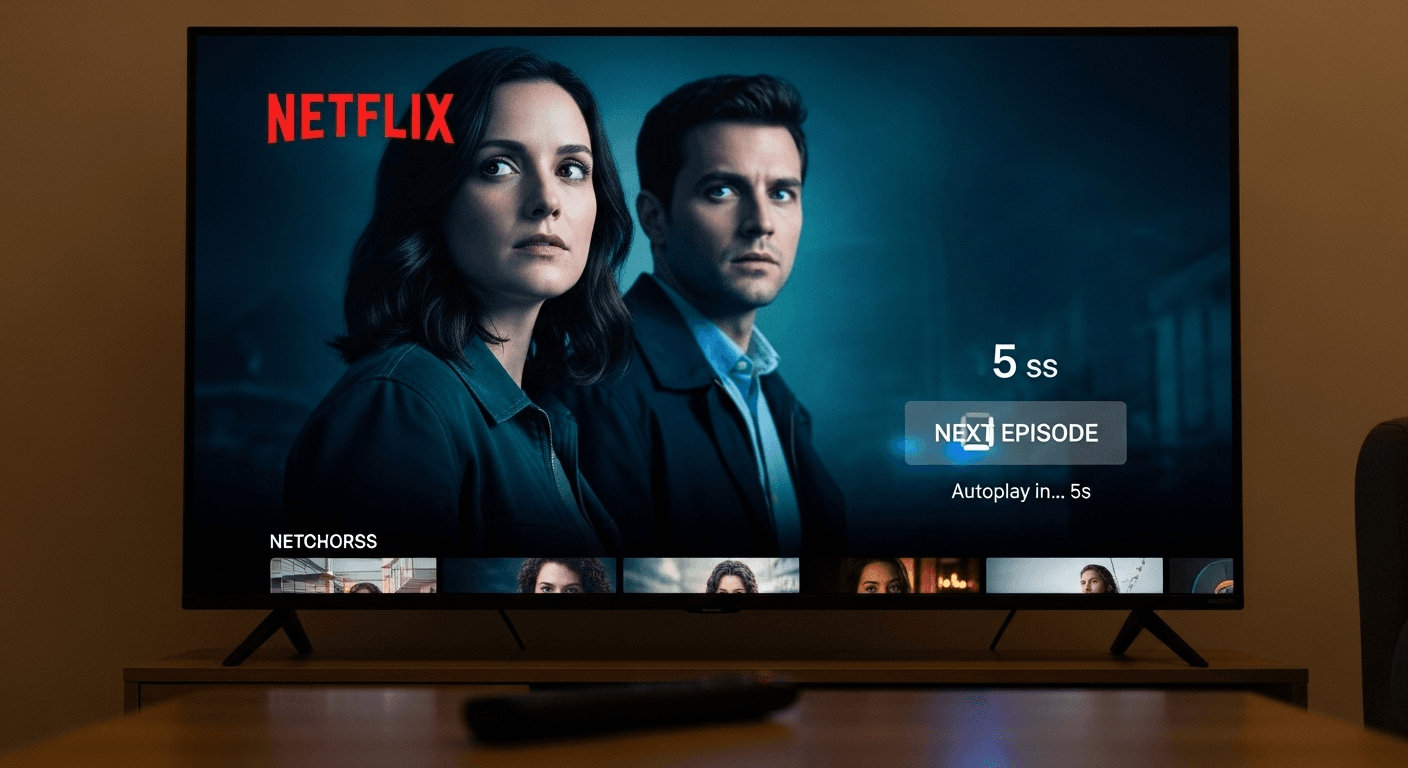
Netflix’s ‘autoplay next episode’ feature automatically starts the next episode after a 5-second countdown when one episode ends. This powerful nudge leverages status quo bias: unless we actively decide to stop watching, we remain in the current state.Netflix’s ‘autoplay next episode’ feature
What’s more unsettling is that Netflix A/B tested countdown durations of 5, 10, and 15 seconds to see which keeps viewers watching the longest. They experimented to find which time interval most effectively holds our attention. It’s unsettling — convenience disguised as meticulous design.
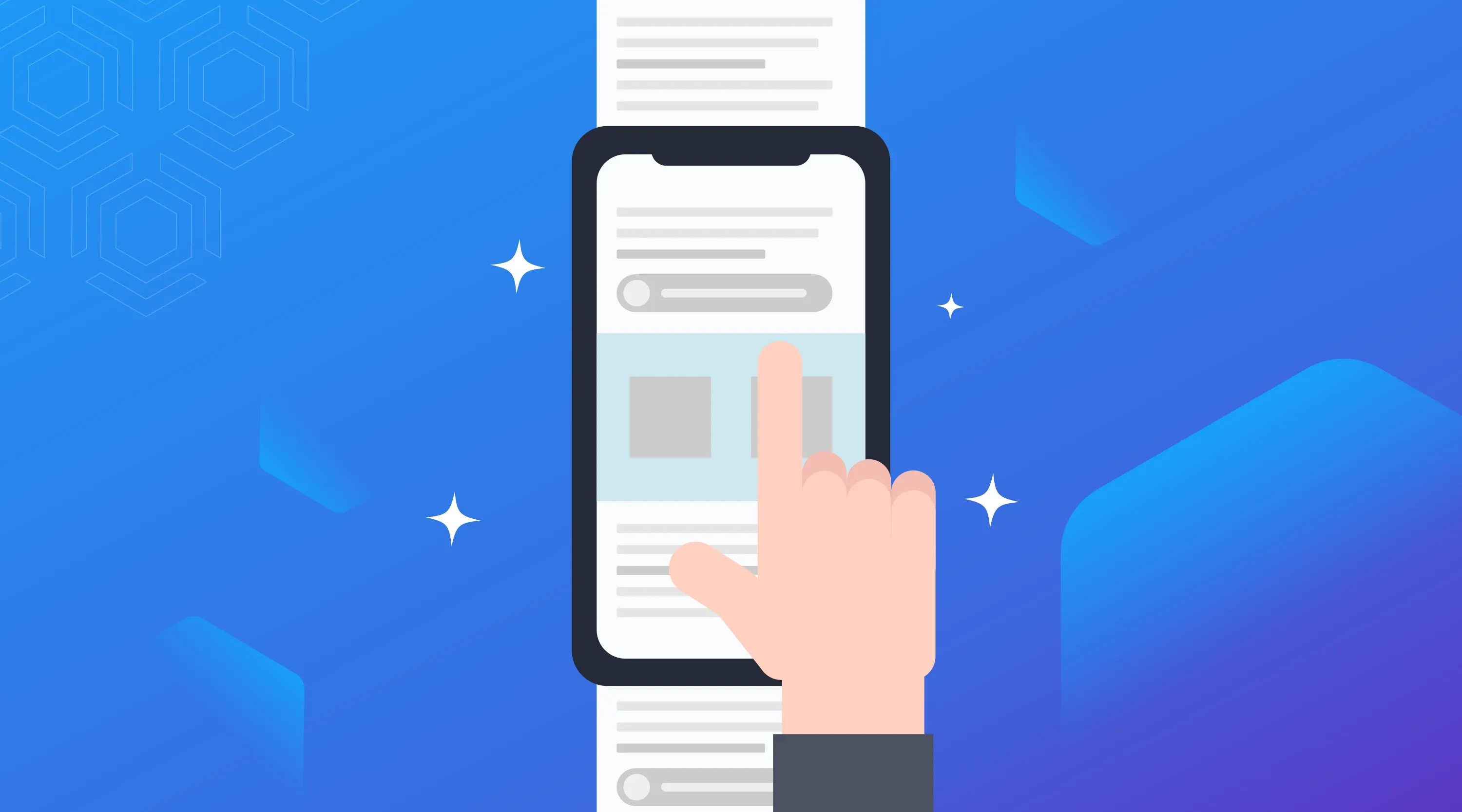
What about social media’s ‘infinite scroll’? If there were a ’next page’ button like before, that would act as a conscious breakpoint: “Should I continue or stop?” Infinite scroll removes that cognitive stopping point, making us keep scrolling like slot-machine gamblers, expecting the next interesting post.
Infinite Scroll
Hyper-personalization: Blessing or plunder?
When AI joins the mix, the story shifts again. The era of ‘hyper-personalization’ arrives. Systems now understand our unconscious desires and vulnerabilities, sometimes better than we do.Hyper-personalization
There are positive potentials: a health app that analyzes glucose data and warns “Your blood sugar is at risk — take a walk now” can clearly be helpful.
But the dangers are far greater.
Take online gambling (iGaming) as an example. AI systems can detect the exact moments a player is emotionally vulnerable and at high risk for addiction.
An ethical system should suggest betting limits or direct users to counseling.
A profit-driven system, however, will exploit that vulnerability: at the very moment a user is emotionally fragile after a big loss, the system might offer a tailored bonus coupon with messaging like “This is your chance to win it all back now!”
That’s pure predation. It’s not a nudge; it’s precision exploitation of personal weakness.
New ethical dilemmas
Algorithmic nudges raise fundamental questions.
Erosion of autonomy: If a system sends the most persuasive message at the moment we’re least able to resist, is our choice really our own?Autonomy erosion
Algorithmic bias: If AI constructs nudges from biased data against certain races or socioeconomic groups, it could recommend unfavorable loan products or exclude people from hiring opportunities — automated discrimination.Algorithmic bias
Lack of accountability: If a black-box algorithm designs the nudge and something goes wrong, who is responsible?Lack of accountability
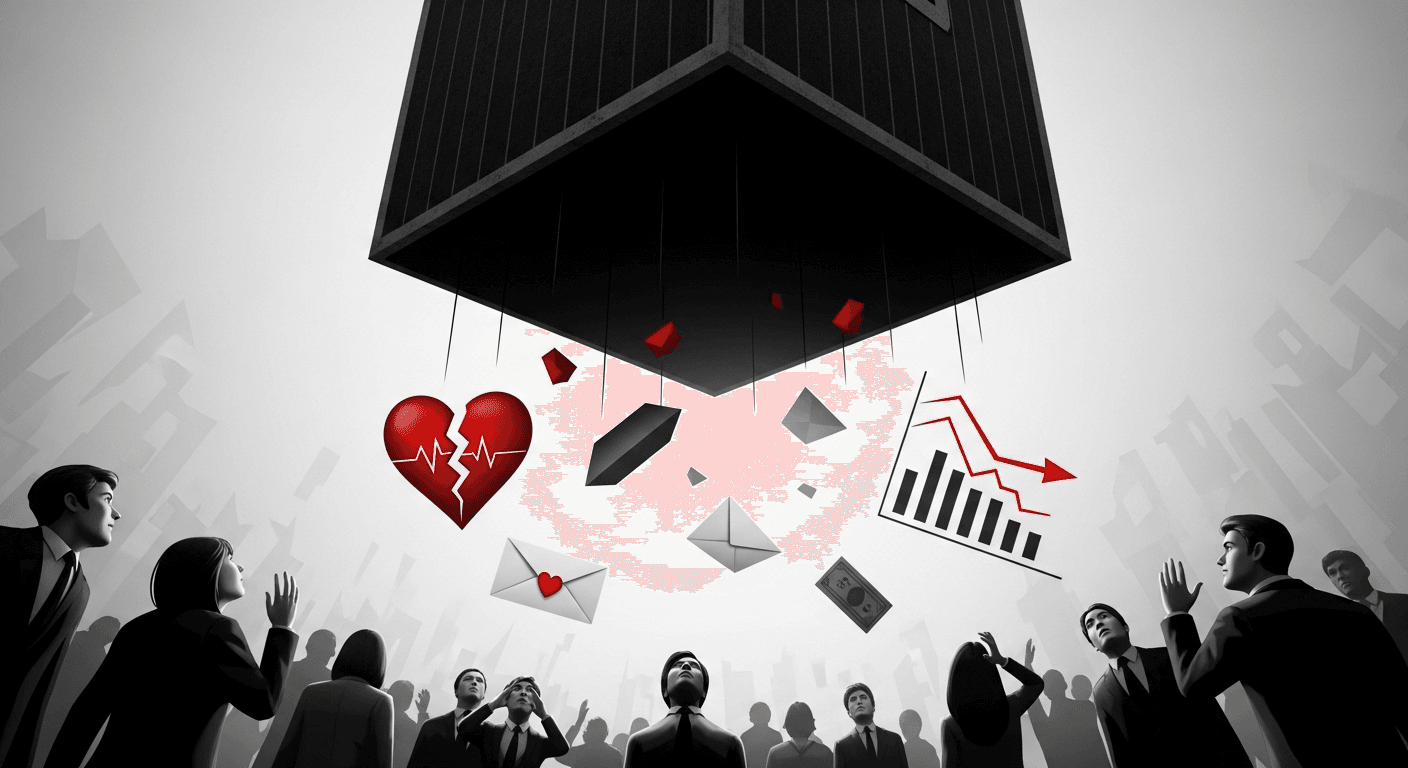
At this point, we must ask whether “my choice” is truly mine. We stand at a crossroads: will technology remain a tool that helps people, or become the master that controls them?
Us at the crossroads of choice
Chapter 5. Nudge’s Foundation Shakes: Criticism and Alternatives
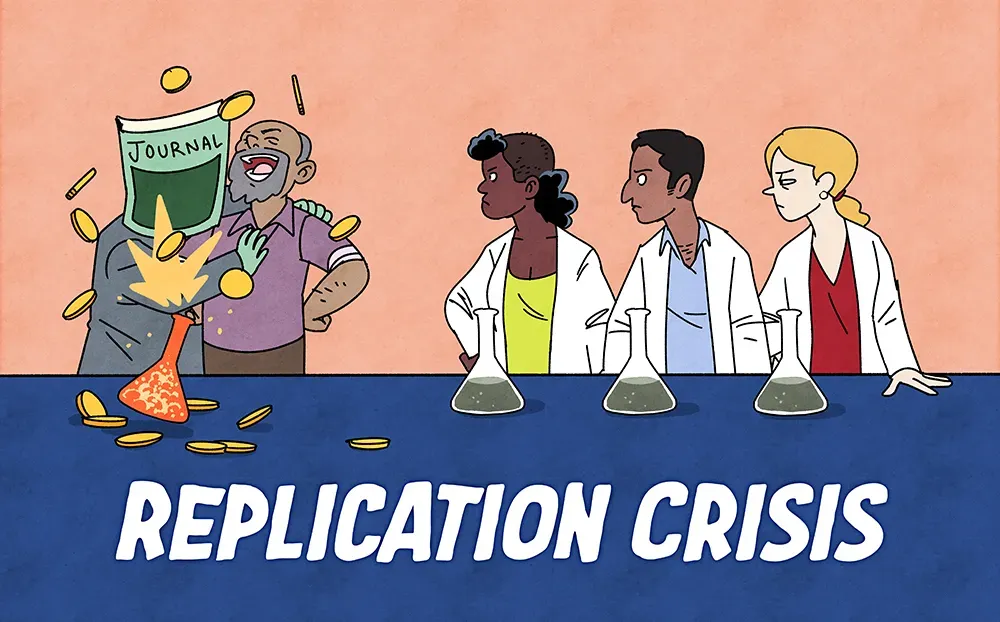
Nudge theory has swept the world over the past decade, but criticism has mounted asking, “Wait, is this really scientifically solid?” The broader ‘replication crisis’ in psychology and social sciences has cast fundamental doubts on many of the studies underpinning nudge theory.
Replication crisis: Can those experiments be repeated?
Replication Crisis
The ‘replication crisis’ means many famous scientific experiments fail to produce the same results when repeated. In a Nature survey, 70% of scientists reported failing to replicate others’ experiments. Why does this happen? Likely due to publication bias favoring positive findings and too many small-sample studies with weak statistics.
This crisis directly challenges the core evidence behind nudge theory.
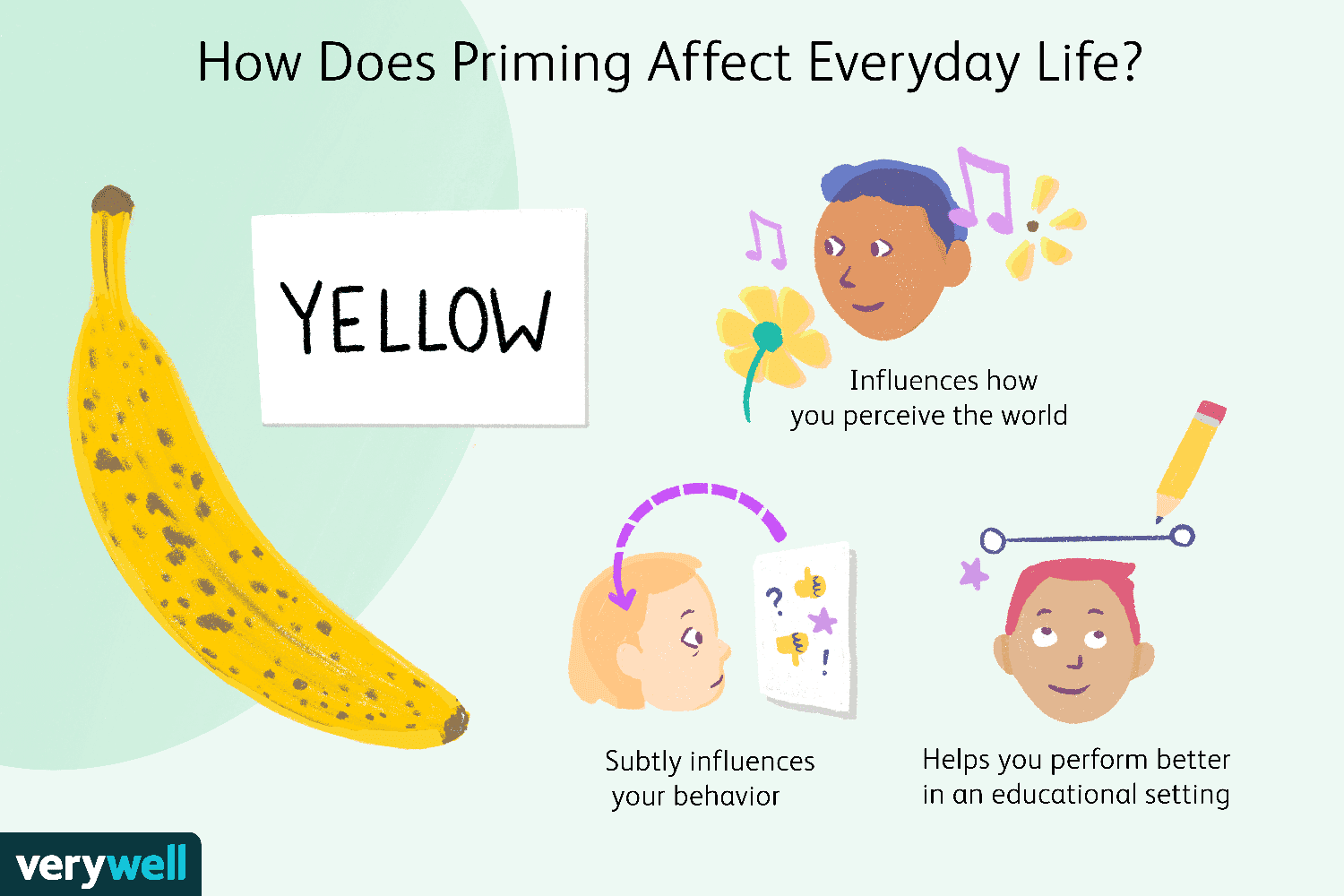
Priming: The fascinating finding that briefly exposing someone to a word (e.g., ’elderly’) could change behavior (e.g., walking slowly) failed to replicate in large-scale experiments, raising skepticism about its existence.Priming
Loss Aversion: Even the strong claim that ’losses hurt twice as much as gains’ has been criticized: the effect may be much weaker or limited to very specific situations.Loss Aversion
Daniel Kahneman himself conceded that some of the studies he cited in “Thinking, Fast and Slow” provided weaker evidence than he initially believed.
This doesn’t mean nudge theory is worthless. But it does warn that the early optimism that certain biases were universal laws enabling万能 nudges must be revised.
Nudge or Boost?
Another fundamental critique comes from the philosophy behind nudges. Nudges are paternalistic in that they assume “humans are irrational, so we should gently push them.” Critics argue that we need ‘boosts’ instead.
A nudge nudges you.
A boost empowers you to make wiser decisions on your own.
Nudges target behavior; boosts target capability.
Example:
Problem: People eat too much unhealthy food.
Nudge approach: Like Google’s cafeteria, place healthy food prominently. (Environmental design)
Boost approach: Teach people how to read and interpret nutrition labels. (Capacity building)
Nudges work in a specific context, whereas boosts help people make better choices across contexts. I personally believe boosting respects autonomy more and is a more fundamental, long-term solution.
Of course, nudges and boosts aren’t mutually exclusive. You can combine them wisely, such as teaching “self-nudging” techniques. Nudge theory has entered a maturing phase: beyond initial enthusiasm, it now faces sober assessment of limits and possibilities.
Conclusion. How Do We Navigate a Nudged World?
From the tiny fly at Amsterdam Schiphol to invisible AI nudges steering us without our knowing — it’s been quite a journey.
Nudge offered an innovative idea: “Humans are irrational, but their irrationality is predictable, so designing environments to help better choices is possible.” It has helped many become healthier and save more.
But we also saw how that powerful tool spawned dark twins: ‘dark patterns’ and ‘sludge.’ Making cancellation a maze and exploiting fake urgency to empty our wallets — all operate on the same psychological foundations as nudges.
In the end, a nudge is a **‘value-neutral tool’**. The direction of its blade depends entirely on the intentions of the choice architect using it. Policy makers, UX designers, and AI engineers carry very heavy responsibilities in this era.
So what do we need to live wisely in this intricately nudged world?
I think it’s probably the ability to ‘consciously slow down.’
In a world designed to constantly tempt and manipulate our fast, intuitive System 1, the most important skill is pausing and waking up the lazy System 2.
And trying to discern the intent hiding behind the choice architecture in front of you by asking this simple but fundamental question:
“Who ultimately benefits from this choice?”
Whether you can ask that question or not will be a key to navigating this refined world wisely.
References
Nudge: The Power to Guide Smart Choices [Yale University Press (Richard H. Thaler, Cass R. Sunstein)]
“AI-integrated services exposed only when renewing subscriptions”… allegations of ‘dark patterns’ [Yonhap News]
Amazon, ‘dark pattern’ lawsuit begins… direct clash with the FTC [Yonhap Infomax]
Subscription inflation and ‘dark patterns’… FTC conducts comprehensive investigation into OTT/platforms [Chosun Biz]
The reality of the replication crisis in science [Seoul National University College of Natural Sciences]
Nudge has become a trend, but scientific evidence is insufficient [NewsPeppermint]
Is the replication crisis real? Overview of Nature’s survey [Editage]
The data manipulation scandal of Professor Dan Ariely [Ph.D. Kim]
[SPR] Nudge has become a trend, but scientific evidence is insufficient [SBS News]
Replication crisis [Wikipedia]
Behavioral Economics Is Dead. Debates on Its Future. [Renascence]
The Death Of Behavioral Economics [The Behavioral Scientist]
Reproducibility: Thinking Fast and Slow [gilesd-j.com]
The Replication Crisis in Economics: A Progress Report [American Journal of Economics and Business Administration]
The Death of Behavioral Economics [LessWrong]
Nudge, Boost, or Design? Limitations of behaviorally informed policy under social interaction [Cowles Foundation for Research in Economics at Yale University]
Nudge or Boost? What’s Best for Changing Behavior [Psychology Today]
Boosting, not nudging, as the key to sustainable behavior change [Max Planck Institute for Human Development]
Nudge, boost, or design? Limitations of behaviorally informed policy under social interaction [PubMed]
Behavioral design and nudges: Unlocking behavior change: The power of nudge [FasterCapital]
Ethical boundaries and regulation of nudge and dark patterns [KDI Economic Information Center]
Design innovation strategy in the AI era [Ministry of SMEs and Startups]
What is AI hyper-personalization? Benefits, case studies, and ethical issues [Unite.AI]
Personalization: Will it smartly enhance or addict iGaming? [SiGMA]
Issues and challenges of introducing AI digital textbooks [National Assembly Research Service]
Legal study on algorithmic nudging [Seoul National University Law Research Institute]
Labor and education in the AI era [Korea Local Tax Research Institute]
Digital nudges, autonomy, and public reason [Institute for Basic Science]