
Exploring his unending resonance that illuminated modern civilization, its light and shadow.
What You Can Gain from This Article
- Understand the full story of the ‘current war’ between Nikola Tesla and Edison.
- Learn the principles behind Tesla’s key inventions (AC system, Tesla coil) that form the foundation of modern technology.
- Follow the journey of a genius inventor’s great successes and tragic failures, and the process of modern reassessment.
The Wizard of Colorado, Nikola Tesla
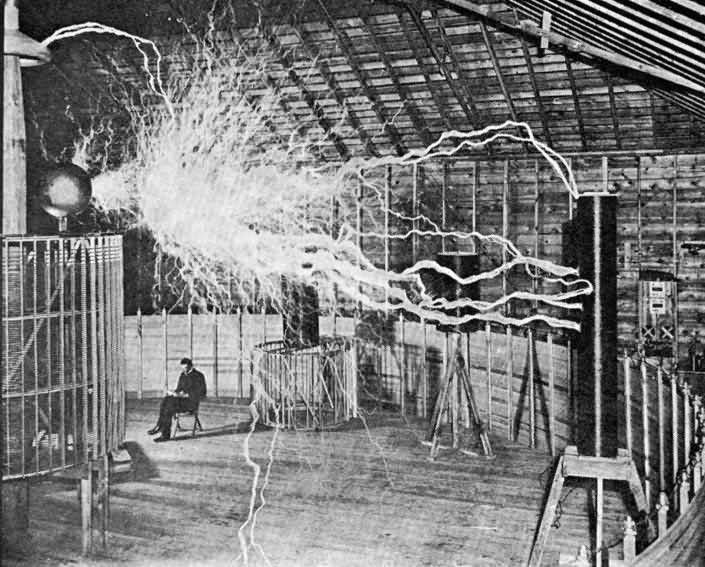
In 1899, in Colorado Springs, Nikola Tesla was dreaming of a grand vision that would change the fate of humanity. His laboratory was a bizarre sight, with a 142-foot tall metal tower piercing the sky. A Dantean warning greeted visitors at the gate: “Abandon all hope, ye who enter here.”
One night, when his massive ‘amplifying transmitter’ was activated, the laboratory transformed into a spectacle of hell and heaven. The machine emitted a thunderous roar like that of an artillery brigade, shooting artificial lightning over 100 feet (about 30 meters) into the night sky. This powerful electrical surge plunged an entire city 10 km away into darkness, symbolizing his life, which recklessly charged toward monumental goals beyond practical limits.
All of this was a meticulously calculated performance to capture the imagination of potential investor J.P. Morgan. His strategy, straddling science and showmanship, painted him as a ‘mad scientist’ or ‘wizard,’ which later contributed to his alienation from both the scientific and financial communities.
I. The Forge of a Pioneer (1856-1882)
Birth Amidst a Thunderstorm and an Extraordinary Childhood
Nikola Tesla was born on July 10, 1856, during a fierce thunderstorm. His father wished for him to become a priest, but he was more influenced by his mother, who had extraordinary creativity and could create mechanical devices from memory.
The death of his brother in childhood and his near-fatal experience with cholera instilled in him immense intellectual ambition and a deep desire to prove himself. Particularly when he contracted cholera, he persuaded his father to send him to engineering school, which ultimately set him on the path to becoming an engineer.
Dazzling Failures and the Path of an Outsider
Upon entering the Graz University of Technology, he was an exemplary student with top grades. It was during this time that he first conceived the idea of the AC (alternating current) system after witnessing the inefficiencies of direct current (DC) generators. However, this innovative idea led to conflicts with professors, and he eventually dropped out without completing his degree due to falling into gambling.
The fact that he never received a formal degree made him an outsider in academia for life. However, this ‘advantage of being an outsider’ became the driving force that allowed him to walk paths no one else could imagine.
Eureka Moment: Rotating Magnetic Field
In 1882, while walking in Budapest Park, he recited Goethe’s ‘Faust’ and was struck by a flash of inspiration. The concept of the ‘rotating magnetic field,’ the core principle of the AC induction motor, appeared in perfect form in his mind. He drew the operating diagram in the sand, marking a historical realization that would herald the true dawn of the modern electrical age.
II. The New World and the Current War (1882-1892)
The Meeting of Nikola Tesla and Edison
In 1884, Tesla crossed over to America and joined Thomas Edison’s company, thanks to a recommendation that stated, “I know two great men, one is you and the other is this young man.”
However, their meeting was fundamentally a clash of different philosophies. Edison was a pragmatist seeking incremental improvements and commercial success, while Tesla was an idealistic scientist searching for the perfect solution in his mind.
Ultimately, when Tesla perfectly solved Edison’s proposal to improve the inefficient DC generator for a reward of $50, Edison remarked, “You don’t understand American humor yet,” breaking his promise. Feeling deeply humiliated, Tesla left the company on the spot.
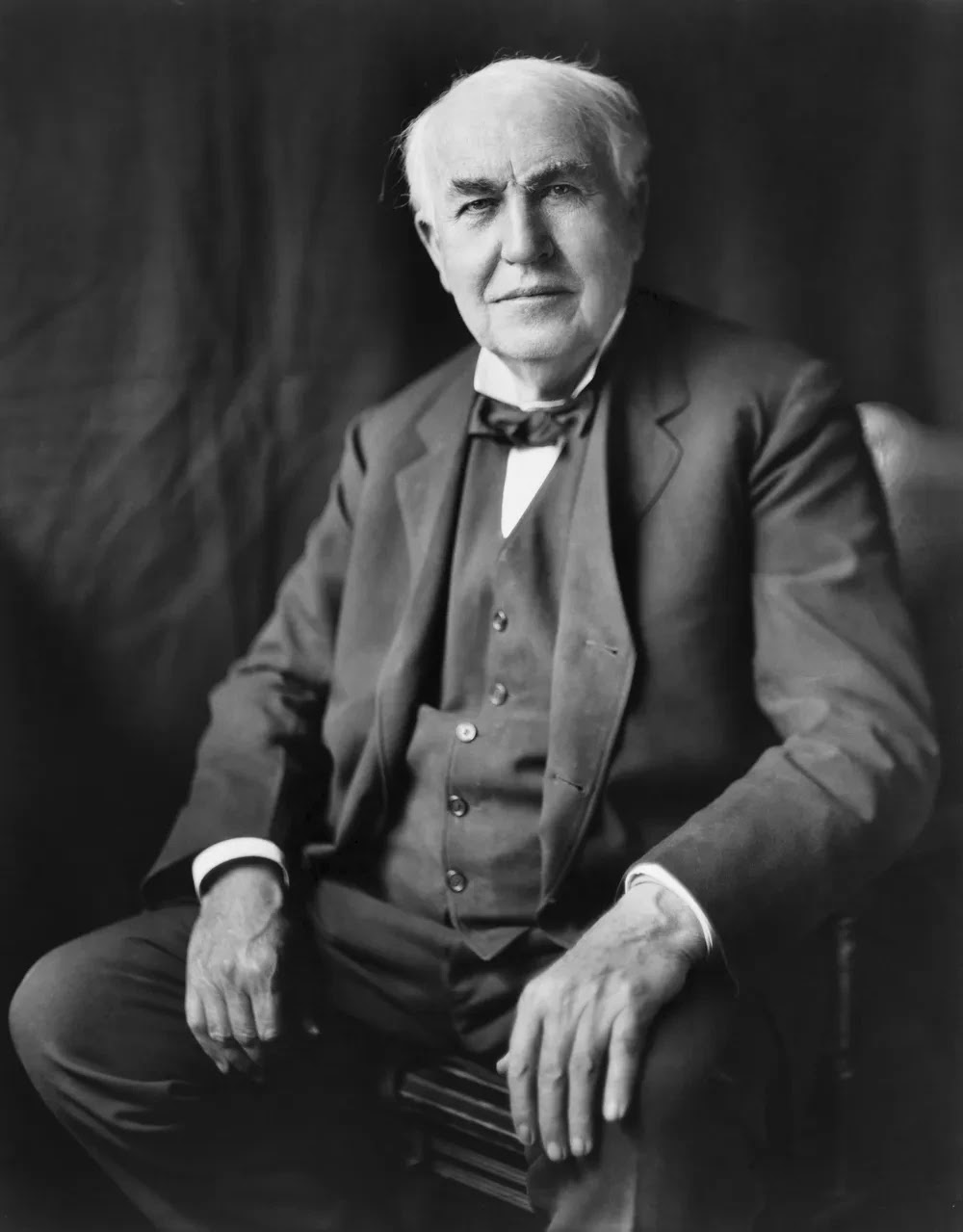
The Current War: DC vs AC
After leaving Edison’s company, Tesla established his own company and demonstrated the superiority of the AC system. Feeling threatened, Edison initiated one of the most malicious corporate propaganda campaigns in history, the ‘current war.’
Edison’s camp sought to instill the perception that alternating current was dangerous by publicly electrocuting animals and even creating the world’s first electric chair using Westinghouse’s AC generator. This was a cunning strategy to engrain the formula ‘AC = death’ in the public’s mind.
[Insight] The collapse of Wardenclyffe was not merely a conflict with investors but an inevitable clash between the 21st-century ideal of ‘free access to information/energy’ and the 20th-century capitalist model of ’exclusive ownership.’ This is a timeless archetype of conflict that can still be seen in today’s open-source movement and net neutrality debates.
| Feature | Direct Current (DC - Edison) | Alternating Current (AC - Tesla/Westinghouse) |
|---|---|---|
| Current Flow | Flows in one direction only (unidirectional) | Periodically changes direction (bidirectional) |
| Voltage Transformation | Difficult and inefficient | Easy and efficient with transformers |
| Transmission Distance | Very short, about 1.5 km | Possible up to hundreds of km |
| Infrastructure | Requires small distributed power plants | Possible with large centralized power plants |
| Safety Perception | Promoted as ‘safe’ | Defamed as ‘deadly’ |
III. The Pinnacle: Nikola Tesla Illuminates the World (1893-1896)
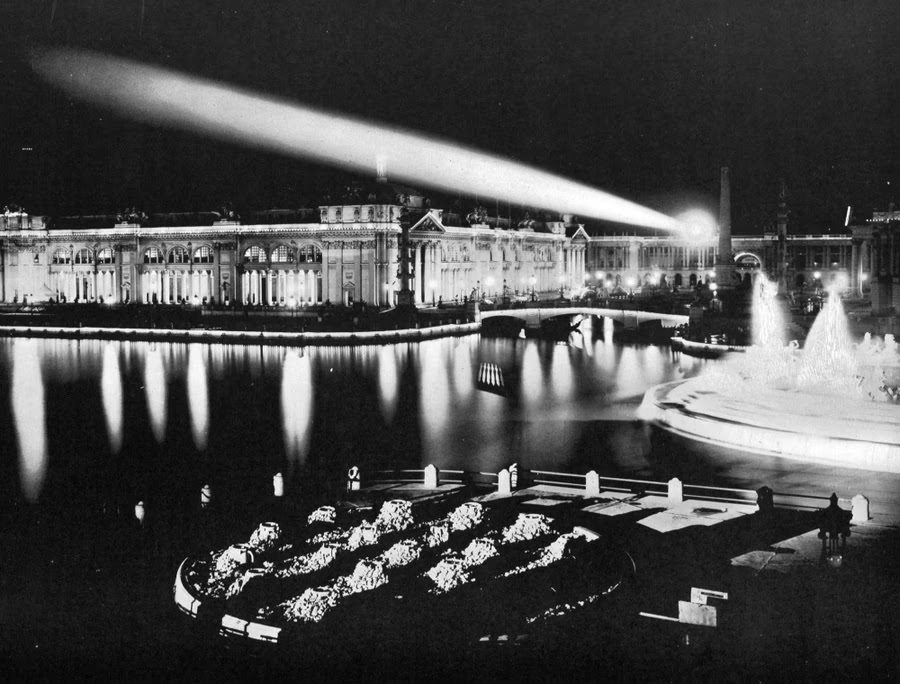
The 1893 Chicago World’s Fair
Inventor George Westinghouse recognized the potential of Tesla’s AC system and formed a historic partnership. The stage of destiny was the 1893 Chicago World’s Fair.
The Westinghouse/Tesla alliance defeated Edison’s GE and secured the lighting contract for the fair. When the president flipped the switch, 100,000 incandescent bulbs illuminated the ‘White City,’ and the safety and scalability of alternating current were proven beyond doubt in front of 27 million spectators.
Taming Niagara
The ultimate victory of the AC system was achieved with the Niagara Falls hydroelectric project. The world’s first large-scale hydroelectric power plant designed by Tesla lit up the city of Buffalo, 32 km away, in 1896, signaling the dawn of the modern power grid era.
Fateful Decision: Ripping Up the Contract
However, behind the victory lay shadows. The current war had brought Westinghouse to the brink of bankruptcy, and bankers demanded that Tesla tear up the contract that granted him substantial royalties as a condition for refinancing.
In a moment of desperation for his partner, Tesla unhesitatingly ripped up the royalty contract that secured his financial future. This noble act preserved the future of the AC system, but ultimately cost him the funding needed to pursue more ambitious projects. The tragedy of dying penniless after creating a system worth trillions of dollars began at this moment.
IV. The Vision of a Wireless World (1891-1900)
Invention of the Tesla Coil
After the victory of the AC system, Nikola Tesla’s focus shifted to wireless communication and power transmission. To this end, in 1891, he created his most iconic invention, the Tesla coil. The Tesla coil is a device that uses electrical ‘resonance’ to amplify voltage to millions of volts, creating spectacular electrical discharges.
He cemented his image as ’the magician of electricity’ with bold demonstrations of high-frequency currents passing through his body during public lectures.
The Dream of Earth Resonance
The core objective of the Colorado Springs experiment was to prove the theory of ‘Earth Resonance.’ He believed that the Earth was a massive conductor, and if energy was injected at a specific frequency, the entire planet would resonate, allowing energy to be received anywhere on Earth.
However, he hastily generalized the success of localized wireless lighting to a principle applicable to the entire Earth and made the error of jumping to unproven theories in engineering by confidently asserting that unknown signals were communications from extraterrestrials.
V. The Grand Failure of Wardenclyffe (1901-1917)
Vision and Collapse of the Global Wireless System
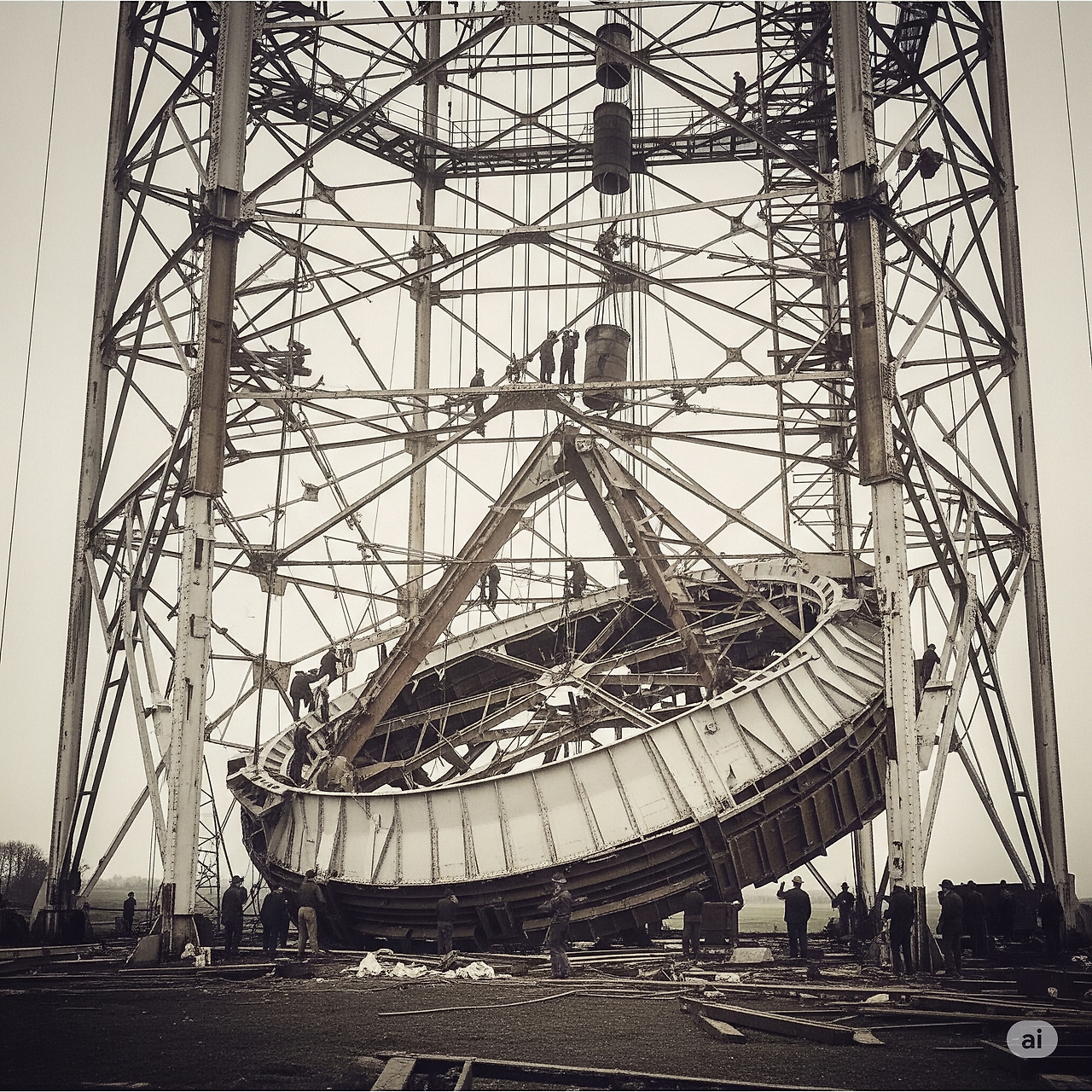
Based on the Colorado experiment, Tesla initiated the Wardenclyffe Tower project to implement a ‘global wireless system.’ He presented wireless communication as the goal to investor J.P. Morgan, but his true aim was to supply power wirelessly and for free to the entire world.
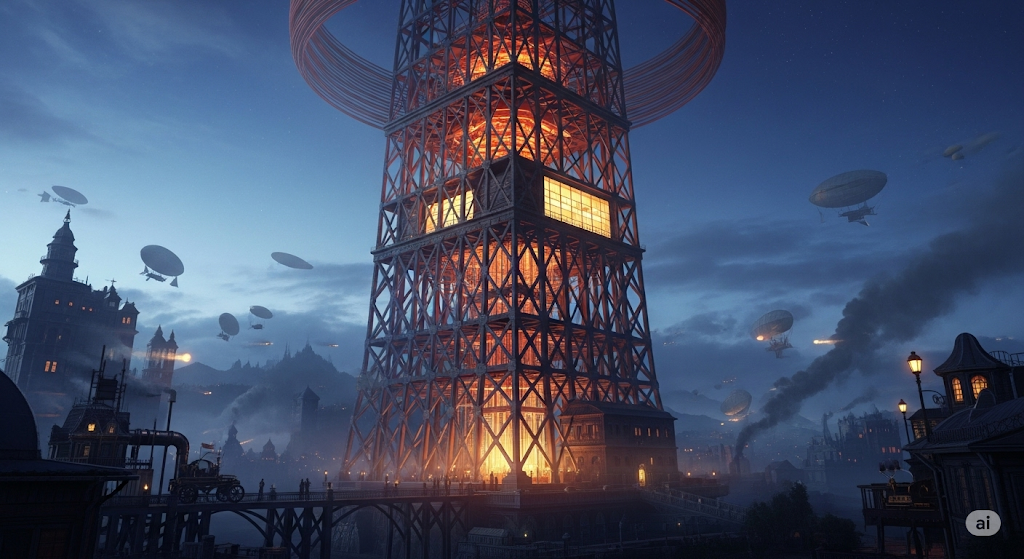
However, in 1901, when Marconi successfully transmitted wireless signals across the Atlantic with simpler equipment, Morgan withdrew his investment. The primary reasons were Tesla’s strategic failure in hiding the ultimate goal of the project from investors and the inability to install meters on power. Ultimately, the tower was sold for scrap in 1917.
| Category | Nikola Tesla (Wardenclyffe) | Guglielmo Marconi |
|---|---|---|
| Underlying Theory | Earth Resonance / Electrical Conduction | Hertzian Waves / Electromagnetic Radiation |
| Main Medium | Earth and Upper Atmosphere | Space (Ether) |
| Main Application | Global Wireless Communication and Power Transmission | Wireless Telegraphy (Point-to-Point Messaging) |
| Commercial Viability | Unproven, Lack of Revenue Model | Proven, Clear Revenue Model |
VI. Fading Light (1917-1943)
A Lonely Old Age and Love for Pigeons
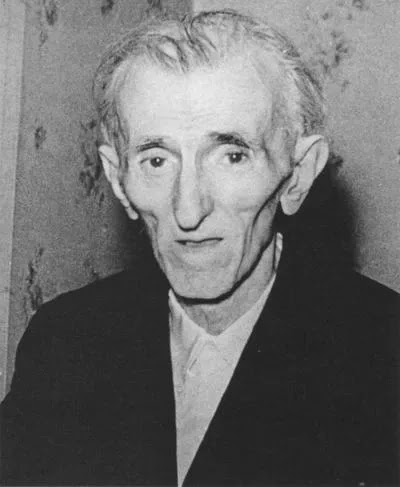
After the failure of Wardenclyffe, Tesla spent his lonely later years moving between hotels in New York. His obsessive-compulsive disorder (OCD) worsened, and he exhibited eccentric behaviors such as an obsession with the number 3 and a fear of germs.
[Personal Reflection] Looking at Tesla’s later years, one is sobered by the realization that even great intellects are not free from the human longing for connection and solitude. He lived a life of celibacy, devoted to inventions for all humanity, yet his final resting place was a single white pigeon, which resonates deeply.
In his profound loneliness, he showed a strong attachment to pigeons, confessing that he fell in love with one particular white pigeon. He said he loved her “as a man loves a woman, and she loved me back.”
One night, when that pigeon flew into his room and died, he claimed to have seen a bright light in her eyes. Tesla interpreted this as a signal that the task of his life was complete. This tragic and poignant end of a genius equated the moment his creative spark extinguished with the death of a symbolic muse.
VII. Death and Resurrection: The Unending Resonance
A Lonely Death and Seized Documents
On January 7, 1943, Nikola Tesla passed away alone at the age of 86 in the New Yorker Hotel. Due to the ongoing World War II, the U.S. government swiftly seized his research materials, particularly documents related to the ‘death ray’ as a national security issue.
John Trump, a prominent engineer at MIT (Donald Trump’s uncle), concluded after analyzing the documents that they had “no military value.” However, the fact that the U.S. Army secretly conducted related research has fueled numerous conspiracy theories about the ’lost files’ to this day.
Modern Resurrection
Posthumously, Tesla was recognized for the priority of radio patents and has made a glamorous resurgence in popular culture today. The electric vehicle company ‘Tesla, Inc.’ named after him has become an icon of innovation, and the Wardenclyffe Tower site is being transformed into the ‘Tesla Science Center’ through online fundraising. This shows that his legacy continues to resonate across time.
Conclusion: A Genius Ahead of His Time, Nikola Tesla
The life of Nikola Tesla resembles an epic where success and failure, light and shadow starkly intersect. His legacy can be summarized in three points.
- Architect of Modern Civilization: The AC power system and induction motor he invented form the foundation of nearly all technologies we use today.
- Timeless Visionary: His ideas on wireless communication, remote control, and wireless energy transmission are becoming reality a century later.
- Tragic Hero of Idealism: He sacrificed his wealth and fame for the advancement of humanity, yet the world did not fully understand or reward his vision.
Nikola Tesla’s resonance will continue not only through the 60Hz frequency flowing through power grids but also in the quest of all those who relentlessly push the boundaries of science for a better world.
What kind of person do you think Nikola Tesla was? Feel free to share your thoughts in the comments!
References
- History Colorado The Wizard in the Mountains
- PBS Tesla - Master of Lightning: Colorado Springs
- The Maverick Observer Eccentric and Electric: Tesla’s Tower of Power in Colorado Springs
- Amusing Planet Nikola Tesla’s Experimental Laboratory in Colorado Springs
- Colorado Springs Pioneers Museum Nikola Tesla - CSPM
- YouTube Nikola Tesla Lightning Experiments - Learn Why He Was Hated
- Colorado Virtual Library Topics in History: Nikola Tesla
- Wikipedia Tesla Experimental Station
- The Public Domain Review Earthen Messages: Nikola Tesla in his Laboratory (ca. 1899)