
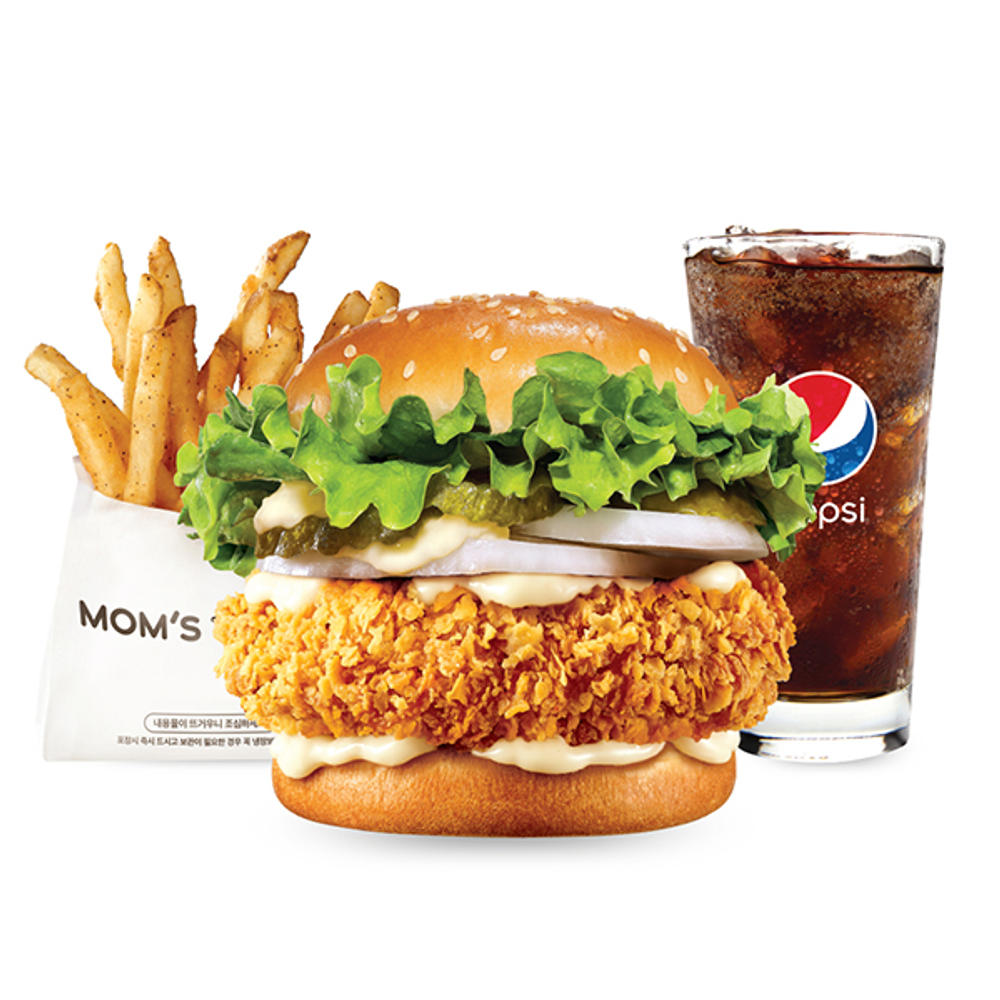
What memories do you have of ‘Mom’s Touch’? Many might recall the hearty sight of the ‘Cyber Burger,’ with its thick chicken patty protruding from the bun. It was the burger that earned the nickname ‘Mouth-Ripping Burger’ for being hard to fit in one bite, known for its great value.
But how did this brand, reminiscent of a warm ‘mother’s touch,’ come to earn the nickname ‘cold stepmother’s touch’? It all begins with a man’s bold challenge, leading to a success story that captivated South Korea, and a drama of betrayal and rebellion at its peak.
1. The Ugly Duckling Comes to Life
The story begins in the late 1990s, in the battleground of fast food where giants like McDonald’s and Lotteria clashed. Under the shadow of the chicken brand ‘Popeyes,’ a small brand named ‘Mom’s Touch’ quietly emerged in 1997.
However, the start was humble. Without support from the headquarters or public interest, it was accumulating an annual deficit of 500 million won, becoming a ‘burden’ to everyone. At that time, a man who recognized the potential of this ugly duckling appeared. He was Jung Hyun-sik, an ordinary salaried executive.
In 2004, when the company planned to wind down the Mom’s Touch business, he made a surprising proposal: “I will take over the business.” Remarkably, instead of paying money, he took over Mom’s Touch under the condition of assuming the brand’s debt of 300 million won. This was the moment when a man left his stable position to gamble everything on a failed project.
2. The Value Revolution of the ‘Mouth-Ripping Burger’
Chairman Jung Hyun-sik’s challenge was arduous. He had to pass through a dark tunnel where he never recorded a profit for seven years. However, during this time of endurance, Mom’s Touch was honing powerful weapons to shake the market.
# The Miracle of the Cyber Burger
In 2005, the ‘Cyber Burger’ was born, changing the fate of Mom’s Touch. The thick patty made from whole chicken thigh was truly shocking. Consumers affectionately nicknamed it ‘Mouth-Ripping Burger’ for its size, saying it was “so big it could rip your mouth,” and called it ‘Concept Burger’ for its reasonable price.
# The Aesthetics of Slowness: ‘Slow Food’
Though a fast-food chain, Mom’s Touch adopted a ‘slow’ strategy, starting to cook only after receiving an order. This wait was a promise to serve warm and fresh food like ‘home-cooked meals from mom,’ creating a quality difference that was incomparable to other brands.

# Dominating the Alleys
Instead of expensive central shopping areas, the strategy of penetrating university and residential alleys was a masterstroke. It lowered the initial startup costs and rental burdens, allowing franchisees to earn more money. Thanks to this strategy, Mom’s Touch achieved sales per area that overwhelmed Burger King and Lotteria.
At the core of all this was Chairman Jung Hyun-sik’s philosophy of ‘coexistence’ (相生), which stated that “if franchisees make money, the headquarters survives.” This sincerity earned deep trust from franchisees and became a solid foundation for building the Mom’s Touch empire.
3. Betrayal at the Top: The 200 Billion Won Question
In 2019, Mom’s Touch, boasting over 1,200 franchises, was at its peak. Just when everyone believed this success would continue, shocking news broke. Founder Chairman Jung Hyun-sik sold most of his shares to a private equity fund for about 200 billion won.
Chairman Jung stated, “This is a decision for a greater leap,” and said, “It is better to entrust it to professional managers than to pass it on to my children.” On the surface, it seemed like a beautiful exit.
However, internally, fear and feelings of betrayal boiled over. The arrival of the private equity fund, which did not hesitate to restructure for profit maximization, meant job insecurity for employees and the end of the ‘coexistence’ philosophy for the franchisees who built the empire together. It was the moment when the tightly-knit ‘Mom’s Touch Family’ shattered.
4. The Mother is Gone, and the Stepmother Has Arrived
With a new owner, Mom’s Touch became a completely different company. The place of ‘coexistence’ and ‘value for money’ was taken by ‘profit maximization’ and ’efficiency.’
| Feature | Founder Era (Mom’s Touch) | Private Equity Era (Stepmother Touch) |
|---|---|---|
| Core Philosophy | ‘Coexistence’ growing with franchisees | ‘Profit maximization’ for resale |
| Pricing Strategy | ‘Price freeze’ to maintain value for money | ‘Frequent price increases’ to boost profits |
| Franchisee Relationship | ‘Partners’ sharing profits | ‘Vertical relationship’ shifting costs |
Popular menu items were discontinued due to low efficiency, and the price of the Cyber Burger, once a symbol of value for money, soared by 35% in just three years. The affectionate nickname ‘Mom’s Touch’ turned into the cold mockery of ‘Stepmother Touch.’ While the company’s profits skyrocketed, it was essentially bought at the cost of consumer trust and affection.
5. A Franchisee’s Lonely Fight
The pursuit of profit by the headquarters directly harmed franchisees. The headquarters began unilaterally raising the supply price of the key ingredient, the Cyber Burger patty, without consulting the franchisees.
In response to this injustice, Hwang Seong-gu, the franchisee of the Sangdo Station branch in Seoul, raised his voice. He gathered scattered franchisees to form the ‘National Mom’s Touch Franchisee Council’ and began to respond collectively to the headquarters.

The headquarters’ response was not dialogue but oppression. They sued Hwang, threatened him, and ultimately took the extreme measure of terminating his franchise agreement by cutting off supplies to his store.
However, Hwang did not give up. After his persistent struggle, in 2024, the Fair Trade Commission finally sided with the franchisees. They deemed the headquarters’ ‘abuse of power’ a clear violation and imposed a fine of 300 million won. This was a valuable victory achieved by an individual’s resistance in a tragedy where the founder’s spirit of ‘coexistence’ clashed head-on with the private equity fund’s profit logic.
6. The Empire with Two Faces: Lingering Questions
While suffering from ‘abuse of power’ controversies domestically, ironically, Mom’s Touch achieved dazzling success overseas. Particularly, the pop-up store opened in Shibuya, Tokyo in 2023 drew long lines daily, marking a ‘hit.’ Japanese media referred to Mom’s Touch as the ‘black ship from Korea,’ highlighting its power.
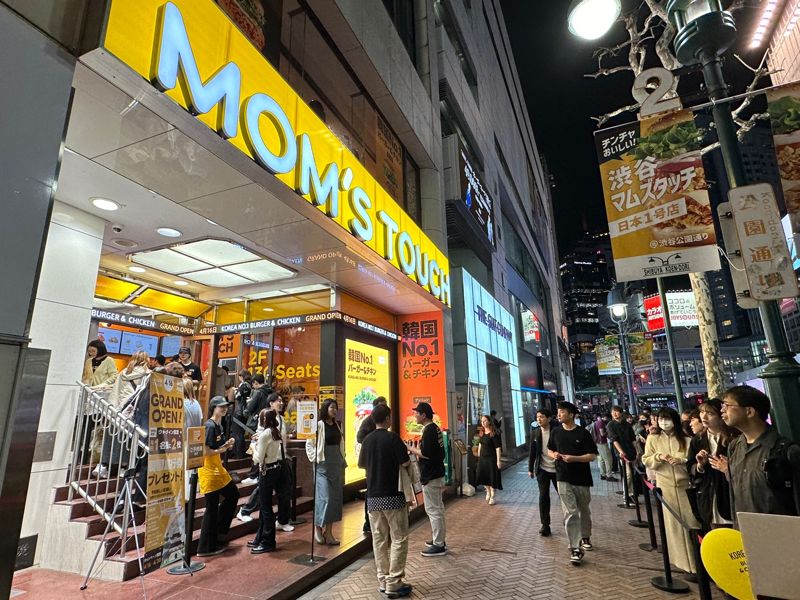
Currently, Mom’s Touch has two faces. It is a successful icon of K-food overseas, but domestically, it exists as a brand with a complex inner struggle to recover trust after past wounds.
From ‘mother’s touch’ to ‘value burger,’ and now to ‘stepmother touch.’ The history of Mom’s Touch is encapsulated in the way its name has been called. This story may be a fable of our times, showing how precious values can be distorted in the face of capital’s logic.
Now, one final question remains for Mom’s Touch. Can the ‘stepmother’ regain the warm ‘mother’s touch’? Or has that special magic, which captivated a generation’s taste, now vanished forever? The answer will depend on the path Mom’s Touch chooses to take in the future.