
How can we think, be deceived, and reach better conclusions?
- We will understand the three core reasoning tools (deduction, induction, abduction) contained in our mental ’toolbox'.
- We will learn through specific examples how heuristics and cognitive biases deceive our judgments.
- We will gain practical training methods to develop our thinking skills that can be applied in everyday life.
What is my brain detective doing every day?
“My friend seems quiet today, is something wrong?” “Did I eat something bad yesterday? My stomach feels a bit off.” From the moment we wake up in the morning until we fall asleep, we constantly think, judge, and draw conclusions. Facing more than 150 choices a day, our brains strive to connect scattered pieces of information to understand the world.
This mental activity of deriving new conclusions based on given information is called ‘reasoning’. But how does our brain accomplish this process accurately? This article unfolds the map of thoughts in our minds, exploring the amazing tools hidden within, the shortcuts that save us time, and sometimes the dangerous paths that lead us into traps.
The Toolbox of Thought: Three Core Methods of Reasoning
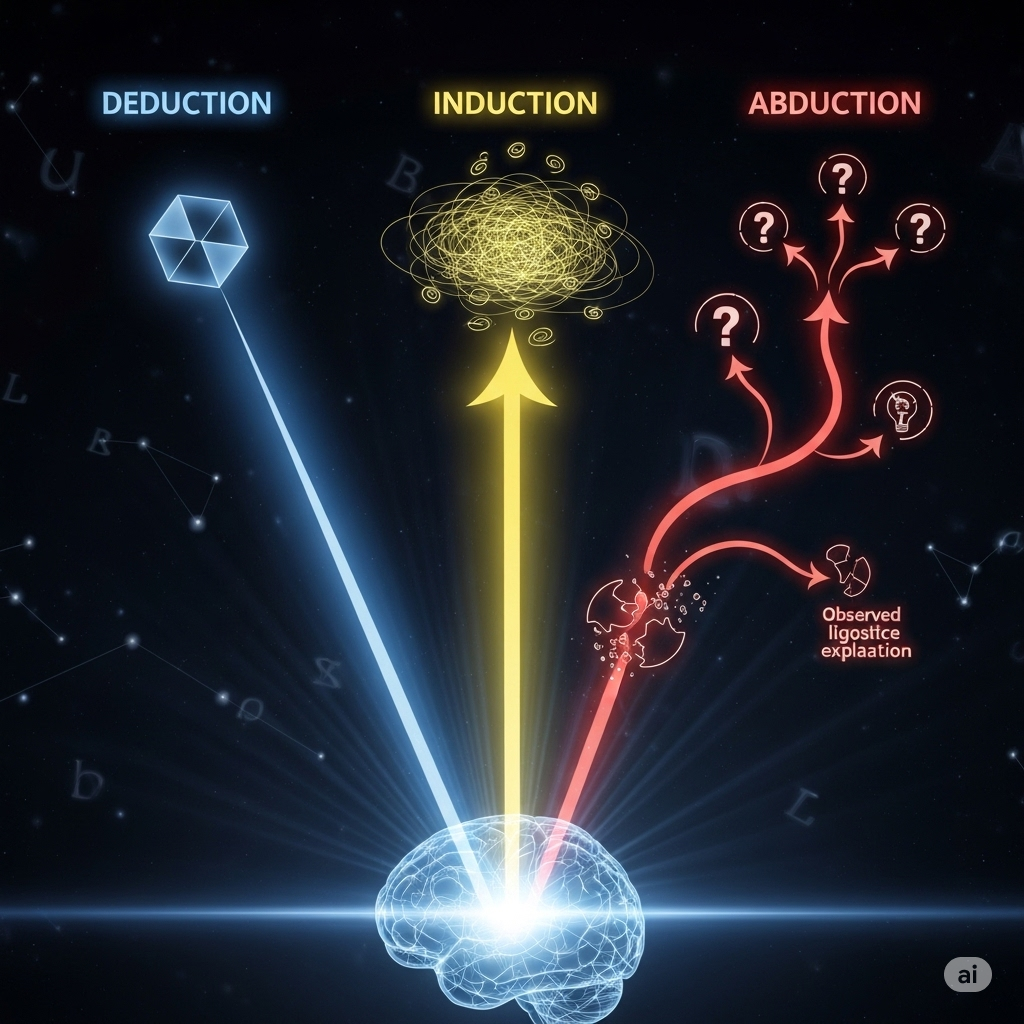
In our minds, there is a ’toolbox’ filled with powerful tools for understanding the world. Logicians categorize these tools into three main types: deduction, induction, and abduction. These terms may sound unfamiliar, but in fact, we are already using these tools skillfully in our daily lives.
Thinking Like Sherlock Holmes: Deductive Reasoning
Deductive reasoning is the most certain and logical thinking tool. It starts from a general rule (major premise) that has already been proven and applies it to a specific situation to derive a conclusion that must be true. If the premise is true, the conclusion is guaranteed 100%.
- Rule: All humans die.
- Example: Socrates is a human.
- Conclusion: Therefore, Socrates will die.
Deductive reasoning is very powerful when deriving logical conclusions within clear rules, such as in legal interpretation or computer programming. However, it has the limitation of only clarifying facts already included in the premise, not creating entirely new knowledge.
Thinking Like a Scientist: Inductive Reasoning
Inductive reasoning is the opposite of deduction, a ‘bottom-up’ approach. It gathers multiple specific cases or observations to derive general principles or laws hidden within.
- Case 1: The pasta I had at this restaurant was really delicious.
- Case 2: My friend says the pizza was excellent too.
- Case 3: Most online reviews are positive.
- Generalization: Therefore, this restaurant is likely a good place to eat.
The conclusions of induction are not 100% certain but are based on probabilities of ‘it is likely to be so’. It allows us to create new theories and predict the future, but it has the weakness that even a single counterexample can shake the conclusion.
Thinking Like a Doctor: Abductive Reasoning
Abductive reasoning is a method of reasoning that seeks to find the ‘most plausible explanation’ or ‘best hypothesis’ based on limited clues. It is similar to the process of diagnosis by a detective or a doctor, inferring the cause from the observed effects.
For example, if you come home to find the trash can overturned and the floor messy, you might hypothesize, ‘It was probably my dog.’ This is abductive reasoning, which plays an important role in providing creative hypotheses that serve as starting points for problem-solving.
Are Heuristics, the Shortcuts of Thought, Really Safe?
In the flood of information and choices we face every day, our brains use clever ‘shortcuts of thought’, known in psychology as heuristics. While they are very useful tools, they can sometimes lead us astray.
Why are we more afraid of airplanes than cars?: Availability Heuristic
Availability heuristic is the tendency to judge the frequency or likelihood of an event based on how easily examples come to mind.
Statistically, the death rate from car accidents is much higher, yet many people fear flying more. This is because airplane crashes are heavily reported in the media, leaving a strong impression on our minds. Thus, easily ‘available’ information from memory greatly influences our perception of risk.
The Illusion of ‘Just Knowing’: Representativeness Heuristic
Representativeness heuristic is the tendency to judge the probability of an object belonging to a specific group based on how much it fits our ‘stereotype’ of that group.
When we see a person in a white coat and glasses, we easily assume they are a ‘doctor’ or ‘scientist’ because their appearance evokes our typical image of a ‘scientist’. This heuristic is the root of many social biases and misunderstandings.
Is First Impressions Everything? The Secret of Price Tags: Anchoring Effect
The anchoring effect is the phenomenon where, when making decisions, we rely too heavily on the first piece of information (anchor) we encounter, causing our thoughts to revolve only around that.

When we see a price tag that says ‘Regular price 100,000 won → Discounted price 50,000 won’, 50,000 won feels cheap. This is because the initial information of ‘100,000 won’ serves as an anchor, raising our judgment standard. This principle is widely used in everything from salary negotiations to marketing.
The Traps of Thought: The World of Cognitive Biases We Fall Into Unknowingly
When heuristics malfunction, we fall into systematic traps of thinking known as cognitive biases. These are not mere mistakes but arise from the structural characteristics of our brains.
- Confirmation Bias: The tendency to see only what we want to see and believe only what we want to believe. A typical example is consuming news that aligns with our opinions.
- Hindsight Bias: The “I knew it all along!” effect. It makes it difficult to learn from failures by thinking retrospectively as if we predicted the outcome from the beginning.
- Overconfidence Bias: The tendency to overestimate our judgments or abilities. This is a trap that experts are particularly prone to.
- Bandwagon Effect: The tendency to follow along because “everyone else is doing it”. This psychology operates behind trends or bubbles in investment markets.
- Groupthink: The phenomenon where pressure for group harmony prevents critical opinions from being voiced, leading to irrational decisions.
These biases do not act in isolation but trigger a chain reaction. For example, due to availability heuristic, we remember negative news about a specific group better, and because of confirmation bias, we only seek out related negative information. This information becomes an anchor, shaping our overall impression, and if those around us think similarly, we fall into overconfidence bias due to the bandwagon effect.
Building Thinking Muscles: Training for Better Reasoning
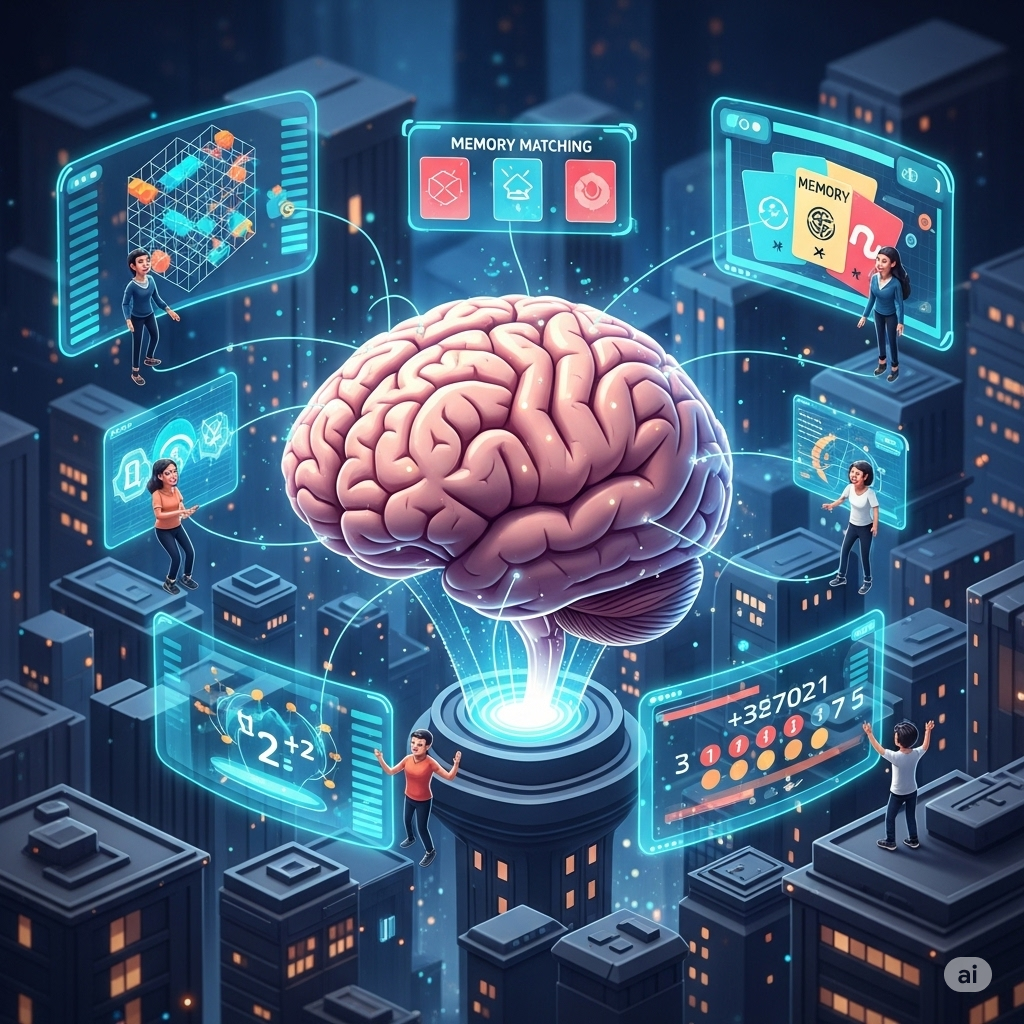
Better reasoning skills are not innate but can be developed through conscious practice. The key is to slow down the speed of fast, intuitive thinking (System 1) and activate careful, logical thinking (System 2).
When making important decisions, I have developed the habit of intentionally asking myself, ‘What if I am wrong, what could be the reason?’ This small question has greatly helped me escape the trap of confirmation bias and gain a more objective perspective.
Comparison: A Quick Look at the Three Methods of Reasoning
| Reasoning Method | Direction | Key Question | Certainty of Conclusion |
|---|---|---|---|
| Deduction | Top-Down (General → Specific) | “Does this rule apply here?” | Guaranteed |
| Induction | Bottom-Up (Specific → General) | “What patterns are visible in these observations?” | Probabilistic |
| Abduction | Best Guess (Result → Cause) | “What is the most plausible cause for this phenomenon?” | Plausibility |
Checklist: Everyday Training for Better Reasoning
-
Improve the Quality of Information:
- Read widely across various fields of books and articles.
- Deliberately seek out writings that present opposing viewpoints to your own. (To prevent confirmation bias)
- Make it a habit to always verify the reliability of information sources.
-
Externalize Your Thoughts:
- Ask ‘Why?’ five times to find the root cause of a problem.
- Write down your thoughts. This clarifies the logical flow.
- Explain your thoughts to someone else. This can help you discover logical gaps.
-
Practice Logic in Daily Life:
- Practice distinguishing between ‘facts’ and ‘opinions’ when encountering information.
- Enjoy logic games like Sudoku or chess.
- Consider your strong beliefs as hypotheses that need verification, not as ’truths’.
Conclusion
We have explored how our brains understand the world through the map of thought.
- Key Point 1: We use three powerful reasoning tools: deduction, induction, and abduction to draw logical conclusions.
- Key Point 2: The shortcut of thought called heuristics is fast but can lead us into systematic traps known as cognitive biases.
- Key Point 3: Better reasoning skills are not innate but can be sufficiently improved through conscious training and practice.
This is not a destination to reach but a process of continuous practice throughout our lives. How about picking one thing from the checklist and practicing it for a week starting today? Thus, you can begin the enjoyable journey of cognitive self-growth.