
Not a single coffee tree grows in this land. The climate is simply not right. Yet, the number of cafes in this country has surpassed 100,000—nearly double the total number of outlets across the four major convenience store brands. As of 2025, with over 2,000 locations, Starbucks has more stores here than anywhere else except for the U.S. and China, having surpassed Japan for the first time. The average citizen drinks 405 cups of coffee per year, 2.7 times the global average.
How did this happen in a land where not a single coffee bean is harvested? It is often explained this way: as Starbucks entered the market, people began to yearn for Western cafe culture, and that taste naturally matured into a specialty coffee market. That is only half the truth. The people who actually created Korean specialty coffee didn’t particularly like Starbucks. They were the ones at the opposite end of the spectrum—right in the middle of an era where cream and sugar were the standard—stubbornly brewing bitter coffee that no one else wanted.
Have you ever thought about where the coffee you drank today came from? Behind a 4,500-won Americano lies the origin, the roasting method, and the judgment of the people who set that price. Opening a cafe is still considered one of the easiest sectors to enter for self-employment. Consequently, tens of thousands of shops open every year, and just as many close quietly. Once you know the stories of the three people who designed this entire industry, what you see when you stand in front of the next cafe door will look a little different.
Invasive Species in the Gaps
In ecology, there is a concept called ‘adaptive radiation.’ It is a phenomenon where a species enters an empty habitat and, in a much shorter time than in its original home, explodes into a variety of forms. When a species encounters an empty niche with no natural predators or competitors, it evolves more extremely than it did in its place of origin.
If we look at the history of Korean coffee through this framework, a strange picture falls into place. In 1976, Dongsuh Foods released the world’s first coffee mix, containing coffee, creamer, and sugar in a single packet. This invention, born to match the speed of the industrialization era, tamed the palate of an entire generation. Coffee was not a beverage to be enjoyed, but a ritual to be ‘mixed,’ and the standard for taste was not aroma, but sweetness and warmth.
Yet, this standardization paradoxically created an empty niche. Because the very sense of the acidity and aroma inherent in coffee beans did not exist in society at all, there were no competitors when that sensation first arrived. When Starbucks landed in front of Ewha Womans University in 1999, it first occupied the niche of ‘space.’ When specialty coffee, which digs into the subtle differences of the beans themselves, followed, this country began to split and multiply at an extreme speed, like an invasive species dropped onto a deserted island.
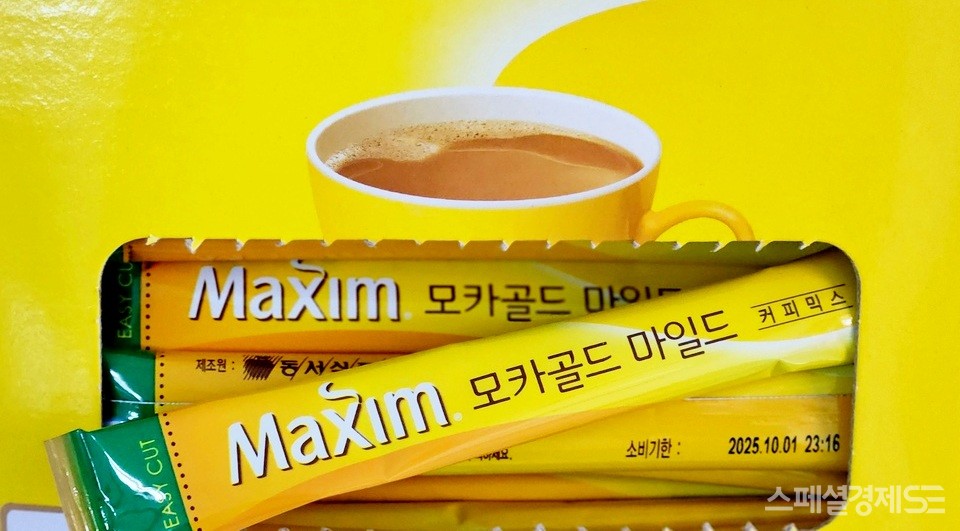
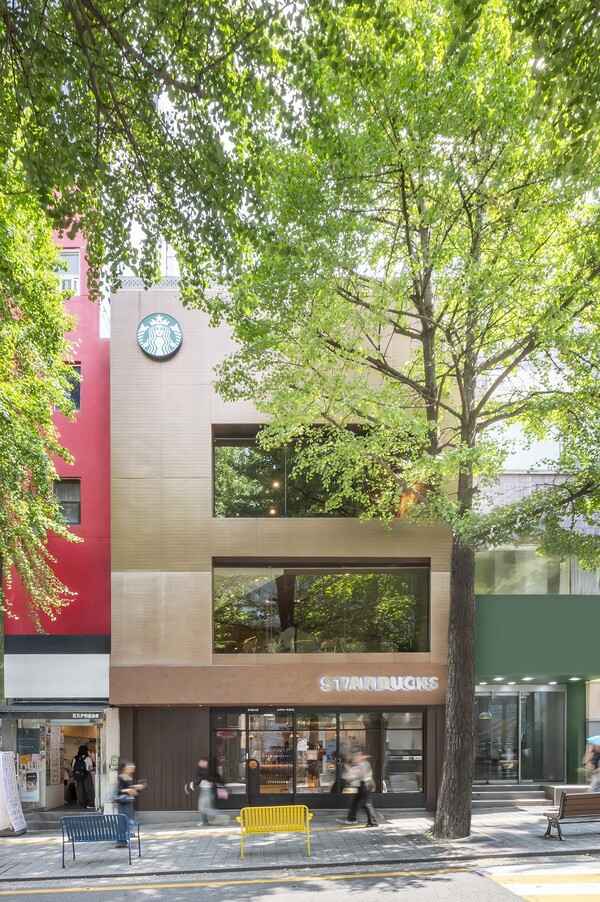
When we look at the speed in numbers, the scale of this compression is revealed. It took over half a century in the U.S. to move from Folgers-style mass production to the emergence of Starbucks (1971), and nearly thirty more years for specialty coffee to take off. It was a journey of nearly a century. In Korea, it took 23 years from coffee mix (1976) to the landing of Starbucks (1999), and another decade or so for specialty coffee to spread to alleys across the country. The same journey was completed in less than half a century, twice as fast.
Within this compressed strata, there are the stories of three people.
Hands That Left the Ranch
In 1974, twenty-four-year-old Zainichi Korean youth Park Lee-chu stepped onto Korean soil with dreams of a cooperative farm. He raised dairy cows between Pocheon and Wonju, but the farm collapsed due to land ownership issues. He fled back to Japan, where he happened to start learning about coffee at a tea house.
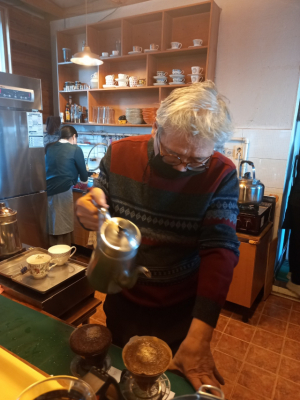
In 1988, in Seoul’s Hyehwa-dong, when the sweet smell of vending machine coffee vibrated through every street, Park Lee-chu hung a small sign that read ‘Bohemian Coffee.’ Without cream or sugar, he served strong coffee, roasted and brewed by hand. His cafe soon became the only place in the city selling a ‘different taste.’
Success could not keep him in one place. Every time the crowds became overwhelming, he moved. He went through Anam-dong to Pyeongchang, and then to Gangneung. Now, at a spot overlooking the sea in Sacheon, Gangneung, he roasts beans every dawn and brews coffee without hesitation whenever an order comes in. The taste of coffee is different every day, and that is like a person’s life is what he says most often. To him, coffee was something without a single correct answer, just like our lives.
The Historian Searching for a Face
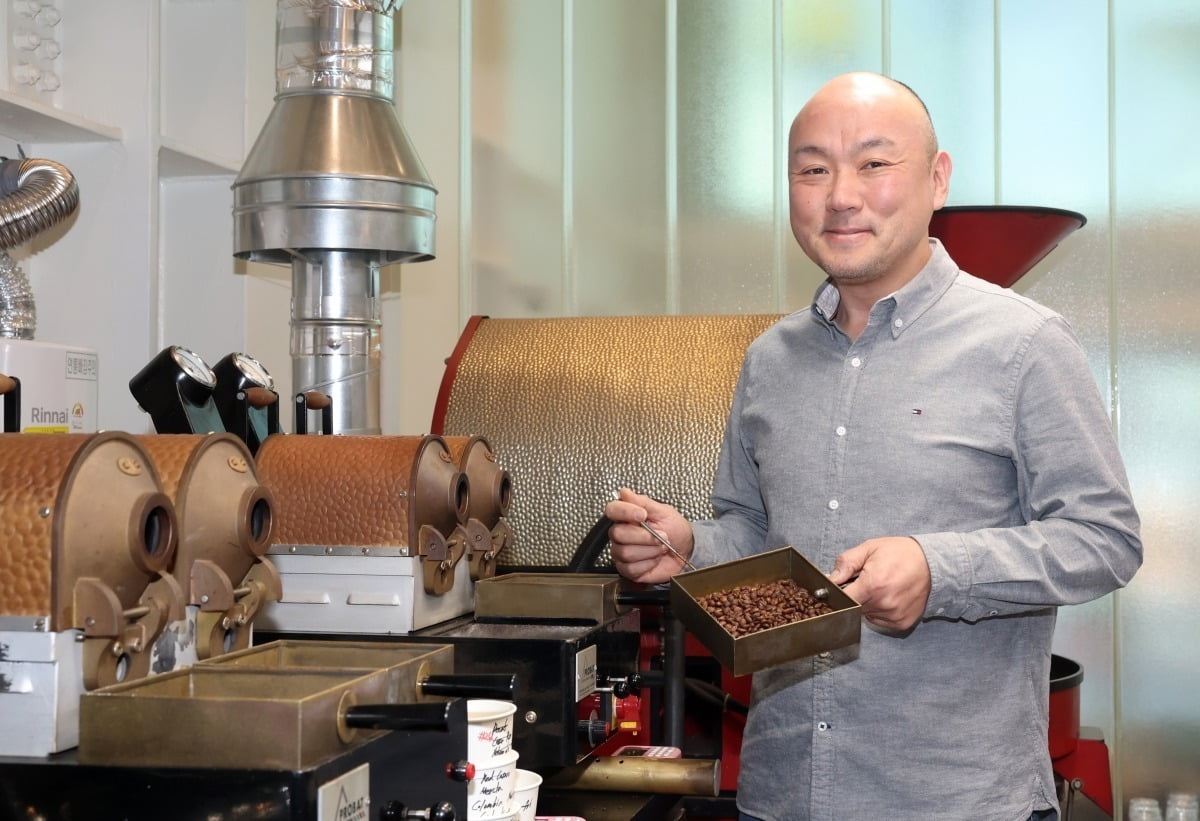
For Seo Pil-hoon, who studied Western history at Korea University and Russian women’s history in graduate school, the laboratory felt stifling. He had only started learning the trade at the cafe ‘Bohemian’ in front of the school, but he was completely captivated by coffee there.
His questions were different. While most baristas asked, ‘How can I brew this to taste better?’, he asked, ‘Who grew this bean, and where?’ It was the habit of a historian. In 2007, he became the first in the country to earn a Q-Grader certification, and he began traveling to farms in Central and South America and Africa with a backpack.
In 2009, ‘Coffee Libre’ opened in a small workshop with a monthly rent of 300,000 won in the alley of Dongjin Market in Yeonnam-dong, Seoul. The startup capital was 50 million won—money he had saved for five years, plus the deposit for his studio apartment provided by his parents. Today, this company trades directly with over 250 farms in 15 countries. A trading method that gives faces back to farmers who were disappearing without names—what he built wasn’t just a cafe.
The Banker’s Stubbornness, Coffee as an Industry
When the IMF financial crisis hit, Kim Yong-duk was in his 21st year as a bank employee. At thirty-nine, he took early retirement. He attended art school and opened a tonkatsu restaurant. The study he began because he was bothered by the taste of the coffee served for dessert completely changed his life.
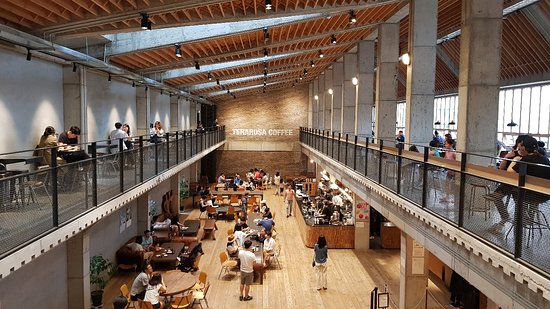
In 2002, he opened his first store in a secluded area on the outskirts of Gangneung. People around him predicted failure due to his choice of location, which ignored commercial viability. In fact, for four years, there were more days without customers than with. But he saw coffee not as a ‘cup,’ but as an ‘industry.’ He traveled to origins around the world to trade beans directly and personally designed a space filled with art and high-end furniture. Terarosa thus became a cafe that is a destination in itself.
With annual sales in the tens of billions of won and over thirty locations nationwide, the late-blooming barista who was once a banker elevated specialty coffee to the level of an ‘industry.’ Gangneung’s Anmok Beach was once a roadside where people bought coffee from vending machines, but it has now become a city of coffee festivals drawing 200,000 people every year.
Questions Inherited by Generations
On the soil where Park Lee-chu cultivated the ‘soul’ of coffee, Seo Pil-hoon the ‘face,’ and Kim Yong-duk the ‘scale,’ a new generation rewrote specialty coffee in their own way. In the 2010s, unique small-scale roasteries began opening across the country, from Hongdae and Yeonnam-dong to Jeonpo-dong in Busan and small villages in Jeju.
Consumers grew along with them. Now, they don’t just stop at distinguishing between ‘bitter coffee’ and ‘sour coffee.’ They discuss the differences in processing methods like washed and natural, and memorize the names of varieties like Geisha and Pink Bourbon. The emergence of a consumer base with a delicate palate was the most solid foundation that allowed this market to continue to grow.
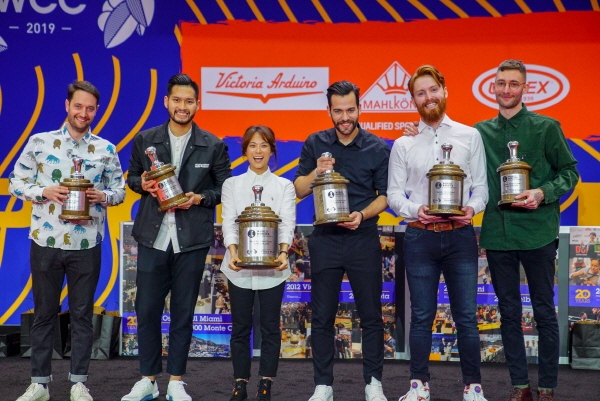
In 2019, at the World Barista Championship (WBC) finals in Boston, USA, Barista Jeon Ju-yeon of Momos Coffee in Busan was named the final winner. On a stage where representatives from 55 countries competed, she became the first Korean winner, beating out representatives from Canada, Germany, and Switzerland. She was also recognized as the first Asian woman to do so. What she emphasized in her winning performance was the relationship of trust with farmers and the value of mutual growth. It was a moment where Park Lee-chu’s human-centric philosophy and Seo Pil-hoon’s ethical trading method met again in a single cup of coffee.
Again, When the Gate of Capital Opens
However, in April 2026, Kim Yong-duk sold all his remaining shares.
The founder who led for 23 years stepped down, and the system changed to one with professional management where private equity firms hold most of the shares.
That stubbornness that opened the first store in the countryside ignoring commercial areas, Park Lee-chu’s philosophy that ‘people come before coffee,’ and Seo Pil-hoon’s belief in searching for ‘coffee with a face’—the industry created by all of this was ultimately completed in the most familiar way. In a way where capital absorbs scale.
This is not just the story of Terarosa. The number of coffee shops nationwide, which was about 50,000 in 2016, surpassed 100,000 in 2022. It doubled in six years. There are 886 coffee brands—more than chicken brands. A significant number of the people who flocked to the industry because it is easy to start with small capital quietly close their doors within a few years. This niche, which started as a form of resistance, has now itself become another stage for ‘hurry, hurry.’
The way Park Lee-chu quietly brews coffee in Gangneung and the way 886 brands compete with each other actually come from the same root. The power to push something to the extreme once you are hooked. That power created the world’s first coffee mix, spread specialty coffee at the fastest speed in the world, and now is pushing the industry itself to the brink of saturation.
Still, no coffee trees grow in this land. Yet, every day somewhere a new cafe opens, and every day somewhere else a cafe quietly takes down its sign. Where does the cup of coffee in your hand today stand in that cycle? Is it the cup Park Lee-chu is still brewing today by the Gangneung sea, is it the cup containing the face of a farmer Seo Pil-hoon found a name for, or is it the cup from a neighborhood cafe that might disappear in ten months? The answer is not fixed. However, the moment we lift this cup, we are already standing somewhere in that cycle.
References
- Kyunghyang Shinmun, Barista Jeon Ju-yeon becomes the first Korean to win WBC (2019)
- Wikipedia, Bohemian Park Lee-chu Coffee
- Korea Economic Daily, Interview with Seo Pil-hoon, CEO of Coffee Libre, Korea's first Q-Grader
- Top Daily, Introduction to Seo Pil-hoon, CEO of Coffee Libre
- Asia Business Daily, Kim Yong-duk sells all shares of Terarosa (2026)
- Seoul Shinmun/KBS God of Business, Success story of Terarosa CEO Kim Yong-duk
- Women's News, From Gangneung to the World: Terarosa's K-Coffee Story
- Money Today, South Korea ranks 3rd in Starbucks stores worldwide
- MBC News, South Korea's Starbucks surpasses Japan for the first time
- Sisa World, Comprehensive analysis of Starbucks in Korea (Coffee consumption per capita)
- MBC News, Number of coffee shops nationwide surpasses 100,000
- No Cut News, Statistics on coffee shops nationwide surpassing 100,000
- Ajou Business Daily, Coffee Republic coffee shop statistics
- Gyeongnam Shinmun, Interview with Barista Jeon Ju-yeon
- Black Water Issue, Review of 2019 WBC Barista Jeon Ju-yeon's performance