
From the Age of Speed to the Age of Stories
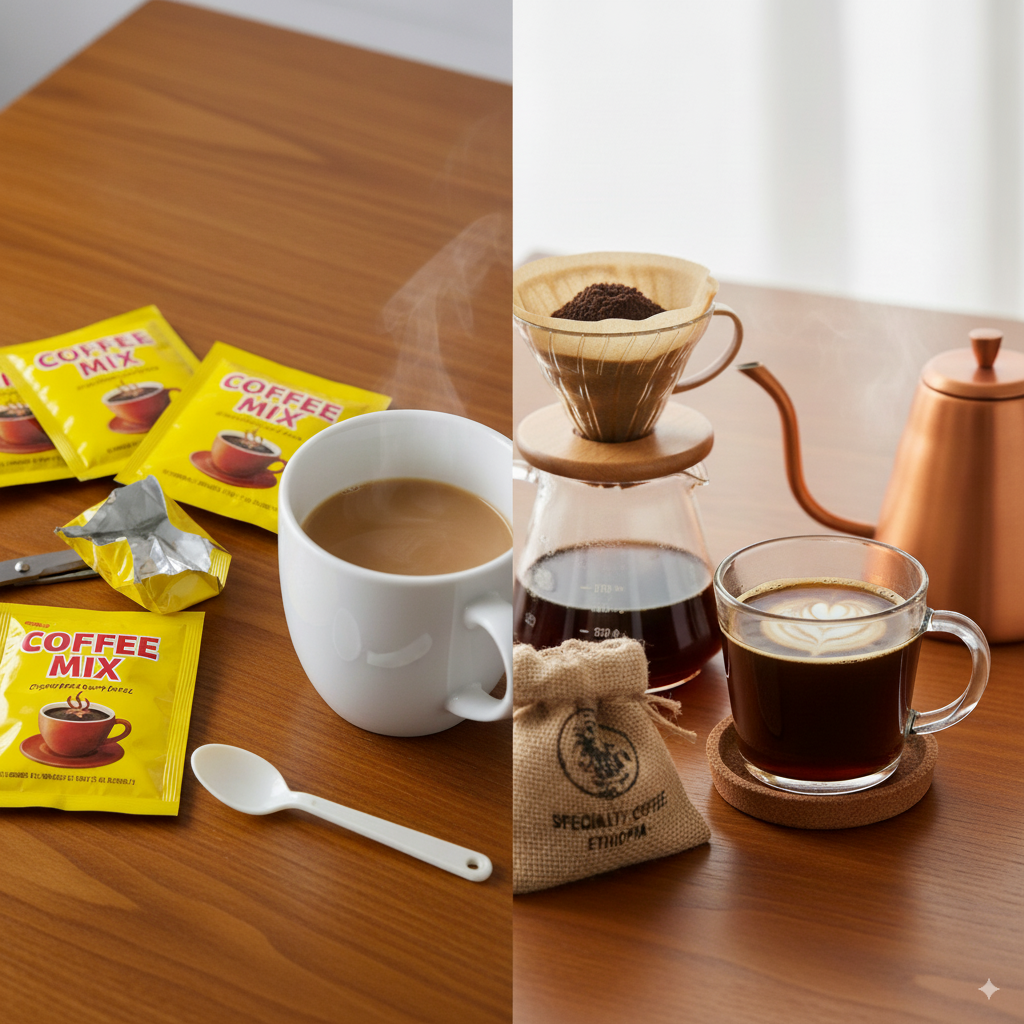
Do you remember the taste of coffee from a café, where creamy milk and sweet sugar were perfectly blended with coffee grounds? Or the taste of coffee mix that magically came to life with just hot water poured over the torn yellow package?
At one time, ‘coffee’ meant that to us. The golden ratio of coffee grounds, cream, and sugar was the beginning of conversation, and the warmth of a paper cup from a vending machine was a comfort after a tiring day. Coffee was more about ‘burning’ than ‘drinking,’ and its flavor was not a complex world of aromas, but rather the sweet and immediate taste of awakening.
Yet, in just one generation, everything changed. Today, we talk about the delicate floral notes of Ethiopian Yirgacheffe beans and listen intently to news of Panama Geisha beans being auctioned for millions of won. Baristas have become respected artisans, and cafés have transformed from mere places to drink into stages that reveal an individual’s taste and lifestyle. How did the country known for coffee mix, a symbol of ‘speed’ and ’efficiency,’ evolve into a delicate ‘Republic of Coffee’ that listens to the ‘stories’ and ‘relationships’ contained in each coffee bean?
This wave of change did not come suddenly. It was a massive paradigm shift that occurred globally, and in Korea, it unfolded as a particularly hot and dynamic story. Three pioneers were at the center of this transformation. One was a philosopher who saw life through coffee, another was a scholar who sought the hidden face of coffee, and the last was an entrepreneur who dreamed of a coffee empire fueled by anger.
Their stories are not merely success myths. They are an epic that heralded the birth of Korean specialty coffee and the hottest record of how a drink became a cultural phenomenon of an era. To fully understand this journey, we first need to revisit the history of the massive ‘waves’ of coffee that swept across the globe. Let us now unveil the legend.
Chapter 1: Three Waves, How Coffee Changed the World
The history of coffee is often likened to three great ‘Waves.’ This analogy signifies not just a change in trends, but a fundamental shift in how humanity consumes and perceives coffee. To understand Korea’s unique coffee culture, one must first grasp this global flow.
Table 1: Comparison of the Three Waves that Changed the Coffee World
| Category | The First Wave | The Second Wave | The Third Wave |
|---|---|---|---|
| Core Values | Convenience, Affordability, Popularity | Experience, Branding, Space | Quality, Expertise, Relationships, Transparency |
| Main Products | Instant Coffee, Coffee Mix | Latte, Cappuccino, Brand Blends | Single Origin, Hand Drip, Light Roast Beans |
| Keywords | #MassProduction #Folgers #VendingMachine | #Starbucks #ThirdPlace #Franchise | #Specialty #Craftsmanship #DirectTrade |
| Consumption Style | ‘Consumption’ at Home and Office | ‘Experience’ at Brand Cafés | ‘Exploration’ at Roastery Cafés |
| Role of Barista | Simple Manufacturer | Beverage Maker and Customer Service | Coffee Expert, Guide, Storyteller |
The First Wave: The Democratization of Coffee, the ‘Cup of Caffeine’ Era
The first wave marked the period when coffee transformed from a luxury item for a privileged few into a staple for everyone. In the early 20th century, vacuum packaging technology and the invention of instant coffee brought coffee to every household table. Brands like Folgers and Maxwell House led coffee into an era of mass production and consumption with the slogan “Good to the last drop.”
The core values of this era were ‘convenience’ and ‘affordability.’ It was not the taste of coffee that mattered, but the fact that one could consume ‘caffeine’ at a low price anytime, anywhere.
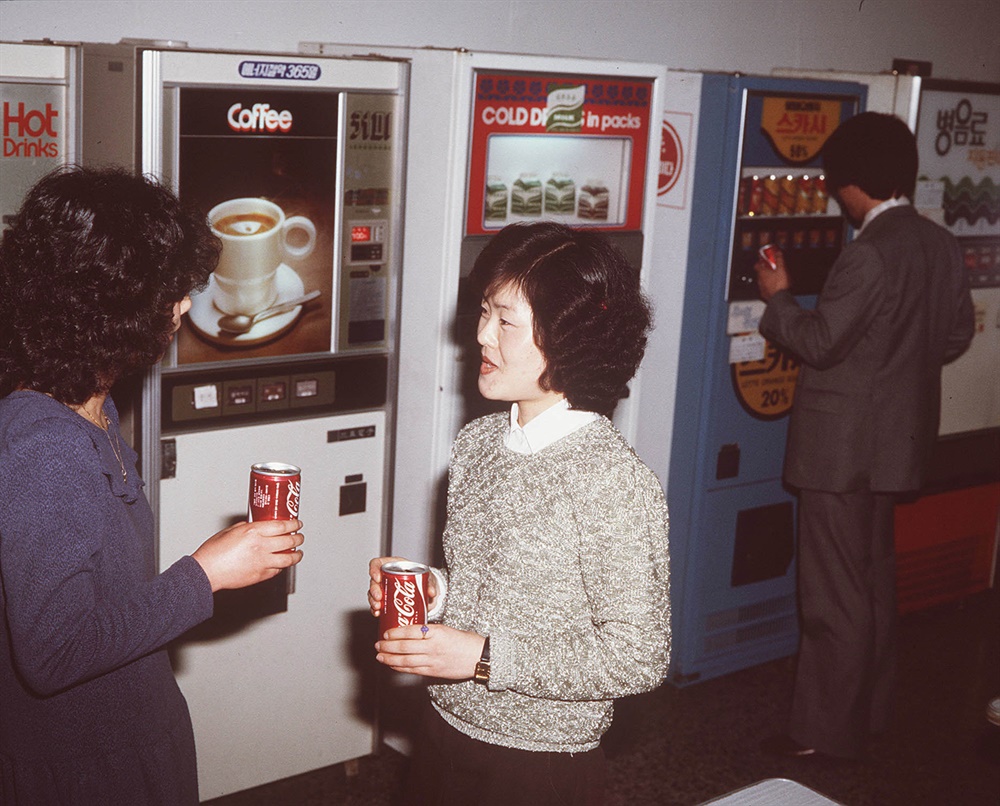
In Korea, the first wave manifested in the most compressed and powerful form: the birth of ‘coffee mix.’ In 1976, Dongseo Foods developed the world’s first coffee mix, perfectly catering to the ‘quick’ culture by packaging coffee, cream, and sugar in one. This was more than just a beverage; it became a symbol of the industrialization era in Korea and a national comfort. Korea thus experienced the most unique and powerful first wave in the world.
The Second Wave: Discovery of Experience, the ‘Café as Space’ Era
In the 1960s, the emergence of ‘Peet’s Coffee & Tea’ in Berkeley, California, signaled the beginning of change. Inspired by this, three young men opened ‘Starbucks’ in Seattle in 1971, marking the official start of the second wave.
The core of the second wave is the ’experience’ and ‘branding’ of coffee. Starbucks provided not just coffee but a ‘Third Place’ between home and work. People began to spend time sipping lattes and cappuccinos in stylish spaces.
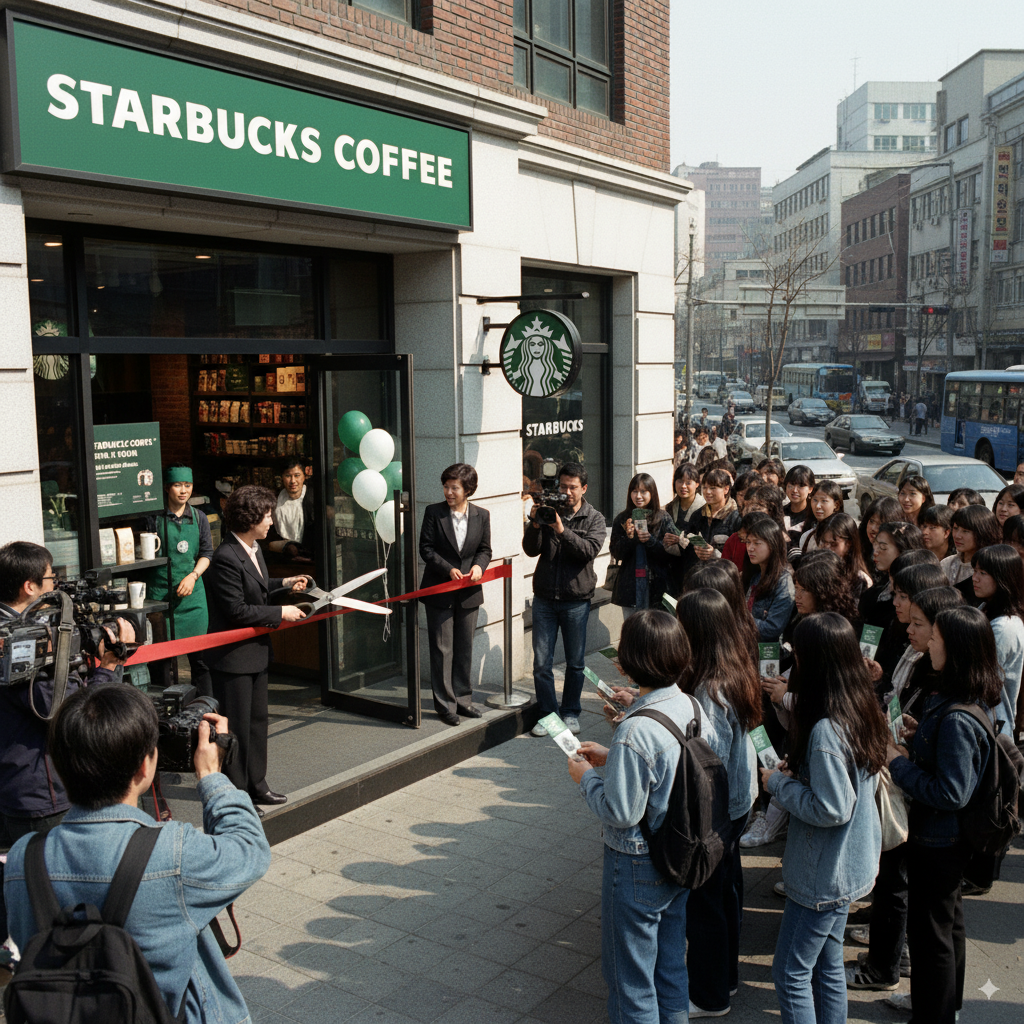
In Korea, the second wave landed with the opening of the first Starbucks in front of Ewha Womans University in 1999. Following the IMF financial crisis, this café with its unfamiliar green logo became a symbol of a new consumer culture. Soon after, domestic franchises like Café Bene and Hollys rapidly grew, turning the nation into a ‘Café Republic.’ Coffee transcended being just a beverage and became a medium for spatial consumption.
The Third Wave: Return to Essence, the ‘Single Bean’ Era
As the second wave reached its peak, some began to question, “Why does all café coffee taste the same? Who grew this bean, and how?” These questions marked the beginning of the third wave, the ‘Specialty Coffee’ revolution.
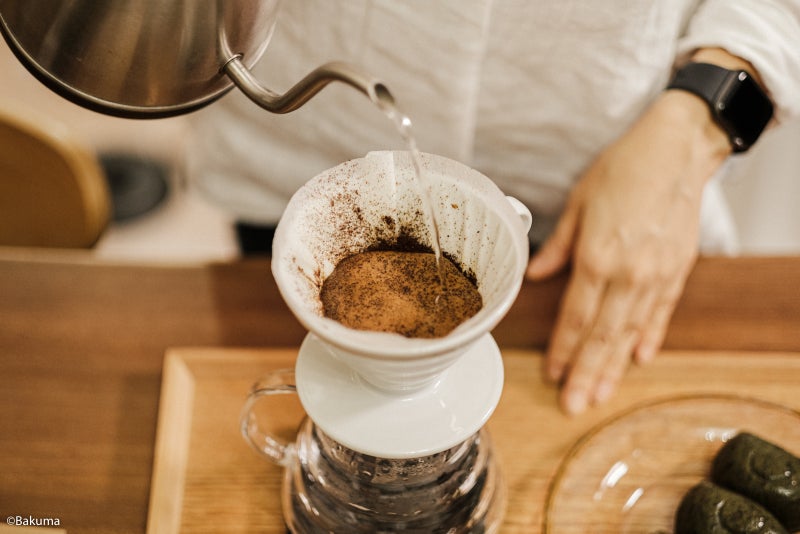
The core of the third wave focuses on ’the coffee itself.’ Like the ’terroir’ of wine, it is believed that the land, climate, and the farmer’s touch all influence the flavor of coffee. To preserve the delicate flavors of the beans, they are lightly roasted and extracted using various tools.
Moreover, the third wave values ‘relationships’ and ’transparency.’ Through ‘Direct Trade,’ fair compensation is given to farmers, allowing consumers to learn the ‘story’ behind each cup of coffee they drink. Baristas are no longer just beverage makers; they become ‘craftsmen’ and ‘guides’ who understand the entire process of coffee and convey its value.
It is at this point that the great story of Korean specialty coffee begins.
Chapter 2: The Prelude to the Republic of Coffee, Three Pioneers
The history of Korean specialty coffee did not simply import and imitate the third wave. Instead, it compressed and reinterpreted the global flow in the most Korean way, creating a unique ecosystem. At the center of this were three pioneers with different backgrounds and philosophies.
Act 1: The Age of Romance, the Soul of Coffee - First Generation Master Park I-chu
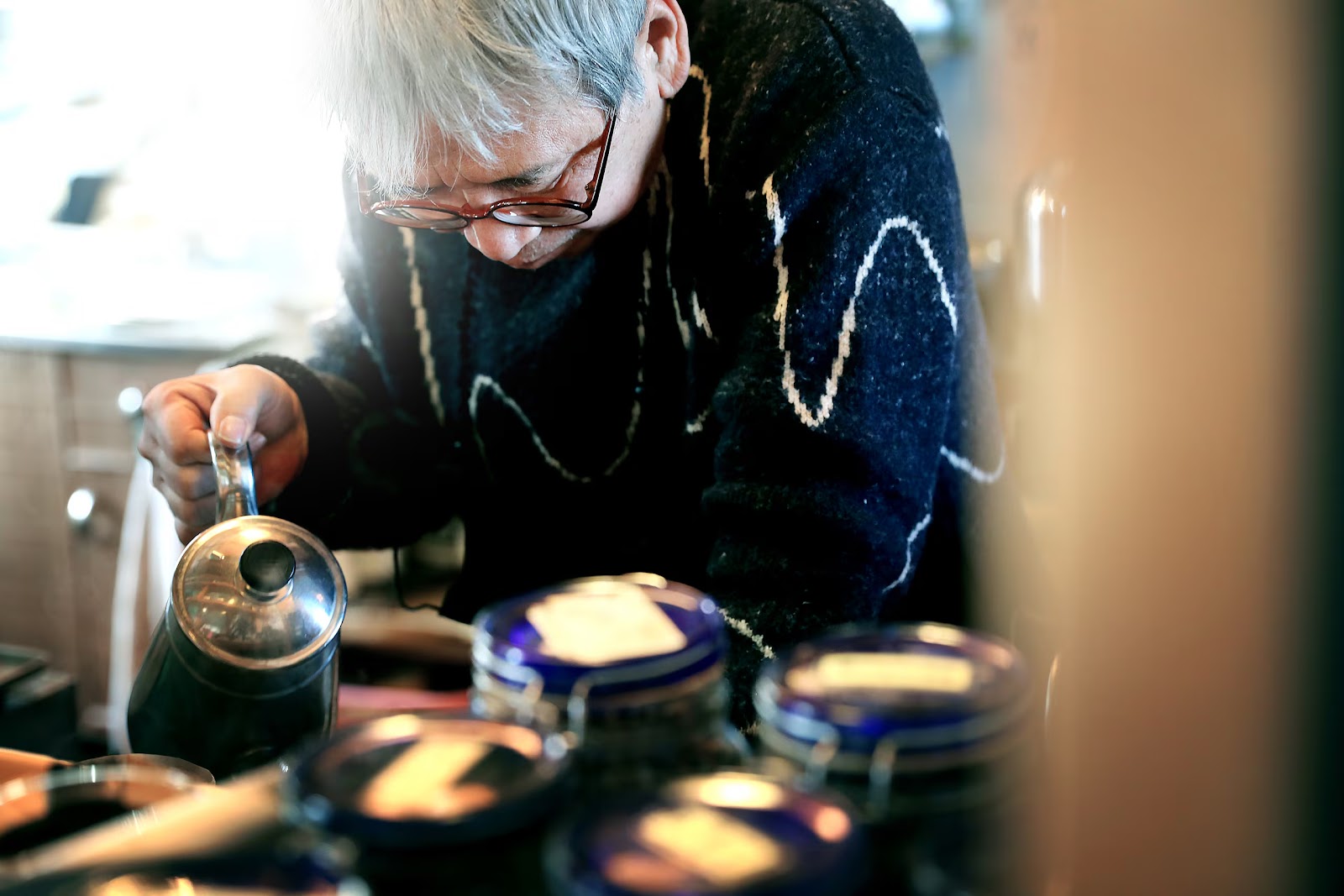
Brewing coffee with hands that once milked cows The story begins not in a café filled with the aroma of coffee but on a farm in Gangwon-do, rich with the smell of earth. Park I-chu, a Korean resident born in Japan in 1950, did not dream of being a barista. He came to Korea with dreams of a cooperative farm but faced the wall of reality and was fatefully captivated by coffee while washing dishes at a tea house in Japan. His rough hands, once used for milking cows, were now preparing to be reborn as hands that delicately brew coffee.
The Legend of Hyehwa-dong, ‘Cafe Bohemian’ In 1988, when the streets of Seoul were filled with the sweet scent of vending machine coffee, Park I-chu hung a small sign that read ‘Cafe Bohemian’ in Hyehwa-dong. In an era where cream and sugar were the norm, his rich and heavy hand-drip coffee, roasted and brewed by himself, was a cultural shock. His café soon became a sanctuary for coffee enthusiasts.
“Coffee is like life”: Bohemian finds a home in Gangneung Despite his tremendous success, he left everything behind and moved to quiet Gangneung. This ‘retreat’ paradoxically became a ‘forward’ that opened a new chapter in Korean coffee history. Thanks to his presence, Gangneung began to rise as the mecca of coffee in Korea. Settling in Gangneung, he finally completed his coffee philosophy: “Year by year, I come to think that people are more important than coffee. The true value changes depending on the person drinking it. Some days it’s sweet, some days it’s bitter. It’s just like life.” For him, coffee was something without a definitive answer, akin to our lives. In him, we see the ‘soul’ of specialty coffee. He became the spiritual father of Korean specialty coffee.
Act 2: A Young Man Studying History, Seeking the Face of Coffee - Seopil Hoon of Coffee Libre
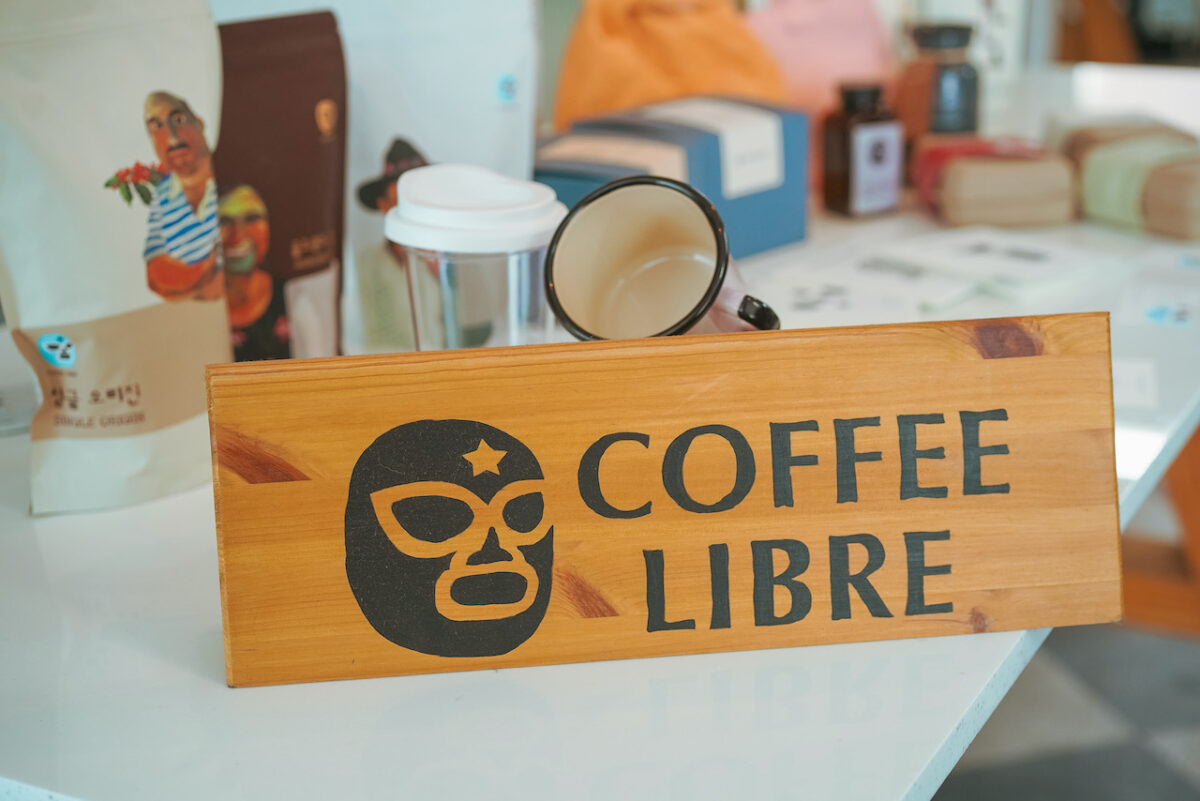
A fateful encounter at Bohemian If Park I-chu infused coffee with ‘soul,’ then Seopil Hoon is the one who gave that soul a ’narrative.’ Studying history at Korea University, he longed for a ’life with substance’ and entered the world of coffee by washing dishes at the ‘Bohemian’ café in front of his school.
In Search of ‘Coffee with a Face’ What makes Seopil Hoon unique is that he viewed coffee through the ’lens of a historian.’ “Where does this bean come from? Who cultivated it?” He wanted to restore the ‘faces’ of coffee farmers who had disappeared without a name in the logic of massive capital. He began a Korean-style ‘Direct Trade’ by backpacking to coffee-growing regions in Central and South America and Africa to build direct relationships with farmers.
Sharing Knowledge: Coffee, Be Free! What truly makes Seopil Hoon a radical figure is his philosophy of ‘sharing.’ He translated and freely shared high-level coffee-related information and materials on his website. By not monopolizing knowledge and sharing it freely, he envisioned an ecosystem where the entire industry could grow together. He became the ‘conscience’ of coffee and the architect of an intellectual foundation.
Act 3: A Banker, Building a Coffee Empire with Anger - Kim Yong-deok of Terarosa
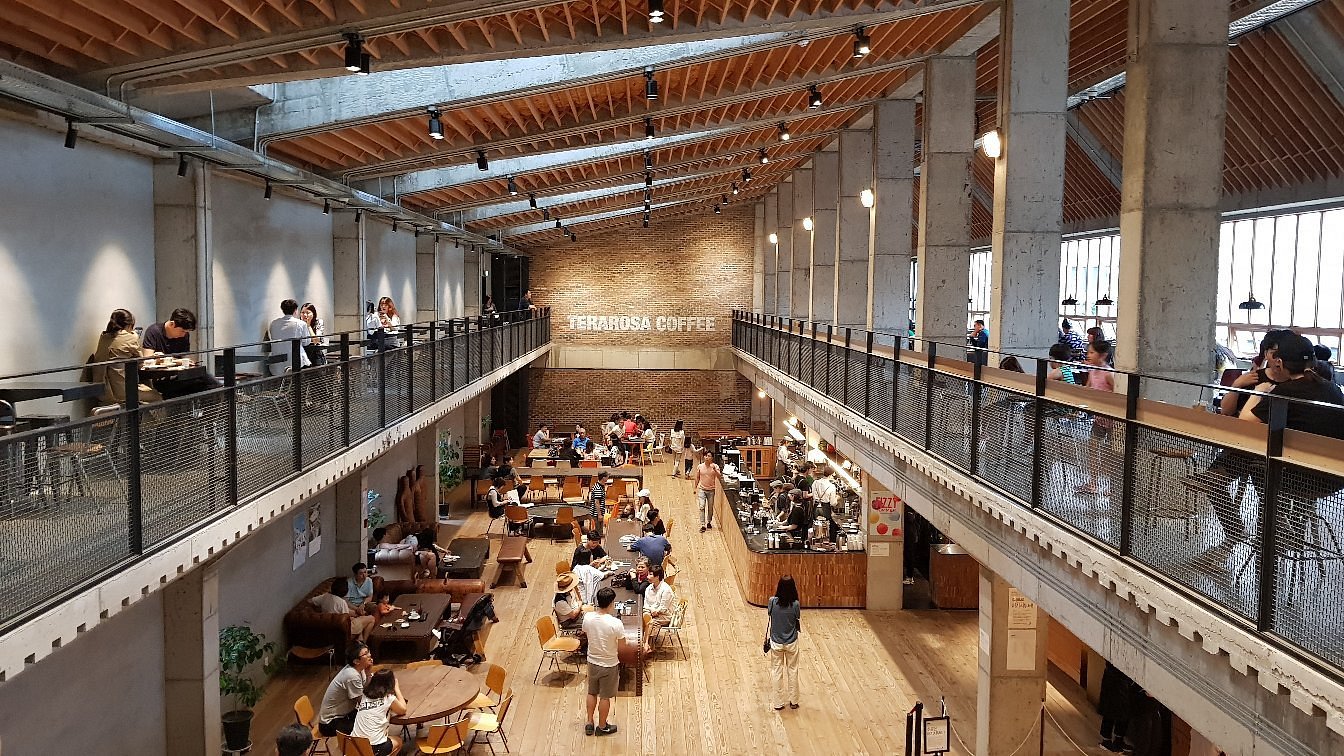
IMF, Pork Cutlet, and the Shock in Cheongdam-dong Kim Yong-deok, who worked as a banker for 21 years, felt a tremendous ‘anger’ after being honorably discharged due to the IMF financial crisis. At a high-end restaurant in Cheongdam-dong, he experienced a sense of self-loathing, realizing, “What I’m doing isn’t even a restaurant.” This intense emotion became the driving force of his life, leading him to a mission to elevate the level of Korean dining culture to a global standard.
“This is a national industry.” Kim Yong-deok viewed coffee through the ’lens of a banker.’ He saw not just a cup of coffee but a system, an economy, and an ‘industry.’ His question was, “How can we develop the coffee industry on a national level?” This macro perspective was the key reason Terarosa could grow into a massive enterprise.
A Fortress Built on Red Soil, Terarosa In 2002, he opened his first store in a sparsely populated rural area of Gangneung. He aimed not just to sell coffee but to sell ’experience.’ Terarosa stores, filled with artworks, high-end furniture, and unique architectural designs, became destinations in themselves. His strategy to elevate coffee to the center of cultural and aesthetic experiences was a great success, making him a giant who led the ‘scale’ and ‘industrialization’ of specialty coffee.
Table 2: Three Pioneers of Korean Specialty Coffee
| Pioneer (Brand) | Background | Core Philosophy & Keywords | Major Contributions |
|---|---|---|---|
| Park I-chu (Bohemian) | Farmer, Korean resident in Japan | “Coffee is life.” #Craftsmanship #Soul | Established the ideal of hand-drip coffee artisans as the ‘spiritual father.’ |
| Seopil Hoon (Coffee Libre) | Historian, Activist | “Coffee with a face.” #DirectTrade #Conscience | Democratized coffee knowledge and introduced ethical systems as the ‘conscientious architect.’ |
| Kim Yong-deok (Terarosa) | Banker, Entrepreneur | “Coffee is an industry.” #Experience #Scale | Expanded specialty coffee into mainstream culture and industry as the ‘business architect.’ |
Chapter 3: The Blooming Republic of Coffee, the Emergence of a New Generation
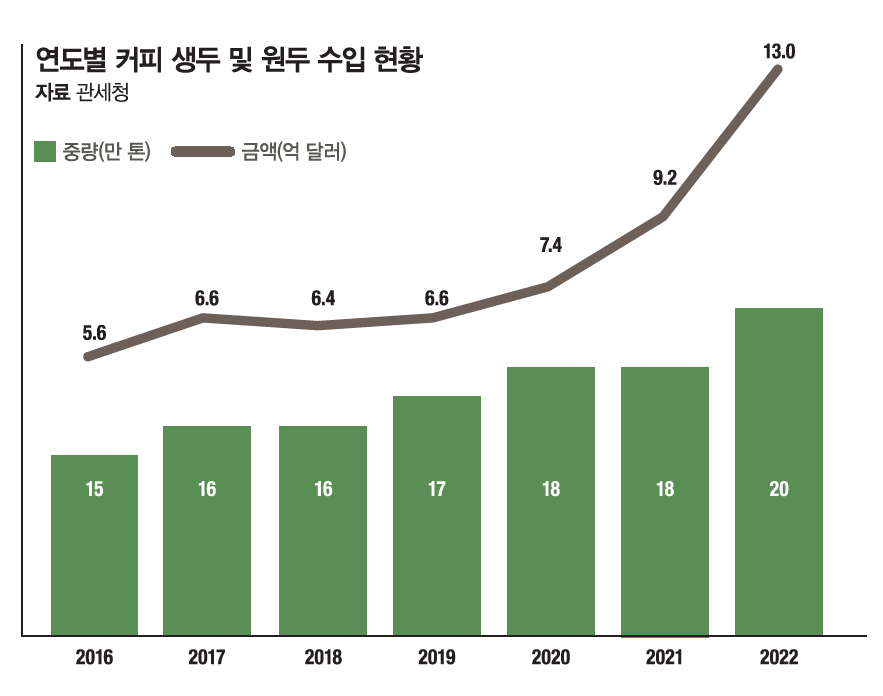
If Park I-chu created the ‘soul’ of coffee, Seopil Hoon the ‘conscience,’ and Kim Yong-deok the ‘scale,’ then finally, on the soil they cultivated, Korean specialty coffee began to bloom. By the 2010s, unique small roastery cafés sprang up across the country, from Hongdae and Yeonnam-dong in Seoul to Jeonpo-dong in Busan and small villages in Jeju.
This new generation inherited the legacy of the pioneers but reinterpreted specialty coffee in their own ways. However, the more significant change occurred among consumers. Now, consumers began to understand not just the difference between ‘bitter coffee’ and ‘sour coffee,’ but also the differences in processing methods like ‘washed’ and ’natural,’ and started discussing the characteristics of varieties like ‘Geisha’ and ‘Pink Bourbon.’ The emergence of a consumer base with refined palates and intellectual curiosity has become the strongest foundation for the continued development of the specialty coffee market.
Coffee, Becoming a Vessel that Captures the Era
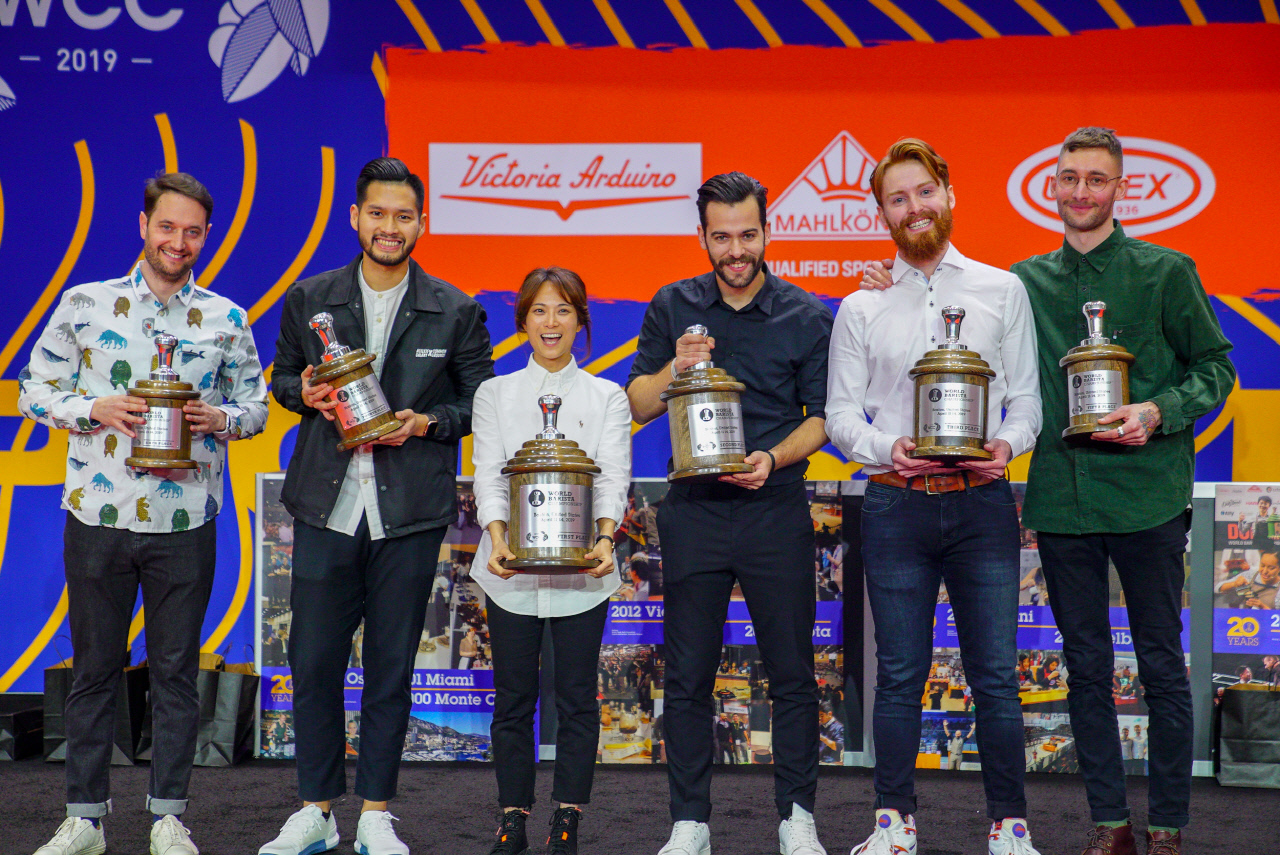
In 2019, at the World Barista Championship (WBC) finals in Boston, USA, barista Jeon Ju-yeon from Busan’s Momos Coffee was named the ultimate winner. This was a historic achievement as the first Korean and the first Asian woman to win. This event symbolized the official recognition of the dream of Korean specialty coffee, which began in a small café in Hyehwa-dong, on the world stage.
In particular, her emphasis on ’the human trust relationship with farmers’ and ’the value of coexistence’ during her winning demonstration can be seen as a beautiful synthesis of Park I-chu’s human-centered philosophy, Seopil Hoon’s ethical relationships, and Kim Yong-deok’s global standards, all encapsulated in a cup of coffee.
Ultimately, the history of Korean specialty coffee closely resembles the history of our society’s development. It is characterized by a relentless desire that is fast, passionate, and never stops until it reaches the top. Thus, the cup of coffee we hold today is no longer just a simple beverage. Within it lies the sweat of nameless farmers, the struggles of artisans, the anger of a retired banker, and the passionate stories of a generation that dreamed of a better world, all etched like poetry.