
There are already many articles that list the pros and cons of the Jeonse system separately.
However, when you place the lists side-by-side, something strange becomes apparent.
If you flip a line from the ‘pros’ column, it becomes a line in the ‘cons’ column.
The landlord’s advantage of not having their large capital tied up is the tenant’s disadvantage of having that same capital held by someone else without collateral; the tenant’s advantage of using an entire home for 70% of its value is the same as the risk that if the home value drops by 30%, the deposit will exceed the property’s value.
The reason is simple: Jeonse is a loan agreement disguised as a lease contract. The tenant lends money to the landlord interest-free and lives in the house in lieu of interest. This single sentence is the source of both the advantages and disadvantages. Below, we examine where this structure came from, why it is currently collapsing, and quantify how much more tenants actually pay when switching to monthly rent.

Is the Jeonse System Unique to Korea?
The common belief that it exists only in Korea is not entirely accurate.
Contracts involving depositing a large sum of money to use a home appear in records from Nuzi, Mesopotamia in the 15th century BC, and it was included in the 1804 Napoleonic Code under the name ‘antichresis.’
Similar types of contracts still exist today in Bolivia, Argentina, Peru, and in Surat and Bengaluru, India.
Records in Korea are divided between theories suggesting it appeared during the reign of King Sejong of the Joseon Dynasty or that it originated from the Goryeo-era pawn system.
Its modern form was first confirmed in the 1899 Hwangseong Shinmun, and the Government-General of Korea’s customs survey report noted that Jeonse deposits were typically half to 7–80% of the home’s value.
What makes Korea unique is the scale.
While this contract remained a peripheral custom in other countries, it became the mainstream method in Korea, used by two-thirds of all rental households.
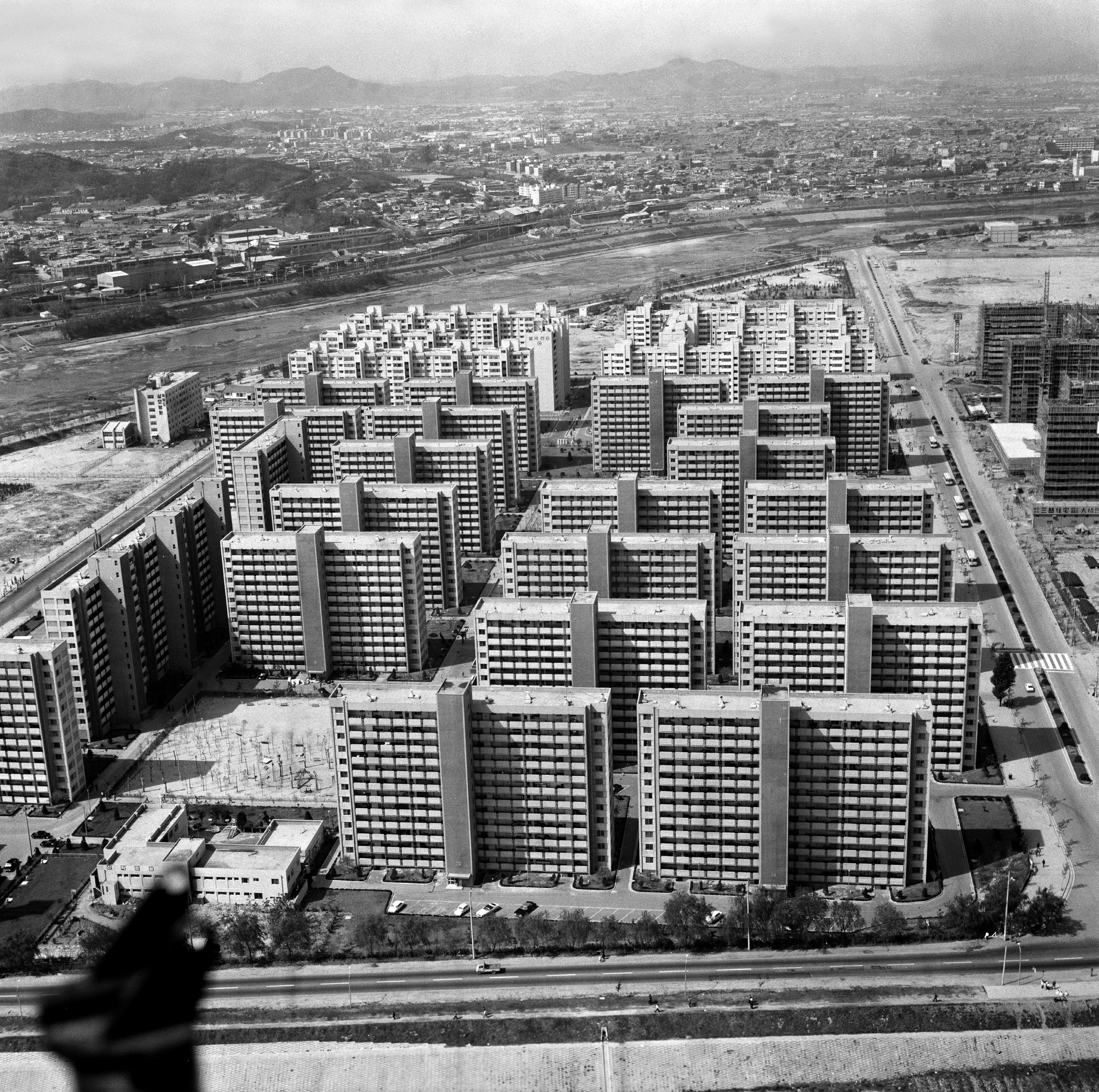
Why Jeonse Became Mainstream in 1970s Korea
It was because three conditions were met simultaneously: a housing shortage, high interest rates, and rising home prices.
Industrialization drove the rural population into big cities, leading to a constant housing shortage. Bank interest rates were in the double digits, and it was difficult for individuals to obtain mortgage loans. Furthermore, home prices rose almost every year.
Under these conditions, landlords found it profitable to borrow money from tenants at 0% interest just to keep it in the bank, and the appreciation in home value was entirely their own gain.
Since tenants didn’t pay monthly rent, their income could be saved directly. After two years, they would add their savings to the returned deposit to move to a larger Jeonse, eventually using it as a ladder to homeownership.
In a column for the Law Times, Professor Jang Bo-eun of the Hankuk University of Foreign Studies Law School evaluates this period by stating that Jeonse was beneficial to both parties.
Kim Hak-ryul, head of the Smart Tube Real Estate Research Institute, goes a step further, defining Jeonse as a private residential finance system. It is an interpretation that in a country lacking public rental housing and stable retirement income, landlords and tenants took on the role of housing finance that banks could not fulfill.
How Pros and Cons Emerge from the Same Structure
The fact that a tenant lends hundreds of millions of won without collateral assessment or credit checks is the starting point for all pros and cons. The table below shows the results of reading the same items from both perspectives.
Table summarizing the pros and cons of the Jeonse system as two sides of the same coin
| Structure | Read as a Pro | Read as a Con |
|---|---|---|
| No monthly rent | Tenant income accumulates as savings | Tenant’s entire life savings are tied up without collateral |
| Landlord uses interest-free funds | Can own a home without a loan | Allows for ‘gap investment’ and loss of repayment ability if prices drop |
| Deposit is ~70% of home value | Use an entire home for 30% of its price | If value drops by 30%, it becomes an ’empty’ (underwater) Jeonse |
| 2-year lump-sum repayment | Large sum returned at the time of moving | Repayment is blocked if there is no next tenant |
| No bank involvement | Simple procedure, no fees | No credit checks or recovery mechanisms |
KDI analyzed that since the sharp rise in interest rates in the second half of 2022, both ’empty’ Jeonse (where home values drop below the Jeonse price) and ‘reverse-Jeonse’ (where landlords must return part of the deposit upon renewal) have increased.
This overlaps with the period when Jeonse fraud emerged as a social issue. Jeonse fraud is essentially the right column of the table above becoming a reality all at once.
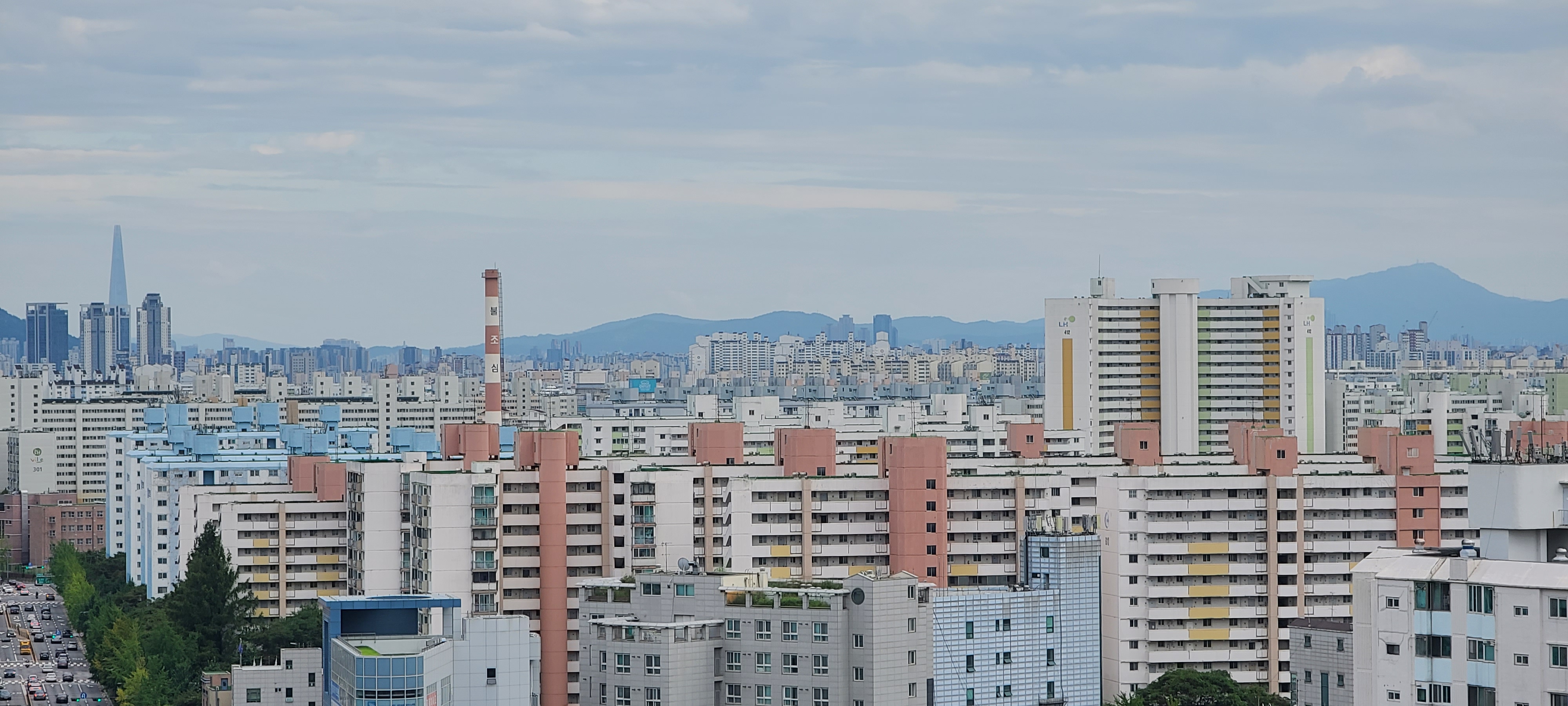
70% Monthly Rent Rate: How Fast is Jeonse Disappearing?
From January to April 2026, 70.0% of rental transactions in Seoul and 68.5% nationwide were monthly rent.
The national monthly rent ratio was 48.7% in 2022 and 58.0% in 2024, an increase of 20 percentage points in four years.
In June statistics, the monthly rent ratio for non-apartments in Seoul reached 78.1%, and even for apartments in Seoul, it surpassed 50% for the first time.
This decline did not start recently.
According to the Population and Housing Census, the ratio of Jeonse among rental households was 67.2% in 1995 and 39.9% in 2020. It is a form where a sharp decline over the last four years has been added to a slow decrease spanning 25 years. A long-term factor is the increase in single-person households. Single-person households living in small homes are more likely to choose monthly rent over Jeonse, which requires a large initial deposit.
Short-term factors lie in both sides moving away from Jeonse simultaneously.
Following Jeonse fraud, landlords found it difficult to secure tenants and, due to gap investment regulations, found less utility for Jeonse deposits, opting for monthly rental income. Tenants calculated that monthly rent was safer considering the risk of deposit non-repayment.
Additionally, tighter regulations on Jeonse loans and the designation of land transaction permit zones have increased owner-occupancy, reducing the supply of Jeonse properties themselves.
How Much Does the Tenant’s Burden Increase When Switching from Jeonse to Monthly Rent?
Depending on the conversion rate, the same deposit can translate to 750,000 won or 1.07 million won per month.
The upper limit for conversion when switching from Jeonse to monthly rent is set at the base rate plus 2%. With a base rate of 2.5%, it is currently 4.5%. If you convert a 300 million won Jeonse to a 100 million won deposit with monthly rent, 200 million won is subject to conversion; multiplying 200 million won by 4.5% and dividing by 12 results in 750,000 won per month.
The problem is that this limit only applies to existing contract renewals.
New contracts with new tenants can be set according to market rates. The Korea Housing Finance Corporation’s average regional Jeonse-to-monthly conversion rate applied to guarantee reviews in the first half of 2026 was 6.4%; converting the same 200 million won at 6.4% results in 1.07 million won per month.
When borrowing 300 million won for Jeonse at around 4%, the monthly interest is around 1 million won.
We have already entered a phase where monthly rent and Jeonse loan interest are similar, and when you add the risk of deposit non-repayment, the calculation favors monthly rent. However, while Jeonse loan interest is supported by policy financing at 2–4%, there is no corresponding support for monthly rent. This is why the existence of Jeonse as a competing product is often cited as the background for why monthly rent in Korea has remained lower than in other major cities.
No institution has yet answered with figures how high monthly rents will rise once Jeonse disappears.
Why the Answer is a Deposit Safety Net, Not Abolishing Jeonse
Jeonse is a custom created by the market, so there is no legislation to abolish it. The market is already pushing Jeonse out without the need for laws, at a rate of 20 percentage points every four years. The remaining issue is how to protect the deposits of households still living in Jeonse.
Director Kim Hak-ryul seeks the solution for Jeonse fraud and reverse-Jeonse not in the expulsion of Jeonse, but in deposit return safety nets and blocking gap investments.
Professor Jang Bo-eun suggests focusing on legal improvements to guarantee deposit returns rather than landlord regulations or Jeonse stimulus measures, citing the advancement of the effective date of ‘counter-power’ (daehang-ryeok) and priority repayment rights through the expansion of electronic contracts as an example.
The commonality of both proposals is to add to the side lending the money the things banks do before issuing a loan: collateral verification and recovery mechanisms. It is about filling the gaps in the structure rather than changing the structure itself.

From the tenant’s perspective, there is only one practical conclusion.
Treat the Jeonse contract as a loan agreement. The items a bank checks before handing over 300 million won—senior claims on the registry, the ratio of the deposit to the home value, and the availability of guarantee insurance—are the exact list a Jeonse tenant must check before signing a contract.
References
- “Finding Jeonse is like picking stars from the sky”… Seoul's monthly rent ratio hits record high
- 'Disappearing Jeonse': Seoul non-apartment monthly rent ratio nears 80%
- 'Country of Jeonse' is a thing of the past… Monthly rent ratio jumps from 48% to 69% in 4 years
- Jeonse ratio hits record low of 37%… Jeonse prices to rise further due to reduced supply this year
- KDI FOCUS: Improvement Plan for the Jeonse Deposit Return Guarantee System (Sept 2023)
- Korea Housing Finance Corporation: H1 2026 Jeonse-to-Monthly Conversion Rate Guide