
Uncovering the Deadly Risks Hidden Behind the Sweetness of ‘Zero’ Brokerage Fees.
- Reasons for the explosive increase in direct real estate transactions
- Three common types of fraud that can occur during direct transactions
- Essential checklist for safe direct transactions
The Stories of Two Tenants
Here are two young individuals. One is Min-jun, a 30-something graphic designer. He recently found a charming one-room apartment in Mangwon-dong through a second-hand marketplace. Thanks to signing the contract directly without a real estate agent, he saved over 1 million won in brokerage fees, known as ‘bokbi’. He proudly tells his friends, “I saved money by putting in some effort.” Min-jun’s story is a sweet success tale promised by direct real estate transactions.
The other is Su-jin, a recent graduate taking her first steps into society. She also discovered a great house listed at a lower price than the market rate through a platform. The ’landlord’ was friendly, and everything seemed smooth. Without hesitation, Su-jin transferred her deposit, which was her parents’ lifelong savings. However, on moving day, what awaited her was a cold, locked door and a ‘ghost landlord’ who had cut off all contact. Su-jin’s story reveals the devastating risks hidden behind the rosy illusions of direct transactions.
These two stories are not extreme fiction. They represent a reality occurring in the South Korean real estate market even at this moment. This article asks you, “Is saving that brokerage fee worth the gamble of risking your deposit, which could be your entire fortune?” By the end of this article, you will clearly understand the stakes and rules of this game, and how you can become like Min-jun instead of Su-jin.
Chapter 1: The Sweet Temptation of ‘Zero Brokerage Fees’
The Era of New Digital Real Estate
In the past, direct real estate transactions were an exceptional method primarily conducted between family members or special relationships. But now, it’s different. We have entered an era where people trade houses worth hundreds of millions of won as easily as selling second-hand furniture through a smartphone app. Especially, direct transactions through second-hand trading platforms like ‘Carrot’ have exploded.
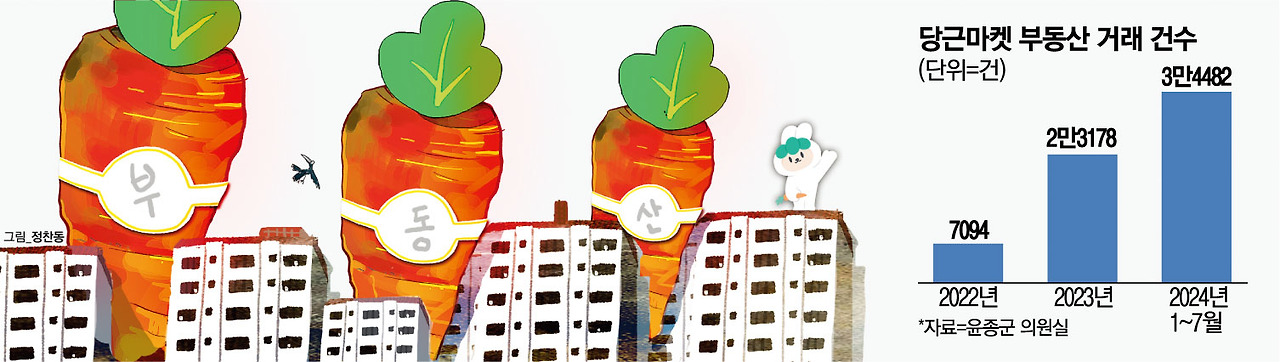
The numbers prove this change. The actual number of real estate transactions through the Carrot app, which was only 268 in 2021, skyrocketed to 59,451 in 2023, a staggering increase of 220 times in just three years. The number of listings during the same period also increased by 124 times. This is not just a new phenomenon; it shows a fundamental change in how people search for homes, akin to a ‘revolution’. This transformation is further accelerated by the emergence of specialized direct transaction platforms like ‘Finding a Good Room with Peter Pan’ and ‘Selling a House’. Thanks to online platforms, anyone can easily access real estate information.
The Core Motivation: The Huge Barrier of ‘Brokerage Fees’
At the center of this change is a very simple and powerful motivation: the desire to save money. With skyrocketing housing prices, brokerage fees, which are set in proportion to the transaction amount, have become a significant burden that cannot be ignored. The mindset of “Let’s try to save on fees” is leading many people into the direct transaction market.
So, how much can you actually save? The following table provides an example of the maximum fees that tenants must bear when signing lease agreements according to the current legal brokerage fee rates.
Housing Lease Brokerage Fee Rates (Tenant Burden Example)
| Transaction Type | Converted Deposit | Maximum Rate | Maximum Tenant Fee (Including VAT 10%) |
|---|---|---|---|
| Monthly Rent | 150 million won (e.g., deposit 5,000/monthly rent 100) | 0.3% | 495,000 won |
| Jeonse | 200 million won | 0.3% | 660,000 won |
| Jeonse | 500 million won | 0.3% | 1,650,000 won |
| Jeonse | 800 million won | 0.4% | 3,520,000 won |
Reasons Beyond Money
Of course, the appeal of direct transactions is not just about cost savings. ‘Speed’ and ‘control’ are also important factors. When the real estate market is sluggish, landlords prefer to list their properties directly on platforms to find tenants more quickly rather than waiting for real estate agencies to contact them. Conversely, tenants, especially the MZ generation who are accustomed to finding information themselves through apps like ‘Hogangnono’, want to choose properties themselves instead of relying on agents. The ability for buyers and sellers to negotiate prices and conditions directly without intermediaries is also an attractive factor that increases the likelihood of meeting each other’s needs.
However, behind all this convenience and advantage lies a trap that we may easily overlook. The explosive growth and ease of use of second-hand trading platforms paradoxically undermine caution against high-risk transactions. Real estate contracts, which involve hundreds of millions of won, are complex legal acts that require expert assistance. However, as people begin to trade houses in the same user environment (UI) as selling an old bicycle, they start to forget the weight of this transaction. The platform’s claims of ‘safe transactions between neighbors’ and features that explicitly show ‘cost savings through direct transactions’ further fuel this misconception. The risks have not disappeared; they have merely become invisible behind a convenient user experience. This is the biggest blind spot created by the ’normalization of risk’.
Chapter 2: The Wolf in Sheep’s Clothing: Dissecting Direct Transaction Fraud
Cold Hard Numbers of Harsh Reality
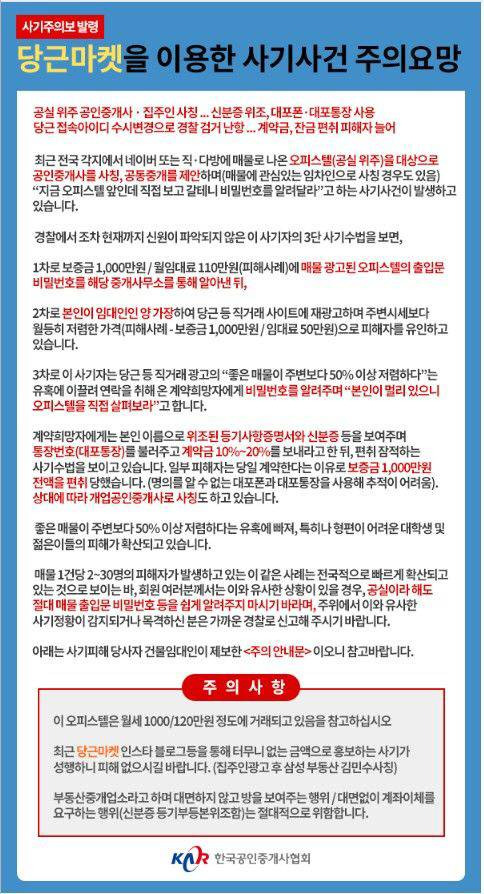
Before delving into specific fraud cases, it is necessary to face the cold reality. In the past 34 months, a whopping 45.8% of domestic real estate transactions have been direct transactions. Of course, not all of these transactions are fraudulent, but it shows how massive the scale is. The amount of fraud occurring in this vast market has already reached 1.57675 billion won as of October 2024. Now, let’s look at specific cases to see how these cold numbers can destroy an individual’s life.
Case 1: The Ghost Landlord
Let’s return to Su-jin’s story mentioned in the introduction. She discovered a clean officetel that had just been renovated and was listed at 20% below market price on the platform. The man who introduced himself as the landlord said he was on a business trip and could not show the house in person, so he provided her with the entrance password. After touring the house alone, Su-jin was captivated by its perfect condition. The man sent her a photo of his ID and a file of the property registration certificate via messenger, and everything seemed fine on paper.
Su-jin hurriedly sent a deposit of 5 million won, fearing she would miss out on a good deal, and a few days later transferred the remaining 150 million won for the jeonse. However, on moving day, the password had changed, and the landlord was unreachable. Shortly after, the real landlord appeared, completely unaware that his house had been listed for rent. All the documents Su-jin received were meticulously forged fakes, and the fraudster had committed the crime by using the password he had secretly observed while a real estate agent showed the house to someone else. This case exemplifies a typical fraud method that exploits the structural loophole of the platform, namely the lack of or inadequate owner verification procedures during property registration.
Case 2: The Devil’s Double Contract
Now, let’s look at the story of a young couple searching for their newlywed home. They met a ‘building manager’ who claimed to have been authorized by the landlord to sign the lease agreement. The manager showed them a genuine power of attorney with the landlord’s seal, reassuring the couple. They signed a jeonse contract worth 200 million won with him. However, there was something they did not know. The manager had separately signed a monthly rent contract with the actual landlord for a deposit of 20 million won and a monthly rent of 1.5 million won. The manager handed over only the 20 million won deposit to the landlord and absconded with the remaining 180 million won. Ultimately, the couple was recognized only as monthly tenants by the landlord, and their path to recovering their substantial jeonse deposit became bleak. This ‘double contract’ fraud illustrates the deadly risks that can arise in transactions with agents. This is a clear criminal act that falls under the legal definition of ‘breach of trust’.
Case 3: The Fraud that Takes Away Hope
The risks of direct transactions are not limited to residential real estate. As the number of commercial properties in dire financial straits has surged, ‘key money fraud’ has also become rampant. A young man dreaming of starting a business discovered a great café listing on the platform. The existing tenant promised to hand over all regular customers and business know-how at a low key money price. The young man directly paid several million won in key money to the existing tenant and took over the shop. However, shortly after, he received a notice from the landlord that the contract could not be renewed. It turned out that the landlord had never agreed to the transfer of the lease rights, and contrary to the claims of a ’thriving business’, the shop was actually on the verge of closing down. This case shows how dangerous direct transactions between tenants without the landlord’s consent can be, and how easily the intangible value of ‘key money’ can vanish into thin air.
These individual fraud cases are by no means isolated stories. They are a microcosm of large-scale jeonse fraud cases that have shaken South Korean society, such as the ‘Villa King’ and ‘Construction King’ incidents. The core fraud methods that exploit forged documents, misrepresentation of ownership relationships, and information asymmetry are no different whether they involve large-scale organized crime or individual fraudsters. The emergence of online platforms has provided fertile ground for these fraud methods to spread more easily and widely. In other words, the spread of direct transaction fraud through platforms is not a new type of crime but rather a ‘digital popularization’ of existing fraud methods. Behind the small fraud cases you encounter lies the shadow of a massive social disaster.
Chapter 3: The Invisible Shield: What You Give Up When You Skip the Broker
Choosing direct transactions is not just an act of saving on ‘brokerage fees’. It is also an act of giving up the legal and institutional protections provided by professionals like real estate agents. You need to understand how crucial that shield is.
Beyond Guidance: The Legal Obligation of Verification and Explanation
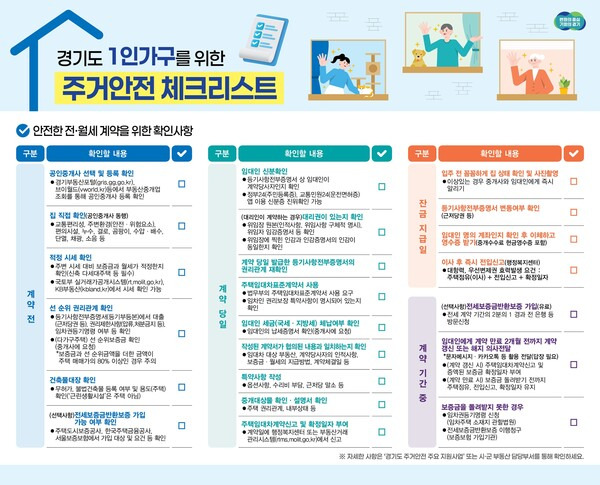
The most critical role of a real estate agent is the ‘verification and explanation obligation’ stipulated in the Real Estate Agent Act. This goes beyond simply showing a house; it is a legal responsibility to faithfully and accurately explain all important information about the property to the client until the contract is signed.
- Basic Information: Address, area, structure, etc., of the property
- Ownership Relationships: Analyzing and explaining complex ownership relationships such as ownership, mortgage, provisional seizure, and priority lease rights through the property registration certificate
- Legal Restrictions: Confirming legal restrictions such as land use plans and building regulations
- Facilities and Environment: Elements affecting the actual living environment, such as water, electricity, gas, leaks, noise, and sunlight
- Taxes and Costs: Information on related taxes such as acquisition tax and the landlord’s tax arrears, as well as the status of other tenants’ confirmed dates, which are directly related to the safety of the deposit
All these verification processes are documented in an official legal document called the ‘Brokerage Object Verification and Explanation Document’, which is provided to the parties involved in the transaction, and the real estate agent is legally responsible for its content.
Professional Skills: Rights Analysis
‘Rights analysis’ is a specialized skill that performs this verification and explanation obligation. It involves interpreting complex legal terms written in the property registration certificate and identifying hidden risks. For example, predicting future auction risks by noticing ‘provisional registrations’ or excessive ‘mortgage amounts’ that a layperson might overlook is the role of an expert. Choosing direct transactions means you have to perform all this analysis yourself.
Safety Nets and Their Gaps: The Truth About Surety Bonds
When you contract through a real estate agent, you receive a document called a ‘surety bond’. This is a type of insurance that compensates for property damage caused by the agent’s intent or negligence. Currently, the guarantee limit for individual real estate agents is 200 million won, and for corporations, it is 400 million won. However, many people misunderstand this surety bond as a ‘safety device that guarantees up to 200 million won without fail’. This is a very dangerous misconception. The reality of the surety bond is as follows:
- Lawsuits are Mandatory: To receive compensation, you must first win a lawsuit proving the agent’s negligence in a damage claim.
- No 100% Compensation (Negligence Offset): Courts often hold clients responsible for ’lack of verification’, resulting in an average actual compensation amount of only 55.9% of the claimed amount.
- The Most Deadly Trap (Total Limit): The 200 million won is not a limit per incident but rather the total limit that the agent can compensate for ‘one year’.
In conclusion, the surety bond is not a personal insurance for tenants but rather a minimum professional liability insurance for agents.
Platform’s Evasion of Responsibility: ‘We Are Just a Bulletin Board’
In contrast to the heavy legal responsibilities borne by real estate agents, direct transaction platforms generally bear no responsibility for issues arising during the transaction process. They define themselves merely as ‘information intermediary bulletin boards’. Even if problems arise, there is no official channel to mediate or resolve them, and all responsibility falls solely on the individuals involved in the transaction.
Chapter 4: The Ultimate DIY: A Perfect Guide for Safe Direct Transactions
If you have decided to take on all these risks and pursue direct transactions, you must now become your own real estate agent. The following procedures are not optional; they are essential, and missing even one can lead to losing everything.
Step 1: The War with Documents - Become Your Own Analyst
Obtain Essential Documents
- Property Registration Certificate (Certificate of All Registration Matters): Can be obtained from the Supreme Court’s Internet Registration Office (www.iros.go.kr).
- Building Ledger: Can be obtained for free from Government 24 (www.gov.kr).
Perfectly Analyzing the Property Registration Certificate
- Title Section: Check if the address, building, and unit number of the house you are contracting match exactly.
- A-Section (Ownership): Compare the ID information of the current owner and the landlord you are meeting. If you see words like ‘provisional seizure’, ‘seizure’, ‘provisional disposition’, or ‘auction’, immediately halt the transaction.
- B-Section (Rights Other than Ownership): Check the amount of ‘mortgage rights’. (The maximum amount of the mortgage + my deposit) exceeding 70-80% of the housing market price indicates a high risk of ’empty jeonse’.
Confirming the Building Ledger
- Confirm the exact use of the building (e.g., residential, neighborhood living facility). Make sure to check if there is a ‘violating building’ mark in the upper right corner. Violating buildings may be denied loans for jeonse funds.
Clearly Understand the Relationship Between the Two Documents
The property registration certificate proves ownership relationships (who is the owner), while the building ledger proves factual relationships (what kind of building it is). Ownership is prioritized by the property registration certificate, while the address or area and other physical conditions are prioritized by the building ledger. You must cross-check to ensure the information in both documents matches.
Comparison of Property Registration Certificate vs. Building Ledger
| Item | Property Registration Certificate (Document of Rights) | Building Ledger (Document of Facts) | Which Takes Precedence? |
|---|---|---|---|
| Ownership | Final verification basis | Owner information recorded | Property Registration Certificate |
| Address, Area, Use | Recorded | Final verification basis | Building Ledger |
| Loans, Seizures | Unique verification source | Not recorded | Property Registration Certificate |
| Illegal Construction Status | Not recorded | Unique verification source | Building Ledger |
Step 2: Verify the Person - Is Your Landlord Real?
Merely visually verifying the landlord’s ID is meaningless. Counterfeit ID fraud is very common. You must verify its authenticity through government systems.
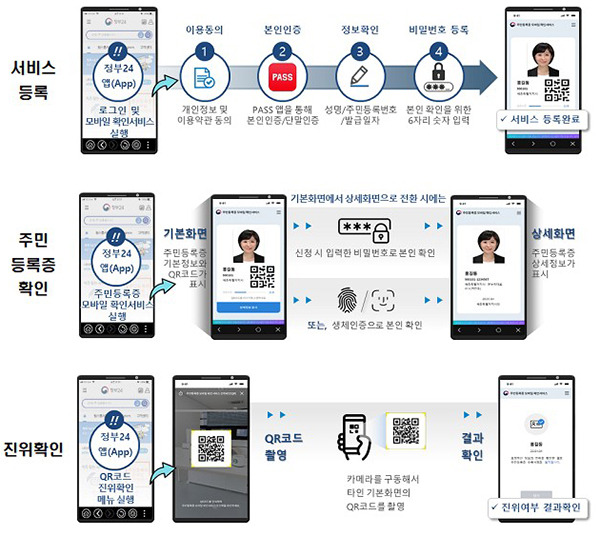
You must verify the authenticity of the ID through Government 24 or ARS 1382.
- Method 1 (Phone): Call 1382 without an area code and enter the resident registration number and issue date.
- Method 2 (Internet): Use the ‘Resident Registration Authenticity Verification’ service on the Government 24 (www.gov.kr) site.
This process must be executed in front of the landlord at the time of signing the contract.
Step 3: Contract as Armor - How to Utilize Special Clauses
A standard lease contract alone cannot protect you. ‘Special clauses’ are your strongest shield. The following provisions must be included in the contract:
- Essential Special Clause 1 (Preventing Dangerous Gaps): “The landlord shall maintain the rights on the property registration certificate as of the date of contract signing until the day after the payment of the balance, and in case of violation, the tenant may immediately terminate the contract, and the landlord shall immediately return the entire deposit paid.”
- Essential Special Clause 2 (Escape Clause for Loan Failure): “This contract is conditional upon the execution of the tenant’s jeonse fund loan, and if the loan is impossible due to the landlord or defects in the leased property, this contract shall be void, and the landlord shall immediately return the entire deposit.”
- Essential Special Clause 3 (Guarantee of Deposit Return): “Upon expiration of the lease contract, regardless of whether a new tenant’s contract is made, the deposit shall be returned immediately on the expiration date.”
Step 4: Plant Your Flag - Securing Legal Rights
Completing the contract is not the end. The final step is to legally secure your rights.
- The Trinity of Tenant Protection: The three key elements that protect your deposit are ① possession (moving in and residing), ② registration of residence, ③ confirmed date.
- Registration of Residence: Report to the local community center or Government 24 within 14 days after moving in. This grants you the right to ‘counterclaim’, allowing you to continue residing even if the landlord changes.
- Confirmed Date: Get a date stamp on the original contract. This gives you the right to ‘priority repayment’, allowing you to recover your deposit before other creditors if the house goes to auction.
The Most Important Warning: The Existence of a ‘Dangerous Day’
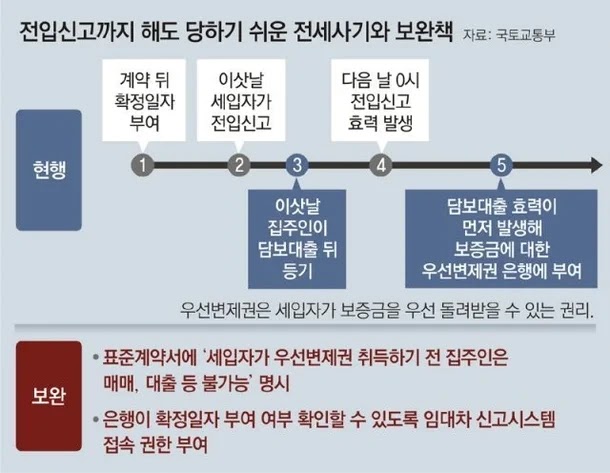
Be cautious of fraud that exploits the fact that the effectiveness of the registration of residence begins at 0:00 the day after the report.
Here lies the most deadly trap. Your counterclaim and priority repayment rights only take effect from ‘0:00 the day after the registration of residence and possession is completed’. If a malicious landlord takes out a mortgage on the day you pay the balance and move in, the bank’s mortgage rights will legally precede your lease rights. This is why the aforementioned ‘Essential Special Clause 1’ is as crucial as life itself.
Conclusion: Calculated Risk or Reckless Gamble?
Now we return to the initial question. Is it okay to contract real estate without a real estate agent? This article does not provide a simple answer of ‘yes’ or ’no’. Instead, it aims to clearly show what this choice means.
- Key Point 1: Direct real estate transactions have clear advantages in saving brokerage fees and gaining control over transactions, but a convenient UI can make one forget the risks involved.
- Key Point 2: Fraud methods like ghost landlords and double contracts are becoming increasingly sophisticated, and falling victim can lead to catastrophic consequences, including losing your entire fortune.
- Key Point 3: To conduct direct transactions safely, you must perfectly handle everything from analyzing property registration certificates to verifying ID authenticity, inserting essential special clauses, and registering residence/confirmed dates.
On one side of the scale lies the certain and sweet benefit of saving tens or hundreds of thousands of won in brokerage fees, while on the other side lies the risk of losing your deposit, which could be worth hundreds of millions of won in an instant.
Having read this article to the end, you now know the reality of the risks and have the tools to analyze and avoid them. Whatever choice you make, I hope you walk not in the fog of ignorance but with clear vision, fully aware of everything.
References
- [Exclusive] “I need to save 6 million won in fees” Real estate direct transactions have surged 220 times in three years Link
- [Kim Seul-gi’s Friendly Real Estate] Thinking of saving on fees with direct transactions on ‘Carrot’?… Check ’this’ Link
- Saving salary while saying “I’m selling my house”… Reasons for the explosion of ‘Carrot Real Estate’ / SBS 8 News - YouTube Link
- [Minji Review] From ‘Hogang’ to ‘Expert’… Real estate information apps that the MZ generation keeps an eye on | JoongAng Ilbo Link
- [Easy Real Estate] Evolution of real estate direct transaction fraud methods and countermeasures - Daum Link
- “I signed a contract and made a deposit, but…” Real estate ‘direct transaction fraud’ has gone this far (Subtitle News) / SBS - YouTube Link
- Responsibilities of brokerage contracts and real estate agents - Easy Living Law Information Link
- Even if you suffer losses due to the agent’s mistake, the compensation is only about half of the claimed amount - Tax Accountant Newspaper Link
- Government 24 Resident Registration Authenticity Verification Link
- Housing Lease - Acquisition of Counterclaim and Priority Repayment Rights - Easy Living Law Information Link