
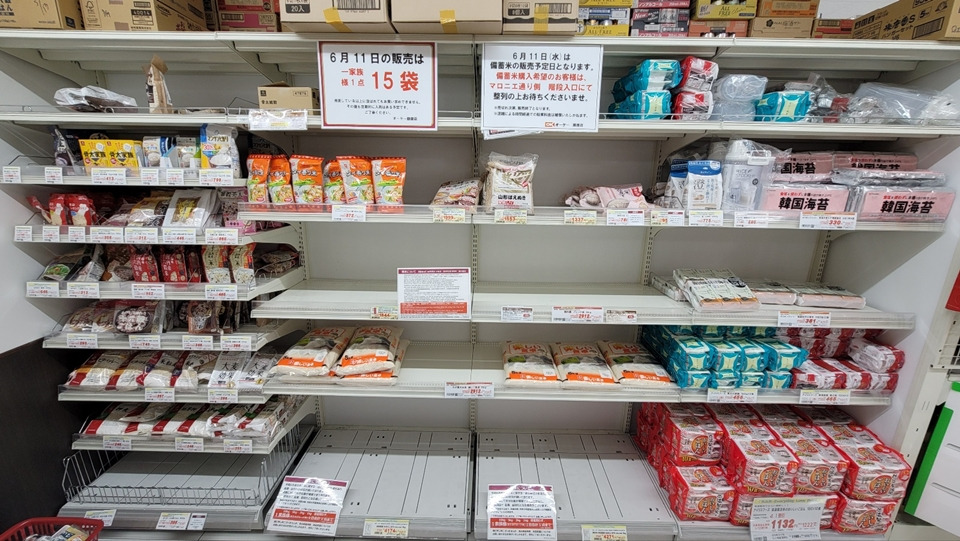
A record of a massive crisis that shook Japanese society, starting from the empty shelves in Tokyo.
- The four key causes of the rice crisis in Japan.
- The shocking impact of rising rice prices on ordinary citizens and small business owners.
- Lessons for future food security through comparisons with past rice crises.
‘The Reiwa Rice Crisis’: How Did the Tragedy Begin?
The story begins in a typical supermarket in Tokyo, where housewife Akiko’s hand freezes as she reaches for dinner. Instead of the usual Koshihikari rice, she is met with empty shelves, and the personal embarrassment she feels marks the starting point of the massive social crisis known as the Japanese Rice Crisis. The price tag that soared nearly double in just one year was not merely a case of inflation.
The name ‘Reiwa Rice Crisis’ (令和の米騒動), coined by the media, carries the historical fears ingrained in the DNA of the Japanese people. The specters of the 1993 ‘Heisei Rice Crisis’ and the rice crisis that led to a government collapse in 1918 have been resurrected. In Japan, rice shortages signal anxiety that shakes the very foundations of society, transcending mere food issues. How did this happen in a country that once had a surplus of rice and needed to reduce production?
Chapter 1: The Perfect Storm - Four Factors That Brought Disaster
The rice crisis that engulfed Japan in 2024 was a ‘perfect storm’ created by four ingredients: climate backlash, policy contradictions, an unexpected surge in demand, and an opaque distribution structure.
1. Climate Backlash: The Record Heat of 2023
The prelude to all disasters was the record heat that scorched the Japanese archipelago in the summer of 2023. While past issues were related to cold damage, this time the problem was the ‘hot summer’.
The government and experts initially missed the essence of the crisis. They focused solely on the quantity of the harvest, but the real disaster stemmed from the invisible collapse of quality. According to Dr. Yuji Matsutomi from the National Institute for Environmental Studies, the unprecedented high temperatures hindered rice from properly accumulating starch in the grains. This resulted in a large number of immature grains that appeared intact on the outside but were hollow or white on the inside.
Ultimately, the proportion of the highest grade ‘1st class rice’ plummeted, and the supply of market-desired, high-value rice decreased far more severely than official statistics indicated. This was the fatal misjudgment that led the government to initially view the situation optimistically.

2. The Ghost of Policy: Decades of Production Reduction Policy
If climate change was the trigger, the bullet was Japan’s decades-long ‘production reduction policy’. This policy, which artificially reduced the area of rice fields through government subsidies to prevent overproduction, paradoxically acted as a slow poison that eroded the flexibility of Japan’s food security system.
The area of rice cultivation shrank from 3.17 million hectares in 1969 to just 1.24 million hectares by 2023. The production potential itself has been reduced to less than half of what it once was. With all buffering mechanisms removed from the system, the combination of supply shocks and surging demand left the system unable to cope. The crisis of 2024 was the bill for decades of ‘managed decline’ policies.
3. Unexpected Demand: Tourists, Panic, and Earthquakes
While supply collapsed, demand unexpectedly exploded.
- Surge in Tourists: In the post-COVID era, the influx of foreign tourists significantly increased rice consumption in the restaurant industry.
- Panic Psychology: In August 2024, reports of the potential occurrence of the ‘Nankai Trough Earthquake’ stirred national anxiety, leading to a panic buying spree for emergency food supplies.
The simultaneous eruption of actual and psychological demand completely depleted already dwindling private stocks.
4. A Broken System: The Mystery of Missing Rice
Greater confusion arose from the disparity between statistics and reality. Some statistics indicated that rice production had actually increased, yet why were the market shelves empty? The Ministry of Agriculture, Forestry and Fisheries pointed to ‘panic buying and speculative movements’ by distributors as the cause.
Strong evidence emerged that rice produced on farms was getting stuck somewhere in the distribution chain and not flowing into the market. This incident revealed just how opaque and inefficient Japan’s rice distribution structure is, a ‘black box’ where even the government lacked the power to grasp or control the flow in real-time.
Table 1: Anatomy of Price Surge - The Perfect Storm of the 2024 Japanese Rice Crisis
| Category | Specific Factors | Description |
|---|---|---|
| Supply Shock (Production) | Record Heat of 2023 | Extreme heat severely degraded both the quantity and quality of rice. |
| Policy Failure (Supply) | Production Reduction Policy | Decades of production reduction policies eliminated the buffering capacity against external shocks. |
| Demand Shock (Consumption) | Post-COVID Tourism Boom | The surge in foreign tourists led to a much larger-than-expected increase in rice demand in the restaurant industry. |
| Demand Shock (Psychological) | Panic Buying and Hoarding | Fears of earthquakes and shortages led consumers to engage in panic buying for emergency food supplies. |
| Distribution and Market Failure | Opaque Distribution Network and Speculation | Allegations of hoarding by distributors created a gap between production and distribution. |
Chapter 2: The Anxiety of a Nation - The Battle on the Dining Table
The waves of disaster created by macro-level causes crashed into the daily lives of ordinary people.
Consumer Tears: “I Can’t Eat Rice Every Day”
The price of a 5kg bag of rice soared to over 4,200 yen, nearly doubling from a year ago. Citizens lamented, “I haven’t been able to eat rice every day for the past month,” and more families began substituting rice with bread or udon. In this situation, an advertisement by the Japan Agricultural Cooperatives (JA) asking, “Do you still feel rice is expensive?” published in newspapers sparked national outrage.
The Survival of Restaurants: The End of ‘Okawari Jiyu’
The restaurant industry took a direct hit. The ‘Okawari Jiyu’ (unlimited rice refill) service, which symbolized the generous spirit of Japanese restaurants, began to disappear. Many restaurants either abolished the service or switched to charging for it, and some used cheaper mixed rice instead of expensive domestic rice.
Market anxiety exploded into the phenomenon of ‘Aotagai’ (青田買い), where participants pre-purchase next year’s harvest before the rice has even grown. This showed that market participants had completely lost trust in the current supply chain.
The Collapse of Pride: ‘Rice Shopping Expeditions’ to Korea
A symbolic event of all this chaos occurred in Korea. Japanese tourists were seen buying rice at large supermarkets in Korea, a shocking sight of Japanese people, who take great pride in Japanese rice, purchasing rice that was hard to find in their own country during their travels to Korea.
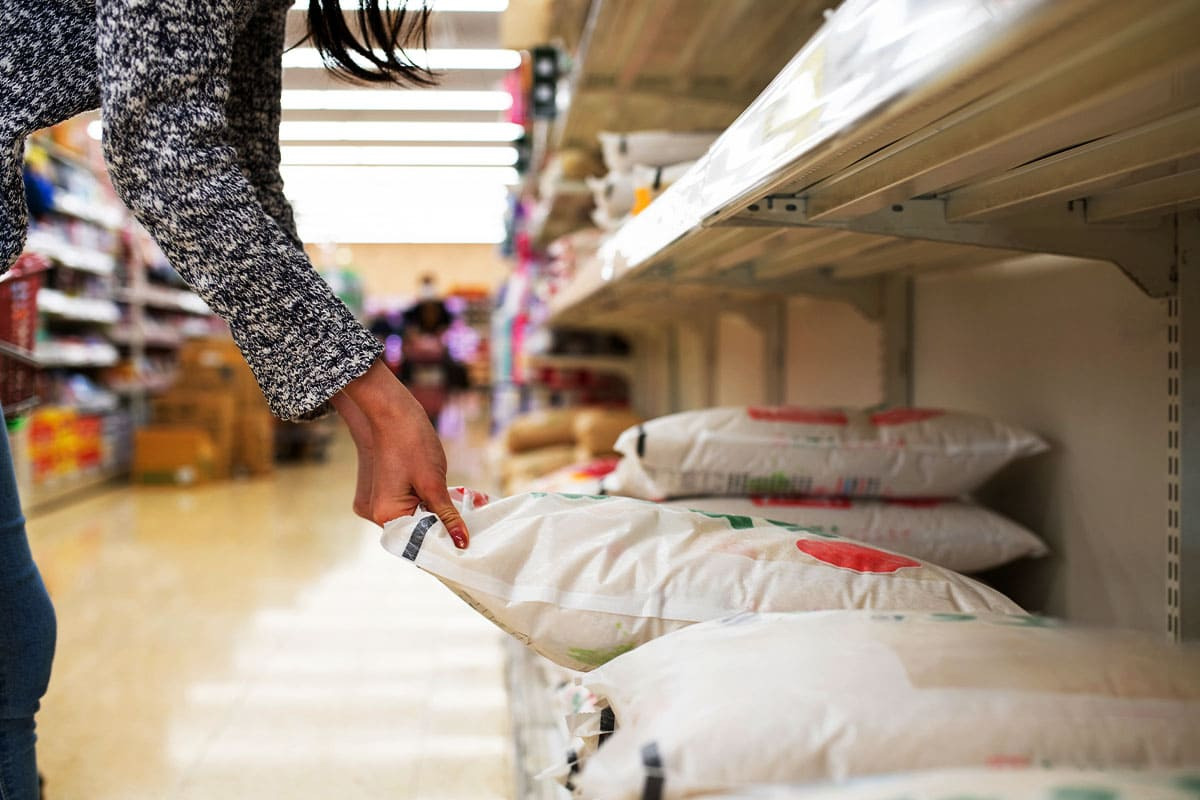
Ultimately, in April 2024, Korean rice was officially exported to the Japanese market for the first time in 35 years. This was not just an economic phenomenon but a cultural event that signaled the serious breakdown of Japan’s food system to the world.
Chapter 3: The Government’s Gamble - Too Little, Too Late
The government’s crisis response faced unavoidable criticism of being ’too little and too late’.
Futile Efforts: Ineffective Release of Stockpiled Rice
The government released hundreds of thousands of tons of national stockpiled rice into the market. However, rice prices continued to rise for 16 consecutive weeks. The core of the crisis was overlooked: it was not the total amount of rice but the ‘distribution system’ that was broken, preventing rice from reaching consumers.
Allegations arose that large distributors who won most of the auctioned stockpiled rice were hoarding it or selling it at a premium instead of immediately releasing it into the market. The government’s policies were thwarted by the very partners meant to implement them.
Political Aftermath: Minister’s Gaffe and Prime Minister’s Crisis
Public outrage turned towards politics. Minister of Agriculture, Forestry and Fisheries Taku Eto sparked anger with his detached comment, “I have never bought rice. I have enough at home because my supporters send it to me,” ultimately leading to his disgrace as the first minister to be dismissed from Shigeru Ishiba’s cabinet. This incident once again proved the formula that a rice price crisis equates to political fate.
Chapter 4: Echoes of the Past, Warnings for the Future
The ‘Reiwa Rice Crisis’ serves as a warning light that reveals deeper structural problems facing Japanese society.
History Repeats Itself, But More Brutally
Compared to past rice crises, the 2024 crisis has far more complex and chronic causes.
Table 2: Japanese Rice Crises - A Comparative Overview
| Crisis | Era | Major Causes and Outcomes |
|---|---|---|
| 1918 Rice Crisis | Taisho (大正) | Caused by inflation and speculation after World War I. Led to nationwide violent protests and government collapse. |
| 1993 Rice Crisis | Heisei (平成) | Caused by an unusual summer cold wave leading to a major crop failure. The first-ever emergency import of foreign rice. |
| 2024 Rice Crisis | Reiwa (令和) | Complex causes including heatwaves, production reduction policies, and distribution network breakdown. Government intervention failures and ‘rice shopping expeditions’ to Korea occurred. |
While past crises were ‘acute diseases’, this crisis resembles the manifestation of a ‘chronic disease’ that has slowly weakened the entire Japanese agricultural system.
Crumbling Foundations: An Aging and Disappearing Rural Japan
Beneath this rice crisis lies the reality of a ‘structural collapse’ in Japanese agriculture. The extreme aging of the agricultural population, lack of successors, and the increase of ‘abandoned farmland’ that is not being managed are shaking the agricultural foundation from the roots.
As the number of farmers decreases, fields disappear, and the production base weakens, the entire system is bound to collapse under even minor shocks. This is the fundamental background of the Japanese rice crisis.
Conclusion
The empty rice shelves in Japan in 2024 leave us with three important lessons.
- Climate change is now a crisis of quality, not just quantity. Unpredictable extreme weather can destroy food quality, leading to a practical supply shortage beyond statistics.
- Policies aimed at stability in the past can hinder the future. Systems that eliminate flexibility to respond to changing environments, like the decades-long production reduction policy, can collapse in an instant.
- Transparent and efficient distribution networks are key to food security. If produced food is not properly distributed, even national stockpiles can become useless.
Japan’s experience serves as a powerful warning that even advanced countries with top-tier economies can see their food security crumble easily. Do you think our dining tables are safe? It is time to reflect on our food security systems, using Japan’s case as a mirror, and discuss fundamental measures suitable for the era of climate change.