

Here’s a pilot. His dashboard has only one instrument: a ‘rearview mirror’. He talks to himself, looking at the straight runway and the calm sky he has already passed. “Well, since the path I’ve taken has been so perfect, there will be no problem going forward.”
However, his windshield is so obscured by thick fog that he can’t see an inch ahead. He has no idea if he’s about to crash into a giant mountain range or fly into the worst turbulence in history. The only belief he holds is the very sweet but fatal illusion that ’the past guarantees the future.’
Frankly, this is surprisingly similar to how countless investors approach the market today. We continue our flight into the future, relying on rearview mirrors of decades of return data and sophisticated economic models. But do you know the most terrifying truth written in the blood of history? The most fatal risks and the greatest opportunities always appear unexpectedly from uncharted territory.
This article isn’t about teaching you some grand investment technique. It’s an invitation to fundamentally change your investment perspective, or rather, your way of seeing the world. Let’s talk together about the greatest wisdom, ‘resilience’, that will firmly protect you and your family no matter what future unfolds, and stop chasing the futile effort of pursuing the mirage of prediction.
Part 1: The Dangerous Lies History Whispers to Us
We say we learn lessons from history. But the moment we use history as a tool for future prediction, it transforms into the most cunning swindler. Past data is not a blueprint for the future. It is merely a ‘preserved record’ of events that occurred under specific conditions, and that record never warns us that a world where it is no longer valid will come.
Case 1: A Miracle Blossoming from Ashes, World War II
Imagine the world in 1945, as the war ended. The ‘data’ of that time was the epitome of humanity’s worst despair. Germany’s industrial production had plummeted by two-thirds, and Japanese cities had disappeared from the map. Economists predicted decades of darkness. The most ‘rational’ investment strategy based on this data would have been to sell everything and prepare for the coming Great Depression.
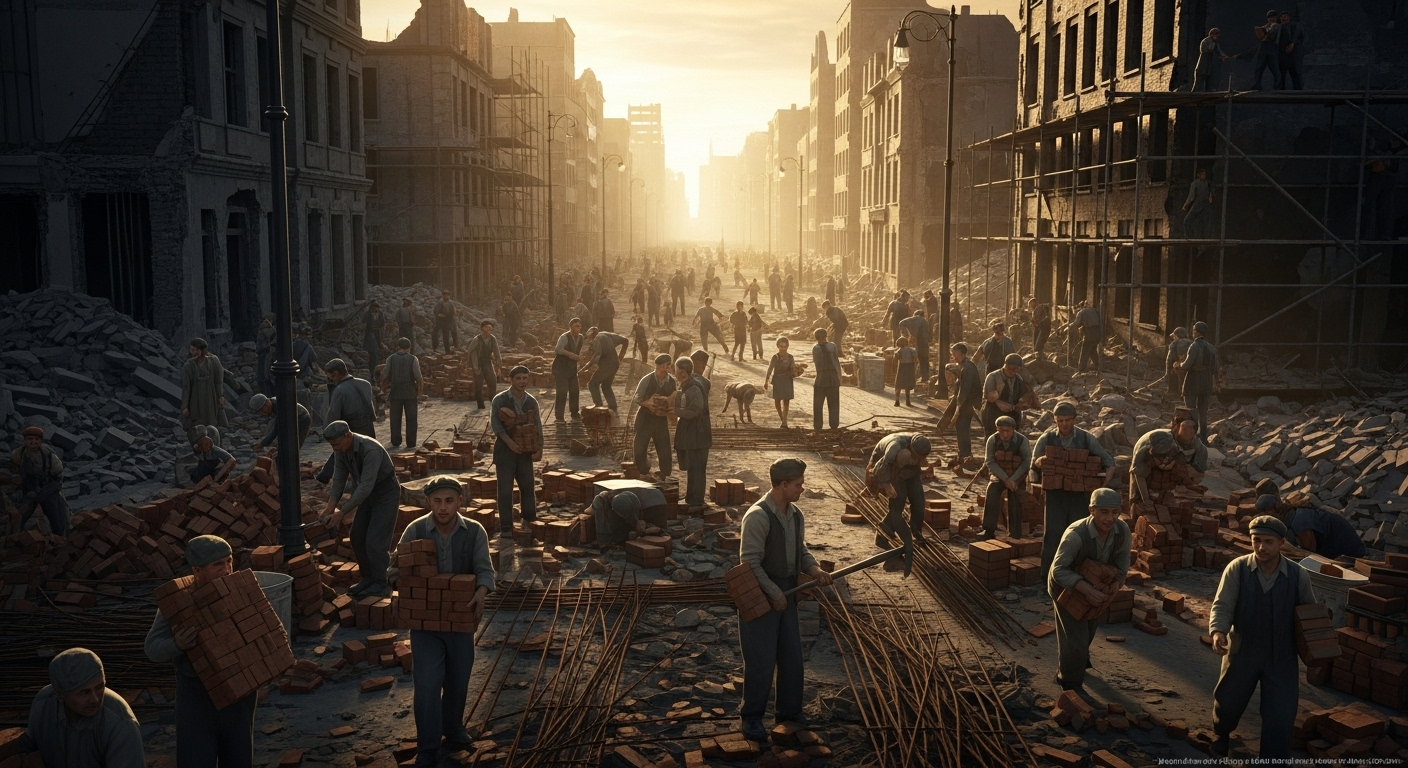
The data in 1945 was only despair, but history took a different path than predicted.
Yet, history unfolded in a completely different direction, as if mocking pessimism. The United States launched the ‘Marshall Plan,’ pouring astronomical sums into the reconstruction of Europe. Destroyed infrastructure was repaired, pent-up consumption exploded, and the ‘Baby Boom’ created new demand. As a result, from 1950 onwards, the Western world recorded phenomenal growth, dubbed the ‘Golden Age of Capitalism’.
Investors who relied solely on the pessimistic data of 1945 could only watch from the sidelines as humanity experienced the greatest wealth creation process in its history. It was a moment that proved history is not an extension of data, but a creation born from unpredictable human decisions.
Case 2: 9/11 Terrorist Attacks, It Wasn’t Just Buildings That Collapsed
On September 10, 2001, no risk model included a scenario where ’terrorists would hijack American passenger planes and strike the heart of New York.’ Such a story belonged only in cheap novels. On September 11, it wasn’t just two buildings that collapsed. A grand belief that ’the world would stabilize in a predictable direction collapsed.’ 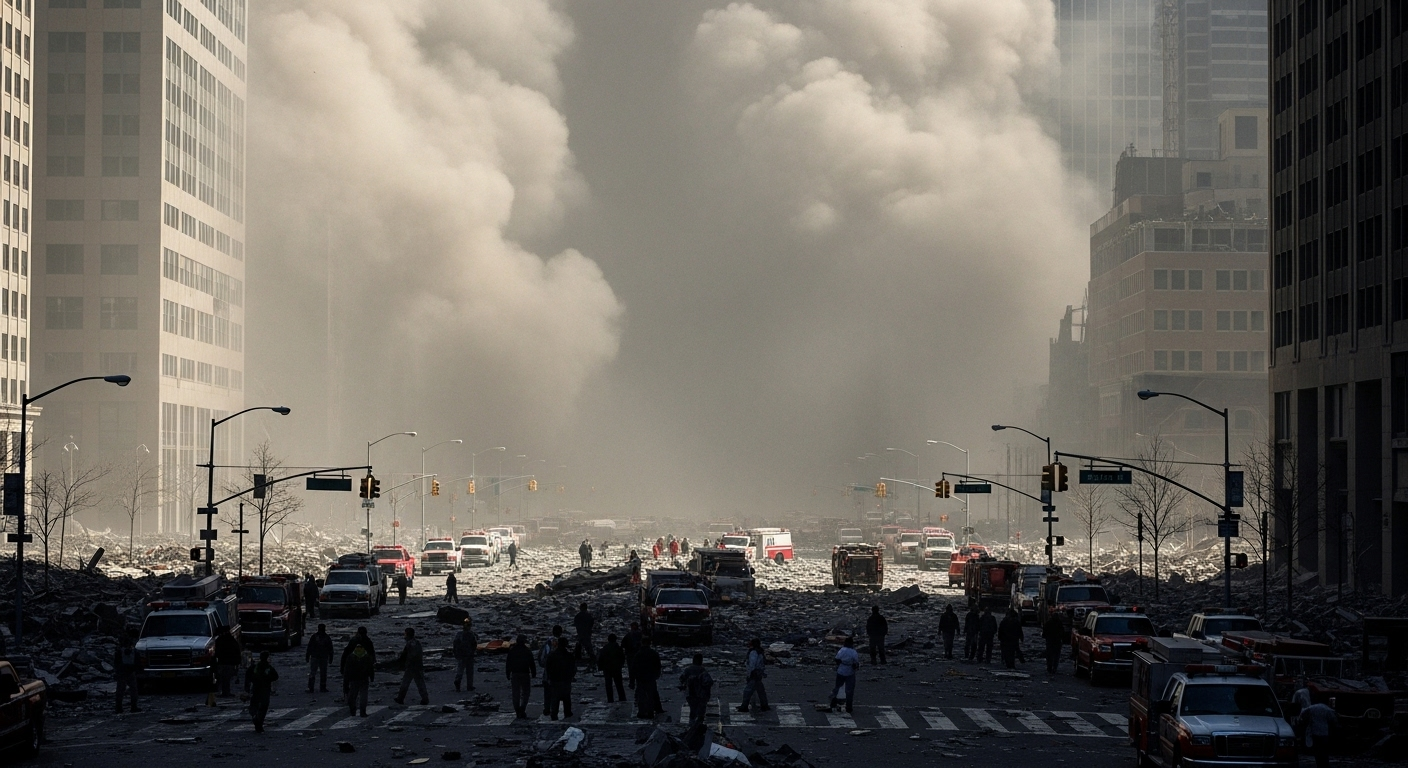
This immense ‘surprise’ triggered a chain reaction that no one anticipated.
- War on Terror: The United States launched costly wars in Afghanistan and Iraq.
- Era of Ultra-Low Interest Rates: Fearing economic recession, the Fed lowered interest rates to historic lows.
- Housing Market Bubble: Ultra-low interest rates flowed into the housing market, creating a massive bubble.
- 2008 Financial Crisis: Eventually, the bubble burst, plunging the world into its worst financial crisis.
No matter how meticulously you analyzed financial data from the past 100 years, could you have predicted that a terrorist attack in New York would lead to the collapse of the global financial system seven years later? Impossible. History unfolds in this manner, where a single massive shock (a black swan) creates entirely unforeseen ripple effects over decades.
Part 2: An Era of New Surprises, The Fog Has Thickened
While past ‘surprises’ were primarily external shocks, we are now living in an era of fundamental structural disruption where the very rules of the game are changing. The map of the past has truly become obsolete.
Paradigm Shift 1: The End of the ‘Flat World’, Deglobalization
For the past 40 years, the global economy was built on the premise of ‘globalization’. A world where goods were manufactured in the cheapest locations and supplied at low prices. Within this trend, there was even a declaration that ‘inflation is dead.’ However, the pandemic and wars have shaken this belief. We are now facing a reality where supply chains are paralyzed and energy is weaponized.
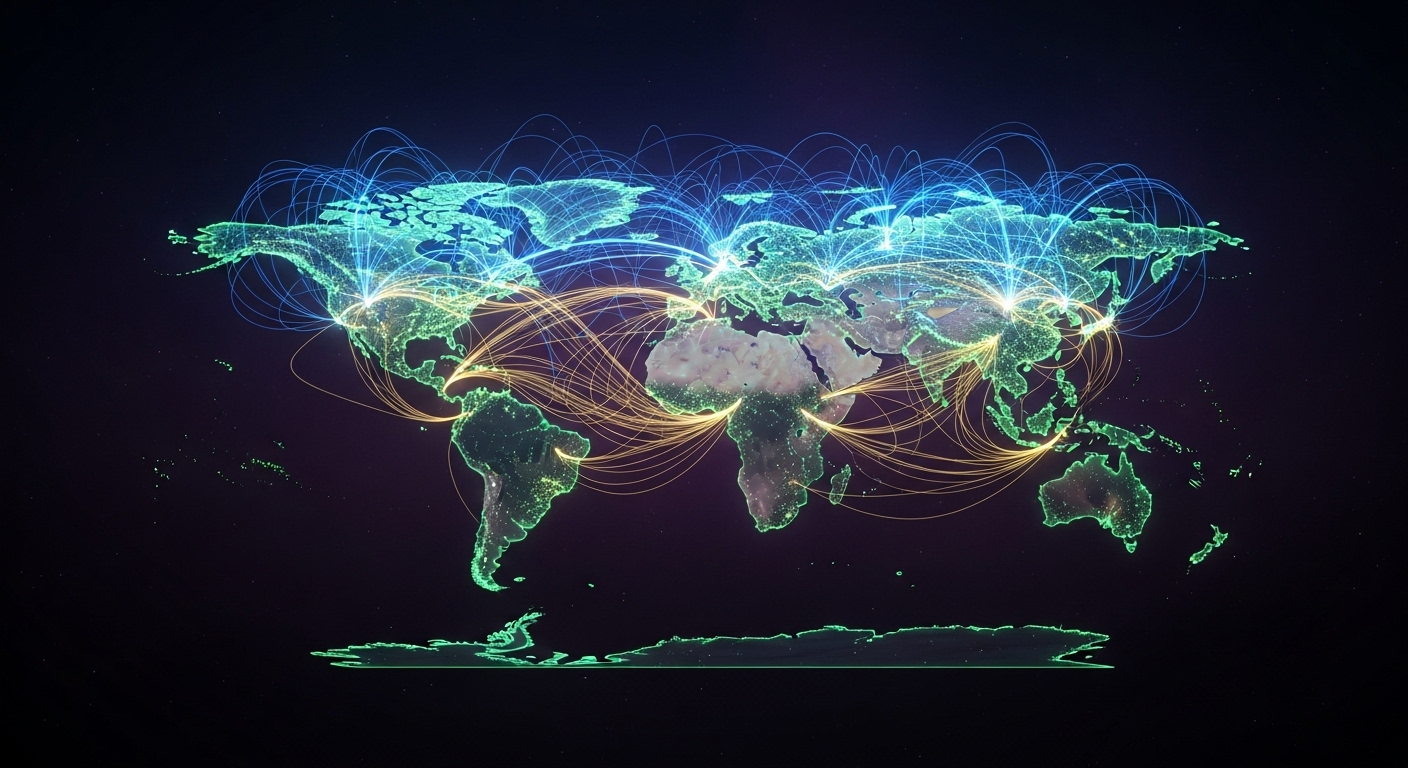
Now, the world prioritizes ‘security’ and ‘resilience’ over ’efficiency.’ ‘Deglobalization,’ which involves reorganizing supply chains around domestic economies, signifies a structural change meaning the end of the era of low inflation that dominated the world for the past 40 years.
Paradigm Shift 2: Generative AI, The Industrial Revolution of Intellect
Prior to the launch of ChatGPT in November 2022, no economic forecast report predicted that ’large language models would fundamentally transform humanity’s knowledge work productivity.’ The advent of generative AI marks the birth of ‘general-purpose technologies’ akin to the invention of the steam engine or the internet. It’s a massive wave that changes the productivity of society as a whole, the value of labor, and the definition of knowledge.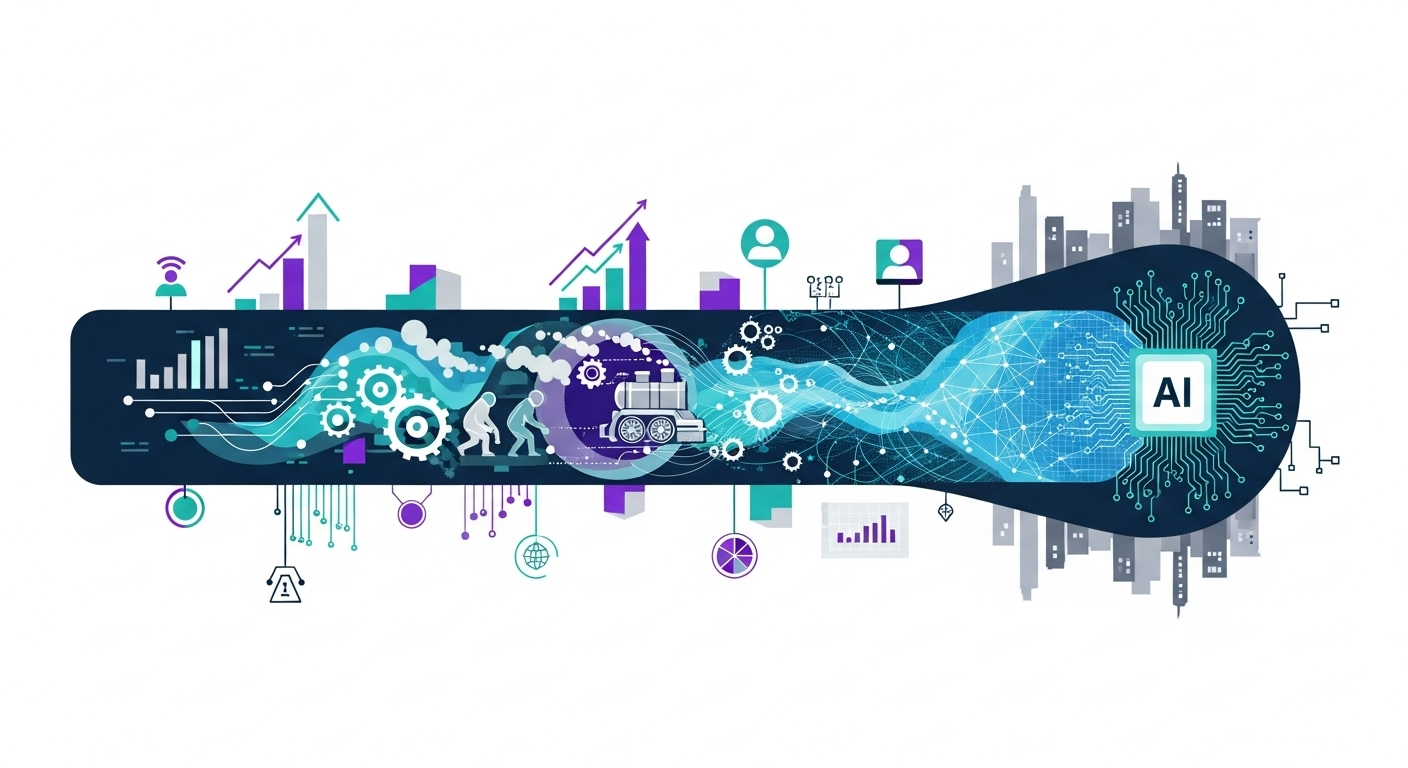
“How can we measure the value of algorithms that learn and evolve on their own using accounting principles created in the 20th century?” Old metrics like PER and PBR cannot measure the value of the disruptive innovation that AI will bring. We are entering an era we’ve never been to before.
Part 3: Resilience, Not Prediction, Build Your Own ‘Ark’
What should we do in this thick fog? We must abandon the pursuit of more sophisticated prediction models and focus our wisdom on building a sturdy ‘ark’ that will not break in any storm.

Instead of predicting the future, we must build resilience that can withstand any storm.
Principle 1: The Wisdom of Benjamin Graham - Margin of Safety (Room for Error)
Benjamin Graham, the father of investing, expressed his ‘margin of safety’ as an acknowledgment of humility: ‘I can be wrong, and the world will surprise me.’ The ‘cash cushion’ that prevents your life from collapsing even in unexpected crises is your margin of safety. Cash is not an asset with a 0% return; it is the most valuable ‘call option’ in the world, allowing you to buy great assets at a bargain price during moments of fear.
Principle 2: Nassim Taleb’s Edge - Profit from Shocks (Antifragile)
Nassim Taleb introduced the concept of ‘antifragile’, which becomes stronger when subjected to shocks. A portfolio is antifragile if it can seize opportunities during crises like market crashes. With sufficient margin of safety (cash), you can become wealthier by picking up great assets that fearful people are dumping. The crisis makes you stronger.
Principle 3: Morgan Housel’s Soul - The Best Strategy is One You Can Stick With For Life
In “The Psychology of Money,” Morgan Housel points out that individual investors underperform the market average due to the ‘behavior gap.’ Emotional actions like selling in fear and buying in greed erode returns. Ultimately, the best strategy is not the one with the highest theoretical return, but the strategy that allows you to sleep soundly and persevere without giving up, even when the market goes wild. Investing is not a battle with the market; it is ultimately a battle with oneself.
Conclusion: “I Don’t Know” is the Freest Wisdom
Now, we are no longer anxious in the thick fog. We have decided to remove the rearview mirror and face uncertainty head-on.
The highest level in the world of investing is not predicting the future. It begins with humbly admitting, “I don’t know what amazing things will happen in the future.” This profound realization liberates us from the foolish game of prediction. Instead, it allows us to focus on what we can fully control: savings rate, patience, and humility.
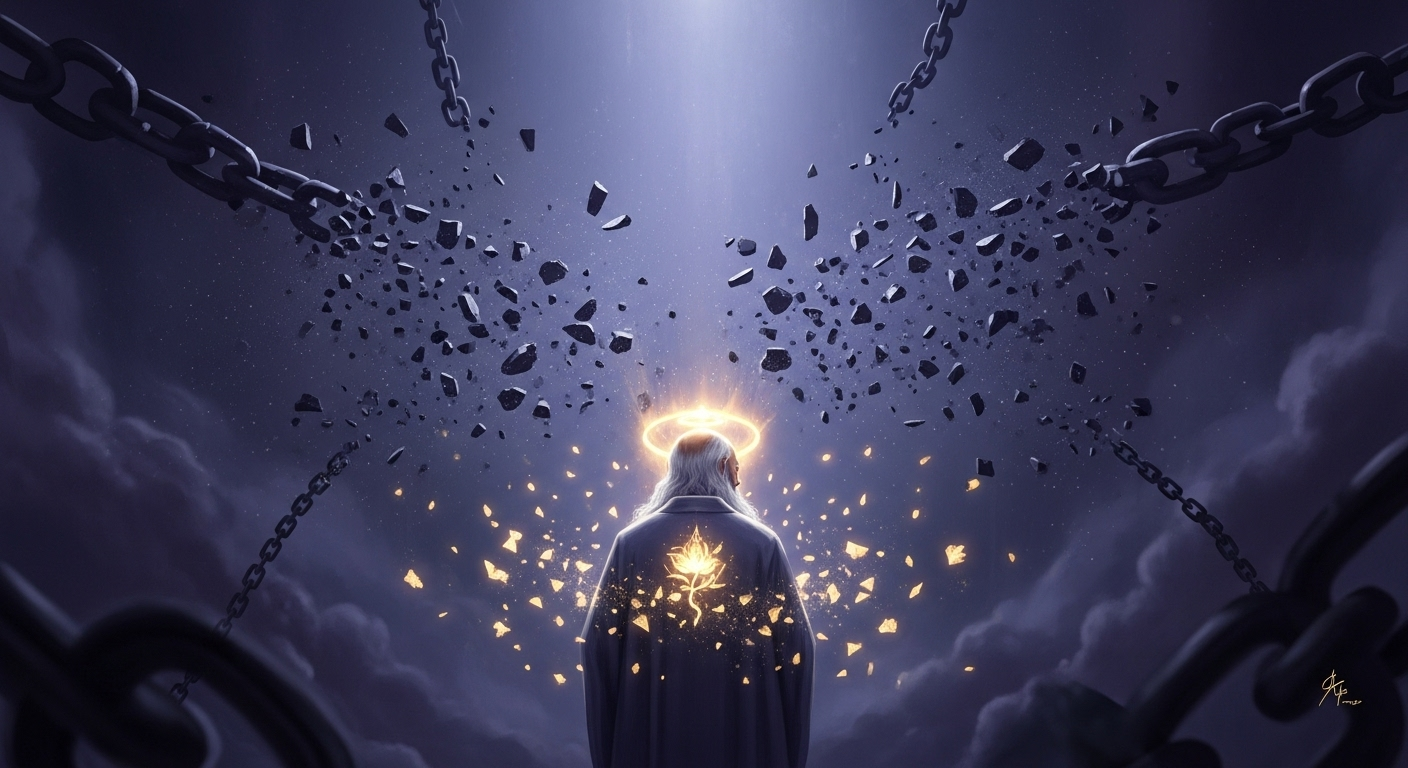
These will be your new compass for navigating an unknown world, more powerful than any prediction model. I sincerely hope that instead of being a slave to prediction, you become a master of resilience, and that you find peace of mind on your safe and sturdy ark when the world encounters storms beyond imagination.
References
- Morgan Housel, The Psychology of Money
- Nassim Nicholas Taleb, The Black Swan, Antifragile
- Benjamin Graham, The Intelligent Investor
- Francis Fukuyama, The End of History and the Last Man