
The Tyranny of the Clock—Why Do We Get Hungry at Set Times?
- The fact that for most of human history, two meals a day were the standard.
- The social background that led to the birth of the concept of ’lunch’ during the Industrial Revolution.
- The deep and interesting history hidden behind our ordinary meal.
An Era When Two Meals a Day Were the Standard
Have you ever seriously thought about it? Why does our stomach clock ring like a ghost at lunchtime, and why is our day neatly divided into three time slots: morning, lunch, and dinner? We regard this ’three meals a day’ rule as a natural law, as inevitable as the rising and setting of the sun. However, for most of human history, this rule was considered rather strange.
What we call the ’three meals a day’ habit is not a biological command but a historical invention sculpted by the immense forces of religion, economy, and technology, created relatively recently. This article embarks on a journey from the two-meal world of ancient Rome and Joseon to the tumultuous era when the revolutionary concept of ’lunch’ was born, leading us to our modern dining tables.
Dining in Ancient Rome: A Stage for Socializing and Class
Looking into the daily life of ancient Romans, we can clearly see how their dining culture reflected social hierarchies and ways of life beyond merely filling their stomachs. A Roman’s day typically began with a light breakfast called ientaculum, consisting of bread, wine, and cheese.
The centerpiece of the day was undoubtedly cena, or the evening banquet. Originally the main meal around noon, cena gradually shifted to the evening as Roman society became wealthier. For the upper class, cena was the most important social event held after a day’s work. To fill the gap left by cena moving to the evening, a light lunch called prandium, often made from leftover food, emerged.
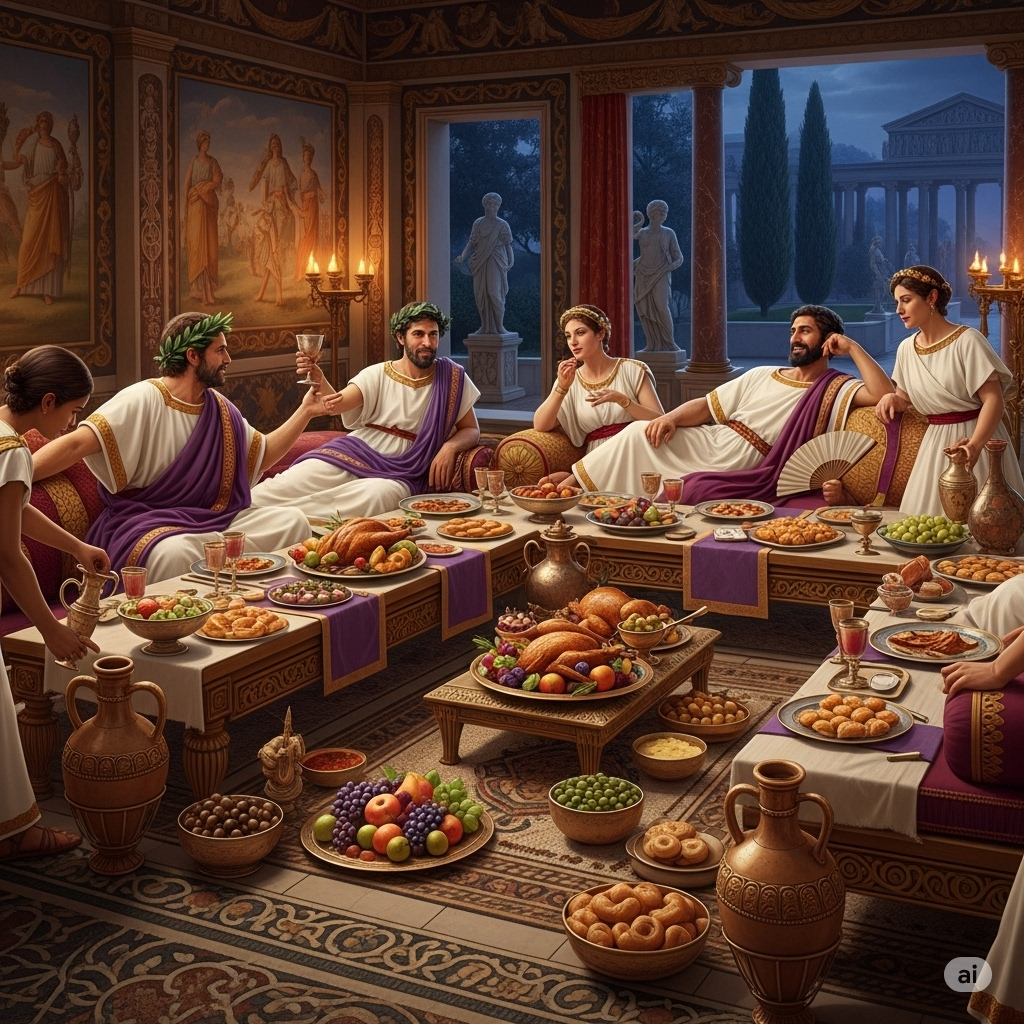
The cena of the upper class was a lavish social event showcasing wealth and power, a ‘social theater’. The reclining position on the long benches of the triclinium was a symbol distinguishing free citizens from slaves. Exotic dishes like ostrich and flamingo were served in ornate tableware, and performances continued during meals, facilitating political, philosophical, and social networking.
In contrast, the staple food of Roman commoners was puls, a grain porridge. They would add vegetables or occasionally meat, but that was all. Thus, Roman dining culture exhibited stark differences based on social class, reflecting the structure of Roman society.
Medieval Europe: Breakfast Was a ‘Sin’
Moving to medieval Europe, dining culture took on another aspect. The standard during this era was also two meals a day, consisting of a hearty ‘dinner’ around noon and a light ‘supper’ in the evening. However, the most surprising fact is that breakfast, which is now a symbol of health, was considered a morally dubious act, even one of the seven deadly sins, ‘gluttony’.
The theologian Thomas Aquinas identified ’eating too early’ as a form of gluttony. Breaking the fast too early was seen as succumbing to physical desires and hindering spiritual focus.
Of course, breakfast was permitted for hard laborers, children, and the elderly. This created a unique social dynamic where the ability to skip breakfast itself became a symbol of piety and high social status. This is an excellent example of how even biological needs can be reconfigured into moral issues by the dominant ideology of an era (Christian theology).
Traditional Korean Meals: The True Meaning of ‘Lunch’
Interestingly, traditional Korean society also based its meals on two a day for a long time. From the Three Kingdoms period to the Joseon Dynasty, having one meal in the morning (조, 朝) and one in the evening (석, 夕) was the standard. I vividly remember my grandmother asking, “Did you eat your 조석?” This shows that ’lunch’ has not been fully established in our daily lives for very long.
The most interesting point here is the original meaning of lunch (點心). This term literally means ’to dot the heart’ and refers to light snacks like noodles or rice cakes eaten to quell hunger between breakfast and dinner. It was not a formal meal. In the diary from the Imjin War, Swaemirok (瑣尾錄), it is clearly stated that when eating simply, it was called ’lunch’, and when eating heartily, it was called ‘day meal (晝飯)’, distinguishing the two.
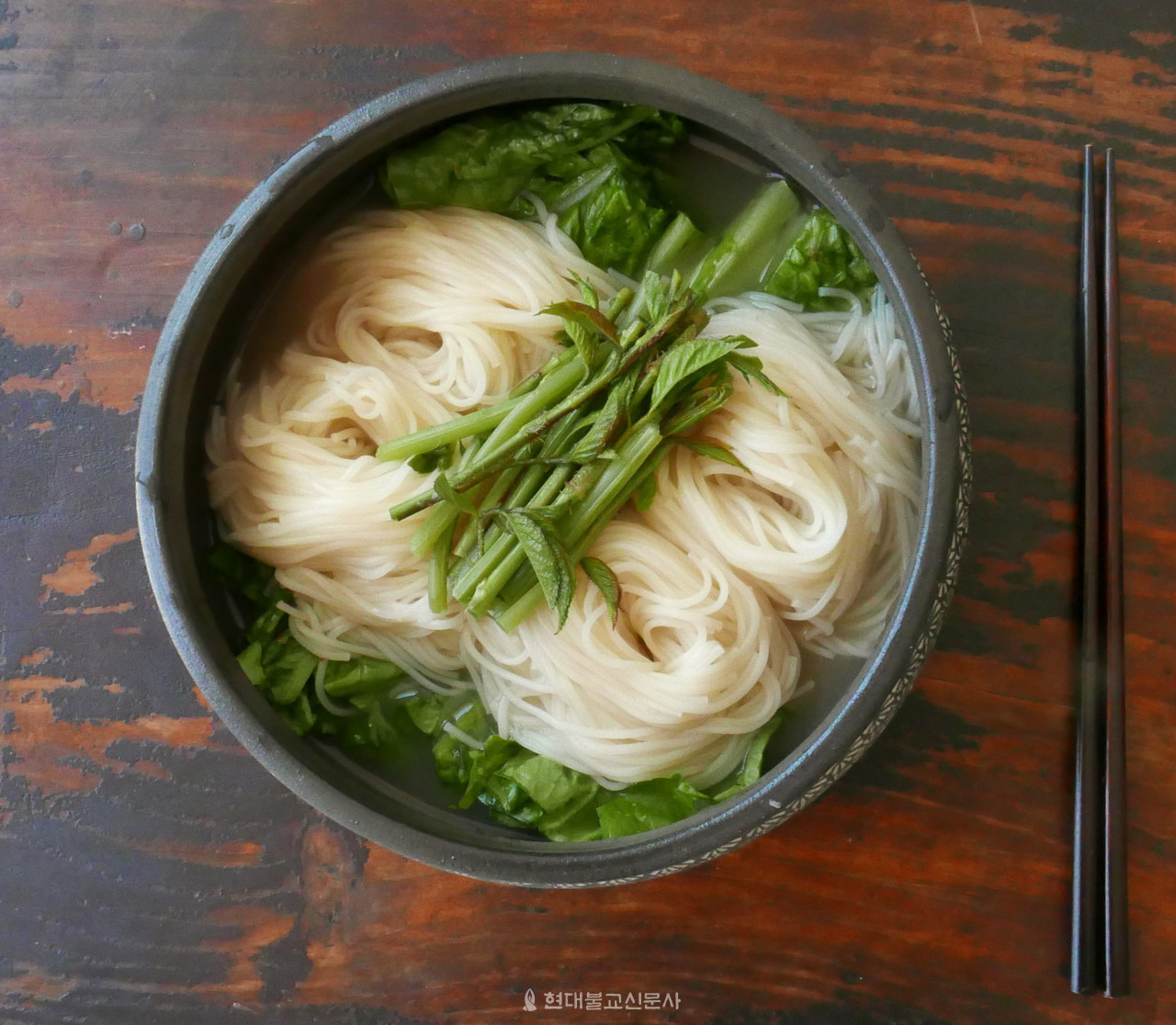
This was very practical compared to medieval Europe. During the busy summer farming season, people would eat three meals, while in the less active winter farming off-season, they would eat two meals, demonstrating wisdom in adjusting meal frequency according to energy expenditure. The change in meaning of the word ’lunch’ serves as a ’linguistic fossil’ showing the massive social transformation where snacks were elevated to formal meals during modernization.
The Birth of ‘Lunch’: How Did Three Meals a Day Begin?
How did the world of two meals a day, which dominated human life for so long, collapse, leading to the birth of the current three-meal culture? At the center of this transformation was the immense force known as ‘revolution’.
The Industrial Revolution and Workers’ ‘Lunch’
The most powerful driving force behind the change in dining habits in Western society was undoubtedly the Industrial Revolution. As society transitioned from agrarian to industrial, workplaces and homes became separated, and workers could no longer return home for a hearty noon meal.
Time began to move according to the sounds of factory machinery, leading to the birth of fixed short lunch breaks. There was a need for new meals that were quick, portable, and could be eaten on-site, which marked the beginning of ’lunch’.
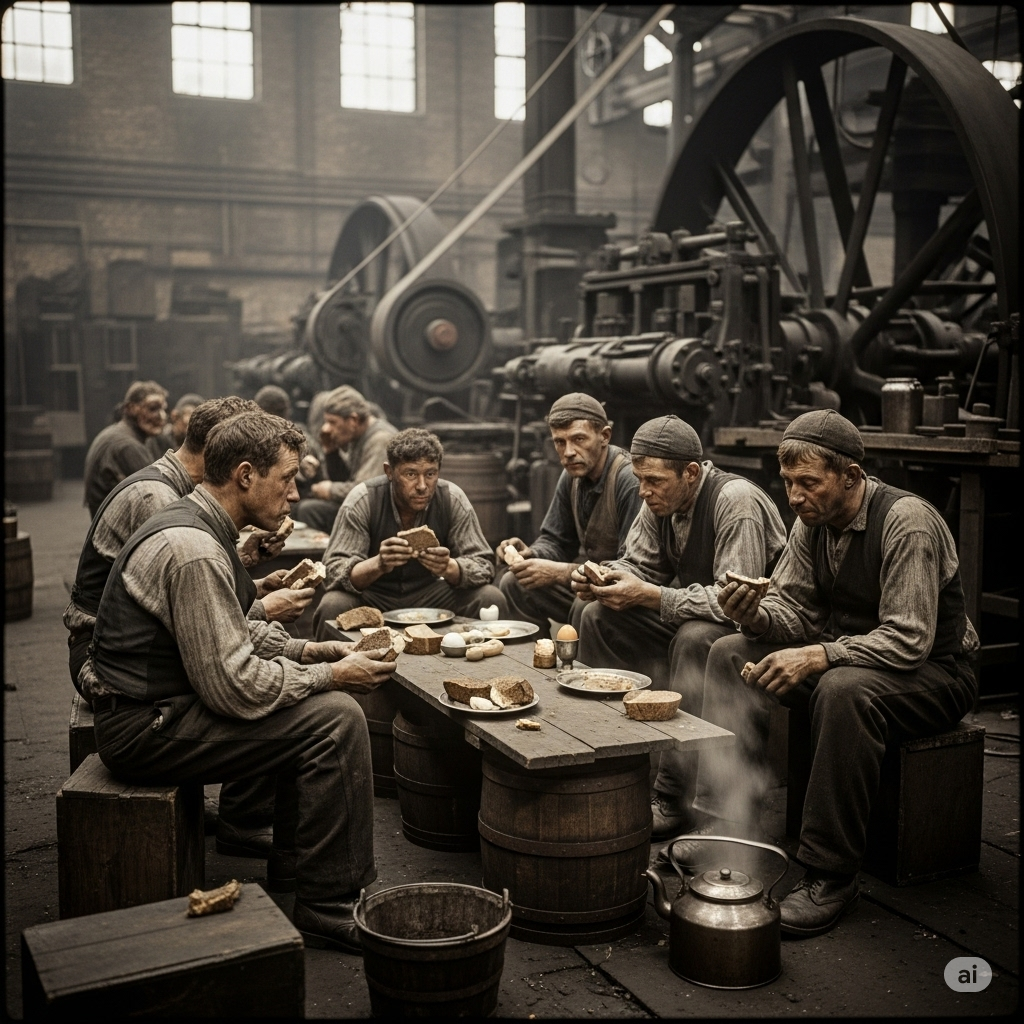
At that time, workers’ lunches consisted of cold and simple items like pie, bread, and oat cakes packed in tin lunch boxes. Poor dining conditions led to health issues, prompting the creation of separate dining spaces known as lunchrooms.
Meanwhile, among the upper class, the introduction of gas and electric lighting delayed evening social activities, leading to the popularity of light social meals called ’luncheon’ around 1 PM. The functional ’lunch’ for workers and the social ’luncheon’ for the upper class were both inevitable outcomes of the new realities of time and space created by the industrial era.
The Process of Establishing Three Meals a Day in Korea
Korea’s transition to a three-meal system primarily occurred in the 20th century, especially rapidly during the industrialization process after the Korean War.
The seeds of change were sown with the introduction of modern companies and school systems during the Japanese occupation. However, the widespread adoption of three meals a day occurred during the industrialization period of the 1960s and 70s. Nationwide compulsory education and a factory-centered labor structure forced the entire population to adhere to a strict timetable, establishing a new rhythm of life characterized by before work/school, lunchtime, and after work/school.
The role of the state was crucial in this process. The ‘Saemaul Movement’ in the 1970s, along with the ‘Food Habit Improvement Movement’, promoted regular three meals a day as a modern dietary norm. In particular, the school lunch program, which began with aid in 1953 and was legislated in 1981, was a decisive mechanism that led an entire generation to accept three meals a day as a norm.
Comparison of Dining Cultures by Era
| Era/Culture | Breakfast | Lunch | Dinner |
|---|---|---|---|
| Ancient Rome | Ientaculum (light; bread, cheese) | Prandium (simple snack, leftovers) | Cena (main meal, social event) |
| Medieval Europe | Generally avoided (sin of gluttony) | Dinner (main meal, hearty) | Supper (light meal) |
| Joseon Dynasty | Jo (朝, breakfast) | Lunch (點心, light snack) | Seok (夕, dinner) |
| Industrial Era (West) | Essential meal (for labor) | Lunch (functional, fixed time) | Dinner (family meal, late) |
| Modern Korea | Breakfast | Lunch | Dinner |
The Hidden Culture of the Dining Table: Food Beyond Its Meaning
What we eat, when we eat, and how we eat goes beyond mere survival. Meals serve as a mirror reflecting the values, power structures, and human relationships of a society.
The Theater on the Table: An Expression of Status and Power
Throughout history, the dining table has often been the most elaborately staged setting. The Victorian dinner parties exemplified this peak. In this grand ritual composed of multiple courses, what mattered was not only the taste of the food but also the extremely strict etiquette.
Hosts arranged seating based on guests’ social status, and discussing the food itself at the table was taboo. The numerous rules for using various forks and knives in a prescribed order were devices to showcase wealth and sophistication.
Interestingly, while the Roman cena served as a ‘catalyst’ for conversation and socializing, the Victorian dinner party was closer to a ‘performance’ where the food itself was the star. As food became more elaborate and visually appealing, direct conversation about the food tended to become taboo. This may be because, when meals became the ultimate symbols of wealth and taste, mentioning them directly was seen as a social faux pas that revealed the mechanisms of that display. Food was merely a backdrop for elegance, not a topic of conversation.
Conclusion: Your Meal is Full of History
We started from a world where two meals a day were the norm and witnessed how the Industrial Revolution, along with ’lunch’, gave birth to a new order of three meals a day. This three-meal structure, once regarded as the pinnacle of modern life, is now facing challenges again.
The key points we should remember from this long journey are:
- Three meals a day is an invention: The dining habits we take for granted are cultural products created by the social, economic, and technological demands of specific eras, not natural laws.
- ‘Lunch’ is a product of the Industrial Revolution: Factory labor and urbanization separated work and life spaces, leading to the emergence of functional ’lunch’ for workers and social ’luncheon’ for the upper class.
- The dining table is a mirror of society: The questions of when and how we eat have always reflected the power structures, social hierarchies, and values of their times.
Next time you sit at the table for lunch, take a moment to think. What you are about to do is not merely satisfying hunger. You are participating in a tradition shaped by the fires of the Industrial Revolution and refined by the ambitions of modern states. Your humble meal is, in fact, a plate full of history.
Now it’s time to ask a new question. What history will our meal times be recorded as 100 years from now?
References
- Ancient Roman cuisine - Wikipedia
- Most poor Romans were lucky to have more than a piece of bread… - VRoma
- Cena - Wikipedia
- Eating etiquette in ancient Rome - History Skills
- Medieval cuisine - Wikipedia
- Gluttony - Stone Dominican Sisters
- The Capital Sins: “Gluttony” — Rosary Center & Confraternity
- [April 26] In April, we used to eat two meals a day - Suwon Ilbo
- [Fountain] Lunch - JoongAng Ilbo
- Culture in: The Revolution of One Meal… - SBS
- Lunch Hour NYC | The New York Public Library
- Why We Have the Industrial Revolution to Thank for the Modern Lunch | BU MET
- Evolution of dinner times. | the Victorian era
- Saemaul Undong - Wikipedia
- School Lunches - ArcGIS StoryMaps
- Planning a Traditional Victorian Dinner Party - Gail Carriger
- Mind your manners! Victorian table etiquette - Recollections Blog