
The Donkatsu Story You Didn’t Know
A large golden fried cutlet, so big it seems to overflow a big white plate, topped with a shiny dark red sauce. On the side, there’s a serving of white rice, a small bowl of cream soup, crunchy kkakdugi (radish kimchi), and spicy green peppers. This single plate is not just food; it’s a small time capsule that captures one of the most dynamic periods in South Korea’s history.
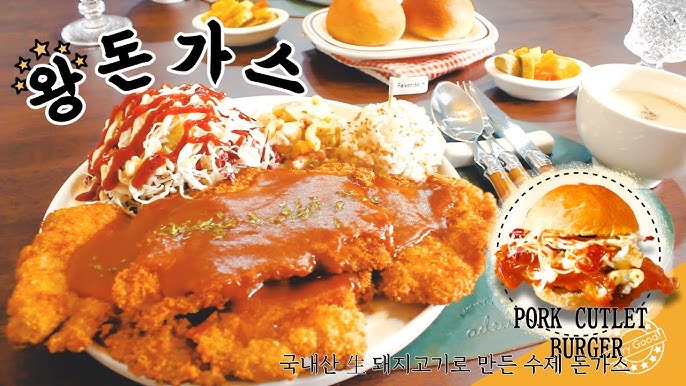
This dish takes us back to the streets of Seoul in the 1970s and 80s, the heart of remarkable economic growth. It invites us into the lives of the unsung heroes who connected the city’s veins: the taxi drivers. One might wonder, “How did this fried dish from the West become the ‘soul food’ that comforts the weary days of Seoul’s taxi drivers?” Let’s embark on this fascinating journey together.
Chapter 1: The Birth of Taxi Restaurants, the Arteries of the City
Seoul in the 1970s was like a massive melting pot. People flocked in from all over the country, expanding the city, but public transportation couldn’t keep up with the pace. Amidst this chaos, taxis played the role of the city’s capillaries.
The daily life of taxi drivers was sheer exhaustion. Driving 400 to 500 km a day was common, and sharing rides was the norm. They desperately needed a place to stop, stretch their legs, and have a meal. The uniquely Korean dining culture of ‘taxi restaurants’ was born out of this urgency.
The conditions to become a taxi restaurant were quite strict:
- Spacious parking was essential,
- The food had to be served in the blink of an eye,
- It had to allow for ‘eating alone’ for the often solitary drivers.
At that time, it was unthinkable to sell a single serving of meat, but this radical rule was standard in taxi restaurants.
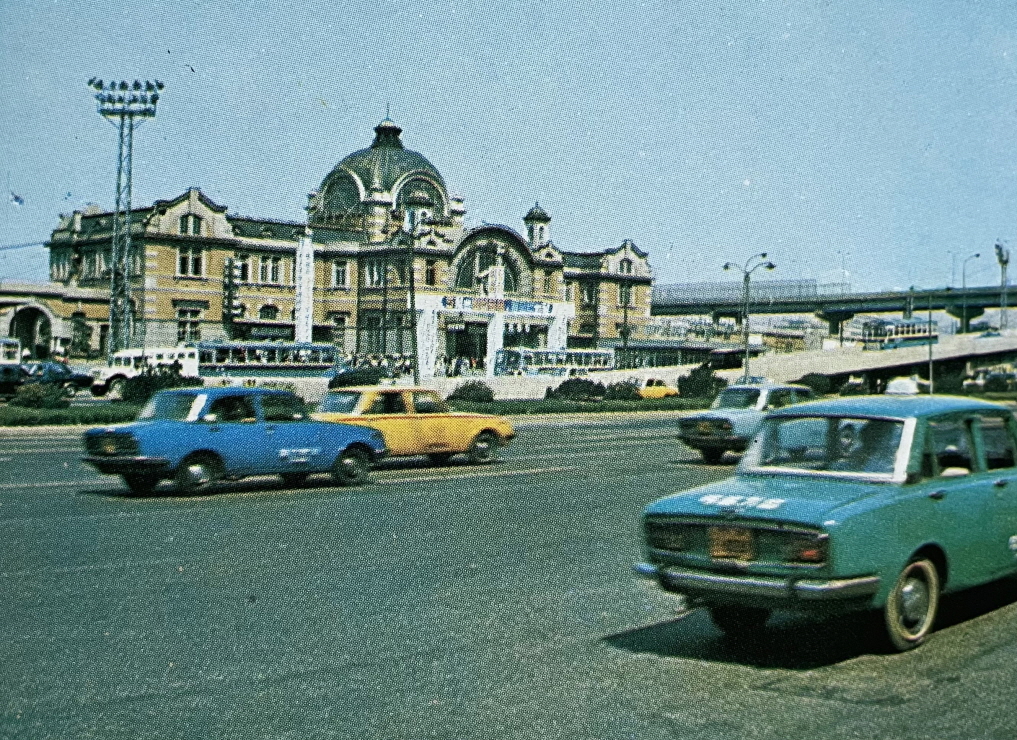
This place was more than just a diner. In an era with little mass media, taxi drivers were the ‘walking radios’ that conveyed news from all corners of the city. Restaurants that passed their taste test were recognized as ‘real gems,’ and from the mid-1980s, they began to gain popularity among the general public. This was the moment when the equation ‘taxi restaurant = good food’ was established.
Chapter 2: The Great Journey of the Cutlet
To understand taxi restaurant donkatsu, we must trace the roots of this dish back to Europe. The origins lie in the cutlet dishes like Austria’s ‘Schnitzel’ or Italy’s ‘Cotoletta,’ where thinly sliced meat is coated in breadcrumbs and pan-fried in butter.
This dish crossed over to Japan in the late 19th century, where it was reborn in a completely new form: ‘Tonkatsu (豚カツ)’.
- Frying method: Instead of butter, it was deep-fried in oil using the ‘tempura’ cooking technique,
- Meat thickness: Instead of thin meat, thick pork was used to retain juiciness,
- Serving style: It was cut into pieces for easy eating with chopsticks and served as a ‘set’ with rice and miso soup.
This Japanese-style tonkatsu made its way to Korea in the 1970s and 80s, becoming popular in Western-style restaurants, and evolved into the familiar ‘donkatsu’ we know today. Korean-style donkatsu showcased a different charm compared to its Japanese counterpart.
The biggest difference lies in how the meat is handled. Unlike Japan, where thickness is emphasized, in Korea, the meat is pounded with a hammer to make it as thin and wide as possible. This shortened cooking time and made the plate look abundant. The sauce, instead of the tangy Worcestershire sauce, became a sweet and smooth sauce made from sautéed flour and butter, generously poured over the fried cutlet, establishing the ‘drenched’ style.
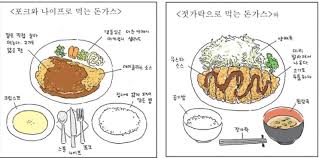
With a pre-meal cream soup and kimchi and pickled radish to cut the richness, the beloved Korean-style donkatsu was finally complete.
Chapter 3: A Fateful Encounter, Why Donkatsu?
Originally, the signature dish of taxi restaurants was pork bulgogi. However, at some point, donkatsu began to threaten its dominance and emerged as a new symbol. There were very compelling reasons for this.
First, donkatsu satisfied both ‘value for money’ and ‘emotional satisfaction’. Thanks to its low cost, restaurants could make a profit while customers enjoyed a hearty meat dish. The thinly pounded meat filled the plate, providing a visual satisfaction of being ‘properly served.’
Second, it perfectly aligned with the core value of taxi restaurants: ‘speed.’ The thin meat could be fried in hot oil in an instant, allowing it to reach the table almost immediately after ordering.
However, the decisive factor that made donkatsu the ‘soul food’ for taxi drivers was the perfect accompaniments: ‘kkakdugi’ and ‘green peppers.’
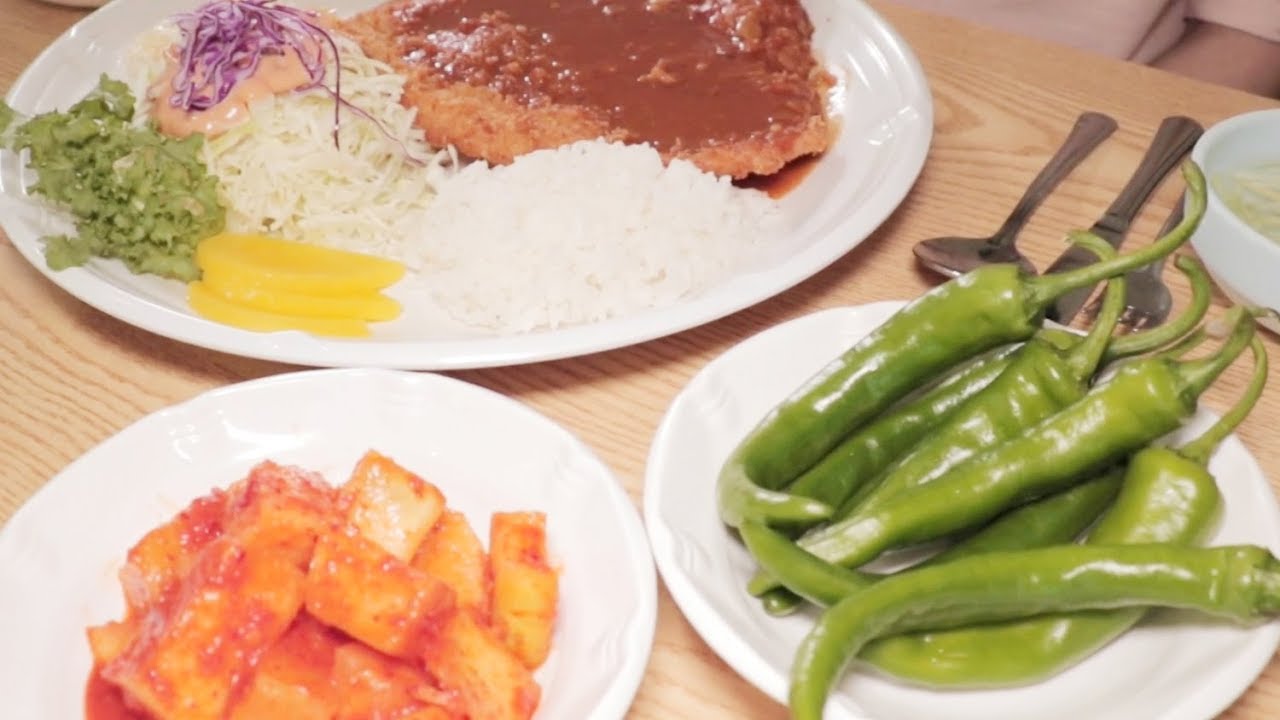
When the crispy cutlet and sweet sauce start to feel heavy, a piece of refreshing kkakdugi cleanses the palate. If that’s not enough, biting into a fresh green pepper dipped in ssamjang (a thick, spicy dipping sauce) instantly cuts through the greasiness with its sharp spiciness. This unique combination is exclusive to Korean taxi restaurant donkatsu.
Ultimately, taxi restaurant donkatsu became a ‘democratized luxury.’ A dish once reserved for special occasions transformed into the perfect comfort food for ordinary people enduring hard labor, soothing the end of their tiring days.
Chapter 4: Pilgrimage to the Donkatsu Holy Land
The history of taxi restaurant donkatsu has left living legends throughout Seoul. Among them, Seongbuk-dong and Namsan are renowned as the twin ‘holy lands of donkatsu.’
A. Seongbuk-dong: The Battleground of Originals
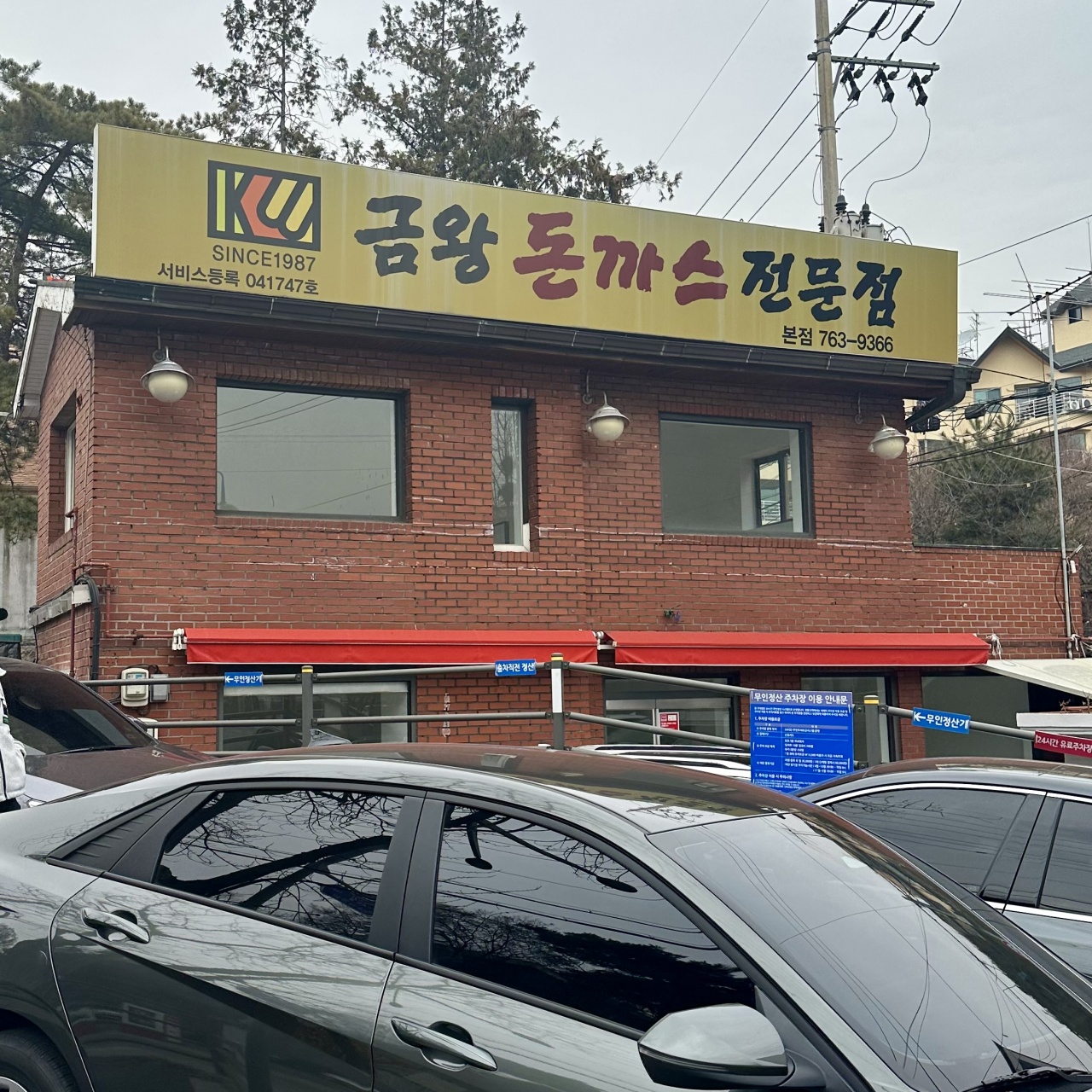
Seongbuk-dong, where the first taxi restaurant in Seoul opened in the 1970s, is where the history of taxi restaurants began. Starting with ‘Geumwang Donkatsu’ in 1987, several restaurants emerged, making it a mecca for donkatsu. Interestingly, they all claim to be the ‘original,’ but what matters to customers is the ‘Seongbuk-dong style’ itself, represented by large donkatsu, pre-meal soup, green peppers, and kkakdugi. Their competition seems to go beyond mere business tactics, resembling a pride battle over ‘the taste of memories.’
B. Namsan: The Donkatsu Street of Drama
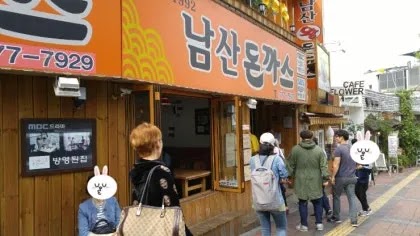
Namsan has become a donkatsu hotspot through tourists visiting the cable car and tower. However, behind its glamorous reputation lies a dramatic ‘originality dispute.’ The long-standing conflict between the true original and the building owner with trademark rights illustrates the commercial value of the name ‘original’ and the hidden struggles of small business owners, causing significant social repercussions.
C. Gangnam and Other Regions: Living Tradition
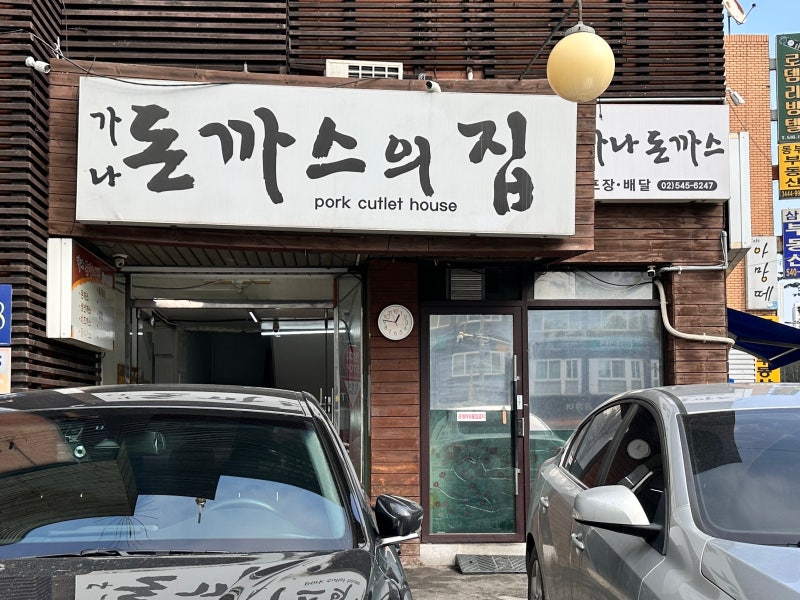
As the center of Seoul shifted to Gangnam, the taxi restaurant culture found a new home. Places like ‘Gana Donkatsu House’ near Eonju Station and ‘Yunhwa Donkatsu’ near Hanti Station continue to thrive, proving their resilience even in the heart of Gangnam. This culture has spread beyond Seoul, becoming a universal taste of nostalgia that resonates with all Koreans.
Conclusion: Warmth Beyond a Meal, ‘Jeong(情)’
We have followed the long journey encapsulated in a plate of donkatsu. If there’s one word that runs through all these stories, it is ‘jeong(情)’.
The generous spirit of a restaurant owner who casually offers extra side dishes, the leisurely enjoyment of a sweet mix coffee after a meal. Taxi restaurants are not just places to fill one’s stomach; they are warm communities that understand each other’s fatigue and nourish the hunger of the heart.
Surprisingly, this taxi restaurant donkatsu has now crossed the Pacific and reached the heart of New York. A restaurant that perfectly recreates the Korean taxi restaurant vibe, complete with a quaint wall-mounted fan and silver trays, has received explosive reactions locally. It’s a wonderful example of how the most Korean can become the most global.
Though times have changed, the name ‘taxi restaurant’ still evokes memories of taste, abundance, and warmth. If you’ve had a tiring and hungry day today, why not look for a nearby taxi restaurant? There, you will experience a very special taste filled with the history of Seoul and the warmth of its people, not just a plate of donkatsu.