Have you ever had an experience like Anna’s?
Anna, a competent project manager, recently received an email full of praise for a successfully completed project. It honored the whole team’s efforts. Yet within that praise-filled message, one sentence stuck in her eyes: “For the next presentation, it would be better to make the timeline slide a bit more concise.”
In that moment, the 99% of compliments in the email evaporated, and that 1% of criticism took over Anna’s entire day. “Did I mess up the whole project because I’m inadequate?” The whirlpool of self-doubt began, and she spent the rest of the day anxious.

This experience isn’t just because someone is “oversensitive.” It’s a specific cognitive error—an excessive faith in criticism. This mistake refers to the tendency to ignore all positive evidence and accept negative feedback as absolute truth without verifying its legitimacy or context.
This article isn’t meant to offer mere consolation. I wanted to dig deeper into the psychological mechanics of this cognitive trap that ties us up. We’ll dissect this problem through four stages. First, we’ll diagnose the deep-rooted reasons why even small criticism shakes us. Next, we’ll rethink the nature of criticism itself. Third, we’ll learn the skill of asking wise questions about feedback. Finally, we’ll embark on building a sturdy inner system capable of handling criticism wisely.
1. Why do we get shaken by minor criticism?
A strong emotional reaction to minor criticism is not a single character flaw. It’s more like a psychological perfect storm. Three seemingly distinct but closely connected vulnerabilities—rejection sensitivity, maladaptive perfectionism, and impostor syndrome—meet at a point to create a storm. In this mix, criticism acts as a small spark that ignites the unstable blend. Our reaction is never just about the criticism itself; it’s about the deep-seated beliefs and fears it touches.
A megaphone that amplifies the inner critic: rejection sensitivity
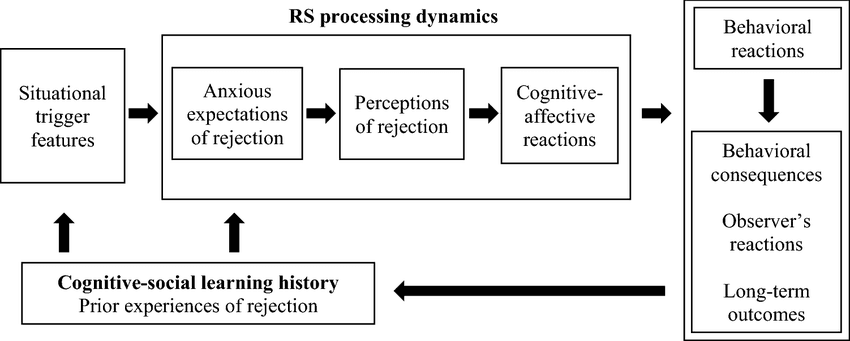
The first is Rejection Sensitivity (RS). It’s a cognitive-emotional processing bias where a person anxiously expects rejection from others, easily detects it, and reacts intensely and excessively to perceived rejection. Put simply, it’s like having a highly sensitive alarm system inside your mind.
For example, imagine a friend takes a long time to reply to your message. A person low in rejection sensitivity might think, “They must be busy.” But a person high in rejection sensitivity immediately leaps to, “Did I do something wrong? Are they angry with me?” Rejection sensitivity fills ambiguous signals with negative meaning directed at oneself. This tendency often roots in repeated social rejection experiences, such as attachment issues in childhood or school bullying. Understanding this cause can be the first step toward viewing yourself with compassion rather than blame.
The all-or-nothing prison: maladaptive perfectionism
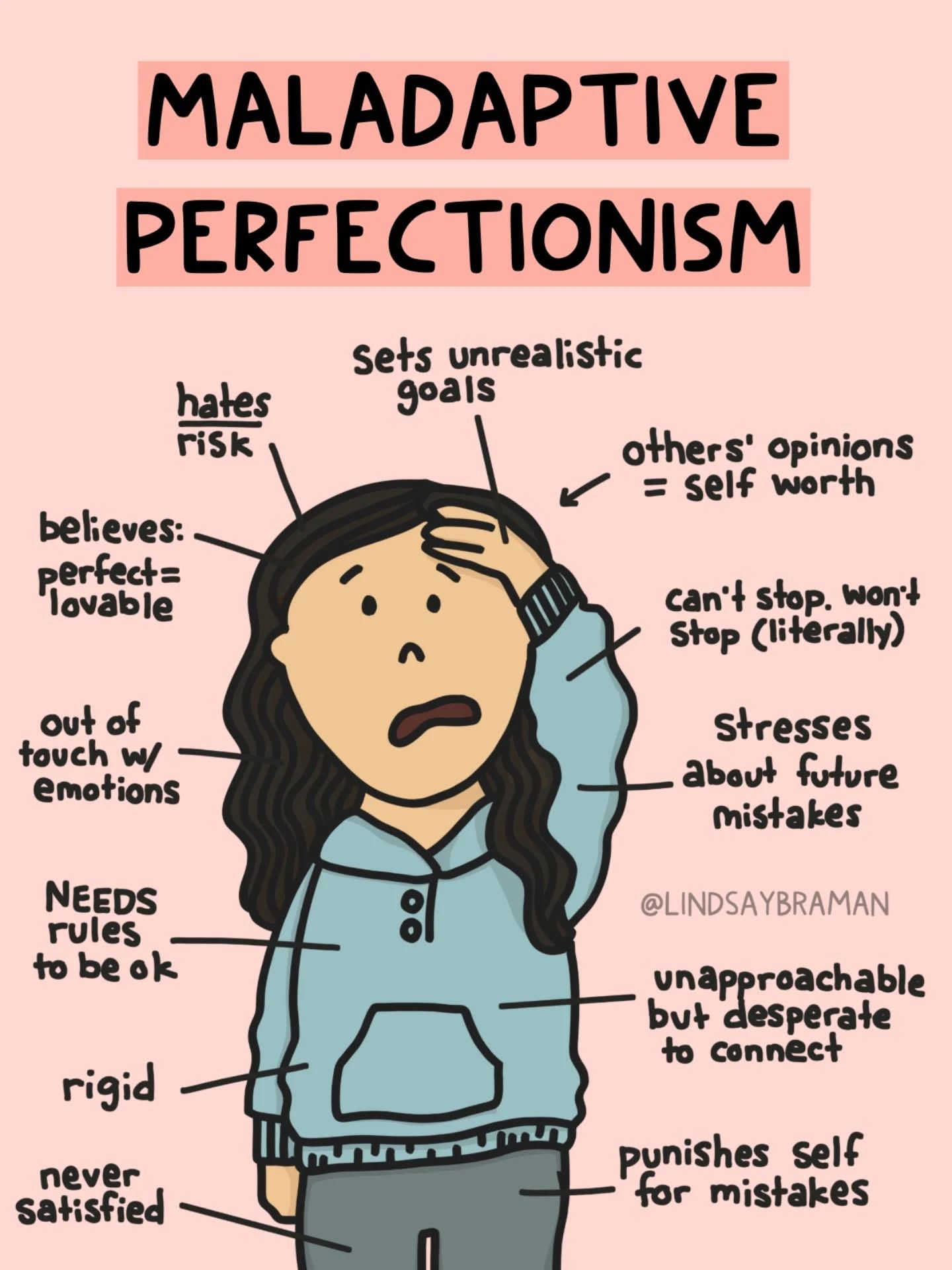
The second is maladaptive perfectionism. This is an exhausting style. While healthy perfectionism pursues excellence, harmful maladaptive perfectionism sets unrealistically high standards and equates any shortfall with catastrophic failure.
For such people, criticism is not data for growth but a final and devastating verdict on their entire worth. Their inner monologue is filled with harsh self-judgment like “I can’t believe I made that mistake, I’m an idiot.” This mindset leads to extreme fear of failure, procrastination to avoid judgment, and an inability to derive satisfaction from achievements because they fixate on trivial flaws.
Fear of being exposed: impostor syndrome
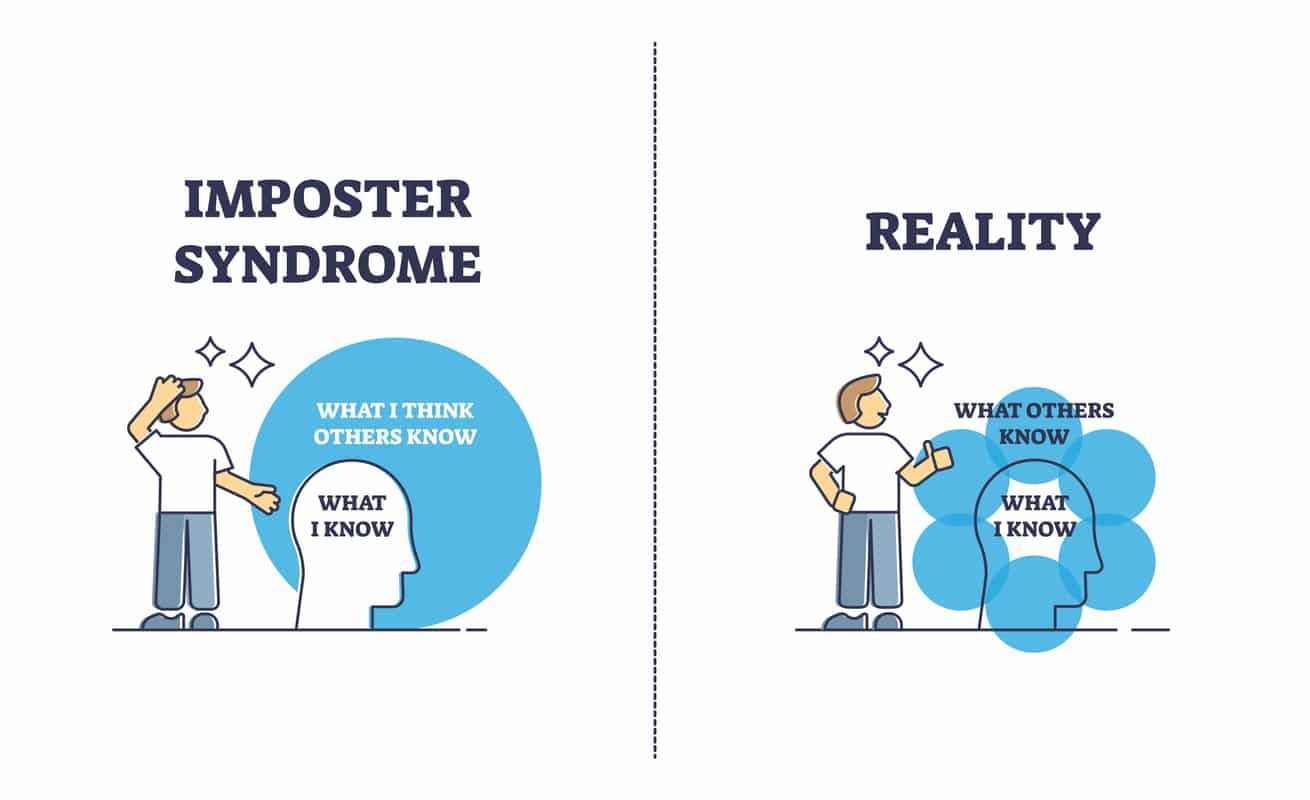
The last piece is Impostor Syndrome. Many of you will recognize this: the persistent inner experience of feeling unqualified or like a fraud despite objective evidence of success.
People with this syndrome operate with cognitive filters that work contrary to healthy thinking. They disregard and downplay positive data as “I just got lucky” or “They’re just being nice,” while internalizing and magnifying negative data as “This one criticism proves I don’t belong here.”
This psychology creates a vulnerable self that lives with the anxiety of being “found out” at any moment. Praise raises expectations and thus increases anxiety, while criticism feels like the inevitable moment of exposure they always feared.
When these three elements combine, even minor criticism is amplified into an existential threat. Rejection sensitivity detects the criticism, perfectionism labels it as failure, and impostor syndrome interprets it as confirmation of being a fraud… yes, the vicious cycle completes itself.
2. First, accept criticism as ‘part of life’
The next step to escape the pain of criticism is to reframe criticism. Move away from seeing criticism as a personal attack and understand it as a natural, unavoidable, and potentially useful part of our social environment. The goal is to lower the emotional stakes we attach to criticism.
Primal pain: the evolutionary root of social hurt
Humans are social animals. For our ancestors, expulsion from the group meant death. Because of this, our brains evolved to treat social rejection with the same alarm level as physical pain. The sharp pain you feel when you hear criticism is not a sign of weakness but a universal human feature designed for survival.
Simply understanding this allows us to accept our reactions without blame and take the first step toward managing them. Modern forms of “rejection signals,” like workplace feedback or online comments, don’t threaten survival, but our primitive brain cannot tell the difference. Therefore, developing a conscious ‘‘second-stage’’ cognitive response to overcome this primal fear is essential.
The story made by 12 rejections: J. K. Rowling’s perseverance
J. K. Rowling’s story is always inspiring. The anecdote that the manuscript of Harry Potter and the Philosopher’s Stone was rejected by 12 publishers offers a deep lesson in how to handle criticism. The key is not that Rowling was immune to being hurt by criticism. Rather, she could see through the ’nature’ of the criticism.
Publishers’ rejections were a commercial judgment—“magic stories don’t sell these days”—not a critique of her fundamental ability as a storyteller. She navigated external feedback while keeping her core belief in her work. She later said that the experience of failure gave her an inner steadiness and self-understanding that no test could have provided. In this way, rejection and criticism can be not setbacks but touchstones that build resilience and selfhood.

From threat to training: building the ‘mental muscle’
So I view criticism as resistance training for building mental muscle. Just as muscles grow by lifting heavy weights, our psychological resilience strengthens when we learn to handle the “weight” of criticism constructively.
This isn’t a passive process; it requires active ’exercise’. Successful people proactively manage their mental state through habits like gratitude journaling, sufficient sleep, and regular exercise. These activities have been shown to reduce the stress hormone cortisol and improve emotion regulation. This is not about escaping criticism but about conditioning oneself to be strong enough to bear it.
3. Before you ’take’ criticism, try asking questions
Now it’s time to shift from a passive victim stance to an active inquiry stance. This section introduces practical tools. The power to manage criticism lies not in blocking it, but in dissecting it with intelligent questions.
The act of questioning itself is a potent psychological tool that fundamentally alters the dynamics of a critical situation. Questions transfer control from the critic to the feedback recipient, convert emotional confrontation into cognitive problem-solving, and demand clarity from vague negativity.
First filter: distinguishing constructive from destructive criticism
The first step in questioning criticism is classification. Constructive criticism aims to build and improve (mutual benefit), while destructive criticism aims only to tear down.
Here is a ‘criticism litmus test’ table to help analyze feedback in real time. It’s a practical diagnostic tool.
| Trait | Constructive criticism | Destructive criticism |
|---|---|---|
| Motivation | Intention to help, improve, and foster growth | Intention to hurt, belittle, or display superiority |
| Focus | Specific behaviors or outputs (“This report needs more data.”) | The person’s character (“You are lazy.”) |
| Specificity | Clear, specific, and actionable (“Could you add sources for this claim?”) | Vague, general, and unhelpful (“This is just bad.”) |
| Tone | Firm but respectful and supportive | Sarcastic, arrogant, aggressive, or dismissive |
| Outcome | Empowers, provides clarity, and points a way forward | Demoralizes, confuses, and provokes anger |
Grace under fire: Steve Jobs’ iconic moment in 1997
In 1997, shortly after returning to Apple which was near bankruptcy, Steve Jobs faced public criticism from a developer at the Worldwide Developers Conference (WWDC). The developer attacked Jobs, saying “You don’t even know what you’re talking about.” Jobs’ response is a textbook example of handling criticism.
- He did not immediately defend himself. He took a long, deliberate silence to gather his thoughts. This exemplifies emotional regulation.
- He acknowledged the critic’s frustration without accepting the attack’s premise—he “read” the other person’s feelings by saying something like, “I understand.”
- He then skillfully shifted the conversation from specific technical complaints to a much larger and more inspiring topic: strategy and vision. He elevated the discourse.
- Finally, he closed by speaking about passion and service to customers. In doing so, he reminded the audience of a shared goal and turned a personal attack into a unifying focal point for the organization.

Your Socratic toolbox: questions for clarity and control
We need a ‘Socratic toolbox’ like this—practical questions you can use in various situations.
- Questions to ask the critic (to gain clarity):
- To specify vague feedback: “You said the presentation was ‘weak’—could you point to specific parts that you found lacking?”
- To shift toward solutions: “Thanks for the feedback. How would you suggest I do it differently next time?”
- To confirm understanding: “I want to make sure I understand correctly. Is the main issue that the content itself was fine but the timeline was unclear?”
- Questions to ask yourself (for inner processing):
- To evaluate the source: “Does this person have relevant expertise? What might their motive be?”
- To find the lesson: “The delivery was rough, but is there 10% of truth here that I can learn from?”
- To prevent catastrophic thinking: “Will this matter a week from now, a month from now, or a year from now?”
4. Final step: redesign your ‘inner system’
The final chapter is about long-term, systemic change. Synthesizing the earlier lessons, it offers an integrated strategy for building a resilient self that accepts worldly feedback wisely without being defined by it.
Sustained change requires a two-front strategy. First, build an external filtering system to decide which feedback to accept. Second, fundamentally reconfigure the internal processing system that interprets that feedback. As long as your inner critic runs amok, merely managing external criticism won’t suffice.
Choosing critics: assemble your personal ‘board of directors’
A metaphor I love is treating your life and career like a company. A successful CEO doesn’t listen to every opinion on the street. They have a trusted board.
You should consciously choose your own ‘board’. Pick 3–5 people whose feedback you actively seek and seriously consider. Criteria for board membership might include expertise, genuine interest in your growth, and a track record of providing constructive feedback. Treat all other feedback as ‘market noise’—worthy of attention perhaps, but not something you need to carry in your heart.
Rewriting your internal script: a 3-step guide to taming thoughts
This is a simple and practical cognitive behavioral therapy (CBT) technique to break the automatic chain of negative thoughts that arise when you hear criticism.

- Catch It: The moment you feel the sting of criticism, identify and write down the exact thought passing through your mind. (e.g., “He thinks I’m incompetent.”)
- Challenge It: Interrogate that thought like a lawyer. Is it 100% true? Is there evidence against it? How can you view the situation more balanced and less extreme?
- Change It: Create a more realistic and compassionate alternative thought. (e.g., “He gave feedback on one aspect of my work. That doesn’t define my overall ability. I can use this as a jumping-off point to improve.”)
The other side of the coin: the difficult skill of accepting praise
Ah, and this is really, really important. The flip side: the difficult skill of accepting praise.
Overvaluing criticism is deeply connected to undervaluing praise. Both come from the same root belief: “I am unworthy.” When you believe you’re lacking, criticism sounds true and praise sounds false.
Honestly, when someone compliments us we often deflect with “No, it was nothing.” That’s not humility. It’s rejecting the other’s positive judgment and reinforcing your negative self-image.
Start a small practice. The next time you receive praise, resist the impulse to diminish or excuse it. Take a breath, look the person in the eye, and simply say, “Thank you.” This small act is a powerful beginning to rewiring your brain to accept positive data.
Conclusion: from vulnerable beliefs to sturdy knowing
We’ve come a long way together. We diagnosed the causes of the psychological storm, reframed criticism as part of life, learned the tool of questioning, and finally designed a new inner structure called resilience.
The ultimate goal is not to build an impenetrable wall against criticism. In my view, that would lead to stagnation.
The true aim is to become a ‘wise gatekeeper’: someone who welcomes feedback that nourishes growth and blocks the poison that harms the soul. Free yourself from a life swayed by fragile beliefs formed from others’ opinions, and root yourself in a solid knowing of your intrinsic worth—that is true freedom.