

The moment trivial conflicts escalate to catastrophe
We all like to believe we are ‘smart’ and rational beings, don’t we? But if you look closely at your daily life… well. There are too many times when trivial conflicts shake our entire lives.
Think back to an argument with your spouse last night. Like “taking out the trash,” how can such a minor friction become a major reason for divorce like “personality differences,” or a cause for quitting like “I can’t stand working with that person anymore”?
One expert says the most fatal ‘smart mistake’ we make is precisely trying to solve problems of Emotion with Reason.
He talks about a powerful 3-step law for resolving all conflicts in the world: ‘Emotion-Reason-Intuition’, or the E-R-I model. The real core of this model is… what’s truly important is the ‘order’. The author clearly points out that the top priority in conflict resolution is always “emotion control”. If we don’t pass through the first door of emotion (E), Reason (R) or Intuition (I) won’t even get a chance to operate.
Therefore, in this article, we will delve deeply into the first and most crucial step of E-R-I, ‘resolving emotions’, divided into two situations: “When the other person is angry,” and “When you are angry.” This is not a simple summary. I want to share psychological, neuroscientific, and… well, existential insights into how this law actually works in our lives, even in extreme situations.
Part 1: When the Other Person is Angry
The ‘Rational’ Mistake That Pours Fuel on the Fire
The basic principle is this: the only firefighter for flames is ’empathic listening’.
Do you know the most common and fatal mistake we make when the other person is burning with anger (E)? It’s pulling out the fire extinguisher of ‘reason (R)’. As warned in a chapter of a certain book, “When the Other Person is Angry,” we instinctively rush to give advice, refute, tell our own stories, and offer solutions.
However, to an angry person, saying “No, that’s not it…”, “Then you can just do this,” or “Listen to me” is essentially like shouting the message, “Your anger is not justified.” This is like pouring fuel on the fire, not water.
Responding to anger with ‘reason’ is like pouring fuel on the fire.
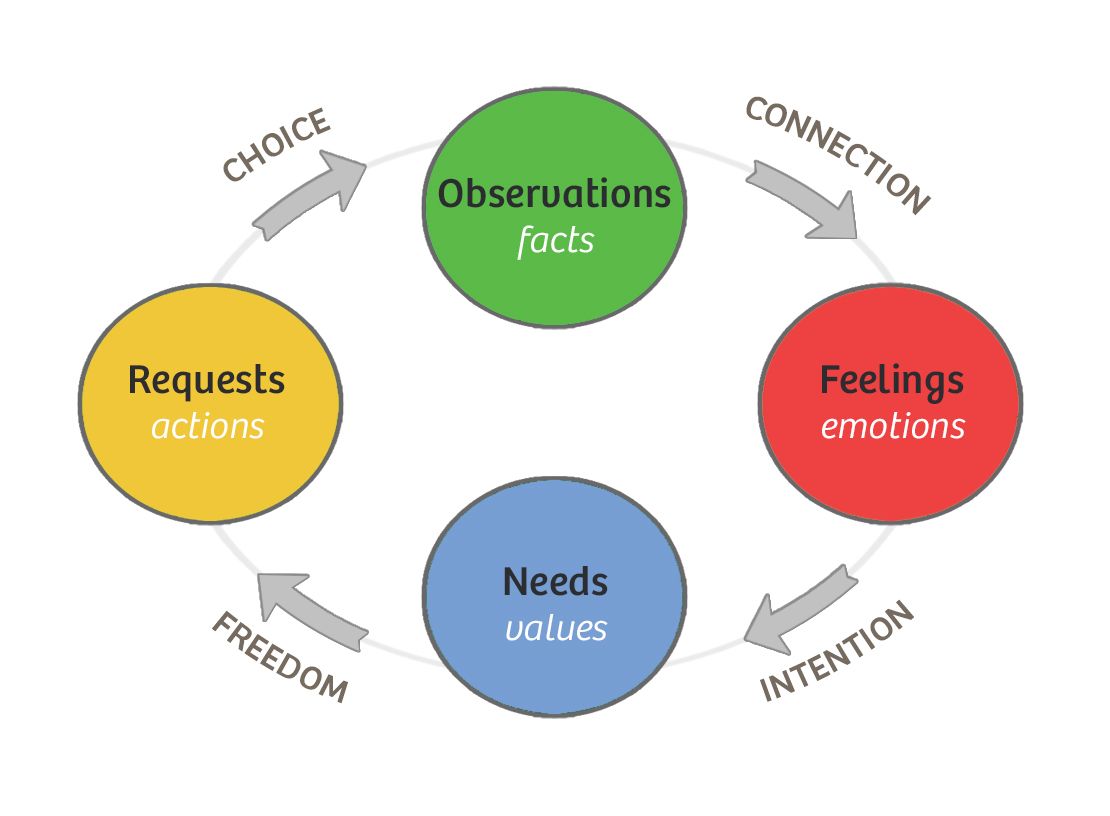
Dr. Marshall Rosenberg’s Nonviolent Communication (NVC) theory defines such anger as a ’tragic expression of unmet needs’. When someone yells, “I’m angry because of you!”, what they really want is not a ‘solution’. It’s ’empathy’. Changing the order of E-R-I in a conflict situation, that is, presenting my reason (R) before the other person’s emotion (E) is resolved, is the most ‘smart mistake’.
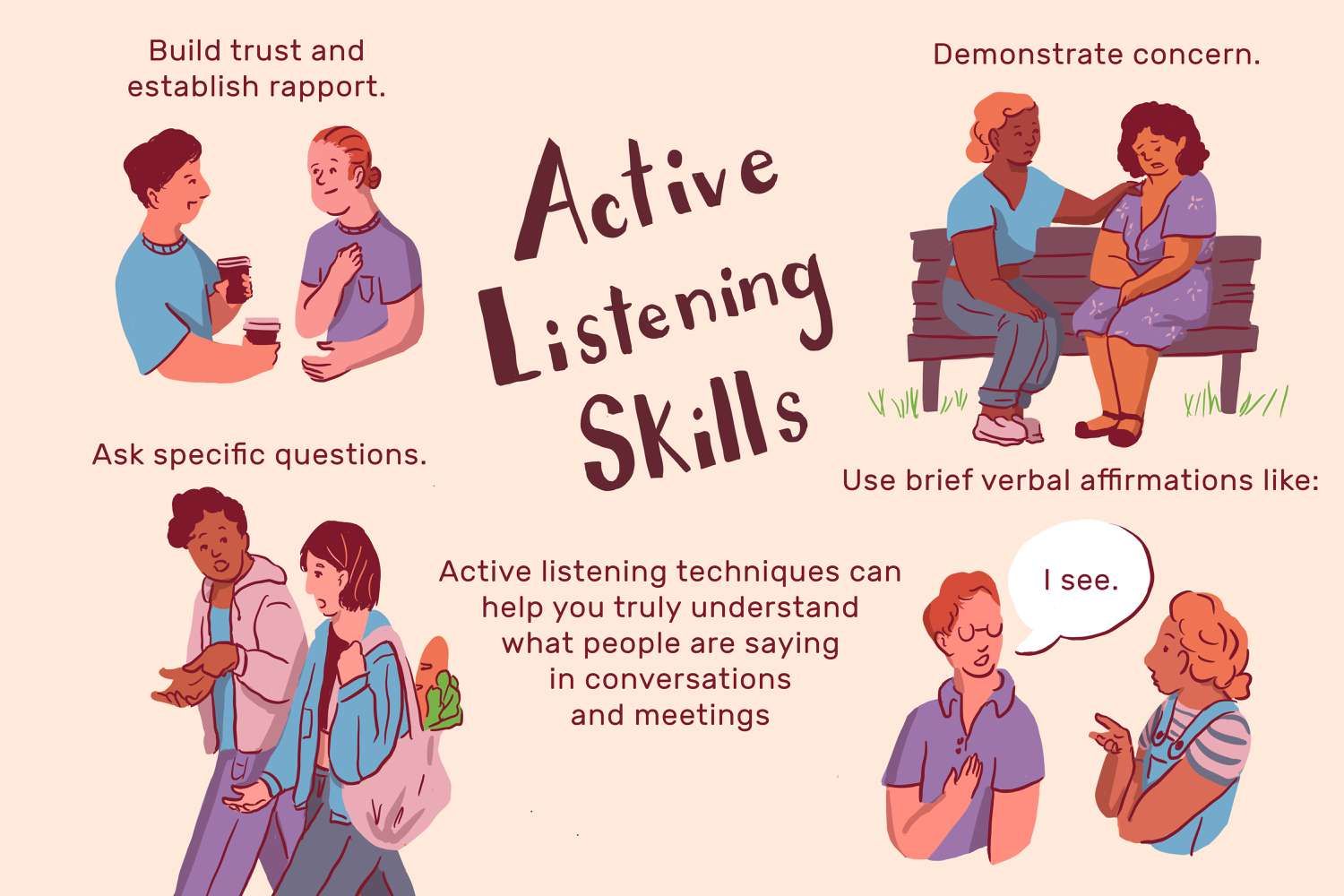
If the other person’s ‘E’ state doesn’t calm down, we can never move to the ‘R’ stage. Therefore, our first mission should not be ‘resolution’ but ‘de-escalation’. The only tool for this de-escalation is ‘Active Listening’.
Practical Skill: FBI Hostage Negotiator’s ‘Tactical Empathy’
How important ’emotion de-escalation’ is, and how it can be life-or-death, is starkly revealed in the experience of former FBI lead hostage negotiator Chris Voss. In 1993, two armed robbers took hostages in a bank in Brooklyn, New York.
The situation was dire. SWAT teams had surrounded the bank, and the agitated robbers threatened to harm the hostages. At the time, the police response was a typical ‘rational (R)’ approach. “Drop your weapons and come out. If you surrender peacefully, we’ll consider it.” But this ‘reasonable’ offer only amplified the robbers’ anger (E).
At this point, Chris Voss entered the negotiation. He completely blocked out ‘reason (R)’ and focused solely on ’emotion (E)’ using ‘Tactical Empathy’. This is, the ultimate practical version of ‘accusation-free listening’, ’labeling emotions’, and ‘paraphrasing’ – key skills of active listening.
Voss said to the robbers, “You must feel trapped right now. You’re probably afraid the police will shoot you, and you feel this situation is unfair.”
Wow… think about it. He didn’t condone the robbers’ ‘actions’. He read their ’emotions’ as they were. The robbers, having their emotions acknowledged without judgment, passed through the first door of E-R-I. As the storm of emotion (E) subsided, they began to think ‘rationally (R)’ for the first time and started ’negotiations (R)’ with Voss. This is truly a textbook case where the E-R-I model made the difference between life and death.
Extreme Listening: A Black Musician Removes the KKK Grand Dragon’s Robe
While Chris Voss’s ‘Tactical Empathy’ aims for short-term ‘de-escalation’, R&B musician Daryl Davis’s ‘Relational Empathy’ leads to long-term ‘de-radicalization’.
Davis is credited with convincing over 200 Ku Klux Klan (KKK) members to leave the organization in the past 30 years. Do you know his only weapon? It was ‘overwhelming listening’.
In 1983, after coincidentally meeting a KKK member, Davis became curious about a fundamental question: “How can you hate me when you don’t even know me?” To find the answer, he requested an interview with Roger Kelly, the Grand Dragon of the Maryland KKK.
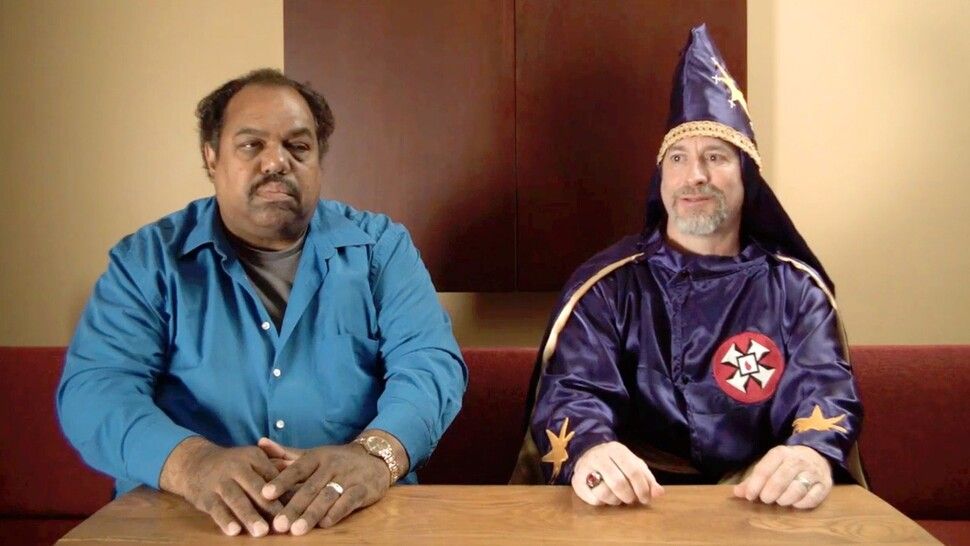
Listening, not debating, dismantles hate.
Kelly and his bodyguards appeared in the hotel room armed, and were naturally shocked to see Davis, a Black man. Kelly, full of hate (E), spewed racist ideology (R). At that moment, instead of ‘refuting (R)’, Davis simply ’listened (E)’. He tried to hear the ‘fear (E)’ underlying Kelly’s ‘ideology (R)’ and the ’need for belonging’ provided by white supremacist groups, rather than Kelly’s ideology itself.
When there was a ’thud’ sound in the room during their conversation, Kelly became extremely tense, thinking Davis had trapped him. But it was just the sound of a soda can, prepared by Davis as a gesture of hospitality, falling over as the ice melted. This small, human incident broke through Kelly’s extreme emotion (E). For the first time, he encountered ‘Daryl’, a human being (E), not an ideological concept of a ‘Black person’ (R).
After years of listening and meetings, Roger Kelly left the KKK and handed his robe and hood to Davis. Davis dismantled hate (E), which could never have been won through debate (R), solely through ’emotion de-escalation’ and ‘human connection’ – the first stage of E-R-I.
Part 1 Conclusion: Turn Off the ‘Reason Switch’ Until the Other Person’s Anger Subsides
So, you see. Chris Voss applied the standard E-R-I, reading and calming the other person’s emotion (E) before leading them to rational (R) negotiation. On the other hand, Daryl Davis continuously accepted the other person’s emotion (E), and made the other person realize the logical contradictions (R) in their own beliefs. And ultimately, he enabled them to choose a new life (I, Intuition/Transformation).
This shows that ’emotion de-escalation’ is not just a first step to mend conflicts. It suggests it is the most powerful weapon capable of changing the other person’s reason and intuition. When the other person is stuck in the ‘E’ stage of E-R-I, our only mission is to provide a safe space of ’empathic listening’ for their emotions to naturally dissipate. The moment they feel “Ah, this person is listening to me (I am heard)”, the door to ‘E’ closes, and the door to ‘R’ finally opens.
Part 2: When You Are Angry
The Storm Within: Observing with an ‘Observer’
Now, what about the other side of conflict, when ‘you are angry’? In this case, we need to apply the E-R-I model internally. Experts urge us to ‘control our emotions’ rather than being helplessly swept away by them.
The key here is… oh, this is really important, ‘control’ does not mean ‘suppression’. Anger is like a volcano; if you forcibly suppress it, it will eventually erupt more powerfully. True control means ’emotion regulation’. This begins by not identifying with our emotions and observing them as ‘phenomena we are currently experiencing’.
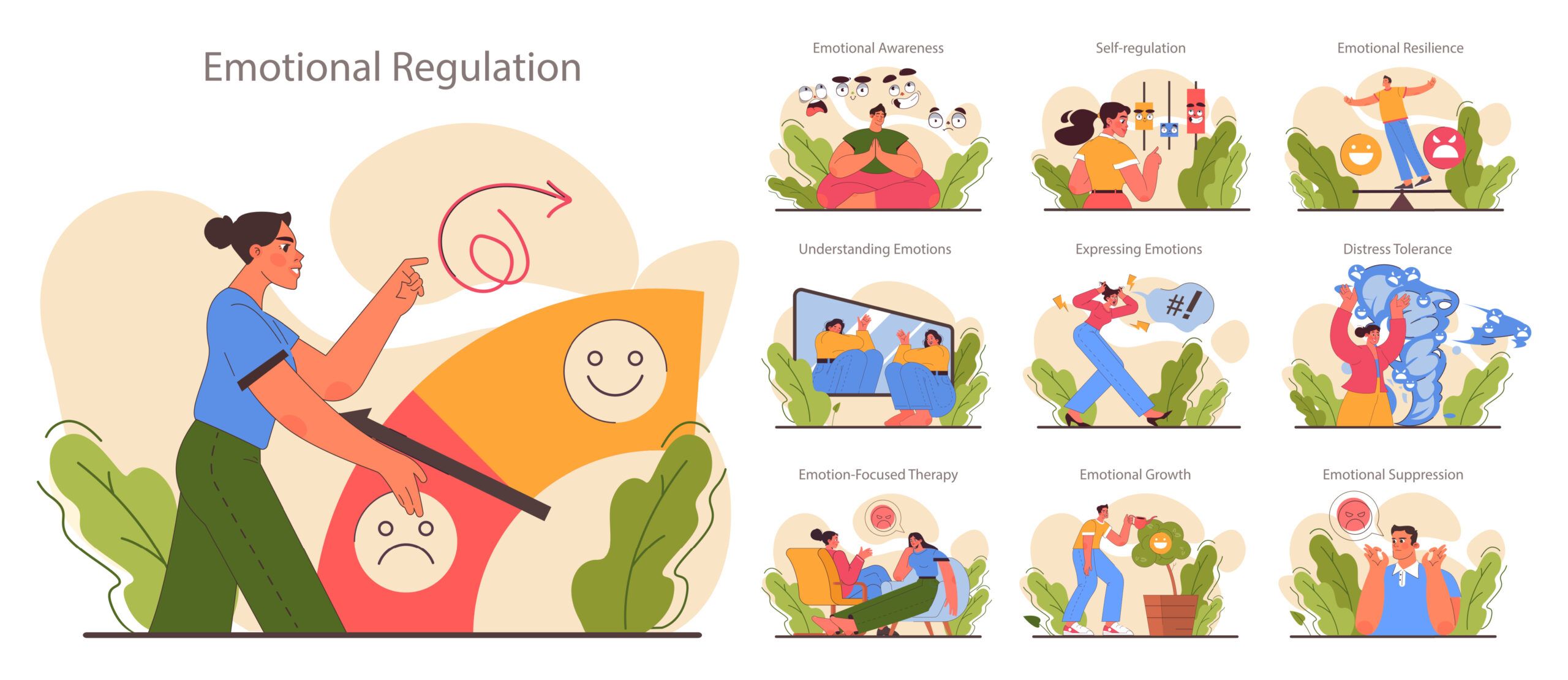
Observe the emotional storm within you as an ‘observer’.
Neuroscience: “Name It to Tame It”
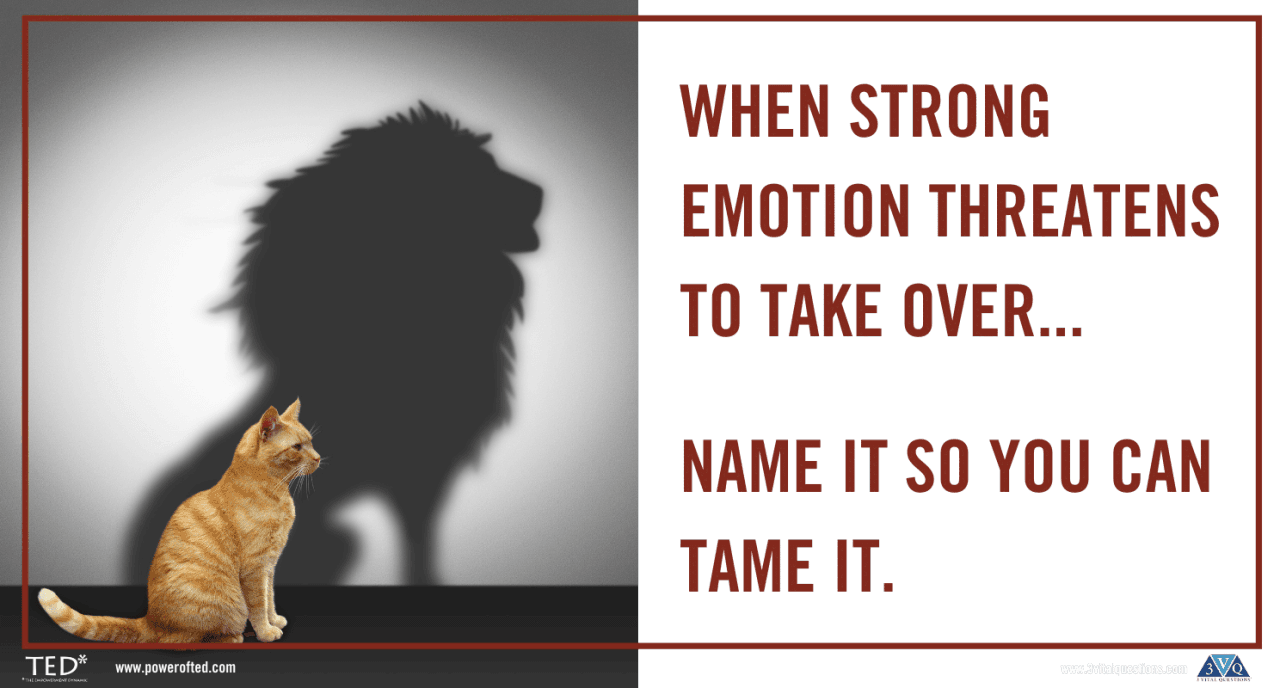
Dr. Dan Siegel’s ‘Name It to Tame It’ is, I believe, the most powerful neuroscientific tool you can use immediately when ‘you are angry’.
When anger (E) surges, our brain’s ’emotion center’, the limbic system, especially the amygdala, goes into overdrive. This primitive “emotional brain” simply turns off the switch of the “rational brain,” the prefrontal cortex (PFC). This is what we commonly call the ‘angry’ state, the ‘Amygdala Hijack’.
Precisely at this moment, simply ’labeling’ your emotions and physical reactions, that is, the moment you recognize, “Ah, I am feeling ‘anger’ right now,” or “My heart is ‘pounding’”… something truly magical happens.
This act of ’labeling’ reactivates the left brain and the prefrontal cortex (PFC), which are responsible for language and reason. When the rational brain (PFC) starts functioning, it sends soothing neurotransmitters to the emotional brain (amygdala) to stop the overdrive. In other words, in a state of being overwhelmed by emotion (E), we control the emotion (E) by activating the ‘rational (R)’ brain through ’naming (R)’ that emotion.

This is the internal working principle of the E-R-I model. The essence of this process is like the ‘observer effect’. We move from the E-state of identifying with the emotion, “I am angry,” to the R-state of, “I notice that anger is arising within me.” This subtle cognitive ‘distance’ is precisely the ‘space’ where reason (R) can operate.
Psychology: “Thoughts Change Emotions” (Cognitive Restructuring)
If neuroscience tells us how to secure ‘space’, then Cognitive Behavioral Therapy (CBT) tells us what to do in that space. The core of CBT is revealing that it is not the ’event’ itself that makes us angry, but our ‘automatic thoughts’ that interpret the event.
- (A) Activating Event: A colleague refutes my opinion in a meeting.
- (B) Belief / Thought: “He is publicly disrespecting me. He is making a fool out of me.”
- (C) Consequence: Extreme anger (E), criticizing the colleague after the meeting.
See? Our anger (E) stems not from the situation (A) but from that darn automatic thought (B). Using R (reason) in E-R-I means ‘challenging’ and ‘restructuring’ this ‘automatic thought (B)’.
We ask ourselves questions like: “Is there 100% evidence that he is disrespecting me?” “Could there be another intention? (e.g., He is genuinely concerned about the project)”.
The smartest behavioral strategy to gain time for this ‘cognitive restructuring (R)’ is ’time-outs’. When anger surges (E), instead of reacting immediately, say “I need a moment to think” and briefly leave the situation. This is the best way to secure golden time for R (reason) to operate. Really.

‘Time-outs’ secure golden time for reason to operate.
The Ultimate Self-Control: “The Space Between Stimulus and Response”
Well… if managing anger is a matter of neuroscience and psychological techniques, what about in the face of the worst stimuli imaginable?
Dr. Viktor Frankl lost his family, colleagues, and human dignity in Auschwitz concentration camp. Nelson Mandela was imprisoned for 27 years for resisting apartheid. The ‘stimuli (E)’ directed at them were unimaginably cruel, and their ‘anger (E)’ was entirely justified.
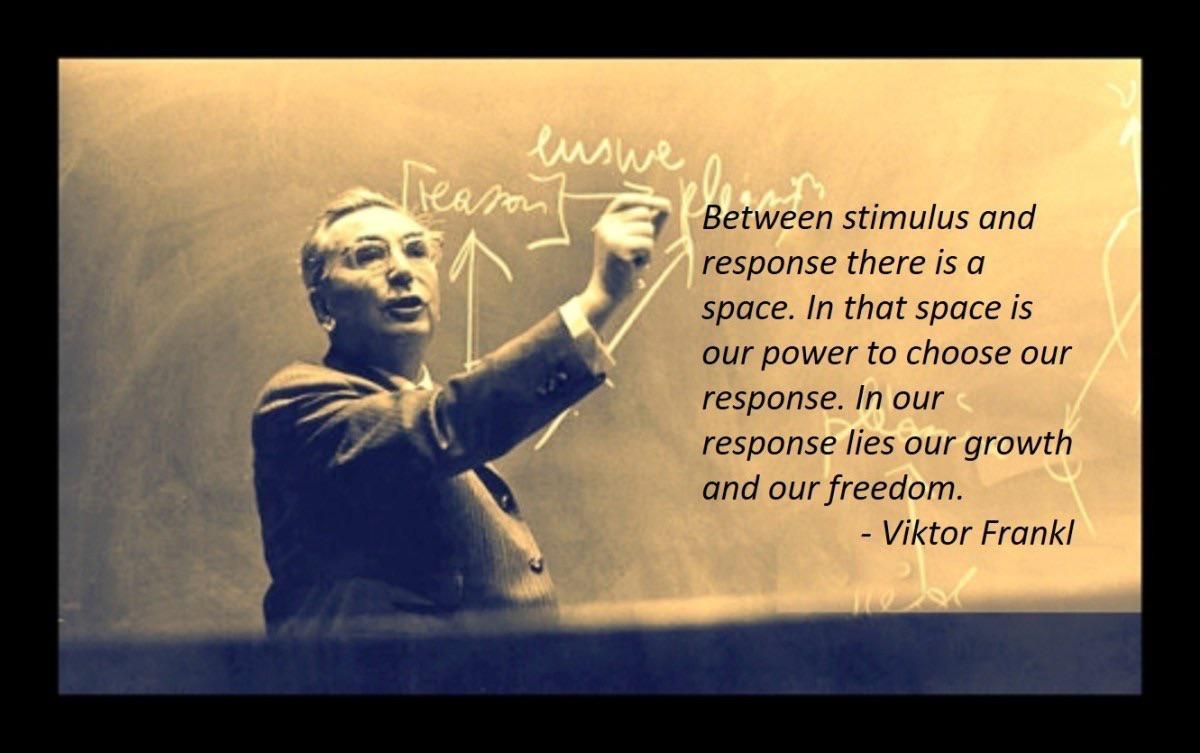
However, they did not make the ‘smart mistake’. Dr. Frankl discovered a great truth within the camp: “Between stimulus and response, there is a space. And in that space is our freedom to choose our response.” He realized that in the space between the concentration camp guards’ ‘stimulus (E)’ and his own ‘response’, he had the freedom to ‘choose (R)’ his attitude.
Mandela, too, instead of being consumed by anger (E) in prison, studied (R) the white people who imprisoned him. He realized, “If I do not forgive them, I am still a prisoner of theirs.” Is this not the ultimate form of ‘cognitive restructuring (R)’ where one realizes that anger (E) only destroys oneself?
They demonstrated the essence of the E-R-I model. In the midst of extreme emotional (E) stimuli, they secured the space of ‘reason (R)’ through ‘Name It to Tame It’ and ‘cognitive restructuring’. And Mandela’s embrace of both Black and white people in his inaugural address transcended emotion (E) and reason (R) to realize a higher truth of forgiveness and reconciliation – ‘intuition (I)’ indeed.
Conclusion: Emotion (E) is Not an Enemy, but a Signal
As I’ve written this out, the E-R-I model is not just a 3-step conflict resolution process. It seems like a dual-level navigation technique for dealing with the storm of emotions.
- First, when encountering an external storm (the other person’s anger), like Daryl Davis and Chris Voss, we must set aside our reason (R) and use ’empathic listening’ to resolve the other person’s emotion (E).
- Second, when encountering an internal storm (our own anger), like Viktor Frankl and Nelson Mandela, we must master our own emotions (E) through ‘cognitive restructuring (R)’ and ‘choice (R)’ to ultimately reach ‘intuition (I)’.
You’ve probably heard psychologist Jonathan Haidt compare the human mind to an ’elephant’ (intuition/emotion) and a ‘rider’ (reason). He said the rider (reason) doesn’t control the elephant (emotion) but merely rationalizes it. I think this is a perfect ‘description’ of why we so easily succumb to emotion (E), that is, make ‘smart mistakes’.
However, the E-R-I model doesn’t stop there; it offers a ‘prescription’. While Haidt’s model shows the reality of ’emotion (E) dominating reason (R)’, the E-R-I model presents the solution that ‘reason (R) only operates and intuition (I) opens up after first mastering emotion (E)’. The rider (R) cannot defeat the elephant (E) by force, but by first calming the elephant (E) (the first step of E-R-I), they can guide the direction (R, I) to move forward.
Anger is not an enemy to be suppressed. It is the most powerful ‘messenger’ informing us of our and the other person’s ‘unmet needs’. Deciphering this signal ‘smartly’, that is, mastering the first step of E-R-I, ‘resolving emotions’, will be the beginning of the most powerful law for resolving all conflicts in the world.