
Let’s thoroughly investigate the secret behind their dazzling growth.
- How grocery stores avoid mandatory closure regulations for large supermarkets
- The secrets of distribution strategies that create overwhelming price competitiveness
- The impact of grocery store growth on traditional markets and local businesses
Where do you go on large supermarket closure days?
One Sunday morning, I opened the fridge to find it empty due to the kids’ demands for breakfast. “Oh no, today is the large supermarket’s closure day!” This familiar scene repeats every second and fourth Sunday of the month. However, at that moment, many people think of their neighborhood grocery store. While large supermarkets take their mandatory breaks within the law, grocery stores remain open year-round, welcoming customers. I too have been surprised by the scale and low prices of my local grocery store on a large supermarket’s day off.
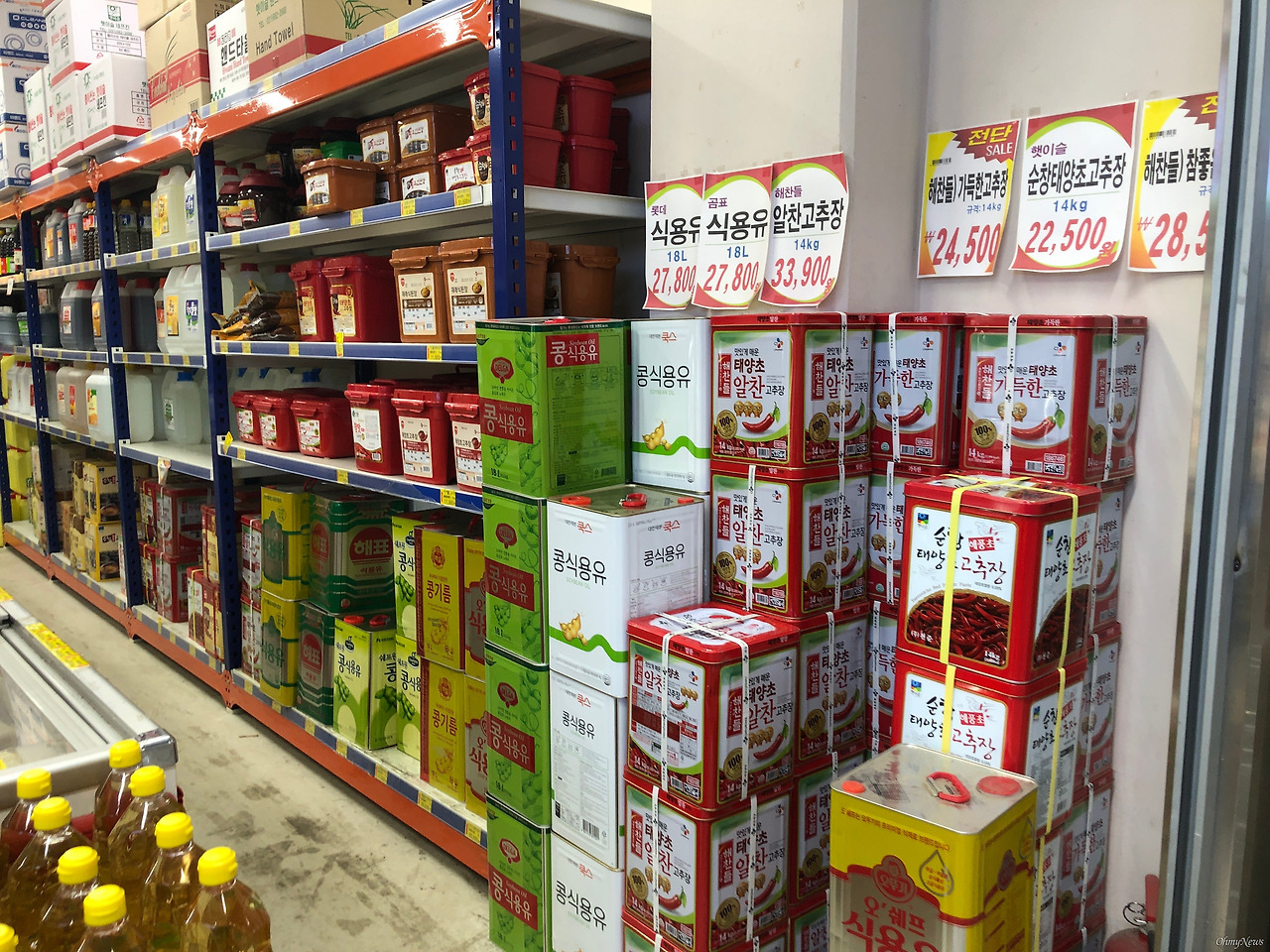
Their growth is astonishing. Over the past decade, while the sales of the three major large supermarkets (E-Mart, Homeplus, Lotte Mart) increased by only 6.5%, the ‘Big 3’ grocery stores (World Mart, Jangbogo Grocery Mart, Grocery King Mart) have surpassed a combined sales of 1 trillion won.
Is this simply the result of outstanding innovation, or is it a victory of cleverly exploiting legal loopholes? Let’s thoroughly investigate the secrets behind the dazzling growth of grocery stores, their clever strategies, and the shadows of controversy.
The Identity of Grocery Stores: The Strategy Hidden Behind the Name
The name ‘grocery store’ originally evokes images of B2B (business-to-business) wholesale warehouses frequented by restaurant owners. However, when you actually visit the stores, you find that the space for bulk products is minimal, and most of the store is filled with groceries and household items for regular families. In fact, there are far more regular consumers with shopping baskets than self-employed business owners.
So why do they stick to the name ‘grocery store’? There is a very clever legal identity acquisition strategy hidden here. Traditionally, ‘grocery store’ refers to a retail establishment that meets the following two conditions:
- Store area is between 1,000㎡ and 3,000㎡
- Not a subsidiary of a large discount store chain
These two conditions have become a ‘magic spell’ that frees grocery stores from all regulations. By using the specialized nuance of ‘grocery’, they have bought time to build a B2C (business-to-consumer) retail empire, evading the scrutiny of regulatory authorities.
Growth Exploiting Legal Loopholes: The Distribution Industry Development Act
At the core of grocery store growth is the Distribution Industry Development Act, revised in 2012. This law introduced strong regulations, including mandatory closures twice a month and restrictions on late-night operating hours, to protect traditional markets and local businesses.
However, grocery stores maintain their store area under 3,000㎡ and operate as independent small and medium-sized enterprises, perfectly evading the definition of ’large retail stores.’ There are allegations that some even employ a ‘split expansion’ tactic by constructing multiple buildings under 3,000㎡ and connecting them with corridors. Ultimately, their growth is the result of a meticulous strategy that accurately identifies legal loopholes and maximizes that space.
Success Strategies Beyond Regulations
Avoiding legal regulations was merely an opportunity for growth, not a guarantee of success. Grocery stores have captivated customers with meticulous business strategies.
Price Competitiveness: How Can They Be So Cheap?
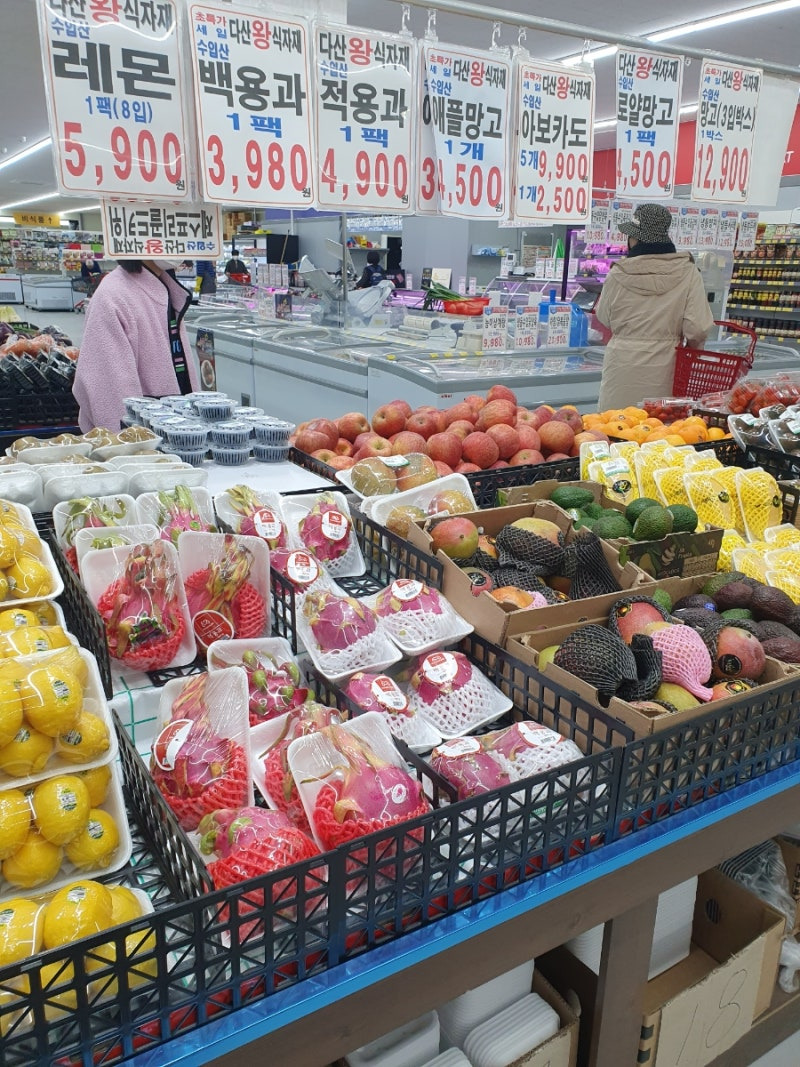
The most powerful weapon of grocery stores is undoubtedly ‘price.’ The secret behind this overwhelming price competitiveness lies in ‘direct sourcing’ and ‘disruption of distribution structures’, which connect producers directly to consumers without going through a complex central logistics system. This drastically reduces distribution costs.
Targeting Consumer Trends: Reading the Modern Consumer’s Mind
Grocery stores have accurately penetrated the changing lifestyles of consumers.
- Ugly Produce: Selling slightly misshapen but still tasty and nutritious produce at low prices has gained immense popularity during times of high inflation.
- Combining Bulk with Lifestyle: Meeting the demand of self-employed individuals with bulk products while planning and selling related items that align with trends like camping.
- The Paradox of Selling in Smaller Portions: Selling bulk products in smaller units has absorbed customers from single-person and two-person households.
Digital Transformation: From Local Mart to Omni-channel Giant
Contrary to the stereotype of being an old offline store, grocery stores have successfully undergone digital transformation faster than anyone else. They have built their own apps and online shopping malls and expanded their sales networks nationwide by entering B2B platforms like ‘Sikbom.’ As a result, some companies have achieved nearly tenfold increases in online sales within a year. They have evolved into ‘hybrid predators’ that possess the price competitiveness of wholesalers, the accessibility of retail stores, and the scalability of e-commerce.
Success Story: The Management Philosophy of Jangbogo Grocery Mart
The CEO of Jangbogo Grocery Mart, a leading player in the industry, attributes their success to ’empathy’ and ‘consideration.’ He states that the reason he visits all stores daily is not for the products but to “see the faces of the employees.” This is based on his firm belief that internal employee satisfaction directly translates to the quality of external customer service. Additionally, by prioritizing local hiring and collaborating with local producers, they have transformed offline stores into regional logistics hubs, practicing true local coexistence.
The Shadows of Grocery Store Growth: Conflicts with Local Businesses
Behind the dazzling growth lies a dark shadow.
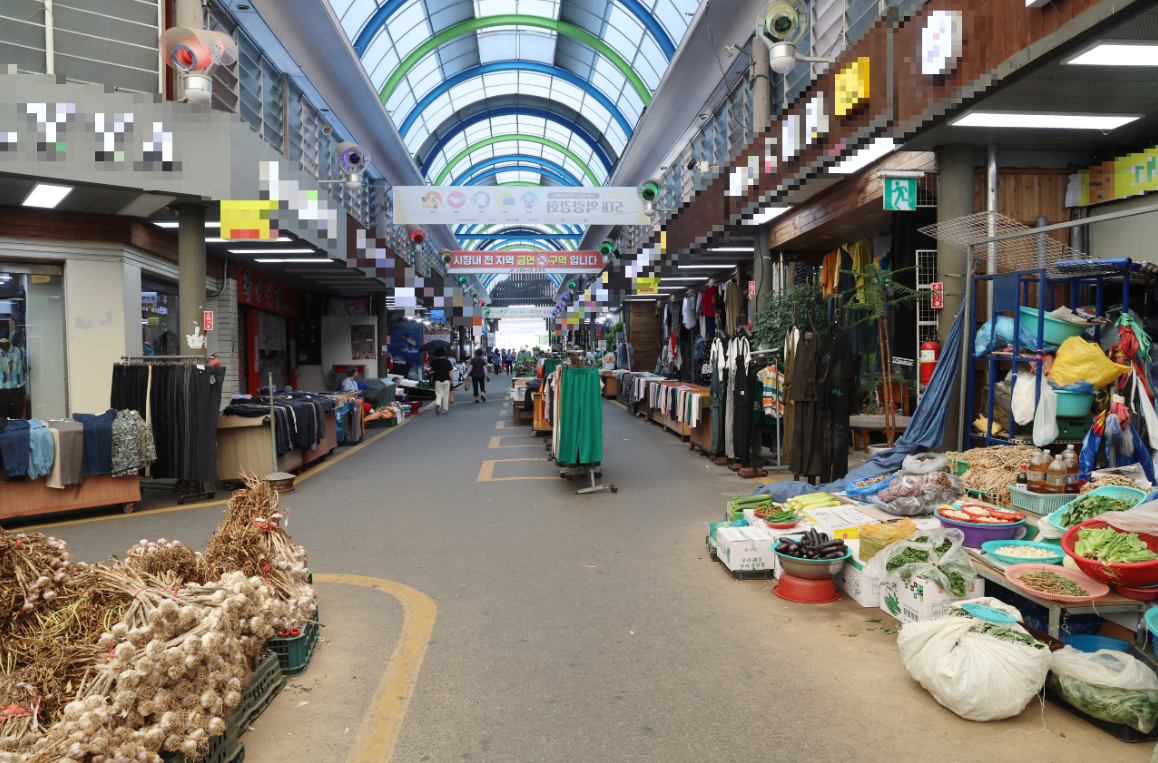
- Conflicts with Traditional Markets: Once protected from large supermarkets, traditional markets are now competing for survival against the new ’top predator’ known as grocery stores. The benefits of large supermarket regulations are now directed towards grocery stores rather than traditional markets, further narrowing the position of traditional markets.
- Controversies with Suppliers: There are criticisms that they demand suppliers to sell below cost, using their increased size and purchasing power, raising concerns that this could harm the profitability of the entire distribution ecosystem.
A Comparative Overview: Large Supermarkets vs. Grocery Stores
| Category | Large Supermarkets | Grocery Stores |
|---|---|---|
| Legal Classification | Large Retail Stores | Medium-sized Mart (not subject to regulations) |
| Applicable Laws | Subject to the Distribution Industry Development Act | Not subject to the Distribution Industry Development Act |
| Mandatory Closures | Twice a month (mostly Sundays) | None |
| Operating Hours | Prohibited from midnight to 10 AM | No restrictions (24 hours possible) |
Conclusion: The Future of Your Shopping Basket
The success of grocery stores is both a clever ’trick’ that exploits legal loopholes and a dazzling history of ‘innovation’ that disrupts outdated distribution structures. They are opportunists as well as innovators. Now, the choice lies with us consumers.
- Key Summary 1: Grocery stores evade the criteria for ’large retail stores’ under the Distribution Industry Development Act (area, ownership type) and are not subject to key regulations like mandatory closures.
- Key Summary 2: They provide overwhelming prices and convenience through innovative strategies such as direct sourcing, targeting consumer trends, and rapid digital transformation.
- Key Summary 3: However, their growth threatens the survival rights of traditional markets and small businesses, leading to new social conflicts.
On a Sunday morning, is shopping at a brightly lit grocery store the future of smarter and more efficient distribution? Or is it turning a blind eye to the process of losing the diversity of our local businesses in exchange for that convenience? Your next shopping basket will determine the future of our society’s distribution landscape.
References
- MoneyS Why are grocery stores on the ‘blacklist’ of small businesses?
- Hongseong Newspaper·Naepo Times Competition among grocery stores begins with their emergence
- Chosun Ilbo While large supermarkets falter… local grocery stores are bustling
- Naver Premium Content [Financial Statement Analysis 46] Grocery Store Sales Surge
- Korea Economic Daily With large supermarkets restrained… grocery stores are soaring
- Dong-A Ilbo Grocery stores grow rapidly with no regulations…
- Seoul Economic Daily While Homeplus sales drop by 2 trillion… grocery stores grow threefold
- Namu Wiki Grocery Store
- Daily Economy [Planning] Grocery Stores Growing in Regulatory Blind Spots
- Daum “Can’t resist 3,000 won for a dozen eggs”… grocery stores evade legal nets
- Ohmynews Grocery stores that only learned bad things… “Prices of bean sprouts slashed by up to 30%.”
- Minjung’s Voice Small businesses in trouble due to grocery stores filling the void left by large supermarkets
- Korean Grocery Distribution Association The competitiveness of the food service industry lies in grocery distribution
- Hana Bank Blog Popular products at half price emerging amid rising prices! Ugly produce
- Biz World Grocery stores see online sales triple after entering open market Sikbom
- MetLife A place filled with warmth and humanity - CEO Seo Jeong-gwon of Jangbogo Grocery Mart