
Have you ever wondered where your ‘place’ is while lost in the city lights?
- Concrete methods to listen to your inner voice and understand yourself
- A new way of building relationships that balances belonging and isolation
- Three journeys to create your own place through real-life examples
Step 1: Who Am I? - Drawing the Map Within
The true journey of finding my place must start with a deep and honest look within, rather than the outside world. Before finding where I belong in the world, I must first know who I am.
The Lesson from the Boy Who Lost His Emotions, “Almond”
The protagonist Yoonjae in Son Won-pyung’s novel “Almond” suffers from ‘alexithymia,’ which prevents him from feeling emotions. He is called a ‘monster’ for his inability to empathize with others, but he changes when he meets his wounded friend Gon. When the emotionless Yoonjae looks at Gon’s pain as it is, a true connection blossoms between them.

Their story shows that our ‘place’ is often found in the mutual healing and recognition space with others. The journey of understanding myself ultimately completes through relationships with others.
Three Tools to Discover Myself
So how can we draw the map within? Philosophy and psychology provide useful tools:
- Understanding Self-Identity: ‘I’ is not a fixed entity but a dynamic process of finding the answer to the question, “Who am I?”
- Optimizing Myself: Rather than fitting myself into an ideal mold, it is the process of observing who I am as I am and finding what is truly ‘suitable.’ Ask yourself, “What activities genuinely make me happy, not through others’ eyes?”
- Finding Life’s Purpose through ‘Fun, Meaning, and Excellence’: Positive psychology identifies Fun, Meaning, and Excellence as commonalities among those who experience happiness and flow. At the intersection of these three, there may exist a ‘calling’ that transcends mere livelihood.
Step 2: Are We Together or Alone? - Finding My Place in Relationships
Once you have drawn the inner map, it is time to step into the world. Humans cannot exist alone, and our ‘place’ is inevitably defined within relationships with others.
The Instinct of Belonging, the Disease of Isolation
Psychologist A. H. Maslow viewed the ’need for love and belonging’ as an essential human need. Belonging is not just about being part of a group; it is a subjective experience of being accepted and understood within it. However, modern society suffers from an epidemic of isolation due to the increase in single-person households and the disintegration of communities. Emotional deficits, or loneliness, are deepening even when surrounded by people.

New Ways of Building Relationships: ‘Voluntary Outsiders’ and Generational Differences
Interestingly, there is a growing number of people identifying as ‘voluntary outsiders.’ They choose solitude to avoid the fatigue that comes from unnecessary relationships, known as ‘relationship fatigue.’ This shows that the paradigm of relationships is shifting from ‘given belonging’ to ‘choosing and editing belonging based on one’s preferences and values.’
This change is also evident in the generational differences surrounding ‘place’ in the workplace.
Comparison of Values on ‘Place’ by Generation
| Values | Gen X | Millennials/Gen Z |
|---|---|---|
| Growth | Personal growth is important (71.3%), but organizational benefits are also considered (45.2%) | Personal growth is the uncompromising top priority (Millennials late 88.9%) |
| Meaning of Work | Work is perceived as a social obligation | A dual perspective that values both income and the meaning of work and self-actualization |
| Organizational Culture | No intention to stay even for a high salary if it is unreasonable (92%) | Core criterion is ‘fairness’ based on individual performance, rejecting unreasonable culture |
| Community | Familiar with ‘strong solidarity’ centered on organizations | Prefers voluntary participation centered on individuals, rejecting unnecessary group activities in favor of ’loose solidarity’ |
Step 3: People Who Created New Places
So how do people specifically find their own places? Finding my place is not a passive discovery but a proactive process of creation.
Journey 1: Returning Home - Cultivating My Own ‘Little Forest’
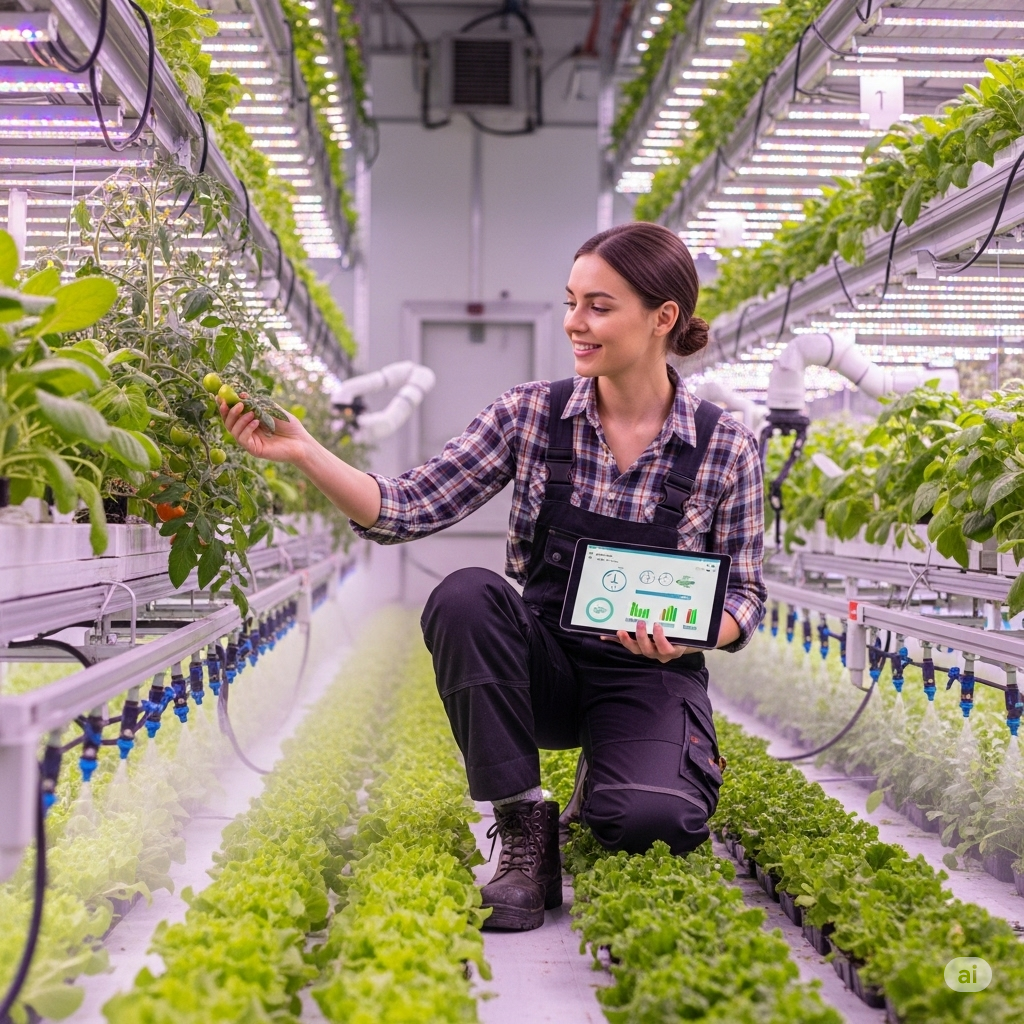
Some people feel burnout from city life and return to the countryside to cultivate their own ’little forest.’ Their choice is not merely an escape but an expression of the active will to “live more freely.” However, thorough preparation, such as smart farm education, and building relationships with existing residents are essential for successful settlement. It is a path to reclaiming oneself through ‘real experiences’ of touching the soil and growing crops.
Journey 2: Leap - Resigning in My 40s to Start My Own Business
“If I have to leave the company in ten years anyway, wouldn’t it be safer to start anew while I’m still younger?” I too have experienced similar thoughts before deciding to take on new challenges. There are those in their 40s who leave stable jobs to start their own businesses. They have a higher success rate due to the experience and networks built over long careers, but the risks of failure are also significant. The support of family and social support systems becomes a pillar during this challenging journey.

Journey 3: Connection - Discovering Myself in ‘Loose Connections’
Modern individuals who feel a sense of disconnection even in crowded cities find new places within ’loose connections.’ They meet in taste-based communities like ‘Munto’ and ‘Trevari.’ The greatest appeal of ’looseness’ is that one can enjoy the joy of connection without deep commitment or obligation. Here, ‘place’ is not a fixed group but a network of relationships flexibly structured around individual passions.

Step 4: Living a Life that ‘Reveres’ Myself - Towards True Liberation
The destination of the journey to find my place is not a physical location or social status, but a state of complete self-acceptance and liberation. The drama
A New Relationship of ‘Reverence’ and Mutual Salvation
The protagonist Yeom Mi-jeong’s monologue, “I have never been filled,” pierces through the emptiness of modern individuals. Her demand to the outsider Gu is to “Revere me,” a longing for existential salvation by asking for unconditional support to fill her empty inner self. Surprisingly, this relationship develops into mutual salvation. By revering Yeom Mi-jeong, Gu finds motivation to escape his lethargy and a reason to save himself. This shows that our ‘place’ can be found in partners who help each other’s liberation.

Ultimately, true ‘place’ is not a geographical location or occupation but a psychological state within. When we reconcile with ourselves and fully accept ourselves, we reach an inner peace where we no longer need to wander in search of a place.
Conclusion: Cultivate Your Own Little Forest
The journey that began with the question, “Where is my place?” ultimately led to inner liberation.
- Finding my place starts with inner exploration. Knowing myself properly prevents me from getting lost in the world.
- The forms of relationships are changing. Rather than being bound by given belonging, I can create my own ’loose connections’ that suit me.
- The ultimate ‘place’ is within my heart. When I reach a state of complete self-acceptance and liberation, I finally find my rightful place.
What is the ‘hunger’ you feel in your life right now? Today, take a very small step to cultivate your ’little forest.’ That is the true beginning of finding my place.
References
- Little Forest Interpretation: Everyone lives by cultivating their own little forest lightyr.tistory.com
- Purpose of Life | Kendall Cotton Bronk Kyobo Bookstore
- [Key Concepts of Modern Philosophy] Understanding and Interpretation (2): Practical Approach (Kim Dong-kyu) Christian Ethics Practice Movement
- 45% of College Students are ‘Voluntary Outsiders’… What Led Them to Become Outsiders? Education News
- [HR Insight] What’s Different About MZ?… Different but the Same ‘X·M·Z … Fortune Korea
- [Rural Youth Success Stories] ① “Returning to Farming and Rural Living Requires Proactive Character” Epoch Times
- [Column] Entrepreneurship Strategies After Retirement in 40s and 50s Seoul Local News
- ‘Taste Communities’ are on the Rise. Slowalk
- ‘Taste Communities’ are on the Rise… Why Gather in ‘Interest-Based Communities’? Sisa Journal
- ‘My Liberation Notes’ Park Hae-young’s ‘Empathy Dialogue’ Becomes a Hot Topic on Various SNS Korea Citizen Journalist Association