
We delve into their lives and tears hidden behind splendor, and the pride of being professional women.
- How court ladies were selected and educated during the Joseon era
- The strict hierarchy within the palace and the roles and lifestyles of court ladies
- The economic stability enjoyed by court ladies and the sacrifices they had to make in return
A Fate Decided by a Single Glance
The story begins with a young girl of about six being led by her parents to stand before the stern sanggung (尙宮). With a brief nod from the sanggung, the girl’s fate is sealed, and she enters the path of a gungnyeo (宮女), destined to live her life as a woman of the king, unaware that she will never see her parents again.
A life that is splendid yet lonely, glorious yet confined. This paradox is what permeated the lives of Joseon court ladies.
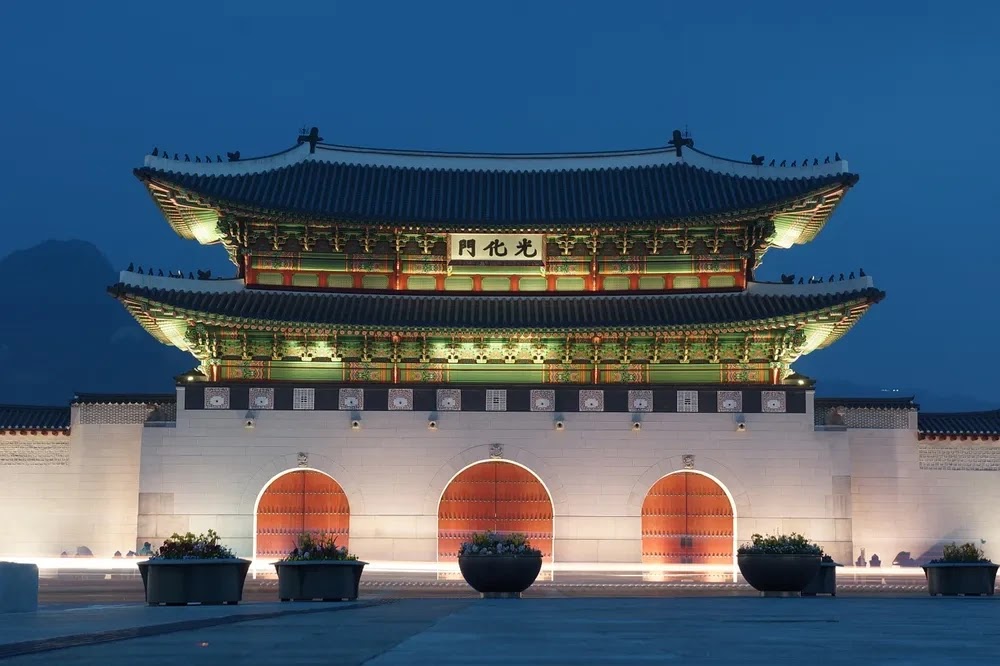
The palace was an unknown world and a lifelong workplace for the young girl.
The selection of court ladies was primarily based on the principle that they were to be daughters of gongnobi (公奴婢). If a daughter of a yangin (良人) was recommended, the punishment was severe, including 60 lashes and a year in prison. However, in practice, it was common for existing court ladies to recommend relatives, leading to a early marriage (조혼) custom where families would marry off their daughters early to avoid sending them to the palace.
The main reason families sent their young daughters to the palace was economic hardship. For poor families, sending a daughter to become a court lady was often the last resort for survival. From the royal perspective, selecting women of slave status was a sophisticated human management system to prevent political interference from relatives and ensure absolute loyalty from state-owned slaves.
Chapter 1: Saenggakshi, 15 Years of Tears and Training
The girl who enters the palace is called ‘saenggakshi’ and undergoes about 15 years of rigorous training. Here, she is reborn not as an individual but as part of the collective identity of court ladies.
Harsh Training Process
Saenggakshis belonging to the jimil (至密) group entered the palace between the ages of 4 to 8, while those in the chimbang (針房) or subang (繡房) entered between 6 to 13 years old. They studied Confucian texts such as Sohak (小學) and Naehun (內訓), and learned the beautiful court script known as gungche (宮體).
However, the core of their education was mastering the court etiquette. Particularly, the ritual known as ‘jiburi geullyeo’ instilled the importance of maintaining palace secrets through a terrifying educational experience. This process erased individual identities, turning them into perfect appendages of the vast royal organization.
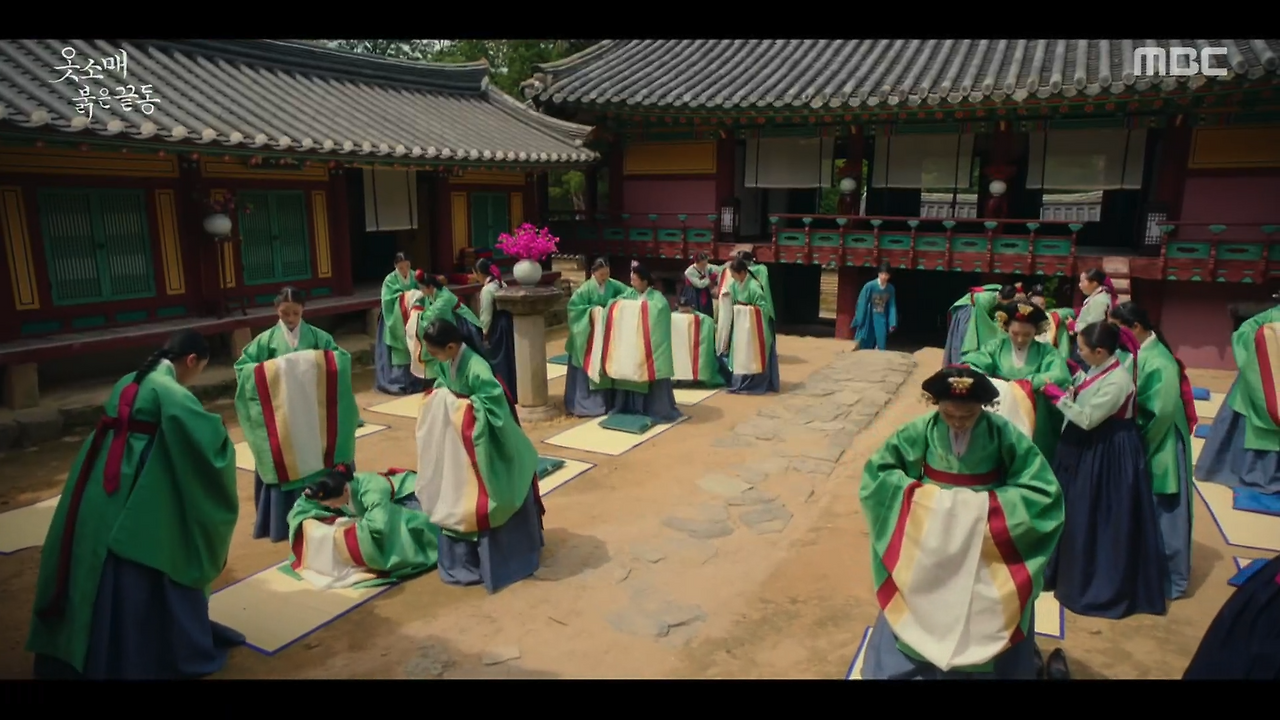
Coming of Age Ceremony, Gwanrye (冠禮)
After 15 years of training, they undergo the formal coming-of-age ceremony called gwanrye (冠禮) around the age of twenty. This ceremony, where they let down their hair and tie it up, symbolizes a conceptual marriage with the king and a sad vow to dedicate their lives to the palace. Thus, the saenggakshi transforms into a proper nain (內人).
Chapter 2: The Organization and Duties of Court Ladies
The palace was a massive organizational society where about 500 to 700 women lived. It was divided into yeogwan (女官) who received ranks and maids who performed menial tasks, with a strict hierarchy in place.
The Pinnacle of Power, Sanggung
After serving as a nain for another 15 years, one could attain the highest position of a court lady, sanggung (尙宮, 5th rank).
- Jejo sanggung (提調尙宮): The supreme ruler of the court lady organization, wielding immense power over personnel and finances.
- Bujejo sanggung (副提調尙宮): The second-in-command managing the internal palace storerooms.
- Jimil sanggung (至密尙宮): Closest to the king and queen, exerting unseen influence.
- Gamsal sanggung (監察尙宮): A feared figure monitoring the discipline of court ladies and administering punishment.
- Bomo sanggung (保姆尙宮): Responsible for the upbringing of princes and princesses.
Specialized Departments, Cheoso (處所)
Court ladies worked in various departments, known as cheoso (處所), according to their specialized fields. This was a systematic system, much like modern corporations, where each department had its expertise to perfectly manage the royal household’s needs.
| Department (처소) | Main Duties | Remarks |
|---|---|---|
| Jimil (至密) | Assisting the daily life of the king and queen | An elite group with the highest probability of receiving royal favor. |
| Chimbang (針房) | Making all clothing for the king and queen | Required high sewing skills and was ranked just below jimil. |
| Subang (繡房) | Creating embroidery for clothing and decorations | Required excellent artistic sense. |
| Soju bang (燒廚房) | Responsible for royal meals and palace banquets | Divided into internal and external kitchens for royals and guests. |
| Saenggwabang (生果房) | Preparing snacks, rice cakes, and drinks | Required specialized knowledge in confectionery and beverages. |
| Sesugan (洗手間) | Preparing washing and bathing water for the king and queen | Required meticulousness and care. |
| Sedapbang (洗踏房) | Managing all laundry in the palace | A physically demanding and large department. |
Chapter 3: The Price of the Golden Cage, Laws and Lifestyle
Court ladies were professional women receiving nokbong (祿俸) from the state, but in return, they were deprived of basic human freedoms.
Salaries of Professional Women in the Joseon Era
Court ladies received their salaries in kind, including rice, beans, and dried fish. The highest-ranking jejo sanggung received treatment comparable to a 3rd rank official and was provided with housing and personal maids. Even young baby nains received monthly stipends, allowing them to enjoy economic stability unimaginable for women at the time.
Iron Discipline: Celibacy and Punishment
The prerequisite for all these benefits was ‘lifelong celibacy’. Court ladies were considered ‘women of the king,’ and if they fell in love with an outside man, they faced the severe punishment of beheading (斬首刑).
This celibacy regulation, which controlled personal lives, paradoxically granted court ladies unique economic autonomy. Without husbands, they could fully own their salaries and accumulate wealth. This resembles modern career women who delay or forgo marriage to achieve economic independence. The golden cage that confined them paradoxically freed their wallets.
Chapter 4: The King’s Grace, One Dangerous Glory
The most dramatic moment in a court lady’s life was catching the king’s eye, known as receiving seung-eun (承恩). This was a gamble for their lives and the only way to escape a lowly status.
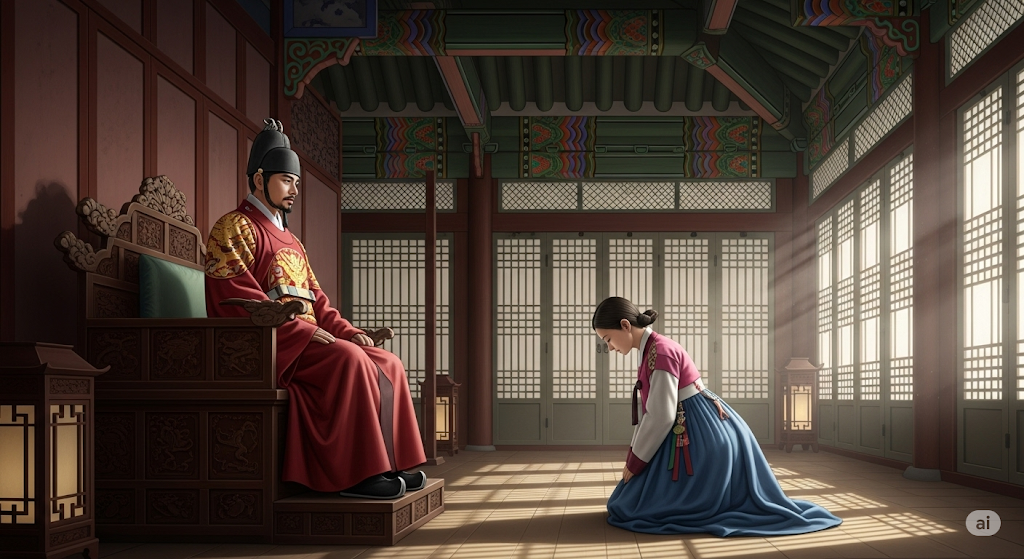
A Cinderella for a Night, Seung-eun Sanggung
A nain who receives the king’s favor becomes a seung-eun sanggung (承恩尙宮), attaining the rank of 5th rank sanggung overnight. She is exempt from all duties and only serves the king, receiving special treatment that even the jejo sanggung cannot afford to disregard.
From Court Lady to Concubine
True elevation of status occurs when she bears the king’s child. A seung-eun sanggung who gives birth is officially appointed as a concubine (후궁) with a rank of sukwon (淑媛) or higher. Heebin Jang (희빈 장씨), who gave birth to King Kyungjong, and Sukbin Choi (숙빈 최씨), who bore King Yeongjo, became symbols of hope and dreams for all court ladies.
This system served as a political device showing that the king could shake the hierarchy of court ladies at any time, acting as a social safety net that maintained the harsh system of court ladies.
Epilogue: Life Beyond the Palace and the Final Resting Place
After decades, aged and ill court ladies leave the palace, a process known as chul-gung (出宮). Some left when their masters passed away or during national disasters.
Even after leaving the palace, marriage was prohibited, so most lived together or relied on temples for the rest of their lives. The state did not neglect their end, providing funeral supplies and paying stipends to their families for three years.
Court ladies without descendants were mostly buried in communal graves with eunuchs in places like Imalsan in Eunpyeong-gu, Seoul. The gravestone found here, ‘Sanggung Okguimssi’s Grave (尙宮 沃溝林氏之墓)’, is a precious testament to the lives of countless court ladies who faded away without names.

Comparison: Life of a Regular Court Lady vs. Seung-eun Sanggung
What did it mean for a court lady to receive the king’s favor? Comparing the lives of a regular sanggung and a seung-eun sanggung highlights the stark contrasts.
| Category | Regular Sanggung | Seung-eun Sanggung |
|---|---|---|
| Acquisition of Status | Requires at least 30 years of training and service | Obtained overnight through the king’s favor |
| Main Role | Overall management as the head of each department | Solely dedicated to serving the king |
| Power Base | Long experience, practical skills, and trust within the organization | The king’s affection and attention |
| Stability | Relatively stable, protected as part of the organization | An unstable position that can be forgotten if the king’s interest wanes |
| Ultimate Goal | Highest positions in the organization such as jejo sanggung | Becoming a concubine and integrating into the royal family through children |
Checklist: Step-by-Step Guide to Becoming a Court Lady
The journey of a girl entering the palace to become the highest-ranking court lady is as follows:
- Ages 4-13: Selected based on family and status to enter as a ‘saenggakshi.’
- Up to 15 years: Undergo rigorous education in gungche, Confucian texts, and court etiquette.
- Around age 20: Complete gwanrye and become a formal ‘nain’ assigned to various departments.
- Up to 15 years: Gain practical experience serving as a nain.
- Around age 35 and beyond: Recognized for abilities and promoted to ‘sanggung,’ the head of each department.
- Highest Position: Achieve the position of ‘jejo sanggung’ by gaining excellent leadership and trust to oversee all court ladies.
Conclusion
The life of a court lady in the Joseon era was more than just serving the king; she was a unique professional woman of her time. Their stories can be summarized in three points:
- Highly Trained Professionals: Court ladies were trained systematically from a young age, becoming experts in their fields.
- Economic Stability and Personal Constraints: While they achieved economic independence through state salaries, they bore the burden of living a life of lifelong celibacy.
- Dangerous Opportunities for Power: The king’s favor was the only path to elevation in status, but it also led to a perilous life filled with political intrigue and instability.
Like a single flower, they entered the palace and lived like shadows, reminding us of the tears and dreams of countless women hidden behind the pages of history. When strolling through Gyeongbokgung or Changdeokgung, why not take a moment to feel the breath of those who silently fulfilled their roles behind the splendid pavilions?