
Principles, Cases, and Future Prospects of Energy Storage Technology Changing the World
- Understand why Energy Storage Systems (ESS) are essential in the era of renewable energy.
- Confirm the economic and technical effects through real ESS utilization cases in Australia and South Korea.
- Compare various ESS technologies, including pumped storage and flow batteries, beyond lithium-ion batteries.
What is ESS? The Emergence of a Giant Auxiliary Battery
Think of the ‘power bank’ that saves us when our smartphone battery is low. Now, imagine if we could scale that power bank to illuminate an entire city. This sci-fi-like imagination is the essence of Energy Storage System (ESS). ESS is literally a massive warehouse and auxiliary battery that stores produced energy.
In fact, electricity is a tricky energy that disappears if not consumed immediately upon production. In the past fossil fuel era, this issue was solved by adjusting power plant outputs as needed, but renewable energies like solar and wind have presented new challenges.
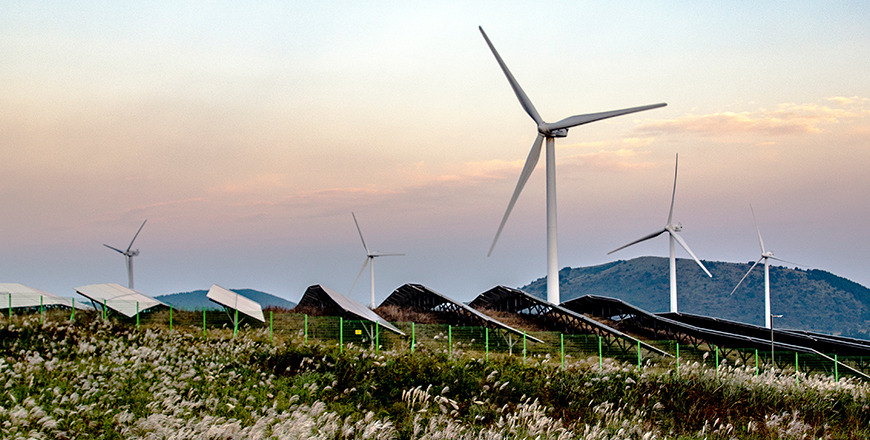
Solar power generates a large amount of electricity only during sunny midday, while wind power does so only on windy days. However, the time when we need electricity the most is primarily in the evening when the sun has set. This ‘mismatch’ between times of surplus energy and times of need has been the biggest weakness of renewable energy.
This is where ESS steps in as a savior. ESS stores the surplus energy gifted by sunlight and wind and supplies it reliably during peak times when electricity demand surges. This transforms the unpredictable output of renewable energy into a reliable energy source 24/7.
Beyond simply ‘storing’ energy, ESS is an innovation that changes the ’time value’ of electricity. For example, solar electricity during the day when supply exceeds demand is of low value, but if ESS stores this electricity and supplies it during the evening when demand peaks, it transforms into high-value energy. In this way, ESS acts as an alchemist that turns energy that would have been wasted into gold, serving as the most crucial key to ushering in the era of renewable energy.
Case Study: Tesla ESS Battery that Saved Australia
In 2016, southern Australia faced a severe energy crisis due to a large-scale blackout. At that time, Elon Musk made a bold promise on Twitter.
“If we don’t build a 100MW battery storage facility within 100 days, we won’t charge a cent for it.”
This provocative proposal became a reality. Tesla completed the construction in just 63 days, giving birth to the ‘Hornsdale Power Reserve (HPR)’. This massive lithium-ion battery, located next to the Hornsdale Wind Farm, was the largest in the world at the time and quickly became a ‘game changer’ for the Australian power grid.
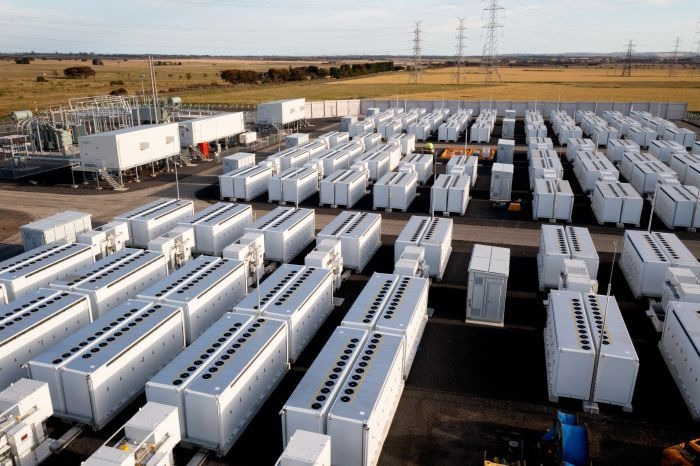
The core mission of HPR was to stabilize the power grid frequency. In fact, when an incident occurred that caused a nearby coal power plant to stop, HPR responded in less than 0.1 seconds, supplying 7.3MW of power and preventing a major blackout. This was revolutionary compared to the several minutes it took for existing gas power plants to respond.
Even more astonishing was the economic effect. With the emergence of HPR, the cost of frequency control services in South Australia plummeted by 91%, and in the first two years of operation, it provided over AUD 150 million (approximately KRW 130 billion) in savings for electricity consumers.
Game-Changing Effects of Hornsdale Power Reserve (HPR)
| Indicator | Performance |
|---|---|
| Initial Capacity / Construction Period | 100 MW / 129 MWh / Completed in 63 days |
| Consumer Cost Savings (First 2 Years) | Over AUD 150 million |
| FCAS Cost Reduction (Frequency Control) | About 91% (from $470/MWh to under $40) |
| Total FCAS Cost Reduction (2019) | About AUD 116 million |
| Emergency Response Speed | Under 100 milliseconds (hundreds of times faster than gas plants) |
| Economic Ripple Effect (Construction) | 158 jobs created, over AUD 300 million in economic value |
Thus, the HPR project not only resolved South Australia’s energy crisis but also served as a catalyst to demonstrate that ESS is economically viable worldwide.
Current Status of ESS Utilization in South Korea: From Factories to Electric Vehicle Charging Stations
Does the story of Australia feel distant? In fact, ESS is already quietly but powerfully changing the world very close to our lives.
A. Smart Factory’s Secret to Reducing Electricity Costs: Peak Shaving
Electricity bills for factories are based on the ‘maximum demand power (peak power)’, which is the momentary power usage. Even a brief spike in electricity usage can lead to high bills for the entire year.
ESS installed in ‘Smart Green Industrial Complexes’ in Changwon, Gyeongnam, and Gumi, Gyeongbuk, performs ‘Peak Shaving’ to solve this issue. The principle is to charge ESS during the low-cost nighttime and use the stored electricity during the expensive daytime (peak time). This reduces the amount of electricity drawn from the grid, thereby lowering peak demand and electricity costs.
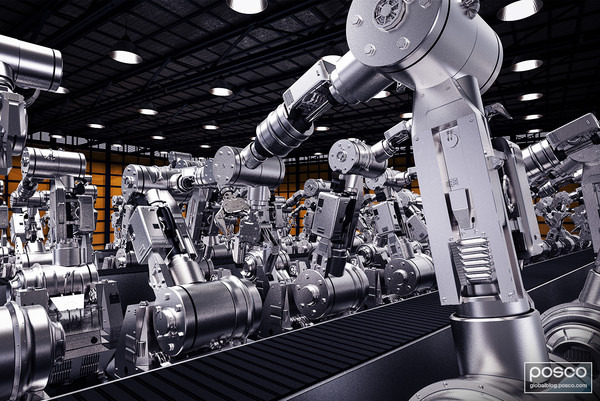
In fact, the Changwon National Industrial Complex integrated ESS with the factory energy management system (FEMS) to achieve an average energy cost reduction of 6-7%, with some companies saving over 20%.
B. Public Buildings Meet AI: Smart Energy Manager
Gyeonggi Province is installing state-of-the-art ESS equipped with artificial intelligence (AI) brains in six public buildings across five cities, including Goyang and Ansan.
The AI in this system analyzes the building’s electricity usage patterns, weather forecasts, and real-time electricity prices to autonomously find the optimal answer to ‘when is the most economical time to charge and discharge?’. AI-based ESS not only maximizes energy efficiency but also significantly enhances safety by monitoring battery status in real-time to detect anomalies like fire risks.
C. ESS Opens the Era of Unhindered Electric Vehicle Fast Charging
One of the obstacles to electric vehicle adoption is ‘charging time’, which requires enormous power instantaneously, putting a strain on the existing power grid.
A domestic startup, ‘Standard Energy’, has introduced a 100% independent fast charging station that does not connect to the power grid. It stores electricity produced by solar panels in an ESS based on vanadium-ion batteries (VIB) and releases massive power all at once when an electric vehicle requests it, supporting ultra-fast charging.
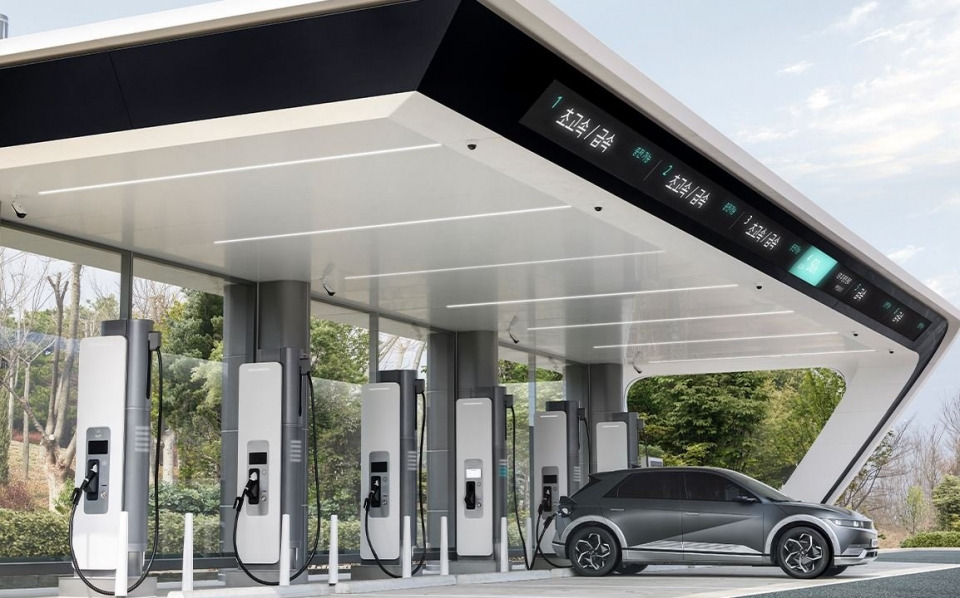
This is made possible by the ‘grid-forming’ technology of ESS, which creates a stable voltage and frequency, forming a ‘microgrid’. In other words, ESS acts not just as a passive storage device but as an active power source. Notably, the vanadium-ion batteries used in this project are evaluated as optimized technology for urban charging stations due to their structural safety, using ‘water’ as the electrolyte, which poses no fire risk.
Beyond Batteries: The World of Diverse ESS Technologies
When we think of ESS, we often think of lithium-ion batteries, but there are many more ways to store energy. When I first heard about ESS, I simply thought of it as a ‘big power bank’. However, the deeper I looked, the more I realized it was close to an innovation that changes the energy paradigm.
A. Giant Water Battery on the Mountain: Pumped Hydro Storage (PHS)
Pumped Hydro Storage (PHS) is the oldest and most widely used large-scale energy storage method, accounting for about 66.5% of global ESS.
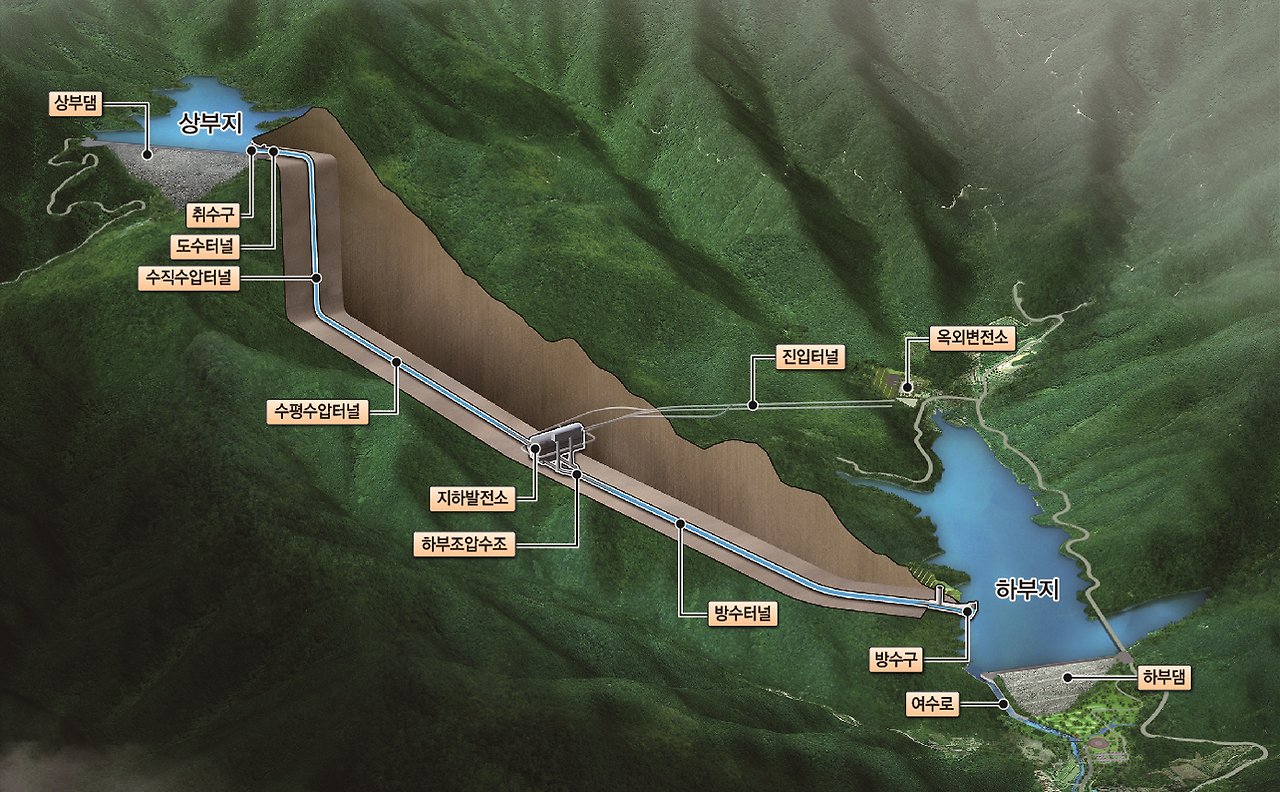
The principle is simple. During the night when power usage is low, surplus power is used to pump water from the lower dam to the upper dam, storing potential energy. When power demand surges, the water from the upper dam is released to turn turbines and generate electricity. It is essentially a massive gravitational battery using water. While it boasts overwhelming storage capacity and a long operational lifespan of several decades, it has the drawbacks of enormous construction costs and being feasible only in specific terrains.
B. Underground Air Battery: Compressed Air Energy Storage (CAES)
Compressed Air Energy Storage (CAES) stores energy by pushing air deep underground. Surplus power is used to compress air and store it in underground spaces like abandoned mines or salt caverns, which is then released to turn turbines when needed. While it allows for large-scale energy storage, it has limitations such as low energy density and difficulty in finding suitable geological structures.
C. Fire-Safe Liquid Battery: Flow Battery
Flow batteries are gaining attention as an alternative to overcome the safety issues of lithium-ion batteries. The representative vanadium redox flow battery (VRFB) stores energy in liquid electrolytes contained in external tanks.
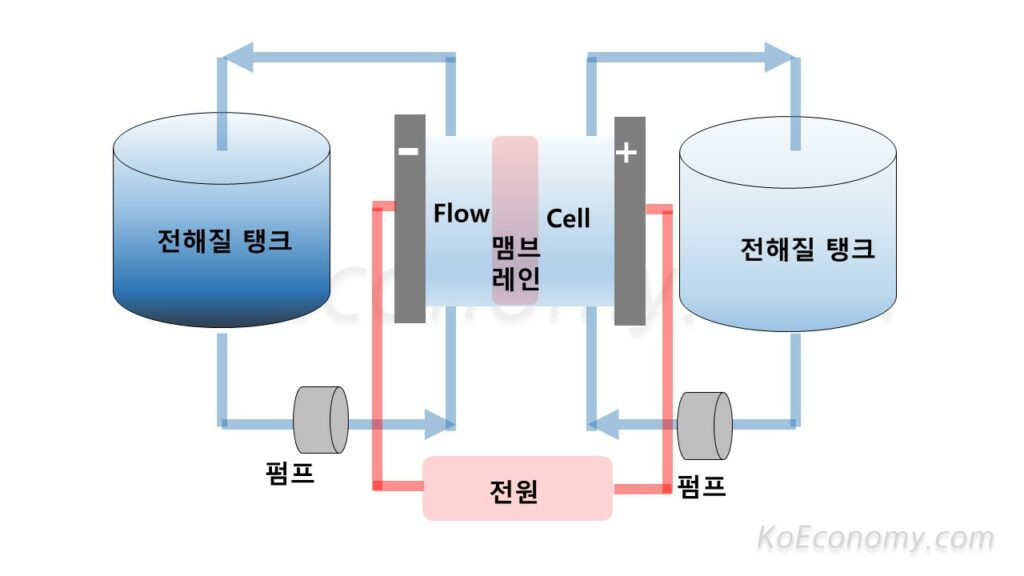
The greatest advantages are ‘safety’ and ’longevity’. Since the electrolyte is water-based, it is fundamentally non-flammable, and it can endure over 20 years and more than 20,000 charge-discharge cycles. While lithium-ion batteries excel in ‘speed’, akin to short-distance sprinters, pumped storage and flow batteries are specialized in providing energy over ’long durations’, like marathon runners. This coexistence of technologies with distinct advantages will likely characterize the future energy market.
Conclusion
Today, we traveled through the world of ESS, the giant auxiliary battery that stores electricity. Through all these stories, we confirmed several key facts about ESS.
- Essential Link in the Era of Renewable Energy: ESS is the key technology that enables the stable use of unpredictable natural energy 24/7. Without ESS, true carbon neutrality is impossible.
- Proven Economic Value: ESS creates tangible economic value by stabilizing the power grid, reducing consumer costs, and enhancing corporate competitiveness, going beyond merely storing energy.
- Evolution and Diversity of Technology: ESS is evolving into various forms beyond lithium-ion batteries, including pumped storage, compressed air, and flow batteries. Each technology provides optimal solutions tailored to specific purposes and environments, ushering in an ’energy storage technology mix’ era.
ESS is no longer a technology of the distant future. It is the key to unlocking a cleaner, safer, and more sustainable energy future that we dream of. What energy transition efforts are taking place in your area? How about taking an interest in your community’s energy independence plans?
References
- Hanwha Group Hanwha’s Energy Storage System (ESS) in Preparation for Energy Crisis
- Battery Inside The All-Powerful Battery Story – ESS Edition
- IBM What is Energy Storage System (ESS)?
- Our Kids Education Information Types of Energy Storage Devices (ESS, Energy Storage System)
- Goover Current Status and Future of Energy Storage Systems (ESS): A New Turning Point for Renewable Energy
- Global Infrastructure Hub Hornsdale Power Reserve Project
- Blackridge Research & Consulting All About Neoen’s Hornsdale Power Reserve in South Australia
- Wikipedia Hornsdale Power Reserve
- Aurecon Hornsdale Power Reserve – Year 2 Technical and Market Impact Case Study
- Clean Energy Finance Corporation SA big battery a game changer
- Ministry of Trade, Industry and Energy Press Release
- Gyeonggi Province Gyeonggi Province installs AI-equipped energy storage devices (ESS) in six public buildings
- Hankook Ilbo Standard Energy, which developed the world’s first vanadium ion battery, supplies ESS for ultra-fast charging of electric vehicles
- Sankun Understanding the Principles, Advantages, Disadvantages, and Current Status of Pumped Storage
- Electric Journal Compressed Air Energy Storage (CAES)
- SNE Research Recent Technology Trends and Market Outlook for Redox Flow Batteries (~2025)