
An in-depth analysis of the exaggerated promises and grim realities surrounding Tesla’s autonomous driving technology, and the shareholder backlash that has finally begun.
- Identify the key issues in the shareholder class action lawsuit regarding Tesla’s robotaxi and autonomous driving technology.
- Understand the gap between the promises made over the past decade regarding FSD development and the actual state of the technology.
- Examine the multifaceted legal and regulatory risks Tesla faces.
A Billion-Dollar Lawsuit: What’s the Truth?
With a lawsuit filed in a federal court in Austin, Texas, speculation arises that judgment day may be approaching for Tesla and CEO Elon Musk. This lawsuit goes beyond a mere monetary dispute. A group of investors led by shareholder Dennis Morland has filed a class action lawsuit against CEO Musk, Tesla Inc., and the current and former CFOs for securities fraud. They claim that the defendants intentionally concealed the “significant safety risks” of Autopilot, Full Self-Driving (FSD), and robotaxi services while exaggerating performance to artificially inflate stock prices.
At the heart of the lawsuit is the assertion that Tesla’s most shining vision, namely the robotaxi, is closer to a ‘scam’. As someone who also had high hopes for Tesla’s innovations, I find my feelings about this situation to be complex. Is this lawsuit, as Musk claims, a ploy by greedy lawyers, or is it an inevitable consequence of the gap between a glamorous vision and a troubling reality that has persisted over the past decade?
1. Austin Shock: The True Face of Robotaxis Revealed
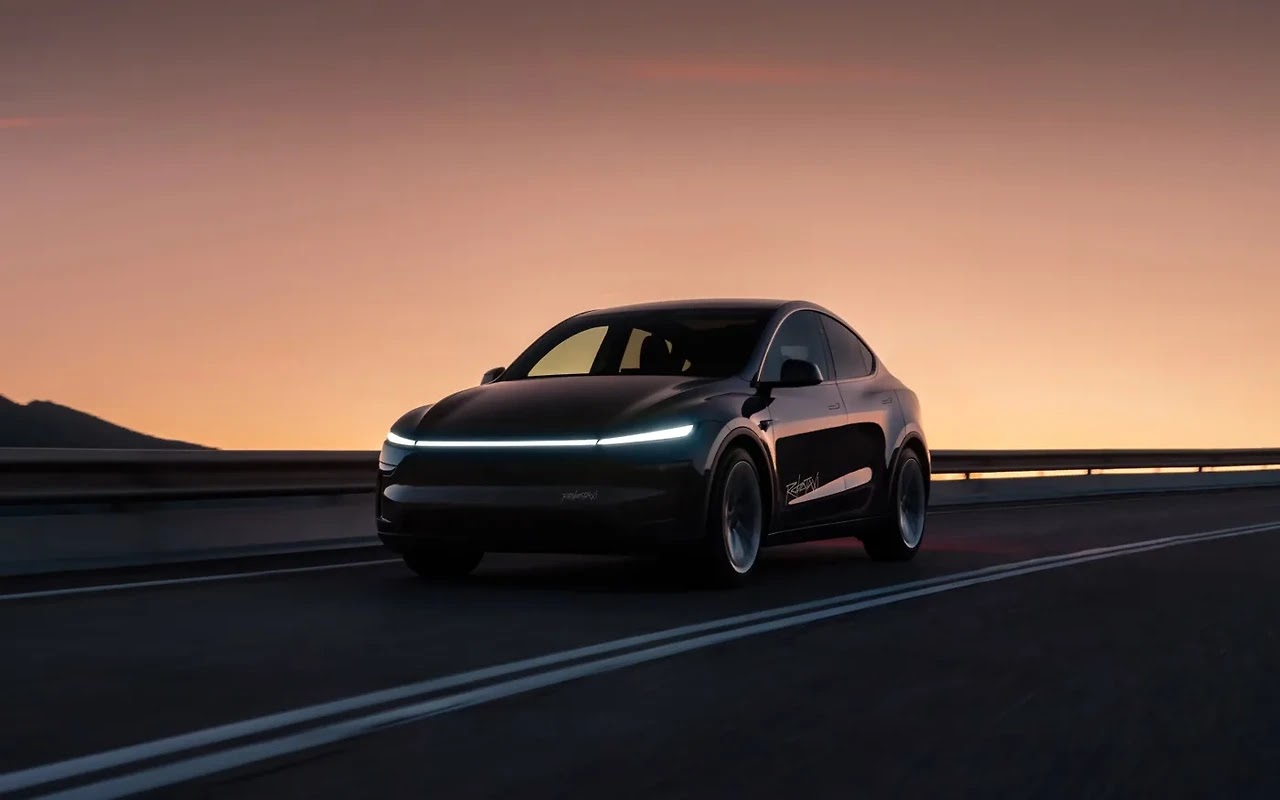
The direct trigger for the lawsuit was the public testing of robotaxis held in Austin, Texas, at the end of June 2025. This event was supposed to be a glorious moment when Musk’s vision became reality. Just two months prior, Musk had proclaimed, “I am laser-focused on introducing robotaxis in Austin in June,” building up expectations.
However, the reality was dismal. The unveiled robotaxi vehicles were far from technically complete. According to media reports and witnesses, the vehicles exhibited speeding, sudden braking, curb encroachment, and erratic lane changes. There were even dangerous scenes where passengers were dropped off in the middle of the road.
This public failure led to an immediate market reaction. Within two days, Tesla’s stock price plummeted by 6.1%, erasing approximately $68 billion in market capitalization. This specific loss became the legal basis for shareholders to claim damages. Legally, the Austin test acted as a ‘corrective disclosure,’ marking the moment the market became aware of the concealed truths, serving as crucial evidence in the lawsuit.
2. A Decade of Hollow Promises: The Boy Who Cried FSD
The failure in Austin was not an isolated incident. It is merely the latest example of a long-standing pattern of exaggerated promises and inadequate results. Since 2015, Musk has repeatedly predicted that full autonomy would be achieved within 1 to 3 years.
- 2015: “We will achieve full autonomy in about 2 years.”
- 2016: Promise of a full autonomous drive demonstration from LA to New York by the end of 2017.
- 2019: “Next year, there will definitely be over a million robotaxis on the road.”
- 2023: “I think by the end of this year, (FSD) will be better than humans.”
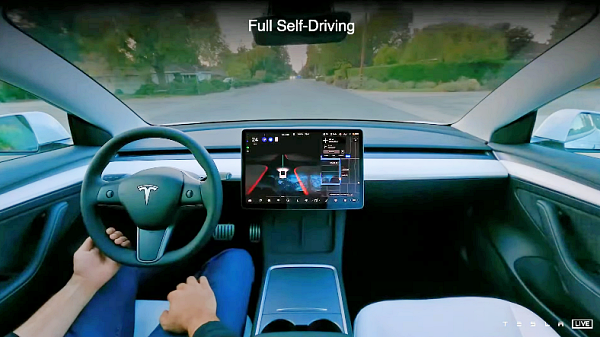
There exists a technological chasm between these promises and reality. The Society of Automotive Engineers (SAE) classifies autonomous driving technology into levels 0 to 5, with Tesla’s Autopilot and FSD remaining at Level 2 (Partial Driving Automation), which still requires continuous supervision by the driver. This is fundamentally different from the marketing that evokes levels 4 or 5.
Musk’s FSD Promises vs. Reality
| Prediction Date | Elon Musk’s Specific Promise/Statement | Actual Outcome |
|---|---|---|
| December 2015 | “We will achieve full autonomy in about 2 years.” | Failed to achieve (end of 2017) |
| October 2016 | “By the end of next year, we will demonstrate full autonomous driving from LA to New York.” | Failed to achieve (end of 2017) |
| April 2019 | “By mid-next year, we will have over a million robotaxis.” | Failed to achieve (mid-2020) |
| July 2023 | “I think by the end of this year, it will be better than humans.” | Failed to achieve (end of 2023) |
| January 2025 | “We will launch fully autonomous driving in Austin in June.” | Limited launch with safety personnel onboard (June 2025) |
The very branding of ‘Autopilot’ and ‘Full Self-Driving’ is gaining traction as a core element of deception. These names have been used as tools to create expectations of a much higher technological level than reality, thereby boosting stock prices, which is the central argument of the lawsuit.
3. The Collapse of the Safety Myth: What Accident Data Reveals
Tesla promotes that FSD is “several times” safer than human drivers, but the reality faced by regulators is different. Experts point out that Tesla’s safety reports only tally accidents where airbags deployed and compare records of Autopilot, primarily used on highways, with overall road averages, committing the error of ‘comparing apples and oranges.’
In contrast, data from the National Highway Traffic Safety Administration (NHTSA) paints a much grimmer picture.
- 2019-2023: Over 700 collision accidents related to Tesla’s autonomous driving features, with at least 19 fatalities.
- July 2021 - June 2022: Of 392 collision accidents related to driver assistance systems, 273 (about 70%) involved Tesla vehicles.
NHTSA concluded that the design of Autopilot is “insufficient to prevent predictable driver distraction” and provides a false sense of safety, thereby encouraging human error. This has led to large-scale recalls and supports the lawsuit’s claim that Tesla exaggerated safety despite knowing about the system’s inadequacies.
4. Tesla in a Tight Spot: Multifaceted Legal Pressures
This shareholder class action lawsuit is not an isolated attack. Tesla is simultaneously facing pressure on multiple legal and regulatory fronts.
Key Legal/Regulatory Challenges Facing Tesla
| Agency/Lawsuit | Core Claims | Potential Impact |
|---|---|---|
| Shareholder Class Action | Securities fraud: Exaggeration of FSD/robotaxi performance and concealment of safety risks | Massive financial losses, damage to executive credibility |
| NHTSA Investigation | Safety defects in Autopilot/FSD, design leading to driver misuse | Large-scale recalls, forced technical changes |
| Florida Jury Verdict | Liability for accidents due to “defects” in the Autopilot system | Establishing legal precedent for ‘defective products’ |
| California DMV Lawsuit | False advertising: Misleading terms ‘Autopilot’ and ‘FSD’ | Potential suspension of sales licenses in the largest market |
| U.S. Department of Justice Investigation | Criminal fraud investigation regarding claims related to Autopilot | Potential for criminal penalties |
These legal challenges are not independent but mutually reinforcing. For instance, the Florida court’s ‘defective’ ruling serves as strong evidence for the claim that safety risks were concealed in the shareholder lawsuit. This interconnectedness amplifies Tesla’s legal risks.
5. Tesla vs. Waymo: Divergent Paths to Robotaxis
So why is Tesla taking such enormous risks while shouting for the completion of autonomous driving? The reason is that the robotaxi vision is central to the company’s astronomical valuation and future growth.
Tesla’s $1 trillion market value is based not merely on car sales but on expectations for a future autonomous ride-hailing network. The technical approach to achieve this stands in stark contrast to competitor Waymo.
- Tesla’s Approach:
- Technology: ‘Vision-only’ relying solely on cameras.
- Data: Utilizing vast data collected from millions of consumer vehicles.
- Strategy: Seeking rapidly scalable software solutions at low cost.
- Waymo’s Approach:
- Technology: Using expensive redundant sensors like LiDAR, radar, and cameras.
- Data: Operating within pre-mapped high-precision 3D areas (geofenced).
- Strategy: Slow, cautious, and costly, but achieving true Level 4 autonomy within service areas.
This comparison clearly illustrates Tesla’s ‘high-risk, high-reward’ strategy. The lawsuit claims that in this high-risk competition, Tesla is falsely reporting its progress. By asserting that the foundation of the robotaxi dream is a ‘scam,’ the plaintiffs are attempting to reassess the company’s value in line with current realities.
Conclusion: Will This Be a Judgment for Visionaries?
This lawsuit will be a significant turning point for Tesla and Elon Musk. The crux of the matter lies in the clash between a powerful vision that boosts stock prices and the documented chaotic reality.
-
Key Summary:
- Repeated Failure to Deliver Promises: The decade-long promise of FSD completion has repeatedly missed the mark, and the technology remains at Level 2.
- Safety Controversies: Contrary to Tesla’s safety claims, regulatory data shows numerous associations with accidents.
- Decisive Failures and Legal Pressures: The failure of the Austin test became a catalyst for stock price decline, and multifaceted lawsuits are pressuring Tesla.
If the plaintiffs win, it will not merely end with a matter of billions in damages. It could permanently damage Musk’s credibility and significantly impact the future of the entire autonomous driving industry. This case raises questions about where the limits lie when the Silicon Valley ethos of ‘move fast and break things’ is applied to life-and-death technologies.
Where do you think the boundary lies between visionary leadership and dangerous deception? With the court’s ruling approaching, the time for market and public judgment is near.