
The Dawn of a Battery-Free World
Imagine a world where your heartbeat powers a pacemaker forever, a slight vibration in your car tire autonomously checks its own condition, and the noisy din of a factory becomes an energy source guarding the machinery 24/7. It sounds like science fiction, but these scenarios are rapidly approaching reality through the incredible technology of ‘Energy Harvesting.’
Until now, we have either ‘mined’ oil from the earth or ‘generated’ electricity in massive power plants. Energy harvesting, however, shifts this paradigm. Just as a farmer harvests crops, we are now ‘harvesting’ and utilizing ambient energy sources like sunlight, vibrations, heat, and radio waves that have always been around us but previously passed us by unnoticed.
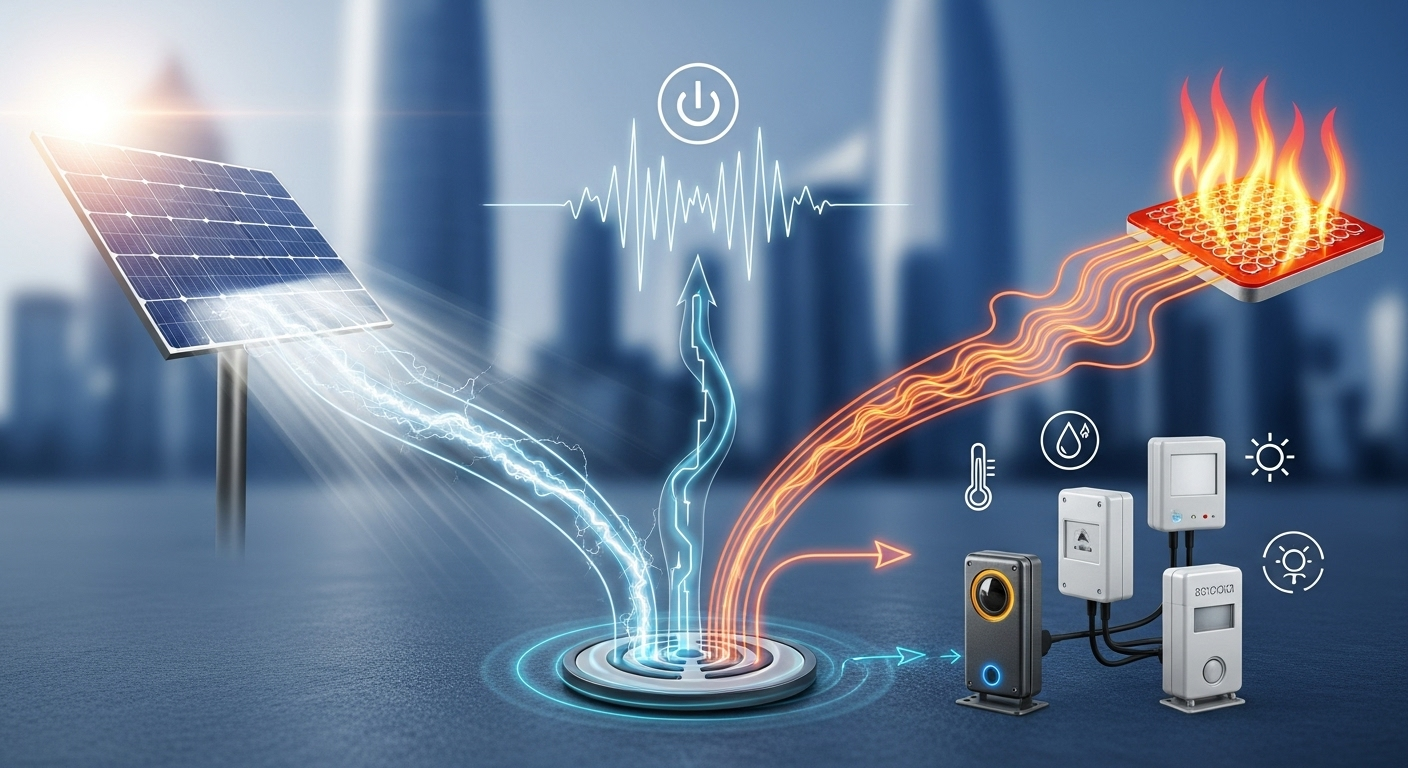
This narrative views energy harvesting not merely as a new form of green energy, but as a fundamental ’enabling technology’ for the 1 trillion sensors that will soon interconnect our world like a vast web, powering the heart of the Fourth Industrial Revolution. Shall we embark on a journey into the epicenter of this quiet revolution? A clearer map of future technology awaits you.
Part 1. Why ‘Energy Harvesting’ Now?
The essence of energy harvesting begins with a small yet profound idea: embedding ‘distributed micro-power plants’ into every object. This technology is gaining unprecedented attention today for two monumental reasons. 
The Era’s Promise of Sustainability
Billions of discarded batteries annually inflict significant damage on our environment. Energy harvesting fundamentally reduces the use of disposable batteries, offering a benevolent technology that helps our planet heal. Beyond cost savings, it’s a pathway to fulfilling corporate ESG commitments and the global pledge for carbon neutrality.
The Immense Wave of the Fourth Industrial Revolution
By 2030, 500 billion devices worldwide are projected to be connected to the internet. Smart factories, smart cities, wearable healthcare devices… individually replacing the batteries for all of them is practically impossible. This is precisely where energy harvesting evolves from a ’nice-to-have’ technology to an ’essential technology.’ It is the only solution for a truly hyper-connected society, where devices can be “install-and-forget,” requiring no further attention.
Part 2. Four Forces Harvesting the Future
The magic of energy harvesting relies on borrowing power from four forces surrounding us. What exactly can we use to harvest the future?
1. Mechanical Energy: Motion is Electricity (Piezoelectricity & Triboelectricity)
Every movement and vibration is a potential treasure trove of energy.
Piezoelectric Effect: Generating Electricity by Twisting Crystals
- What is the principle?: When certain materials are squeezed or twisted, electrical energy is produced, much like water being squeezed from a sponge.
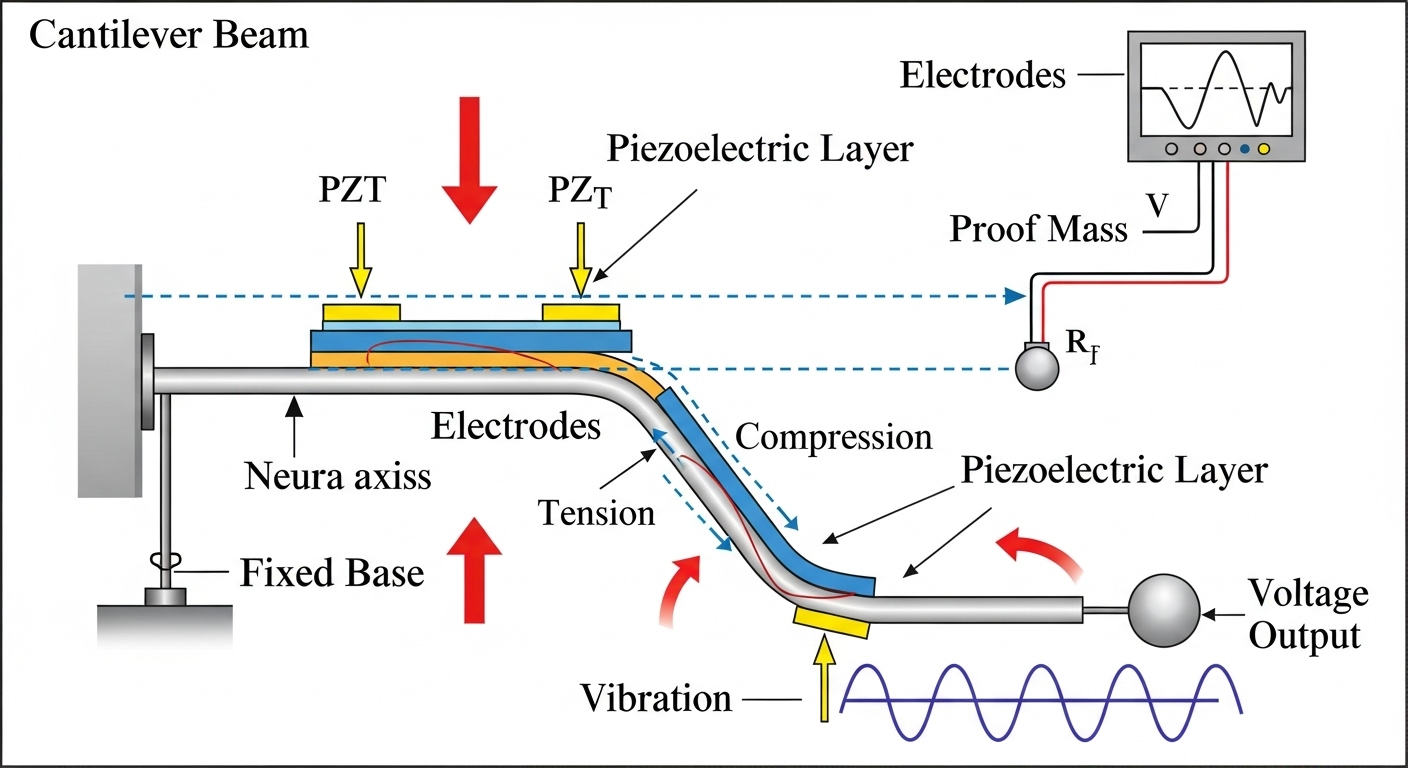
- How does it work?: A thin piezoelectric film is fashioned into a cantilever beam, with one end fixed. As this beam vibrates in response to ambient motion, it bends, generating electricity. The key is to maximize these tiny vibrations to enhance efficiency.
Diagram of a piezoelectric cantilever structure bending due to vibration - Remarkable Advancements: Previously, lead-based materials (PZT) posed environmental concerns. However, DGIST has recently developed eco-friendly new materials (CTO) that pave the way for implantable and wearable medical devices. In Germany, EnOcean’s switches utilize the simple force of our “click” to send signals that turn on lights, already becoming a standard in smart buildings.
Triboelectric Effect: The Grand Transformation of Static Electricity
- What is the principle?: Remember the static electricity you generated by rubbing a plastic ruler against your hair as a child? This technology harnesses that same principle, controlled with nanotechnology, to generate significantly more energy.
- How does it work?: Repeatedly pressing and separating two different films causes positive and negative charges to build up on each film. This force moves surrounding electrons, generating electricity. The core technology involves creating nano-scale bumps on the film surfaces to increase the contact area hundreds of times.
- Where is it used?: While still largely in the research phase, its ability to generate high voltages from inexpensive materials holds great promise for ‘blue energy’ applications, such as generating electricity from wave motion, and for smart clothing that can charge smartphones through the movement of fabric.
2. Thermal Energy: Temperature Differences Create Energy (Thermoelectricity)
The space between hot coffee and a cool desk, the warmth of your hand against the cool outside air – any place with a temperature difference becomes a power generator.
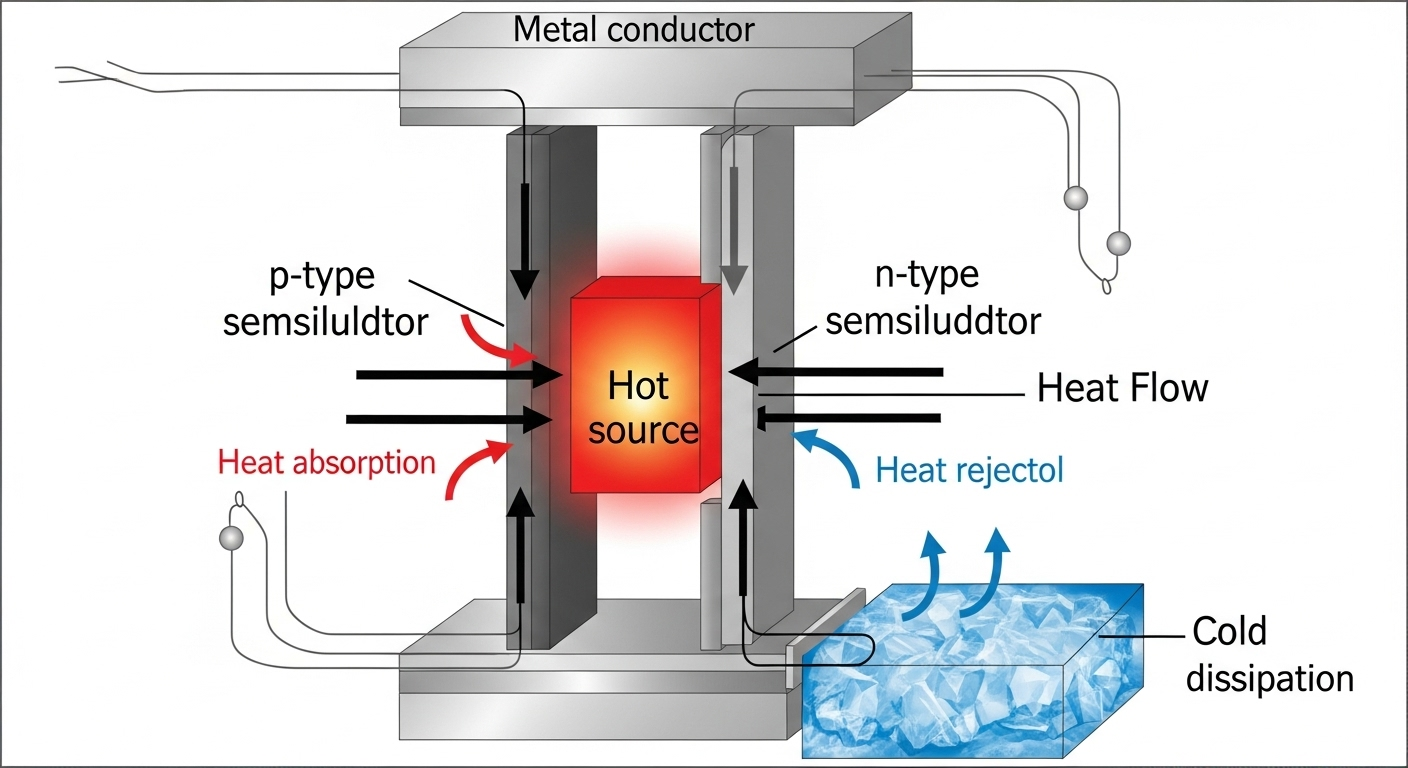
- What is the principle? (Seebeck Effect): When two dissimilar semiconductors are joined and one side is heated while the other is cooled, electricity flows proportionally to the temperature difference. It harnesses the force of energy moving from a hotter region to a cooler one.
Basic structure of a thermoelectric generator (TEG) (p-type/n-type semiconductors and heat source/sink) - How does it work?: p-type and n-type semiconductor pieces are alternated and sandwiched together to form a module (TEG). One side is placed on a heat source (engine, factory waste heat, human skin), and the other side on a heat sink (radiator, air). The small voltages generated by each piece combine to produce usable power.
- Remarkable Advancements: Active research is underway, from recycling waste heat in steel mills to improving vehicle fuel efficiency by 5% using exhaust heat. A Swiss startup is on the verge of commercializing technology that powers smartwatches using just a 1-2 degree Celsius temperature difference between body heat and ambient air.
3. Light Energy: Our Most Powerful and Reliable Friend (Photoelectric)
Solar energy is the most potent, predictable, and familiar energy source to us.
- What is the principle? (Photoelectric Effect): When light particles (photons) strike a semiconductor, they excite and mobilize electrons within it, creating an electrical current.
- How does it work?: Upon receiving light, electrons move towards the n-type semiconductor, and the vacant spots left by these electrons (holes) move towards the p-type semiconductor. This separation of charge at opposite poles creates a voltage, causing electricity to flow.
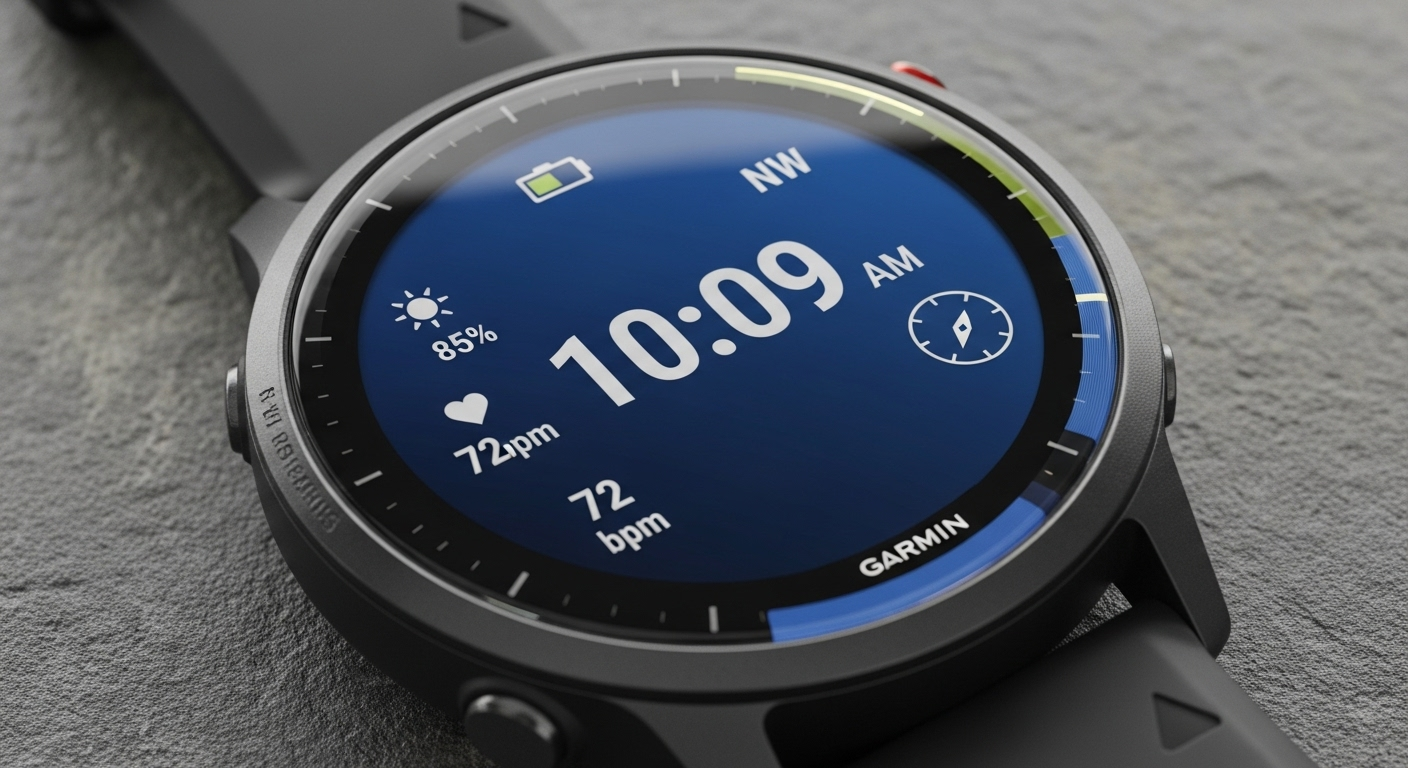
- Remarkable Advancements: Traditional silicon solar cells primarily worked under bright sunlight. However, newer technologies like organic photovoltaics (OPV), which are efficient even in dim indoor lighting, and highly efficient yet affordable perovskite solar cells are emerging as next-generation contenders. Garmin’s smartwatches feature a transparent solar charging lens (Power Glass™) on their watch face, allowing users to enjoy outdoor activities without battery anxiety.
Image of the Power Glass screen on a Garmin smartwatch
4. Electromagnetic Wave Energy: Fishing for Energy in the Air (RF)
Invisible but ubiquitous, our surroundings are filled with Wi-Fi, 5G, and broadcast radio waves. Even these waves hold faint traces of energy.
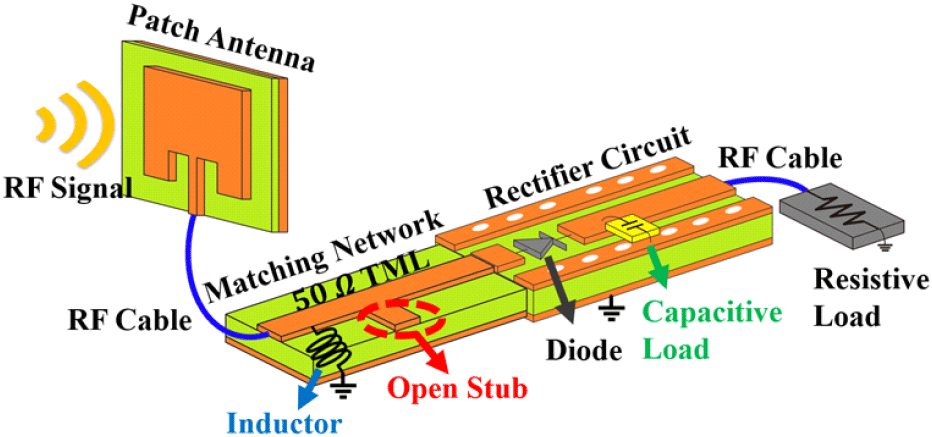
- What is the principle?: This technology captures radio waves traveling through the air using an antenna and converts them into direct current electricity.
- How does it work?: The key component is the ‘Rectenna,’ a combination of an ‘antenna’ that captures radio waves and a ‘rectifier’ that converts AC signals to DC. The antenna picks up even minute radio waves, which the rectifier then transforms into usable electrical power.
Rectenna. A component combining an 'antenna' to capture radio waves and a 'rectifier' to convert AC signals to DC - Remarkable Advancements: Technologies capable of simultaneously harvesting energy from multiple frequency bands are being developed. Powercast in the U.S. has commercialized technology that transmits radio waves from several meters away to wirelessly charge multiple sensors simultaneously. This is ideal for applications like tracking inventory in warehouses or powering electronic shelf labels in supermarkets where battery replacement is cumbersome.
Part 3. Market Pulse: Who Will Dominate the Future?
The energy harvesting market is experiencing rapid growth, with an annual average of over 10%, projected to reach approximately $3 billion by 2032. ‘Industrial Internet of Things (IIoT)’ and ‘Smart Buildings’ are particularly driving this growth.
- North America (Leader): The world’s largest market, driven by a high adoption rate of advanced technologies and a robust semiconductor industry.
- Europe (Policy-Driven): Strong environmental policies like the ‘European Green Deal’ have made Europe a leader in zero-energy buildings and smart home sectors.
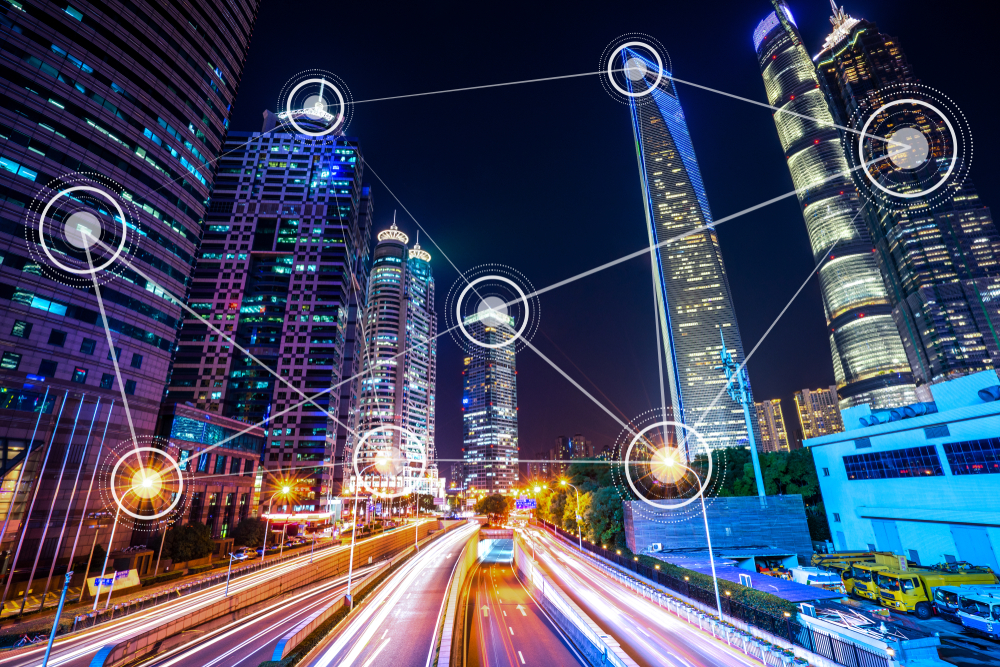
- Asia-Pacific (Growth Engine): The fastest-growing region, with massive smart city projects in China and India creating immense opportunities.
Massive smart city projects in China
Where Does South Korea Stand?
South Korea is somewhat unique. While the domestic market size is modest, its R&D capabilities, centered around KIST and KAIST, are world-class. Companies like Hyundai Motor Group with its solar roof system and KoaChip’s self-powered industrial sensors are already demonstrating global technological prowess. Our strategy is clear: leverage our world-leading technology to solve problems in the largest overseas markets through a ‘Born Global’ strategy.
Part 4. Cutting-Edge Technologies Making Imagination a Reality
In laboratories worldwide, groundbreaking innovations are continuously reshaping the future of energy harvesting.
1. Material Revolution: Wearable and Implantable Energy Sources
Moving beyond rigid components, materials are evolving to become soft, stretchable, and skin-like. Thermoelectric devices that stretch like rubber and biocompatible piezoelectric films are ushering in an era of ‘wearable’ and ‘implantable’ technologies, creating new markets for applications like athlete uniforms and permanent pacemakers. 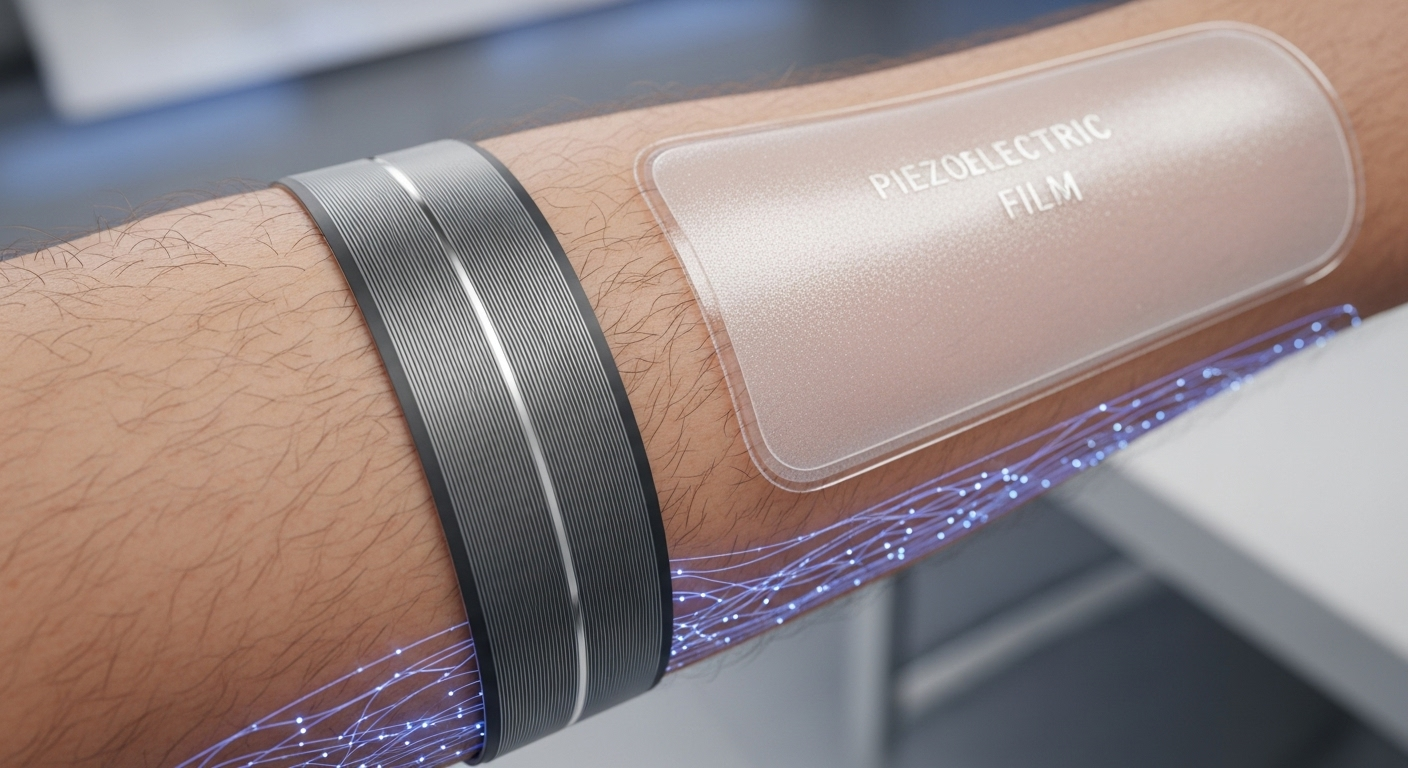
2. Breaking Efficiency Barriers: Hybrid and Metamaterial Technologies
- Hybrid Technology (1+1 > 2): In environments where heat and vibration coexist, harvesting both simultaneously can increase efficiency by over 50%. This also enables technologies that generate power from solar energy during the day and from the impact of raindrops on a cloudy day.
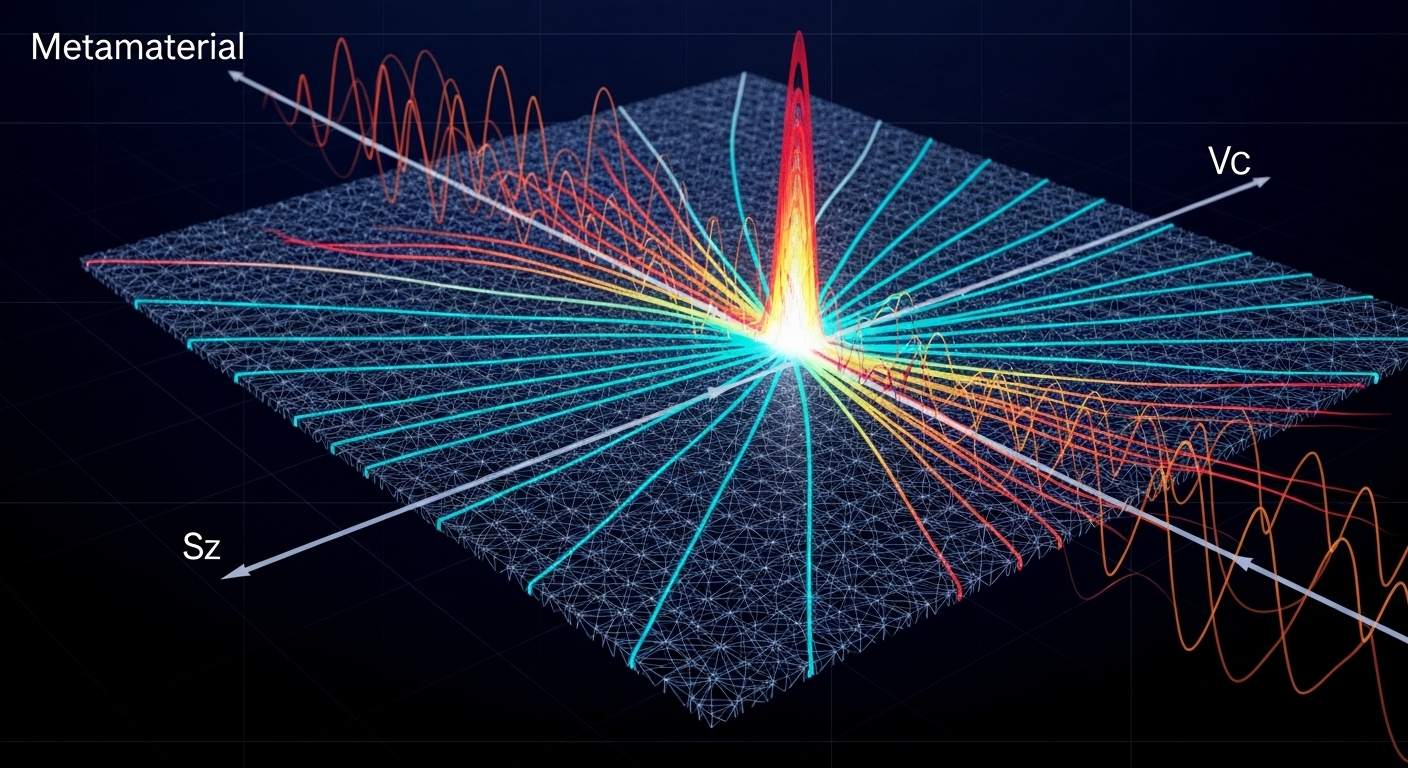
- Metamaterial Technology: Similar to how a magnifying glass focuses light, these novel materials concentrate diffuse, minute vibrational energy into a single point. This allows even a single small device to generate substantial energy, drastically reducing cost and size.
Principle of metamaterials concentrating vibrational energy to a single point
3. New Discoveries: Harnessing the Power of Ions
At KAIST, a new method has been developed to generate electricity using the movement of ‘ions’ instead of electrons. This technology produces a long, steady current rather than short, intense bursts of electricity, making it more suitable for powering actual devices. It is gaining attention as a technology that will significantly enhance the practicality of wearable devices. 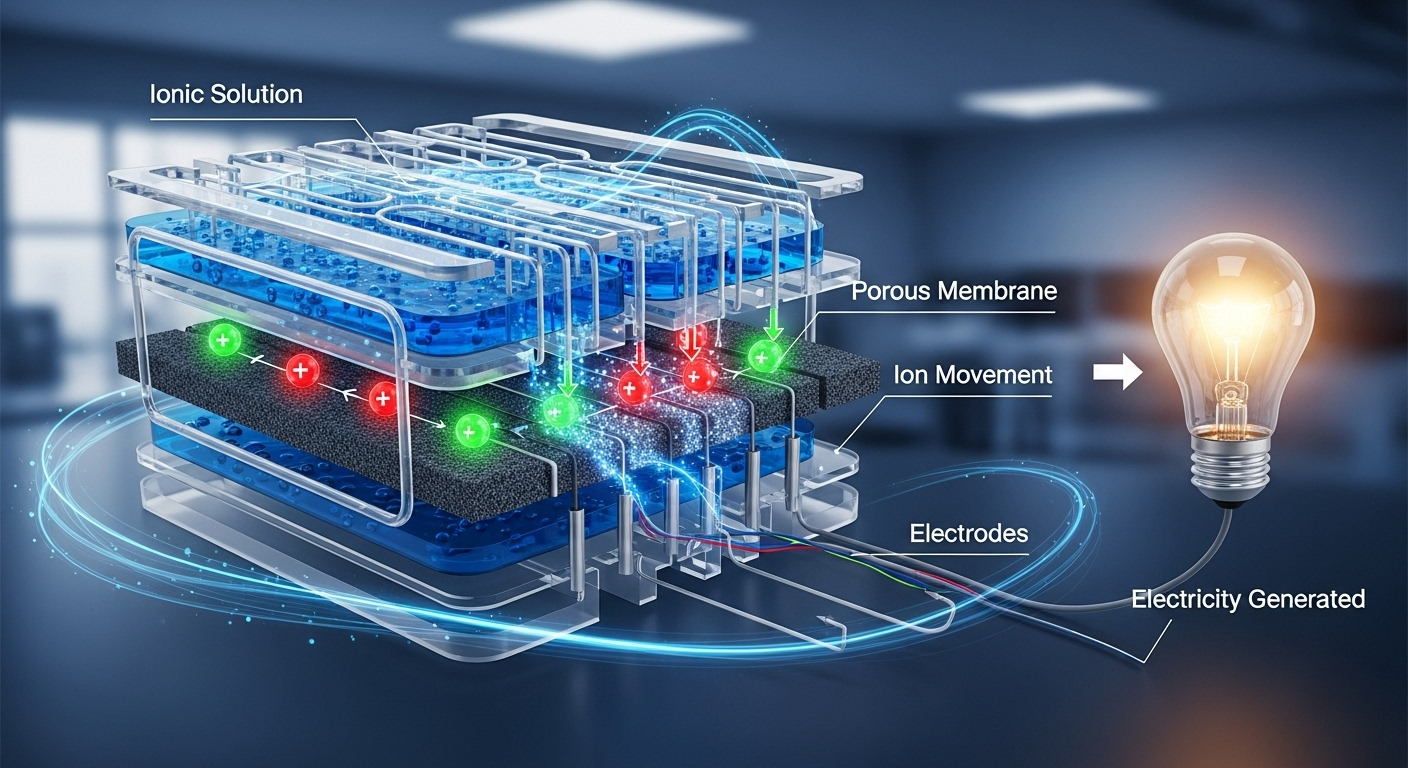
Part 5. The Unsung Heroes: It Wouldn’t Be Possible Without Them
No matter how good a seed is, it’s useless if not properly managed and stored. The same applies to energy harvesting. It only becomes complete with the presence of ‘unsung heroes’ who manage and store micro-energy.
The Brains of the System: Power Management Integrated Circuits (PMICs)
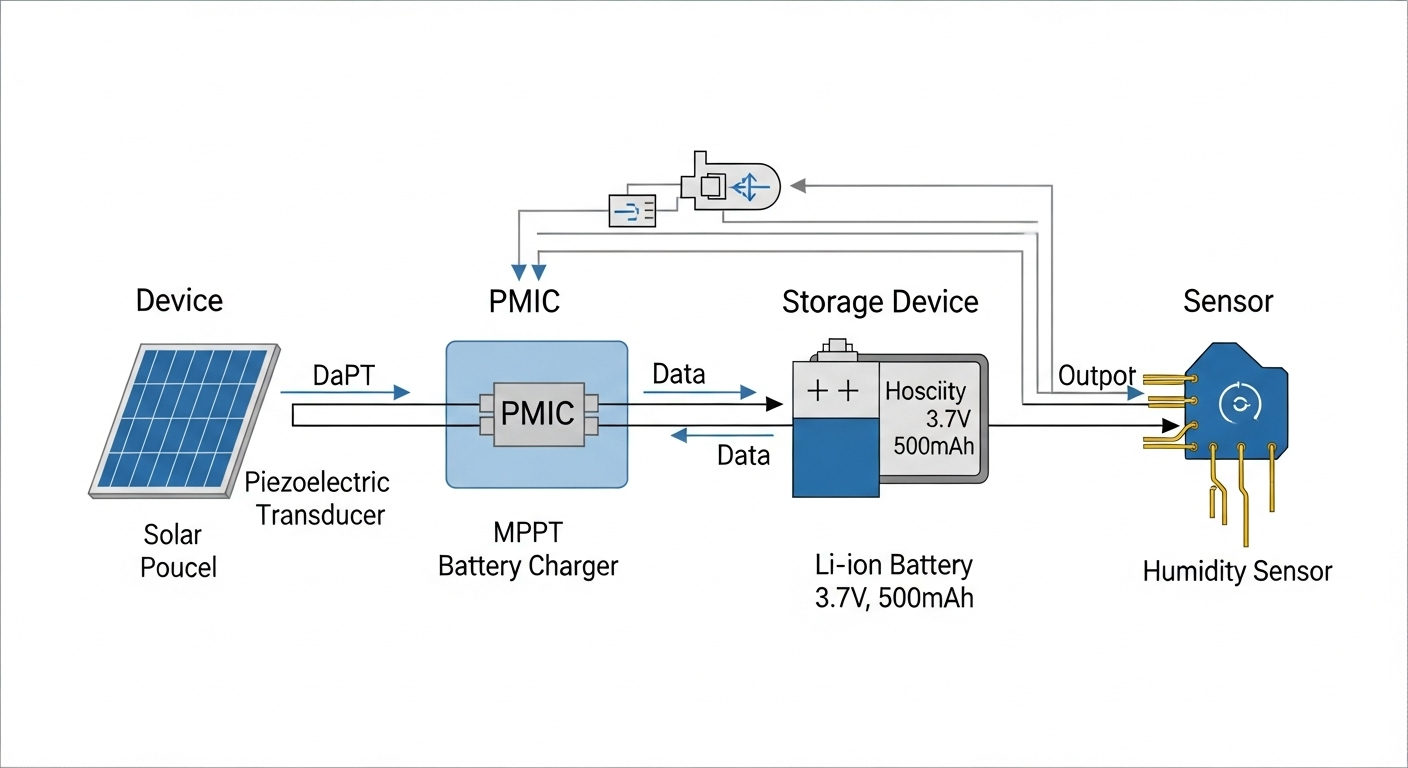
The harvested energy is like ‘crude oil’ – too low in voltage and irregular to be used directly. PMICs act as an ’energy refinery,’ purifying this crude oil into clean and stable gasoline. They possess intelligent brains, consuming minimal energy themselves (ultra-low quiescent current), capable of restarting even from a fully discharged state with minimal energy (cold start), and always extracting maximum power (MPPT).
The Energy Vault: Energy Storage Systems (ESS)
To ensure continuous system operation when there’s no sunlight or vibrations stop, an ’energy bank’ is needed to temporarily store energy. High-capacity ‘rechargeable batteries’ and supercapacitors, which offer extremely fast charging and discharging with near-infinite lifespans, are commonly used. Selecting the optimal combination based on the application is crucial.
Key Insight: Future competitiveness will not solely lie in manufacturing superior components. The ability to understand and optimize the entire system, from the ‘device-PMIC-ESS-sensor’ chain, providing a ’total solution,’ will determine the winners in the market.
Part 6. Success Stories Turning Imagination into Reality
- Automobiles (Hyundai Motor Group): Demonstrated the value of energy harvesting with Solar Roof achieving an additional 1,500km of annual driving and heat pumps utilizing waste heat for heaters, extending EV range.
- Wearables (Garmin): Addressed the perennial “battery anxiety” of wearables with Power Glass™ technology, captivating outdoor enthusiasts.
- Smart Buildings (EnOcean): Wireless switches powered solely by the force of a click eliminate the need for wiring and battery replacements, ushering in an era of ‘zero maintenance cost.’
- Industrial IoT (KoaChip): Self-powered sensors operating on factory vibrations and heat enable even aging equipment to easily transform into smart factories, accelerating the era of data-driven predictive maintenance.
Part 7. The Final Hurdles and Strategies for the Future
Of course, challenges remain. Energy output is still low, a balance between efficiency and cost must be struck, and issues of durability and standardization need resolution. However, we are finding solutions.
- Hybridization and System Integration: Combining multiple energy sources and intelligently integrating them with PMICs and ESS is the most practical solution.
- Material Science Innovations: New materials like metamaterials and perovskites will fundamentally overcome technological limitations.
- Convergence with AI: AI will predict and optimize energy generation, storage, and consumption to maximize efficiency.
- Customized Design: Rather than a ‘one-size-fits-all’ approach, designs perfectly optimized for specific industrial environments will be key to unlocking early markets.
The Future of Sustainable Energy Seamlessly Integrated into Our Lives
Energy harvesting is no longer a distant dream. It is a key driver completing the IoT era and paving the way for a sustainable future. In the short term, it will be seen in industrial sites and smart buildings; in the medium term, in wearables and automobiles; and in the long term, it will create a world where entire cities become vast power generators.
The winner of this grand journey will be the one who provides a ’total solution’ encompassing everything from materials to the system, not just the best components. Will we awaken dormant energy and open the door to a perpetually connected future, or will we be left behind by the tide of immense change? The choice is ours, right now.