
July 1, 2025. History books might record this day as ’the day the internet closed its doors.'
Let’s be honest.
For nearly 30 years, we’ve treated the internet as a free public good, like air or water, something naturally provided.
We lived in a peaceful world where typing a word into a search bar yielded results in 0.1 seconds, and anyone could read what you wrote on your blog. But I can confidently say, that era of the ‘free internet’ is over.
The cause of death is clear.
It is the ‘complete collapse of trust.’
The web of the past was maintained by an unspoken barter agreement: “If you post good information, we’ll send you traffic (people).”
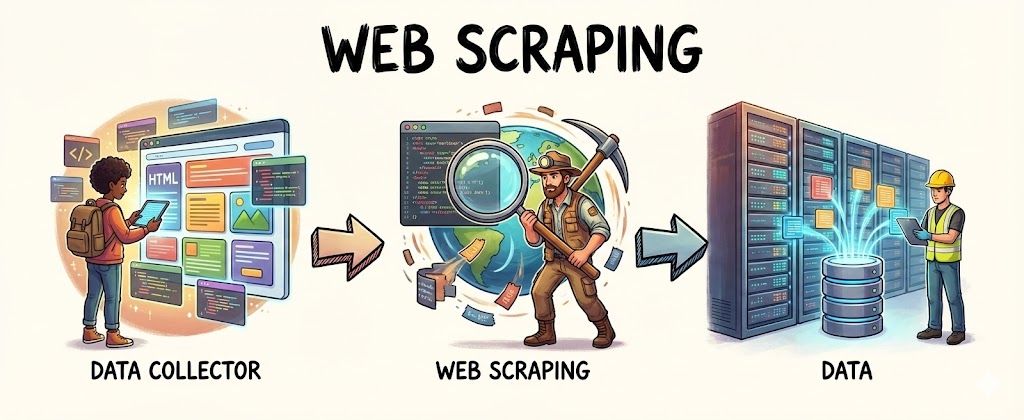
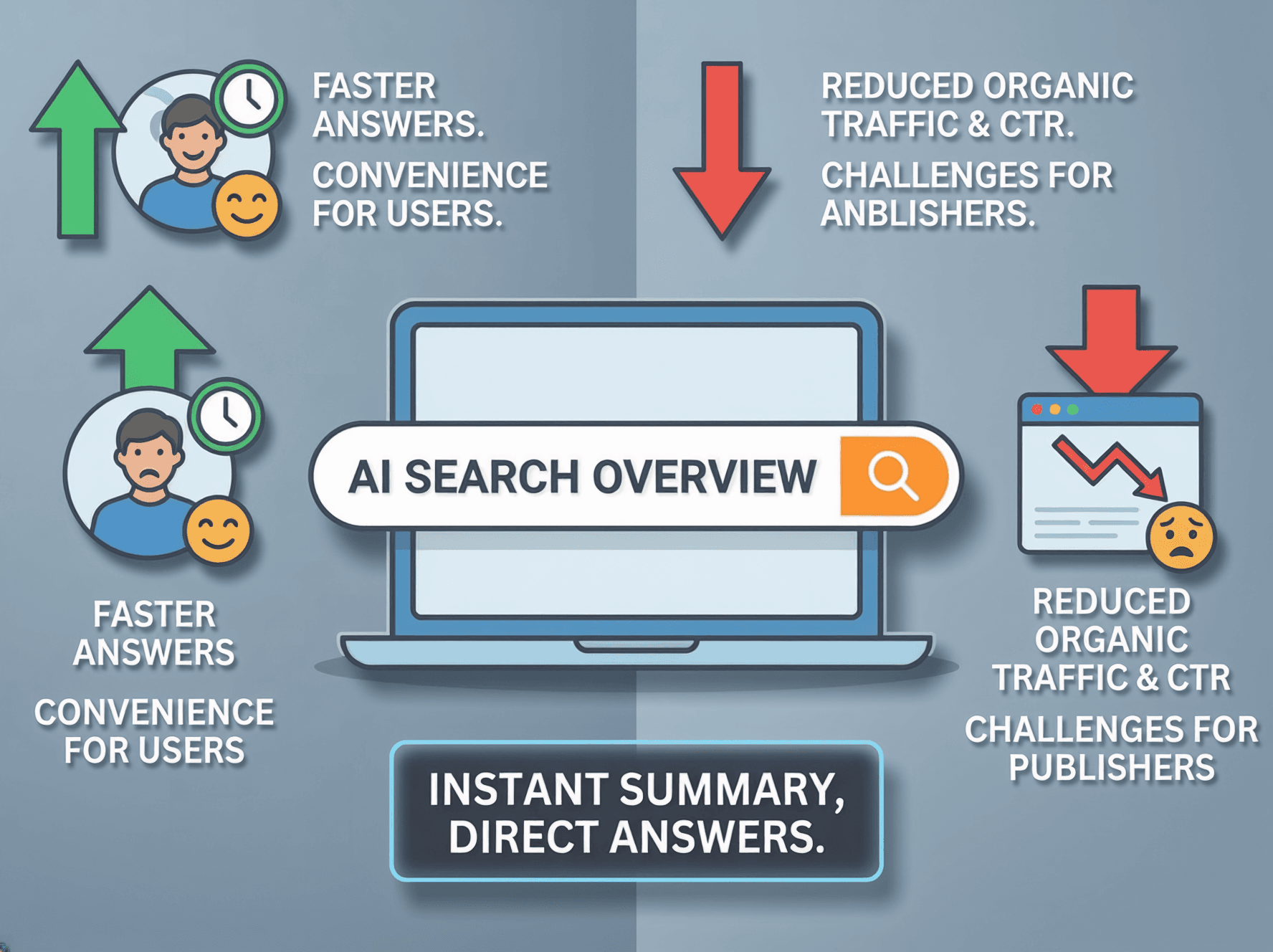
However, with the emergence of generative AIs like ChatGPT and Gemini, this promise has become worthless. This is because AI only reads information and ushers in the ‘Zero-click’ era, returning not a single visitor to the original creator.
Now, to prevent parasites from consuming their host, the guardians of the web have begun constructing massive walls.
What I’m about to tell you isn’t just a technological trend.
This is a vivid record of the ‘First Digital Asset War’ unfolding around every word you’ve carelessly written and every photo you’ve posted.
1. The Invisible War: Infrastructure Becomes a Weapon
Even at this very moment, a fierce battle of swords and shields is raging on the invisible back-end of the web. This is because Cloudflare, the gatekeeper of global web traffic, has declared all-out war on AI bots.
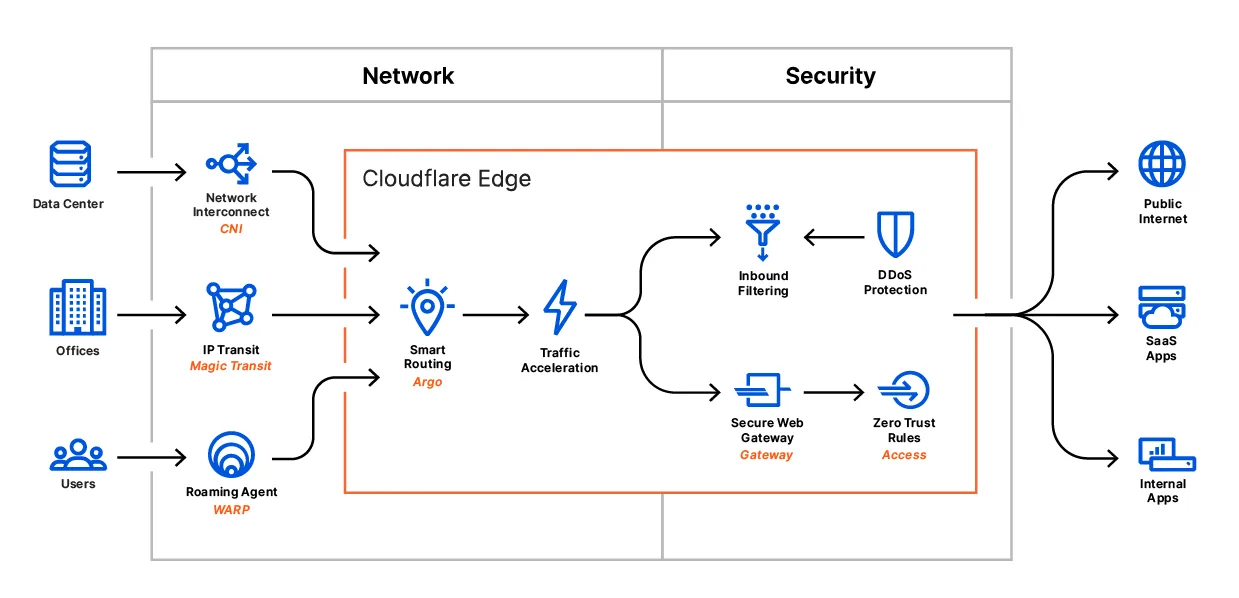
The era of ‘polite requests’ is long gone; a rougher age has arrived.
1.1. No-Go Zones for Robots: The Broken Gentlemen’s Agreement
In the early days of the internet, web order relied on a very simple text file: robots.txt.
If a website owner wrote, “Do not enter from here,” search robots would respectfully comply. This was the Gentlemen’s Agreement that sustained the web ecosystem.
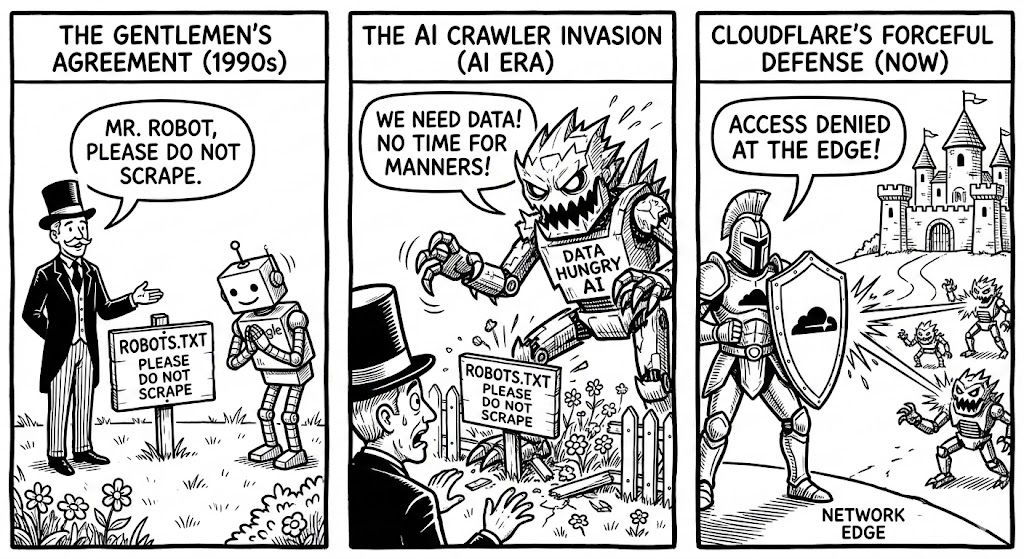
But data-hungry AI companies began ignoring these old signs and scaling the walls. Securing training data was directly linked to their survival.
So, Cloudflare drew its sword. Now, if an unauthorized AI bot is detected? It’s immediately physically expelled at the network’s edge, long before it can even approach the website server.
1.2. The Revival of a Dormant Code: HTTP 402
The most shocking change isn’t technical blocking; it’s the emergence of an ’economic barrier.’
You’re probably familiar with ‘404 Not Found’ or ‘403 Forbidden.’ But a ‘ghost code’ buried in the dusty corners of internet history, known only through legends among developers, has risen from its grave: HTTP 402 Payment Required.
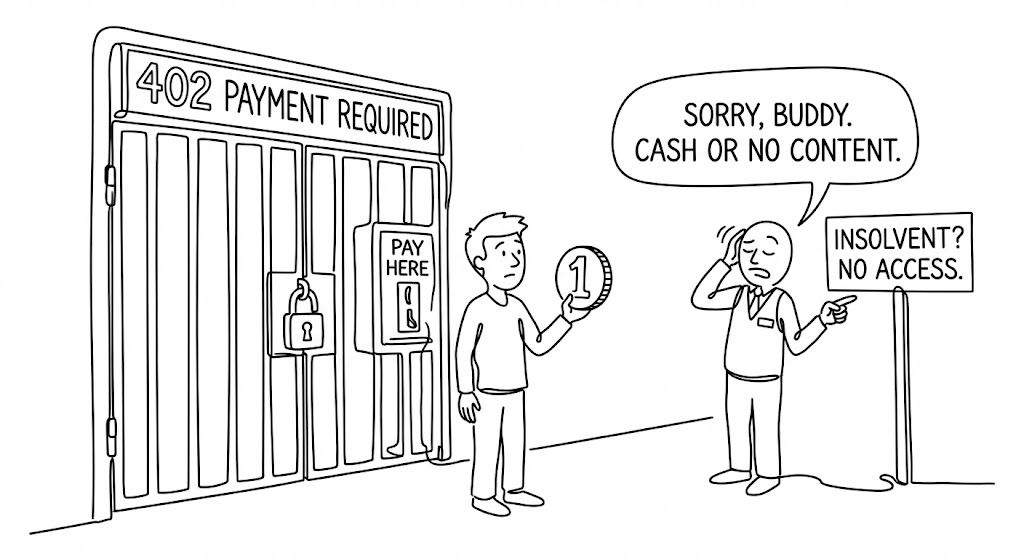
Cloudflare’s proposed ‘Pay Per Crawl’ model is brutally capitalist.
- An AI bot requests data.
- The system sends a bill instead of content. “402 Payment Required: Pay $0.05 to access this data.” The gate only opens after payment in digital tokens.
The web is no longer a free library for AI. It has become a strictly paid bookstore where you must pay an entrance fee to open a book.
1.3. A Maze for Bots: AI Labyrinth
What about ’thief bots’ trying to steal information stealthily without paying?
The defense system activates the ‘AI Labyrinth’ for them.
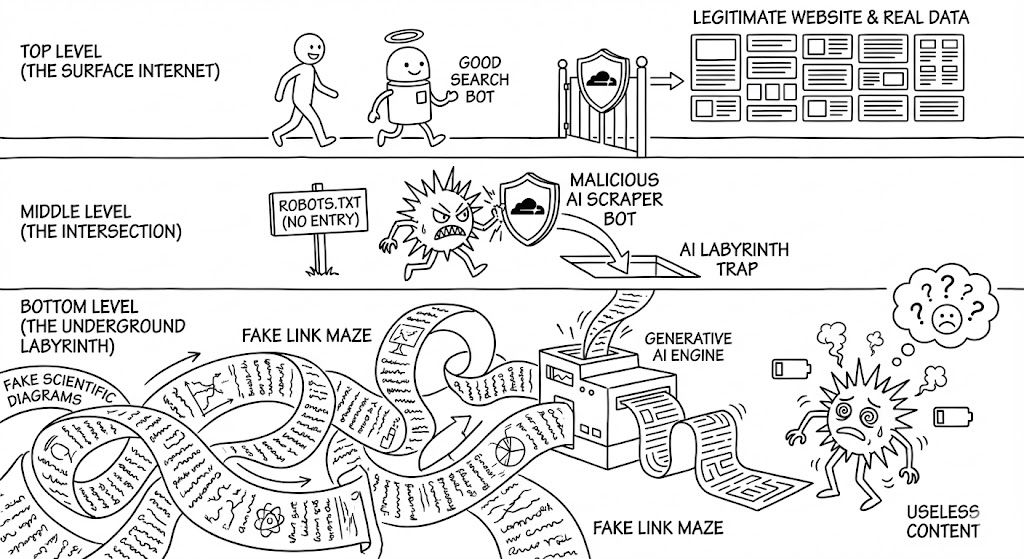
If you subtly drop a fake link to a bot, it bites, thinking it’s real information. But it’s a trap. An endless stream of ‘plausible but meaningless text fragments’ generated by AI in real-time unfolds. The industry calls this a ‘Tar Pit.’ The bot gets stuck in this tar pit, wasting enormous server costs and electricity just to collect meaningless garbage data.
2. Swords and Shields: The Technological Arms Race
When the defender locks the door, the thief learns to pick the lock. A technological arms race has begun, going beyond simple blocking to advanced evolution.
2.1. The Battle of Digital Fingerprints: JA4
Simply blocking IP addresses is now meaningless. Bots change their IPs every second, wearing millions of masks.
That’s why defenders use a technology called JA4 fingerprinting.
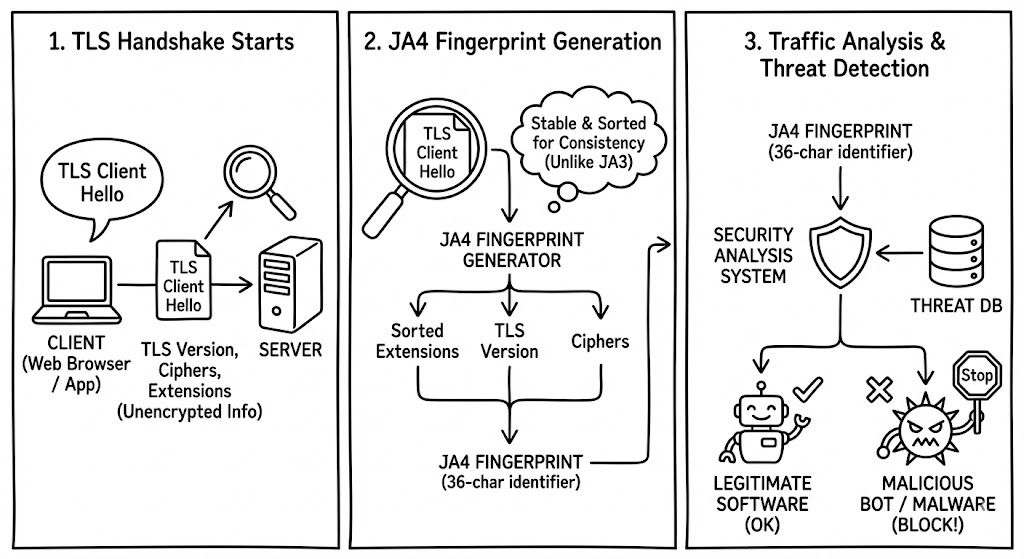
Let’s use an analogy: Imagine a thief who changes clothes and disguises himself every time he enters, but can’t change his unique ‘gait’ or ‘breathing pattern.’
JA4 fingerprints bots by analyzing their communication habits (TLS handshake patterns). It identifies them by saying, “You claim to be a Chrome browser, but your communication gait reveals you’re a Python script!”
2.2. Refrigerators Turned Zombies and AI Solvers
The attackers’ counterattacks are formidable. Most chillingly, they utilize our everyday devices.
- Residential Proxies: Bots connect through hacked home routers, smart refrigerators, and CCTV cameras. To defense systems, it looks like a normal home connection, making it very difficult to block. Your smart refrigerator might be acting as a ‘zombie’ assisting AI’s data theft right now.
- AI CAPTCHA Solvers: The “I’m not a robot” puzzle check is now useless. The latest AIs solve these puzzles better than humans, even perfectly mimicking ‘human-like shaky mouse movements.’
2.3. The Pixel War: Nightshade
Technology to poison the data itself has emerged. ‘Nightshade,’ developed by the University of Chicago, injects subtle noise into images, invisible to the human eye.
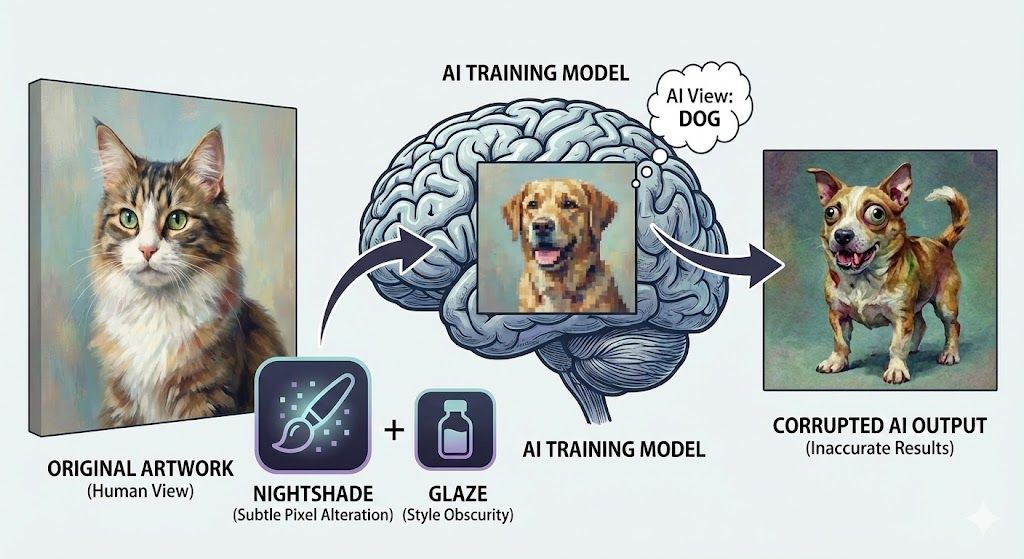
When an AI learns from these poisoned images, a terrible thing happens. The AI might recognize a ‘cat’ image as a ‘dog,’ or a ‘handbag’ as a ’toaster.’ This causes ‘model poisoning,’ corrupting the entire model by feeding it tainted training data.
This is the landscape of 2025: artists must now ‘poison’ their own data to protect their work, an ironic era.
3. Economic Collapse: The Market for Lemons and Model Dementia
Why this desperate fight?
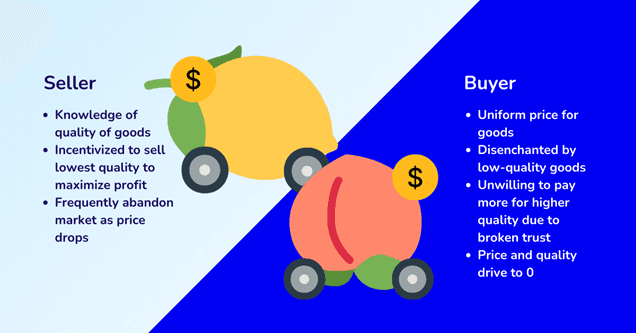
The fundamental reason is that the AI data market is rapidly turning into a ‘Market for Lemons.’
3.1. Garbage Begets Garbage
In economics, a ’lemon’ refers to a defective product that looks good on the outside but is rotten within. The internet is now flooded with soulless articles and images written by AI.
The biggest problem is ’the inability to distinguish between human-made and AI-generated content.’ Ultimately, high-quality human information (research papers, in-depth essays) is hidden behind paywalls, leaving only AI-generated spam content on the free web.
3.2. Model Collapse: The Inbreeding of AI
Even more frightening is the phenomenon of ‘Model Collapse.’ This can be expressed mathematically as:
$$S\_{t+1} = \\alpha D\_0 + (1-\\alpha) D\_t$$
(Where $D_0$ is pure human data, and $D_t$ is AI-generated data.)
Though it looks complex, the core idea is simple.
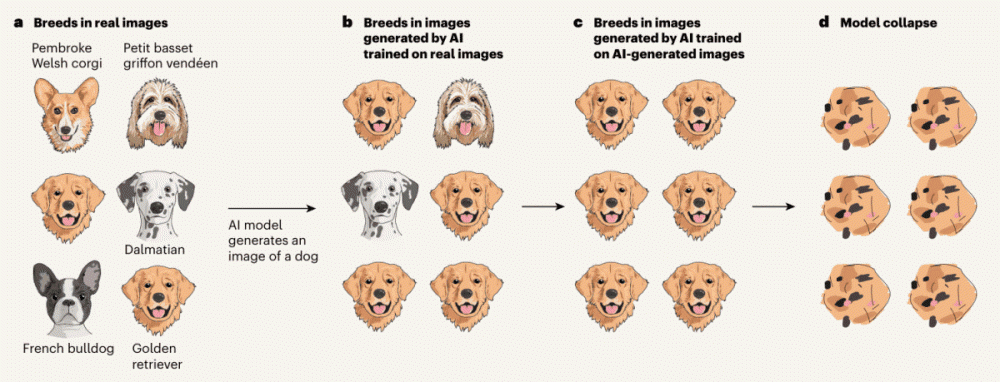
What happens when AI learns from data created by other AIs? It’s like biological inbreeding: genetic diversity disappears. Creative and unique expressions go extinct, resulting in ‘dumb AIs’ that offer only bland, average answers.
Research shows that after just five generations, AI starts spouting nonsensical things unrelated to reality. This is also called ‘AI Dementia.’
This is why the price of ‘Vintage Data’—content created by humans before 2023, before the explosion of generative AI—is skyrocketing. It’s like ‘pre-nuclear-test steel,’ uncontaminated by radiation.
4. A Fragmented World: The Advent of the Splinternet
This war is now escalating beyond corporations into regulatory battles between nations, shattering the internet into pieces. This is known as the ‘Splinternet.’
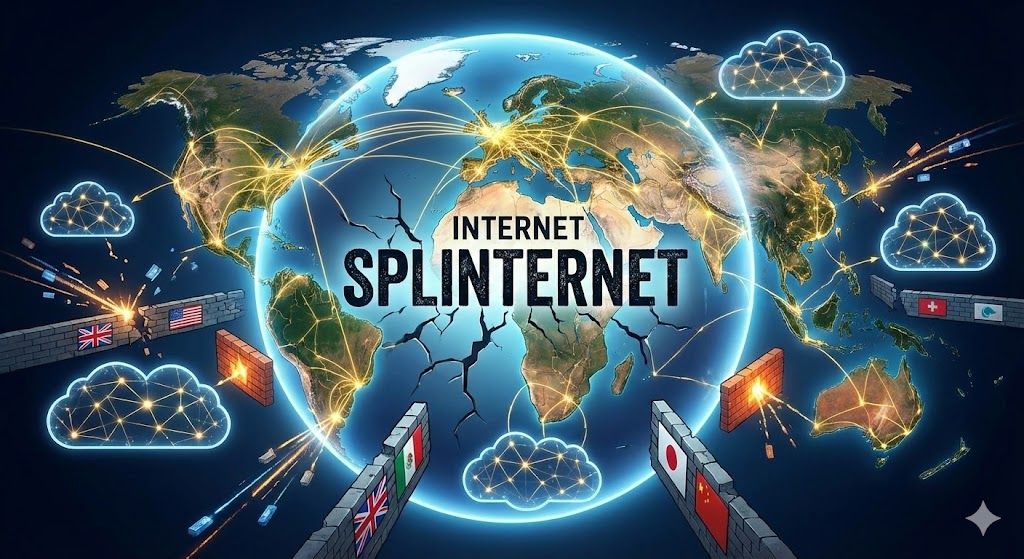
- United States (Battleground of Lawsuits): The New York Times lawsuit against OpenAI is symbolic. It pits the claim “Don’t make money by stealing my articles” against the defense of “Fair Use.”
- European Union (Fortress of Regulation): With the world’s most robust ‘AI Act,’ it demands transparency. It pressures companies by saying, “Disclose all data used,” and blocks AI companies that fail to comply from even entering the market.
- Japan (Paradise for Learning): The opposite is true. With the world’s most lenient laws, stating “Learn to your heart’s content without copyright worries,” Japan is positioning itself as a ‘data haven’ to attract AI companies globally.
5. Future Outlook: From Hunter-Gatherers to Agricultural Society
We are currently at a critical inflection point in the information revolution.
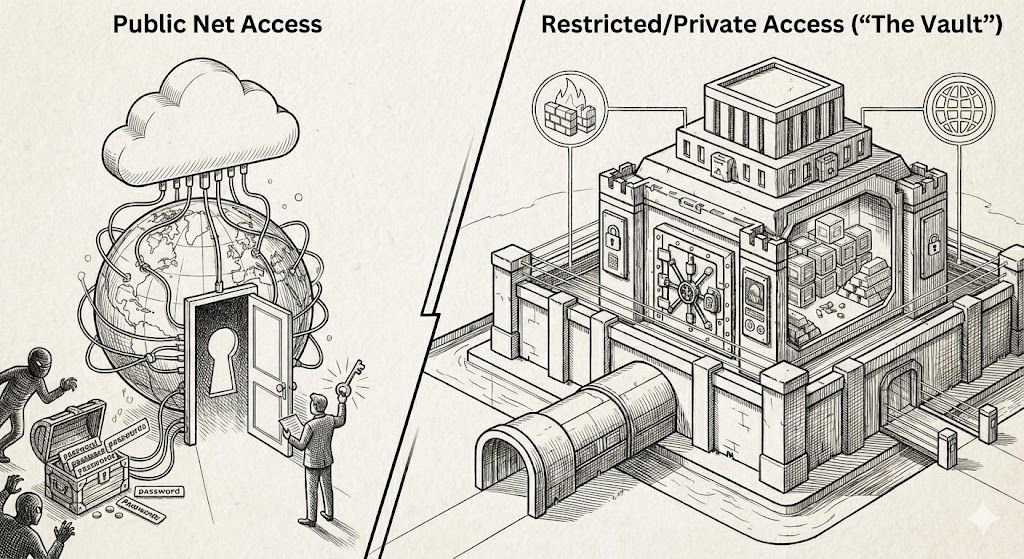
The future web will be largely divided into two worlds:
- Public Web: Accessible to everyone, but a wasteland overflowing with low-quality AI-generated content and ads.
- The Vault: Containing high-quality, human-verified information. Accessing it requires biometric authentication or payment (HTTP 402).
New Powers: Data Unions and Proof of Humanity
In this changing landscape, new forms of organizations will emerge.
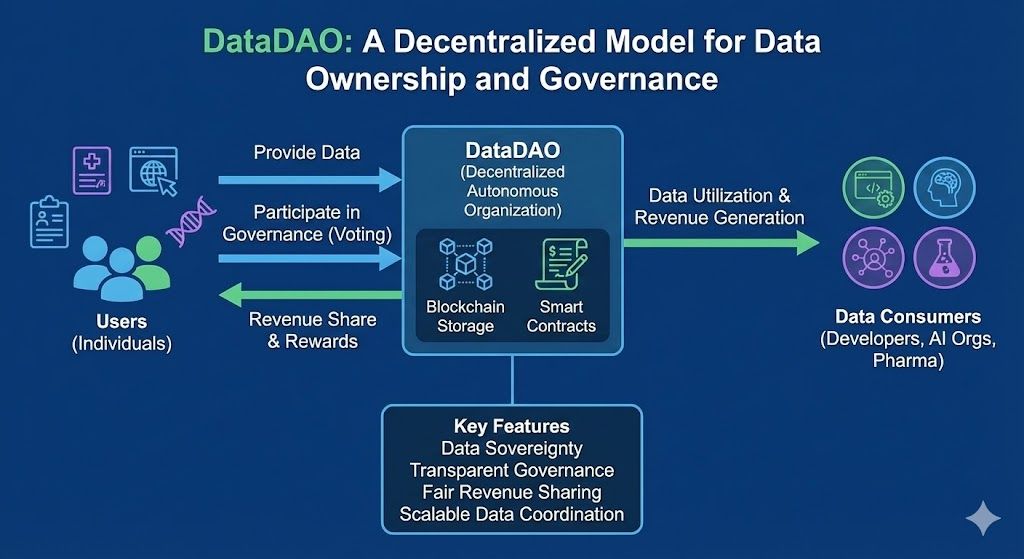
- DataDAOs (Data Decentralized Autonomous Organizations): Individual power is weak, but collective power is strong. ‘Digital labor unions’ will emerge, pooling individual data to negotiate with giant AI companies and share profits via cryptocurrency.
- Proof of Personhood: The biggest business of the future will be services that prove “I am a real human with blood running through my veins, not a bot.” Companies like Cloudflare and Worldcoin will wield immense power by issuing these ‘digital identity cards.’
Conclusion: There’s No Such Thing as a Free Lunch
The signal fired by Cloudflare is not just a security update. It is a grand declaration: “Data is no longer a public good; it is an asset.”
We have been ‘hunter-gatherers,’ freely picking information from the forest of the internet.
But now, the forest has been fenced off. We are being forcibly transitioned into an ‘agricultural society’ where we must cultivate, manage, and pay for information.
This change may be inconvenient and could widen the information gap. But perhaps, it is a necessary process to protect the value of ‘human creativity,’ a scarce resource amidst the infinite replication of AI.
Now, I have one last question for you:
What is the value of that piece of thought you left on the internet today?
References
1 Cloudflare Blog: To build a better Internet in the age of AI, we need responsible AI bot principles (Easton & Zaheri, 2025) \[Link\]2 Cloudflare Blog: Introducing pay per crawl: Enabling content owners to charge AI crawlers for access (Kresh & Vcelak, 2025)
\[Link\]3 GBHackers: Cloudflare Reveals AI Labyrinth to Counter Automated AI Attacks (Gurumoorthy, 2025)
\[Link\]4 DEV Community: Cloudflare’s JA4 Fingerprinting: Smarter Threat Detection Through TLS (Tech Analysis, 2025)
\[Link\]5 University of Chicago: Protecting Copyright - Nightshade & Glaze Project (Sandwich et al., 2025)
\[Link\]6 Nature: The AI Echo Chamber: Model Collapse & Synthetic Data Risks (Shumailov et al., 2024)
\[Link\]7 New York Times: OpenAI resists court order to share ChatGPT logs with NYT (Legal Report, 2025)
\[Link\]8 European Parliament: ‘Splinternets’: Addressing the renewed debate on internet fragmentation (Research Service, 2022)
\[Link\]