
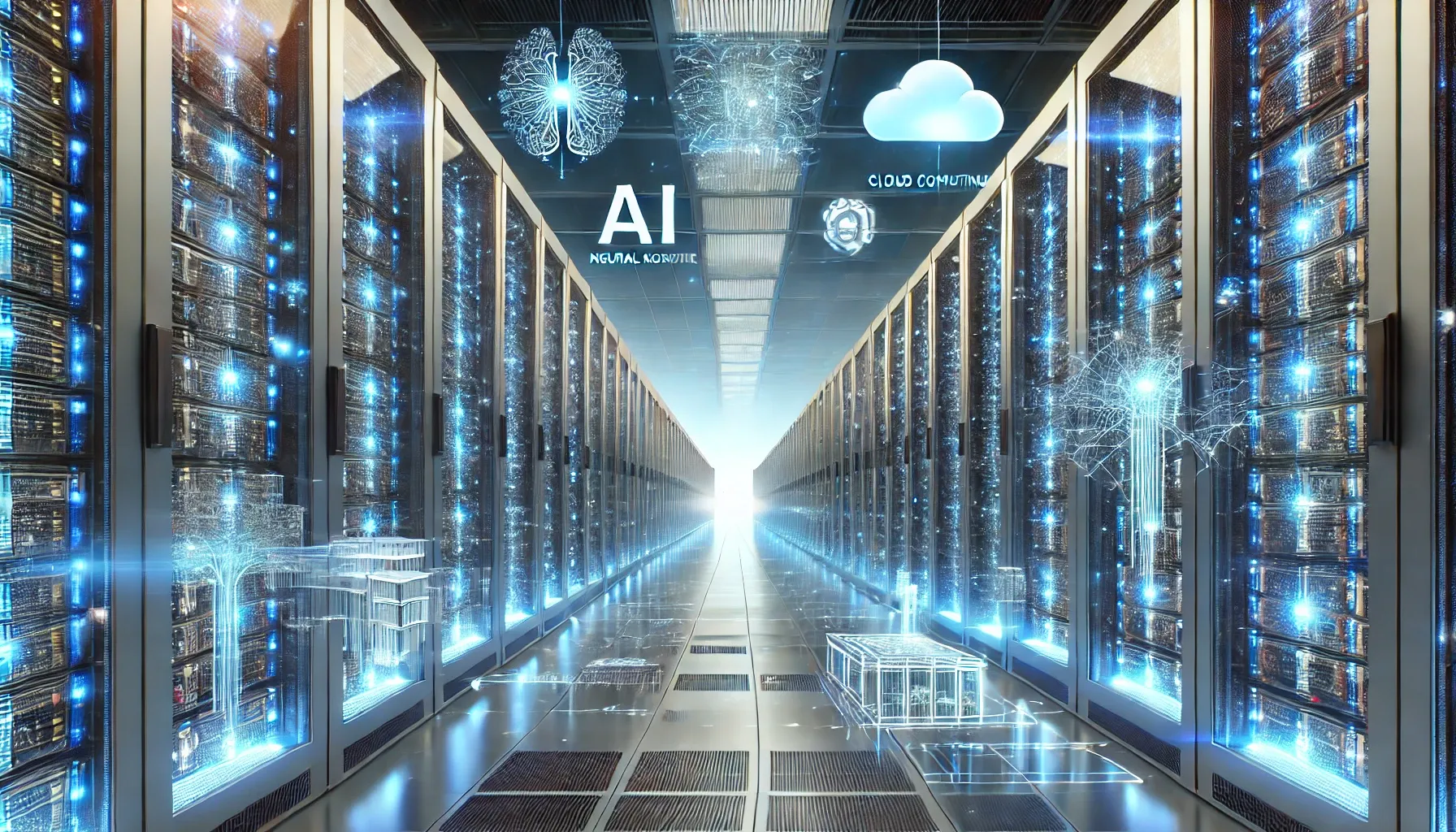
We are witnessing one of the most peculiar and intense bottlenecks in human history. Let’s be frank: for the past half-century, geniuses in Silicon Valley and computer scientists, under the absolute ring of ‘Moore’s Law,’ were solely focused on increasing transistor density.
They firmly believed that *_the digital world was free from the constraints of the physical world, an infinitely expandable ‘Cloud’*.
However, as of 2026, that belief has shattered.
The emergence of Artificial Intelligence (AI) as a colossal predator has forced us to confront the moment when the ‘infinite expansion of the digital’ collides head-on with ’the solid wall of physics.’
To power the most sophisticated product of modern civilization, Large Language Models (LLMs),
we are ironically dusting off and restarting nuclear power plants built in the 1970s,
digging furiously for copper ore,
and scouring scrapyards worldwide for old transformers.
This is no longer a simple matter of software coding.
This is a matter of Thermodynamics.
While NVIDIA’s stock dances, power grid operators worldwide are sweating profusely.
The future hegemony will not belong to those with the smartest AI, but to those who control the ’electricity’ to keep that AI running.
Let’s now unfold the map of this grand ‘Energy War,’ stretching from the data centers of Silicon Valley to South Korea’s Yongin semiconductor cluster and China’s Gobi Desert.
1. Anatomy of a Bottleneck: Why AI is Destroying Power Grids
The term ‘cloud,’ as we commonly use it, sounds quite romantic, doesn’t it?
It feels as light as clouds floating in the sky.
But make no mistake. Data isn’t in the clouds.
It’s trapped in hot, metal boxes, voraciously consuming enormous amounts of electricity.
1.1 The Horror of Density: A Quantum Leap from 10kW to 100kW
Imagine a traditional data center.
Existing server racks processing Google searches or Instagram feeds consumed at most 5-10 kilowatts (kW) per rack. This level of heat could be managed by standard air conditioning systems (air cooling).
However, the advent of Generative AI has completely shattered this peaceful equation.
New AI server racks filled with NVIDIA’s H100 or next-generation GPUs demand an average of 60kW, reaching up to over 100kW.
This is a tenfold ’energy density explosion’ purely in terms of calculation.
-
Thermodynamic Catastrophe: Cramming the latest AI servers into a traditional data center is like trying to fit an industrial furnace into the space of a household oven.
The wiring melts from the heat, and circuit breakers trip.
-
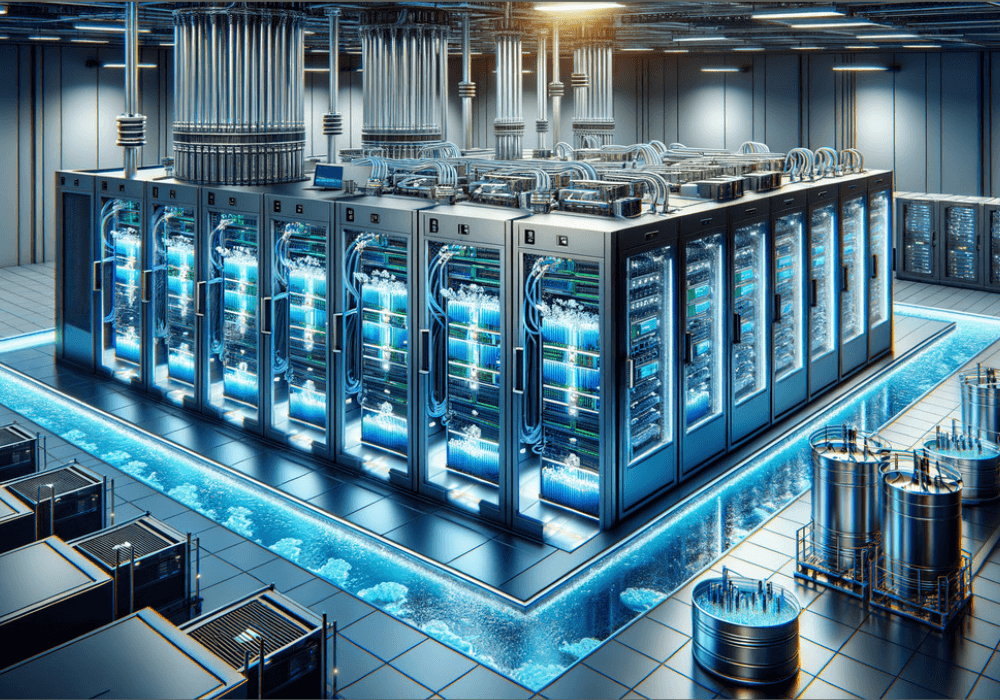
The Imperative of Liquid Cooling: The industry considers air cooling impossible for racks exceeding 50kW of power density.
Now, liquid cooling—circulating water or special fluids directly over the chips—is not an option but a necessity.
This necessitates a complete redesign of data center plumbing, floor load capacity, and safety regulations.
1.2 The Basal Metabolism of Intelligence: Training vs. Inference
AI’s energy consumption pattern differs from the human brain. To understand this clearly, we must divide it into two stages:
-
Training - The Binge Phase: This is the process of creating massive models like GPT-4 or 5.
Thousands of GPUs run non-stop for months, consuming tens of gigawatt-hours (GWh).
This is a massive but predictable load. It can be done anywhere with sufficient power, even in the middle of a desert.
-
Inference - The Constant Hunger: This is the real problem.
These are the computations that occur when we ask ChatGPT questions or when an AI assistant organizes our schedule.
As AI is integrated into search engines, smartphones, and PCs, this ‘inference’ energy has become a 24/7, non-stop base load.
The more terrifying aspect is ’latency.’
For rapid responses, inference data centers must be located near major cities where users are concentrated.
This means adding a massive burden to already strained urban power grids.
1.3 The Collapse of the Physical Supply Chain: Transformers and Copper
The phrase “shortage of semiconductor chips” is a thing of the past.
The real shortages now are ’transformers’ that adjust voltage for electricity distribution, and ‘copper’ to carry it.
-
Increasing Lead Times: Large high-voltage transformers that took six months to receive just a few years ago now require over 4 years (approx. 120-210 weeks).
This waiting list is longer than for a Rolex.
Grim forecasts predict a 30% shortage of large transformers by 2025-2026, which are becoming a reality.
-
Copper’s Counterattack: Data centers are essentially ‘copper-guzzling hippos.’
Analyzing Microsoft’s Chicago data center, approximately 27 tons of copper were used per 1MW.
Electric vehicles, renewable energy, and AI are simultaneously demanding copper, causing the commodity market to fluctuate wildly.
While AI models improve weekly, it takes a decade to build a transmission tower and install a transformer.
This ‘mismatch in speed’ is the essence of the current crisis.
2. Global Ground Zero: Data Displacing Residences
AI’s insatiable appetite for power is no longer just theoretical; it’s infringing on people’s lives.
We are seeing ‘infrastructure cannibalization’ worldwide, where physical living spaces are sacrificed for the digital economy.
2.1 West London, UK: “No Electricity to Build Houses”
Residents in Hillingdon and Ealing, West London, have recently faced a shocking reality.
Data centers have consumed the capacity of local substations, leaving them unable to supply electricity for new housing projects.
Greater London Authority (GLA) warns that “the surge in power demand from data centers could delay housing supply until 2035.”
The irony of building houses without the ability to turn on the lights—this is the face of London in the AI era.
2.2 Ireland: The Anguish of a Data Colony
Ireland, which lured Big Tech with low corporate taxes, is paying a harsh price.
Data centers currently consume about 22% of Ireland’s total electricity, and are set to exceed 30% soon.
Unable to bear it any longer, Irish regulators have issued a de facto ‘off-grid’ mandate:
“If you want to connect to the grid, you must generate the electricity you need yourself.”
Now, building a data center in Ireland requires building a power plant alongside it.
3. National Response Strategies: Nuclear, Civil Engineering, and Law
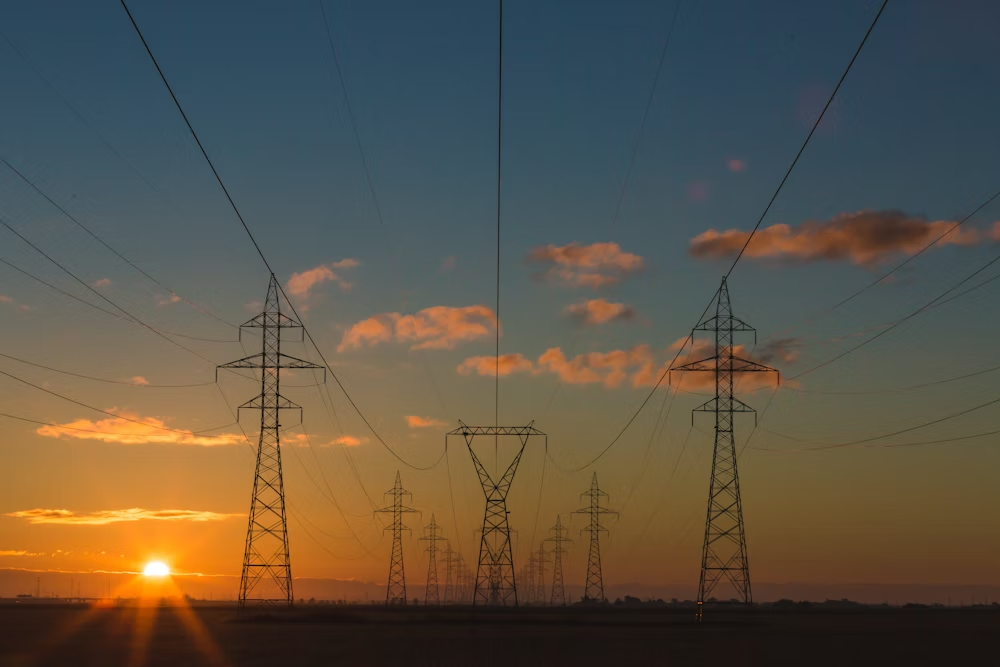
As energy bottlenecks emerge as a key determinant of national competitiveness, the US, China, and South Korea are pursuing distinct survival strategies.
3.1 USA: The Fusion of Capital and the Atom (The Nuclear Pivot)
The US has opted for a **“capitalist solution”**. Big Tech companies, leveraging their vast cash reserves, have begun directly acquiring power sources.
-
Resurrection of Three Mile Island: Microsoft (MS) has partnered with Constellation Energy to restart Unit 1 of the Three Mile Island nuclear power plant.
MS will purchase all 835MW of electricity produced over 20 years. This marks a historic event where AI breathed life back into a dying nuclear industry.
-
Regulatory Scrutiny (FERC vs Big Tech): However, conflicts are arising.
When Amazon attempted to build a data center adjacent to Talen Energy’s nuclear plant to receive direct power, the US Federal Energy Regulatory Commission (FERC) intervened.
The reason cited was, “If Big Tech monopolizes cheap electricity, ordinary citizens’ electricity bills will rise, and grid reliability will decrease.”
This highlights the fierce tug-of-war between the ‘public nature of electricity’ and ‘industrial competitiveness.’
-
Betting on SMRs (Small Modular Reactors): Google and Amazon are making substantial investments in SMR developers like Kairos Power and X-Energy.
The 2030s may usher in an era of ‘personal reactors’ dedicated to data centers.
3.2 China: Engineering a Continent (Dongshu Xisuan)
China is using its strong centralized power to overcome geographical limitations through massive civil engineering projects.
This is the ‘Dongshu Xisuan (East Data, West Computing)’ project, meaning “processing eastern data in the west.”
-
Resolving Geographical Disparity: To connect the data-intensive East (Shanghai, Beijing) with energy-rich West (Inner Mongolia, Tibet), China is going all-in on Ultra-High Voltage Direct Current (UHV DC) transmission technology.
This technology connects thousands of kilometers with minimal loss, an area where China boasts world-leading expertise.
-
Data Dualization Strategy: To overcome latency issues caused by the speed of light limit, China is implementing a national strategy of data dualization:
‘Cold data,’ which doesn’t require real-time processing, is sent to the West, while ‘hot data,’ needing immediate response, remains in the East.
3.3 South Korea: The Dilemma Between Semiconductors and Transmission Towers
South Korea finds itself in the most precarious yet urgent situation.
Despite possessing world-class High Bandwidth Memory (HBM) semiconductor technology, it faces difficulties in supplying the necessary electricity for production in a timely manner.
-
The 15GW Nightmare of the Yongin Cluster: The Yongin semiconductor cluster, being developed by Samsung Electronics and SK Hynix, requires over 10GW of electricity by 2050.
This is an enormous amount, nearly a quarter of the total power demand for the Seoul metropolitan area. However, there is no space left to build new power plants in the capital region.
-
Delay of East Sea - Seoul HVDC: The construction of Ultra-High Voltage Direct Current (HVDC) lines to transmit electricity generated from nuclear and thermal power plants on the East coast to the Seoul metropolitan area has been delayed for years due to resident opposition and permitting issues.
KEPCO’s massive deficit also hinders investment.
-
The Crucial Fate of the ‘Special Act on the Expansion of National Power Grid Infrastructure’: The Korean government and National Assembly, facing urgency, are staking everything on the passage of the ‘Special Act on Power Grid Infrastructure.’
The aim is to create ’electric superhighways’ by significantly shortening site selection and permitting processes under government leadership, coupled with enhanced resident compensation.
The success of this bill is arguably holding the lifeline of South Korea’s semiconductor and AI industries.
4. Future Outlook: The Era of the Electron Standard
How will the future AI hegemony war unfold?
4.1 The Rise of Off-Grid Fortresses
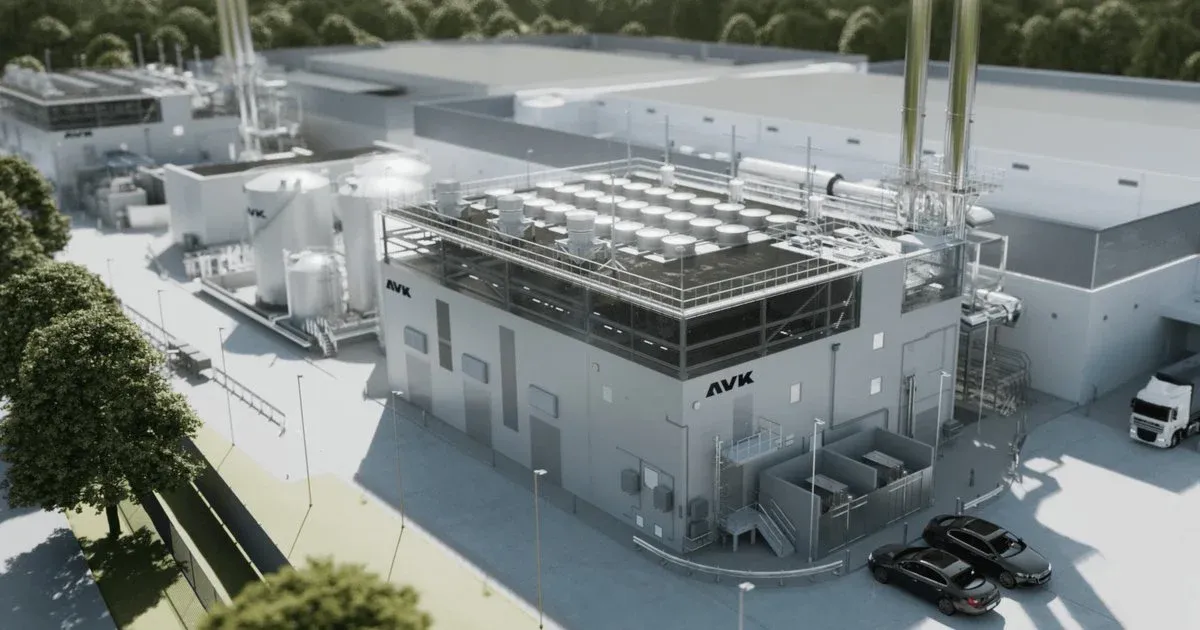
Big Tech companies, weary of waiting for grid connections, will likely decouple from the existing power infrastructure.
They will build ‘independent AI fortresses’ in the middle of deserts or in abandoned mining areas, equipped with solar panels, batteries, or SMRs.
These are likely to become ‘data extraterritorial zones’, free from the control of national power grids.
4.2 An AI Divide Created by Energy Disparity
- USA (Winner): With abundant capital, nuclear technology, and shale gas, the US will maintain its AI leadership.
- China (Challenger): It will fiercely compete using UHV technology and state-led infrastructure construction, but advanced chip sanctions remain a variable.
- Energy-Poor Nations (Consumers): Countries lacking power infrastructure risk abandoning their own AI model training and degenerating into mere ‘AI consumers,’ importing AI from the US or China.
5. Conclusion: Physics Does Not Compromise
We tend to call AI ‘magic.’
But to perform that magic, a steep price must be paid.
They say data is the oil of the 21st century, but the refinery that processes that data ultimately runs on ’electricity.’
“Intelligence is not free. It generates immense entropy according to the laws of thermodynamics.”
The second act of the AI revolution has begun.
If the first act was the stage for brilliant developers and agile chip designers,
the second act is for helmet-wearing electrical engineers and construction workers building massive power plants.
Only the nation that wins this physical war will attain the status of a true digital superpower.
Does your country, does your company, have enough electrons secured?
References and Sources
- Goldman Sachs Research [AI, Data Centers and the Coming US Power Demand Surge]
- Greater London Authority (GLA) [West London Data Centre Capacity Issues Report]
- Bloomberg & POLITICO Pro [Ireland ends moratorium on grid links to data centers]
- Constellation Energy Press Release [Constellation to Launch Crane Clean Energy Center (Three Mile Island Unit 1 Restart)]
- Ministry of Trade, Industry and Energy (South Korea) [Yongin Semiconductor Cluster Power Supply Plan and Status of Special Act on Power Grid Infrastructure Expansion Promotion]
- Huawei & ICDS [Eastern Data and Western Computing Network (Dongshu Xisuan Project Analysis)]
- U.S. FERC [Order Rejecting Amazon-Talen Interconnection Service Agreement]