
‘The Crisis of Privacy in the Digital Age and the Importance of Personal Data Protection’
Foreword: When Does the Worm Turn? - The Prelude to Digital Apocalypse
“The smallest worm will turn, being trodden upon.”
This famous line, uttered by William Shakespeare in his play Henry VI, Part 3, is more than just a proverb.
It serves as a chilling warning about the tipping point of oppression and endurance, hinting at a quiet rage on the verge of explosion.
For decades, humanity has implicitly agreed to have every move recorded, analyzed, and even sold, in exchange for the sweet candy of ‘convenience’.
Under the complacency of “I have nothing to hide, so surveillance doesn’t bother me,” perhaps we’ve taken on the role of the ‘humble worm’, cowering before the immense power of technology.
But things have changed.
The Data Catastrophe that struck the globe in 2024 and 2025 has shattered this silent cartel.
We’ve witnessed a reality where the most intimate medical records are held hostage, shutting down operating rooms; where a lifetime’s savings vanish in seconds; and where resumes desperately submitted for job applications become commodities on the dark web.
The public is finally realizing.
Technology was a ’tool’ to help us, but it has become a ‘weapon’ pointed at us.
As Microsoft’s Brad Smith warned, we stand at a critical crossroads.
This article is a navigational map to explore the direction we must choose at this confusing juncture.
From broken doors in 18th-century London to paralyzed server rooms in 21st-century Seoul, we will trace the history of the struggle for privacy and propose a ’new social contract’ to rebuild shattered digital trust.
Part 1: Summoning Forgotten Memories - A Genealogy of Surveillance
To understand why data privacy is more than just a legal right—why it’s a ’natural human right’—we must turn back the clock.
We must confront the history, written in blood, of the tragedies that unfolded when power monopolized data.
1. The King’s Messengers and the Broken Door: The Terror of 18th-Century General Warrants
In 1763 London, King George III’s messengers raided John Wilkes’ home. In their hands were ‘General Warrants’.
These were essentially ‘blank checks’ that did not specify who to arrest or what to seize.
‘An 18th-century British General Warrant, symbolizing unlimited search authority.’
The messengers broke down Wilkes’ door and confiscated ‘all papers’ in his house, including his diary, private letters, and memos.
This barbaric act was not just about taking property; it was a violation that stripped a person bare, exposing their inner world.
Doesn’t that give you chills?
This ancient terror is being replicated today in the digital space, more subtly and more terrifyingly.
Edward Snowden’s revelation of the U.S. National Security Agency’s (NSA) PRISM program was a modern-day general warrant.
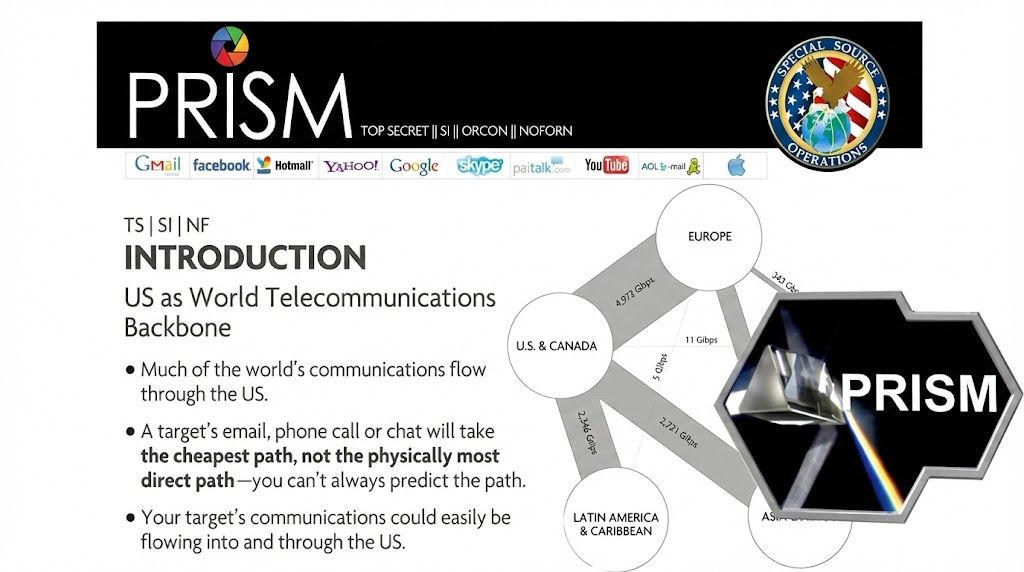
The only difference is that while the 18th century heard the shattering of doors, the 21st century sees data copied silently through fiber optic cables.
John Wilkes’ struggle later became the foundation for the Fourth Amendment of the U.S. Constitution (prohibiting unreasonable searches and seizures), but we now live in an era where that constitutional spirit is rendered powerless against the digital code of zeros and ones.
2. Destroying Others’ Lives: The Legacy of the Gestapo and Stasi
Some may wonder why Europe, especially Germany, is so obsessed with data protection laws like GDPR. The answer lies in a painful history.
Even before computers, Nazi Germany’s secret police, the Gestapo, used meticulous manual card indexes to track down Jews and dissidents.
The ‘religious’ and ’ethnic’ data collected at the time were not mere statistics; they were one-way tickets to the gas chambers.
‘The archives of the East German Stasi, showing extensive records of citizen surveillance.’
East Germany’s Stasi (Staatssicherheit) refined this process with even more insidious precision. They employed a psychological warfare technique called ‘Zersetzung’ (decomposition).
Using highly private information gathered through wiretaps and tailing, they subtly disrupted targets’ work lives, sowed discord in family relationships, and pushed them to mental collapse.
Today’s online doxing and cyberbullying have only advanced technologically; their essence is no different from the Stasi’s ‘soul-destroying operations’.
_Privacy is not the right of a criminal with much to hide, but the last shield for human dignity_.
Part 2: The Breached Walls - 2024-2025 Data Catastrophe Report
While past surveillance was state-driven, the crises of the last two years have been caused by a confluence of corporate greed, security incompetence, and sophisticated cybercrime.
The belief that “Surely, my information won’t be leaked” was betrayed in no time.
1. Mother of All Breaches (MOAB) and the Curse of Accumulation
In January 2024, the cybersecurity world was stunned by the discovery of a 26 billion-record database dubbed the ‘Mother of All Breaches’ (MOAB).
This was not a single hacking incident. It was a colossal ’library of crime,’ formed by the accumulation and combination of countless past leaks.
It contained comprehensive account information from global platforms like Twitter, LinkedIn, and Tencent.
Hackers used this data to carry out ‘Credential Stuffing’ attacks.
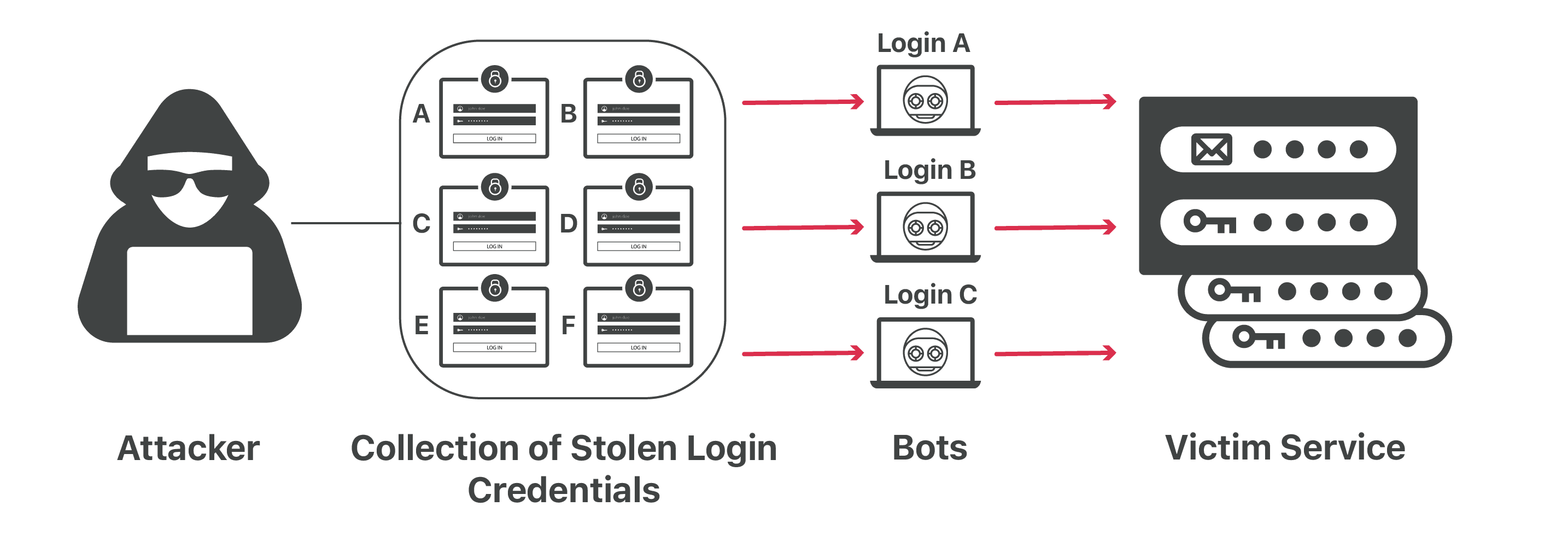
- What is Credential Stuffing? It’s a technique that exploits the fact that people use the same IDs and passwords across multiple sites. Hackers use leaked information to try logging into services like Netflix or bank accounts indiscriminately.
This proved that once data is leaked, it doesn’t disappear but resurrects like a zombie to torment us endlessly.
2. The Day the Hospitals Stopped: Change Healthcare and the Threat to Survival
In February 2024, Change Healthcare in the U.S. was hit by a ransomware attack.
This was no mere system failure. As the backbone of the U.S. healthcare claims system ground to a halt, pharmacies couldn’t dispense medication, and doctors couldn’t get surgical approvals.
Can you imagine cancer patients anxiously waiting for chemotherapy because they couldn’t receive it on time?
This was the hellscape brought about by digital security failures.
The incident, which exposed the sensitive medical information of 190 million people—half the U.S. population—demonstrates that cyberattacks now threaten human ’life’ itself, beyond mere financial damage.

3. Betrayal of Trust: South Korea’s Digital Exodus
Even South Korea’s pride as a world-leading IT powerhouse was shattered by a series of major incidents in 2025.
-
SK Telecom Incident (April 2025): Information of 23 million subscribers, particularly USIM data, was leaked.
This enables hackers to perform ‘SIM Swapping’—stealing one’s phone number.
One million anxious subscribers migrated to competitors, an event known as a ‘Digital Exodus’.
It signifies that consumers are no longer satisfied with hollow apologies like “We are sorry.”
-
Coupang’s Concealment Allegations (Late 2025): Coupang, a lifestyle platform for Koreans, suffered a data leak affecting 33.7 million users.
What fueled greater anger was the ‘delayed confession’.
Allegations of attempted concealment led to a strong boycott and the CEO’s resignation.
It reaffirmed the truth that trust is like a glass vase; once broken, it cannot be mended.
-
KS KOREA EMPLOYMENT INFORMATION (April 2025): The most heartbreaking incident.
Documents totaling 22GB, including resumes and family relationship certificates submitted out of desperation for employment, were leaked onto the dark web.
This was not just an information leak; it was the **destruction of data dignity**, trampling on an individual’s life narrative.
Part 3: The Invisible War - Data Sovereignty and the Geopolitics of Regulation
Amidst this chaos, governments worldwide have drawn the sword of ‘regulation,’ but their blades point in different directions. This is quite ironic.
1. Human Rights (EU) vs. Commodity (US): The Philosophical Abyss Dividing the Atlantic
‘Infographic comparing key differences between the EU’s GDPR and the US’s CCPA’
- EU’s GDPR (General Data Protection Regulation): For Europe, privacy is a non-negotiable **fundamental human right**. Companies must obtain explicit consent (Opt-in) before collecting data, and individuals have the ‘Right to be Forgotten’. This stems from the painful lessons learned from the Nazi and Stasi history.
- US’s CCPA/CPRA (California Consumer Privacy Act): In contrast, the U.S. views privacy from a **consumer protection** perspective. Data trading is generally free, stopping only when a consumer explicitly states, “Do Not Sell My Information” (Opt-out). This is a product of American pragmatism, prioritizing market efficiency and corporate activity.
2. The Cloud Dilemma: Whose Laws Does Data Obey?
In the cloud era, data flows across borders, but laws remain within them. This creates serious conflicts.
The U.S. CLOUD Act allows U.S. law enforcement to access data stored on overseas servers. This directly clashes with European data sovereignty. The incident where Microsoft was forced to block emails of an International Criminal Court (ICC) prosecutor subject to U.S. sanctions was shocking. It revealed that even an international organization located in the Netherlands could be subject to U.S. foreign policy simply by using U.S. software. In response, Europe is rushing to build its own ‘Sovereign Cloud’.
Part 4: A New Social Contract - Towards Digital Dignity
So, how should we overcome this crisis? The solutions proposed by Brad Smith and Satya Nadella demand not just technical patches but a new social consensus.
1. Digital Geneva Convention

Just as the 1949 Geneva Conventions protected civilians during wartime, we desperately need international laws to protect cyberspace during peacetime.
‘Image symbolizing the Digital Geneva Convention, representing cyber peace agreements between nations.’
-
Obligations of States: Governments must not hack civilian infrastructure such as hospitals, power grids, and electoral systems during peacetime.
Furthermore, instead of weaponizing and stockpiling discovered security vulnerabilities (Zero-days), they should immediately inform manufacturers to issue patches.
-
Neutrality of Tech Companies (Digital Switzerland): Global tech companies must become ‘Digital Switzerland’.
They should not cooperate in attacking civilians of other nations, even at the request of their own government, and should provide security patches impartially even to adversary nations.
The safety of the internet takes precedence over national interests.
2. Data Dignity: We Are Not ‘Digital Sharecroppers’
The current data economy is structured such that we produce data, Big Tech harvests it, and they monopolize the immense wealth.
Frankly, we are no different from digital sharecroppers.
‘Data Dignity’ is a movement to correct this inequality.
If my data generates value by being used for AI training or targeted advertising, I should receive fair compensation for it.
As Jaron Lanier argues, we need a new economic model where data is recognized not as a ‘free resource’ but as an individual’s ’labor’ or ‘asset’.
This is the path to achieving economic justice beyond privacy.
Conclusion: From Surveillance to an Era of Trust
On the cusp of 2026, we must ask ourselves again.
Does Technology Liberate or Control Humanity?
‘The worm has turned.’ Consumers are no longer powerless.
They abandon companies with breached security without mercy, retaliate against concealing companies with boycotts, and strongly demand their data sovereignty.
The activism shown by South Korean consumers in the SK Telecom and Coupang incidents is just the beginning.
Now, the ball is in the court of corporations and governments.
Companies must recognize security not as a cost but as a survival instinct, and governments must protect peace in cyberspace through international cooperation that transcends outdated border concepts.
And we, as individuals, must recognize the power and value of our data.
Our dignity cannot be confined within data codes.
The journey to reclaim control, where technology serves humanity, has just begun.
Will you join this journey?
References
- Tools and Weapons: The Promise and the Peril of the Digital Age \[Brad Smith & Carol Ann Browne, Microsoft\]
- The NSA’s “General Warrants”: How the Founding Fathers Fought an 18th Century Version of the President’s Illegal Domestic Spying \[Electronic Frontier Foundation\]
- Mother of All Breaches (MOAB): A Historic Data Leak Reveals 26 Billion Records \[Cybernews Research Team\]
- Change Healthcare Cyberattack Impact Report \[American Hospital Association\]
- Microsoft Chief Executive Calls for ‘Data Dignity’ at Davos \[City A.M.\]
- The Need for a Digital Geneva Convention \[Microsoft On the Issues Blog\]