
The Protagonist of the $350 Billion Market: You
By 2028, the global online secondhand trading market is projected to reach approximately $350 billion (about 480 trillion won). The protagonists of this massive market are not large corporations, but ordinary people like us.
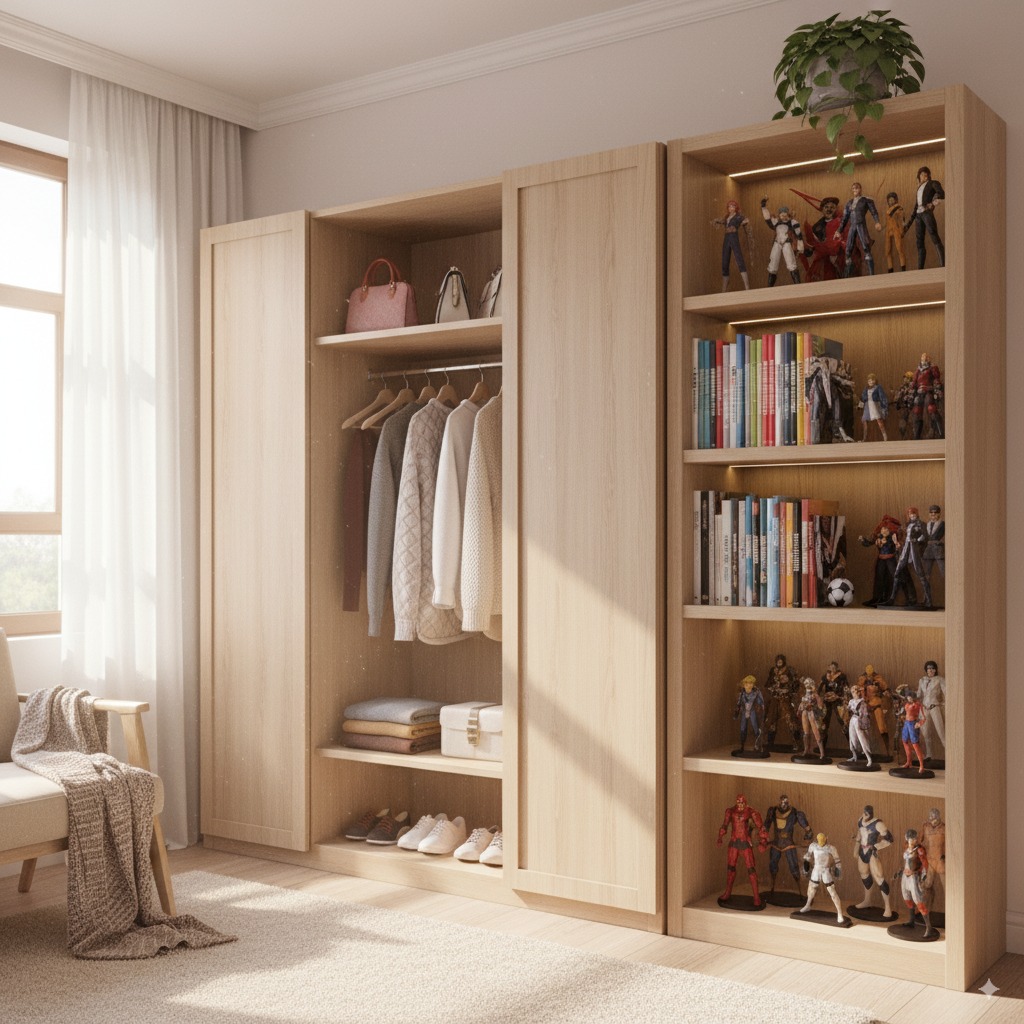
Here, we have Su-jin, an office worker living in Seoul, and her friend Min-jun. Su-jin’s treasure trove is her ‘closet.’ In contrast, Min-jun’s treasure lies in his ‘bookshelf.’ His precious collection includes limited edition K-POP albums, retro gaming consoles, and figures filled with childhood memories that are now hard to find.
Despite their vastly different tastes, these two will soon share a surprisingly similar experience: the magical moment when items that have been dormant in their rooms become someone else’s cherished ’treasure’ across the globe. Their stories will showcase the dazzling evolution and global spread of secondhand trading in South Korea today.
The Evolution of Secondhand Trading: From 4 Trillion to 43 Trillion Won
Before their experiences, the South Korean secondhand market underwent remarkable changes in a short period. The domestic secondhand market, valued at about 4 trillion won in 2008, is expected to explode to 43 trillion won by 2025. Let’s look back at this journey through Min-jun’s memories.
Step 1: The Adventurous Era of ‘Online Cafes’
Early secondhand trading was mostly centered around online communities, relying on ’non-face-to-face delivery transactions.’ Buyers had to send money upfront based on the seller’s ID and a few posts, leading to stories of scams like “there was a brick in the box” circulating widely; transactions were more about adventure than trust.
Step 2: The Era of ‘Neighborhood Face-to-Face Trading’ Building Trust
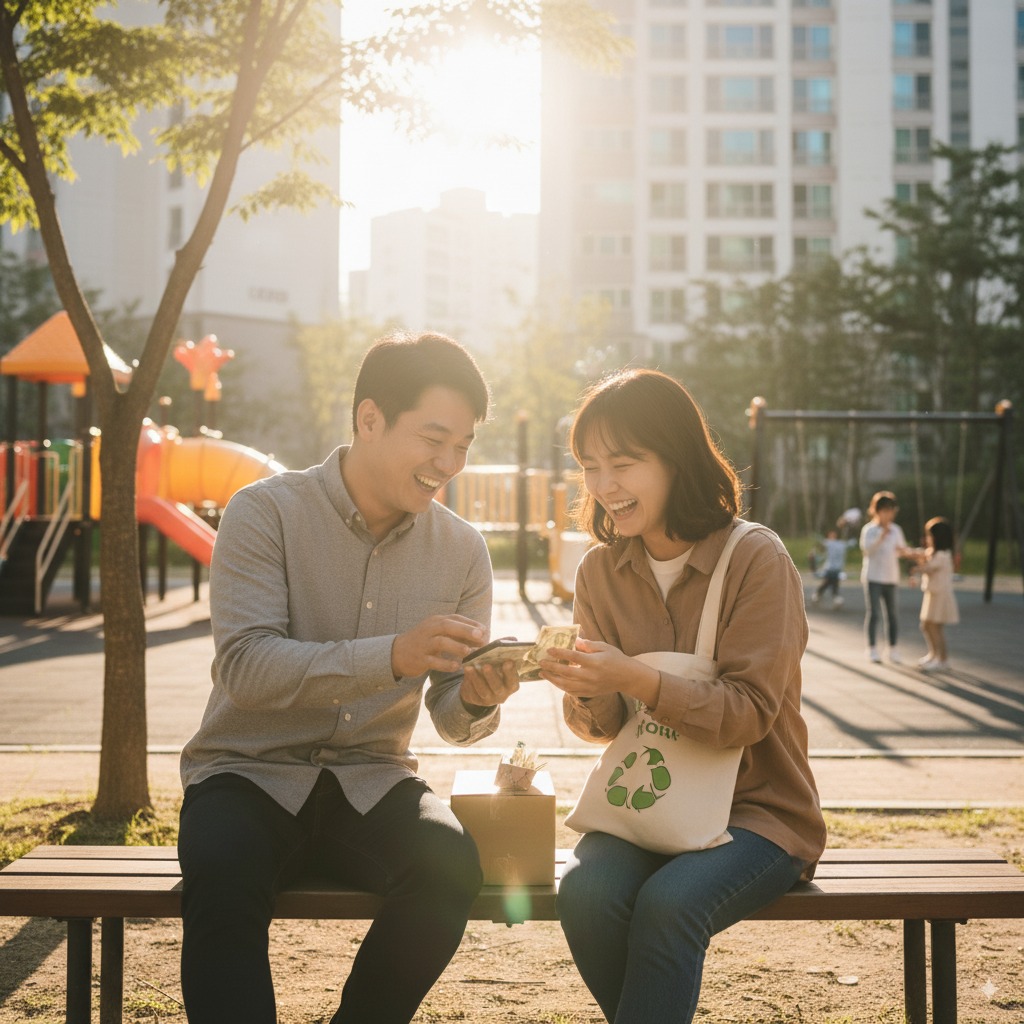
To alleviate these anxieties, ’neighborhood direct trading’ emerged. Meeting nearby neighbors to check and trade items based on smartphone GPS infused the market with values of ’trust’ and ‘community.’ Karrot has grown based on this model, surpassing 19 million monthly users and making secondhand trading a part of everyday culture for the entire nation.
Step 3: The Evolution of ‘Non-Face-to-Face Trading’ Becoming Safer and Smarter
With trust established through face-to-face trading, the market turned its attention back to ’non-face-to-face trading.’ However, this time it was completely different. The introduction of a ‘safe payment (escrow)’ system, where money is only transferred to the seller after the buyer confirms receipt of the item, along with systematic delivery services, has opened an era where transactions can be safely conducted anywhere in the country without the need to meet.
Connection: K-Culture, A New Currency Crossing Borders
The results were astonishing. A few days later, Su-jin’s bag found its way to a K-Culture fan named ‘Chloe’ in Paris, while Min-jun’s photo card ended up in the hands of a girl fan living in the United States.
This experience is not just a unique case for individuals; it is a massive trend supported by data. In fact, the overseas transaction volume of Bunjang, a leading domestic fashion secondhand platform, surged by 386% in the first half of 2024 compared to the same period last year. Remarkably, 92% of these transactions were K-POP related products. The most traded artists were Stray Kids, NCT, and ATEEZ, highlighting how K-POP fandom has emerged as a powerful ‘big player’ in the global secondhand market.
Not Just a Korean Story: The Case of Japan
This phenomenon is not limited to Korea. Japan’s largest secondhand platform, Mercari, saw cross-border sales through overseas shipping agencies grow by about 1.5 times in 2023 compared to the previous year. The most popular items were undoubtedly in the ’toys and hobbies’ category, including anime and character goods. This clearly illustrates how unique items from specific cultural spheres gain new value in the global market.
Why is the World Enthusiastic About Secondhand Goods from Other Countries?
- The Era of Smart Value Consumption: The consumption trend of the MZ generation, which seeks diverse experiences at reasonable prices rather than owning new products, has fueled the growth of the secondhand market.
- The Value of Sustainability: Conscious consumers who think about resource circulation instead of indiscriminate consumption are practicing environmental protection through secondhand trading.
- The Irreplaceable Power of Culture: On top of all these trends, powerful soft powers like K-Culture and J-Culture have been added. Limited edition albums, idol goods, and vintage products from local designers offer a unique experience of owning that culture, which cannot be bought with money alone.
Trading Like an Expert: Global Secondhand Trading Platforms A to Z
| Platform Name | Country/Base | Monthly Users (MAU) / Members | Features and Main Items | Cross-Border Strategy |
|---|---|---|---|---|
| Bunjang | South Korea | About 5 million (MAU) | K-POP goods, fashion, sneakers, etc., targeting the MZ generation | Supports direct sales to overseas fans through ‘Global Bunjang’ service and partnerships with overseas shipping agencies. |
| Karrot | South Korea | About 19 million (MAU) | General household items based on local communities | Directly expands overseas under the name ‘Karrot’ to transplant the local community model. |
| Mercari | Japan | About 23 million (Japan MAU) | Anime goods, fashion, household items | Successfully established in the U.S. market, providing an official overseas sales link service for searching and purchasing Japanese products within the app. |
| eBay | United States | About 132 million (Active Buyers) | Original platform covering all categories | Through the ‘Global Shipping Program (GSP),’ sellers send items to domestic shipping centers, and eBay handles international shipping and customs thereafter. |
| Vinted | Lithuania/Europe | About 80 million (members) | Clothing, fashion accessories | Strengthening logistics solutions to connect users in Europe with low shipping costs through ‘Vinted Go,’ dominating the European market. |
| StockX | United States | - | Sneakers, streetwear, luxury goods | Introduces a ‘stock market’ model. A ‘professional verification center’ is placed between sellers and buyers to guarantee authenticity. This system itself ensures trust in global transactions. |
Future Outlook: How Far Will Secondhand Trading Evolve?
Beyond the current explosive growth, the future secondhand trading market is expected to become more sophisticated as it meets technology and new business models.
1. Technology Turning Transactions into Art: The Era of AI and Data
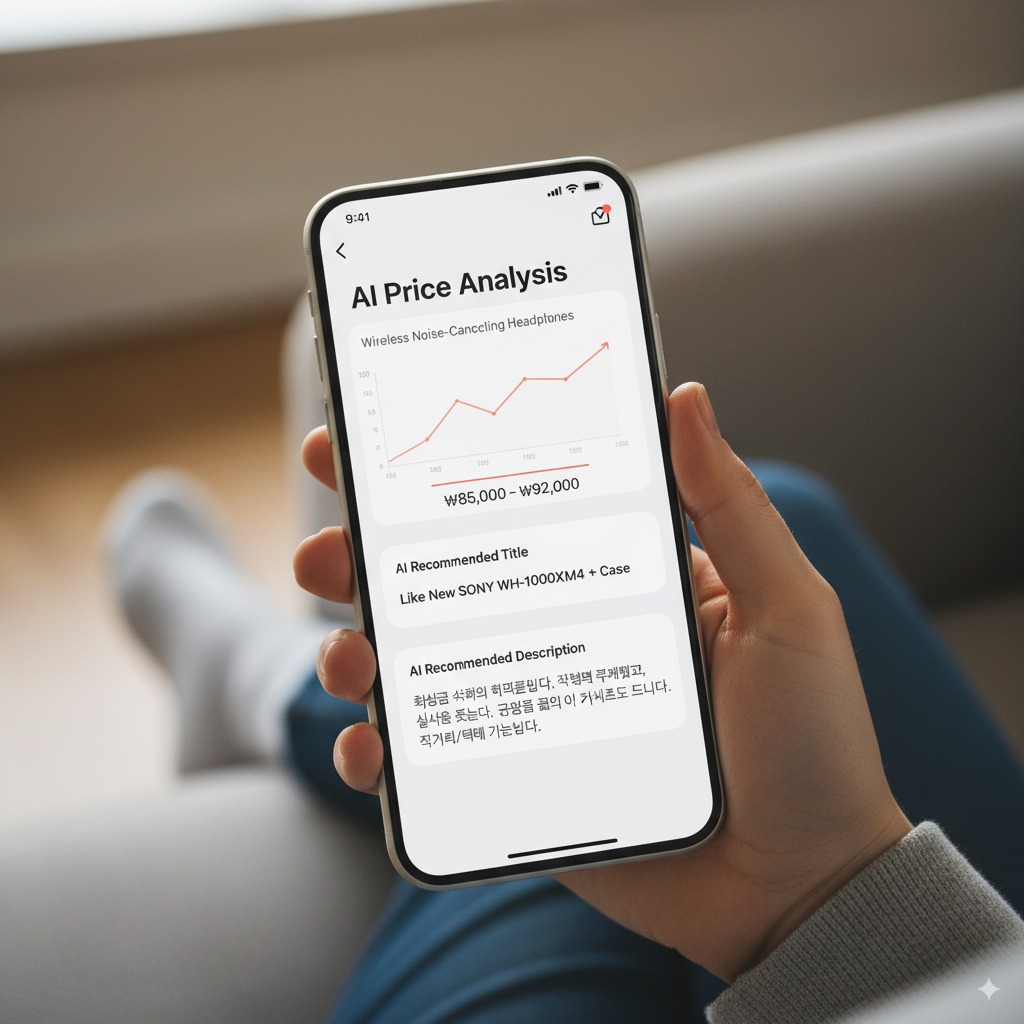
The future of secondhand trading will be the era of ‘smart re-commerce’ led by artificial intelligence (AI) and big data.
- AI Price Analysis and Recommendations: The era of wondering, “How much should I sell this for to make a good sale?” is over. AI will analyze the vast trading data accumulated on the platform in real-time to suggest optimal selling prices, while accurately targeting products to buyers based on their preferences.
- Automatic Content Generation: Just by taking a photo of the product, AI will automatically write the most attractive title and detailed description, and even create short-form videos for sale. This will significantly reduce the seller’s workload.
- Blockchain and Authenticity Verification: Especially for high-priced luxury or limited edition products, digital authenticity certificates using blockchain technology will be introduced to fundamentally eliminate counterfeiting issues and maximize transaction trust.
2. Beyond Simple Sales: The Rise of C2B and Live Commerce
New forms of trading models will emerge as the mainstream, going beyond consumer-to-consumer (C2C) transactions.
- Expansion of the C2B (Consumer-to-Business) Model: The C2B model, where individuals sell items back to businesses, will become more active. Many fashion companies, including Kolon and ZARA, have already introduced ’trade-in’ services where they buy back their products or facilitate secondhand sales. This provides individuals with a convenient and stable sales channel while offering companies opportunities to strengthen brand loyalty and sustainable resource circulation.
- Integration of Live Commerce: Live commerce, which vividly conveys the story of products in real-time, will be a powerful tool to solve trust issues in secondhand trading. The method of sellers directly showing the condition of products and communicating with buyers will create a sense of presence and fun, akin to conducting a transaction via video call, thus generating a new shopping experience.
3. The Era of Value and Investment: Strengthening ESG and ‘Resell-Tech’
The future of secondhand trading will expand beyond simple consumption to the realm of value realization and investment.
- Core of ESG Management: The intrinsic value of secondhand trading, ‘resource reuse,’ will become a core element of ESG (Environmental, Social, Governance) management. Companies will become more proactive in building a ‘sustainable circular economy’ by collaborating with or directly operating secondhand platforms.
- Rise of Resell-Tech: Scarce products like limited edition sneakers and luxury watches are increasingly recognized as ‘investment assets’ that appreciate over time. The term ‘resell-tech,’ a combination of ‘reselling’ and ‘investment tech,’ represents a new investment culture for the MZ generation, who will consider the future resale value when purchasing new products.
Epilogue: Where Your Memories Become Future Value
From the uncertain online transactions to trustworthy face-to-face trading, we have now entered the era of smart re-commerce, where AI analyzes prices and transactions cross borders. The evolution of secondhand trading is ongoing.
Today, take a moment to open your closet and bookshelf. The memories lying dormant there may be treasures waiting for new stories beyond borders, as well as investment assets holding future value. Secondhand trading is becoming not just a joyful culture connecting the world and ourselves, but also the smartest way to create sustainable futures and generate new values.