

The reason 160 billion won disappeared in an instant wasn’t some grand conspiracy, but a ‘unit’ mistake.
Ah… September 23, 1999. You could probably hear a pin drop at the NASA mission control center. Communication with the $125 million (about 160 billion won!) Mars Climate Orbiter, as it was entering Mars orbit… just went dead. Forever.
Years of research and the efforts of thousands of people vanished in an instant. But do you know what the cause was? Ridiculously enough, Lockheed Martin, which built the probe, used the British Imperial system (yards and pounds), while NASA’s research labs used the metric system. This simple unit conversion error turned the probe into ashes.
This incident clearly shows that mistakes are not just problems to be dismissed as ‘bad luck’ or ‘someone was careless.’ It’s a complex result of failures in processes, communication, and complacent assumptions like ‘it’s obvious it would be this way.’
The root of the mistakes we repeat lies in our thinking patterns, our ‘cognitive patterns.’ The failure of the Mars probe can be seen not as a simple calculation error, but as a deeply ingrained problem in our minds, such as the lack of cross-verification systems, poor team communication, and the complacency of thinking, ‘Surely they wouldn’t have failed to unify units.’
So, in this article, we’ll first discuss practical techniques to reduce errors. But that’s not all. We’ll delve into why these techniques are necessary, look deep into our psychology, explore how errors occur in complex systems, and finally… we’ll talk about how to rethink our relationship with failure itself. The goal is to gain the wisdom to use failure not as an embarrassing memory, but as a stepping stone for growth.
1. Techniques to Reduce Errors: Not Just Simple Tips
It’s a mistake to think that techniques for reducing errors are just a collection of simple tips like ‘Try this~’. They are based on scientific evidence from cognitive psychology, behavioral science, and even biology. Let’s break down these techniques into three main categories and examine them thoroughly.
1.1 Cognitive Techniques: Turning Off Your Brain’s ‘Autopilot’
Our brains are highly focused on efficiency, operating in ‘autopilot’ mode whenever possible. The core of cognitive techniques is to deliberately turn off this autopilot and switch on the ’thinking carefully’ mode.
- The Power of the ‘3-Second Pause’: The habit of taking a 3-second breath before speaking or acting. This isn’t just about politeness. It’s a cognitive switch that momentarily stops the brain’s fast, intuitive ‘System 1’ and allows the deliberate, analytical ‘System 2’ to intervene. These brief 3 seconds allow rational judgment (prefrontal cortex) to act before emotional reactions (amygdala), preventing impulsive mistakes.
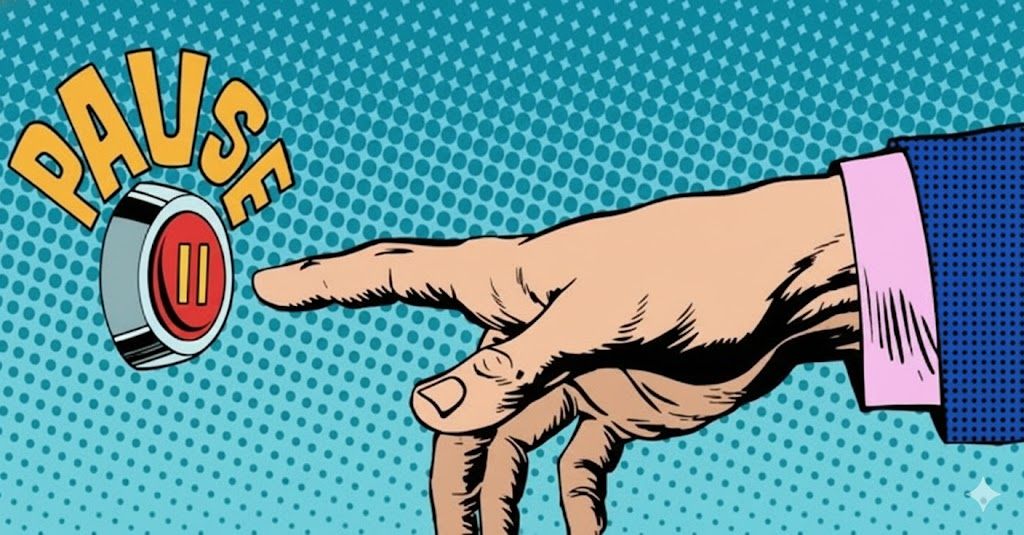
The power of pause - Mistake Journaling and ‘Error Lists’: This is a form of ‘metacognitive’ training. By writing down what, when, and why you made a mistake, you learn to see your thoughts objectively. It builds a database of your ‘patterns’ of mistakes that the brain might otherwise forget or overlook due to laziness. This is a very practical way to avoid cognitive traps like ‘recency bias’ (remembering only recent events) or ‘availability heuristic’ (prioritizing easily recalled information).
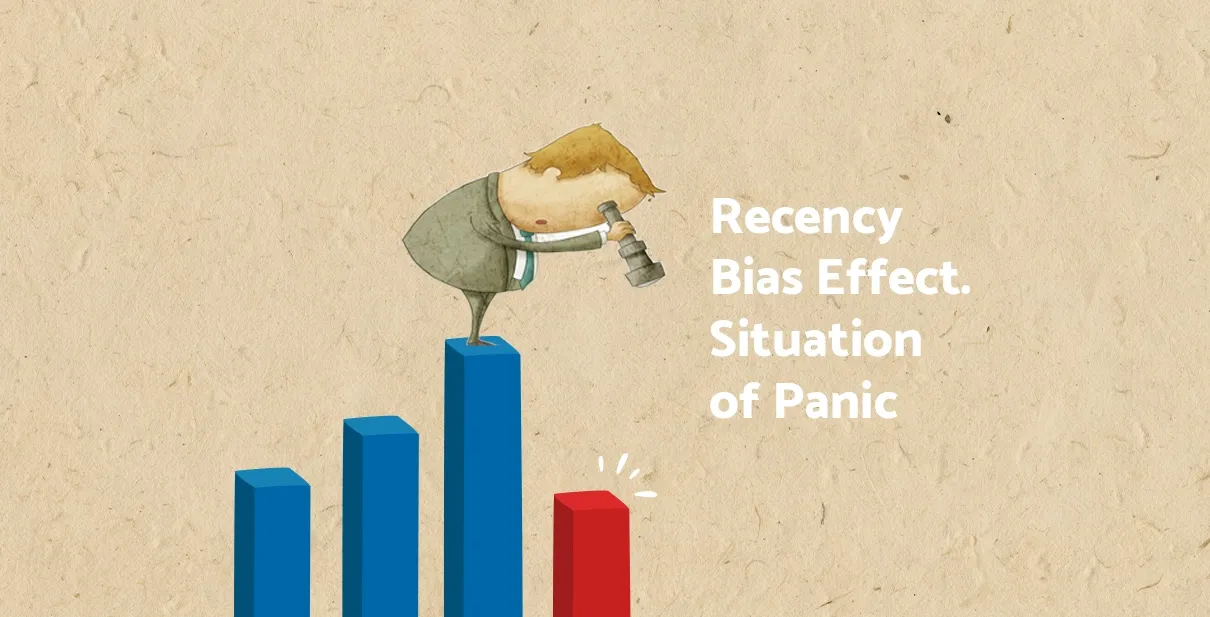
Recency Bias Effect - The “What if I Heard This?” Test (Projective Test): Ah, this is really important. It’s about forcefully putting yourself in the other person’s shoes. Psychologically, this question is said to activate ‘mirror neurons’ that simulate the listener’s emotions. Therefore, it prevents mistakes in interpersonal relationships caused by self-centered communication.

What if I Heard This? Test Projective Test - Switching Environments for Review: The brain quickly adapts to familiar surroundings, entering a state of ‘cognitive blindness.’ Simply put, when you see something repeatedly, you stop noticing errors. Try reading a document you wrote on your monitor on your smartphone, or even just changing the font. Your brain perceives it as ’new information’… and you’ll notice typos or awkward sentences that were invisible yesterday. It’s true.

Cognitive Blindness
‘Mistake journaling’ is a practical metacognitive training to avoid cognitive traps.
It’s like the story of novelist Truman Capote. He not only read his manuscripts aloud during editing but also moved to a different room to read them. He knew that changing the location made his brain perceive the text as unfamiliar, allowing him to discover errors in sentences that seemed perfect the night before. This isn’t just about changing the mood; it’s a sophisticated strategy to deliberately disrupt the brain’s ‘autocompletion’ function.
1.2 Behavioral and Environmental Techniques: Blocking the Gaps for Errors
Mistakes don’t just happen in our minds. Our physical state and surroundings greatly influence errors. These techniques focus on creating an environment where errors are unlikely to occur in the first place.
- The Biology of Accuracy: Mistakes are more biological than we think. Getting 7+ hours of sleep daily, regular exercise that aids in neuron regeneration, and getting sunlight to help serotonin production, which regulates mood and concentration. These are the basics, but we often forget them. Only when these biological fundamentals are met can the brain perform at its best.
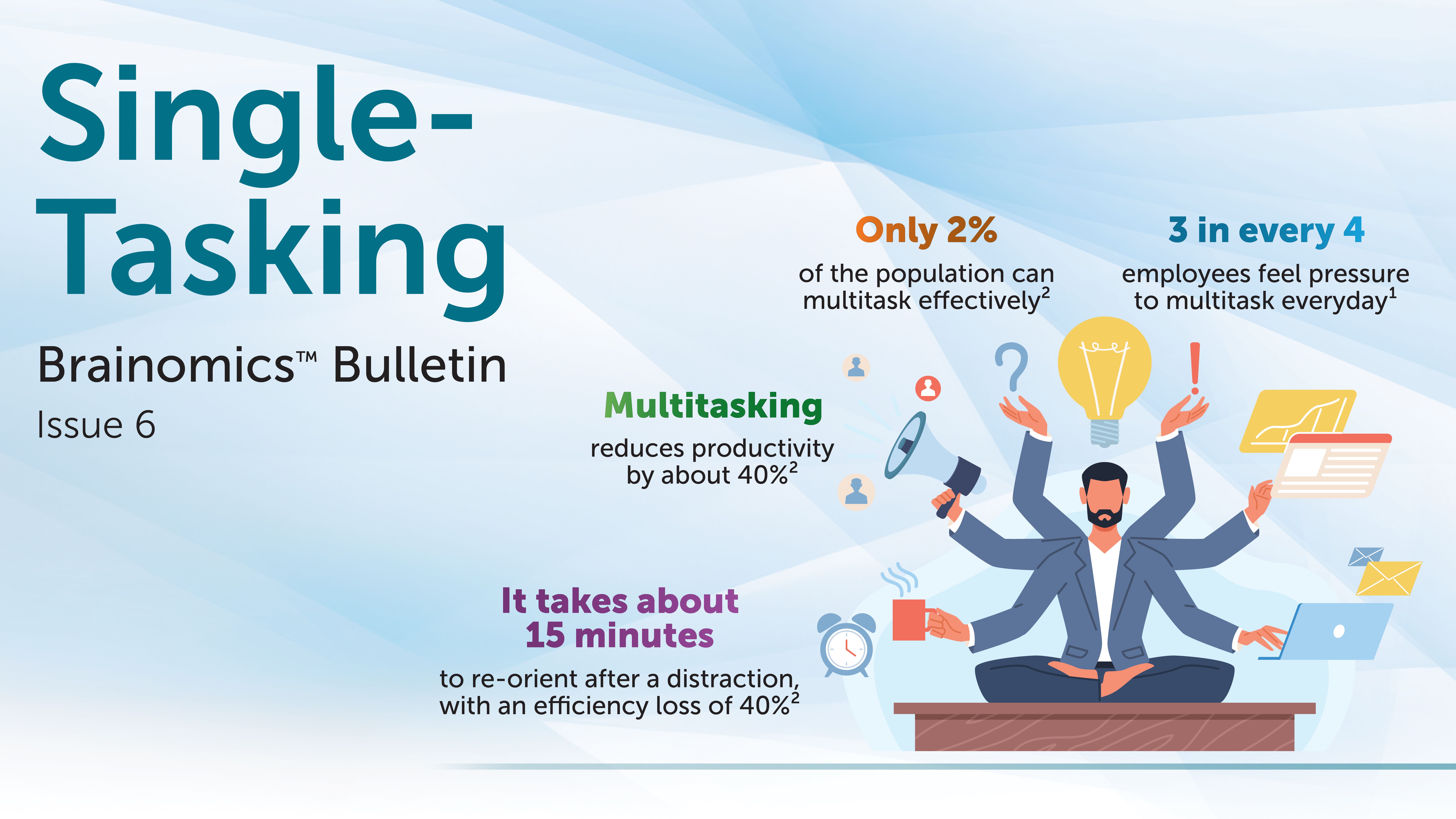
- The Principle of Single-Tasking: Multitasking? It’s closer to a myth. Cognitive science suggests that what we call multitasking is actually just rapid ’task-switching,’ and this process incurs a ‘cognitive cost.’ Mental resources are depleted, and the possibility of errors explodes across all tasks being attempted simultaneously.
Single-Tasking
Multitasking is actually rapid ’task-switching,’ incurring cognitive costs and increasing the likelihood of errors.
Stanford University professor Clifford Nass’s research vividly illustrates this illusion. He experimented with people who prided themselves on being ‘heavy multitaskers’… and found that these individuals performed significantly worse than ’low multitaskers’ in filtering irrelevant information, managing working memory, and efficiently switching between tasks. In other words, the more you believe you multitask, the higher the probability that you’re actually not doing any single task properly… a rather shocking conclusion, isn’t it?
- Implementing the ‘Checklist Manifesto’: The case of Dr. Peter Pronovost at Johns Hopkins Hospital is truly… miraculous. He introduced a 5-step checklist in the ICU to prevent infections during central line insertions. The result? The infection rate dropped from 11% to 0% over 10 days. As Atul Gawande’s research shows, this clearly demonstrates that checklists are not tools for incompetent people. Instead, they are sophisticated tools used by highly skilled professionals to manage complexity and prevent errors that can arise from relying on memory.
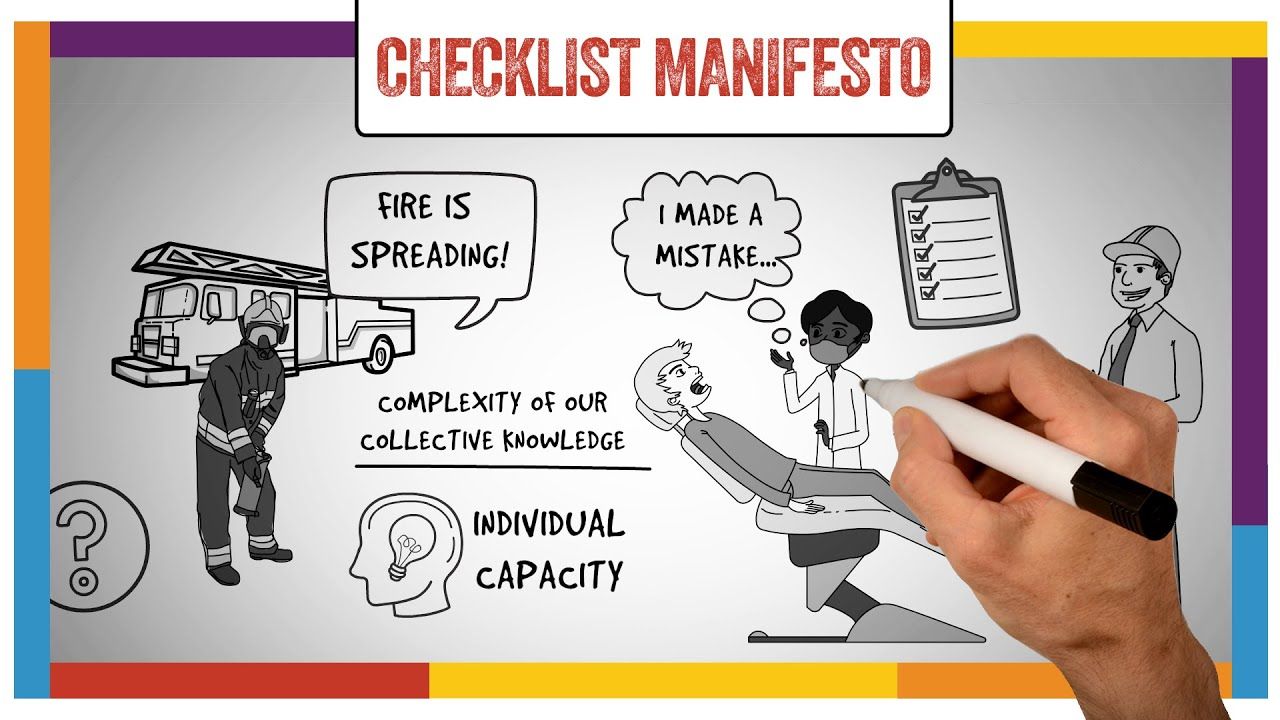
The Checklist Manifesto - Reverse-Order Task Processing: A simple tip that’s useful for sending important emails. After attaching files and writing the body, enter the recipient’s address last. This physically prevents you from sending an incomplete email or an email with a forgotten attachment.
1.3 Communication Techniques: How Not to Ruin Relationships with Verbal Blunders
Many mistakes occur not due to a lack of skill or knowledge, but due to a failure in ‘communication.’ Language habits that prevent relational errors are key skills for protecting your reputation and team performance.
- The “If You Hesitate, Don’t Do It” Principle: The impulse to say something uncertain because you can’t stand silence or pretend to know what you don’t. This often leads to verbal blunders. Once words are spoken, they can’t be taken back. When in doubt, the default should be silence. This buys you time to gather your thoughts more carefully and speak later.
- Clarity and Conciseness: The longer and more convoluted your explanation, the wider the ‘surface area’ for errors or misunderstandings to creep in. The habit of conveying the core message briefly and simply is a way to respect the listener’s time and the most effective way to increase communication accuracy.
- Proactive Listening Instead of Reactive Storytelling: A common mistake in conversations is to latch onto a keyword from what the other person says and shift the topic to your own story with ‘interruptive response’ like, ‘Ah, that happened to me too…’ Don’t listen just to prepare your answer; focus on understanding the other person. This is the fundamental skill for building trust and making conversations about relationships, not transactions.
It reminds me of the legendary GE CEO Jack Welch. He greatly disliked executives who interrupted others mid-sentence at meetings by saying, ‘My opinion is…’ He knew that great leaders listen not to prepare an answer, but to understand even what the other person hasn’t said yet. This isn’t a matter of politeness, but a critical communication error prevention technique that stops the team’s collective intelligence from being stifled by one person’s hasty reaction.
Now, as I’ve organized these techniques… an interesting point emerges. Most of these techniques slow us down and create ‘friction’ that deliberately pulls us out of ‘autopilot’ mode. The 3-second pause, checklists, reverse-order email processing… they all do that. Ah, come to think of it, efficiency and accuracy often seem to be inversely related.
2. In-depth Analysis of Errors: Why Do We Keep Making the Same Mistakes?
To effectively use techniques for reducing errors, you need to understand ‘why’ you should do them, beyond just ‘what to do.’ In this chapter, we’ll delve deep into the psychological and systemic roots of errors. Accurate diagnosis leads to effective prescriptions.
2.1 The Psychology of Human Error: Slips, Mistakes, and Violations
What we casually lump together as ‘mistakes’ are actually different when examined closely. Their causes and solutions differ.
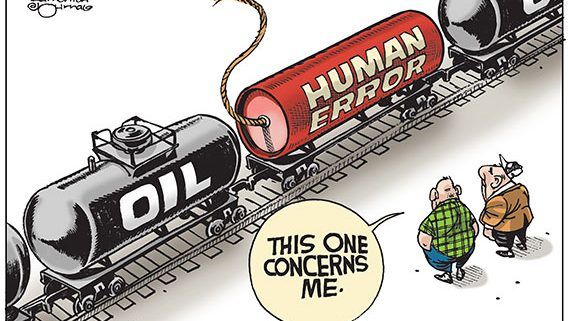
- Slips and Lapses: These occur when the intention was correct, but the action went awry. They usually happen due to inattention or distraction. For example, pouring orange juice instead of milk on cereal. These are errors from ‘autopilot’ mode.
- Mistakes: These occur when the plan itself is flawed due to incorrect knowledge or reasoning. For example, making an investment decision that leads to losses after misinterpreting a financial chart. Cognitive biases often play a significant role here.
- Violations: These occur when rules or procedures are intentionally broken, even when known. Skipping safety inspection procedures to save time is a prime example.
Why is this distinction important? Because the solutions are completely different! Slips can be prevented by checklists, but mistakes require better education or bias-awareness training. Violations? They require changes in organizational culture or renewed motivation.
Let’s use driving as an analogy:
- Missing your exit because you were momentarily distracted on a familiar road is a slip.
- Taking the wrong road from the start because you misread the map (incorrect knowledge) is a mistake.
- And driving 130 km/h in a 100 km/h zone, knowing it’s wrong but thinking ‘I’m in a hurry, it’ll be fine,’ is a violation.
See? These three have completely different causes and solutions. Knowing which type of error you repeatedly make is the first step to solving it.
2.2 The Invisible Architect: Heuristics and Cognitive Biases
Our brains evolved to use mental shortcuts called ‘heuristics’ to navigate a complex world. While often efficient, they can lead to systematic errors, or ‘cognitive biases,’ when making complex decisions.
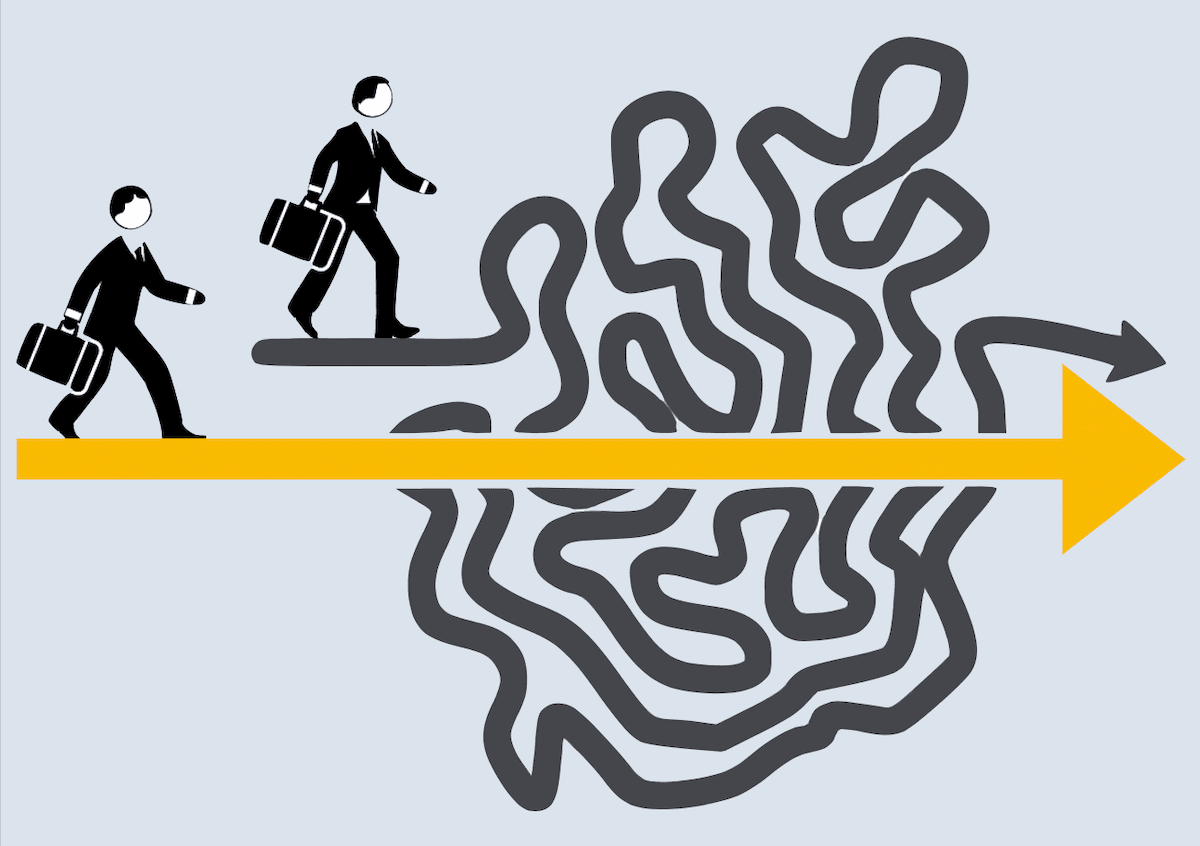
The tragedy on Mount Everest in 1996… a truly heartbreaking case. Even experienced experts made fatal judgments due to cognitive biases.
- Sunk Cost Fallacy: The thought of ‘We’ve come this far…’ or ‘How much have we invested…’ led them to persist in dangerous situations instead of giving up.
- Overconfidence Bias: Thinking ‘We’re the best climbers’ led them to overestimate their abilities and underestimate the immediate danger.
- Confirmation Bias: They likely focused only on positive signs of improving weather, ignoring evidence warning of danger.
Behind the Everest tragedy lay fatal cognitive biases like sunk cost, overconfidence, and confirmation bias.

Beyond these, we live with numerous biases in our daily lives. We see a plane crash on TV and think flying is more dangerous than driving (availability heuristic), fail negotiations because we latch onto the first number heard (anchoring bias), and attribute others’ mistakes to their personality while our own mistakes are due to circumstances (fundamental attribution error). Don’t we all do this?
2.3 Cracks in the System: Major Disasters Seen Through the Swiss Cheese Model
James Reason’s ‘Swiss Cheese Model’ is truly eye-opening. In this model, each layer of defense in a system (rules, training, technology) is like a slice of Swiss cheese. The holes in the cheese? They represent potential flaws in that defense. When does disaster strike? Unluckily, when all these cheese slices’ holes align in a row, allowing a hazard to penetrate all defenses without obstruction.
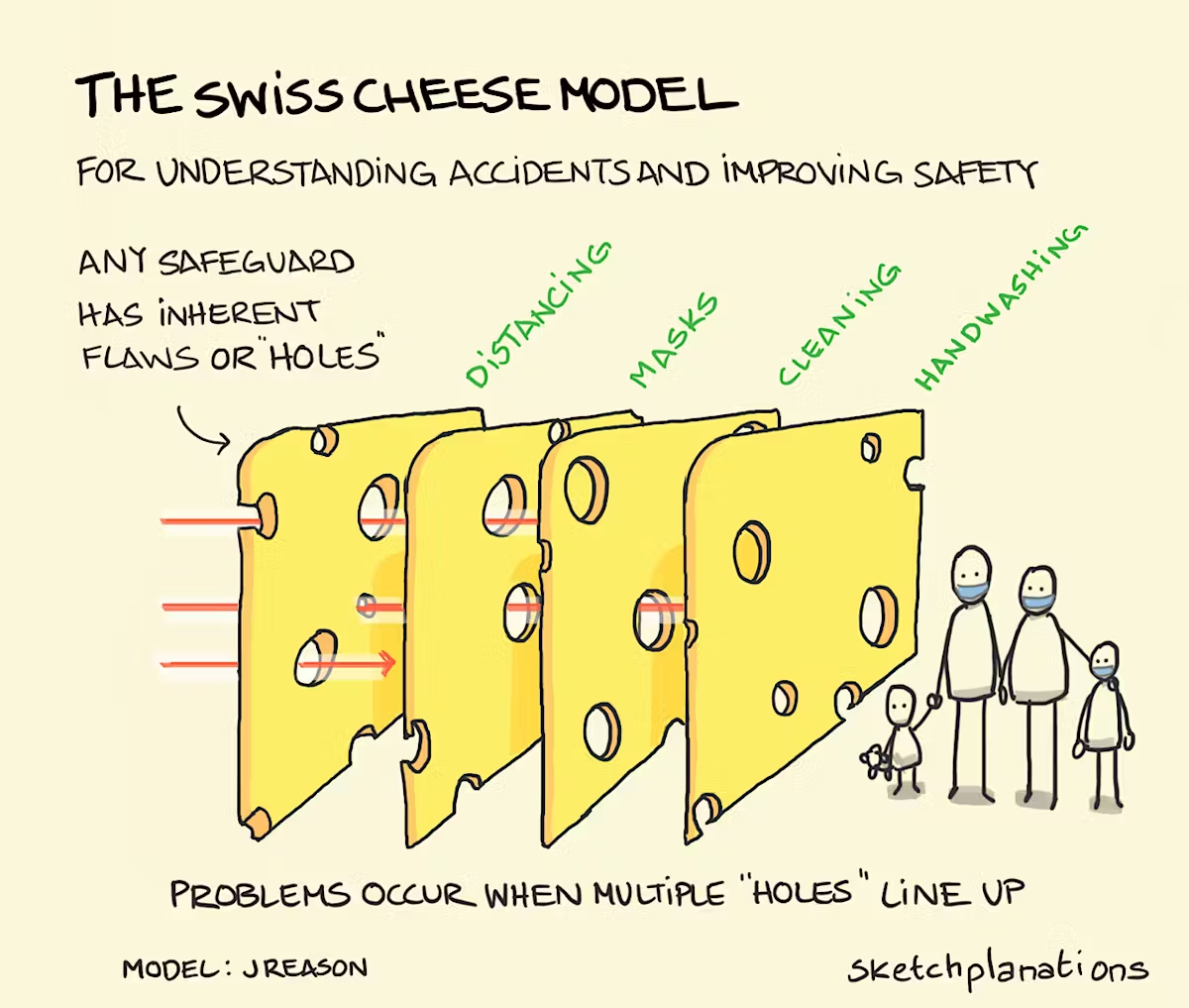
Swiss Cheese Model: Major disasters occur when flaws (holes) in multiple layers of defense align.
The recent fire at the Arcel plant in Korea… viewed through this model, it looks different.
- Slice 1 (Material Management): Flaws in the storage method for highly explosive lithium batteries (a hole).
- Slice 2 (Safety Training): Insufficient training for dealing with thermal runaway (a hole).
- Slice 3 (Emergency Evacuation Routes): Flaws in the design or accessibility of emergency escape routes (a hole).
- Slice 4 (Firefighting System): Lack of a firefighting system suitable for chemical fires (a hole).
When these holes lined up… it became a terrible disaster. While a ‘human error’ by one worker might have been the trigger, the Swiss Cheese Model shows this was an ‘organizational accident’ where a disaster was waiting to happen. It’s a powerful perspective that shifts blame from individuals to the system.
Thus, our instinctive reaction to errors, the urge to find and blame an individual, is frankly… often the most immature and unproductive response. True ‘smart’ analysis involves suppressing this urge to blame and finding the ‘system’s’ holes that made the individual’s error almost inevitable. Blaming only the last domino to fall is ultimately useless.
3. Seeking Alternatives to Reduce Errors: Structural Solutions Beyond Individual Effort
Telling individuals to ‘be more careful!’ or ‘pay attention!’ has clear limitations. To truly reduce errors, we need to design structures where errors are difficult to occur or, if they do, can be quickly detected and corrected.
3.1 Designing to Prevent Failure: The Principle of Poka-Yoke
‘Poka-yoke’ means ‘mistake-proofing’ in Japanese. Shigeo Shingo, an engineer at Toyota, realized it was much more effective to design assembly processes where mistakes were physically impossible than to train workers to ‘be more careful.’ Isn’t that genius?
Poka-yoke is all around us.
- USB-A plugs that only fit one way.
- SIM card trays with notched corners to prevent incorrect insertion.
- Car ignitions that prevent the key from being removed unless in ‘P’ (Park).
These are all intentional mistake-proofing designs. This principle also applies to the digital world. Buttons that don’t work if an email address format is incorrect, or incompatible options being grayed out.
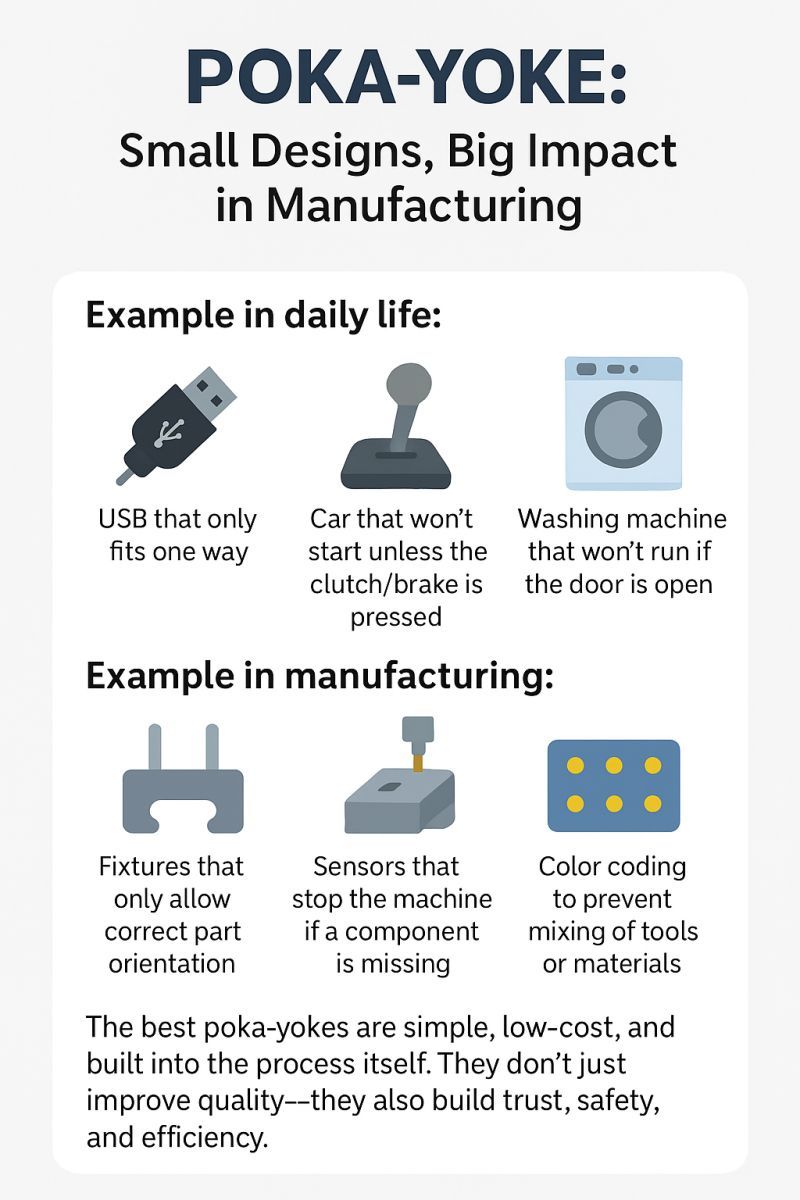
USB plugs, SIM card trays, and many other everyday items feature ‘Poka-yoke’ designs that prevent errors at the source.
Consider how the ‘Next’ button on an online shopping checkout doesn’t activate if you miss essential information like the shipping address or contact number. This doesn’t rely on the user’s ‘carefulness’; the system itself makes ‘omission’ errors impossible.
The best mistake? One you don’t even have the chance to make.
3.2 Tools to Tame Complexity: The Checklist Manifesto
Checklists are not just memo tools. According to Atul Gawande’s research, in highly complex fields like aviation, medicine, and construction, failures occur not due to ‘ignorance’ (not knowing) but ‘ineptitude’ (failing to execute what is known under pressure).
Before Atul Gawande introduced checklists to the medical field, the aviation industry had already realized the power of this tool. In 1935, Boeing’s new bomber, the ‘Model 299,’ crashed during a test flight. The cause wasn’t pilot incompetence. The plane was so perfect and complex that even the best pilot of the era forgot to release the ’elevator lock’ during takeoff. After this incident, the aviation industry didn’t ’train pilots more’; instead, they created ‘checklists’ containing all procedures for takeoff, flight, and landing. This became not an auxiliary memory aid for pilots, but a key system for managing complexity.
Well-designed checklists have two powerful functions:
- Cognitive Safety Net: It prevents your memory and attention from betraying you under stressful situations.
- Catalyst for Teamwork and Communication: Like a ’timeout’ before surgery, it prompts team members to pause, communicate, verify critical steps, and voice concerns regardless of rank.
Of course, bad checklists are… truly worse than none. Long, ambiguous, impractical checklists hinder work. Good checklists are precise, efficient, and focus only on the most critical ‘key steps’ that even experts might miss.
3.3 The Secret of Failure-Proof Organizations: The 5 Principles of High-Reliability Organizations (HRO)
How do organizations operating in complex and dangerous environments like aircraft carrier decks, nuclear power plants, and air traffic control systems manage to operate for extended periods without serious accidents? These organizations are called ‘High-Reliability Organizations (HROs).’ Their success lies not in better rules, but in a deeply ingrained ‘organizational culture’ that prioritizes safety.
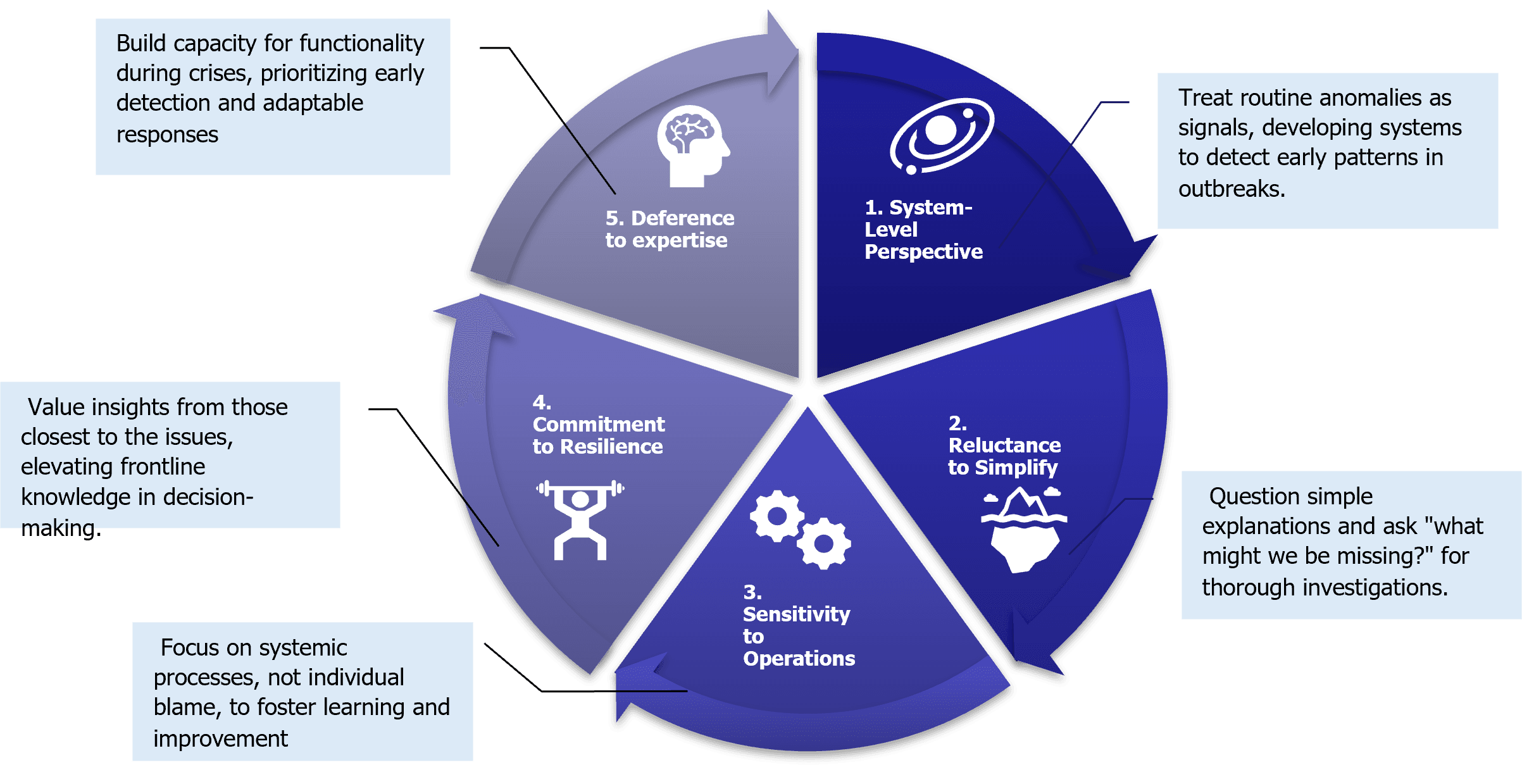
HROs share 5 unique principles:
- Preoccupation with Failure: They don’t dismiss minor mistakes or ’near-misses’ as ‘Phew, lucky.’ Instead, they treat them as valuable information revealing system weaknesses and analyze them persistently.
- Reluctance to Simplify: They resist the temptation to attribute the cause of a problem to a single factor like ‘It was because of this.’ They acknowledge that reality is complex and are wary of concluding with a single cause.
- Sensitivity to Operations: They maintain a vivid sense of what is actually happening ‘on the ground right now,’ not just what’s written in the manual.
- Commitment to Resilience: They assume that failures will ’eventually’ occur. Therefore, they focus on training the ability to detect, contain, and rapidly recover from unexpected events.
- Deference to Expertise: This is truly impressive. In crisis situations, decision-making authority naturally shifts not to the highest-ranking person, but to the person with the most relevant ’expert knowledge’ on the ground.
The core of High-Reliability Organizations (HRO): On an aircraft carrier deck, a deckhand (expertise) controls the takeoff signal, not a 4-star general (rank).
The aircraft carrier deck is a prime example. In a hair-trigger situation where aircraft are taking off and landing, it’s not a 4-star general (rank) but a 20-something deckhand in a yellow vest (expertise) who controls the final takeoff signal. When on-the-ground expertise leads decision-making rather than rank, the system becomes safest.
These solutions ultimately show that the most effective mistake-proofing strategy relies not on individual fallibility but on creating robust processes, designs, and cultures. There seems to be an inherent tension between traditional management metrics like ’efficiency’ (speed) and HRO principles like ‘reliability’ (safety). HROs willingly slow down for reliability and respect experts who challenge authority. This implies a fundamental shift in organizational values is necessary.
4. Practical Ways to Overcome Errors: Turning Failure into a Driving Force for Growth
In any case, errors are inevitable. Therefore, the ability to learn from mistakes and get back up, the skill of ‘recovery,’ is as important as the ability to prevent them. Ultimately, being ‘smart’ isn’t about not making mistakes, but about having the ability to turn mistakes into a driving force for growth.
4.1 The Moment of Error: Immediate Response and Damage Minimization
When you make a mistake… ah, you just want to hide. The impulse to hide out of fear and shame is very human. But this almost always, 100% of the time, makes the situation worse. The later the report, the more the golden time to prevent damage is missed, and organizational trust is shattered.
Immediate and honest reporting is not an admission of failure like ‘I was wrong,’ but an action of ‘I take responsibility as a professional.’ Good systems separate the mistake itself from the act of ‘reporting it’ and reward the reporter instead of punishing them.
Toyota’s ‘Andon Cord’ is a prime example. Any worker on the production line can pull the cord if they discover a problem, instantly stopping the entire line. The worker who reports the mistake (pulls the cord) isn’t punished; instead, they are treated as a hero for immediately solving the problem and improving the system. Conversely, in a culture where mistakes are hidden, small defects snowball into disasters like large-scale recalls.

The focus should shift from ‘Who was wrong?’ to ‘What happened, and what do we do now?’
4.2 Building Mental Strength: Resilience Training
Resilience. This isn’t about being so tough you don’t feel pain, but about the psychological ‘flexibility’ to bounce back after adversity. It’s the ability to bend without breaking.

Practical ways to cultivate resilience include:
- Emotional Regulation: Immediately after a mistake, manage the waves of emotion like shame and anxiety using techniques like the ‘6-second deep breathing method’ or mindfulness meditation.
- Cognitive Reframing: You must consciously change your internal narrative from ‘I am a failure’ to ‘I made a mistake, and there’s something to learn from this.’ This is the key process of separating the event from your identity.
- Leveraging Social Support: Confide in trusted colleagues or mentors about your mistakes and actively seek their help. Sharing the burden reduces emotional weight and provides an objective perspective.
4.3 The Power of ‘Not Yet’: Redefining Failure with a Growth Mindset
Stanford University psychologist Carol Dweck introduced the concept of ‘mindset,’ which is truly essential for life.
- Fixed Mindset: Abilities are innate. Mistakes are proof of my incompetence.
- Growth Mindset: Abilities can be developed through effort. Mistakes are opportunities to learn.
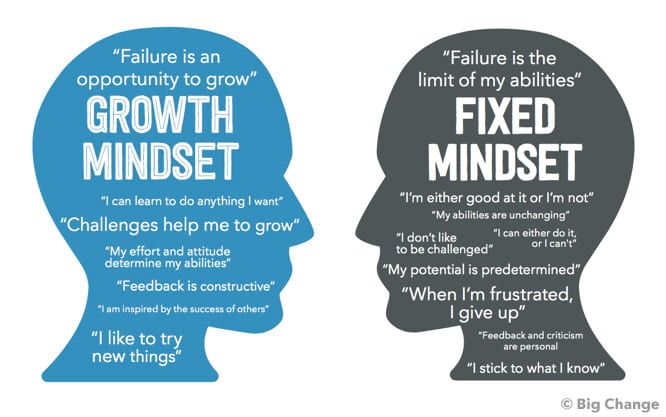
The difference between a fixed mindset viewing mistakes as ‘verdicts’ and a growth mindset viewing them as ‘data.’
You all know the story of basketball legend Michael Jordan being cut from his high school team. If he had a fixed mindset, he would have concluded, ‘I’m not talented,’ and quit basketball. But his growth mindset led him to conclude, ‘I am not good enough yet,’ and he used that failure as fuel to become the greatest player in history.
The core of the growth mindset is viewing challenges and failures not as ‘verdicts’ but as ‘data.’ When mistakes happen, a growth mindset asks: ‘Which strategies didn’t work? What skills do I need to practice more? What should I do differently next time?’
This is the power to transform failure from a dead end into a roadmap for improvement. Thomas Edison’s quote about finding 10,000 ways that didn’t work on the path to inventing the lightbulb makes us reconsider that failure is an essential part of innovation.
Ultimately… how we ‘react’ to mistakes is far, far more important than the mistakes themselves. Even a small mistake, if hidden and responded to with a fixed mindset of ‘I can’t do it,’ can become a disaster. However, even a huge mistake, if faced honestly and responded to with a growth mindset of ‘What can I learn?’, can become a decisive momentum for growth.
5. Utilizing the 23 Techniques: A Personalized Strategy for Managing Your Errors
Finally, based on the theoretical background discussed so far, here’s a diagnostic tool that integrates practical techniques. Use this table to first identify the ’type’ of errors you frequently make, and then select and apply the optimal technique accordingly. Understanding the psychological principles behind each technique will help you move beyond just following them and develop your own application strategies.
Table: Integrated Guide to Mistake Prevention Techniques
| Category (구분) | Technique (기법) | Core Concept (핵심 내용) | Applicable Situation (적용 상황) | Expected Outcome (기대 효과) | Related Psychological Principle (관련 심리 원칙) |
|---|---|---|---|---|---|
| Cognitive Techniques | 3-Second Pause | Consciously pause before speaking or acting | When making emotional or important decisions | Inhibits impulsive reactions, improves rational judgment | System 1/System 2 Thinking, Emotional Regulation |
| Mistake Journal | Record mistake details, causes, and lessons learned | When making repetitive mistakes, after project completion | Identifies error patterns, enhances metacognition, prevents recurrence | Metacognition, Externalized Memory | |
| Perspective Shift | Ask yourself, “What if I heard this?” | When delivering important feedback or criticism | Builds empathy, prevents relationship damage | Empathy, Theory of Mind | |
| Behavioral/Environmental Techniques | Checklist Use | Review key steps of complex procedures | When performing multi-step tasks or high-risk operations | Reduces cognitive load, prevents omissions, enhances teamwork | Cognitive Load Theory, Procedural Memory Support |
| Reverse-Order Process | Enter recipient last when sending an email | For tasks where attachments or final checks are crucial | Prevents critical errors (non-attachment, sending incomplete) at the source | Poka-Yoke (Mistake-Proofing Design) | |
| Sleep and Exercise | Ensure 7+ hours of sleep and regular exercise | General daily life, especially when concentration is required | Optimizes brain function, improves attention and memory | Neurobiology of Attention | |
| Single-Tasking | Focus on only one task at a time | When writing important reports, analyzing data, etc. | Improves work quality, reduces error rates, enhances efficiency | Cognitive Cost of Task Switching | |
| Communication Techniques | Speak Clearly & Simply | Convey only the core message concisely | All conversations, especially in directive or reporting situations | Reduces misunderstandings, increases communication efficiency | Signal-to-Noise Ratio Principle |
| Active Listening | Focus on listening without interrupting to tell your own story | Conversations with colleagues or clients, conflict situations | Builds trust, identifies root causes of problems | Relational vs. Transactional Communication | |
| Post-Mistake & Growth | Swift, Honest Reporting | Immediately notify relevant parties upon recognizing a mistake | When a work-related error occurs | Minimizes damage, restores trust, accelerates problem-solving | Psychological Safety, Damage Control |
| Resilience Training | Recognize and positively reframe feelings about failure | When feeling frustrated or anxious due to a mistake | Enhances emotional recovery, strengthens stress tolerance | Emotion Regulation, Cognitive Reframing | |
| Growth Mindset Application | View mistakes as ’learning data’ rather than ’limits of ability’ | At all moments of failure and challenge | Motivates learning, promotes continuous self-development | Dweck’s Mindset Theory |
{{{< details “References” >}}}
- Smart Mistakes You’ve Only Just Learned About - Arthur Freeman, Rose DeWolfe
- 2011 #5 - Smart Mistakes You’ve Only Just Learned About
- How to Neatly Reduce Verbal Blunders, Even Psychologists Use It - Daum
- How to Reduce Errors and Become a High Performer - Newneek
- Mistakes, How Do You Reduce Them? - Mailly
- How Can I Reduce Minor Errors? - Super Rookie
- A Few Small but Powerful Ways to Drastically Reduce Mistakes - Super Rookie
- 3 Ways to Significantly Reduce Mistakes - YouTube
- Create Twice the Results with Small Habits: 5 Know-Hows to Reduce Recurring Work Errors - Daouoffice
- 15 Bad Habits That Hinder Productivity - ClickUp
- Checklist: Checklists - Atul Gawande (Aladin)
- Check: Checklists - Atul Gawande (Kyobo)
- 30 Ways to Reduce Verbal Blunders - Linker Community
- Human Error - Wikipedia
- Human Error Experience Examples? - KOCW
- In Simple Terms, What is Cognitive Bias and Some Examples? - Reddit
- Heuristics: Usefulness and Errors in Decision Making - Human Sea
- UI/UX Design Heuristic Principles - Honey Badger’s Archive
- Cognitive Bias - Wikipedia
- A Complete Guide to Our Cognitive Biases - Newspeppermint
- Concept of Cognitive Bias and How to Guide Users to Behave in a Specific Direction - Naver Premium Content
- Bias - Namuwiki
- 50 Cognitive Biases We Should Know ① - Healthcare News
- Human Factors and Environmental Factors (2) - kiha21.or.kr
- [On-Site] The Swiss Cheese Model and the Sin of Forgetfulness - Segye Ilbo
- Swiss Cheese Model - Korea Research Institute for Human Settlements
- Swiss Cheese Model - Namuwiki
- [Safety Theory_1] Swiss Cheese Model - YouTube
- [On-Site] The Swiss Cheese Model and the Sin of Forgetfulness - Daum
- Poka-Yoke - Wikipedia
- Poka-Yoke: Preventing Errors in Manufacturing - Penguin Solutions
- Poka-Yoke - Autodesk Fusion Operations
- Poka-Yoke Examples Online and Offline - pxd story
- Poka-Yoke Examples Online and Offline - Are UX Ready?
- The Law of Poka-Yoke - Slashpage
- Checklist: Checklists - Atul Gawande (Yes24)
- Checklist: Checklists (Perfect People Differ in the Last 2 Minutes) - Flybook
- Atul Gawande’s “The Checklist Manifesto” - Reddit
- How Safety Leaders Build High-Reliability Organizations (HROs) in the Workplace - safety1st.news
- Samsung Economic Research Institute ‘High-Reliability Organizations Resilient to Crises’ - Newswire
- Learning Corporate Resilience from High-Reliability Organizations - SME News
- How to Deal with Work Mistakes - Yesform
- Resilience Training: Methods to Enhance Resilience - Maum Sopung
- What are the ways to increase ‘Psychological Resilience’? - Health Life Herald
- Two Ways to Improve Resilience! - YouTube
- 4 Ways to Build Resilience: 3 Scientific Methods for Healing - FamilySearch
- 4 Ways to Increase Resilience - Mabo Blog
- [How-To] How to Cultivate a Growth Mindset - Reddit
- Growth Mindset - Carol Dweck - Kaden Sungbin Cho
- Mindset (Recover Edition) - Carol Dweck (Yes24)
- [Coaching Theory Every Coach Must Know] Growth Mindset Theory - Coaching News
- Who Learns from Failure? - Psychology of My Life Mind
- Mistakes: Learning from Mistakes: Moments as Opportunities for Growth - FasterCapital
- Let’s Learn About the Failures of Great Figures Worldwide!!! - Popcorn Planet {{{< /details >}}}