
The tragic fall of geniuses who flew towards the sun
- Understand the core concepts of behavioral economics, ‘System 1 and 2’, and identify the flaws in our decision-making.
- Learn about the catastrophic results caused by cognitive bias through the collapse of LTCM and the 2008 financial crisis.
- Discover specific overcoming strategies for individuals and organizations to avoid fatal failures.
The Icarus Syndrome and the Dangers of Cognitive Bias
History loves the bizarre tragedies of geniuses like Nobel laureates or Wall Street legends who bring about their own downfall. I too have experienced losses from vague confidence in important investment decisions, thinking, ‘This should be fine,’ falling into cognitive bias. “How could such smart people make such foolish mistakes?” The answer lies not in economics textbooks, but in the ‘bug-ridden software’ of our minds.
Behavioral economics is the tool to decode these mental bugs. Today, we will dissect the collapse of the hedge fund LTCM, created by a dream team of Nobel laureates, and the global financial crisis of 2008, exploring the predicted tragedies caused by the ‘predictably irrational’ human mind.

Part 1: The Two Faces in Our Heads - The Primitive and the Economist
Our brains are not the latest supercomputers. They are more like the latest programs crammed onto an outdated operating system. Nobel laureate Daniel Kahneman states that there are two characters living in our minds.
- System 1 (Fast Thinking): The impulsive and intuitive ‘primitive’. It is a survival optimization system that reacts immediately to threats in front of us, handling most everyday judgments.
- System 2 (Slow Thinking): The cautious and logical ’economist’. It performs complex calculations and corrects the mistakes of System 1, but has the significant drawback of being very ’lazy’.
The problem is that even experts easily fall into the traps of System 1 when faced with pressure and uncertainty. Interestingly, most of our cognitive biases were ‘functions’ that favored survival in the past.
- Loss Aversion: The tendency to feel the pain of losing $100 more than the pleasure of gaining it, a survival instinct from primitive times when losing hard-earned food meant death.
- Availability Heuristic: The tendency to give more weight to recent vivid information. Believing that a tiger seen yesterday is more likely to appear today would have been advantageous for survival.
When this ancient software runs in modern financial markets, stock market crashes trigger ‘panic selling’ by stimulating the primal fear of System 1 instead of the calm analysis of System 2. The failures of geniuses are not due to a lack of intelligence, but rather the result of ’evolutionary mismatch’.
Part 2: The Tragedy of Failed Geniuses - The Autopsy of LTCM
In 1994, a pantheon of gods called Long-Term Capital Management (LTCM) was established on Wall Street.
The Hubris of the Gods and Cognitive Bias
The team included Nobel laureates Myron Scholes and Robert Merton, forming an ‘Avengers’ of sorts. Their names alone created a powerful authority bias, preventing investors from questioning their strategies.
Their weapon was a mathematical model for ‘convergence arbitrage’. They believed that markets are always rational and that price distributions follow a normal distribution. However, the model had no room for the extreme situations created by human ‘fear’ and ‘greed’, known as ‘fat tails’. This was a classic example of expert bias, where an expert is trapped in their own knowledge and fails to see reality.
Anatomy of the Collapse: A Textbook Case of Cognitive Bias
Disaster struck in 1998 with Russia’s declaration of a moratorium. The reactions of LTCM partners were a textbook case of behavioral economics.
- Hubris and Overconfidence: Even as losses mounted, they blindly believed, “The market is just irrational; our model is correct.” This is a typical case of confirmation bias.
- Groupthink: A closed ’echo chamber’ where no one dared to question the models of Nobel laureates.
- Loss Aversion and Sunk Cost Fallacy: To avoid the pain of admitting losses, they increased their bets. They fell into the sunk cost fallacy, unable to abandon a failed strategy due to the money and reputation already invested.
Ultimately, $4.6 billion vanished, and the Federal Reserve had to arrange a bailout. The failure of LTCM was not a failure of mathematics, but a failure of intellectual arrogance lacking practical wisdom (phronesis).
Part 3: The Great Collapse - 2008, When the Whole System Went Mad
The 2008 financial crisis was an epic saga of collective delusion across the entire system.
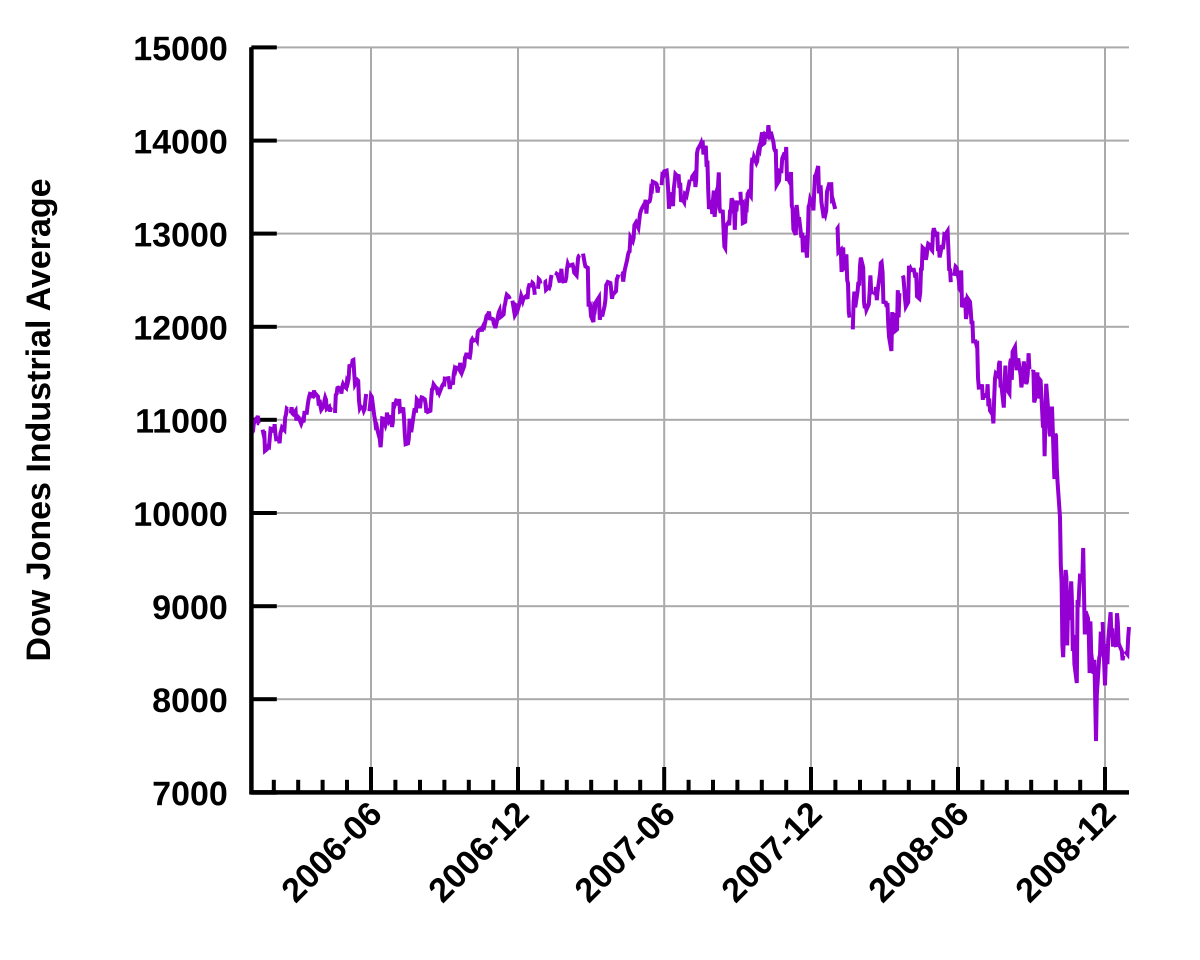
The Maestro’s Silence and the Chain Reaction of Biases
At the time, former Fed Chairman Alan Greenspan confessed, “I was shocked to discover the flaw in the ideology that financial institutions would protect themselves from their own greed.” This was the moment his confirmation bias crumbled.
The 2008 financial crisis was a product of all sorts of cognitive biases.
- Herd Behavior: Under the belief that “U.S. housing prices will never fall,” everyone jumped into the subprime mortgage party, a classic example of the bandwagon effect.
- Misleading Anchors: The ‘AAA’ ratings assigned by credit rating agencies to ‘junk’ assets became a misleading ‘anchor’ that deceived investors.
- Illusion of Control: Bankers believed that complex financial products perfectly diversified risk, but in reality, they were merely hiding time bombs.
- Misaligned Incentives and Moral Hazard: Receiving bonuses based on the quantity rather than the quality of loans led to a massive moral hazard, where risks were offloaded onto society while chasing short-term profits.
Of course, there were those like Michael Burry from the movie ‘The Big Short’ who predicted the crisis. They were not smarter; they simply had a different cognitive habit of seeking contrary evidence and asking fundamental questions when everyone else was shouting ‘yes’.
Comparison: Fast Thinking vs. Slow Thinking
| Characteristic | System 1 (Primitive) | System 2 (Economist) |
|---|---|---|
| Speed | Fast, automatic | Slow, deliberate |
| Role | Intuition, emotion, habit | Analysis, logic, complex calculations |
| Energy | Requires little energy | Requires significant effort |
| Errors | Frequent biases and mistakes | Can supervise and correct mistakes |
| Example | 2+2=?, startled by a sudden loud noise | 17x24=?, tax calculations, parking |
Checklist: How to Overcome Cognitive Bias
The tragedies of LTCM and 2008 were failures of wisdom, not intelligence. To prevent the Icarus within us from falling, consider implementing the following:
- Think Backwards: Instead of asking, “How can this investment succeed?” ask “What are all the ways this investment could fail?” (Charlie Munger)
- Run a ‘Red Team’: Intentionally create a team within your organization that voices opposing opinions to prevent groupthink.
- Conduct a ‘Pre-Mortem’: Before starting a project, assume, “This project failed completely a year later. Why?” and analyze the causes.
- Know Your ‘Zone of Competence’: Cultivate intellectual humility by acknowledging that your thoughts could be wrong.
- Listen to Opposing Views: Deliberately pay attention to opinions that differ from yours to escape confirmation bias.
Conclusion
The reason smart people fail is not due to a lack of intelligence, but because they overlook the traps of cognitive bias that we all possess.
-
Key Summary:
- Our brains are irrational: The ‘System 1’ evolved for survival leads to fatal judgment errors in modern society.
- History proves it: LTCM and the 2008 financial crisis were predicted disasters caused by overconfidence, groupthink, and other cognitive biases.
- Wisdom is the shield: Thinking backwards based on intellectual humility and intentionally seeking opposing views is the best defense.
Ultimately, the ultimate defense against ‘foolishness’ is knowing the limits of your own rationality. Which system—1 or 2—had a greater influence on your recent important decision?
References
- Reddit ELI5 •|• What exactly is behavioral economics, and how is it different from classical economics?
- KDI Economic Information Center How is behavioral economics applied in reality?
- Wikipedia Behavioral Economics
- WEEKLY BIZ - Chosun Ilbo [Cover Story] Professor Daniel Kahneman, Nobel Laureate in Economics
- Wikipedia Cognitive Bias
- Yonhap Infomax [Financial Terms] Loss Aversion Bias
- Yonhap Infomax [Financial Terms] LTCM Incident
- Namu Wiki LTCM
- Pressian ‘The Culprit of the Financial Crisis’ Greenspan, Late Reflection
- Atlassian How to Run a Pre-Mortem Exercise [Including Template]
- (Other sources can be added in the same format as above)