
Discover everything about vegan food, from the table of Pythagoras to the laboratories of Silicon Valley.
- Understand the background and philosophical meaning of the term “Vegan.”
- Explore the key technologies that enable vegan food, such as alternative meats and cultured meat.
- Predict the growth drivers of the vegan market and how our tables will change in the future.
Today, vegan has established itself as a lifestyle, but its roots run much deeper than one might think. This article follows the grand journey of how the concept of veganism, which began at the tables of ancient philosophers, was born as a single word amidst the devastation of World War II and has made its way to our tables through technological innovations in Silicon Valley.
Everything Started in Ancient Greece
To begin the story, let’s go back to ancient Greece around 500 BC. The great mathematician Pythagoras preached compassion among all species and argued against meat consumption. His philosophy resonated with the principle of ‘Ahimsa’ (non-violence) taught by Eastern religions like Buddhism and Jainism.

However, for most of history, a plant-based diet was not a choice but a necessity for ordinary people. Meat was a rare food. With the advent of the industrial revolution and factory farming, a time of abundance emerged where anyone could easily eat meat, paradoxically making the act of not eating meat a meaningful philosophical ‘choice.’ The oldest question has returned to our tables.
Chapter 1: The Birth of the Term ‘Vegan’
The time shifts to 1944 in England, in the midst of World War II. A quiet woodworking teacher, Donald Watson, needed a new word to distinguish himself from existing vegetarians. He held a stricter belief that rejected dairy and eggs.

In November 1944, Watson and his colleagues coined the term ‘Vegan’ by taking the beginning and end of ‘Vegetarian’ and founded the world’s first vegan organization, ‘The Vegan Society.’
The early vegan movement expanded beyond diet to a philosophy of “liberating animals from human exploitation.” This became a comprehensive lifestyle that rejected all practices that use animals for food, clothing, labor, and more.
Chapter 2: Three Reasons We Choose Vegan
Why do people choose vegan today? Through the journey of a fictional character named ‘Gina,’ we explore three key motivations faced by modern vegans.
1. Ethical Awakening (Animal Welfare)
One day, Gina is shocked after watching a documentary about the reality of ‘factory farming.’ She takes her first step into veganism through an ethical awakening, not wanting to be part of a system that exploits and harms animals. This is a resistance against the belief that humans are superior to other species, known as ‘speciesism.’
2. The Earth’s Plea (Environment)
Gina learns that livestock accounts for about 14.5% of global greenhouse gas emissions, which is more than all forms of transportation combined. The destruction of the Amazon rainforest is also primarily caused by livestock farming. The fact that a vegan diet can reduce an individual’s carbon footprint by up to 73% gives her hope for small actions toward the future of the planet.
3. A Promise to Myself (Health)
Finally, Gina reflects on herself. She encounters research showing that a plant-based diet can help lower the risk of heart disease, type 2 diabetes, and certain cancers. She also realizes that careful planning is needed to maintain a balanced intake of nutrients like vitamin B12 and iron.
These personal changes align with social trends of ‘value consumption’ and ‘meaning out,’ where the images of celebrities on social media have made veganism a ‘hip and’ meaningful lifestyle.
Guide to Plant-Based Diets
Confused about the different types of vegetarianism? Here’s a simple table summarizing them.
| Type | Definition | Examples of Allowed Foods |
|---|---|---|
| Flexitarian | Primarily aims for vegetarianism but flexibly consumes meat or fish as needed. | Most plant-based foods, occasionally chicken or fish |
| Pesco-Vegetarian | Does not eat meat but consumes fish and seafood. | Vegetables, fruits, grains, dairy, eggs, fish, seafood |
| Lacto-Ovo Vegetarian | Does not eat meat or fish but consumes dairy (Lacto) and eggs (Ovo). | Vegetables, fruits, grains, dairy, eggs |
| Vegan | Does not consume any animal products, including meat, fish, dairy, eggs, and honey, and rejects animal exploitation in all aspects of life. | Vegetables, fruits, grains, legumes, nuts, seeds |
| Fruitarian | Only consumes fruits (including nuts and seeds) that fall naturally from plants to avoid harming them. | Fruits, nuts, seeds |
Chapter 3: Vegan Food Tech, Future Foods from the Lab
Now, let’s head to the laboratories of Silicon Valley, where science and technology are providing innovative answers to humanity’s oldest question: “What shall we eat?”
1. Plant-Based Alternative Meats: Deconstructing Meat
How can soybeans replicate the taste and texture of meat?
- The Secret of Texture, Extrusion Technology: Beyond the initial ‘soy meat’ using TVP (Textured Vegetable Protein) technology, HMMA (High Moisture Meat Analog Technology) aligns plant protein molecules in a way that resembles actual muscle fibers. This is the secret behind ‘Beyond Meat’ achieving a texture similar to real meat.
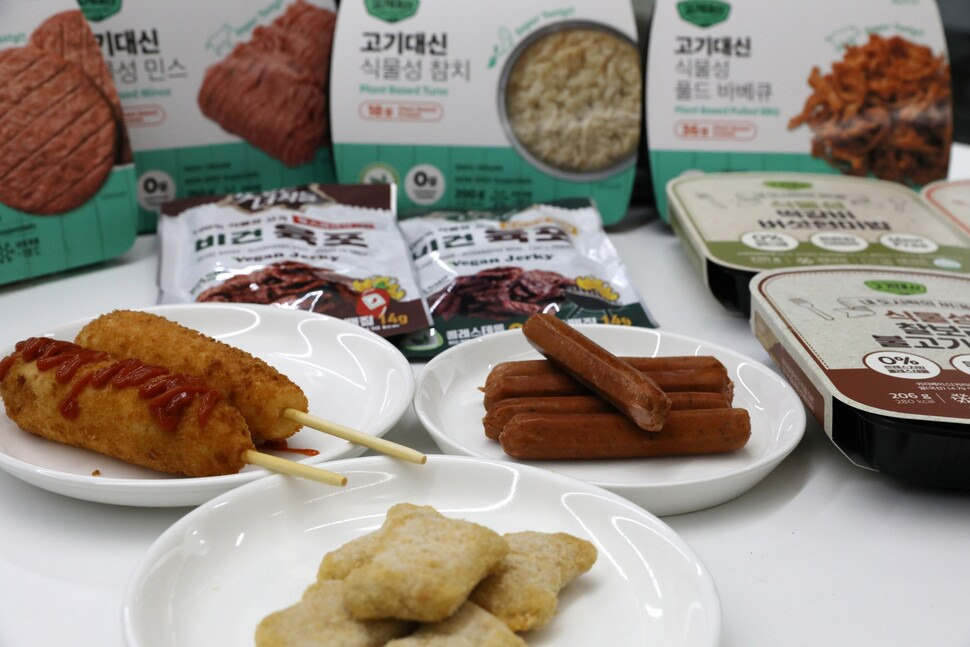
- The Key to Flavor, ‘Heme’: ‘Impossible Foods’ discovered that the unique flavor and juiciness of meat come from ‘Heme’ molecules. They successfully inserted the gene that produces heme from soybean root nodules into yeast for mass production. Thanks to this technology, the “bleeding” plant-based burger was born.
2. Cultured Meat: Growing Meat Without Animals
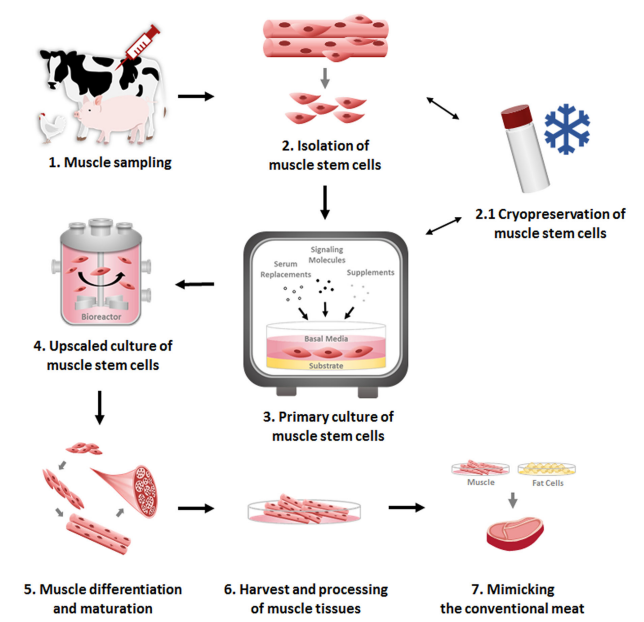
Cultured meat is a technology that grows meat tissue from a small number of cells taken from living animals in a nutrient-rich culture medium. It is considered the ultimate alternative as it does not require slaughtering animals, but challenges remain in high production costs and regulations.
3. Precision Fermentation: Brewing the Future
Precision fermentation is a technology that genetically programs microorganisms like yeast to produce only specific components, such as milk proteins (casein, whey) or egg white proteins. This ‘cell-free cell agriculture’ technology can create cheese, ice cream, and meringue without animals, holding the potential to transform the entire food supply chain.
Chapter 4: From Minority to Mainstream, Growth of the Vegan Market
Innovations from the lab have now become a massive market. The global vegan food market is expected to grow at an average rate of over 10% annually, surpassing $100 billion by the early 2030s. The vegetarian population in Korea has also increased more than tenfold in the past decade, estimated at 2.5 million.
Giants of Flavor: The Tale of Two Burgers
Leading this market are two representative companies, Beyond Meat and Impossible Foods, each with different strategies. For consumers, the competition between these two giants means ’the joy of choice.’ If you prioritize texture, you might choose Beyond Meat; if you want the authentic flavor and juiciness of meat, you might opt for Impossible Foods. Which alternative meat burger will be your first?
| Category | Beyond Meat | Impossible Foods |
|---|---|---|
| Founder Background | Ethan Brown - Clean energy and business expert | Patrick O. Brown - Stanford biochemistry professor |
| Core Technology | High moisture meat analog technology (HMMA) | Heme molecule production through precision fermentation |
| Main Ingredients | Pea protein | Soy protein + Heme |
| Target Customers | Flexible vegetarians, mainstream consumers | Meat lovers who don’t want to give up meat |
| Market Strategy | Partnerships with large distribution networks, emphasis on GMO-Free | Differentiation based on technology, dominance in food service channels |
In Korea, large companies like Pulmuone (Earth Diet) and Shinsegae Food (Better Meat), along with innovative startups like Unlimit and The Planet, are driving the growth of the vegan market.
Vegan as Culture
Veganism has now expanded into the realm of fine dining. New York’s ‘Eleven Madison Park’ shocked the world by maintaining its Michelin 3-star status after transitioning to a fully vegan menu.
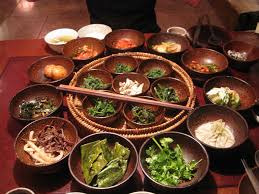
Interestingly, Korea has a long-standing tradition of vegan cuisine known as temple food. Temple food, which avoids the use of the five pungent vegetables (garlic, onion, chives, wild chives, and leeks), highlights the natural flavors of ingredients and can be considered the most Korean and perfect vegan dining experience.
Conclusion
The small concern that began at Pythagoras’s table has now become a massive industry that could change the future of humanity. The revolution on our plates has already begun.
- Expansion of Veganism: Veganism has evolved from a simple diet to a comprehensive philosophy and lifestyle encompassing animal rights, the environment, and health.
- Advancements in Technology: Plant-based alternative meats, cultured meat, and precision fermentation technologies are making a sustainable future of ‘animal-free farming’ a reality.
- Market Growth: Veganism is no longer a minority choice but a rapidly growing mainstream market centered around the value consumption of the MZ generation.
Today, your choices at the table will determine tomorrow’s menu and shape the future of the planet. How about finding a nearby vegan restaurant or buying plant-based alternative meat at the grocery store to cook for dinner tonight? Small actions are the beginning of great change.
References
- The Vegan Society https://www.vegansociety.com/
- FAO, “Tackling climate change through livestock” https://www.fao.org/ag/againfo/resources/en/publications/tackling_climate_change/index.htm
- Poore, J., & Nemecek, T. (2018). Reducing food’s environmental impacts through producers and consumers. Science, 360(6392), 987-992. https://www.science.org/doi/10.1126/science.aaq0216
- Beyond Meat https://www.beyondmeat.com/
- Impossible Foods https://impossiblefoods.com/
- Oatly https://www.oatly.com/
- Eleven Madison Park https://www.elevenmadisonpark.com/
- Meaning Out: A neologism combining ‘meaning’ and ‘coming out,’ referring to the phenomenon of actively expressing one’s beliefs or values through consumption.
- Five Pungent Vegetables (오신채): The five pungent vegetables (garlic, onion, chives, wild chives, and leeks) prohibited in Buddhism, believed to interfere with meditation.
- Price Parity: The point at which the price of alternative products becomes equal to that of existing products. An important goal for vegan foods to become mainstream.