
On the Shelf, the Magical Powder
Do you remember? As a child, the seasoning container with the red and white packaging that quietly occupied a corner of your mother’s kitchen cupboard. We are more familiar with it as ‘Miwon’.
When the stew tasted somewhat lacking, or when the umami of the seasoned vegetables was disappointing, my mother would add a pinch of this white powder like a secret weapon. Amazingly, the flavor of the entire dish would come alive harmoniously. We called that taste ‘mother’s touch’, but joked among ourselves that it was thanks to that magical powder.
Would you believe that this simple seasoning is actually the protagonist of a grand drama spanning 100 years? From the agonizing discovery of a Japanese scientist to the determination of a Korean entrepreneur who took pride in his country, the bloody wars of giant corporations, and the misunderstandings and accusations that shook the world.
Let’s begin the real story of MSG hidden in the dusty seasoning container.
The Fifth Taste Born in a Tokyo Laboratory
The Dinner Table that Changed Destiny
The story begins in the early 20th century, in a Tokyo heated by modernization. Professor Ikeda Kikunae, a chemist at Tokyo Imperial University, was deep in thought. During his studies in Germany, he returned with a sense of mission to improve the nutritional status of the Japanese people after observing the robust physiques of Germans. This was more than mere academic curiosity; it was a heartfelt calling from a scientist worried about the future of his country.
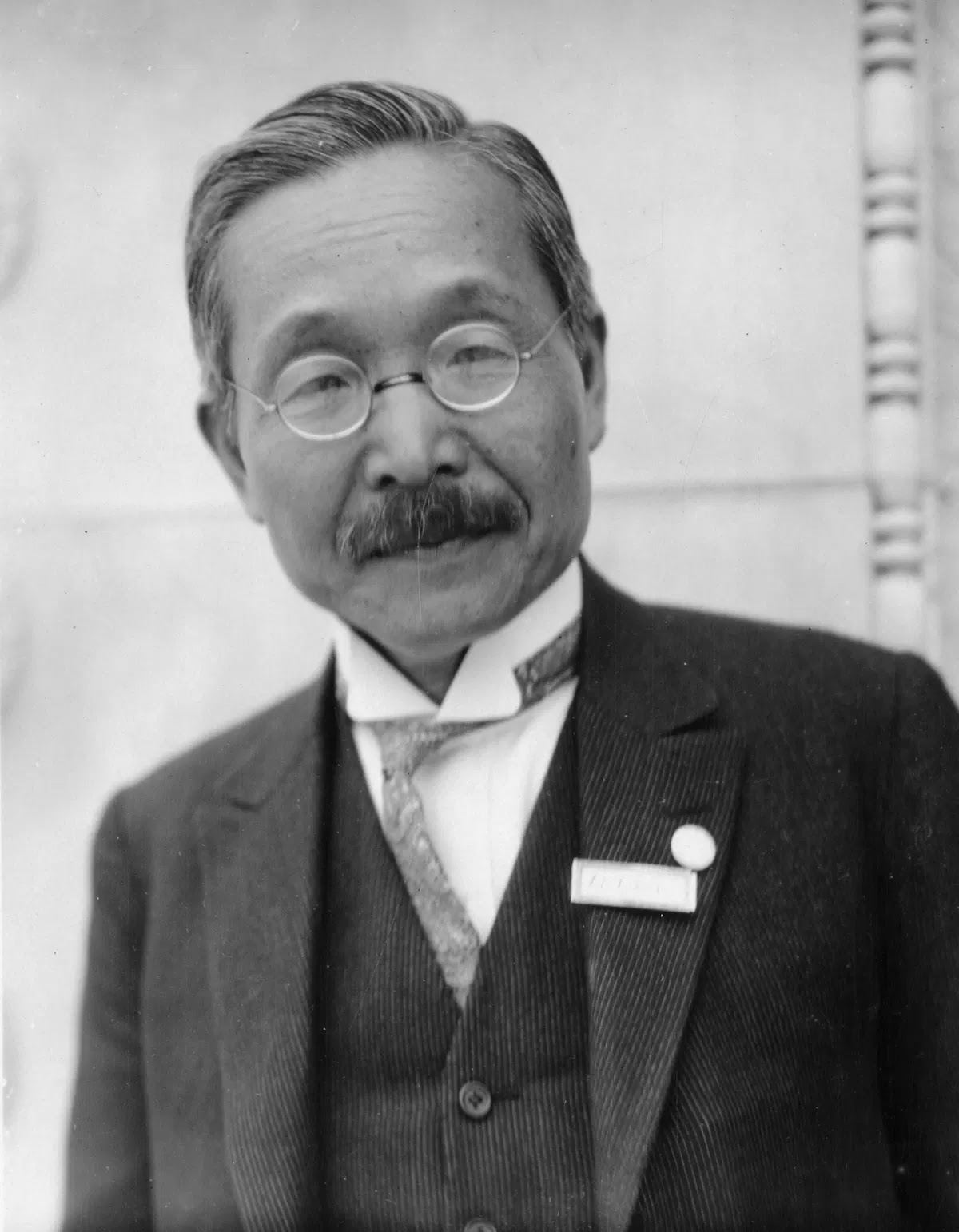
The fateful day was one evening in 1907. While tasting the kelp broth his wife had prepared, he suddenly encountered a new sensation on his tongue that he had never felt before. It was a fifth taste that was neither sweet, salty, sour, nor bitter. “What’s the secret to this broth?” he asked, to which his wife simply replied that it was made from kelp. At that moment, the ordinary dinner table transformed into the site of a great discovery.
The Birth of ‘Umami’ and the Beginning of ‘Ajinomoto’
Professor Ikeda rushed to his laboratory to delve into the components of kelp. After arduous research boiling and reducing numerous kelps, he finally discovered that the source of this unique taste was an amino acid called ‘glutamic acid’. He named this new taste ‘umami (うまみ, 감칠맛), derived from the Japanese word ‘umai (うまい)’, meaning ‘delicious’.
Not stopping there, he successfully combined glutamic acid with sodium to create a stable, water-soluble white crystalline substance. This was the world’s first L-glutamate sodium, MSG (Monosodium Glutamate).
His dream was to allow everyone to enjoy delicious food through this ‘umami’. In 1909, he partnered with a businessman to launch ‘Ajinomoto (味の素)’, meaning ‘Essence of Taste’. Ajinomoto quickly dominated Japanese dining tables, and Professor Ikeda Kikunae would later be recognized as one of Japan’s top ten inventors.
A Bold Challenge by a Korean Entrepreneur
A Determination Sprouting from Ruins
Time passed to the 1950s, in a South Korea still healing from the scars of war. The market was dominated by various foreign products, especially Japanese ones. Among them, Ajinomoto, which had captivated our taste buds since the Japanese colonial period, was being sold secretly at exorbitant prices, many times the cost of rice.
There was a young entrepreneur who watched this situation with regret. His name was Lim Dae-hong. He would later become the founder of the Daesang Group, and he made a resolution: “We will create domestic seasoning with our own hands and capital.” His determination was not merely a business ambition but a passionate patriotism aimed at removing the remnants of colonialism and achieving economic independence.
A Desperate Struggle for Technology
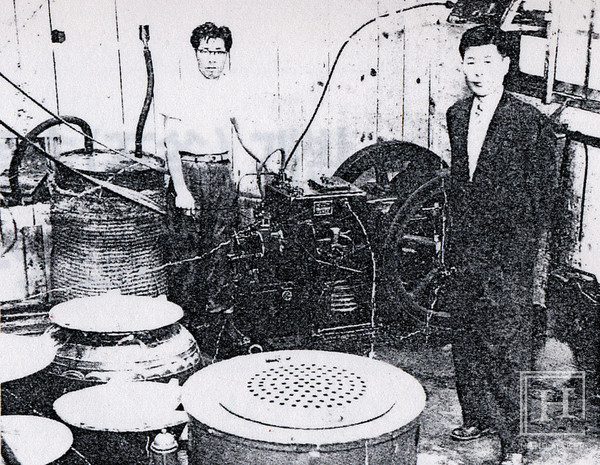
In the spring of 1955, he crossed over to Osaka, Japan, and got a job as a laborer in a seasoning factory. It was a time when formal technical partnerships were out of the question. He endured the disdain and humiliation of the Japanese while learning the manufacturing process over their shoulders. This was less about being an industrial spy and more about a desperate struggle of a man who had thrown everything away for his country.
After mastering the core technology in a year, he returned and in 1956, finally created South Korea’s first domestic seasoning in a small factory in Busan.
The Birth of Korea’s Legend, ‘Miwon’
He named the product ‘Miwon (味元)’, meaning the essence of taste. It was a clever renaming that replaced the ‘so (素)’ in Ajinomoto with ‘won (元)’. As a symbol, he included the ‘Sinsollo’, a traditional Korean royal cooking vessel, to clearly assert our identity.
The success of Miwon was explosive. Word spread that “just a little makes the taste incredibly better,” leading merchants across the country to line up in front of the factory. Miwon quickly displaced Ajinomoto and became an essential item in every household, symbolizing the post-war industrial revival of Korea.
The Seasoning War: When Gold Rings and Sweaters Fight
The Rise of Giants, the Prelude to War
In 1963, when Miwon reigned as the absolute leader, a massive shift occurred in the market. The then sugar giant Samsung Group’s Cheil Jedang (now CJ CheilJedang) launched ‘Miphung (美豊)’, challenging Miwon. This marked the beginning of the most intense ‘seasoning war’ in the history of the Korean food industry.
The First War: The Era of Prizes and Gifts
In the 1970s, the competition between the two companies escalated into an unimaginable marketing war.
- Cheil Jedang (Miphung): “Bring us 5 empty bags and get a luxury sweater!”
- Daesang (Miwon): “We’ll give you a solid gold ring for just 1 empty bag!”
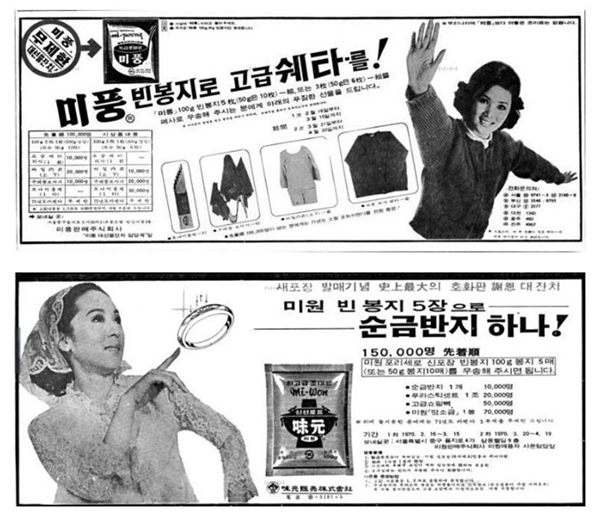
Their competition became a social phenomenon, leading to jokes like “The seasoning companies are making the post office rich.” Eventually, as the competition heated up, the government had to step in to halt the prize events.
Black Propaganda and Lee Byung-chul’s Remark
As marketing could not determine the winner, the war took a dark turn. Malicious rumors spread that “Miwon is made from snake powder ground from Taiwanese poisonous snakes.” Miwon had to work hard to clarify these claims with advertisements.
However, despite the powerful offensive from the giant Samsung, Miwon’s stronghold did not crumble. The formula ‘seasoning equals Miwon’ was deeply ingrained in the Korean palate. In reflection of this bitter defeat, Lee Byung-chul, the founder of Samsung Group, later left a legendary remark in his autobiography:
“There are three things in the world that I cannot control: my children, golf, and Miwon.”
This remark was the strongest praise proving that Miwon was not just a product but a cultural icon that dominated an era.
Wearing the Devil’s Clothes
Fear from the Other Side of the Globe
When Miwon won the first war, a massive storm was brewing from an unexpected place. In 1968, in the United States, a doctor published an experience in a medical journal stating that after eating Chinese food, he felt headaches and weakness. This symptom was named ‘Chinese Restaurant Syndrome (CRS)’, and MSG was pointed out as the culprit.
Although scientific evidence was scant, the fear spread like a virus. MSG was suddenly branded as a ‘harmful chemical additive’ overnight.
CJ’s Masterstroke: Turning Fear into Opportunity
This global fear completely overturned the landscape of the South Korean seasoning market. Cheil Jedang, which had lost in the first war, decided to change the entire market. They recognized the shift in consumer preferences towards ’natural’ rather than ‘artificial’, and ‘deep flavors like home-cooked meals’ rather than ‘simple tastes’.
In 1975, Cheil Jedang launched ‘Dasida’, a comprehensive seasoning that claimed to have the taste of beef and vegetable broth. They cleverly capitalized on the global MSG controversy, promoting it with the warm slogan of ’the taste of home’ and featuring the beloved actress Kim Hye-ja as a model, establishing the image of a ’natural and healthy seasoning’.
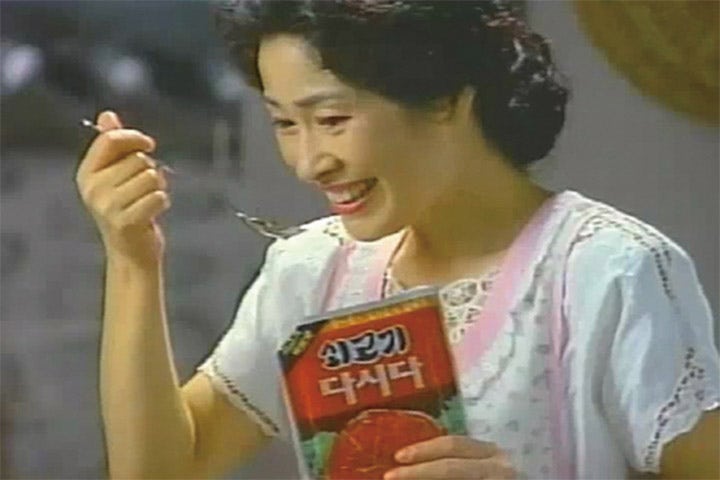
In contrast, Miwon, which was pure MSG, suddenly became synonymous with ‘chemical seasoning’ and began to be shunned.
The Dawn of a New Era
The results were dramatic. Dasida gained explosive popularity and became the new king of the seasoning market. CJ, the loser of the first war, finally surpassed its rival, riding the wave of fear surrounding MSG. The stronghold of Miwon, which Lee Byung-chul could not conquer, crumbled not under weapons but under the power of the story of ’nature versus chemistry’.
The Truth in a Pinch
For decades, MSG has been pushed into a corner of the kitchen, wrongfully accused. But science ultimately stands on the side of truth.
Many of the suspicions have been proven baseless through decades of rigorous scrutiny.
- World Health Organization (WHO) and Food and Agriculture Organization (FAO): Classified MSG as ‘a food additive that is very safe for humans’. No need to set an acceptable daily intake level.
- U.S. Food and Drug Administration (FDA): Included in the list of ‘Generally Recognized as Safe (GRAS)’ substances, like salt and pepper.
In fact, MSG contains one-third the sodium content of the same amount of salt, and when used properly, it can help reduce overall sodium intake.
Now, MSG is returning to us after passing through a long tunnel of misunderstanding. I recall my mother’s kitchen cupboard once again. The white powder sitting there was neither a dangerous chemical nor a mysterious snake powder.
It was the dream of a scientist who sought to enrich human life, the fighting spirit of an entrepreneur who wanted to protect his country’s pride, the fierce wars of corporations vying for market share, and the century-long grand drama of our complex relationship with food. That white powder was not a villain but a grand epic unfolding on our dining tables.