
How Our Small Choices Change Life and the World: The Amazing Chain Reaction
- Understand the principle that small habits can change the fate of life.
- Learn about historical cases where positive and negative butterfly effects have actually changed the world.
- Discover specific ways to create positive chain reactions in daily life.

What small choice started your day this morning? The decision to sleep for five more minutes or the act of making your bed could be the beginning of a butterfly effect that changes your entire life, or even the fate of the world. The term ‘butterfly effect’ originated from meteorologist Edward Lorenz’s question, “Can the flap of a butterfly’s wings in Brazil set off a tornado in Texas?” This concept illustrates how our small actions can lead to astonishing results. Let’s explore real stories of how our small actions can create remarkable outcomes.
The Butterfly Effect of Habits Awakening the Giant Within
The most immediate result of our actions appears in ‘myself.’ A great destiny is ultimately the result of countless small choices accumulated over time.
Small Successes That Shape Me: Making the Bed
17th-century poet John Dryden said, “We first make our habits, and then our habits make us.” According to author Tim Ferriss, who studied successful people, they all had the small habit of making their beds carefully in the morning.
This act goes beyond simply cleaning the room; it is a ritual that starts the day with discipline and successful task completion. The experience of such small successes empowers one to maintain a positive attitude throughout the day.

The Miracle Created by a Glass of Milk: The Story of Howard Kelly
There is also an inspiring true story of how a small act of kindness changed a person’s life and returned as a huge wave of impact. This is the story of Dr. Howard Kelly.
As a poor student working to pay for his tuition, he once asked a girl for a glass of water when he was exhausted from hunger. However, seeing his weary face, the girl offered him a glass of milk instead. She conveyed her mother’s teaching: “Do not expect a reward for kindness.”

Decades later, Kelly, now a renowned doctor, treated a middle-aged woman suffering from a rare disease. Upon recognizing her as the girl from his past, he poured all his efforts into saving her life. The woman, who was disheartened by the enormous hospital bills, received a note instead of a bill.
“All is paid for with a glass of milk.”
This story illustrates that the results of good deeds do not simply return in a one-to-one manner. The girl’s kindness, compounded with Kelly’s efforts and expertise, amplified into the incomparable value of ’life’ decades later. This is a vivid example of how positive butterfly effects manifest in human relationships.
The Positive Butterfly Effect Changing Society
An individual’s actions can spread beyond the individual to create real social change.
The Miracle of Guro Station: A Post-it Note of Empathy
In 2016, a tragedy occurred at Guro Station in Seoul when a 19-year-old part-time worker lost his life while repairing a screen door. Amid the social outrage, the beginning of change was not a grand slogan but rather a single memorial post-it note left by an unknown citizen at the accident site.
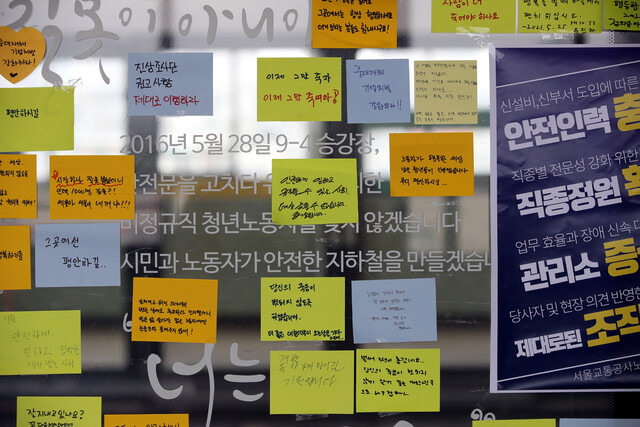
This small action became a powerful catalyst, prompting participation from passing citizens. A single note soon turned into a massive wall of memorial messages. This ‘visible empathy’ drew the attention of the media and the Seoul city government, preserving a tangible record of the shared conscience of our society.
Modern Small Practices: From Bottle Caps to Positive Comments
- Plastic Bottle Cap Campaign: Citizens collect small bottle caps that are difficult to recycle and contribute to solving real environmental issues by upcycling them into new products.
- ‘Positive Comment’ Movement: This movement, which encourages leaving comments that provide courage and hope against the culture of malicious comments, has had measurable impacts in reducing school violence and changing online culture.
The power of these movements lies in their ‘visibility.’ An individual’s action creates a strong social signal of “You are not alone,” leading to greater participation, showcasing the essence of social butterfly effects.
The Negative Butterfly Effect Leading to Catastrophe
However, not all butterfly effects are positive. Small mistakes and careless decisions can accumulate and spiral into unimaginable disasters.
The Chernobyl Disaster: A Chain Reaction of Small Mistakes
The Chernobyl disaster, the worst nuclear accident in human history, was not the result of a single mistake but rather a tragic explosion of numerous small errors.
- Initial Flaws: There were seeds of tragedy in the design flaws of the reactor itself (instability at low power, contradictions in the emergency stop system).
- Cascading Mistakes: The inexperienced night shift crew proceeded with the experiment, ignored basic safety protocols, and disabled several key safety devices.
- Catastrophic Outcome: In an uncontrolled state, the operators pressed the emergency stop button, which instead triggered an explosive increase in nuclear reactions.
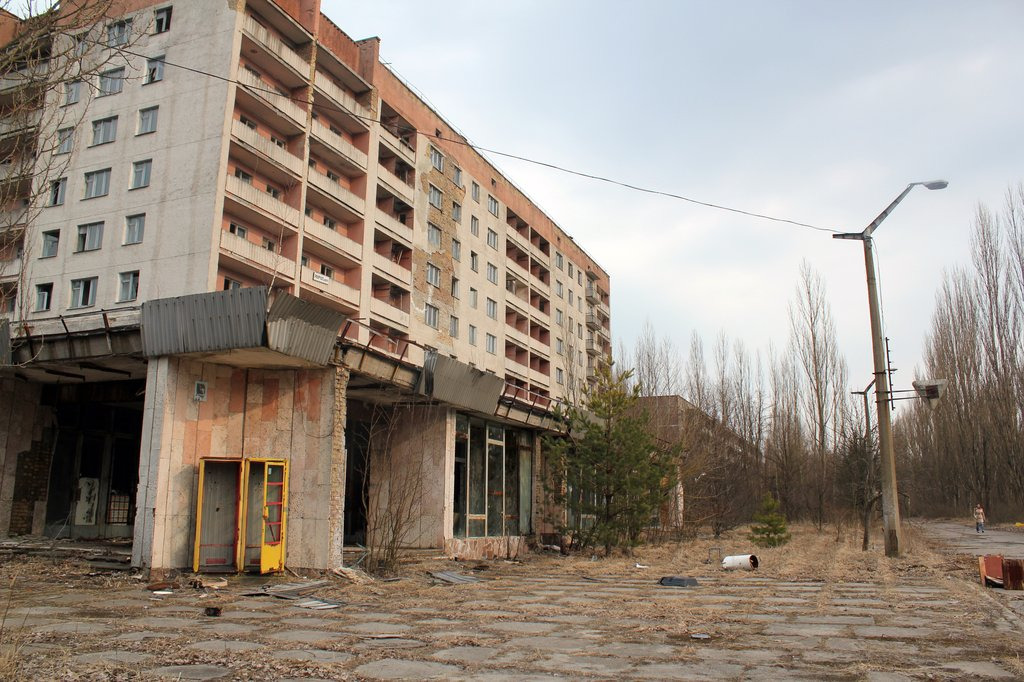
Such a massive disaster occurs not from one big mistake but when several seemingly unrelated small vulnerabilities interact in unexpected ways and amplify exponentially.
The ‘No’ That Saved the World: The Weight of Decisions
There is also a story that starkly contrasts with Chernobyl. In a system heading towards destruction, a single decision of ’not acting’ saved the world.
Stanislav Petrov: The Man Who Prevented Nuclear War
In 1983, at the height of the Cold War, Soviet Air Defense Colonel Stanislav Petrov was monitoring the nuclear attack early warning system. One night, the system sounded an alarm indicating that it had detected five nuclear missiles launched from the United States.
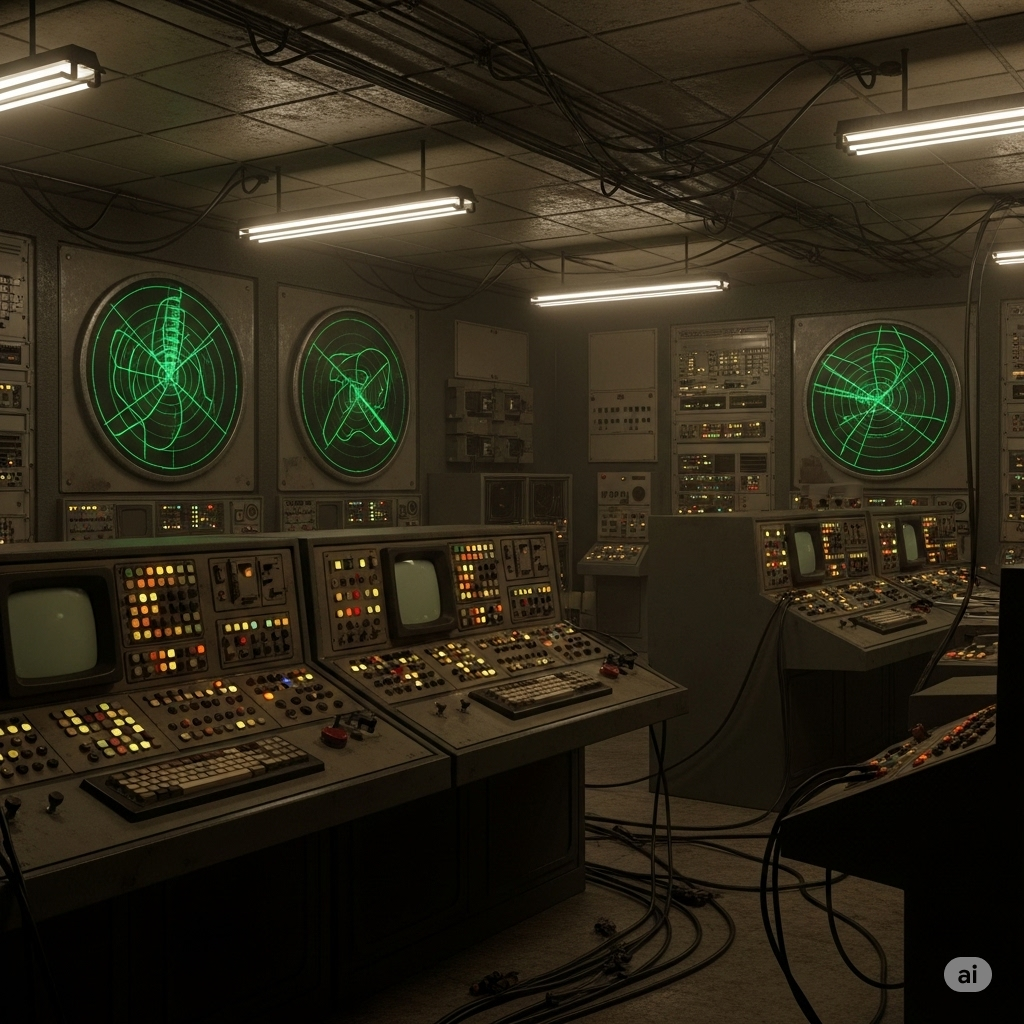
According to protocol, he was required to immediately report to superiors and initiate nuclear retaliation procedures. However, he hesitated. ‘If the U.S. were to launch a preemptive strike, they wouldn’t start with just five missiles,’ his human intuition clashed with the absolute certainty of the computer.
He defied all regulations and reported to his superiors that it was a ‘system malfunction’ rather than an attack. His judgment was correct. The alarm was a false positive caused by sunlight reflecting off clouds, misinterpreted by the satellite. His courage to decide to ‘do nothing’ through critical thinking, rather than blindly following a faulty system, saved humanity from the brink of nuclear war. This stands in stark contrast to the tragedy of Chernobyl, where blind adherence to a flawed system led to disaster.
Comparison: Positive vs. Negative Butterfly Effects
| Category | Positive Butterfly Effect (Guro Station Post-it) | Negative Butterfly Effect (Chernobyl Disaster) |
|---|---|---|
| Start | A citizen’s voluntary and small expression of empathy | A latent design flaw in the system |
| Process | Voluntary participation and spread among other citizens | Cascading mistakes such as ignoring regulations and disabling safety devices |
| Outcome | Formation of social solidarity and inducing real change | The worst nuclear disaster in human history |
| Core | Positive feedback loop through visibility | Simultaneous failure of multiple safety devices |
Checklist: Creating Positive Butterfly Effects in Daily Life
- Start the day with small successes: Try achieving very small goals, like meditating for five minutes or making your bed in the morning.
- Consciously spread kindness: Offer a warm cup of coffee to a colleague without expecting anything in return, or leave encouraging comments online. I have also experienced how a small act of kindness, like yielding a step during a busy commute, returned as a bright smile from the other person, making my day better.
- Think and act once more: Before making impulsive criticisms or decisions, ask yourself, like Petrov, ‘Is this the best course of action?’ Sometimes, not acting can be the best action.
Conclusion
We have confirmed the immense potential of small actions. Are you curious about what results your choices might bring?
-
Key Summary:
- An individual’s fate begins with small habits: Simple actions like making the bed create a successful day and a positive attitude towards life.
- Positive actions change society: A single post-it note or a positive comment can gather to form a powerful social solidarity and induce real change.
- Moments of decision can change the world: The cascading mistakes of Chernobyl and Petrov’s conscious ‘inaction’ illustrate how crucial each of our decisions can be.
The future is not predetermined. It is shaped by our small choices and actions in every moment. The flap of a butterfly’s wings is in your hands. What kind of weather will you create today?
References
- Butterfly Effect in Daily Life Brunch
- Butterfly Effect Wikipedia
- Butterfly Effect Namu Wiki
- [Curious S] The Origin of the ‘Butterfly Effect’ from Chaos Theory YTN Science
- [Column] A Small Habit Can Change Your Life Brain Media
- Episode 1: Small Habits Determine Life Brunch
- Changing the World with ‘Small Kindness’ Rather than ‘Great Revolutions’ Korea Economic Daily
- Following Guro Station, ‘Post-it Memorial’ at Guro Station… The 2030s are Moving JoongAng Ilbo
- Candlelight → Yellow Ribbon → Post-it… The Evolution of Tools for Empathy Newsis
- Post-it Memorial: “Empathy for Inequality” Biz Korea
- Guro Station Victim’s Memorial Post-it Moves to Seoul City Hall Hankyoreh
- [Upcycling & Recycling] Bottle Caps Turned into ‘Whistles’… Trash Reborn as Self-Defense Products News Can
- Carbon Neutral Practice Bottle Cap Stamp Collection Campaign Jeonju Volunteer Center
- Positive Comment Movement Official Website
- It’s Time to Be Firm Against Malicious Comments! The Reason Min Byung-cheol Started the Positive Comment Movement YouTube
- “Don’t Be Discouraged, Stay Strong”… The ‘Miracle of Positive Comments’ Tackles School Violence Segye Ilbo
- Chernobyl Nuclear Power Plant Accident Wikipedia
- [Uljin Times] Special Feature/ 1. Analysis of the Causes of the Chernobyl Nuclear Power Plant Accident Uljin Times
- Stanislav Petrov U.S. National Park Service
- The Hero Who Saved Humanity from Nuclear War, Former Soviet Colonel Petrov, Dies at 77 Chosun Ilbo
- Stanislav Petrov Wikipedia
- How Stanislav Petrov Saved The World From Nuclear War All That’s Interesting
- The Hero Who Prevented Humanity’s Destruction from Nuclear War, ‘Colonel Stanislav Petrov’ YouTube
- The Man Who ‘Saved the World’ from Nuclear War Passes Away Hankyoreh