
The Great Paradox of a Small Seaweed
What is the first side dish you reach for when you open your lunch box? Many of you might think of the black, salty ‘seaweed.’ This small seaweed, which has been a humble side dish for a long time, has now become the ‘black semiconductor of the sea,’ recording over 1 trillion won in annual exports as it traverses the oceans worldwide. Can you believe it?
This amazing story is not just about a lucky success myth. It contains a grand epic of a thousand years of wisdom, a scholar’s keen observation, technological innovations that tamed the sea, and marketing magic that transformed ‘black paper’ into a ‘healthy snack.’ Shall we follow the great chronicle of seaweed, which has evolved from a royal gift to a global snack?
Ancient Whispers: From Royal Tribute to the Birth of Wisdom
The Gem on the King’s Table
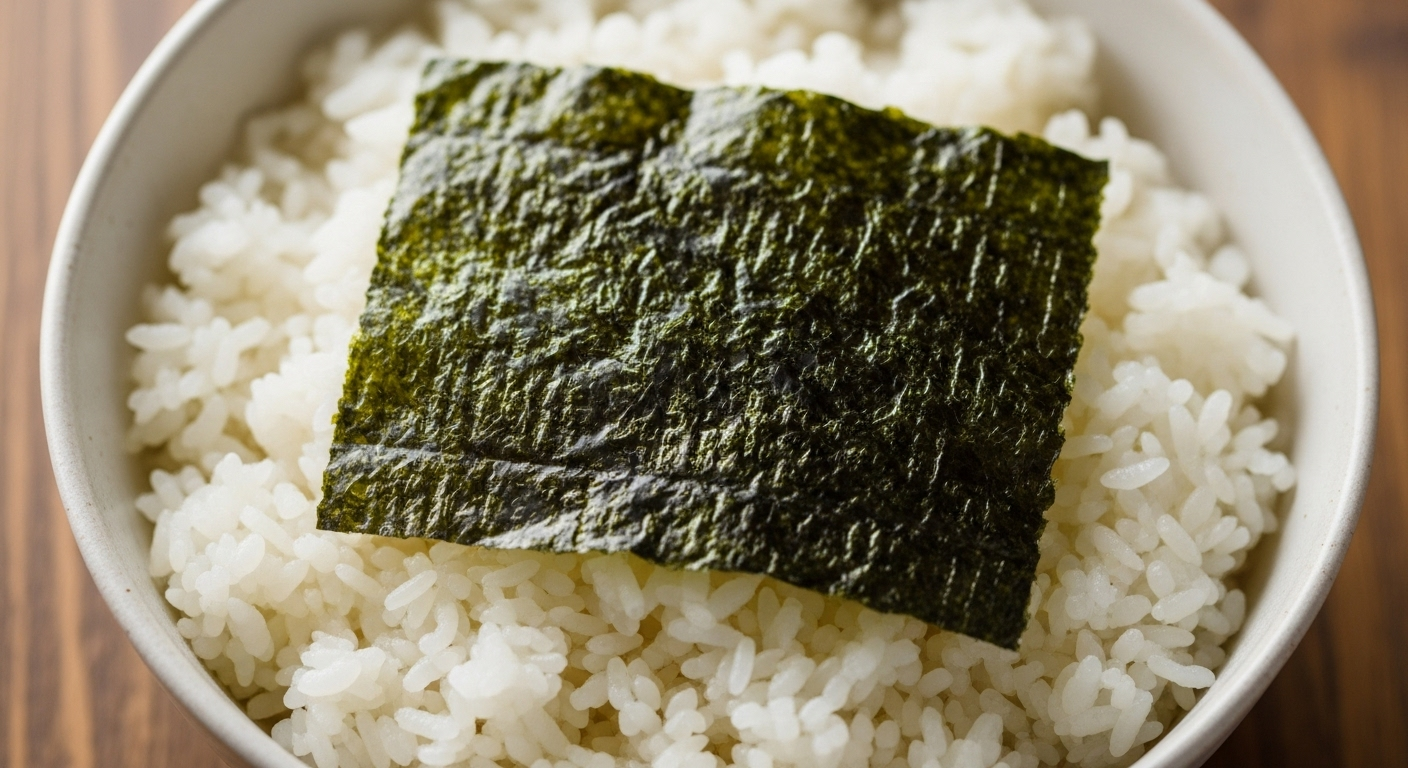
The first appearance of seaweed dates back to the distant Silla period. According to the “Samguk Yusa,” seaweed was a precious gift used only for royal weddings. It was never a food that anyone could taste from the beginning. By the time of the Joseon Dynasty, its value was beyond imagination; the “Annals of King Hyojong” records that the price of 100 sheets of seaweed was equivalent to 20 bolts of cotton. Considering that cotton was used like currency at the time, a single bundle of seaweed might have been worth the price of a house. Thus, the first value of seaweed was simply its ‘scarcity.’
Scholar Kim Yeo-ik: Taming the Sea
As time passed to the mid-17th century, there was a scholar in Joseon who bore the scars of war. His name was Kim Yeo-ik (金汝翼). Disappointed with the realities of the country, he moved to the quiet seaside village of Gwangyang Taeindo. He was not just a scholar who sat at his desk reading books; he was a practical thinker pondering, “How can the people live better?”
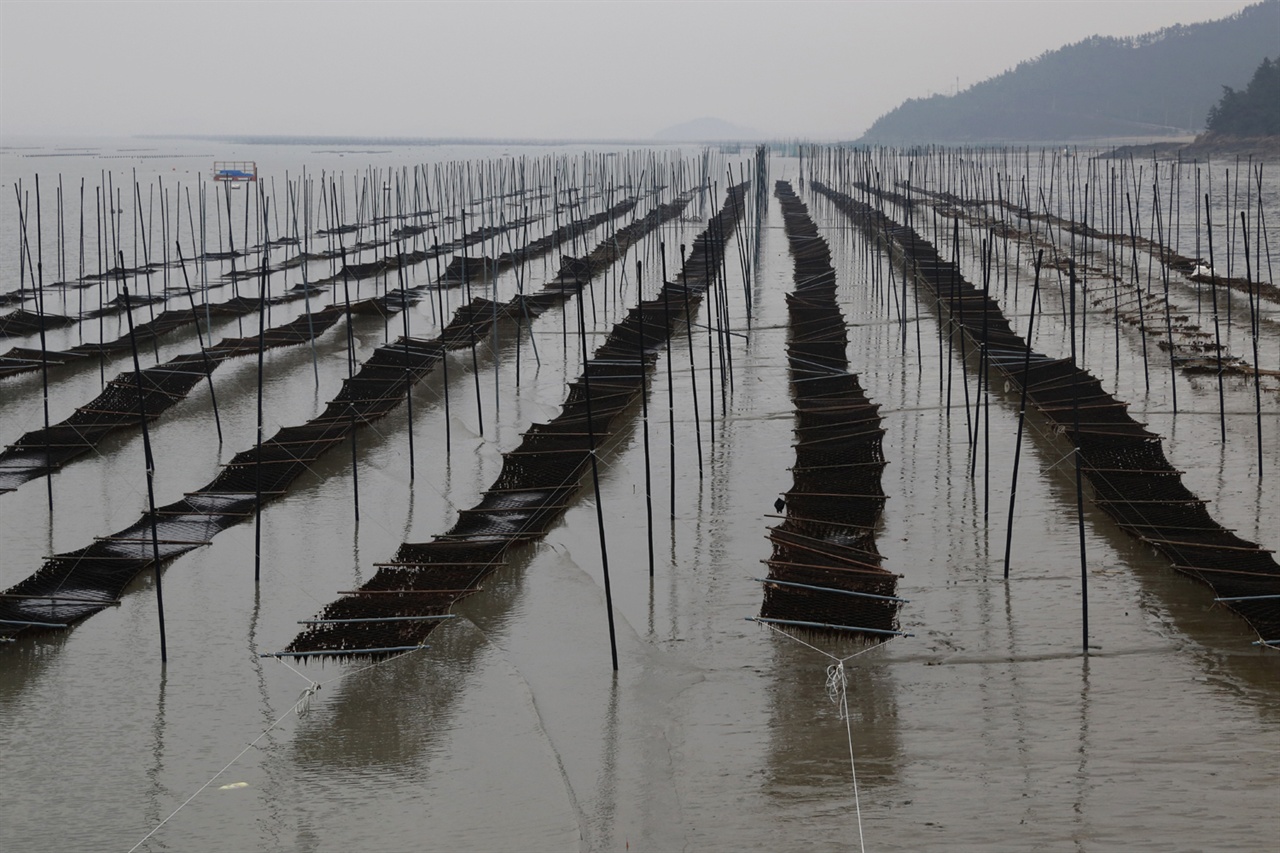
One day, he discovered black and delicious seaweed clinging to a chestnut branch floating in the sea. “Why does seaweed thrive only on this branch? Can we obtain it not by chance but by design?” This small question marked the beginning of great innovation. In 1640, he created a ‘sea farm’ by densely planting bamboo and chestnut branches in the tidal flats, allowing seaweed to naturally attach and grow. This was the beginning of humanity’s first seaweed cultivation, now known as ‘stake farming.’
The finest seaweed produced by Kim Yeo-ik made its way to the king’s table. When King Injo, impressed by its taste, asked his minister for the name of this seaweed, he was told it was made by a man named Kim from Gwangyang, and thus the king named it ‘seaweed’ on the spot. This was the moment when one person’s practical thinking transformed the sea into a field of cultivation and left his name in history.
A Quiet Revolution: Taming the Sea and Becoming an Industry
Two Methods, Two Secrets of Flavor
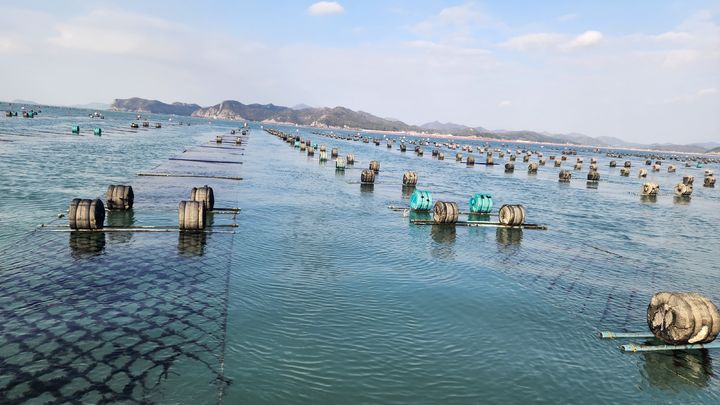
The ‘stake farming’ initiated by Kim Yeo-ik resembles the artisan methods that have continued for centuries. By driving stakes into shallow tidal flats and hanging seaweed nets, the seaweed grows slowly, exposed to sunlight and sea breeze twice a day during low tide. In this process, impurities are washed away, and nutrients are concentrated, resulting in premium seaweed with a chewy texture and rich flavor.
| Feature | Stake Farming (Traditional Method) | Floating Farming (Modern Method) |
|---|---|---|
| Location | Shallow tidal flats | Deep sea |
| Environment | Exposed to sunlight/wind twice a day | Submerged in seawater 24 hours |
| Productivity | Small, slow growth | Large, fast growth |
| Taste/Texture | Chewy and rich flavor | Soft and tender |
| Use | Premium traditional seaweed | Popular seasoned seaweed, for kimbap |
The Industrial Ecosystem Created by ‘Automatic Dryers’
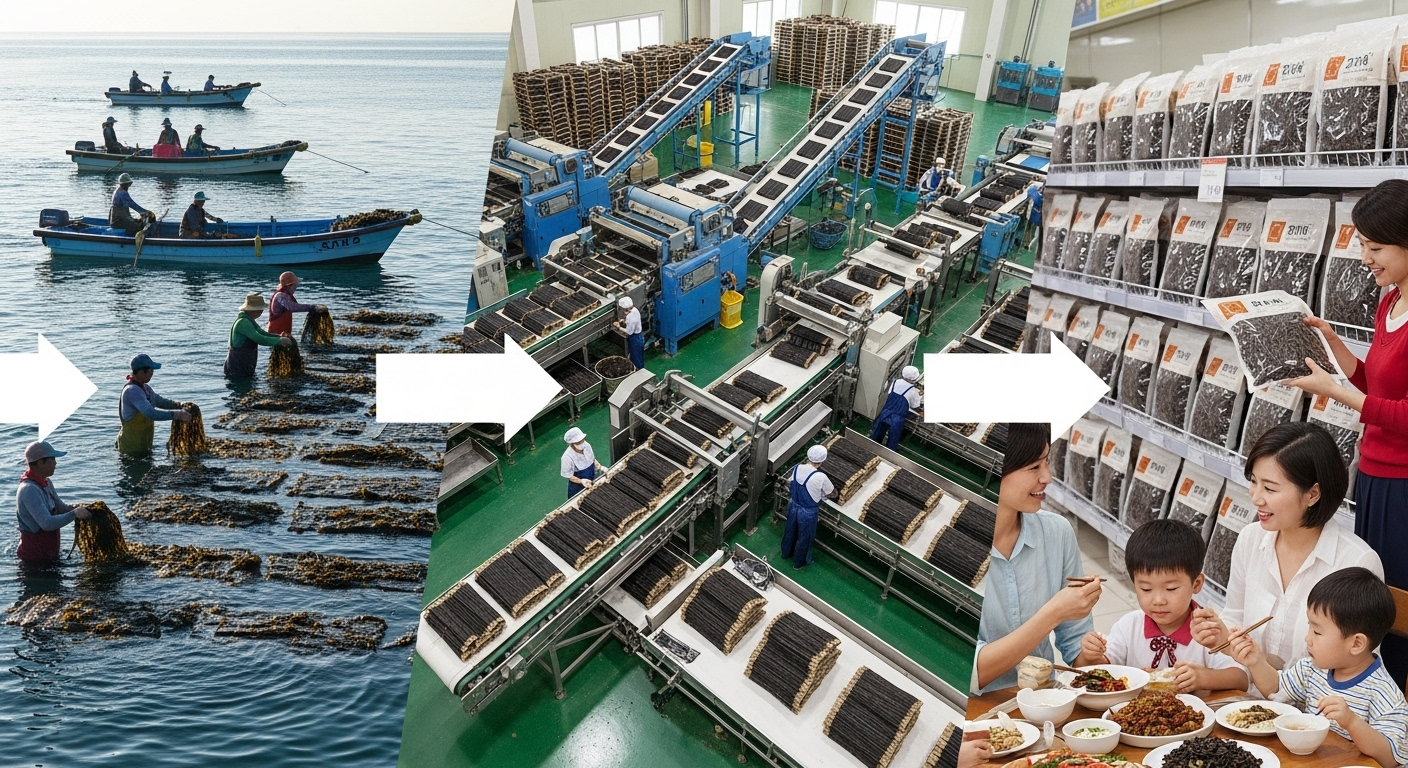
However, the true unsung hero that turned seaweed into a genuine ‘industry’ is the ‘automatic dryer’ that emerged in the late 1970s. This machine solved the laborious process of drying seaweed in the sun, which fishermen had to do manually until then.
The Global Market Conquest of a Small Seaweed
From ‘Black Paper’ to ‘Wellness Superfood’
Having conquered the domestic market, seaweed ventured into the wider world, but the beginning was rocky. To Westerners, seaweed was just an unidentified ‘black paper.’ The secret to overcoming this barrier was a remarkable shift in perspective: “Let’s make it a healthy snack enjoyed on its own, not just a side dish!”
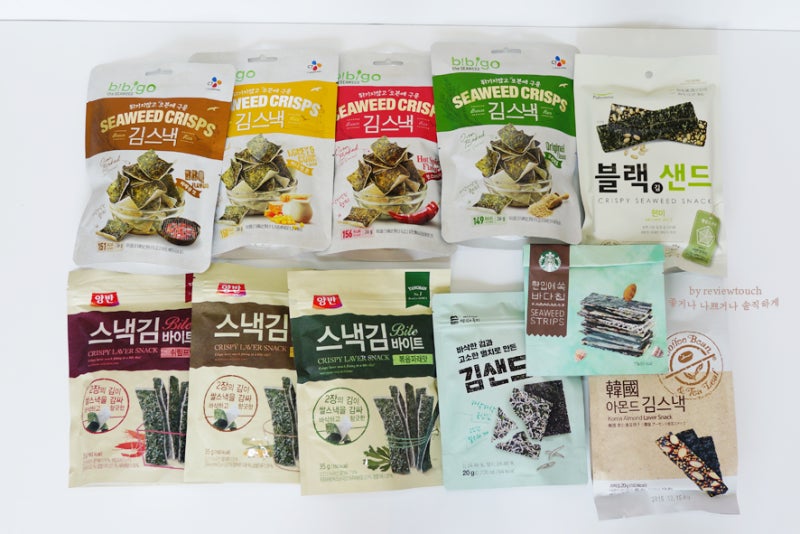
Seaweed is low in calories, gluten-free, and rich in vitamins, minerals, and protein, making it the ‘vegetable of the sea.’ When this ‘health’ keyword met the Western wellness trend, something magical happened. ‘Gimme Seaweed,’ founded by a Korean-American, received USDA organic certification and flavored the seaweed with familiar tastes like teriyaki and chili lime. It positioned itself as a crispy, healthy snack that children love, opening parents’ wallets. The essence of seaweed was preserved, while packaging, flavor, and storytelling were thoroughly localized, making the strategy successful.
Capturing the Tastes of the World
Now, seaweed is loved in different forms on the tables of various countries.
| Country | Main Consumption Form | Preferred Product Type | Market Approach Strategy |
|---|---|---|---|
| USA | Snack | Seasoned seaweed, seaweed snacks | Wellness trend, low-calorie/gluten-free marketing, localized flavor development |
| Japan | Cooking ingredient | Dried seaweed, seaweed for kimbap/sushi | Targeting the B2B market for triangle kimbap, lunch boxes, etc. |
| China | Cooking ingredient & snack | Dried seaweed (bulk), seasoned seaweed for snacks | Emphasizing the quality competitiveness of Korean raw materials, targeting the youth snack market |
| Europe | Snack | Seasoned seaweed, seaweed snacks, seaweed chips | Utilizing K-content, emphasizing natural/sustainable food image |
In the USA, seaweed is consumed as a healthy snack replacing potato chips; in Japan, it is an essential ingredient for making triangle kimbap and sushi; in China, it is consumed as high-quality cooking ingredients and snacks for the younger generation. Having captured the tastes of people worldwide, seaweed has finally achieved the remarkable record of 1 trillion won in exports for two consecutive years, solidifying its status as the ‘semiconductor of the sea.’
Challenges Towards a Sustainable Future
The Great Threat of Climate Change
However, behind this glamorous success lies a dark shadow: the global threat of ‘climate change.’ The success of seaweed cultivation hinges on ‘water temperature,’ and as ocean temperatures continue to rise, seaweed is increasingly unable to grow properly and is prone to disease. Over the past 55 years, the surface temperature of our seas has risen by about 1.36 degrees, leading to a decline in seaweed production year after year. The traditional methods that relied on nature have hit their limits.
Future Alternatives: Cultivating Seaweed on Land
In the face of this crisis, Korean companies and the government are preparing for yet another innovation: cultivating seaweed ‘on land’ rather than in the sea. They aim to create an environment identical to the ocean in a massive tank isolated from the outside, allowing for the production of clean and uniform quality seaweed year-round, regardless of weather, season, or pollution.
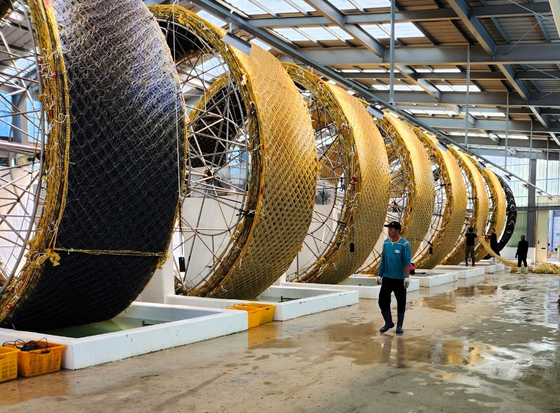
Domestic food giants like CJ, Dongwon, Daesang, and Pulmuone have already jumped into this future technology, engaging in fierce development competition. This represents a massive shift in the paradigm of seaweed production from ‘agriculture’ reliant on nature to ‘manufacturing’ with perfect environmental control.
New Challenges and Tasks
Of course, land farming is not a panacea. There are many challenges to solve, including enormous initial investment costs, land acquisition issues, and environmental problems caused by wastewater from the farms. Additionally, social conflicts with traditional fishermen who have lived with the sea all their lives must also be resolved wisely.
Conclusion: The Great Questions Posed by a Small Seaweed
Through the chronicle of seaweed, we have seen how a small piece of seaweed has evolved and changed its value according to the demands of the times. If the value in the Joseon era was ‘scarcity,’ in the 20th century it was ‘convenience’ and ‘culture,’ and in the 21st century, it has donned new garments of ‘health’ and ‘industry.’
None of this was a coincidence. It was made possible by the practical spirit of Kim Yeo-ik, who sought to understand nature scientifically, the maximization of efficiency through industrial division of labor, and the bold rebranding strategy that aimed for the global stage.
Now, seaweed stands before the great wave of climate change. While preparing a new ship in the form of land farming, that voyage will not be smooth either. For the myth of the ‘black semiconductor’ to continue, we must remember the wisdom of tradition while tackling these complex issues with the spirit of innovation that was unafraid in the past. The story of this great gift from a small piece of the sea will continue to move towards the next chapter.