
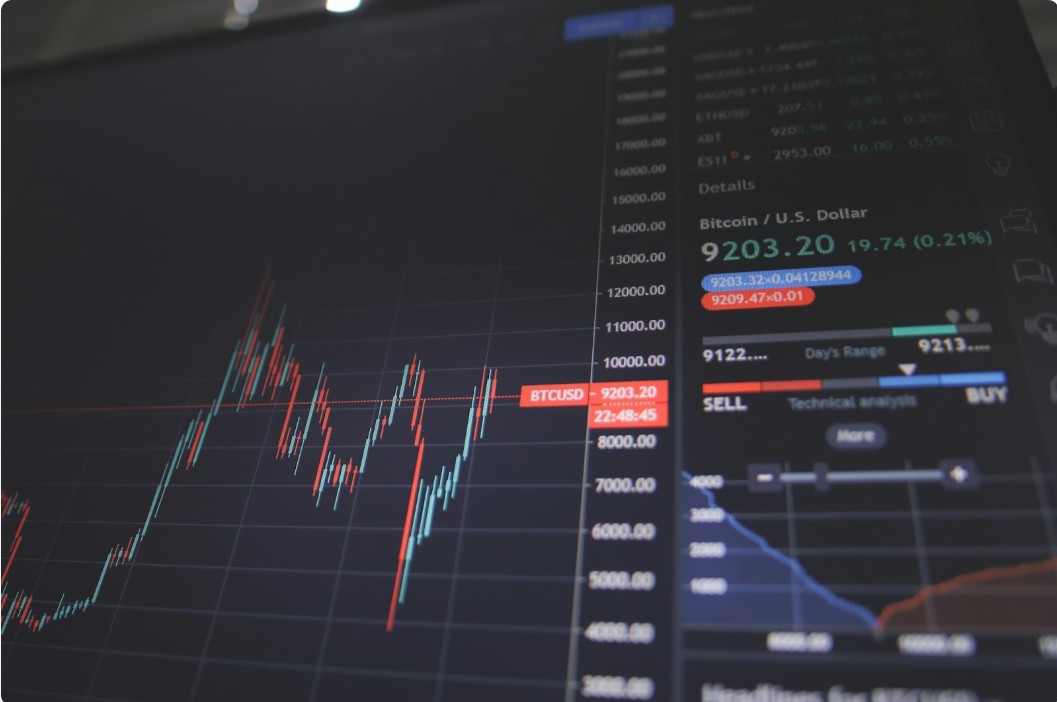
Have you ever created a “perfect” investment plan, only to panic and sell everything when a market crash occurred? Honestly, I have. My mental spreadsheet was screaming, “This is an opportunity!” but my heart was pounding, and my fingers were reaching for the sell button – that sense of betrayal… It truly is a sad cliché that repeats itself in financial markets.
When we look at people who are good at investing, they all seem intelligent and analytical. So why is the outcome so varied?
Perhaps the answer lies in what the investing sage, Morgan Housel, says in “The Psychology of Money.” “Being reasonably good is better than being perfectly rational.” What does that mean? It means that a strategy that is slightly more relaxed, one that acknowledges our human weaknesses and can be consistently followed in any situation, ultimately wins over a mathematically perfect strategy.
Perhaps your investment struggles weren’t due to a lack of analysis, but rather because you pursued “rationality” too perfectly. Now, let’s put aside the troublesome spreadsheets for a moment and start talking about the real investment psychology for our minds.
Why Can’t We Stick to Our Plans? 🤔
In traditional economics textbooks, there’s a character called “Homo Economicus.” This is a human who always acts perfectly rationally for their own benefit, like… an AI. Your investment plan is likely the work of this character.
But what about us in reality? Just like a gym membership canceled at the start of the new year, we easily abandon our plans when faced with immediate gratification or momentary fear. In the world of money, these emotional waves are much stronger.
🔖 Psychology You Should Know: Loss Aversion As leading behavioral economists have revealed, humans feel the pain of losing $1,000 about **2.5 times** more intensely than the joy of gaining $1,000. When you’re making a profit, you might think, “Hmm, nice,” but when you incur a loss, it feels like the world is ending – this is precisely why.
These psychological traits lead us to make the worst choices when the market is volatile.
- Anchoring: We become fixated on the price at which we bought, unable to sell due to the thought of breaking even, only to suffer.
- Herding: When others are selling, we get anxious, thinking, “Is there something I don’t know?” and follow suit.
- Confirmation Bias: During a downturn, we seek out only negative news, rationalizing our fear by thinking, “See, I was right.”
Ultimately, what we need isn’t an F1 racing car (a perfect strategy), but a sturdy four-wheel-drive truck (a reasonable strategy) that can steadily keep moving forward on any unpaved road or in any storm.

The Divergent Fates of Two Investors 👥
To truly grasp the power of “reasonableness,” it’s best to consider a hypothetical story. Here are “Rational Ron” and “Reasonable Rachel.”
| Category | ‘Rational’ Ron | ‘Reasonable’ Rachel |
|---|---|---|
| Occupation | Fund manager with a degree in Financial Engineering | Ordinary elementary school teacher |
| Investment Philosophy | Maximizing returns based on mathematical models | “The best investment is one that lets me sleep at night.” |
| Portfolio | Tech stocks/Emerging market stocks + Leverage (very high risk) | 70% Global Index Funds + 30% Bond Funds (medium risk) |
| Pandemic Crisis | Account dropped by -50%, panicked and sold everything at the bottom. | Defended at around -20% thanks to bonds. Maintained automatic investments according to principles. |
| Outcome | Missed the entire V-shaped recovery, suffered irreversible losses. | Steadily grew assets with market rebound, eventually surpassing Ron’s assets. |
Ultimately, Ron’s failure wasn’t due to a lack of skill, but because he ignored his “human” emotions. Rachel’s success, on the other hand, wasn’t due to her ability to predict the market, but because she acknowledged her weaknesses and established psychological safety nets.
Your Brain vs. Algorithms 🤖
Let’s be honest. The modern financial market is a brutally unfair playing field for individual investors.
The opponents we have to fight are, in reality… not human. Most market transactions are made by High-Frequency Trading (HFT) algorithms that trade millions of times per second. These are traders with hearts of steel, devoid of emotions, fear, or greed. Add to this the news that bombards us 24/7, and it’s nearly impossible for an ordinary individual swayed by emotions to win a short-term game against these cold algorithms.
⚠️ Warning: Your Emotions are Algorithm Food The very moment we panic and hit the sell button, algorithms exploit that emotional wave to quietly take our money.
So what do we do? It’s simple. Don’t get into the ring to fight. Play a different game. The only and most powerful weapon individual investors have is ’time.’ By giving up on short-term prediction games and letting good assets mature for a long time with a ‘reasonably’ rational strategy, that is our only path to victory.
Building Your Unshakeable Fortress 🏰
So, how can we build a “reasonably rational” investment fortress that will protect us through any storm? There’s nothing grand about it.
💡 Principle 1: Please, sleep soundly. Before you start investing, ask yourself, “How much can I afford to lose without impacting my daily life?” Any investment that keeps you up at night is fundamentally the wrong investment. That’s the capacity of your vessel.
💡 Principle 2: Simplicity is the ultimate weapon. Complex products or strategies you can’t understand become uncontrollable monsters during a crisis. Start with simple, clear investments, like index funds that invest broadly in good companies worldwide. Simplicity acts as a strong pillar that holds us steady when we’re anxious.
💡 Principle 3: Turn off your emotion switch (feat. automation). The moment you start thinking, “Should I buy now? Should I sell?” emotions creep in. Eliminate that gap entirely. (This is the most important part. Our biggest enemy is always ‘ourselves’.)
- Dollar-Cost Averaging: Mechanically buy the same amount on the same day each month. Stop worrying about timing.
- Automatic Rebalancing: Once a year, on a set date, bring your portfolio allocation back to its original proportions. This naturally leads to selling what has become expensive and buying what has become cheap.
💡 Principle 4: Downturns are an entrance fee, not a penalty. Let’s reframe the idea of stock market declines, or ‘volatility.’ It’s not a penalty, but a ‘cost.’ If you want to earn higher returns than bank savings, you naturally have to pay the entrance fee for the volatility rollercoaster. Thinking of downturns as ‘fees for long-term gains’ will make you feel much more at ease.
[Key Takeaways from the Article] 📝
- Humans are emotional beings: We feel losses more intensely and are easily swayed by various psychological biases. Acknowledging this is the first step.
- Reasonableness beats perfection: A realistic strategy that you can consistently follow because it makes you feel comfortable ultimately wins over mathematical optimality.
- Play a different game: Don’t engage in short-term prediction battles with algorithms. You must go for the long haul, leveraging your unique weapon: ’time.’
- Build psychological safety nets: Invest at a level that allows you to sleep soundly, keep it simple, act unemotionally (automatically), and view downturns as costs.
Frequently Asked Questions ❓
Q: Can you give a specific example of a ‘reasonably rational’ portfolio? A: There’s no single right answer, but the combination recommended by Warren Buffett in his will – ‘90% S&P 500 Index Fund + 10% Short-Term Government Bonds’ – is a prime example. It’s a simple yet powerful strategy that allows most people to follow market growth without much worry. Adjusting the stock and bond ratio to 7:3 or 6:4 based on your own temperament makes it your ‘own reasonable portfolio.’
Q: Isn’t it rational to buy more when the market crashes? A: Yes, theoretically, that’s 100% correct. However, in a situation where your account has been halved, the act of ‘putting in more of your existing money’ requires immense courage. A ‘reasonable’ approach doesn’t leave this to willpower. Simply setting up ‘automatic dollar-cost averaging’ where you mechanically buy a fixed amount each month will ensure you continue buying even in moments of fear.
Believe in Your Greatest Weapon
We are not robots. We are imperfect humans who feel emotions, make mistakes, and tremble with fear. True investing begins with acknowledging that imperfection.
Your most powerful investment asset is not your eye for reading the market or complex financial knowledge. It is ‘patience’ and ‘consistency.’ And these two can only blossom on the foundation of a ‘reasonably rational’ strategy that allows your mind to be at peace.
Now, forget the numbers on your spreadsheet for a moment and find the path that brings comfort to your mind. The noisy clamor of the market will eventually fade with time. If you can walk your path steadily without being swayed by that noise, time will surely lead you to a much better place than you can imagine. I support your human, and therefore, more magnificent investment.
**References**
- Housel, Morgan. The Psychology of Money
- Kahneman, Daniel, and Amos Tversky. “Prospect Theory: An Analysis of Decision under Risk.”
- Montier, James. The Little Book of Behavioral Investing