
The Asymmetry of Our Lives Explained through the Anatomy of Collapse and the Architecture of Miracles.
- Understand why bad things happen faster and more dramatically than good ones.
- Learn how to build ‘antifragile’ systems that become stronger through shocks and failures.
- Apply the ‘Barbell Strategy’ to manage life’s risks and seize opportunities in an uncertain world.
“Good things accumulate gradually, while bad things happen suddenly due to a loss of trust or fatal mistakes.” This statement is not just a metaphor; it is a clear law that permeates our lives and the entire social and economic system. I too have experienced becoming stronger through small failures in the past. Why are success (miracles) and failure (tragedies) so asymmetrical?
In this article, I will delve into the secrets of antifragility through two lenses: ’the anatomy of collapse’ and ’the architecture of miracles,’ exploring why the walls we build through effort rise slowly while the sandcastles built by greed collapse in an instant.
Part 1: The Anatomy of Collapse - How Everything Can Fall Apart in an Instant
The Collapse of Trust: Enron, Tylenol, and the ‘5-Minute Rule’
Warren Buffett said, “It takes 20 years to build a reputation, but you can lose it in 5 minutes.” Trust is the hardest asset to build and the easiest to lose in an instant.
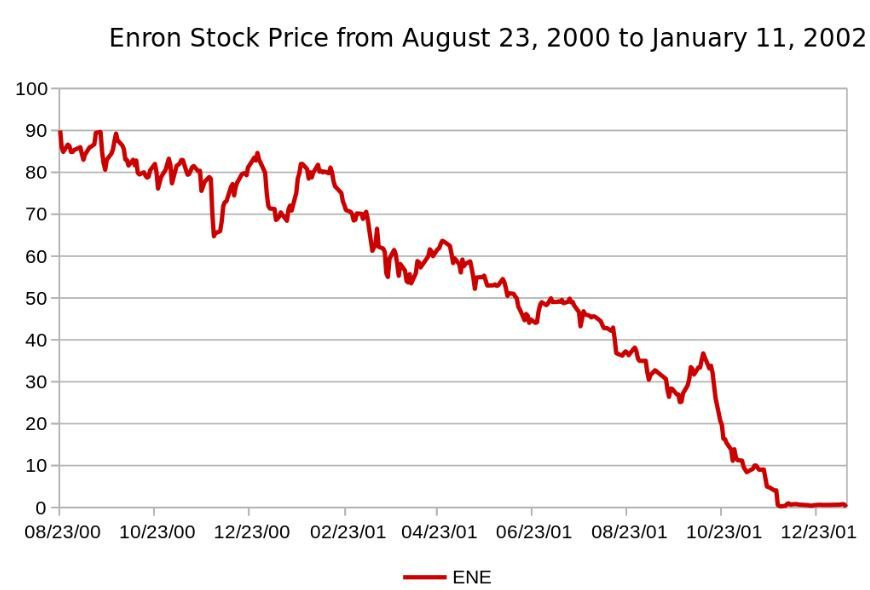
The complete demise of Enron starkly illustrates this. In 2001, the giant company Enron, ranked 7th in the U.S., declared bankruptcy in an instant as systematic accounting fraud was revealed, despite decades of built-up reputation. The more frightening aspect is the contagious nature of trust collapse. The accounting firm ‘Arthur Andersen,’ which overlooked Enron’s accounting fraud, also went bankrupt, triggering a chain reaction that destroyed the entire industrial ecosystem due to the loss of trust in one company.
In contrast, the Tylenol poisoning incident is a case of rebuilding trust in a crisis. In 1982, someone injected cyanide into Tylenol capsules, resulting in 7 deaths. The manufacturer Johnson & Johnson (J&J) recalled 31 million bottles at a cost of $100 million, prioritizing consumer trust. Thanks to this sincere response, Tylenol regained its market share within a year, demonstrating the paradox that the power to prevent tragedy ultimately comes from a slow and costly process of miracles.
The Traps of Systems: ‘Minsky Moments’ and Repeating History
Economist Hyman Minsky stated, “Stability breeds instability.” Prolonged booms lead to excessive optimism and debt, making the entire system vulnerable, and when a small shock occurs, everything collapses in a moment, known as a ‘Minsky Moment.’ The market becomes risky through the following three stages:
- Hedge Finance: The healthiest stage. Income covers both principal and interest.
- Speculative Finance: Income covers only interest. Principal requires asset sales or refinancing.
- Ponzi Finance: The most dangerous stage. Income cannot even cover interest, relying on new loans to pay existing interest.
This pattern has been repeatedly observed from the 2008 global financial crisis, the 2000 dot-com bubble burst, to the recent real estate crisis in China and the ‘crypto winter.’ While the technology and investment targets change, the underlying factors are always human collective greed and fear, along with confirmation bias that insists ’this time is different.’
The Curse of Innovation: What Kodak, Nokia, and Blockbuster Missed
Why do successful companies collapse in an instant? Harvard Business School’s Clayton Christensen explains in ‘The Innovator’s Dilemma’ that they become too rational and loyal to existing customers. By focusing solely on ‘sustaining innovation’ desired by existing customers, they can be swiftly toppled by ‘disruptive innovation.’
- Kodak: Invented the world’s first digital camera but went bankrupt after ignoring it due to fears of cannibalizing its film business.
- Nokia: Ridiculed the arrival of the iPhone and became fixated on hardware, missing the importance of the software ecosystem.
- Blockbuster: Laughed off Netflix’s acquisition offer and became complacent with offline stores and late fees, ultimately swept away by the streaming wave.
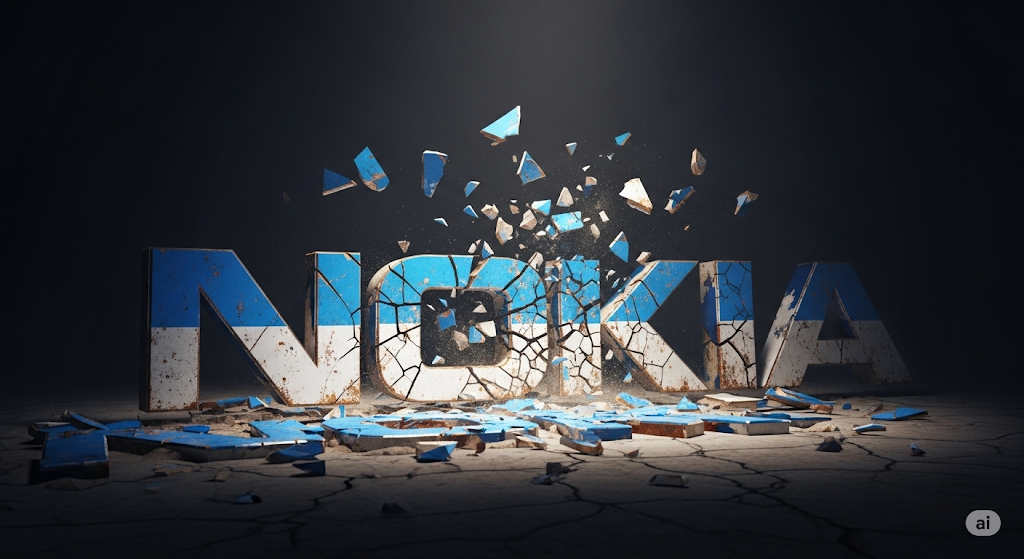
Their tragedy lies in the inertia created by long-accumulated success formulas, which ultimately led to instant tragedies due to their refusal to embrace new changes.
The Tragedy of a Single Point of Failure: A Ship Blocking the Suez Canal
Highly optimized systems are vulnerable to a ‘Single Point of Failure (SPOF)’ where a minor issue can paralyze the entire system. In 2021, when the container ship ‘Ever Given’ ran aground in the Suez Canal, 12% of global maritime traffic came to a halt. This incident illustrates the ‘paradox of efficiency.’ The global supply chain, which relied heavily on ‘Just-in-Time’ systems and critical paths for cost reduction, lost its resilience and became a fragile structure that could stop entirely due to a single accident.
Part 2: The Architecture of Miracles - How Greatness is Gradually Built
If collapse is an instantaneous event, miracles are the organic growth process that unfolds over time. How is solid value, or ‘antifragility,’ created?
The Magic of Organic Growth: Jane Jacobs and Living Cities
Urban theorist Jane Jacobs believed that truly vibrant cities are not created all at once according to a grand blueprint but grow organically like living organisms. When old and new buildings mix, diverse spaces coexist, and random encounters among people are frequent, cities generate their own vitality. This is the power of ‘spontaneous order’ created by countless ordinary people, not a ‘manufactured order’ designed by a few geniuses. True miracles arise from the process of small, diverse elements interacting over time to create complex and resilient systems.
Turning Shocks into Opportunities: How to Survive ‘Antifragile’
Nassim Nicholas Taleb categorized system properties into three types: ‘Fragile,’ which breaks under shock; ‘Robust,’ which withstands shock; and ‘Antifragile,’ which becomes stronger through shocks and stress.
Comparison/Alternatives
| Attribute | Fragile | Antifragile |
|---|---|---|
| Definition | Damaged by shocks and volatility | Gains from shocks and volatility |
| Metaphor | Glass | Hydra (grows two heads when one is cut off) |
| Real-world Example | Centralized systems, excessive debt | Human immune system, startup ecosystem |
The concept of antifragility means that unpredictable shocks, or ‘Black Swans,’ are tragedies for fragile systems but part of a larger miracle process for antifragile systems. Just as strength training (stress) makes muscles (systems) stronger, the process of being continuously exposed to and overcoming small failures is the key to long-term success.
The Inner Fortress: Dealing with Uncertainty through Stoic Philosophy
Our inner selves can also become antifragile through gradual training. The answers can be found in Stoic philosophy from 2000 years ago.
- Dichotomy of Control: Distinguishing between what we can control (our thoughts, judgments, actions) and what we cannot control (others’ evaluations, economic situations), focusing our energy only on what we can control.
- Premeditatio Malorum: Training to imagine the worst-case scenarios in advance. This acts as a ‘mental vaccination’ that reduces shock and allows for rational responses when actual misfortunes occur.
These tools align with principles of modern psychology’s cognitive behavioral therapy (CBT) and show that mental miracles are not innate but built through daily training.
Checklist or Step-by-Step Guide: The ‘Barbell Strategy’ for Your Life
Nassim Taleb proposes the ‘Barbell Strategy’ as a concrete solution for living an antifragile life. This strategy involves allocating resources and efforts to both extremes while avoiding the mediocre middle.
- Keep 90% of your assets extremely safe. Create a protective shield to ensure that the foundation of your life is not shaken by sudden tragedies, such as government bonds or deposits. Avoid mediocre choices like ‘medium risk, medium return.’ This strategy directly acknowledges unpredictable extreme risks (Black Swans), unlike modern portfolio theory, which aims for averages.
- Use the remaining 10% to challenge yourself with life-changing miracles. Take on highly potential challenges with small resources that are okay to fail. This includes startup investments, side projects, and learning new skills. In this area, small failures become an ‘antifragile’ process of learning and growth.
- Apply the barbell to knowledge and career as well. Maintain a stable job (90%) while pursuing passionate side projects (10%) in your spare time. Also, aim to be a ‘T-shaped talent’ who possesses deep expertise in one area (90%) while maintaining a broad curiosity about various fields (10%).

Conclusion
We live in an asymmetric world where tragedies can take everything away in an instant while miracles must be built slowly. To navigate this uncertainty, remember these three points:
- First, collapse occurs instantly at the system’s vulnerabilities. Loss of trust, excessive debt, and complacency in success are always seeds of tragedy.
- Second, true growth comes from the ‘antifragile’ property that becomes stronger through shocks and stress. We must view small failures as opportunities for growth.
- Third, the ‘Barbell Strategy’ is a realistic way to survive and thrive in an uncertain world. Keep most things safe and take bold challenges with a small portion.
We cannot stop the waves crashing onto the shore. However, we can choose whether to build a sandcastle that will be swept away by the waves or a brick wall that will withstand the waves and become stronger. Tragedy strikes in an instant, but the strength to endure that tragedy comes only from what has been built over a long time. What ‘antifragile’ bricks are you building in your life right now?
References
- Monthly CEO Reputation takes 20 years to build, but 5 minutes to lose
- FasterCapital Consumer Trust: How to Build and Enhance Customer Trust and Reputation
- TalentNet Ethical Awareness: Cases Emphasizing Honesty and Transparency
- Atlas News 2002 U.S. Accounting Fraud Case: The Enron Incident
- Namu Wiki Enron
- Wikipedia Enron
- Kyobo Bookstore Scholar Study on the Enron Accounting Fraud Case
- FasterCapital Arthur Andersen: The Ultimate Betrayal of Enron and Accountants
- Econotelling ‘Tylenol’ Crisis Management Lessons
- Korea Herald In 1982, during the Tylenol poisoning incident, the pharmaceutical company recalled 31 million bottles saying, “Do not take it.”
- Anti-Corruption and Civil Rights Commission The Role and Responsibility of Companies in the Era of Trust Crisis
- Le Monde Diplomatique Tylenol: The Best Drug in the COVID-19 World… What About the Past?
- Namu Wiki Tylenol Poisoning Incident
- Yonhap Infomax Minsky Moment
- Korea Economic Daily Minsky Moment
- Korea Economic Daily Minsky Moment… Excessive Debt Brings the End of a Bull Market
- Stibee Investment and Uncertainty, Minsky Moment
- Korea Economic Daily [Thousand Character Column] Hedge Funds and Ponzi Schemes
- Namu Wiki Subprime Mortgage Crisis
- Shinhan Financial Investment What Went Wrong in the Subprime Mortgage Crisis?
- Financial Services Commission Analysis and Outlook of the Subprime Mortgage Crisis
- Wikipedia Bankruptcy of Lehman Brothers
- Newsis 10 Years After Lehman Brothers’ Bankruptcy… Is the World Economy Safe?
- Hankyoreh The Rise of NASDAQ and the Nightmare of the Dot-Com Bubble
- Atlas News Dot-Com Bubble Burst: The Collapse of New Economic Theories
- Toss Bank Is It a Big Tech Bubble in the U.S.? Let’s Compare It to the Dot-Com Bubble
- Namu Wiki Dot-Com Bubble
- Wikipedia Dot-Com Bubble
- Korea Economic Daily Fears of China’s Economic Collapse Have Grown… Evergrande Files for Bankruptcy Protection
- Brunch The End of the Chinese Real Estate Bubble and Growth Model
- Yonhap Infomax After Facing the Reality of Evergrande… The Company is Selling Overseas Assets
- Le Monde Diplomatique The NFT Market, Which Plummeted by 99% and Died… Why Did It Fail?
- YouTube The Deflated NFT… “Market Maturity Process” vs. “Value ‘Zero’” Debate
- Future Korea Weekly [In-depth Analysis] Cryptocurrency Fears, Fueled by the Moon Jae-in Administration
- Asia Economy [News Term] Rising Cryptocurrency Prices… Will the ‘Crypto Winter’ End?
- News Dream [New Year Plan ①] Three Scenarios for Cryptocurrency in 2023
- Brunch Chapter 6: Investment Wisdom from Warren Buffett, the World’s Top Investor
- Asia Economy “When You Feel Fear is the Time to Buy” Warren Buffett is Indeed…
- Wikipedia Confirmation Bias
- Namu Wiki Hasty Generalization Fallacy
- Jaewook.KR [BOOK] The Innovator’s Dilemma
- YouTube Clayton Christensen’s ‘The Innovator’s Dilemma’
- IdeaScale What is Disruptive Innovation?
- Tistory Disruptive Innovation Theory
- Brunch The Fall of the Number One Company Due to Neglect and Obsession
- Open News Communication [Column by Kwon Byeong-seon] The Innovator’s Dilemma
- YouTube The Shocking Reason Kodak Went Bankrupt Despite Inventing the Digital Camera!
- YouTube ‘The Bankrupted Film Empire’ The Fall of Kodak, One of the World’s Top 5 Brands
- WEEKLY BIZ The Secret of Nokia’s Fall After Dominating the Mobile Phone Market for 14 Years
- Korea Economic Daily The Real Reason for Nokia’s Fall
- Brunch Being in a Company That Fell from Number One in an Instant – Part 2
- Reddit The $50 Million Mistake: How Netflix Destroyed Blockbuster
- Brunch Five Terrifying Moments When Netflix Almost Went Bankrupt
- Brunch The Strategy Story of Netflix, the Venture that Bankrupted Blockbuster (1)
- Cho Sung-moon’s Blog Two Companies That Look Similar but Are Completely Different: Blockbuster and Netflix
- AWS Executive Insights Amazon’s Day 1 Cultural Elements
- Brunch [Business] Jeff Bezos’ Business Philosophy as the Founder of Amazon
- Small Business News Beware of the ‘Single Point of Failure’ in the Digital Age
- Wikipedia Single Point of Failure
- Cultural Daily ‘Ever Given’ Grounding: History and Compensation of the Suez Canal
- Namu Wiki Suez Canal Ever Given Grounding Incident
- UNIST News A Completely New Perspective on Understanding Cities
- Ohmynews “Old Buildings Generate Vitality in Cities”
- Smart Cities Dive Urban Designer Series: Jane Jacobs.
- Project for Public Spaces Jane Jacobs
- Korean Geography Society A Study on Urban Origin Theory Based on Jane Jacobs’ Urban Thought
- Scribd The Theories of Jane Jacobs
- Strong Towns The 4 Rules of Fostering Good Urbanism, According to Jane Jacobs
- Brunch 2.2 Lessons for Companies Learned from a Near-Death City
- Kyobo Bookstore Small is Beautiful
- Aladin Small is Beautiful - For a Human-Centered Economy
- Wikipedia Small is Beautiful (Economics)
- Monthly Gardening [Permaculture] Designing Farms Like Gardens in the Era
- Coop e-jang Living in the Countryside with Permaculture II (1)
- Tistory [Reading Note #12] Antifragile (Nassim Nicholas Taleb)
- LIFESEEKER ‘Antifragile’ is the Reason My Life Book
- Kyobo Bookstore Antifragile
- Kang Min-seok Nassim Taleb - Antifragile
- Dev.to Decentralized AI Models vs. Centralized Systems
- Brunch Antifragile
- Yoon Soon-bong’s Library [memo] Antifragile (Antifragile). Nassim Taleb
- Namu Wiki The Paradox of Wildfires
- Hwaseong Focus [Editorial] The Paradox of Wildfires, We Must Open a ‘Path’ to Protect the Forest
- Brunch Pain That Cannot Kill Me Makes Me More Antifragile
- Korea Lecturer News Published… A Masterpiece that Completes ‘Black Swan, Don’t Be Deceived by Luck, Antifragile’
- Science Times The Paradox of Wildfires… Do Wildfires Create Healthy Forests?
- Brunch The Paradox of Wildfires
- Brunch Chapter 6: Dichotomy of Control
- Reddit Explanation of the Dichotomy of Control!
- Brunch Dichotomy of Control
- Safety First News Philosophy Story Part 16 - Distinguishing Between What I Can Control and What I Cannot Control
- Reddit “The Man Who Anticipated Coming Problems Takes Away Their Power When They Arrive.” - Seneca
- Aju Economy [Training, Bae Cheol-hyun’s Morning Meditation] 13. Negative Visualization
- Wikipedia Negative Visualization
- Stoic Quotes Premeditatio Malorum Definition
- FasterCapital Cognitive Behavioral Therapy for Anxiety
- FasterCapital Cognitive Restructuring Strategies
- Brunch Emotional Regulation through Cognitive Restructuring
- YouTube The Most Influential Book of the Last 60 Years Selected by Time Magazine | The Black Swan
- Brunch The Formula for Long-Term Victory: The Barbell Strategy
- Brunch I Reveal All the ‘Three-Track Strategies’ I Use
- Yes24 [E-book] Implementation of the Bond Barbell Strategy for U.S. Stock Investment
- ODO Barbell Strategy
- Brunch Creative Leaders are Polymath-Type Talents.
- Kwon Tae-hyung’s Development Blog Let’s Become T-Shaped Talents
- minieetea Creating an Environment to Become T-Shaped Talents