
Secrets of Divine Animals Guiding the Journey of Sin and Salvation
- Symbolic meanings of key animals appearing in each part of Hell, Purgatory, and Paradise
- How Dante mapped human morality and theology through animals
- A new perspective for a deeper understanding of the Divine Comedy
Dante’s Divine Zoo Filled with Symbols
Imagine Dante, a man lost on the path of life, wandering through a dark forest. His journey is not just a story but a pilgrimage of every soul towards salvation. Dante Alighieri’s masterpiece, the Divine Comedy, teaches us how to read the signs of the world, with the most important being the animal symbols of the Divine Comedy. These are not mere beasts but living maps that illustrate the terrain of sin, repentance, and divine love, known as the ‘Divine Bestiary’.
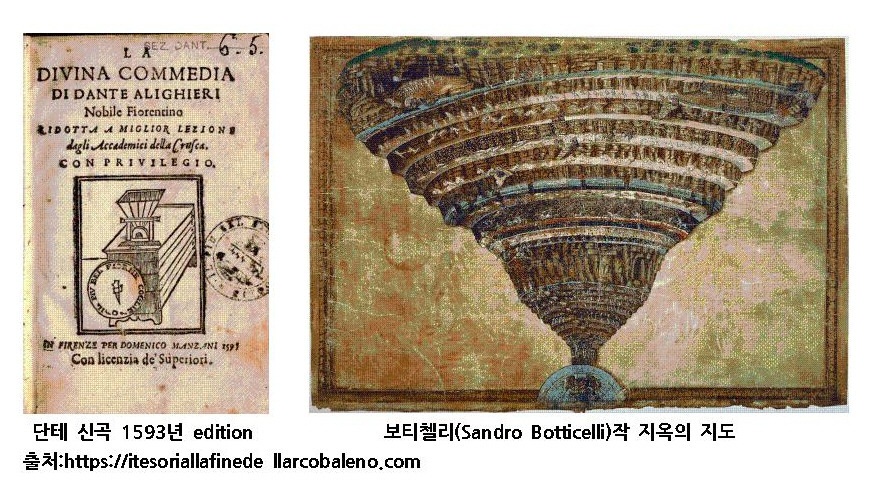
This perspective is deeply rooted in the medieval worldview, which regarded the natural world as a book written by God. In particular, texts known as ‘Bestiaries’ assigned moral and theological meanings to all creatures. Dante combined this tradition with monsters from classical mythology, recreating animals as profound mirrors of the human condition.
A Field Guide to the Divine Zoo
Before embarking on Dante’s complex journey, a summary guide of the symbolic meanings of key animals will be very helpful.
| Animal/Creature | Appearance (Part) | Key Symbolic Meaning |
|---|---|---|
| Leopard | Inferno | Lust, intemperance, political betrayal of Florence |
| Lion | Inferno | Pride, violence |
| She-wolf | Inferno | Greed (especially the greed of the papacy) |
| Cerberus | Inferno | Gluttony (the punisher and embodiment of sin) |
| Harpies | Inferno | Despair, punishment for suicide |
| Geryon | Inferno | Fraud (deceptive and mixed nature) |
| Eagle - Dream | Purgatorio | Divine grace and imperial justice |
| Griffin | Purgatorio | Jesus Christ (duality of divinity/humanity) |
| Eagle - Celestial | Paradiso | Collective divine justice, ideal empire |
Part 1: Beasts of Sin – Animal Symbols of Inferno
Now we enter the horrific world of the Inferno, where each animal appears as the living embodiment of sin. The animals here are not mere monsters but symbolic devices that reveal the essence of sin itself.
The Dark Forest: Confronting Inner Demons
As Dante attempts to ascend the hill of salvation, three beasts block his path. The agile leopard symbolizes lust and intemperance, the fearsome lion represents pride and violence, and the starving she-wolf embodies greed. Particularly, the she-wolf drives Dante back into darkness, illustrating that greed is the most difficult sin to overcome.
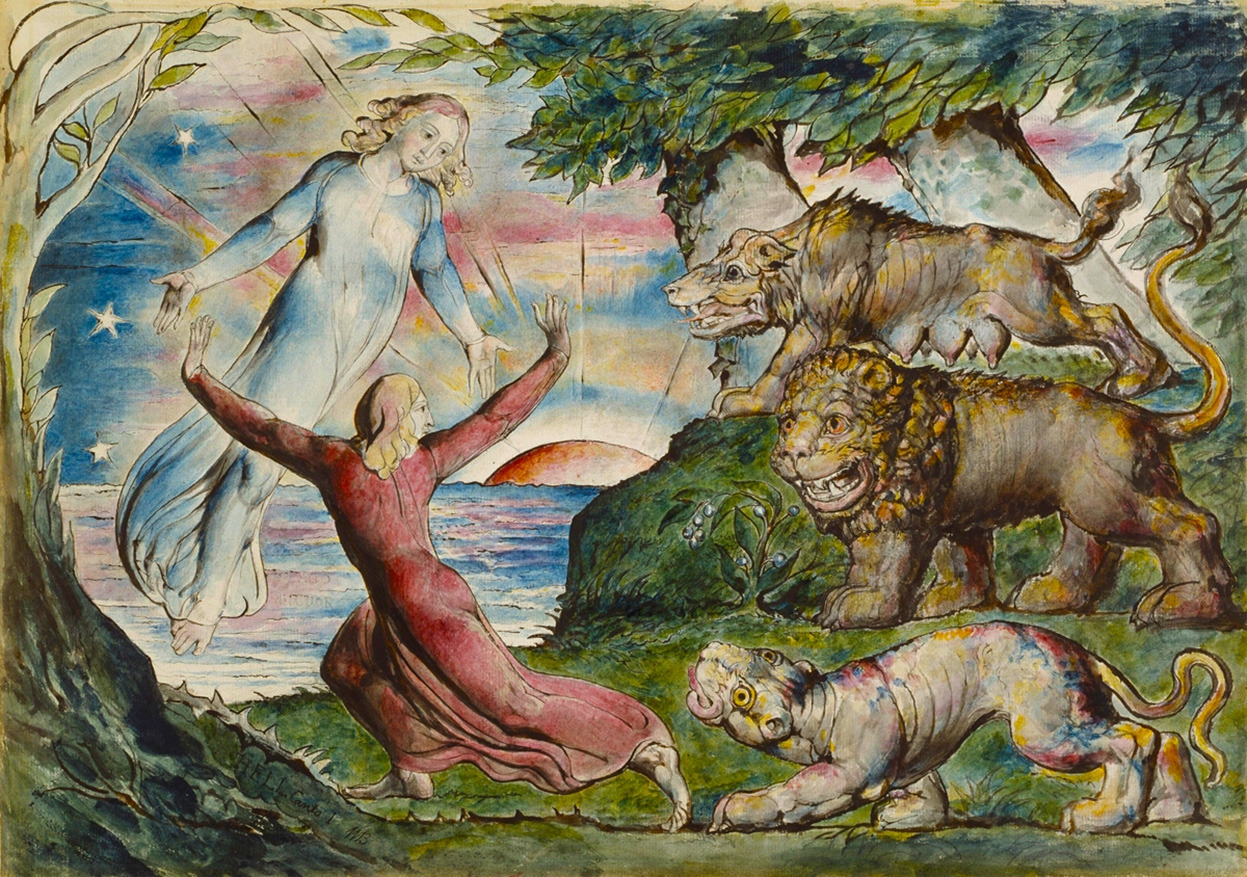
These three beasts serve as a table of contents for the moral structure of Hell. The leopard corresponds to ‘intemperance’, the lion to ‘violence’, and the she-wolf to the most wicked sins of ‘fraud’ and ‘malice’, previewing the map of Hell that lies ahead for the reader.
Guardians of the Curse: The Rebirth of Mythical Monsters
Each circle of Hell is guarded by horrific guardians borrowed from classical mythology. They symbolize the distortion of natural order and an affront to God.
- Cerberus, the embodiment of gluttony: In the third circle, the three-headed dog Cerberus tears apart the gluttons while howling. He is the embodiment of mindless consumption itself.
- Harpies, symbols of despair: In the seventh circle’s forest of suicides, the Harpies peck at the leaves of souls transformed into trees. This act represents the eternal extension of despair that led souls to suicide.
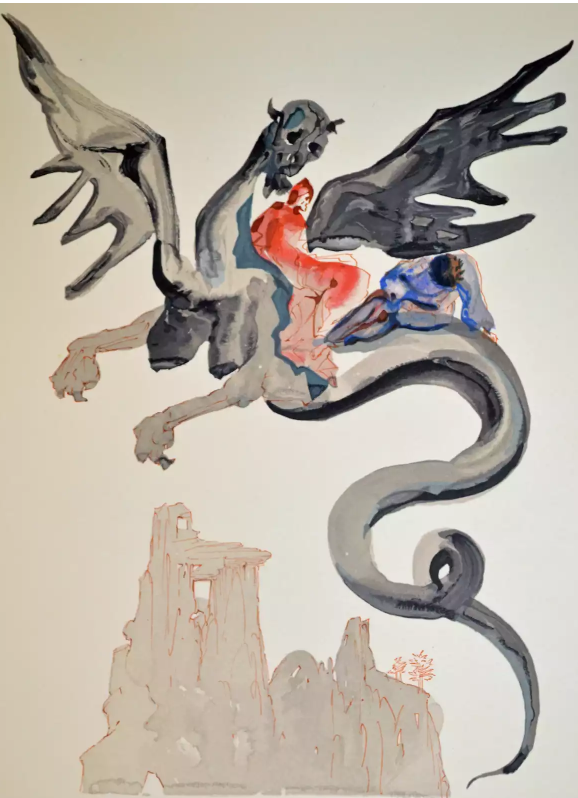
- Geryon, the face of fraud: On the way to the eighth circle, Geryon has an honest face, a serpent’s body, and a scorpion’s tail. He perfectly embodies fraud itself, hiding a toxic reality behind a charming facade.
Part 2: Creatures of Hope – Animal Symbols of Purgatorio
The atmosphere now shifts to Purgatorio, a place of hope and purification. The animals here function not as punishers of sin but as guides to salvation and grace.
The Ascension of the Eagle: A Dream of Divine Grace
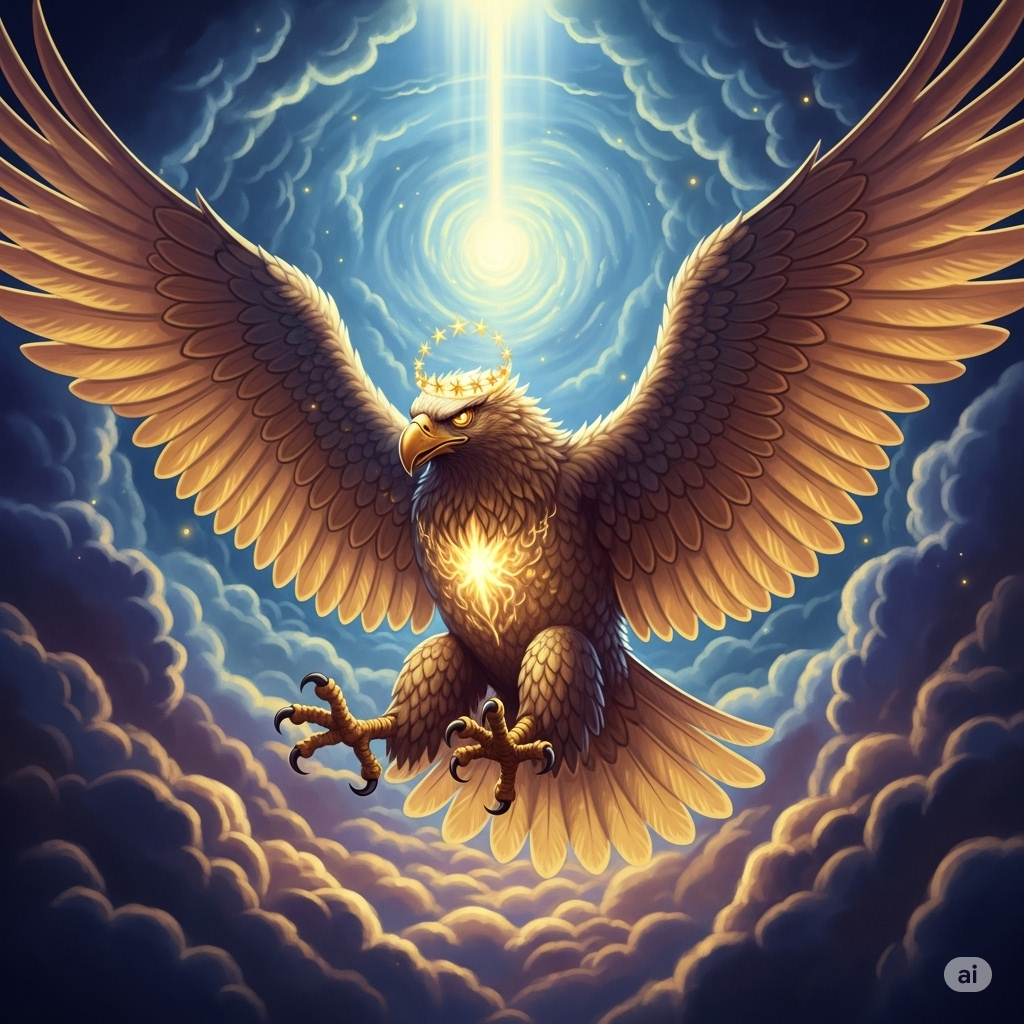
At the foot of Purgatory, Dante dreams of a gold-feathered eagle that snatches him into the realm of fire. Upon waking, he finds himself at the gates of Purgatory, aided by Saint Lucia. This dream eagle illustrates that the purification of the soul is possible not only through human will but through divine grace.
The Procession of the Griffin: Christ, the Church, and History
At the summit of Purgatory, in the terrestrial paradise, Dante witnesses a majestic Griffin pulling the chariot of the Church. This creature, with the head and wings of an eagle and the body of a lion, symbolizes the dual nature of Jesus Christ (divinity/eagle and humanity/lion), making it one of the most important symbols throughout the Divine Comedy. The Griffin binds the chariot to the barren tree of good and evil, causing it to bloom, acting as a healer and restorer that resolves the central conflict of Christian history: fall and redemption.
Part 3: Celestial Constellations – Animal Symbols of Paradiso
In the Paradiso, animals no longer appear as physical beings but as glorious manifestations of divine truth.
The Imperial Eagle: A Chorus of Righteous Souls
In the sixth heaven of Jupiter, thousands of souls of just rulers gather to form a massive Imperial Eagle. Despite being a collective of individual souls, this eagle proclaims the mystery of divine justice with a singular voice of “I.” It symbolizes an ideal empire where countless individual wills achieve perfect harmony, embodying the sacred principle of ‘E pluribus unum’ (out of many, one).
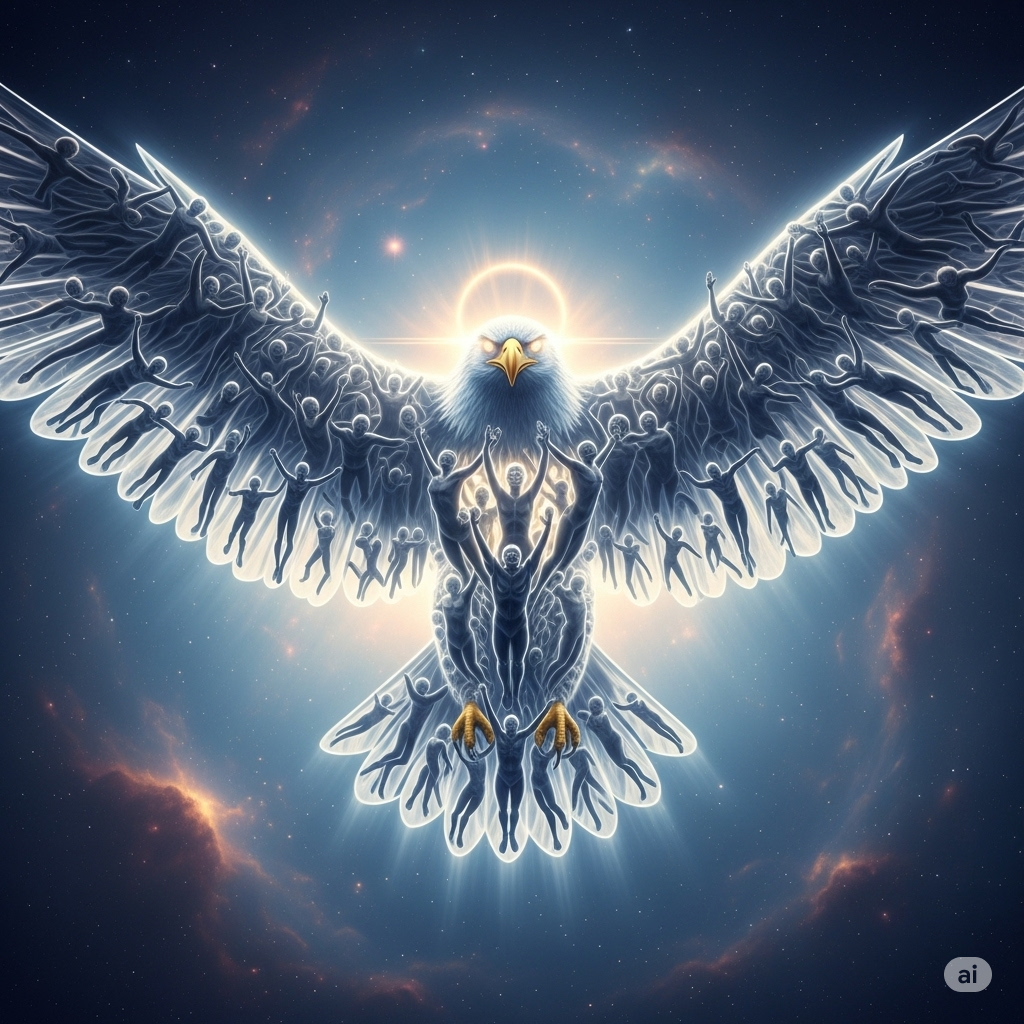
Comparison of the Role of Animals in Hell, Purgatory, and Paradise
What I found most fascinating while reading the Divine Comedy is how dramatically the role of animals changes in each realm. This is a key difference that reveals the essence of each world beyond mere background.
- Animals of Hell: Extensions of sin and tools of punishment. They are static and destructive, trapping sinners in eternal torment.
- Animals of Purgatory: Guides of hope that assist in the purification of souls. They are dynamic and restorative, leading souls to higher places.
- Animals of Paradise: Transcendent symbols that embody divine truth and perfect order. They demonstrate harmonious integration beyond individual existence.
Conclusion: What Reflects Your Soul?
The journey through Dante’s Divine Zoo ultimately becomes a journey into oneself. From the beasts of Hell to the constellations of Paradise, they reveal a gradual revelation of the soul’s potential.
Key Summary:
- Animals of Hell symbolize the ’embodiments of sin’ lurking within human nature.
- Animals of Purgatory are ‘guides of hope and salvation’ that transform and grow through divine grace.
- Animals of Paradise are the ‘manifestations of divine virtue and order’ that achieve perfect harmony beyond individuality.
Why not pose the question that initiated Dante’s journey to yourself? “Which of these beasts is the most threatening to you?” Through this question, the masterpiece from 700 years ago can become an eternal guide as we navigate our own dark forests towards the stars.
References
- Dante,
Inferno - Café Arcadia link - Divine Comedy - Wikipedia, the free encyclopedia link
- Fantastic Beasts - The University of Melbourne link
- bestiary – Medieval Studies Research Blog link
- Bestiary - Wikipedia, the free encyclopedia link
- Bestiary: Dante to World War I - Princeton University link
- [Aladin Library] Reading the Divine Comedy: Canto 1 ~ 5 of Inferno link
- Hell Beasts: Mythical Figures From Dante’s Inferno | TheCollector link
- [Let’s Learn Dante’s Divine Comedy Properly] ③ The Three Beasts as Moral Allegories - Catholic Times link
- Middle-aged Divine Comedy 1: Middle Age, Light and Shadow - Brunch link
- [The Humanities of the Wanderer 〈3〉] Dante, the Greatest Poet of Modern Times, and the Divine Comedy - Monthly Chosun link
- [Divine Comedy] Lecture by Seol Min-seok: The World of the Afterlife Described by Dante, the Flower of Italian Literature - Circular Seoul link
- Why ‘Hell’? A Comprehensive Summary of the Symbols and Meanings Hidden in Hell: Part 2 of Dante’s Divine Comedy Inferno - YouTube link
- Inferno Canto 13 - Divine Comedy Lecture link
- Dante and the Eagle - On Verticality link
- Purgatorio9 - S GILES-IN-READING link
- “Visions of Dante”: The Imperial Eagle | Cornell University link
- Purgatorio Canto 29 - Divine Comedy Lecture link
- Purgatorio Canto 32 - Divine Comedy Lecture link
- Griffin - Wikipedia, the free encyclopedia link
- Divine Comedy (Paradiso) | Dante - Literature is Beautiful link
- Divine Comedy/Paradiso - Namu Wiki link
- 100 Selections from Classical Texts 67 Dante, Divine Comedy③ The Poem of Completion Paradiso - Sanggeul Sanggeul link