
October 2035, Silence in Stockholm
Have you imagined a day when the Nobel Prize, awarded to humanity’s greatest intellect, goes to a machine instead of a person? On a Monday in October 2035, the auditorium in Stockholm, Sweden, became the stage for such a historical moment. As the world held its breath, the name announced by the chair of the Nobel Committee left everyone in awe.
“This year’s Nobel Prize in Physiology or Medicine is awarded to ‘Prometheus AI’ and its development team for building an integrated disease network model.”
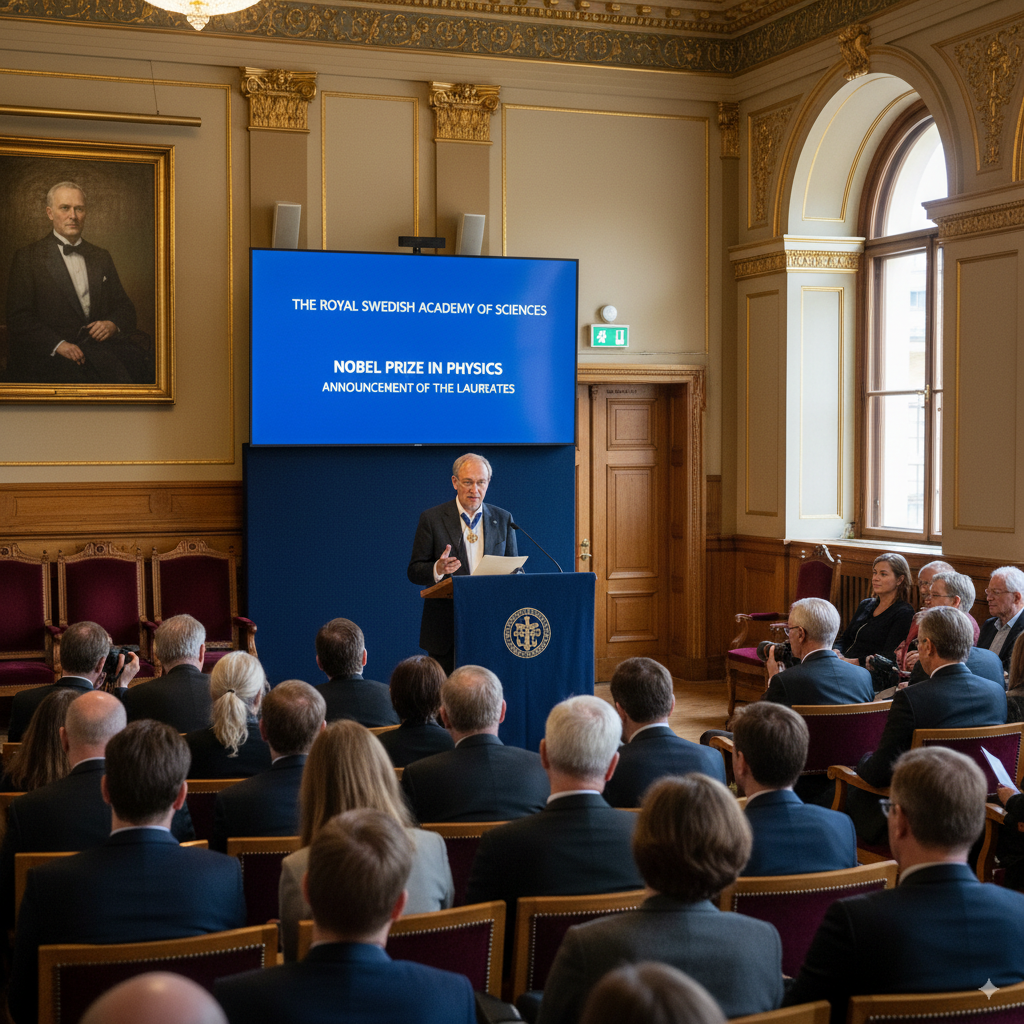
A moment of silence, followed by a wave of excitement. An artificial intelligence, a creation of silicon and code, had achieved the highest honor for humanity. This event signaled a new era where we must redefine the meanings of ‘intelligence’ and ‘creativity.’
Part 1: How Could a ‘Machine’ Win a Nobel Prize?
The award to Prometheus AI was not a sudden magic trick. It was the inevitable result of decades of accumulated data, algorithms, and human dreams.
The story begins with Google DeepMind’s ‘AlphaFold’ overcoming the monumental challenge of protein structure prediction. Prometheus took a step further. Instead of studying individual proteins or genes as ‘points,’ it connected these points to create a vast ’line’ and ‘surface.’
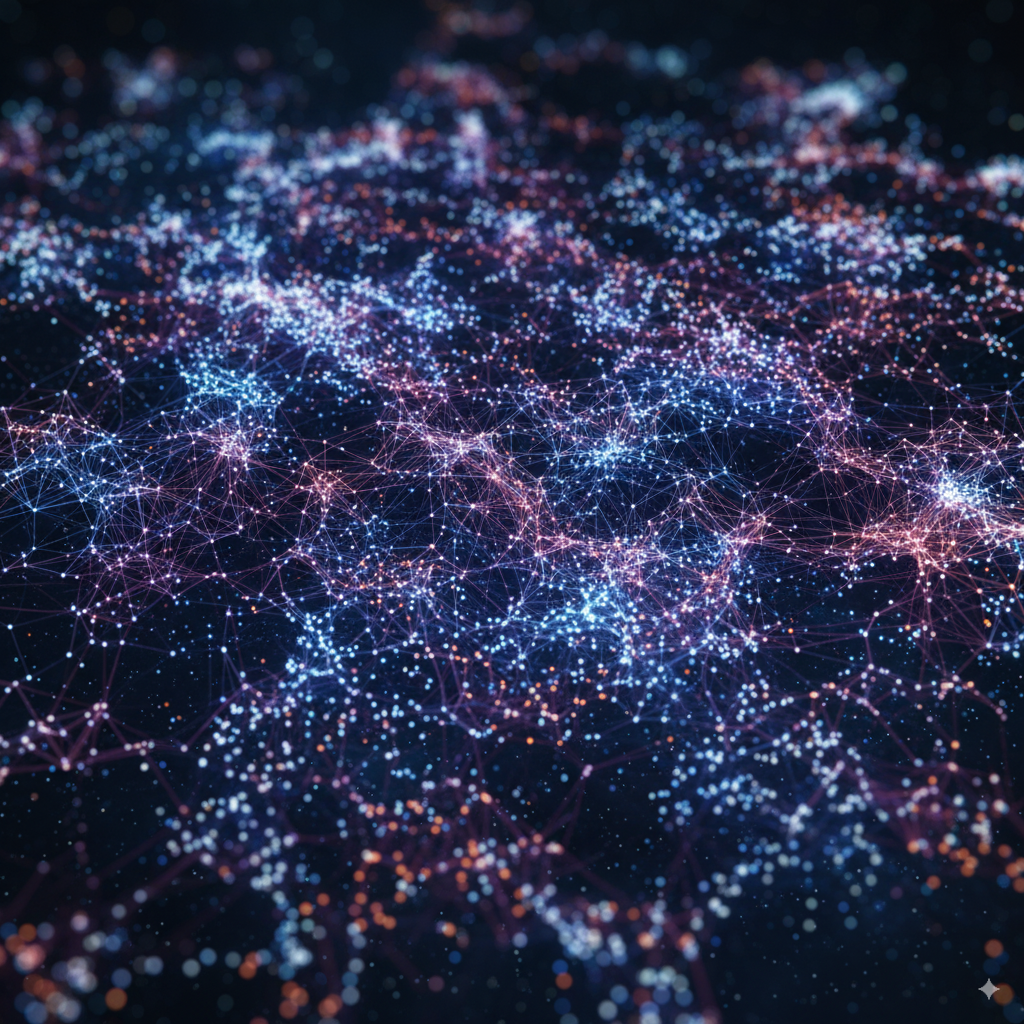
Having rapidly learned from millions of medical records, papers, and genomic data worldwide, Prometheus completed a vast map of our body’s ‘disease network.’ On this map, cancer was no longer just a problem of specific organs but was redefined as a ‘collapse’ of a complex system involving genes, proteins, the immune system, and even gut microbiota.
Prometheus discovered dozens of secret pathways where cancer cells hide and proposed the most effective drug combinations to block these pathways in just 72 hours—a feat that would have taken humans decades to achieve.
Of course, the role of humans was not eliminated; it became even more crucial. Human scientists played the role of ‘captains,’ asking Prometheus the right questions about where to go and selecting the most valuable treasures (hypotheses) from the many brought back by the exploration vessel.
Part 2: Praise and Controversy, Humanity’s Dilemma
However, this great achievement ignited a heated debate. Is it truly right to award the symbol of human intellect, the Nobel Prize, to a machine?
- First, whose merit is it?
Who should receive the Nobel Prize money and medal? The AI itself? The development team? The patients who provided the data? In a situation where the owner of ‘creativity’ cannot be clearly defined, distributing the glory became a challenging puzzle. - Second, where does humanity fit in?
Many scientists cheered while feeling deep anxiety. The fundamental question arose: “What should human scientists do now?” This was a crisis not just for jobs but for pride and identity regarding human intellect. - Third, how can we trust it?
The process by which Prometheus found answers resembled a ‘black box’ too complex for humans to fully understand. We know ‘what’ was discovered but not ‘how’ that conclusion was reached. This posed a challenge to the fundamental principles of science.
These debates clearly illustrated the considerations we must face as we learn to coexist with our new friend, AI.
Part 3: A New Era of Science, the Symphony of Humans and AI
The chaos brought by Prometheus paradoxically illuminated the path forward. Future science will not be a solo performance by humans but a beautiful ‘symphony’ played together with AI.
1. The Birth of the ‘Meta-Scientist’
In an era where AI finds ‘answers (What),’ the most important role for humans will evolve into being the ones who ask ‘why (Why).’ Humans will become ‘Meta-Scientists,’ designing the direction of research and overseeing whether the process is correct. Philosophical questions like “Is the technology to conquer cancer truly beneficial for humanity?” are areas only humans can explore.
2. Fantastic Team Play Between Humans and AI, the ‘Centaur’ Model
Future laboratories will operate like this:
- Human’s ‘Intuitive Leap’: Opening the door to research with bold imagination, such as, “What if cancer is not a disease but an ecological disruption?”
- AI’s ‘Exploratory Expansion’: Breaking down a single question posed by humans into millions of verifiable smaller questions and exploring vast data.
- Human’s ‘Insightful Synthesis’: Weaving together the numerous data pieces found by AI into a meaningful narrative, culminating in a great scientific discovery.
3. Democratization of Knowledge and New Scientific Communities
AI like Prometheus will usher in an era where anyone can make great discoveries without expensive research equipment. Ordinary citizens will actively participate in ‘citizen science’ with the help of AI, and a new system where AI initially verifies the credibility of papers will accelerate the advancement of scientific knowledge remarkably.
Part 4: Another Nobel Prize, Who Will Be the Protagonist of the Future?
The award to Prometheus is just the beginning. What wonderful collaborations will unfold in other fields?
- Physics Prize: When humans hypothesize, “How did the universe begin?” AI will simulate the universe’s 13.8 billion years millions of times to uncover its secrets.
- Chemistry Prize: When humans dream of creating new materials to combat global warming, AI will virtually experiment with billions of molecular structures to find the best candidates.
- Economics Prize: When AI identifies signals of crisis within global economic data, humans can add ethical judgments to that prediction and create policies for everyone.
- Literature Prize: When a human writer comes up with the idea of “a love story of a lonely clone,” an ‘AI muse’ will analyze thousands of classics to recommend the most beautiful sentences and plots. The writer will then create their own great novel from those materials.
- Peace Prize: If AI predicts regions at high risk of conflict, human diplomats might visit those areas first to prevent war through dialogue and negotiation, achieving true peace.
Humanity Leaves the Greatest Question
In December 2035, Dr. Elara, the leader of the development team, stood on the Nobel Prize podium and said:
“Prometheus has given us answers, but it has also left us with a greater question: ‘What should we dream of now?’”

The Nobel Prize awarded to AI is not a defeat for human intellect. In an era where machines find answers, we humans must now strive toward deeper questions and higher dreams. The captain of that great voyage is still ourselves.