
“A world where your face becomes your password.”
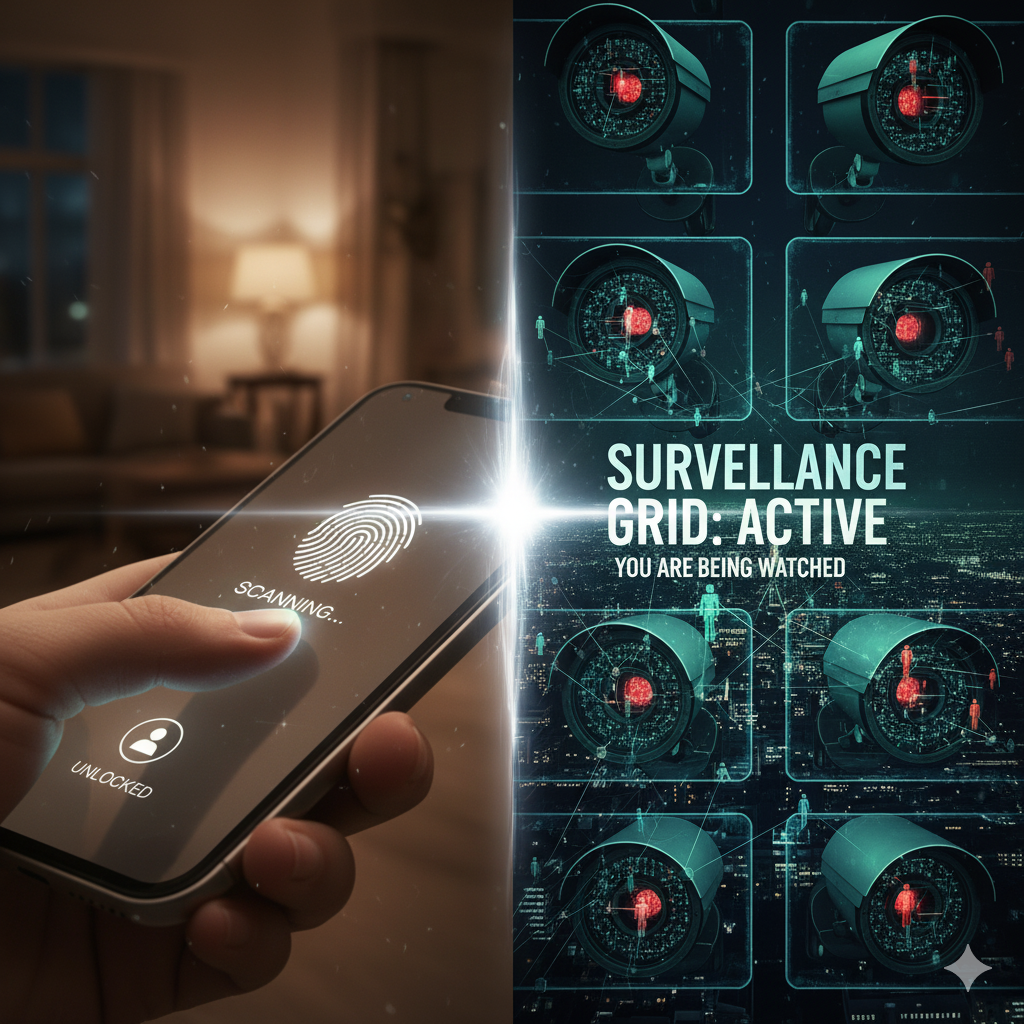
A few years ago, this seemed like a story from a sci-fi movie. But today, we experience this magic every moment we unlock our smartphones, pay for coffee, or enter an office. It’s a truly convenient world.
However, this technology is a ’tool’ that offers humanity amazing possibilities, but it can also become a sharp ‘weapon’ directed at us at any moment.
Today, I want to share two stories about how this powerful technology of facial recognition can infiltrate and threaten our lives.
Story One: The Smart Store That Drove Away Regular Customers
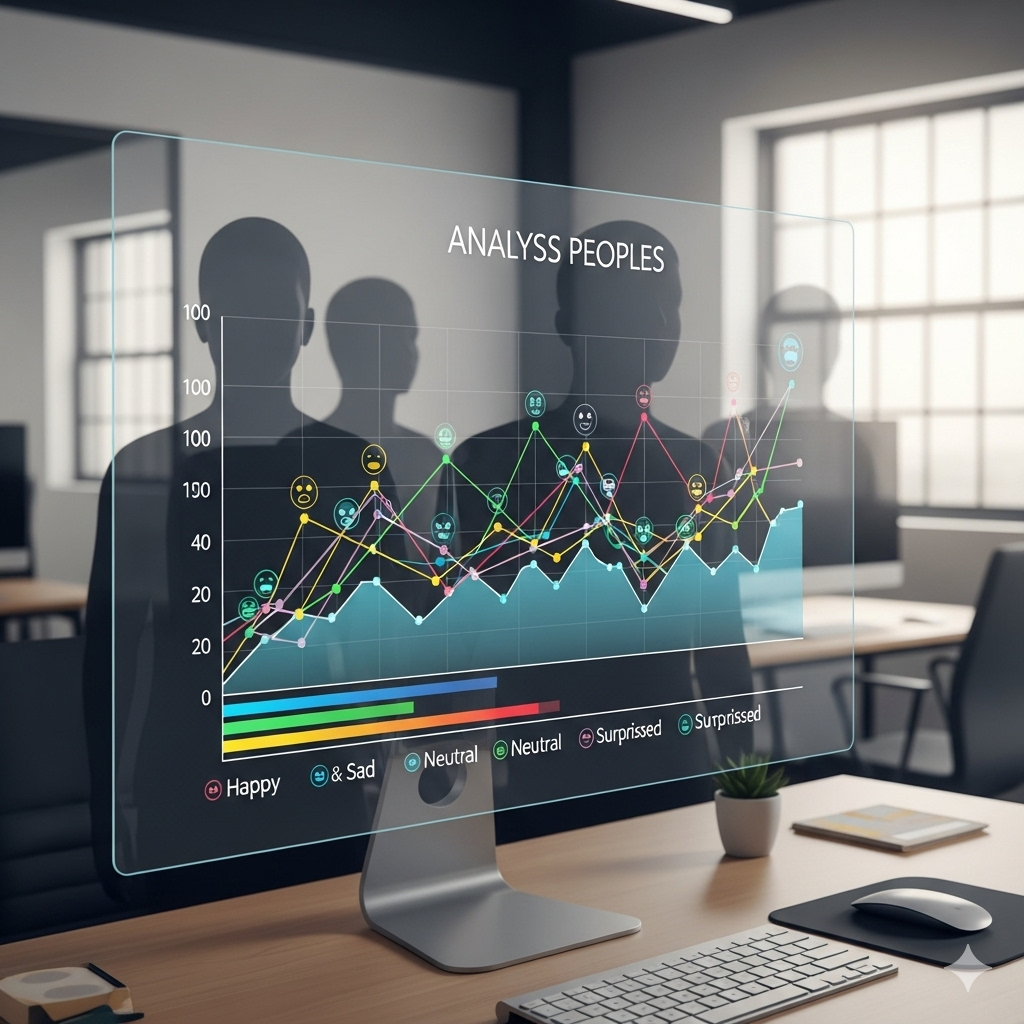
To revitalize local businesses, the government supported the installation of ‘AI customized advertising boards’ in small shops. These boards analyzed the age, gender, and facial expressions of passersby using facial recognition technology to recommend the most suitable products.
The owner of the local flower shop was initially fascinated and grateful for this technology. When a couple that looked like lovers passed by, the board displayed, “How about a rose for your loved one?” And to parents holding hands with their elementary school child, it suggested, “How about some freesia for tonight’s dinner?” Sales actually increased a bit. It seemed like technology was truly becoming a good ’tool.’
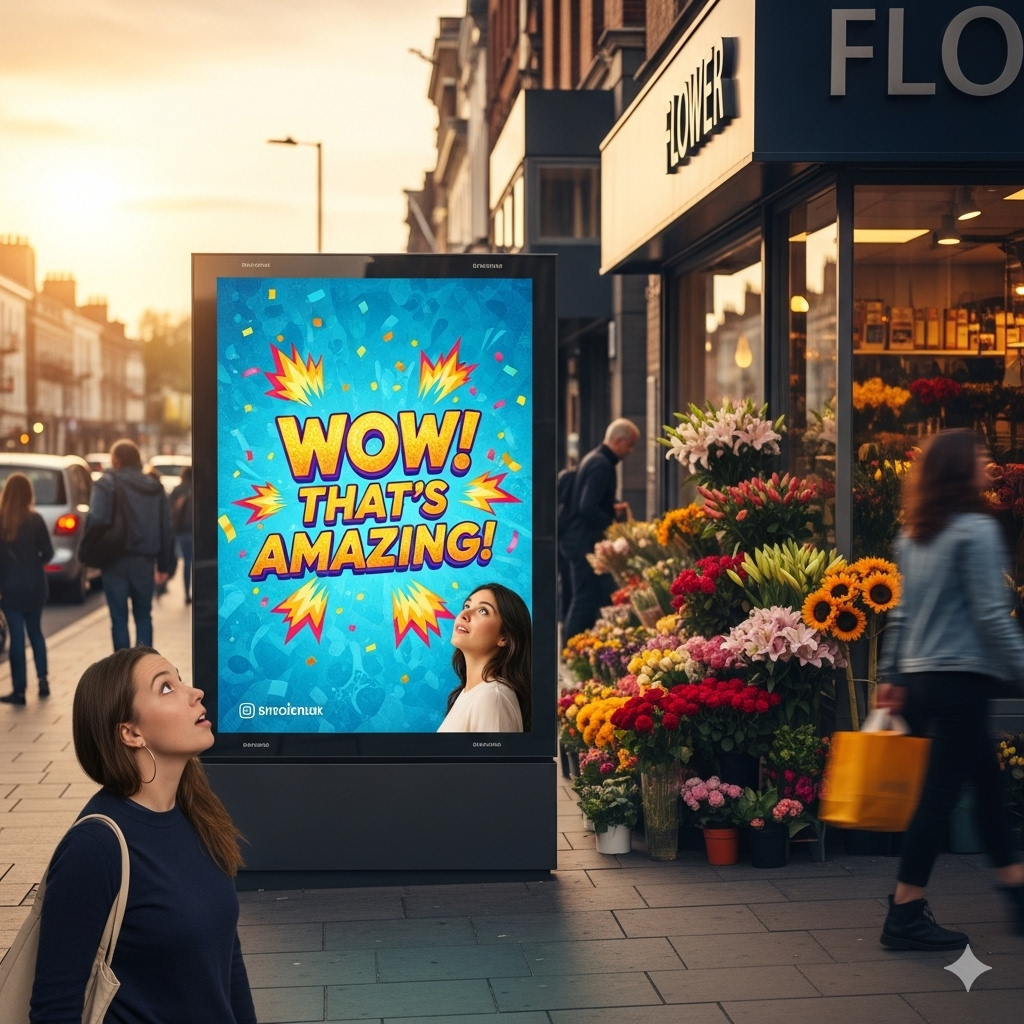
But one day, the regular customers began to visit less frequently. A customer struggling with divorce had to see the advertisement, “Brighten up your gloomy days with yellow flowers!” every time they passed by, while another customer who had just been laid off was hurt even more by the message, “We support your new beginning!”
People felt discomfort and fear at the fact that their emotions were being read without consent and that their innermost feelings were being used as a marketing tool to sell products. Ultimately, the warm ’tool’ that once attracted customers became a cold ‘weapon’ that judged their hearts and drove them away.
Story Two: A Life Ruined by 99% Accuracy
In a city, a hit-and-run incident occurred. The only clue was a blurry side profile of the driver captured by a distant CCTV. The police activated the latest AI facial recognition system, which identified a man as a suspect with 99% accuracy. It was Mr. Kim Cheol-soo, an ordinary father of two.
The police were confident in the AI’s analysis. Mr. Kim claimed he was driving alone on the outskirts at the estimated time of the incident, but he could not provide a perfect alibi. The media sensationalized the story, proclaiming, “AI has caught the hit-and-run driver,” and overnight, he became a criminal. His children were bullied at school as the ‘hit-and-run driver’s kids,’ and his wife had to quit her job.
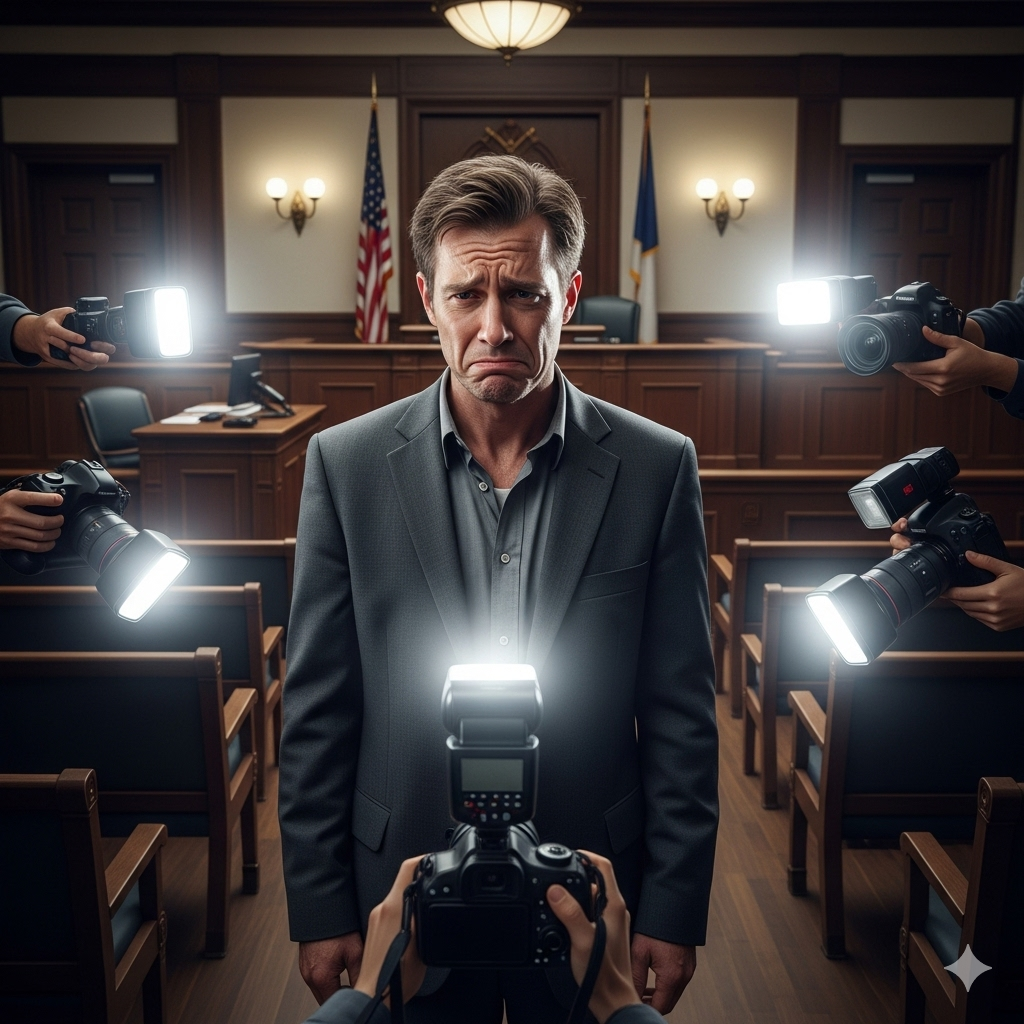
A month later, the real perpetrator turned himself in, feeling guilty. The AI had misjudged Mr. Kim as the culprit due to a lack of data on specific angles of faces or low-quality video footage, leading to the wrongful identification.
A 99% accuracy rate means there is a 1% chance of error. However, people blindly trusted the machine’s judgment, and that 1% error became a lethal ‘weapon’ that completely shattered a family’s life. Although his innocence was proven, the scarlet letter branded on him and his family will never be erased.
Shall we look at another story?
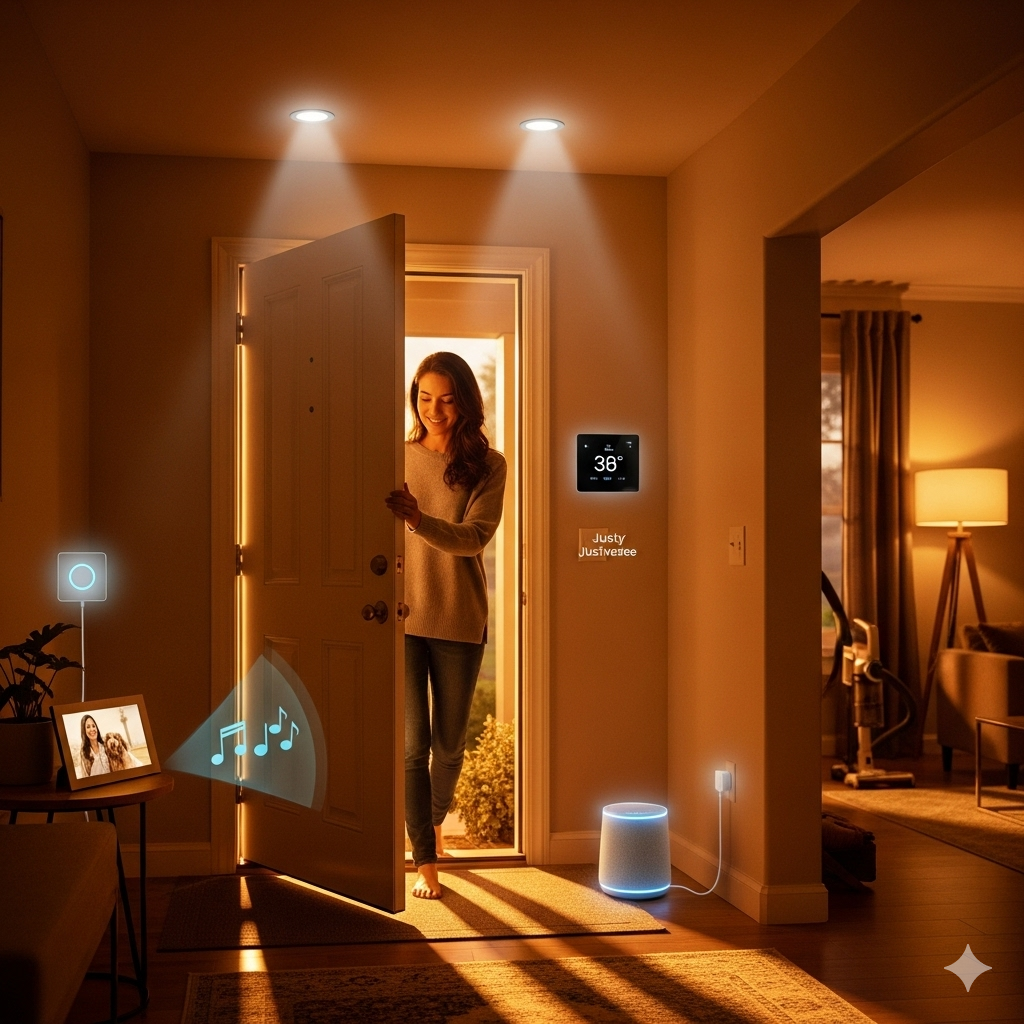
As I walk through the door, soft lighting and my favorite music greet me. “Welcome back, Nari!” A picture frame on the wall changes from a regular painting to a stunning night view. Did it sense my mood?
This is 2030, the world I live in. And the magic that makes all this possible is my ‘face.’
Morning: A World Opened by My Face
“Good morning, Nari! Today is clear, and it will be a pleasant day.”
What wakes me up is not an alarm sound but the kind voice of my AI assistant recognizing me. As I enter the kitchen with a still-sleepy face, the coffee machine scans the puffiness of my face and says, “How about a smooth latte today?” and brews coffee automatically.
I haven’t needed a wallet for a long time. Just smiling brightly at my favorite bakery completes the payment, and the subway turnstile opens wide like a red carpet for me. When I see the station’s advertising board displaying, “Keep it up today, Nari!” I feel like the world revolves around me, and my shoulders lift a bit. My face is the universal key that opens this convenient world.
Afternoon: A Slightly Strange Whisper
When I arrive at the office, I must have looked a bit tired. As soon as I sit at my desk, a message pops up on my computer screen: “Nari, you didn’t get enough sleep yesterday. How about a cup of herbal tea to boost your concentration?” While I appreciate the thoughtfulness, a part of me feels a chill at the thought that my every move is being scrutinized.
During the afternoon meeting, did I drift off for a moment? As soon as the meeting ends, I receive a message from my team leader: “The AI meeting minutes analysis shows that your concentration dropped for a moment. Is there anything difficult?” Oh, I just zoned out for a bit. The thought that every expression of my face is being turned into data to evaluate me makes me unconsciously force a smile.
Evening: A Stranger in the Mirror
On my way home, I stopped by a small signature campaign started by local people to raise funds for stray dog protection. I returned home with a sense of pride for participating in a good cause.
However, that night, I received a strange notification. It was a message from the private insurance company I had signed up with.
“Dear customer, recent activities in an ‘unclassified risk’ area have been detected. Please note that your monthly insurance premium will be slightly increased.”
My heart sank. Was it the signature campaign I briefly participated in during the day that was the problem? The CCTV installed throughout the city recognized my face, recorded where I was and what I did, and even passed that data on to the insurance company, evaluating me without my consent.
At that moment, the convenient world that had welcomed me in the morning felt like a massive glass prison. My face, regardless of my intentions, had become a ‘shackle’ that monitored, evaluated, and sometimes penalized me.
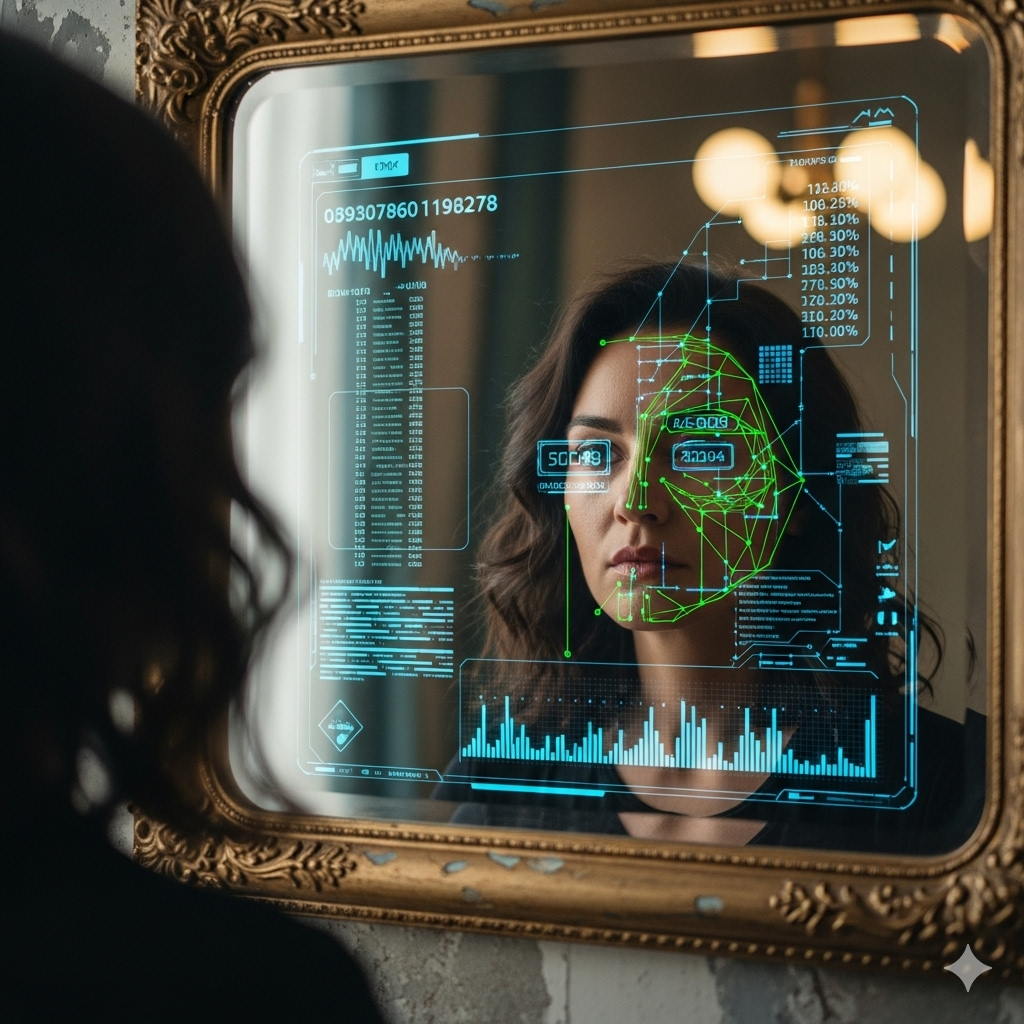
Standing in front of the mirror, I quietly examine my face. Is this face truly mine? Or is it part of a vast system spread throughout the city?
Technology has given us amazing gifts, but it seems we haven’t properly read the instruction manual for those gifts. Our rights to our faces, our rights to privacy, and above all, the ‘right to be forgotten.’ Have we taken these fundamental things too lightly?
Is Your Face Protected as Much as Your Smartphone?
These stories clearly show the shadows cast by facial recognition technology. Companies analyze our emotions to generate profits, and governments identify and track citizens for efficient control. In the process, our privacy and human rights can be easily violated.
The companies that create this powerful technology must take ethical responsibility, and governments must establish clear laws and regulations to protect citizens. When the pace of technological advancement outstrips social consensus and systems, the damage will inevitably fall on ordinary citizens.
We think that if we lose our smartphones, we can just change the password and buy a new one. But once my facial information is leaked or misused, I can never change or reclaim it.
Today, why not ask ourselves once again? Is my face truly worthless, receiving less protection than a disposable password or a cheap smartphone? Finding the answer to this question will be the homework for all of us living in the age of technology.