
May 2025, the Ministry of National Defense’s new policy raised fundamental questions about how society views our sons, who are in the special situation of ‘mandatory service.’
- The history of the automatic promotion system centered around ‘seniority’ maintained for decades.
- The justification for the Ministry of National Defense’s attempt to introduce a ‘performance-based promotion system’ and its criteria.
- Issues of unfairness based on assignments and physical conditions, along with strong parental backlash.
- The process leading to a comprehensive review of the policy and the challenges that remain.
A Sudden Shock for Two Privates on the Same Day
On May 1, 2025, the air in the barracks of an army unit felt particularly heavy. It was right after the new abolition of automatic military promotion policy from the Ministry of National Defense was communicated to two newly assigned privates, Private Kim and Private Lee.
Private Kim, who was considered an ‘ace,’ felt a surge of hope upon hearing the news of the ‘performance-based promotion system.’ He was excited about the possibility of being recognized for his efforts and being promoted faster than others to earn a higher salary. To him, this change seemed like the beginning of a rational compensation system.
In contrast, Private Lee, who was struggling with the demanding kitchen duties as a cook, was filled with anxiety. Finding time to train physically during personal maintenance time felt nearly impossible. To him, this news felt like the start of another form of discrimination and stigma rather than a fair evaluation. He couldn’t shake the worry of being overlooked for promotion and facing embarrassment in front of his peers, fearing he might be labeled a ‘deadweight.’
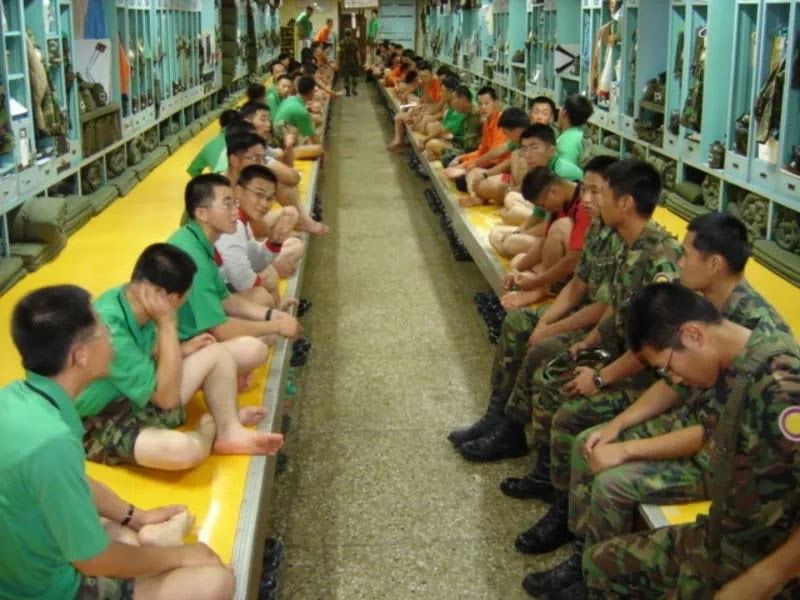
This is not just a story about a policy change. It reflects the reality that under the pretext of fostering a strong military, one young man might only earn the sergeant rank a day before discharge, while another might receive 2 million won less in salary than his peers. At the heart of all this controversy lies a fundamental question about how our society views our sons in the context of ‘mandatory service.’
Chapter 1. The Unseen Promise: When ‘Seniority’ Meant Rank
For decades, the South Korean military operated under an unwritten rule of hierarchy and promotion based on ‘seniority.’ It was taken for granted that one would naturally be promoted over time.
This system was a kind of ‘invisible social contract.’ It provided a predictable future for young men enduring tough times in the military, assuring them that their rank would rise over time, along with some authority, responsibility, and honor. Promotion was seen not as a reward for outstanding performance but as a minimal acknowledgment of fulfilling one’s duty by quietly dedicating time.
Concerns among active-duty soldiers about ‘disrupted hierarchies’ went beyond mere awkwardness of mixed ranks. Within the military, unofficial hierarchies based on ‘seniority’ operate as significantly as, or even more than, official ranks. If a junior soldier were to be promoted before a senior, it would undermine the informal training and command structure that has sustained the unit.
Ultimately, the automatic promotion system was not just a personnel regulation; it was a cultural pillar that guaranteed the stability and continuity of military life for decades.
Chapter 2. The Ministry of National Defense’s Justification: A Military Where the Capable Are Promoted
The Ministry of National Defense’s reasons for taking action were clear. They aimed to enhance combat readiness and establish a performance-oriented military culture. They sought to break the complacent perception that simply passing time would lead to promotion, encouraging soldiers to develop competencies that matched their ranks.

Spokesperson Huh Ha-kyu emphasized that granting appropriate ranks to soldiers with competencies matching their ranks is a normal and rational measure.
The new promotion criteria included combat skills such as physical fitness, shooting, and chemical warfare, with 70% of the evaluation score allocated to physical fitness.
However, this is where a fundamental conflict arose. The definitions of ‘fairness’ held by the Ministry of National Defense and the public were completely different.
- Ministry of National Defense’s Perspective: ‘Meritocratic Fairness’ The logic that it is reasonable to reward individuals who prove their capabilities with higher positions and compensation. From this perspective, soldiers are seen as ‘assets’ that contribute to combat effectiveness.
- Public Perspective: ‘Conscription Fairness’ As one active soldier lamented, “I didn’t choose to come here,” mandatory service is a forced sacrifice. Therefore, all soldiers making the same sacrifice deserve equal respect, and the introduction of a competitive system is fundamentally unfair. From this viewpoint, soldiers are ‘sons’ that the state is responsible for and must care for.
Chapter 3. Ripples in the Barracks: The Tragedy of a ‘Tilted Playing Field’
The impact of the new system extended beyond mere honor. The most significant issue was money. If a soldier continuously failed promotion evaluations, they could end up as a ‘one-day sergeant’ on the day of discharge.
This meant a direct hit to their salary. Considering the salary of a private (approximately 900,000 won) and a sergeant (approximately 1,500,000 won) in 2025, there could be a salary loss of up to 4 million won compared to peers who were promoted normally.
The most fatal flaw of this policy was its disregard for the reality of a ’tilted playing field’ in the military.
- Disadvantages Based on Assignments: It is nearly impossible for cooks or administrative soldiers working all day in the kitchen to find time to train physically like infantry soldiers.
- Individual Physical Conditions: In a situation where enlistment standards have been relaxed due to a population cliff, penalizing soldiers for physical or mental weaknesses in promotions is a contradiction of the system.
- Differences in Working Environment: Soldiers stationed in frontline areas often lack proper training facilities or time.
Ultimately, the promotion and salary would be determined not by effort or will but by the ’luck’ of assignments and physical conditions.
Chapter 4. Parental Rebellion: “Why Should Our Sons Bear This Burden”
Following the Ministry of National Defense’s announcement, voices of anger erupted primarily from parents who had sent their sons to the military. The National Assembly’s public petition board became a platform for denouncing the policy as an “unfair system that demoralizes soldiers who enlisted at a young age for their country.”
Some parents even raised suspicions that this was a ’trick’ to cut the salaries of soldiers, the most vulnerable group, to make up for insufficient tax revenue.
In particular, the clause about ‘one-day sergeants’ was perceived not as respect but as ‘mockery.’ This represented a critical communication failure on the part of the Ministry of National Defense, and the bureaucratic logic clashed with public sentiment, becoming a shackle that hindered the entire policy.
Chapter 5. Strategic Retreat: The Ministry of National Defense Bows to Public Opinion
The fierce backlash spread to the political arena, ultimately overturning the Ministry of National Defense’s policy. On June 25, 2025, the Ministry announced it would temporarily suspend the strengthening of soldier promotion evaluations and conduct a comprehensive review.
Members of the National Assembly’s Defense Committee united in calling for a reconsideration of the policy, and Acting Minister Kim Sun-ho stated, “Considering public petitions and the demands of the National Assembly, I have instructed that the implementation of this system be temporarily suspended and comprehensively reviewed.”
This incident symbolized that the voices of parents organized through public petitions and online communities had emerged as a new ‘power’ in the defense policy decision-making process. It acknowledged that the Ministry of National Defense could no longer unilaterally decide policies without social consensus.
Comparison: Existing Automatic Promotion System vs. Revised Evaluation-Based Promotion System
| Category | Existing Automatic Promotion System | Revised Evaluation-Based Promotion System |
|---|---|---|
| Core Principle | Based on service duration (seniority) | Based on competency evaluation (meritocracy) |
| Promotion Criteria | Fulfillment of service duration, no major disciplinary issues | Comprehensive evaluation including physical fitness (70%), shooting, and military life |
| If Omitted | Automatic promotion after a maximum delay of 2 months | Possibility of indefinite omission (up to 15 months of service as a private) |
| Discharge Rank | Essentially all discharged as sergeants | Possibility of ‘one-day sergeant’ |
| Salary Difference | Minimal | Potential salary difference of up to about 4 million won compared to normally promoted peers |
Conclusion
The controversy over the abolition of automatic military promotion has returned the policy to square one, but it leaves us with three important questions.
- Balancing Motivation and Frustration: Is it possible to create a system that motivates the outstanding few without frustrating the majority of conscripts?
- Possibility of ‘Fair’ Evaluation: In a reality where the conditions of cooks and infantry differ, can a fair evaluation encompassing all soldiers truly be achieved?
- Meaning of Soldier Ranks: Are the ranks of conscripted soldiers a measure of combat effectiveness, or are they a testament to diligent duty fulfillment?
This incident has prompted all of us to reflect on what ’the duty of defense’ should mean in a 21st-century democratic society. The Ministry of National Defense has promised to find the “optimal solution,” but the journey to find that answer has only just begun.
References
- SBS [Subtitled News] Only Private for 15 Months?… Ministry of National Defense Orders Comprehensive Review of ‘Abolition of Automatic Promotion’
- Daum Today’s Information Let’s Learn About the Abolition of Automatic Promotion for Soldiers
- Pen & Mic [Reporter’s Notebook] ‘Abolition of Automatic Promotion’? How Does the Military View Young Men in Their 20s?
- Media News Automatic Promotion for Soldiers Abolished from May… Concerns About Salary Loss and Discharge as Private
- Dong-A Ilbo Military Suspends Abolition of Automatic Promotion Amid Concerns of ‘Only Private for 15 Months’
- Brunch Rank Is Not a Reward for Time: The Responsibility of Soldiers, The Qualification of Soldiers
- Segye Ilbo [Debate] Abolition of Automatic Promotion for Soldiers
- Tistory Changes in Service Duration and Promotion Timing for South Korean Army Soldiers
- Chosun Ilbo “If Omitted from Evaluation, Remain a Private”… Controversy Over Abolition of Automatic Promotion for Soldiers
- Newsis Ministry of National Defense Temporarily Suspends ‘Only Private for 15 Months’ Promotion System… Acting Minister Orders Comprehensive Review
- KBS News [Crab] “Is Rank Based on Seniority?” This Is Now Old News… Summary of the Controversy Over ‘Abolition of Automatic Promotion’
- Namu Wiki Petition Against the Omission of Promotion for Military Personnel