
Everything Started with a Question
Have you ever heard the story of a drink that instantly changed sports history, or rather, our everyday landscape? A miraculous tale that went beyond mere thirst quenching, created an industry, became a symbol of victory, and even saved countless lives.
Today, I want to take you back to the sweltering summer of the 1960s in Florida, to share an incredible journey that began in a university laboratory. This is the true story of Gatorade that has not been properly told until now.
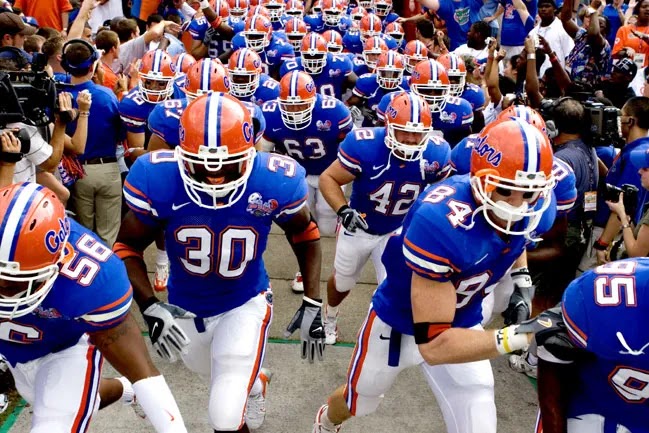
Like all great stories, this one began with a question. In 1965, the University of Florida’s football team, the Florida Gators, was struggling against an invisible enemy. This enemy was not the opposing team, but the relentless heat of Florida. Players were losing several kilograms in weight during games and frequently collapsing from severe dehydration.
Observing this desperate situation, head coach Dwayne Douglas one day approached Dr. J. Robert Cade, a kidney specialist at the university hospital, and asked a very simple yet peculiar question.
“Doctor, why don’t our players urinate during games?”
At that moment, no one could have imagined that this innocent question would later shake the world of sports science and a multi-billion dollar industry. Let’s follow that legendary journey together.
Part 1: The Lab Detectives and the Secret of Dehydration
“Why don’t players urinate?”
This question posed to Dr. Cade was not just a matter of curiosity; it was a matter of life and death for the players. He immediately summoned his fellow researchers. Dana Shires, Harry James Free, and Dr. Alejandro de Quesada, the four ’lab detectives,’ began to unravel the mystery occurring within the players’ bodies.
At that time, there were no advanced computers, so the research team collected blood and sweat samples directly before and after training and games. They meticulously recorded surrounding temperature, humidity, blood sodium, and glucose levels on yellow ledger paper by hand.
As the data accumulated, a shocking truth emerged. The players were not just losing water. Their bodies were in a state of total chemical collapse.
- Electrolyte Imbalance: Essential electrolytes were being lost through sweat, disrupting the body’s balance.
- Energy Depletion: Blood sugar levels dropped to dangerously low levels, causing severe fatigue in the later stages of the game.
- Reduced Blood Volume: Total blood volume decreased, putting tremendous strain on the heart.
Dr. Cade summarized the seriousness of this discovery: “Each of these three problems can incapacitate a player on its own. When all of them hit at once, it creates a truly serious issue.”
Moreover, the sports world at that time was trapped in the misconception that drinking water during exercise was not allowed. Dr. Cade’s research proved how dangerous this was. Dehydration was not simply a state of ’lack of water’ but a ’total crisis where the body’s chemical factory shuts down.’
Now the research team’s task was clear: to create a solution that would restore everything lost as quickly and efficiently as possible.
Part 2: The Taste of ‘Toilet Cleaner’ and the Miracle of Lemon Juice
With the scientific diagnosis in hand, Dr. Cade’s team immediately began formulating a solution. They mixed water, salt, and fructose in precise ratios to create a theoretically perfect ‘hydration and nutrition supplement.’
However, this scientific masterpiece had a fatal flaw: its ’taste.’
When the first prototype was tasted by colleague Dr. Shires, he grimaced and left a historic remark.
“This tastes… how should I put it, like toilet cleaner.”
The players’ reactions were even more intense. No matter how scientifically perfect it was, it was useless if it couldn’t be consumed. The project was in serious jeopardy.

At this moment, the miraculous solution came not from a cutting-edge laboratory but from an ordinary home kitchen. When Dr. Cade lamented about the terrible taste to his wife, Mary, she made a very simple suggestion.
“Honey, why don’t you try adding some lemon juice?”
This simple remark changed everything. By adding lemon juice and artificial sweeteners, the liquid that once tasted like ’toilet cleaner’ was finally reborn into a drink that players wanted to consume. Without this ‘miracle of lemon juice,’ the name Gatorade might have faded away as just a footnote in an academic paper.
Part 3: The Emergence of the ‘Second-Half Powerhouse’
With the taste perfected, this secret weapon finally entered the real-world testing phase. In October 1965, during a practice game between the freshman team and the starting B team, the freshman team unexpectedly held the experimental drink.
As the second half began, a bizarre scene unfolded. While the starting players were collapsing from exhaustion, the freshmen who drank the beverage were flying around the field as if they had just started the game, achieving a stunning comeback victory.
The fame of this drink spread rapidly, and soon it began to be supplied to the starting players as well. In the 1966 season, the Florida Gators earned the glorious nickname ‘Second-Half Gators’ and recorded their best performance in history.
Then, on January 2, 1967, the fateful Orange Bowl.
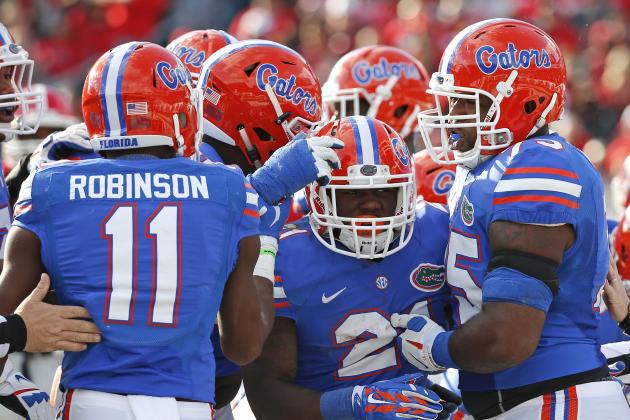
Against the powerhouse Georgia Tech, the Gators players drank this beverage throughout the game, dominating with unyielding stamina and winning 27-12 in an overwhelming victory.
However, the real highlight of that game came after the final whistle. When reporters asked the legendary Georgia Tech coach Bobby Dodd about the loss, he left a brief but historic remark.
“We didn’t have Gatorade. That made the difference.”
This statement was more powerful than any advertisement. It was the moment that turned an unknown drink born in a small university laboratory into a national star overnight.
Part 4: From University Laboratory to Global Empire
After Coach Dodd’s remark, inquiries about the drink flooded in. Dr. Cade’s team realized it was time to commercialize their invention. They chose a simpler and more powerful name, ‘Gatorade,’ instead of ‘Gator-Aid,’ which means ‘helping the Gators.’
Dr. Cade first asked the University of Florida if they were willing to acquire the rights for $10,000, but the university failed to recognize the value of this offer and declined. This would later be recorded as one of the most regrettable decisions in the university’s history.
Ultimately, Dr. Cade’s team partnered with an external food company, ‘Stokely-Van Camp.’ As Gatorade achieved commercial success, the University of Florida, realizing their mistake, filed a lawsuit, and after a lengthy legal battle, they agreed to receive 20% of the royalties permanently. This agreement set a precedent that university research could yield substantial commercial benefits, changing the entire culture of university research in the U.S.
The growth of Gatorade was just beginning.
- 1983: Quaker Oats acquired Gatorade, using powerful marketing to establish its name across the U.S.
- 2001: Beverage giant PepsiCo acquired Gatorade for a staggering $13.4 billion, finally establishing it as a ‘global empire’ that reigns supreme worldwide.
Part 5: From Victory Celebrations to Saving Lives with a Sip
Gatorade has left an indelible mark on our culture and science, transcending the definition of a successful beverage.
Symbol of Victory, ‘Gatorade Shower’
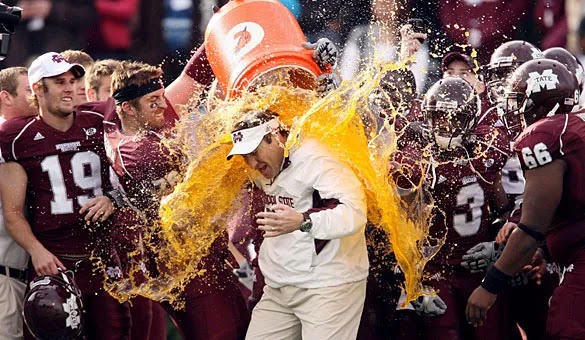
Every sports fan has seen that scene, the ‘Gatorade Shower.’ This tradition began in 1984 when New York Giants players poured Gatorade over their coach Bill Parcells as a playful act of revenge. This delightful ceremony quickly became the ultimate ritual for celebrating victory and a cultural icon symbolizing the highest level of triumph.
A New Horizon in Sports Science
The emergence of Gatorade revealed to the world how crucial ’nutrition’ and ‘physiology’ are to athletic performance. Concepts like hydration and electrolyte balance finally became core elements in sports, effectively creating the massive market of ‘sports drinks.’ In 1985, the ‘Gatorade Sports Science Institute (GSSI)’ was established, proving to this day that it is a science-based ‘sports fuel.’
Beyond the Stadium, Saving Lives with a Sip
However, the legacy that the inventors were most proud of was that Gatorade saved countless lives outside the stadium. For young children suffering from severe dehydration due to vomiting and diarrhea, Gatorade served as a far more effective hydration and electrolyte supplement than water. Dr. Cade often said that this was one of the greatest rewards he felt in his lifetime.
Epilogue: The Unending Thirst for Innovation
The story of Gatorade, which began with a simple question from a coach under the hot sun of Florida in 1965, still lives on with us today, half a century later.
This is not just a story about a drink made of sweat, sugar, and saltwater. It is a grand narrative showing how curiosity that does not ignore problems on the ground, fierce scientific inquiry to find answers, and humble wisdom that shines in critical moments can change the world.
True innovation does not stem from grand plans but from sincere efforts to solve the problems around us and the ’thirst for innovation’ that does not stop until the answers are found.
Next time you take a sip of Gatorade, why not reflect on the history of sweat, science, and miracles contained within it?