
“Don’t hang laundry at night.” It’s a phrase you’ve likely heard from your grandmother at least once.
I remember as a child, back at my grandmother’s country house, my heart skipped a beat when I saw white laundry hanging on a line at night, mistaking it for a ghost. Back then, I thought that was the reason for the taboo.
It turns out there are four overlapping reasons for this belief.
Optical illusions in the dark, the economic calculations of an era when doing laundry was a full day’s work, the belief in paths for ancestral spirits, and bacteria growing on wet fabric. Roughly half of these are actually backed by modern science. Let’s distinguish between what is scientific and what is merely metaphorical.
Why laundry looks like people at night: Pareidolia
When light is scarce, the brain uses incomplete information to identify familiar patterns, especially human shapes. This is the same phenomenon as seeing faces in clouds, and it’s called Pareidolia. Clothes swaying in the wind provide the perfect outline with limbs to trigger this illusion.
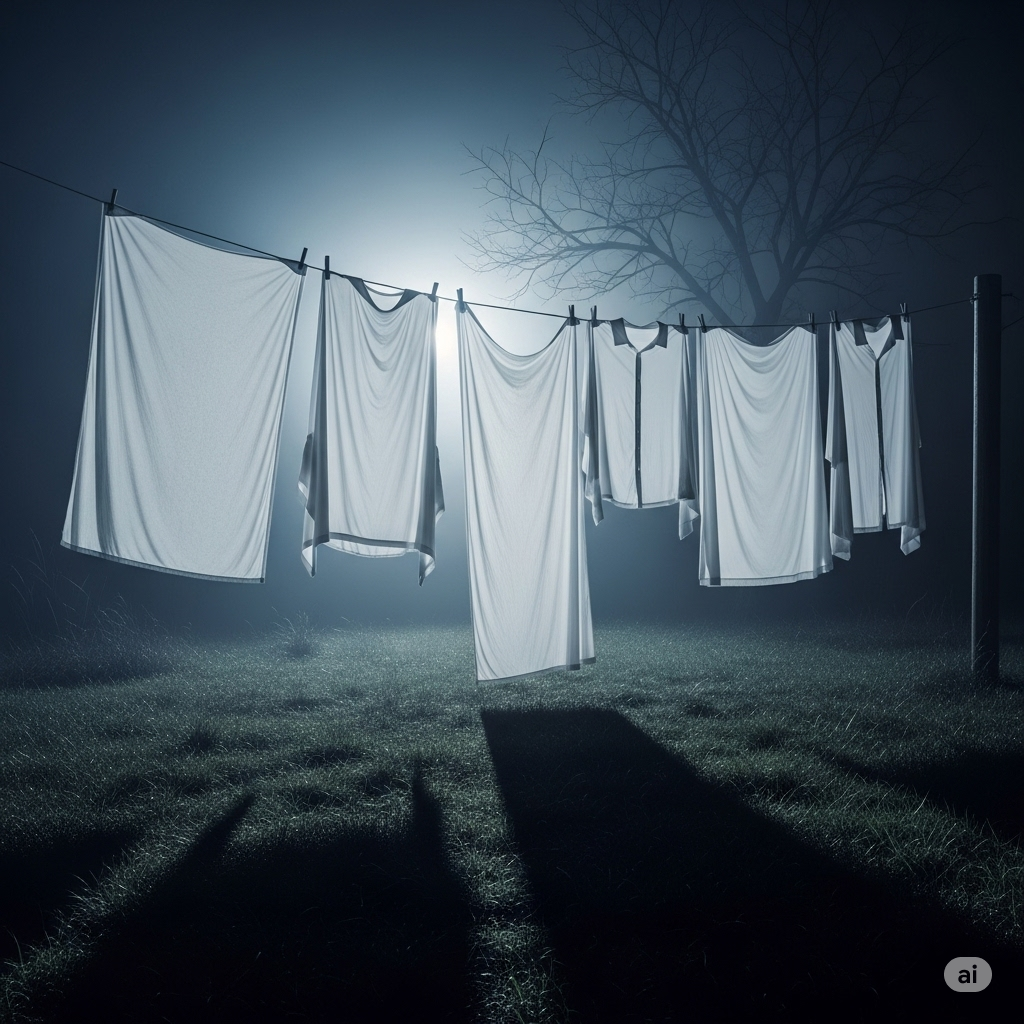
There is an anecdote about a military officer. While on patrol, he saw a swaying figure through the window of a repair shop and panicked, thinking someone had hanged themselves, only to discover it was just work clothes on a hanger. The experience I had in my grandmother’s yard was the same type of illusion. The advice to take down laundry at night contained a bit of consideration to avoid startling family and neighbors.
The taboo against night laundry wasn’t alone
In Korean folklore, night was a time when the boundaries between the living and the dead blurred.
The Joseon Dynasty’s nighttime curfew and stories of the “night-wandering ghost” who steals shoes solidified the notion that night was a time when normal activity should cease. The night laundry taboo was just one of many such nighttime restrictions. While they used the language of the supernatural, they often contained practical warnings upon closer inspection.
When you place the representative night taboos of Korea side-by-side, the place of the night laundry taboo becomes clear.
| Taboo (禁忌) | Superstitious Result | Cultural Interpretation |
|---|---|---|
| Whistling at night | Calls snakes or ghosts | A warning that sound travels far in the quiet of night, attracting unwanted attention |
| Cutting nails at night | Mice will eat them and transform into humans | It’s easy to get hurt in the dark, and a fear of discarding parts of one’s body carelessly |
| Hanging laundry at night | Ghosts will attach or one’s luck will be blocked | A taboo with overlapping psychological, spiritual, and practical risks |
Calculations from an era when laundry was a full day’s labor
In the days before washing machines, doing laundry was heavy labor.
People used lye made from burnt rice straw or urine as detergent and had to beat the clothes with wooden bats at a stream.
Isabella Bird Bishop, who visited Joseon at the end of the 19th century, observed Korean women beating laundry with bats all day long.
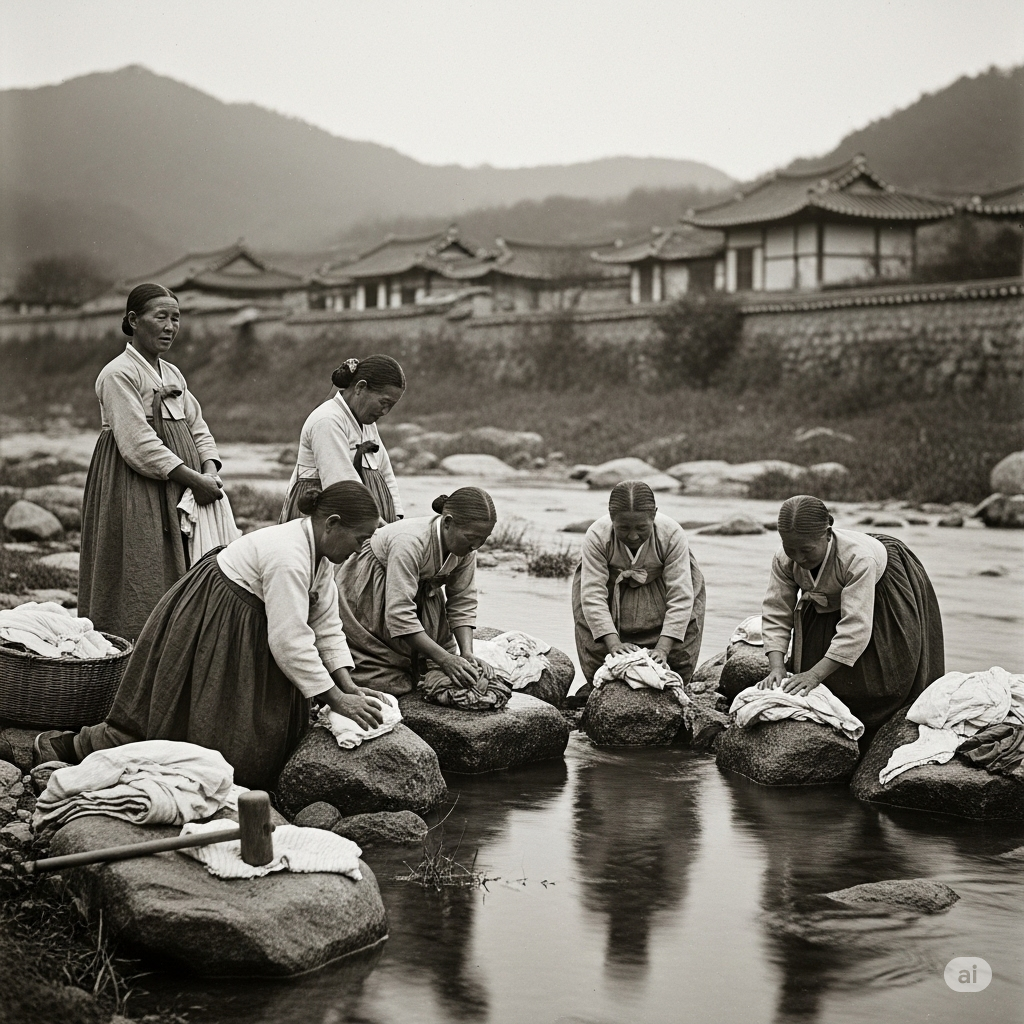
Leaving such laundry outside overnight causes problems.
As temperatures drop at night, relative humidity rises, and dew forms in the early morning. The laundry you hung to dry ends up getting damp all over again. The superstition that “the owner’s luck will be blocked” is less about a curse and more of a warning about the tangible loss of a full day’s labor and potential damage to the fabric.
The belief that night laundry invites spirits and blocks ancestral paths
Taboos also extended into the spiritual realm.
A classic example is the saying, “If you don’t take down the clothesline during a memorial service, the ancestral spirits cannot enter.” It is a belief that clothes hanging on a line act as a barrier blocking the path of spirits.
Applying the same logic to the night, people believed that clothes permeated with the scent of humans would attract wandering spirits or absorb the “yin” (negative) energy of the night, harming the household’s fortune. This part is not meant to be verified by science but belongs to the realm of belief. However, as we will see in the next section, the intuition that “leaving damp things out overnight is bad for your health” holds quite a bit of truth.
The culprit behind the musty smell: Moraxella bacteria
Moraxella osloensis is the bacterium most frequently identified as the culprit behind the musty odor of wet laundry. It produces foul-smelling substances while breaking down sweat and sebum left on the fabric. According to a Segye Ilbo report, this bacterium showed higher resistance to dryness and UV rays than E. coli or Staphylococcus aureus in experiments. Other bacteria like Micrococcus also contribute to the smell.
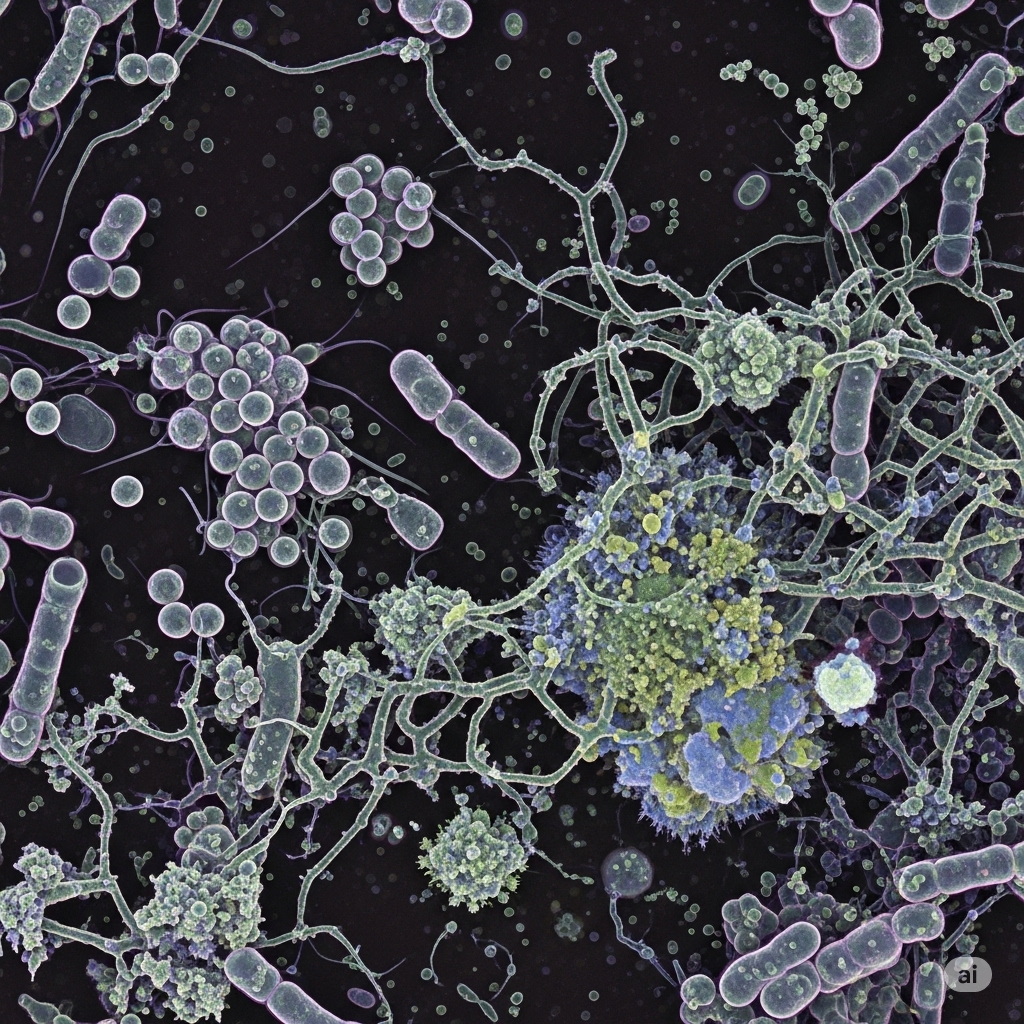
These bacteria thrive under the condition of ‘prolonged dampness.’
If you hang laundry at night when humidity rises, the drying time increases, which intensifies the odor.
If you dry them indoors, the situation changes. As noted in an SBS report, damp laundry raises indoor humidity, creating an environment perfect for mold and house dust mites, which can be a burden for people with allergies or rhinitis.
There is a line to be drawn here, however.
I originally wrote that ‘yin energy is synonymous with microbes’ and that the taboo matches modern science perfectly, but that was an exaggeration. Our ancestors didn’t know about bacteria. They simply explained through the concept of ‘yin energy’ the experience that leaving wet things out leads to odors and illness, and that experience happens to overlap with microbiology.
Other stories regarding hygiene and taboos are covered in my Korean Bathing Culture post, and folk wisdom on managing dangerous things through experience is summarized in The Temptation of a Single Bite at the Risk of Life.
If you have to hang laundry tonight
Nowadays, most people dry laundry indoors, and doing laundry at night is a part of daily life.
Instead of strictly following the taboo, you can just take the scientific half of the advice.
The key is to reduce the time the laundry remains wet.
Take it out as soon as the wash is done, space items out, and use ventilation or a dehumidifier.
Pouring in more detergent because of the smell is counterproductive. Detergent residue left on the fabric or in the washing machine can itself be a source of odor.
The idea that ghosts will attach to your clothes is something you can laugh off now, but the situation with Moraxella is different. They are bacteria that, in experiments, have proven to be more resilient to dryness and UV rays than E. coli.
References
- Taboo (禁忌) - Encyclopedia of Korean Culture | https://encykorea.aks.ac.kr/Article/E0007629
- Folk Beliefs (民間信仰) - Encyclopedia of Korean Culture | https://encykorea.aks.ac.kr/Article/E0020061
- Laundry (빨래) - Encyclopedia of Korean Culture | https://encykorea.aks.ac.kr/Article/E0025319
- Washing (세탁) - Encyclopedia of Korean Folk Culture | https://folkency.nfm.go.kr/kr/topic/detail/7076
- National Museum of Korean Contemporary History Newsletter Vol. 38 | https://www.much.go.kr/webzine/vol38/sub/sub4.html
- Recommended Essay - Don't Hang Laundry at Night / Shin Bok-hee - Korean American Essayists Association | https://jaemisupil.com/recommend_articles/42343
- Drying Laundry Indoors in Winter is Actually Harmful - SBS News | https://news.sbs.co.kr/news/endPage.do?news_id=N1002197636
- Summer Laundry Mustiness, Moraxella Bacteria Also a Cause - Segye Ilbo (2026.7.25) | https://segye.com/newsView/20260725500101