“Is it already October?”
You may have felt that several times already this year.
We often say this:
“It seems like time goes faster as you get older.”
But from a scientific perspective, the perception of time speeding up is not simply because of the number of years, but because of the biological and cognitive changes in the brain that come with aging.
This article examines why we get that feeling and how to reduce this illusion.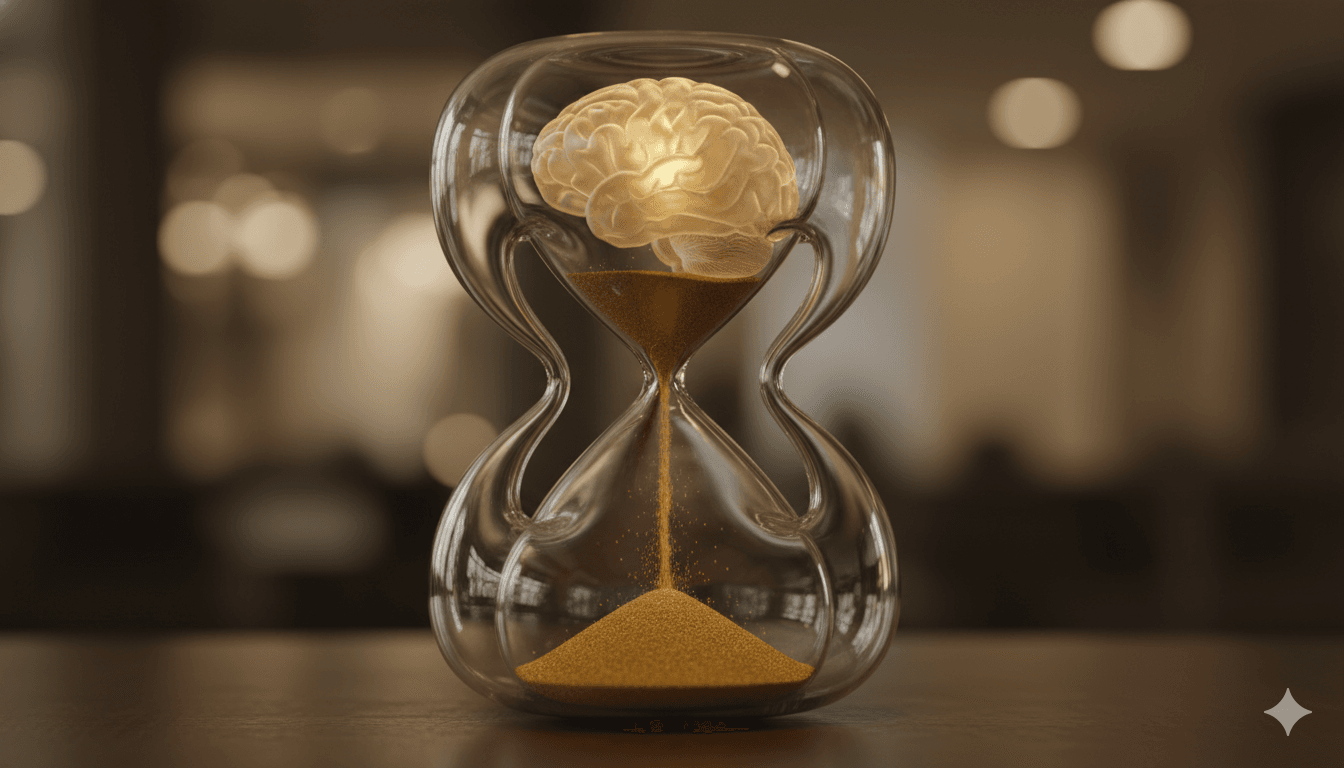
1. Dopamine & novelty decline — “Familiarity compresses time”
When ‘novelty’ disappears, there is less for the brain to record.
In this process, time feels “shorter.”
- Childhood: Everything is new. Many first friends, first trips, and first experiences.
→ The brain tries to record all these stimuli, increasing memory density. - Adulthood: The commute–lunch–commute routine, familiar routes and daily patterns.
→ The brain shifts into ‘autopilot’ while processing known information, and dopamine responses decrease.
Also, Psychology Today reports that the less new experience you have, the faster time feels. :contentReference\[oaicite:1\]{index=1}
If the brain judges ‘this is a scene I’ve already seen,’ that scene is remembered less and time seems to pass more quickly.
2. Pattern recognition and information-processing changes — the trap of ‘autopilot mode’
The brain prefers repetition and patterns to conserve energy.
As routines become familiar, the brain judges that there is “less information to process.”
- The same commute, the same coffee order, similar conversation topics → the brain judges ‘no new information.’
- With frequent repetition, the frequency of internal brain state changes decreases.
Recent research has found evidence that fewer brain activity changes (state transitions) are associated with a faster subjective sense of time. :contentReference\[oaicite:2\]{index=2} - A Psychology Today article also explains that “the fewer events that remain in memory, the faster subjective time feels.” :contentReference\[oaicite:3\]{index=3}
In short, daily automation signals the brain ‘no need to record,’ which makes the day feel like it “flew by.”
3. Aging-related cognitive structure changes — ‘brain state transitions’ slow down
On a deeper level, as we age the brain’s ways of processing information and transitioning between states also change. The previously mentioned ‘autopilot mode’ is closely related, neuroscientifically, to the slowing of brain state transitions.
For example, the frequency of switching from one brain state to another tends to decrease or the transition time tends to increase. :contentReference\[oaicite:4\]{index=4}
In other words, within the same hour there are fewer moments when the brain judges ‘this is a new event,’ and as a result time subjectively seems to pass more quickly.
Also, from a proportional perspective—‘what percentage of my life is one year’—time feels faster. For example, for a 10-year-old one year is 10% of life, but for a 50-year-old it’s only 2%. :contentReference\[oaicite:5\]{index=5}
These cognitive, biological, and proportional changes act together, making time feel faster as we get older.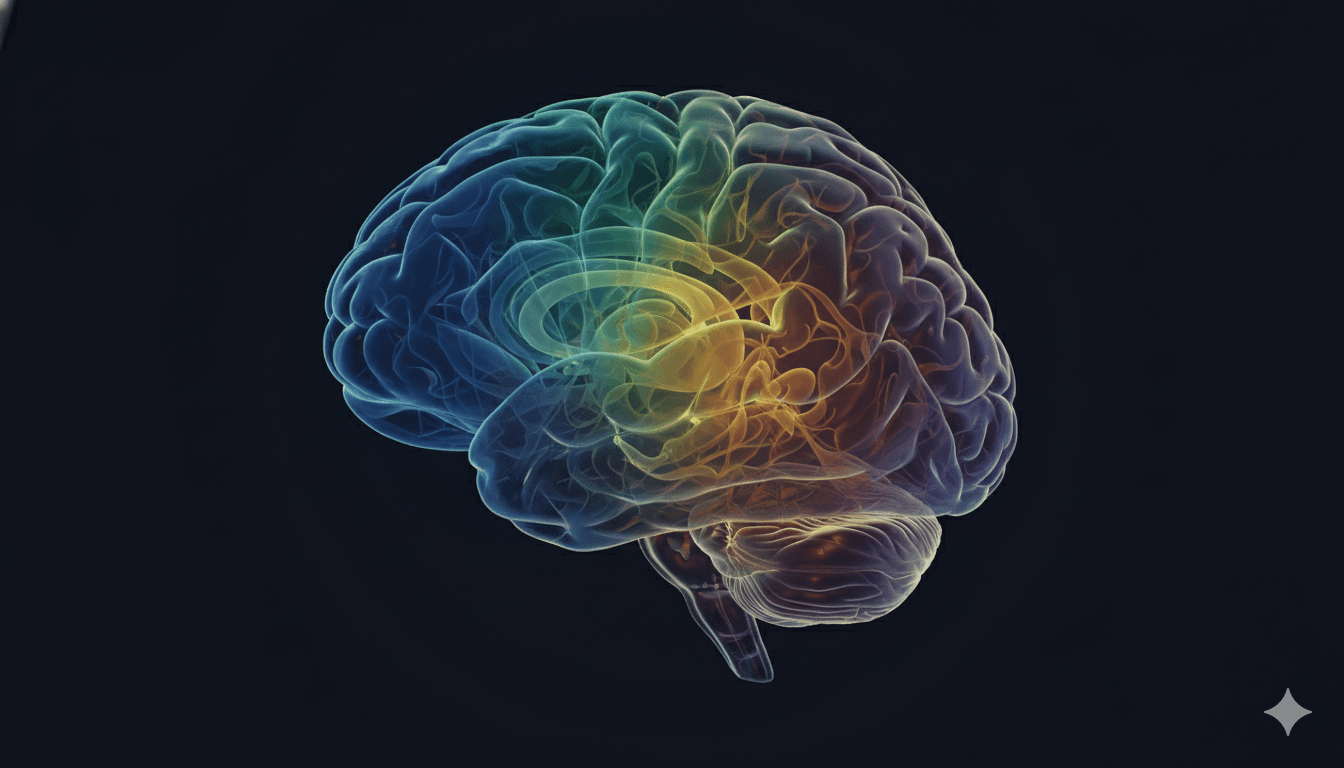
4. Ways to regain memory density — make time feel slower
To reduce the feeling that time is passing quickly, you can try the following:
🔸 1) Add novelty
Step out of familiar routines.
- Walk a different route
- Start a new hobby
- Explore unfamiliar places
New stimuli trigger the brain’s dopamine response and increase memorable events.
🔸 2) Consciously record
A diary, photos, or even simple notes help.
When memories remain, you feel like you had more time.
Recording increases memory density ↑ → and connects to an increase in the perceived ‘length’ of time.
🔸 3) Secure meaningful experiences
Not only novelty but also “meaningful” experiences matter.
Deep conversations with friends, time with family, and engaging activities leave stronger impressions on the brain. Psychology Today also points out that meaningful experiences expand perceived time. :contentReference\[oaicite:6\]{index=6}
🔸 4) Focus on the present moment (mindfulness)
The opposite of ‘autopilot’ is ‘intentional focus.’
Even on your daily commute, deliberately waking your senses—‘today I’ll notice the feel under my feet’ or ‘I’ll smell the coffee’—disrupts the brain’s autopilot and helps store familiar moments as ‘new’ memories through mindfulness.
Conclusion — time is a ‘function of novelty’
Feeling like time is speeding up isn’t because of age itself, but because our brains choose familiarity and efficiency.
But the good news: we can change this illusion as much as we want.
By doing ‘new things,’ ‘recording,’ and creating ‘meaningful moments,’
your brain will again judge ‘this is worth recording’ and
those moments will remain for you as longer, richer time.
Summary :
The speed of time depends not on age, but on how much novelty you give your brain.