
When religion asks ‘why’ and science answers ‘how’, we finally complete the picture of existence.
- Various creation narratives presented by major religions (Abrahamic, Hinduism, Buddhism)
- The 13.8 billion years of cosmic history revealed by science, the key stages of ‘Big History’
- Insights into how these two origin stories provide meaning to our existence
Part 1: Humanity’s Quest for Beginnings
Introduction: The Power of Origin Stories
For a very long time, humanity has been curious. “Where do we come from, and where are we going?” The effort to answer this fundamental question has been one of humanity’s deepest desires. The result of this effort is the ‘origin story’. It is not just a simple tale from the past, but a lens through which a community views the world (worldview), giving meaning to our existence and providing coordinates that indicate our place in the vast universe.
In ancient societies, ‘creation myths’ primarily took on this role. They explained how the heavens and the earth, and all things in the world came into being, and where the order of the society we live in originated. Myths served as a powerful adhesive that informed our identity, telling us “Who are we?” and binding communities together through shared beliefs.
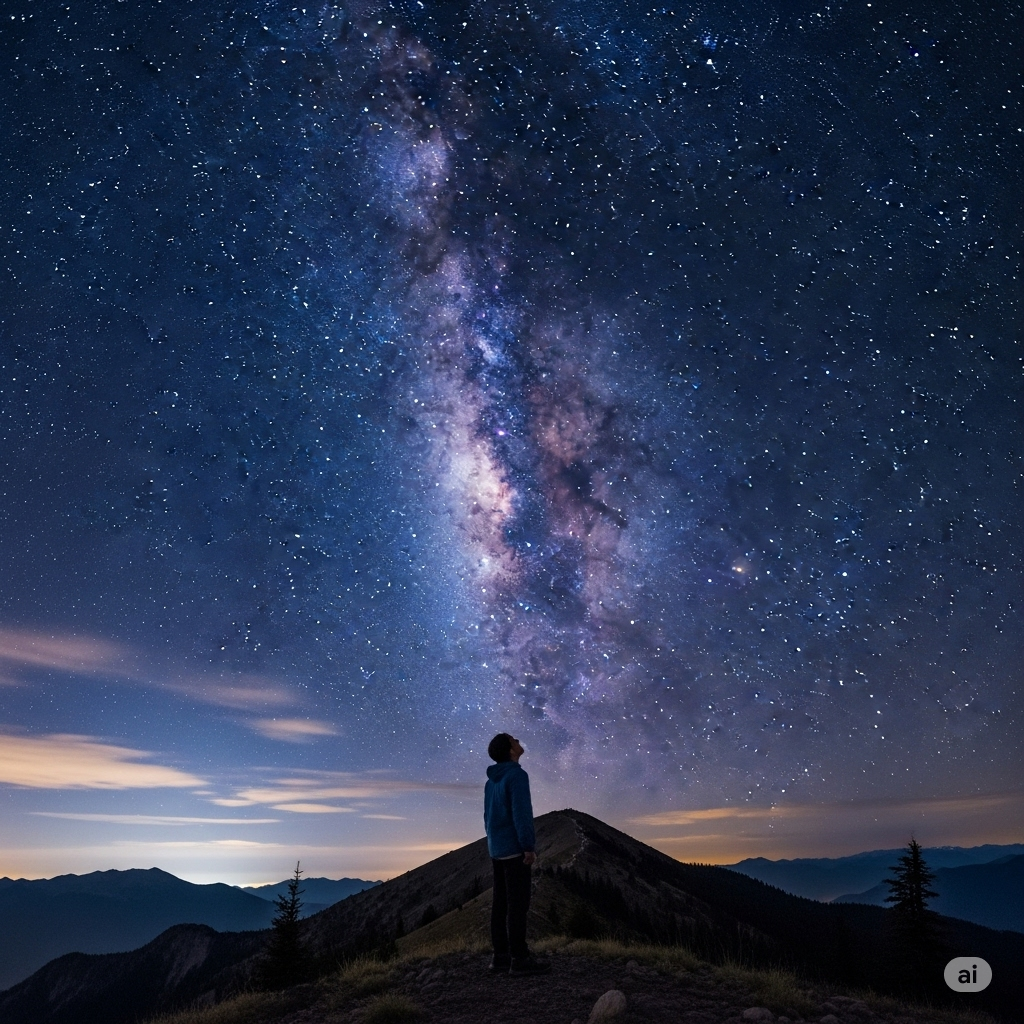
In modern times, science tells us another kind of origin story. This is ‘Big History’. Big History is a discipline that weaves together the birth of the universe 13.8 billion years ago, the history of the Earth, life, humanity, and civilization into one grand narrative. In the age of science, it explores our origins based on empirical evidence as a new ’narrative of identity’ for humanity.
Interestingly, both myths and Big History fundamentally serve the same role. Both narratives aim to create a ‘historical community’ through shared history. While religion binds specific ethnic or faith communities, Big History dreams of a narrative that encompasses all humanity through the universal language of science.
Two Ways of Knowing: Faith and Empiricism
The relationship between science and religion is quite complex. Models for understanding this relationship are usually divided into four categories: the ‘conflict model’ which denies each other, the ‘independent model’ which states they answer different questions, the ‘dialogue model’ which allows for conversation, and the ‘integration model’ which seeks deep integration.
In this article, I will examine the two stories from the perspective of the ‘dialogue model’. Rather than fighting over which side is correct or viewing each other as completely separate, this attitude recognizes both as great intellectual and spiritual legacies born from humanity. Einstein famously said, “Science without religion is lame, and religion without science is blind.” When we look at the ‘world of facts (how)’ that science reveals and the ‘world of meaning (why)’ that religion presents together, we can finally understand our existence more deeply.
Part 2: The Universe as God’s Creation - Religious Origin Stories
The Beginning of Abrahamic Traditions: A Purposeful Universe
Judaism, Christianity, and Islam share a worldview that an absolute God created the universe with clear will and purpose. Their origin stories depict a transcendent creator who brings order from chaos and existence from non-existence.
The Book of Genesis in the Old Testament actually begins with two different creation stories. The first story (Genesis 1) grandly describes the creation of the world over six days through divine word, while the second story (Genesis 2) presents a much more human and intimate atmosphere, where God directly molds a person from the earth. These two are not contradictory but rather complement each other, addressing both cosmic perspectives and human inner issues.
The Quran in Islam also shares the story of creation over six days, but there is a crucial difference: the concept of ‘original sin’, which is central to Christian theology, is absent. In the Quran, Adam’s mistake is not an inherited sin but a forgiven personal error. Therefore, Islam believes that all humans are born with a pure nature (‘fitrah’) without sin. This small difference fundamentally alters the salvation views of each religion.
The Cycle of Hinduism: An Ever-Changing Universe
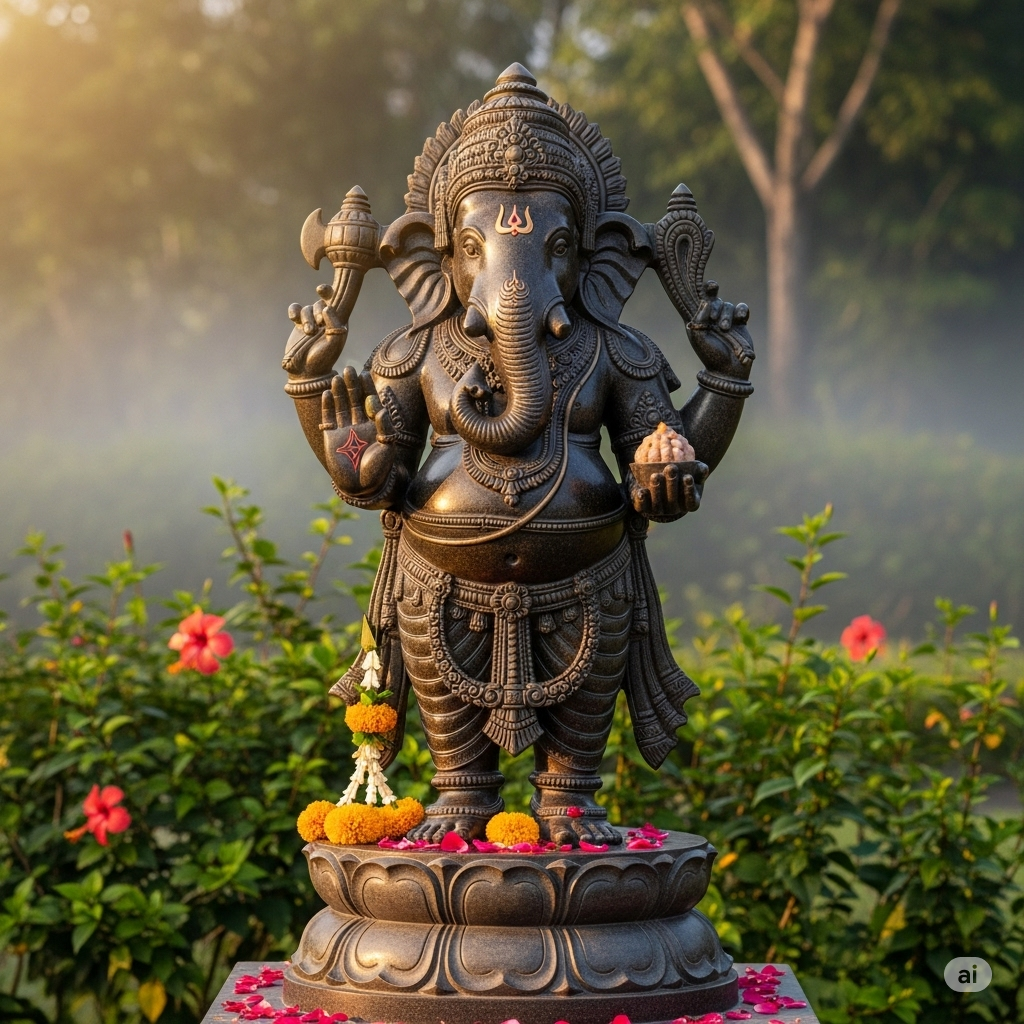
Hindu cosmology is not a clear linear beginning and end but a vast cycle where creation and destruction eternally repeat. This cycle is overseen by three main deities, the ‘Trimurti’.
- Brahma, the god of creation: initiates a new cycle of the universe.
- Vishnu, the god of maintenance: preserves the order and balance (dharma) of the world.
- Shiva, the god of destruction: destroys the old world to prepare for new creation. His destruction is not an end but a purification process for rebirth.
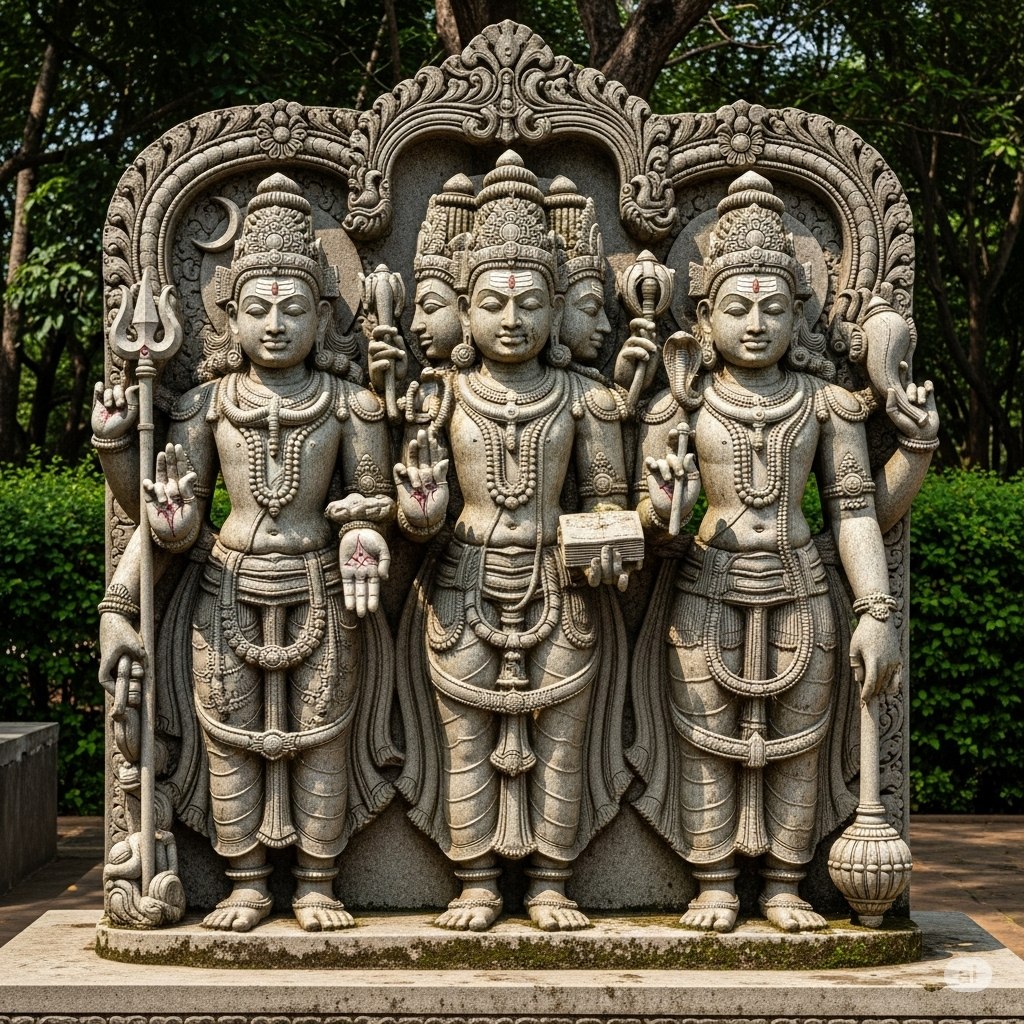
Here, the ultimate reality is often described as the impersonal and universal principle known as ‘Brahman’. The idea that everything originates from one vast cosmic entity forms the deep roots of Eastern worldview.
The Buddhist Universe: A World of Interconnected Causality
Buddhism does not speak of a creator or the first event but explores the fundamental principles of how all beings arise and perish in connection with each other. Siddhartha Gautama (the Buddha) deliberately remained silent on metaphysical questions like “Is the world eternal?” because he believed such questions do not help in alleviating immediate suffering.
The core concept that replaces creation myths in Buddhism is ‘Dependent Origination’. It can be summarized as, “This exists because that exists, and this arises because that arises.” The teaching states that nothing in the world exists independently; rather, everything arises from countless causes and conditions intertwined like a web. Therefore, the Buddhist origin story is an innovative exploration of where our mental suffering begins, rather than the physical beginning of the universe.
Part 3: The Grand Narrative of Science, Big History
The origin story told by science is based on observable evidence and universal physical laws. ‘Big History’ explains the 13.8 billion years of history from the Big Bang to the present through the concept of ‘increasing complexity at critical junctures’.
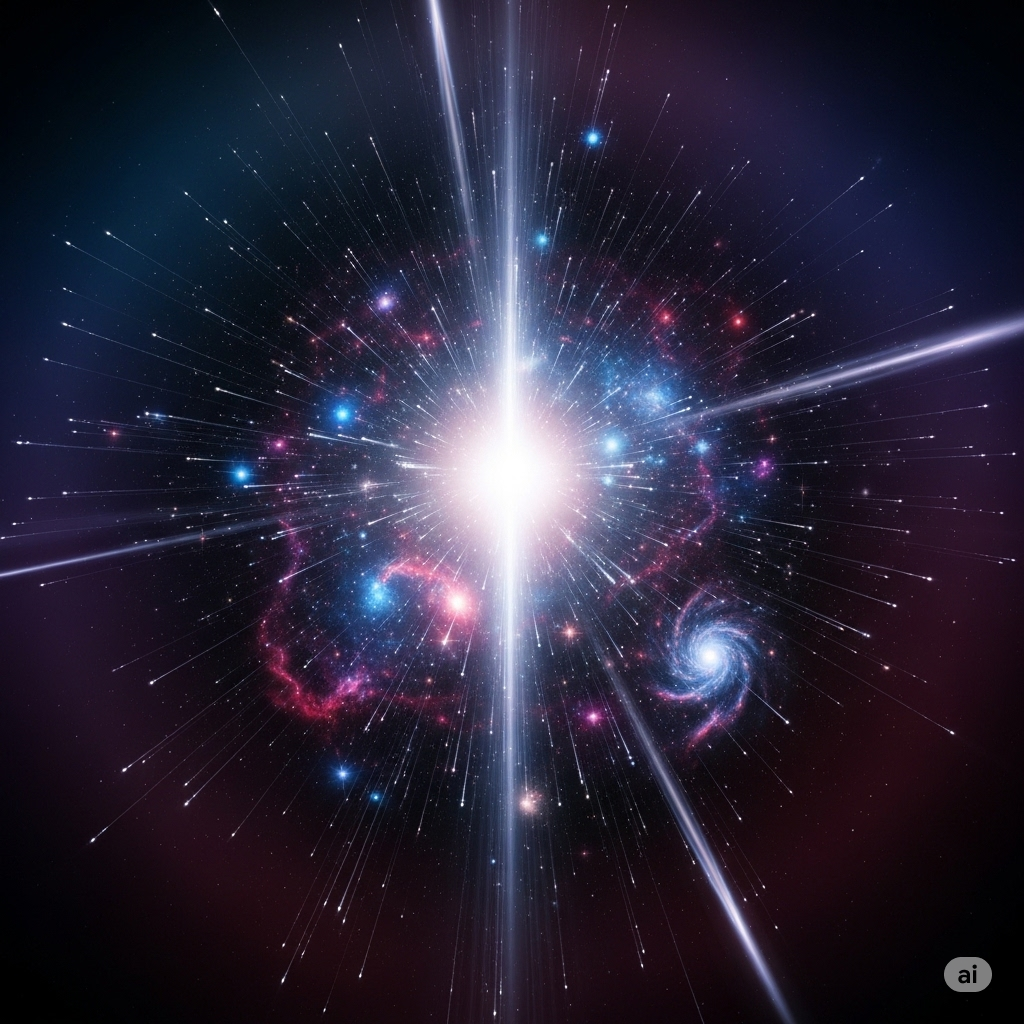
Critical Phases 1-3: The Big Bang, Stars, and the Birth of New Elements
The first chapter of the scientific origin story begins about 13.8 billion years ago with the ‘Big Bang’. It was the moment when the universe explosively expanded from an unimaginably hot and dense point, giving birth to time, space, matter, and energy. The strongest evidence for this theory is the faint afterglow of the Big Bang, known as ‘cosmic microwave background radiation’.
Immediately after the Big Bang, the universe consisted only of hydrogen and helium. The heavier elements that make up our bodies today, such as carbon, oxygen, and iron, were created inside the universe’s great furnaces, ‘stars’. Stars acted as ’element factories’ throughout their lifetimes, creating heavier elements through nuclear fusion. In particular, elements heavier than iron, such as gold or uranium, were scattered into the universe through the majestic ‘supernova explosions’ that massive stars cause at the end of their lives. As astronomer Carl Sagan said, “We are made of star stuff” is not just a poetic metaphor but a scientific fact.
Critical Phases 4-5: The Solar System, Earth, and the Emergence of Life
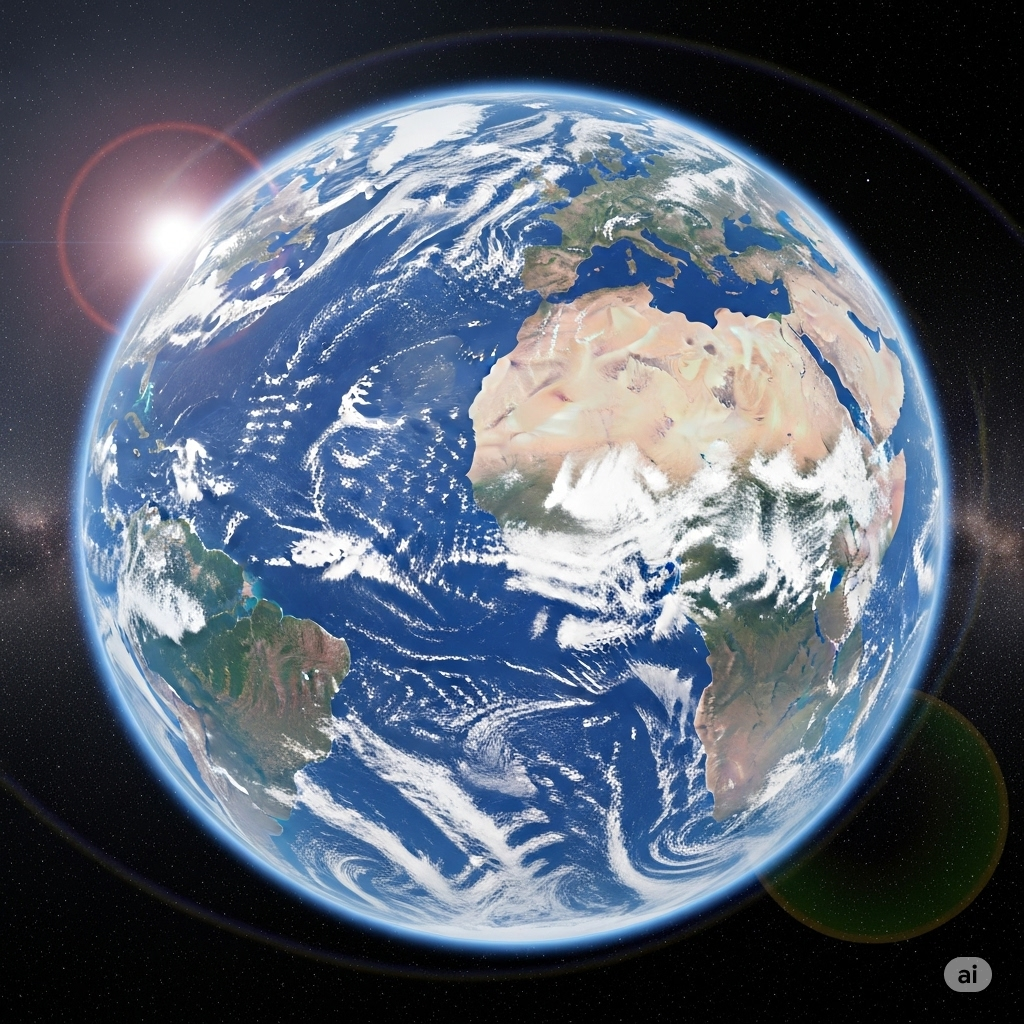
About 4.6 billion years ago, a massive cloud of gas and dust coalesced in a corner of our galaxy to form the solar system. Approximately 3.8 billion years ago, the first life emerged from inanimate matter in the primordial oceans. This process remains an unsolved mystery, but hypotheses such as the ‘RNA world’ hypothesis and the ‘deep-sea hydrothermal vent’ hypothesis are being discussed. About 2.5 billion years ago, the ‘Great Oxidation Event’, caused by photosynthetic cyanobacteria releasing oxygen in large quantities, changed the fate of the Earth and paved the way for life to venture onto land.
Recent Critical Phases: The Rise of Humanity
The final chapter of Big History is about us, Homo sapiens. Emerging in Africa about 200,000 years ago, modern humans possessed the ability for ‘collective learning’, allowing knowledge and skills to be accumulated across generations through sophisticated language. Thanks to this ability, humanity could develop faster than any other species. Following the ‘Agricultural Revolution’ and the ‘Industrial Revolution’, we gave rise to today’s technology-centered modern civilization.
Part 4: Comparing and Dialoguing the Two Narratives
The origin stories of religion and science answer different questions, understand the world in different ways, and pursue different purposes. I believe the most interesting point is that when the two narratives complement rather than reject each other, they provide a more complete picture.
| Feature | Religious Narrative (Myth) | Scientific Narrative (Big History) |
|---|---|---|
| Core Question | Why are we here? (Purpose and meaning) | How did we become what we are? (Process and cause) |
| Time Perspective | Linear (Abrahamic) or Cyclical (Hindu/Buddhist) | Linear (starting from the Big Bang and continuously evolving) |
| Ultimate Cause | Transcendent Being (God) or Fundamental Principle (Brahman, Dependent Origination) | Natural Laws, Chance, and Emergent Complexity |
| Structure | Top-down: Absolute principles design the world | Bottom-up: Complexity gradually emerges from simplicity |
| Role of Humans | Special Creatures: Given meaningful roles within God’s plan | Cosmic Beings: Products of 13.8 billion years of evolution and self-understanding |
Conclusion
What can we learn from examining these two great origin stories? How do you find your place within these grand narratives?
- First, religion and science answer questions on different dimensions. Science tells us how the universe works, while religion presents meaning and values on how to live within it.
- Second, both narratives provide us with a sense of belonging and awe. The belief that we are created in the image of God, the realization that we are part of an eternal cycle, and the scientific fact that we are born from stardust all evoke a sense of wonder about existence.
- Third, an integrative perspective leads us to a deeper understanding. By reading both books together rather than insisting on one language, we can have a richer perspective that encompasses both the ‘world of facts’ and the ‘world of meaning’.
Ultimately, the great journey of seeking answers to the eternal question “Who are we?” will continue as long as humanity exists.
References
- Creation Myths - Encyclopedia of Korean Culture link
- From the Big Bang to Humans: What is Big History? - Korea Institute for Advanced Study link
- Creation - Wikipedia link
- Dependent Origination (Buddhism) - Namu Wiki link
- Big History - Wikipedia link
- Big Bang Cosmology - Astronomy and Space Knowledge Information link
- Birth and Evolution of the Solar System - Astronomy and Space Knowledge Information link
- Origin of Life - Wikipedia link