
The First War That Opened the Chapter of Myth
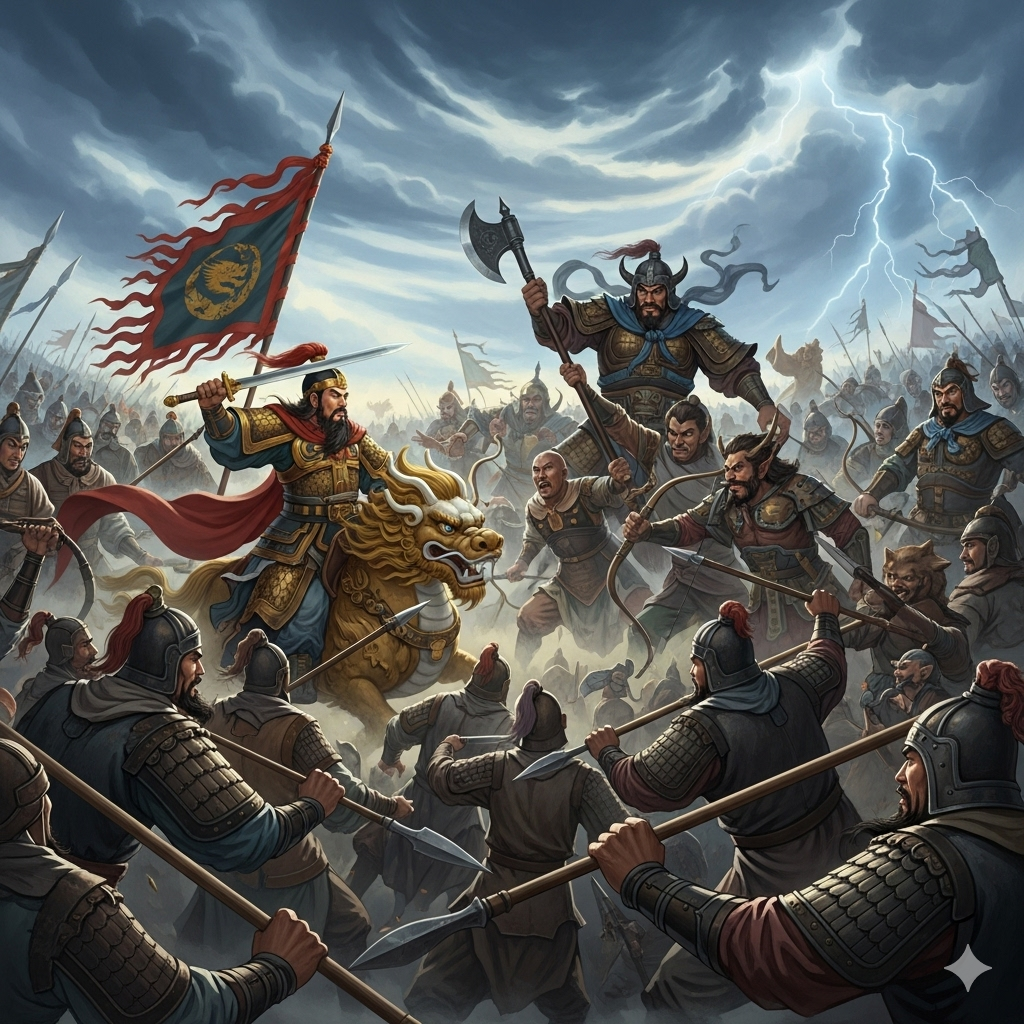
A long time ago, in the early dawn when the vast land of China was still shrouded in the mist of mythology, history whispers of a great war that shook heaven and earth. The name of this grand battle, which adorns the first page of the Records of the Grand Historian (史记), is The Battle of Zhuolu (涿鹿之戰). This was not merely a dispute between tribes but a fateful confrontation that would determine the future of Chinese civilization.
◆ The Grand Duel of Heroes and Monsters
On one side of the story stood the hero of civilization, Emperor Huangdi (黃帝) Xuanyuan (軒轅). He was a great leader who united the scattered lords and governed his army with virtue. Opposite him stood the fearsome god of war, Chiyou (蚩尤). With a copper head and iron forehead, he was said to have chewed on stones and sand, leading the 72 (or 81) tribes as the chief of the Jiuli (九黎). In history, he is depicted as a rebel who caused chaos in the world.
The war was a battleground of powers beyond human imagination. As Chiyou summoned thick fog to confuse the Emperor’s army, the Emperor created a mysterious invention, the Zhinangche (指南車), pointing in all directions to navigate through the crisis. When Chiyou called upon the wind god Fengbo (風伯) and the rain god Yusha (雨師) to unleash a storm, the Emperor received help from the heavens, sending the drought goddess Ba (魃) and the water-controlling dragon Yinglong (應龍), ultimately securing victory.
According to Sima Qian’s records, the Emperor captured and killed Chiyou on the plains of Zhuolu, uniting the scattered tribes to establish the Huaxia (華夏族), which would later become the Han people (漢族). This dramatic victory made the Emperor the progenitor of Chinese civilization, and the Battle of Zhuolu has been passed down for thousands of years as a symbolic event where good (善) triumphed over evil (惡). (This is a controversial point as it contradicts Korean records, which often depict Chiyou as the victor, and many folk traditions remain regarding this. This aspect will be revisited later.)
◆ The Hidden Truth Beyond the Veil of Myth
But what truly lies behind such a fantastical story? Should we view this tale of gods and monsters merely as the imagination of ancient people? The great historian Sima Qian recorded this mythical event at the beginning of his historical text because it was recognized as a significant historical turning point for future generations.
Now, let us lift the thick fog of mythology and embark on a journey to uncover the hidden reality of history. Perhaps this grand war was not a matter of divine whims or heroic ambitions, but rather a fierce struggle over the most fundamental issue that determined the survival of ancient societies: the essential resource known as ‘salt.’
Hypothesis: Was the Battle of Zhuolu a War for ‘Salt’?
◆ The Value of Ancient White Gold, Salt
When we momentarily set aside the romance of mythology and look into the realities of ancient society, we confront the overwhelming importance of ‘salt.’ Salt was not merely a seasoning; it was a vital necessity for sustaining human life, especially in agricultural societies where grains were the staple food.
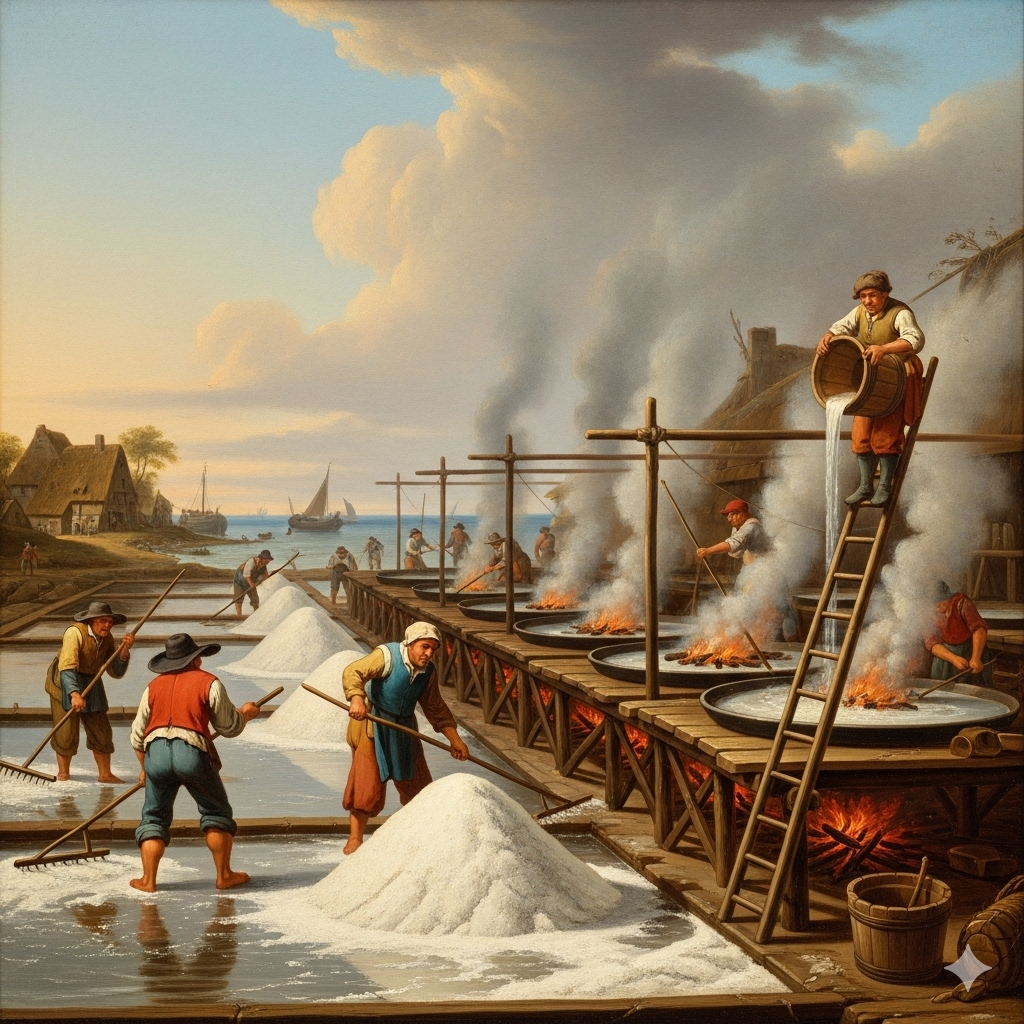
The strategic value of salt is proven by history. During the Tang Dynasty, salt taxes accounted for half of the national revenue, and the salt smuggler Huang Chao (黃巢) led a massive rebellion that shook the empire. In the American Civil War, the Union army gained the upper hand by blockading Southern salt production, and Gandhi confronted the British Empire with the ‘Salt March.’ In ancient China, salt was regarded as a ‘great treasure of the nation (國之大寶)’ alongside iron, viewed as the lifeline of the state.
Controlling the production and distribution of salt meant seizing wealth and power. Thus, the hypothesis that ancient tribes waged wars risking everything to monopolize this ‘white gold’ is quite persuasive.
◆ The Target of War: Yuncheng Salt Lake (運城鹽湖)
So, where was the prize that the Emperor and Chiyou fought for with their lives? The answer likely lies in the vast salt lake located in southern Shanxi Province, Yuncheng Salt Lake (運城鹽湖). Known as ‘Xiechi (解池)’ in ancient times, this lake has records of salt extraction dating back 4,600 years, astonishingly aligning with the period when the mythical Emperor was said to have been active.
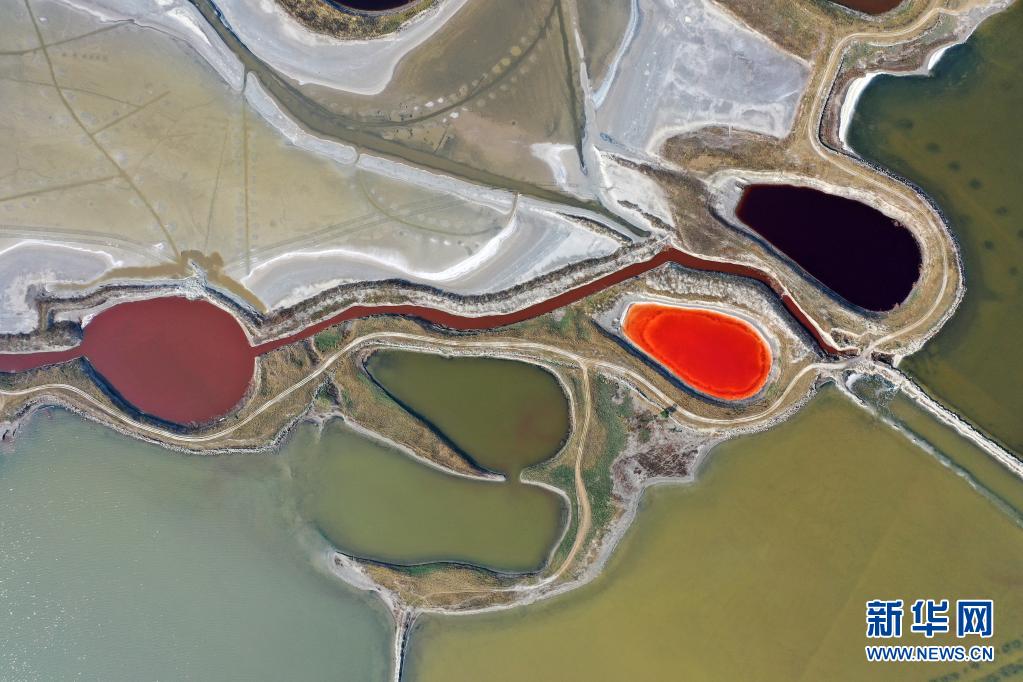
Yuncheng Salt Lake was not just a simple salt field. The ’lake salt (池鹽)’ produced here was the almost sole source of salt supplied to the entire Central Plains, the birthplace of ancient Chinese civilization. The fact that the capitals of legendary emperors Yao, Shun, and Yu were all near this lake demonstrates the ancient powers’ intent to control this critical resource.
Interestingly, legends about the Battle of Zhuolu are still vividly passed down in the Yuncheng region. It is said that the salty water of the lake was formed from the blood of Chiyou, who was defeated and killed by the Emperor. This goes beyond mere folklore; it serves as strong evidence that the massive conflict surrounding the salt lake has been etched into the collective memory of people in the form of myth.
Decoding the Hidden Codes in Language and Place Names
◆ The Name of the Battle: Fighting in ‘Murky Salt Water’
The most intriguing clue supporting the hypothesis that the Battle of Zhuolu was a war over salt lies hidden in language. The name of the battle, ‘Zhuolu (涿鹿, Zhuōlù)’, sounds almost identical to ‘Zhuólu (浊卤, zhuó lǔ).’ ‘Zhuólu’ means ‘murky salt water’ or ’turbid brine,’ directly describing the brine before salt crystallization from Yuncheng Salt Lake. Thus, ’the battle at Zhuolu’ can literally be interpreted as ’the battle in the place of murky salt water.’
This code extends to the main characters of the war. The defeated ‘Chiyou (蚩尤, Chīyóu)’ and the Emperor’s other rival, ‘Yandi (炎帝, Yándì),’ both have names that closely resemble the ancient pronunciation of ’lake salt (池盐, chí yán),’ suggesting that Chiyou and Yandi may symbolize salt itself or the groups producing salt rather than specific individuals.
◆ The Location of the Battle: Hebei or Shanxi?
Traditionally, the stage of the Battle of Zhuolu has been known to be in Zhuolu County, Hebei Province. However, from the perspective of the salt war hypothesis, this location seems awkward. The key resource, Yuncheng Salt Lake, is in Shanxi Province, making it illogical to wage war hundreds of kilometers away.
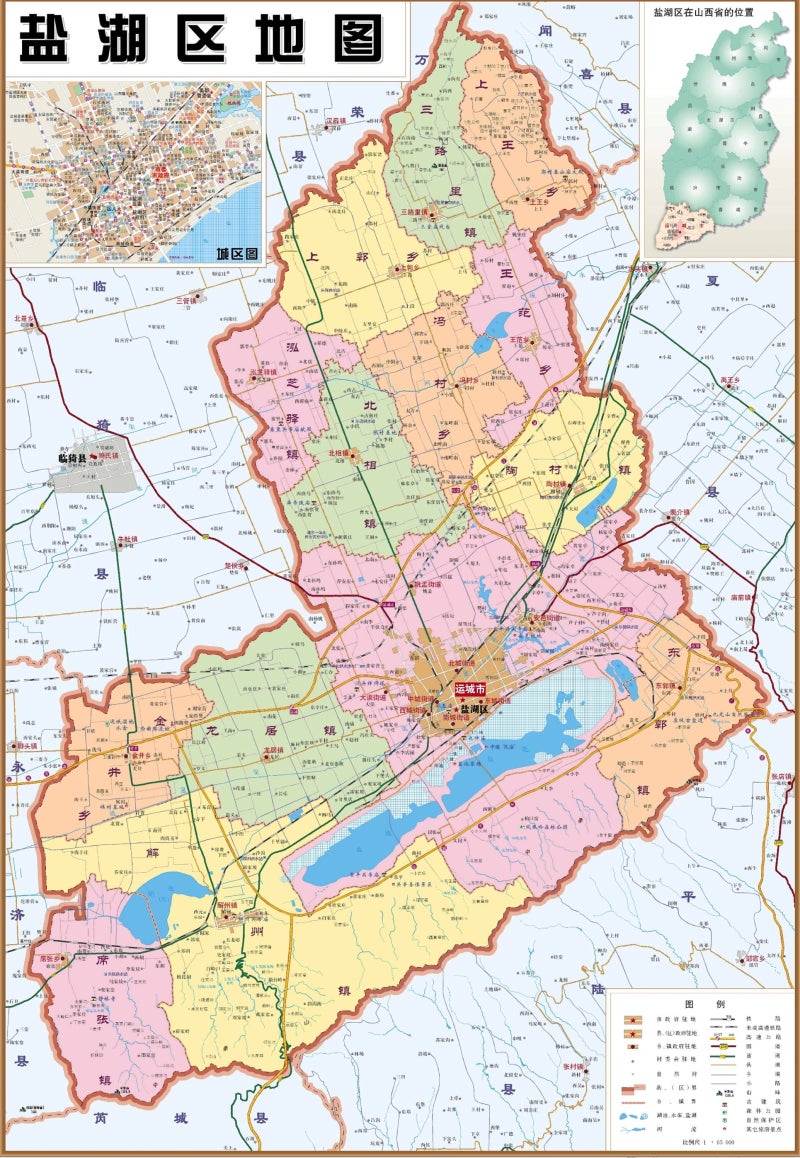
A closer examination of ancient texts reveals that the battle site is not specifically identified as one place. There are records of ’the plains of Jizhou (冀州),’ which encompassed a vast area including parts of present-day Shanxi Province. Crucially, the historical text Xiexian Zhi (解縣志) notes that the old name of the area near Yuncheng Salt Lake was indeed ‘Zhuolu.’
Geographically, the Shanxi theory is much more reasonable. The forces of Yandi were in the southwestern part of Shanxi, while the Emperor’s forces were in the middle reaches of the Yellow River, with Yuncheng Salt Lake strategically located at the center of both forces. If the two factions were fighting for supremacy in the Central Plains, it would be most natural for the battleground to be around the key resource of the salt lake.
Perhaps later dynasties wished to erase the traces of a secular war over resources while deifying the Emperor. They might have removed the economic motive of ‘salt’ from the background of the battle and relocated the Battle of Zhuolu to portray it purely as a moral event where civilization punished barbarism.
Evidence Beneath the Ground: Archaeological Discoveries at Yuncheng Salt Lake
◆ Cradle of Civilization, Salt Lake
If the puzzles of language and place names open new possibilities, archaeological discoveries provide a solid material foundation for that hypothesis. Over the past few decades, astonishing relics proving the highly developed Neolithic civilization have emerged around Yuncheng Salt Lake.
This area is densely packed with sites from the Yangshao Culture (仰韶文化) and Longshan Culture (龍山文化), undeniably the heart of early Chinese civilization. Notably, at the Taosi (陶寺) site, massive city walls, palaces, astronomical observatories, and early writing have been discovered, earning it the title of ’the first China.’ It is only natural to infer that the economic foundation enabling such prosperity was the vast salt resources of Yuncheng Salt Lake.
◆ Conclusive Evidence: Salt Jars ‘Changtongguan’
Among numerous discoveries, the site that presents the strongest evidence for the ‘salt war’ hypothesis is the Yuanchun (轅村) site. Located just 4 km from Yuncheng Salt Lake, this 5,000-year-old site yielded a large quantity of very uniquely shaped pottery known as ‘Changtongguan (長筒罐),’ a long cylindrical jar.
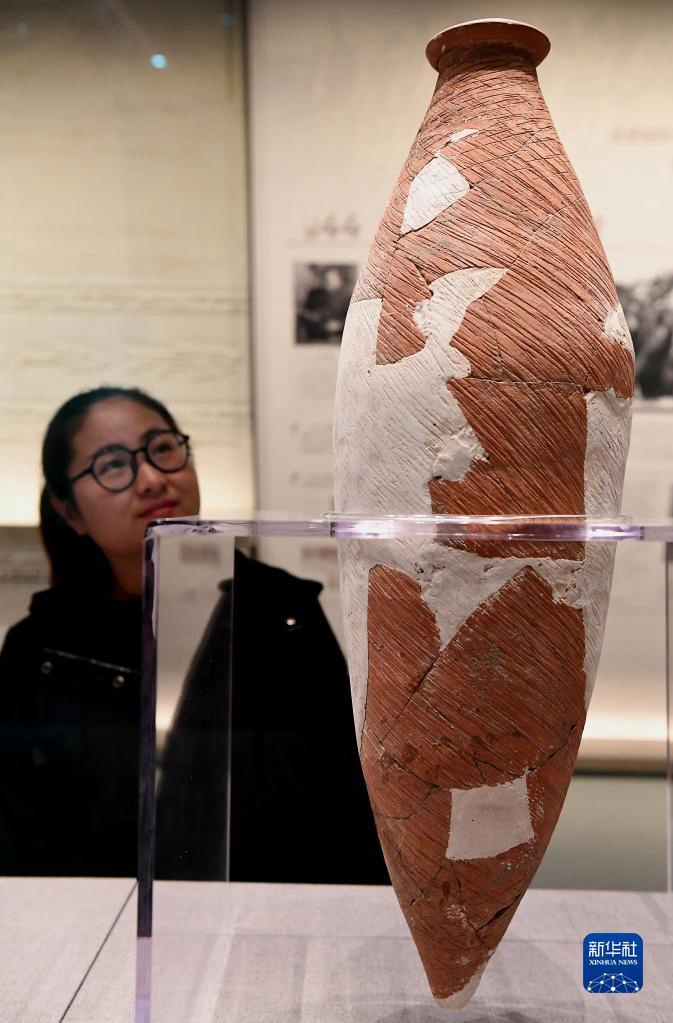
These Changtongguan jars have a unique shape rarely found elsewhere. Archaeologists noted that this special vessel was mass-produced right next to the vast salt lake, leading to the tentative conclusion that it was used for storing or transporting salt.
This discovery is revolutionary. If this hypothesis is correct, the Changtongguan serves as direct evidence that a systematic ‘salt industry’ existed here 5,000 years ago. The mass production of standardized containers (Changtongguan) for a specific product (salt) implies that processing, storage, and distribution were already taking place, suggesting that behind the grand war of mythology lay a fierce struggle over control of a highly organized economic production base.
Reinterpreting Myth: The Battle as a Natural Phenomenon
◆ The Great Allegory of the Salt Production Process
When we gather all the evidence together, we arrive at the astonishing interpretation that the myth of the Battle of Zhuolu is, in fact, a grand allegory personifying the natural process of salt production by ancient people. In other words, the ‘battle’ was indeed a war that took place, but its mythical depiction symbolically narrates the natural phenomenon of sunlight, wind, rain, and fog coming together to create salt crystals.
According to this interpretation, the protagonist Emperor Huangdi (黃帝) symbolizes ’light,’ represented by the sun. The hot sunlight is the most essential element for evaporating brine to obtain salt. In contrast, his adversary Chiyou (蚩尤) symbolizes the brine of the salt lake itself, the raw material before it becomes salt.
Within this framework, other elements of the myth find their place.
- Chiyou’s allies, Fengbo (風伯) and Yusha (雨師), are the greatest enemies of salt production, wind and rain.
- The drought goddess Ba (魃), who assists the Emperor, represents the clear and dry weather that salt producers desperately desire.
- The great fog (大霧) raised by Chiyou literally obscures the sun with the lake’s fog.
- The Zhinangche (指南車) created by the Emperor symbolizes human wisdom and technology that overcome such difficulties.
Ultimately, the myth of ’the Battle of Zhuolu’ becomes a grand epic depicting the process by which the ‘sun (Emperor)’ overcomes the obstacles of ‘rain and fog (Chiyou’s allies)’ to produce precious salt from ‘brine (Chiyou).’
◆ Decoding the Codes of the Zhuolu Myth
| Mythological Element | Salt Production Metaphor |
|---|---|
| Emperor (黃帝) - Hero | Sun (太陽) or ‘Emperor of Light.’ Creates salt with heat. |
| Chiyou (蚩尤) - Rebel | The brine (池盐/浊卤) of the lake itself. The raw material of salt. |
| Battle of Zhuolu (涿鹿之戰) | The natural phenomenon of solar evaporation and salt crystallization. |
| Fengbo (風伯), Yusha (雨師) | Rain and storms (風雨) that hinder salt production. |
| Drought Goddess Ba (魃) | Clear and dry weather (晴天) essential for evaporation. |
| Chiyou’s Great Fog (大霧) | Natural fog (霧氣) that obscures the sun. |
| Zhinangche (指南車) | Human wisdom and meteorological knowledge that overcome nature. |
Conclusion: Salt Becomes the Cornerstone of Civilization
◆ From Myth to Material History
Now, the Battle of Zhuolu is no longer a distant tale. The codes hidden in language and place names, along with the archaeological evidence unearthed from the ground, all point to one truth. At the heart of China’s first great war lies the material resource of ‘salt.’ The Battle of Zhuolu was a mythological record of a fierce economic war fought to control the production and distribution of essential survival resources during the dawn of civilization.
◆ Towards a Complex Truth
Of course, we cannot explain all of this simply with ‘salt.’ There is a perspective that Chiyou was not an evil monster but a powerful leader of the Dongyi (東夷族) alliance centered around the Shandong Peninsula. From this viewpoint, the Battle of Zhuolu can be seen as an actual tribal war between the Huaxia alliance (Emperor) in the west and the Dongyi alliance (Chiyou) in the east, fighting for supremacy in the Central Plains. The Yuncheng Salt Lake, located at the intersection of their spheres of influence, would have been the most significant cause and target of this grand war.
Perhaps the truth lies in the intertwining of these two interpretations. That is, the Battle of Zhuolu was a historical ‘salt war’ that actually existed, and the victorious Huaxia likely created the grand myth we know today by merging the memory of the actual war with the natural principles of the salt production process to justify their rule.
◆ An Eternal Legacy
As historical events and natural phenomena merged into a single narrative, the dominance of the victors was elevated to an unassailable cosmic principle. Ultimately, the struggle surrounding Yuncheng Salt Lake became a decisive factor in strengthening social organization, promoting technological innovation, and ultimately leading to the formation of a powerful authority capable of managing resources reliably, namely the state.
Whoever controls the ‘white gold’ dominates the Central Plains, and on that economic foundation, the cornerstone of Chinese civilization was laid. The desire for salt, which began in the misty fields of mythology, became a tremendous force that birthed civilization.