
Who Were We in the Days When We Only Had Names?
- When and how did Korean surnames begin?
- Why are surnames like Kim, Lee, and Park so prevalent?
- The 2000-year social transformation reflected in the surname before my name.
You may have wondered about the origins of Korean surnames at least once. The one or two characters before our names, which we take for granted, actually weave a grand narrative that spans 2000 years of history on the Korean Peninsula. It is a story about power and politics, social ambition and survival, and the formation of national identity.
To understand this long journey, we delve into three pivotal scenes: from the myth of Park Hyeokgeose, the political strategies of Goryeo’s founder Wang Geon, to the story of a slave named ‘Subong’ who dedicated his life to acquiring his own name. Following these narratives, you will realize that Korean surnames are not just mere titles but mirrors reflecting the changes of the times.
Chapter 1: The Birth of Surnames as Symbols of Kings and Nobility
Tracing back the origins of Korean surnames leads us to the mysterious era of myths. The Samguk Sagi and Samguk Yusa record that surnames emerged with the birth of early Silla kings.
- Park (朴) Clan Founder Park Hyeokgeose: Born from a purple egg, which resembled a park, he took the surname ‘Park’.
- Seok (昔) Clan Founder Seok Talhae: Discovered in a box guarded by a magpie, he derived his surname ‘Seok’ from ‘magpie’ (鵲).
- Kim (金) Clan Founder Kim Alji: Found in a golden (金) box in the forest, he acquired that surname.

However, contrary to this mythical narrative, there are no traces of surnames in contemporary records like inscriptions. People at that time identified themselves by group or regional names, such as ‘a certain person from the Sarangbu’.
So why were surnames necessary? Early surnames primarily served as a strategic tool to express national identity on the diplomatic stage with China. They were privileges enjoyed only by kings and the highest nobility, serving as external symbols.
Ultimately, the myths of Park Hyeokgeose and Kim Alji should be viewed not as historical facts but as part of a ‘founding myth’ created by historians of the Goryeo period to justify the power of the ruling class and bestow sanctity upon it.
Chapter 2: A Tool for Unification, Goryeo’s Surname Policy
After ending the chaotic period at the end of Silla, Goryeo’s founder Wang Geon faced the challenging task of unifying powerful local aristocrats across the nation. To solve this issue, he introduced the innovative Saseong (賜姓) policy.
Saseong is a system where the king grants surnames to loyal subjects or noble forces, thereby forming strong bonds.
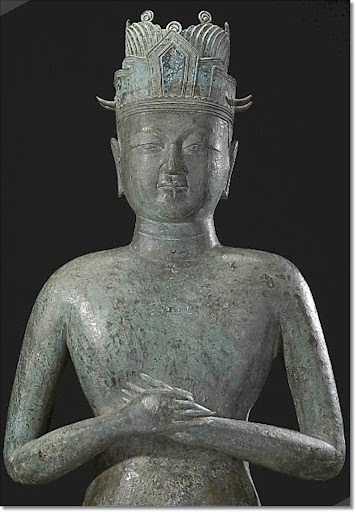
The most dramatic example is the birth of the Andong Kwon (權) Clan. After assisting Wang Geon in battles against Later Baekje, Wang Geon granted the surname ‘Kwon’ to the influential figure Kim Haeng from Hochang, saying, “There is a Kwon-do (權道) that weighs the situation.”
Furthermore, in 940, Wang Geon implemented the Toseongbunjeong (土姓分定) policy, granting local aristocrats their bon-gwan (본관) as their base and assigning them indigenous surnames. This was not merely a matter of granting names but a sophisticated form of ‘social engineering’ for state governance.
[Insight] The Uniqueness of the Korean Surname-Bon-gwan System The ‘surname-bon-gwan’ system created by Wang Geon became the foundation for a unique identity in Korea, where specific clans are strongly associated with specific regions, differing from China or Japan. This signifies that a person’s roots are connected to a specific territory recognized by the state, serving as a powerful social mechanism.
Ultimately, Korea’s unique ‘surname-bon-gwan’ system was the product of a monarch’s meticulous governance technique aimed at uniting fragmented forces into a single national system.
Chapter 3: The Ladder of Social Ascension, Commercialization of Surnames in Joseon
Surnames, which were markers of the ruling class in the Goryeo era, became even more solidified as barriers of status in Joseon. Legally, surnames were the exclusive property of the yangban, and the majority of commoners and slaves could not possess surnames.
However, the Imjin War and the Manchu invasions shook this rigid social order. As the national finances collapsed, the government indiscriminately issued Gongmyeongjeop (空名帖), selling official positions and yangban status for money or grain. At the same time, economically ruined yangban began selling positions in their family trees for money, known as jokbo maemae.
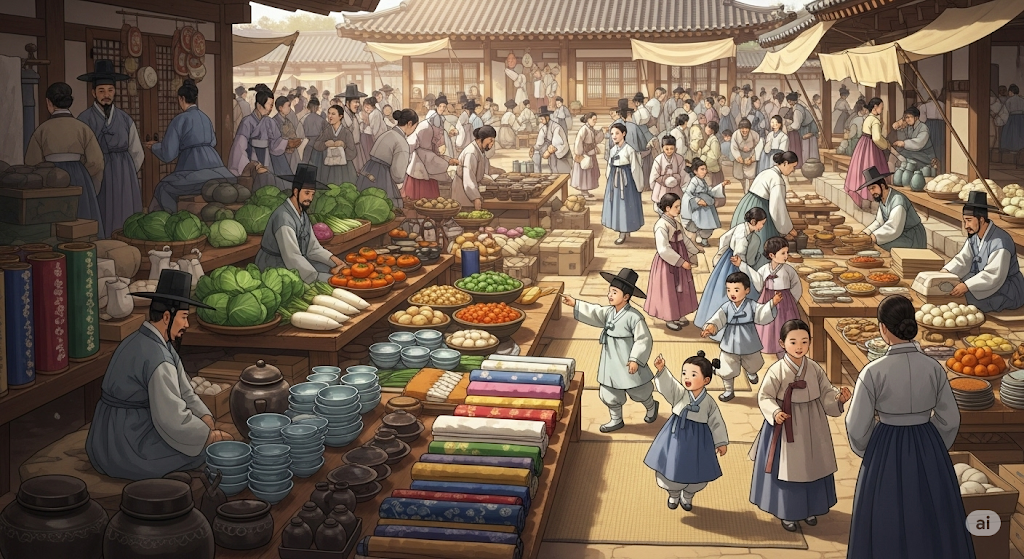
This massive social change can be vividly seen through the life of the slave ‘Subong (壽奉)’. In 1678, he was a nameless slave. However, 40 years later, in 1717, he paid money to escape his status as a slave and registered under the name ‘Kim Subong (金壽奉)’. His descendants eventually achieved the status of ‘Yuhak (幼學)’, meaning yangban scholars, by the mid-19th century.
[Experience] The Weight of a Single Character in a Name The 200 years it took for the descendants of slave Subong to obtain the status of ‘Yuhak’ illustrates that acquiring a single character in a name was a desperate struggle that could change a family’s fate. This suggests that surnames were not just mere titles but the very proof of an individual’s dignity and social existence. What is so obvious to us today was once a lifelong dream for someone.
The story of Subong is a microcosm of the ‘status inflation’ that shook the entire late Joseon society. As surnames, once the exclusive domain of a small elite, were released into the market as commodities, the population holding surnames surged from just 20% in the late 17th century to over 70% by the late 19th century. Paradoxically, the commercialization of surnames undermined the Joseon class system from within.
Chapter 4: Finally for Everyone, the Universalization of Surnames in Modern Times
The decisive moment when everyone legally acquired surnames was the implementation of the Minjeokbeob (民籍法) in 1909. This was the first law mandating that all citizens be registered with their surnames and bon-gwan for modern population management.
With the enforcement of this law, lower-class individuals such as slaves and baekjeong, who had no surnames, had to make a life-changing choice.
- The most common choice: Adopting the surname of their master.
- Other choices: Following the surname of a prominent local family or choosing a common surname with positive meanings.
This is the most important reason why today Kim (金), Lee (李), and Park (朴) surnames are overwhelmingly prevalent. These surnames were the most representative yangban families during the Joseon era and thus had the largest number of slaves and tenant farmers under them.
| Era | Major Events and Policies | Surname Ownership Classes |
|---|---|---|
| Three Kingdoms Era (~918) | Diplomacy with China | Royalty, Highest Nobility |
| Goryeo Era (918~1392) | Saseong and Toseongbunjeong Policies | Royalty, Nobility, Powerful Local Aristocrats |
| Late Joseon (circa 1600~1894) | Gongmyeongjeop and Jokbo Sales | Yangban, Emerging Wealthy Class, Freed Slaves |
| Modern Era (1909~Present) | Implementation of the 1909 Minjeokbeob | All Citizens |
Ultimately, the Minjeokbeob, which was a tool of modernization, granted surnames equally to all people, but the process of selection paradoxically engraved the power structures of pre-modern society into modern demographics.
Conclusion
The path that surnames have taken on the Korean Peninsula is a grand testament to how individual identity is intertwined with national history.
-
Key Summary
- Symbol of Power: Early surnames were sacred privileges enjoyed only by kings and the highest nobility.
- Tool of Unification: Goryeo’s founder Wang Geon controlled local aristocrats by granting surnames and bon-gwan, unifying the state.
- Universal Right: With the collapse of the class system in late Joseon and the implementation of the modern Minjeokbeob, surnames finally became the property of all citizens.
Now, take another look at the surname placed before your name. Within those one or two characters lies a story of myth, anguish, and aspiration. My name is indeed our history.
What stories are contained in your surname? How about discussing the roots of our family together with your family on this occasion?
References
- Surname (姓氏) - Busan History and Culture Encyclopedia Link
- [Rewriting Ancient History] Unique Surnames of Goguryeo and Baekje, Gradually Disappearing with the Fall of Nations - JoongAng Ilbo Link
- History of Surnames - In Search of Roots Link
- Saseong Policy - Namu Wiki Link
- <2012 Chuseok Special - Korean Surnames ‘Roots and History’> All Citizens … - Munhwa Ilbo Link
- Buyeo Clan - Wikipedia Link
- Policies of Wang Geon in the Early Goryeo Dynasty - KBS WORLD Korean Link
- Saseong (賜姓) - Encyclopedia of Korean Ethnic Culture Link
- Becoming Yangban for Commoners ‘Surnames and Family Trees in My Hands’ - Hankyoreh Link
- Family Tree - Namu Wiki Link
- The Trend of ‘Fake Family Trees’ [History Journal That Day] - KBS Link
- Korean Surnames - Wikipedia Link
- Minjeokbeob (民籍法) - Encyclopedia of Korean Folklore Link
- Implementation of the 1909 Minjeokbeob… Forming Large Surnames Following the Master’s Surname and Bon-gwan - Segye Ilbo Link