
Exploring the history of meat consumption among the Korean people between the belief of being a ‘vegetable nation’ and the Korean BBQ craze.
- Understand the changing meanings of meat culture from ancient to modern times.
- Identify the historical background that formed the notion that ‘Koreans are vegetarians.’
- Rediscover the significance of the balance between meat and vegetables in modern Korean cuisine.
Were we really a ‘vegetable nation’?
Looking at a table filled with green vegetables and kimchi, one might think we are a ‘vegetable nation.’ I too was curious about the true nature of Korean meat culture in light of the global ‘Korean BBQ’ craze. The answer to this question is not simple. It is a complex narrative that runs through the geography, philosophy, and history of the Korean Peninsula. To uncover this truth, let’s begin our time travel from the tombs of ancient rulers.
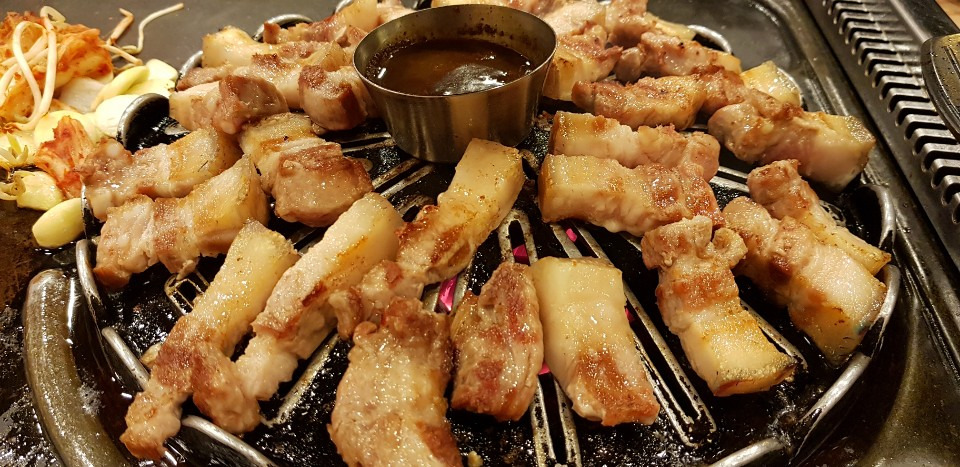
The diverse vegetable side dishes spread across a Korean table give the impression of a ‘vegetable nation,’ but behind this lies a complex history of meat consumption.
Ancient Testimonies: The Meaning of Meat Consumption Revealed by Tombs
Ancient tombs, especially from the Three Kingdoms period, serve as time capsules showing the past. The grave goods (副葬品) buried with the deceased reflect the hope that they would continue their earthly life in the afterlife, providing the most definitive evidence of the dietary culture of the ruling class at that time.
Traces of Meat Found Underground
Records indicate that in the early Three Kingdoms period, the Mahan region used cattle or horses for funerals, and fish bones presumed to be for offerings were found in the tomb of King Muryeong of Baekje.
In the tombs of Silla and Gaya, bones of horses, wild boars, chickens, and even sharks have been excavated. This clearly shows that the diet of the ruling class at that time consisted of a diverse range of meats, including livestock, game, and seafood.
The Ultimate Sacrifice: Human Sacrifice
The pinnacle of ancient meat culture is revealed in the practice of human sacrifice. When a king or noble died, this ritual involved burying servants or animals with them, indicating that animals were not merely food but essential ‘property’ and ‘companions’ symbolizing the owner’s authority and wealth.
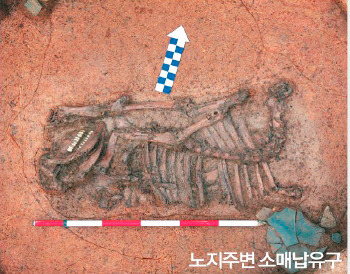
The sacrificed animals prove that meat consumption was a symbol of power for the ruling class beyond mere survival.
Such evidence is concentrated in the tombs of the ruling class, which paradoxically indicates a deep dietary hierarchy in society at that time. The diet of the majority of commoners was likely centered on grains and vegetables due to economic realities rather than philosophical choices.
The Era of Buddhism: Avoiding Meat
In the late Three Kingdoms period and during the Goryeo Dynasty (918-1392), Buddhism became the state religion, fundamentally changing the perception of meat consumption through the doctrine of non-killing (不殺生).
The Goryeo royal family often issued bans on slaughter, and the act of avoiding meat was a virtue encouraged at the national level. The image of the ’noble vegetarian’ began to take root in cultural consciousness.
However, the Mongol invasions in the 13th century caused a massive upheaval in Goryeo’s food culture. Influenced by the nomadic Mongols, dishes like seolleongtang were introduced, and meat culture became active again. Thus, the Goryeo period marked the first time moral and philosophical concerns about meat consumption became a social discourse.
The Confucian State of Joseon: The Revival of Meat Consumption
In the Joseon Dynasty (1392-1910), which adopted Confucianism as its national ideology, the status of meat consumption dramatically changed once again. Meat, which was considered sinful in Buddhism, transformed into a sacred duty in the Confucian ritual of ancestor worship (祭祀).
From Sin to Sacred Duty
In a Confucian society based on ancestor worship, failing to place meat on the ritual table was a serious offense. The act of procuring and offering meat carried the noble value of Confucian filial piety.
The Joseon government systematically managed meat supply by operating state-run farms for ritual cattle and horses and permitting slaughterhouses.
Symbol of Status and Wealth: Beef
At the pinnacle of Joseon meat culture was beef. Cattle were the core labor force in an agricultural society, leading the state to strictly prohibit private slaughter through the Udogeum (牛屠禁) policy.
This scarcity made beef the ultimate luxury enjoyed only during rituals, royal banquets, and by the yangban class. In contrast, pork and chicken were relatively easier to obtain, allowing commoners to enjoy them on special occasions.
Modernization, War, and the Popularization of Meat
Through the Japanese occupation and the Korean War, the agricultural base was destroyed, and meat became a distant dream for most people amid severe poverty. The harsh deprivation of this period further reinforced the notion that ’the Korean people were originally vegetarians.’
The situation changed dramatically after the rapid economic growth of the 1970s. The latent desire for meat exploded, but expensive beef remained difficult to popularize. The answer to this demand was pork.
In this process, the icon of modern Korean food culture, samgyeopsal, was born. Originally an unpopular cut, samgyeopsal gained immense popularity among workers due to its low price. The culture of gathering around a grill to cook meat established itself as a social ritual to relieve the fatigue of a hard day and strengthen camaraderie.
Comparison: Summary of Changes in Meat Culture by Era
| Era | Main Meats and Consumer Groups | Cultural Significance and Evidence |
|---|---|---|
| Ancient | Game (wild boar), livestock (cattle, horses), fish / royalty, nobility | Symbols of wealth and power, offerings for the afterlife. Grave goods and human sacrifice practices. |
| Goryeo | Pork, chicken, limited beef / nobility, Mongols | Avoidance of meat was a virtue due to Buddhist influence, but revitalized by Mongol impact. |
| Joseon | Ritual beef, pork, chicken / yangban, nobility | Sacred duty for Confucian rituals. Beef was a luxury controlled by the state. |
| Modern | Pork (samgyeopsal), beef, chicken / entire population | Symbol of economic prosperity and everyday food. Strengthening community bonds. |
Conclusion
The answer to the question, “Were the Korean people originally vegetarians?” is clear. We have never been a vegetarian community based on ideology.
- Key Point 1: Due to economic/geographical limitations, the majority historically consumed a vegetable-based diet, but for the ruling class, meat has always been a symbol of power and wealth.
- Key Point 2: The meaning of meat consumption has changed according to the philosophies of the times. In Buddhist society, it was a subject of reflection, while in Confucian society, it was a sacred duty.
- Key Point 3: The modern samgyeopsal culture is an invention created by economic growth and social demands, symbolizing that meat consumption has become an everyday pleasure for everyone.
The true essence of Korean cuisine lies in the perfect balance and harmony between meat and vegetables. Next time you face a Korean meal, why not savor the deep history contained in a piece of meat and a bite of greens?
References
- Grave goods (副葬品) - Encyclopedia of Korean Culture Link
- Tombs - National Heritage Knowledge Network Link
- Tomb of King Muryeong - Wikipedia Link
- Why did ancient people perform human sacrifices? (KBS_2000.03.18. broadcast) - YouTube Link
- Changes by era - Korea Funeral Culture Promotion Institute Link
- Human sacrifice (殉葬) - Encyclopedia of Korean Culture Link
- Achievements of excavations in Silla and Gaya tombs ⑥ Understanding the perception and customs of human sacrifice - Yeongnam Ilbo Link
- Cremation (funeral) - Namu Wiki Link
- Cremation (火葬) - Encyclopedia of Korean Culture Link
- The history of funeral culture and modern funeral culture… Harmony of tradition and innovation - Education Plus Link
- The history of changes in Korean funeral culture - Honors Home Link