
How did the same-surname and same-clan marriage ban, which lasted for hundreds of years, begin and eventually disappear?
- The political reasons behind the Silla and Goryeo royal families’ use of consanguineous marriages
- The background of the unprecedented ‘same-surname and same-clan marriage ban’ system during the Joseon Dynasty
- The process leading to the abolition of the same-surname and same-clan marriage ban as it conflicted with individual freedoms in modern society
What if the law prevented you from marrying the person you love? It may sound absurd, but just a few decades ago, thousands of couples in South Korea suffered due to the same-surname and same-clan restriction. This article follows the long and arduous journey of marriage systems on the Korean Peninsula, intertwined with blood, power, love, and taboos.
A Tool for Royal Power: Consanguineous Marriages in Silla and Goryeo
For nearly a thousand years, marriage between close relatives was not a taboo but a key strategy for maintaining power on the Korean Peninsula. Why did the Silla and Goryeo royal families have to marry their nieces, cousins, and even half-siblings?
The Extreme Choice of Silla’s Sacred Bone to Preserve Bloodline
The history of Silla begins with the strict class system known as bone rank system (골품제). As the term implies, the purity of bloodline determined everything. At the pinnacle was the sacred bone (성골), which required both parents to be of royal blood.
This closed system was a ‘golden cage’ in itself. To maintain the sacred bone status, marriages had to occur only within the sacred bone class, severely limiting options. Ultimately, the consanguineous marriages of the Silla royal family were a practical and extreme solution to resolve the contradictions of a system they had created, rather than a belief in a divine bloodline.
- King Jinheung: Born to the brother of King Beopheung (Ipjong Galmunwang) and his daughter (Jisobu-in). This was a marriage between uncle and niece.
- Kim Yushin and Kim Chun-chu: Kim Yushin married his sister Munhui to Kim Chun-chu, later marrying their daughter, making him both brother-in-law and son-in-law to Kim Chun-chu.

Such extreme choices led to genetic vulnerabilities and succession crises, akin to the European Habsburg dynasty, and have been analyzed as one of the causes of Silla’s downfall. The choice to protect power ultimately became a shackle that hindered them.
Goryeo’s Ingenious Strategy to Control External Forces
Founded in 918, Goryeo faced different challenges. King Taejo Wang Geon had 29 wives to incorporate local aristocrats, resulting in numerous external forces threatening royal power.
At this time, the Goryeo royal family recycled Silla’s ‘old strategy’ into a ’new tactic.’ By promoting consanguineous marriages within the royal family, they effectively blocked external forces (aristocrats) from becoming the king’s in-laws and seizing power. This was an excellent example of cleverly adapting existing systems to contemporary political situations.
King Gwangjong, the fourth king of Goryeo, formalized this strategy by marrying his half-sister Queen Daemok, which was not merely following Silla customs but a meticulous political and economic calculation to strengthen royal power and prevent the outflow of royal assets.
| Dynasty | Major Consanguineous Marriage Cases (Relationship) | Purpose and Background |
|---|---|---|
| Silla | King Jinheung’s parents (Uncle-Niece) | Bone rank system: Maintaining the purity of ‘sacred bone’ bloodline |
| Silla | Kim Yushin & Jisobu-in (Uncle-Niece) | Strengthening political ties (Gaya-Silla royalty) |
| Goryeo | Gwangjong & Queen Daemok (Half-Siblings) | Political isolation: Blocking aristocratic intervention in the royal family |
| Goryeo | Gyeongjong & Queen Heonae/Heonjeong (Cousins) | Concentration of power: Solidifying power among direct descendants of Taejo |
A Major Shift: The Birth of the Same-Surname and Same-Clan Marriage Ban
The customs that lasted for a millennium faced a significant shift with the introduction of Neo-Confucianism during the late Goryeo period. Strategies of the past began to be defined as sins of the present.
The Blade of Neo-Confucianism: Redefining Family
Neo-Confucianism emphasized a strict patriarchal order and ‘ritual (礼).’ To this new ideology, the consanguineous marriages of the Goryeo royal family were merely barbaric customs. The newly established scholar-officials who founded the Joseon Dynasty vehemently criticized this, arguing that marriage should align with ‘principles’ rather than the ‘practical’ strengthening of royal power.
King Sejong remarked, “Could the reason the Wang family (Goryeo) has no descendants after 500 years be due to consanguineous marriages?” This clearly illustrated the changing spirit of the times. The value of abstract purity of paternal bloodline fundamentally altered the definition of family.
A Law Unseen in the World: Genealogy and Same-Surname and Same-Clan
Joseon adopted the Chinese Great Ming Code and introduced ‘same-surname marriage prohibition (동성불혼)’ banning marriages between individuals with the same surname. However, they took it a step further by combining the unique Korean concept of ‘bon-gwan (본관)’, which indicates the founding ancestor and origin, to create the unique system of ‘same-surname and same-clan marriage ban.’
This was not merely a legal amendment but a massive social engineering project. This law became a powerful tool that absolutized the status of paternal-centered clans (문중). Individuals had to prove their surname and bon-gwan, and their roots to marry, leading to an explosive proliferation of genealogies (족보).
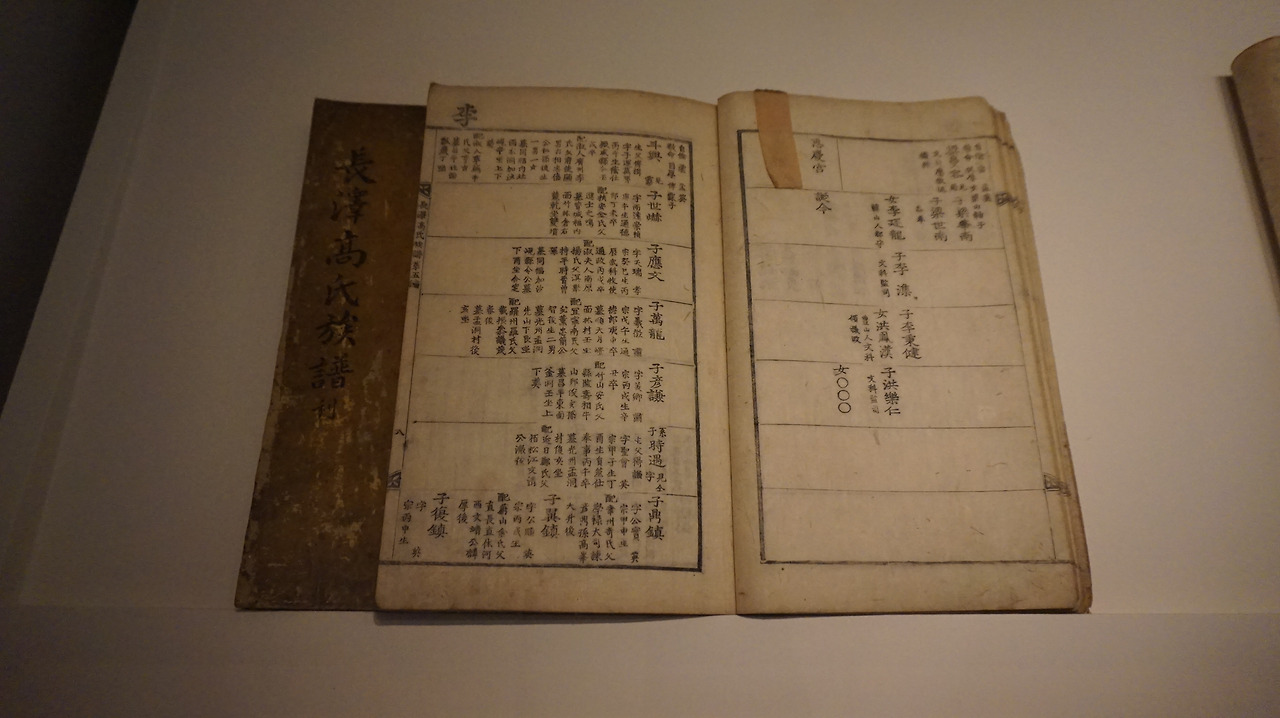
Interestingly, the genealogy records changed. In the early Joseon period, individuals were recorded in the order of their birth without distinction between sons and daughters. However, after the 17th century, as patriarchy strengthened, the method shifted to ‘first sons, then daughters (선남후녀).’ Genealogies transformed from books recording history to social weapons proving the purity of paternal bloodlines.
Modern Conflict: Love Dismantles the Same-Surname and Same-Clan Law
The massive customs that lasted for centuries clashed head-on with new values of individual freedom and happiness in the 20th century.
The Tears of Lovers Living Outside the Law
The same-surname and same-clan marriage ban, a custom of Joseon, surprisingly continued into Article 809, Paragraph 1 of the Civil Code of South Korea, enacted in 1960. As industrialization and urbanization led to more encounters between same-surname and same-clan individuals, they were still legally unable to marry. Children born from such unions were stigmatized as ‘illegitimate’ and faced discrimination in all social systems. I also remember hearing from adults in my childhood that ‘same Kims cannot marry,’ which sparked vague curiosity.
As the gap between law and reality widened, the government had to implement a ‘special law’ allowing temporary marriage registrations for one year in 1978, acknowledging the contradictions of the law.
The Day the Law Crumbled: 1997
Finally, in 1997, eight couples filed for a constitutional review of Article 809, Paragraph 1 of the Civil Code, marking the climax of history. The Constitutional Court became a historical stage where traditional values clashed with individual freedoms.
- Argument for Retention (Confucian Scholars): “Same-surname and same-clan individuals are one family. If the law is abolished, social morals and customs will collapse.”
- Argument for Abolition (Women’s Groups, Affected Parties): “It infringes on the dignity of individuals, the right to pursue happiness, and the freedom to marry guaranteed by the Constitution.”
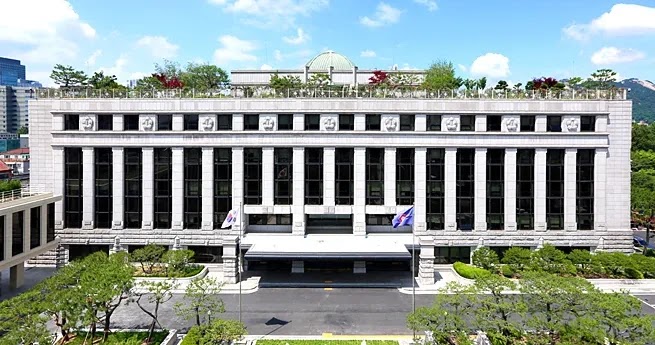
On July 16, 1997, the Constitutional Court issued a ‘declaration of unconstitutionality.’ The law was found to violate the Constitution, but to prevent chaos from immediate abolition, a clever solution was provided, allowing a temporary life until the National Assembly could amend it. This was a ’negotiated surrender’ of an outdated worldview and a historic decision that bought time for our society to create a new consensus.
Conclusion
The marriage system on the Korean Peninsula has undergone a long and arduous journey intertwined with power, ideology, and individual lives. The key points of this lengthy drama are as follows:
- Marriage as Strategy: Consanguineous marriages in the Silla and Goryeo periods had clear political purposes of preserving bloodlines and controlling external forces.
- Marriage as Ideology: The same-surname and same-clan marriage ban in the Joseon period was a unique social norm created by Neo-Confucian ideology, reinforcing the paternal-centered order.
- Marriage as Right: In modern times, marriage has been redefined from the perspective of ‘rights’ concerning individual freedom and the right to pursue happiness, rather than family tradition.
In 2005, the same-surname and same-clan marriage ban was completely abolished and revised to prohibit marriages among ‘blood relatives within eight generations,’ a more reasonable standard. However, this story is not yet over. The current ‘prohibition of marriage within eight generations’ regulation is also under criticism for being broader than global standards, leading to another constitutional petition.
The concepts of family, tradition, and morality are never fixed. What are your thoughts on the currently discussed ‘prohibition of marriage within eight generations’ regulation?
References
- The Same-Surname and Same-Clan Marriage Ban: A Unique Marriage System Created by Confucian Culture Brunch
- Same-Surname and Same-Clan Marriage Ban Mobile Hankyung
- The Bone Rank System of Silla Our History Net
- [Seonbi Village Manuscript] Pure Bloodism World Korean News
- The Closed Nature of Silla’s Class System and Consanguineous Marriages RGM-79’s Samguk Sagi Story
- “I actually love my sister…” The Shocking Consanguineous Marriages of the Silla Royal Family, Why Were They Necessary? YouTube
- Constitutional Court: “Same-Surname and Same-Clan Marriage Ban Cannot Stand” Unconstitutional Ruling JoongAng Ilbo
- Mixed Reactions from Various Sectors Following the Unconstitutionality Decision of the Same-Surname and Same-Clan Marriage Ban KBS News
- Constitutional Court Decisions > Unconstitutionality Petition of Civil Code Article 809, Paragraph 1 National Law Information Center
- [Video] “Please let us marry!” Marriage Permitted by the State Hankook Ilbo