
Introducing the grand epic of doenjang, which started from a small bean on the Korean Peninsula and shaped the soul of our nation.
- Understand the origins and development of doenjang that has lasted for thousands of years.
- Learn how doenjang and soy sauce became distinct.
- Discover the wisdom and philosophy our ancestors embedded in doenjang.
The Beginning of All Stories: The Small Bean of the Korean Peninsula
Like all great narratives, the history of doenjang begins with the small and humble protagonist, the ‘bean’. The homeland of this crop, which is now served on tables around the world, is Manchuria and the Korean Peninsula.
Archaeologists have discovered charred beans at the Gojoseon archaeological site, proving that people in this land have cherished and cultivated beans for thousands of years.
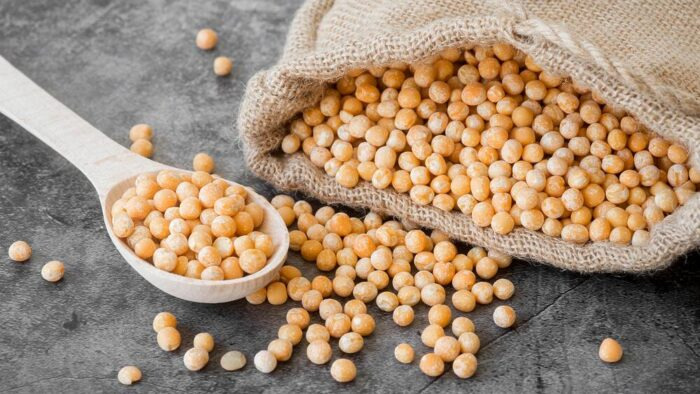
The Korean Peninsula was like a land prepared for beans. It not only thrived in barren soil but also enriched the land, providing high-quality protein that was lacking in rice, thus becoming a reliable source of nutrition for our ancestors.
Thus, beans and the Korean people have shared a history of symbiosis that has shaped and developed each other over thousands of years.
The Magic of Time and Microorganisms: The Discovery of Fermentation
To overcome the limitations of beans, which are difficult to eat raw and spoil quickly when cooked, our ancestors exhibited the great wisdom of ‘fermentation’.
The 3rd-century Chinese historical text, Records of the Three Kingdoms, states that “the Goguryeo people excel in making fermented foods such as brewing alcohol and making sauces”, attesting to the international recognition of fermentation technology in the Korean Peninsula at that time.
Fermentation technology was a food preservation method that helped survive harsh winters and a nutritional science that maximized the nutritional efficiency of beans. This enabled a stable food supply, laying a solid foundation for social development.
The Ancestor of Doenjang: The Birth of ‘Si’
As fermentation technology became systematized, the prototype of doenjang, ‘si’, made its first appearance in history.
In 683 AD, the inclusion of ‘jangsi’ (sauce) in the wedding gift list of King Sinmun of Silla indicates that ‘si’ was not just a simple food but a luxury item symbolizing wealth and authority of the time. Making ‘si’ required abundant beans, precious salt, and advanced fermentation techniques.
Interestingly, ancient Chinese literature, Bokmulji, records that ‘si’ was a product that came from abroad, lending credence to the possibility of its origin being the Korean Peninsula.
The Great Separation: Doenjang and Soy Sauce Stand at a Crossroads
The history of ‘si’, which began in one jar, soon faced a great separation that changed the course of Korean culinary history. By the early Goryeo period, our ancestors developed a technique to ferment meju in brine and separate the black liquid from the yellow solid.
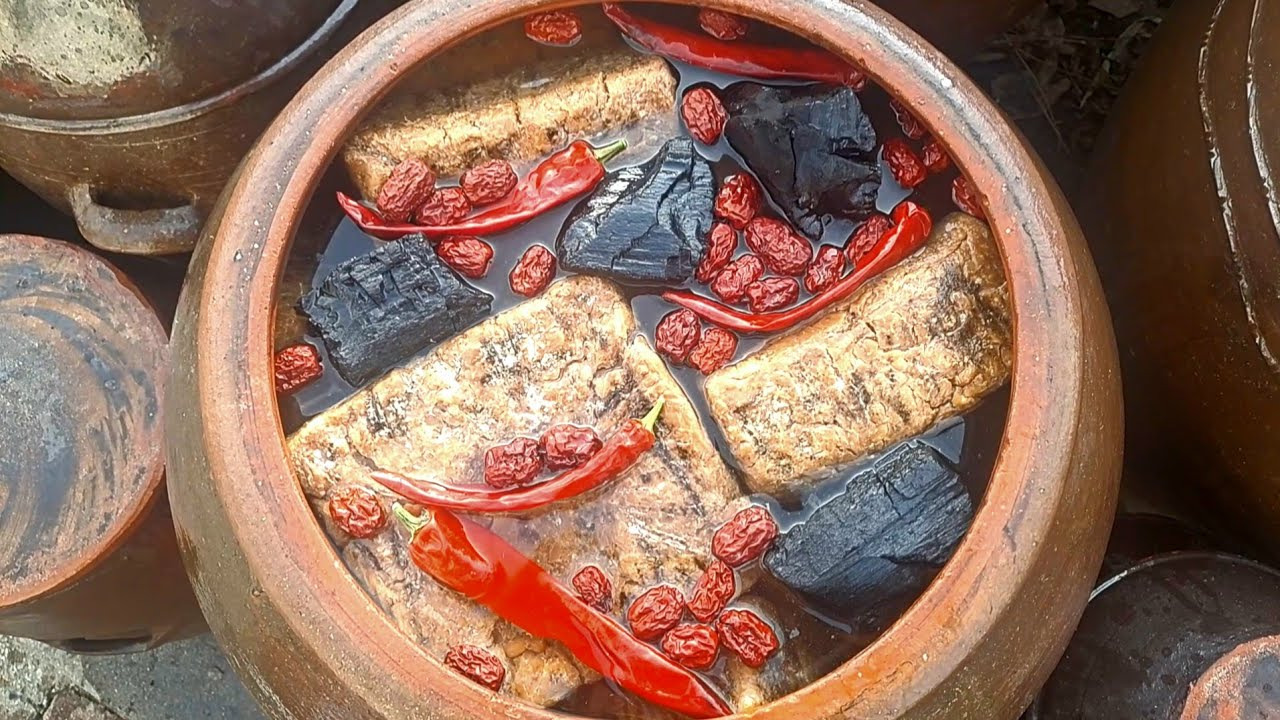
Thus, ‘soy sauce’ with a clear and deep umami flavor and ‘doenjang’ with a rich and savory taste were born. This separation was a significant technological leap that produced two essential condiments with different uses from a single fermentation process.
Through this great separation, the ‘grammar’ of Korean flavors was finally completed. Soy sauce is used in clear soups or stews, while doenjang is used in stews, dipping sauces, and salads, forming the basis of countless Korean dishes.
The Heart of Flavor: The Wisdom of Making Meju
All the flavors of doenjang and soy sauce begin in the small universe of ‘meju’. The process of steaming beans, mashing them into cubes, and tying them with rice straw to dry under the eaves during winter is an art that combines science and care.
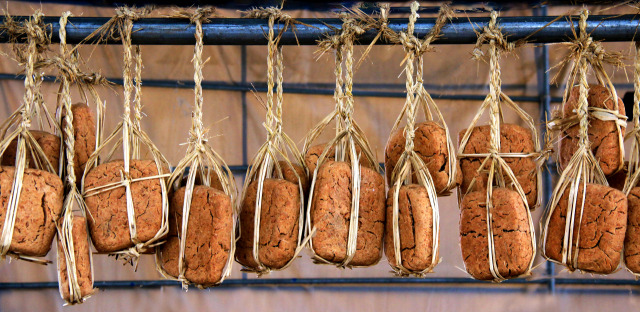
While meju dries, beneficial microorganisms such as Aspergillus oryzae in the air and Bacillus subtilis from the rice straw break down the bean proteins, creating deep and savory flavors and aromas. Isn’t it amazing that invisible microorganisms create such a symphony of flavors?
Our ancestors may not have known about the existence of microorganisms, but they learned through experience how to create the optimal microbial ecosystem. This was an application of microbiology that cooperated with nature to create flavor, a crystallization of wisdom.
Transcending Time, Infusing the Lives of the People
Throughout the Goryeo and Joseon dynasties, doenjang was used as a state relief product and medicine, becoming deeply embedded in the lives of the people, serving as a measure of fortune and misfortune in households. Our ancestors praised the five virtues of doenjang, ‘Odeok’, elevating its value to a philosophical level.
The Five Virtues of Doenjang: The Wisdom of Our Ancestors Explained by Modern Science
| Ancient Virtue (Deok) | Poetic Meaning (Meaning) | Modern Interpretation |
|---|---|---|
| Dan-sim (단심) | An unchanging heart: It does not lose its flavor even when mixed with other tastes. | Strong Flavor Structure: The deep and complex umami created by amino acids and peptides is not easily overshadowed by other ingredients, anchoring the essence of the food. |
| Hang-sim (항심) | A consistent heart: It does not change or spoil even when kept for a long time. | Natural Preservative Effect: High salinity and the activity of beneficial bacteria inhibit the growth of spoilage bacteria, allowing for long-term storage. |
| Bul-sim (불심) | The heart of Buddha: It eliminates the fishy smell of fish and the gamey smell of meat. | Odor Removal by Enzymes: Proteolytic enzymes break down unpleasant odor molecules such as trimethylamine, which causes fishy smells. |
| Seon-sim (선심) | A kind heart: It gently envelops stimulating flavors like spiciness. | Harmony and Balance of Flavors: The rich umami and savory taste soften the sharp spiciness of red pepper powder or the bitterness of vegetables, balancing the overall flavor. |
| Hwa-sim (화심) | A harmonious heart: It complements any food and enhances its flavor. | Excellent Culinary Versatility: It serves as a versatile seasoning that enhances the depth of flavor in any form of dish, such as soups, stews, salads, and dipping sauces. |
Conclusion
I too feel a sense of comfort when I smell the savory aroma of doenjang jjigae. A spoonful of doenjang contains more than just flavor.
- A Time Capsule of History: Doenjang is the very history of our people that began with beans on the Korean Peninsula thousands of years ago.
- The Source of Korean Flavor: The discovery of fermentation technology and the separation of doenjang and soy sauce were great innovations that completed the taste of Korean cuisine.
- A Crystallization of Wisdom: The scientific wisdom contained in meju and the ‘Odeok’ reflect the philosophy of our ancestors that transcends food.
How about tasting the deep history embedded in our food with a savory doenjang jjigae tonight?
References
- [Let’s Play with Newspapers!/Click! Interesting History] Beans rich in protein… cultivated in the Korean Peninsula-Manchuria since prehistoric times
- The Golden Age of Beans - RDA Inter-Bang - Agricultural Technology Portal
- 1. Origin and Spread 2. Cultivation Environment and Characteristics
- Is the origin of beans Korea? I don’t understand? > Goh Jae-hyung’s Twisted History
- [Natural Food Story] Kimchi (1) - Maeil Newspaper
- Starting as a pickled food in the Three Kingdoms period, Dongchimi and Nabak Kimchi appeared in the Goryeo Dynasty - Korea Times
- Doenjang - Encyclopedia of Korean Folklore
- Making Jang - Encyclopedia of Korean Folklore
- [Special Feature: The Story of Invention] Doenjang… A National Food Since Before the Three Kingdoms - Startup News
- Doenjang - Rural Women’s Newspaper
- Jang (醬) - Encyclopedia of Korean Ethnic Culture
- The Timing and Method of Separating Doenjang and Soy Sauce - YouTube
- Meju Recipe, Healthy Cooking Method, Health Functional Food Characteristics, Etymology, Historical Background - Lamp Cook
- [Professor Kim Soon-dong’s Fermentation Story] Meju is the enzyme that turns beans into doenjang or soy sauce - Maeil Newspaper
- Aging Method - Korean Soybean Research Association
- Doenjang (된醬) - Encyclopedia of Korean Ethnic Culture
- Soy Sauce (간醬) - Encyclopedia of Korean Ethnic Culture
- [Our Strength] Traditional Fermented Foods
- The Best Food Left by Our Ancestors: Doenjang - Health Chosun
- Korea’s traditional food, Doenjang (Soybean paste)! When did we start eating it? - YouTube