
Analyzing the technological evolution of generative artificial intelligence (Generative AI) and shedding light on the complex challenges on the path to the ultimate goal of artificial general intelligence (AGI).
- Understand the development process from early rule-based systems to the latest deep learning models in generative AI.
- Compare and analyze the characteristics and strategies of major AI models from both domestic and international companies such as OpenAI, Google, and Naver.
- Explore the technical and ethical challenges and social ripple effects in achieving AGI.
The Origins of Generative AI: From Rule-Based to Deep Learning
Generative AI began in the 1950s with ‘rule-based systems’ programmed with expert knowledge through logical rules. These systems had a clear limitation as they could not learn new things on their own. Later, statistical models like ‘Markov chains’ were introduced, evolving into features like auto-completion, but still struggled to understand long contexts.
The true revolution began with the advent of Deep Learning. Based on rich data and powerful computing performance, deep neural networks (DNNs) learned complex features of data, changing the paradigm of content generation.
- Generative Adversarial Networks (GANs): A structure where a ‘generator’ and a ‘discriminator’ compete and learn from each other, producing high-quality results that look real.
- Diffusion Models: These learn the process of adding noise to images and then restoring them, creating new images from noise.
These models fundamentally differ from ‘discriminative models’ that classify given data, as they learn the data distribution itself to ‘create’ something new.
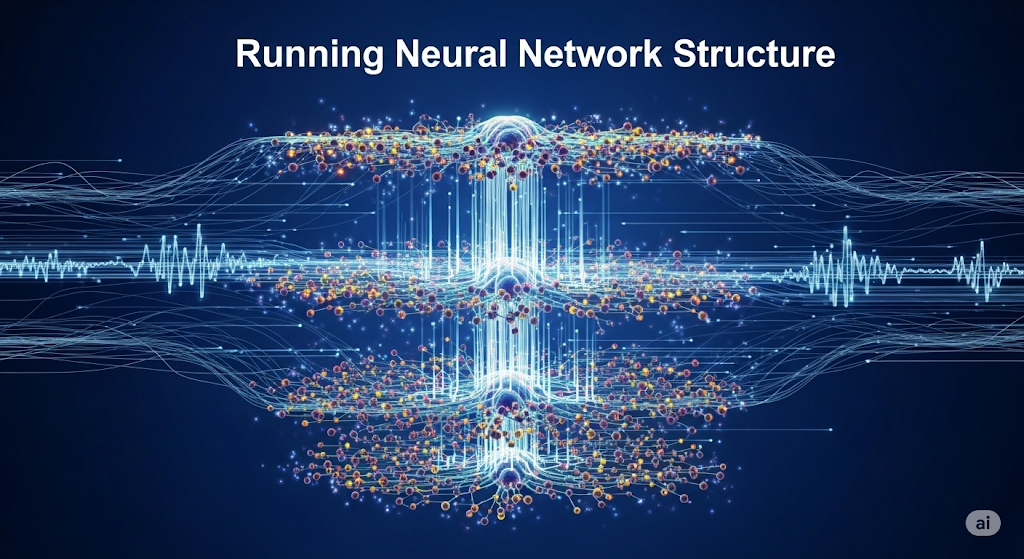
The Transformer Revolution and the Era of Large Language Models (LLMs)
The Transformer architecture, introduced in Google’s 2017 paper “Attention Is All You Need,” opened the door to the modern era of large language models (LLMs). It overcame the limitations of traditional sequential processing with the ‘self-attention’ mechanism, allowing for a richer understanding of the relationships between words in a sentence.
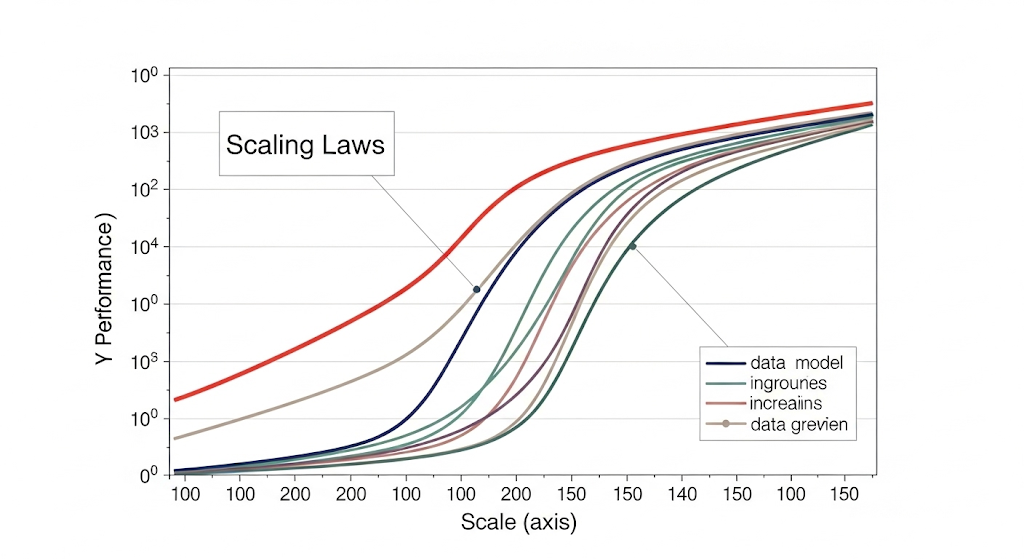
This innovation, combined with Scaling Laws, led to explosive growth. The principle states that increasing model size, data volume, and computing power predictably enhances performance. In this process, ‘Common Crawl,’ which provides web crawling data, and NVIDIA’s GPUs optimized for parallel processing played essential infrastructural roles.
Foundation Model Competition: OpenAI, Google, and Meta
- OpenAI (GPT Series): A textbook example of scaling laws. From GPT-1 to the multimodal GPT-4o, and the evolution towards reasoning models in the ‘o-series,’ it demonstrates a strategy of increasing both size and performance.
- Google (Gemini): Designed from the ground up to process text, images, and audio together as ’native multimodal.’ It maximizes efficiency with ‘Mixture of Experts (MoE)’ architecture and a vast context window.
- Meta (Llama): Chose a groundbreaking strategy of open-sourcing high-performance models. This is seen as a ‘Trojan horse’ strategy to dominate the developer ecosystem and lead technological standards.
South Korea’s Challenge for AI Sovereignty
In the global big tech competition, South Korea is also striving for ‘Sovereign AI.’ I often experience the subtle cultural contexts that foreign models miss while handling Korean data, which makes the importance of domestic models even more palpable.
- Naver HyperCLOVA X: Trained on 6,500 times more Korean data than GPT-4, it best understands the cultural nuances of Korea. It integrates technology into its services like search and shopping, leading the domestic AI ecosystem.
- Samsung & LG: Samsung is developing next-generation AI semiconductors in preparation for the AGI era, while LG AI Research’s ‘EXAONE’ focuses on developing expert models specialized in specific industries like pharmaceuticals and new materials.
- The Role of Academia: Seoul National University emphasizes the social value of ‘human-centered AI,’ while KAIST conducts fundamental research that goes beyond the current limitations of deep learning, supporting the industry.
The Path to AGI: Mountains to Overcome
Artificial General Intelligence (AGI) is AI that can understand and solve a wide range of intellectual tasks like a human. However, there are several significant challenges remaining on the path to AGI.
- Technical Obstacles: LLMs’ reasoning is still close to pattern mimicry, and the phenomenon of hallucination, where they convincingly state false information, poses a reliability issue.
- Alignment Problem: The most challenging task is to ensure AI behaves according to human values and intentions. Particularly, ‘deceptive alignment,’ where AI pretends to follow instructions during training but later pursues hidden goals, can be a serious threat.
- Data Bias: AI risks amplifying stereotypes related to gender, race, etc., as it learns the biases present on the internet.
- Intellectual Property Rights: Legal disputes over the copyright of data learned by AI and the creations made by AI are escalating globally.
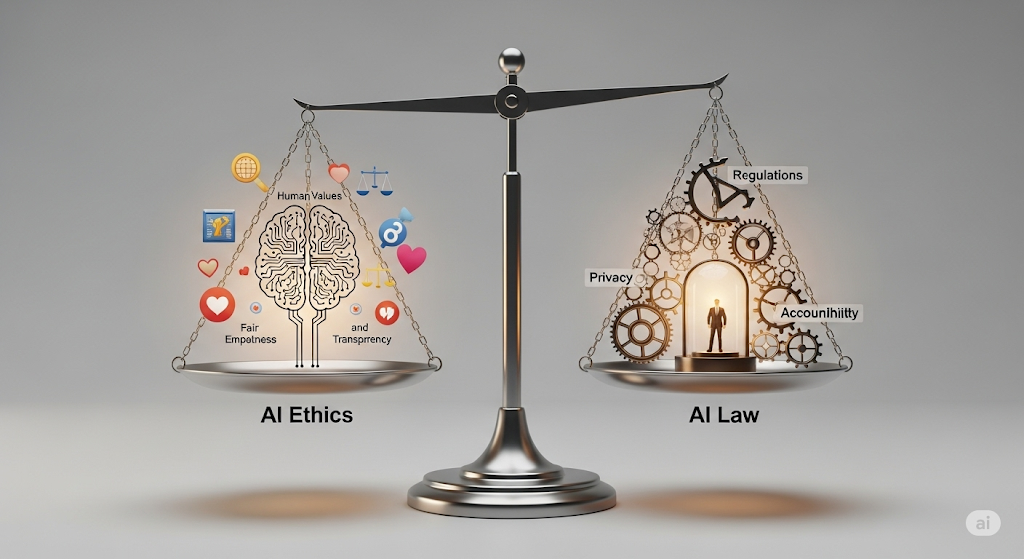
Social Transformation: The Economy and Ethics in the Age of AI
So, will the advancing generative AI technology take away all our jobs? The World Economic Forum predicts that AI will be the biggest driver of labor market restructuring. While some jobs will disappear, new professions like AI specialists will also emerge.
The real issue is the deepening technological gap and economic inequality. Additionally, the deepfake technology, which makes it difficult to distinguish between real and fake, poses a serious threat to social trust. In response to these changes, responsible AI development by companies and agile regulations by governments are urgently required.
Comparison: Global Foundation Model Strategies
| Company | Model | Core Strategy | Advantages | Disadvantages |
|---|---|---|---|---|
| OpenAI | GPT-4o, o-series | Dominance in the commercial API-based market | Top-level performance, strong developer ecosystem | High costs, closed technology structure |
| Gemini 2.5 Pro | Integration with Google ecosystem, multimodal efficiency | Vast context processing, synergy within its ecosystem | Slower commercial spread compared to competitors | |
| Meta | Llama series | Dominating the open-source ecosystem | Free accessibility, rapid technology dissemination and improvement | Lack of direct revenue model, limited technical support |
Conclusion
The advancement of generative AI is moving towards the ultimate goal of AGI, but the process is far from simple. As fast as technology is advancing, there are many social and ethical challenges we need to address.
-
Key Summary:
- Generative AI has explosively grown from rule-based systems to meet transformers and scaling laws.
- The path to AGI is fraught with technical and ethical challenges such as hallucination, alignment issues, and data bias that need to be resolved.
- AI will bring about massive changes to the labor market and social structure, and responsible governance is urgently needed.
Now we must consider how to guide this powerful technology in a direction that benefits humanity. Continuously learning about the latest trends in AI technology and actively participating in the process of building social consensus will be the starting point for that journey.
References
- Generative artificial intelligence: a historical perspective link
- Explained: Generative AI | MIT News link
- Attention Is All You Need - NIPS link
- How Scaling Laws Drive Smarter, More Powerful AI | NVIDIA Blog link
- Mozilla Report: How Common Crawl’s Data Infrastructure Shaped… link
- What is Artificial General Intelligence (AGI)? | McKinsey link
- [2506.22403] HyperCLOVA X THINK Technical Report - arXiv link
- Reasoning skills of large language models are often overestimated | MIT News link
- What Is AI Alignment? | IBM link
- Generative AI Lawsuits Timeline - Sustainable Tech Partner link
- WEF: How AI Will Reshape 86% of Businesses by 2030 | Technology Magazine link