
The Story of a Giant Semiconductor’s Crisis and the Gamble for Survival
Introduction: A Throne Built on Sand
This article explores how Intel, once the absolute monarch of the tech world, found itself on thin ice facing its greatest crisis since its founding. In 2024, Intel’s stock plummeted by over 60%, recording a staggering $16.6 billion quarterly loss—the largest in history—and implemented extreme restructuring measures, laying off over 15,000 employees.1 These chilling numbers heralded the decline of an empire that once seemed unshakeable.
We remember the era when a single sticker, ‘Intel Inside’, guaranteed the performance and reliability of computers. The name Intel was synonymous with ‘semiconductors’. But that era has come to an end. This story is not merely about a temporary downturn of a once-great company. It is an epic tale shaped by technological arrogance, strategic failures, and ruthless competition, with a monumental gamble for the survival of the silicon empire at its core.
Finally, in December 2024, even CEO Pat Gelsinger, who had been at the forefront of overcoming this crisis, abruptly resigned, causing the empire to drift like a massive ship without direction.1 How did the throne built on the sands of semiconductors become so precariously shaken? Where did the first crack of this monumental fall begin?
Chapter 1: The Tragedy of 7nm - The Moment the Giant Stumbled
Every great collapse has a starting point. The massive crack in the Intel empire began at the very foundation of technology, which should have been the most solid ground. This was not a simple mistake or delay; it was the first domino in a catastrophic chain reaction that stopped the heart of the empire.
1.1 The Stopped Clock of ‘Moore’s Law’
The prologue to Intel’s downfall stemmed from delays in technological innovation, specifically the catastrophic failure to introduce the 10nm and 7nm processes.1 Originally aimed for introduction in 2016, the 10nm process faced years of delays. By the time Intel finally released 10nm products, its long-time competitor TSMC was already mass-producing 7nm processes and even sampling 5nm.1 This was not merely a defeat in a speed race; it signified that the heart of Intel, which had led the industry for decades with the mantra that “the density of semiconductors doubles every two years”—Moore’s Law—had stopped.
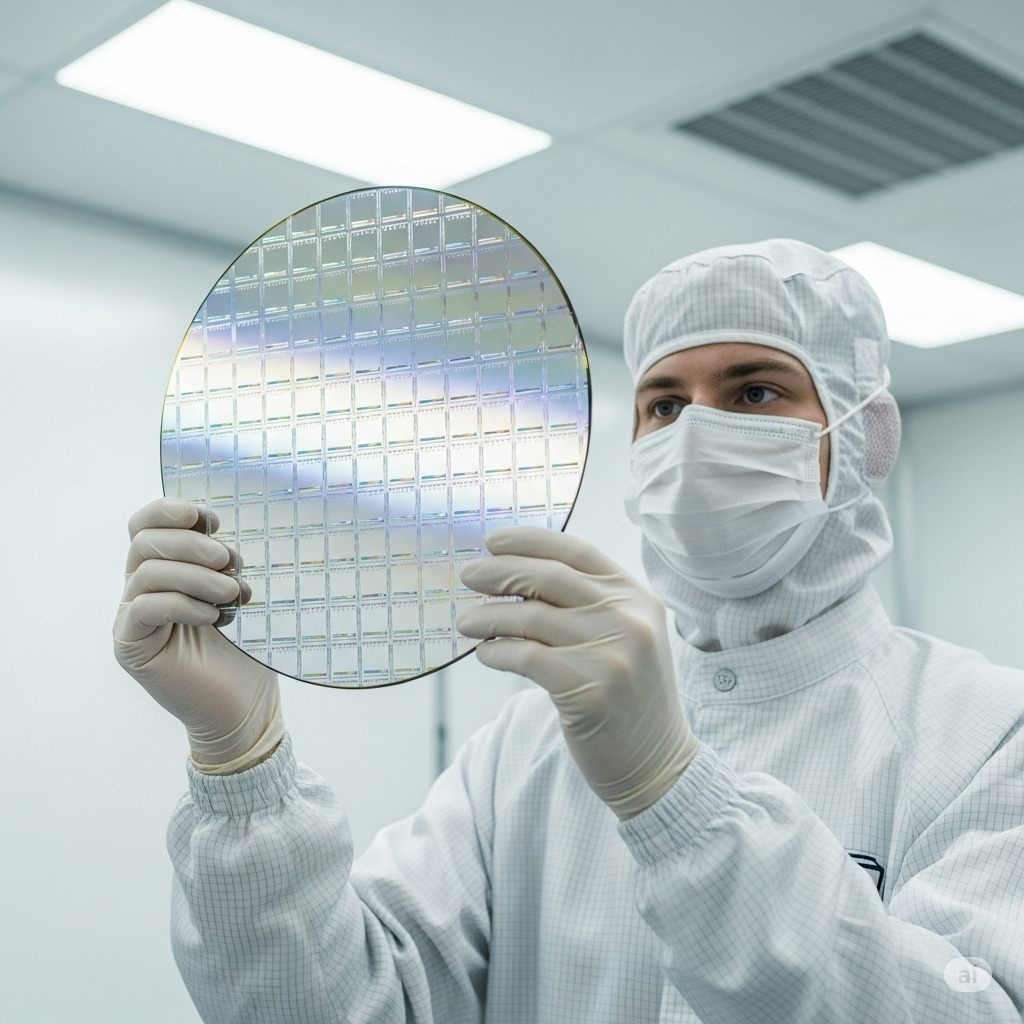
At the root of this technological disaster was a management philosophy known as the ‘Pao Strategy’, which prioritized short-term profitability. This strategy emphasized immediate profitability and process optimization but, at the cost of discouraging bold investments for the future, ultimately slowed the pace of innovation.5 In particular, the hesitation to adopt Extreme Ultraviolet (EUV) lithography equipment, essential for implementing processes below 7nm, proved fatal. While Intel hesitated to invest in this expensive equipment, costing around $200 million per unit, TSMC and Samsung poured massive capital into seizing EUV technology.5 As they opened the door to the future with EUV, Intel began to lag, trapped by past technologies. This was not merely a technical issue but a strategic and cultural failure that forgot Intel’s core DNA of leading the future through aggressive investment.
1.2 Ghosts of the Past - Wounds Left by Departed Customers
The loss of technological leadership shattered market confidence, and customers who once stood beneath Intel began to turn their backs. The wounds they left accelerated the empire’s decline.
Case 1: The Return of the Traitor, AMD’s Counterattack
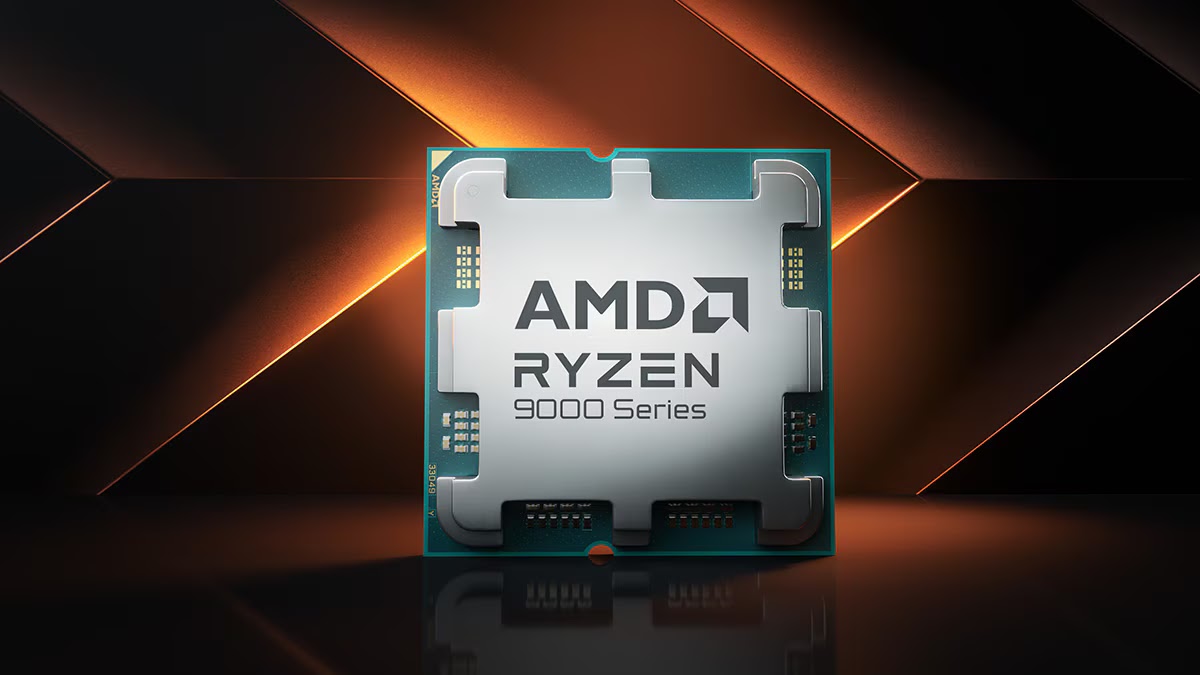
While Intel floundered in the quagmire of technology, the long-time runner-up AMD seized the opportunity. Riding on TSMC’s advanced process technology, AMD introduced the Ryzen CPU based on the ‘Zen’ architecture, which truly shook the market.1 The Ryzen series aggressively eroded Intel’s CPU market share.5 Particularly in the technology-sensitive DIY PC market in Korea, AMD’s share reached 62%, overwhelming Intel in a phenomenon once thought unimaginable.7 Performance comparisons were even more devastating. In the latest gaming performance tests, AMD’s Ryzen 7 9800X3D outperformed Intel’s flagship model, the i9-14900K, by an average of 26%.8 This was the moment when the long-standing formula of ‘Intel’s performance’ was completely shattered.
Case 2: Cupertino’s Declaration of Independence - Apple’s Split
An even greater shock was the declaration of independence by Apple, a long-time partner for 15 years. Apple is a company that seeks perfect control over its product ecosystem. For Apple, Intel’s slow pace of performance improvement and uncertain technology roadmap became an unbearable shackle.9 Ultimately, Apple declared its split from Intel and fully transitioned to its self-designed ‘M1’ chip. This was not merely the loss of a significant customer; it was a public ‘vote of no confidence’ from a company at the pinnacle of the technology ecosystem, resulting in a staggering annual revenue loss of $2 billion (approximately 2.2 trillion won) for Intel.9 The M1 chip from Apple showcased superior performance and power efficiency compared to Intel’s equivalent processors upon release,11 marking a symbolic event that announced Intel’s complete loss of technological leadership to the world.9
Chapter 2: The Gathering Storm - A Series of Crises
The technological cracks that began in Chapter 1 triggered a chain of collapses. The crisis in the CPU market quickly spread to other fronts, ultimately exploding into a financial catastrophe that shook the entire empire.
2.1 Missing the Golden Age - A Bystander in the AI Revolution
While Intel struggled to extinguish the fire in the CPU market, the AI revolution, which shook the foundations of the tech industry, exploded. However, Intel missed this massive gold rush right before its eyes.1 Meanwhile, NVIDIA, a powerhouse in graphics processing units (GPUs), emerged as an overwhelming leader, capturing 80% to as much as 98% of the AI chip market for data centers with hardware optimized for AI learning.13 Although Intel ambitiously launched the AI accelerator ‘Gaudi 3’, the market response was tepid, and sales fell significantly short of expectations.1
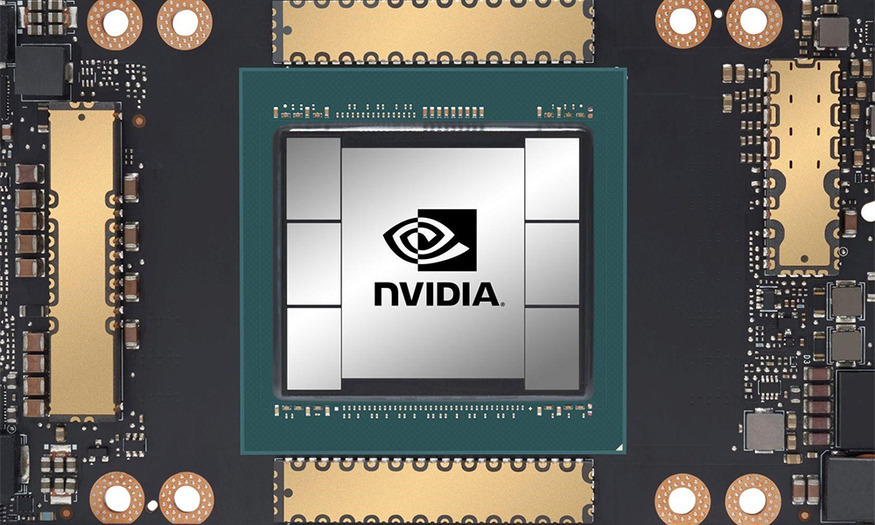
NVIDIA’s strength did not merely stem from fast hardware. Their true moat was the software development platform ‘CUDA’, built over nearly 20 years.15 Over 4 million developers worldwide use CUDA to create AI programs, which only operate on NVIDIA’s GPUs.15 This created a powerful ’lock-in’ effect, making it difficult for developers to leave the ecosystem due to years of accumulated CUDA-based code and knowledge, even if they wanted to use hardware from other companies. Intel fought with hardware performance, but NVIDIA had already ended the war with its software ecosystem. This was akin to creating an excellent game console but having no playable game titles.
2.2 The Horror of Red Ink - Financial Collapse and Restructuring
Technological and strategic failures culminated in an unavoidable financial disaster. In the third quarter of 2024, Intel shocked the market by recording the worst quarterly loss of $16.6 billion in its history**.1 Within a year, its stock plummeted by over 60%, and the company was thrust into a life-or-death struggle for survival.1 Ultimately, Intel embarked on a drastic restructuring plan, aiming to cut costs by **$10 billion by 2025, which involved laying off over 15,000 employees and selling or downsizing two-thirds of its global real estate holdings.1 The once-mighty king of the semiconductor empire found himself in a position of selling off his castle and belongings to pay off debts.
Chapter 3: The Prodigal’s Gamble - The IDM 2.0 Doctrine
A savior emerged from the depths of despair for the empire. An engineer with over 30 years at Intel, Pat Gelsinger returned as CEO in 2021, announcing a bold survival strategy that would determine the empire’s fate.
3.1 A New Blueprint for the Old Empire
Gelsinger’s vision was called ‘IDM 2.0’.20 IDM (Integrated Device Manufacturer) is Intel’s identity as a company that handles everything from design to production. IDM 2.0 was an innovative plan that maintained this identity while fundamentally overhauling it to adapt to changing times. Its core consists of three pillars: First, to further develop Intel’s powerful internal manufacturing capabilities without giving them up. Second, to actively utilize external foundries (contract semiconductor manufacturing) like TSMC if necessary. Third, to take a step further by opening Intel’s factories to provide foundry services for producing chips for other companies.22

This was a truly Copernican shift, discarding Intel’s closed ‘IDM 1.0’ model, which had prided itself on being the best in the world and solving everything internally.25 A symbolic event demonstrating this strategic change was the ‘Meteor Lake’ processor for PCs. Intel made the unprecedented decision to outsource the production of some key components of this chip to its competitor TSMC. This was the first time in Intel’s history that it entrusted its flagship CPU process to an external party.25 It was a desperate struggle of a giant dinosaur choosing evolution over extinction by abandoning its pride and opting for survival.
3.2 A Bet for the Kingdom - Astronomical Investments and an Uncertain Future
IDM 2.0 was not just talk. Gelsinger initiated massive investments that would determine the kingdom’s fate. Over the next five years, he announced plans to invest a staggering **$100 billion (approximately 134 trillion won)** across four states in the U.S.—Arizona, Ohio, New Mexico, and Oregon—and $17 billion in Magdeburg, Germany, to build a massive semiconductor factory (fab).27 This aggressive push aimed to leverage subsidies from the U.S. government’s ‘CHIPS Act’ (up to $19.5 billion) to rapidly reshape the market landscape.3
However, this ambitious plan faced hurdles from the start. In particular, the Ohio factory, which was to become the ‘world’s largest AI chip production center’, aimed to start operations in 2025 but was postponed to the end of 2026 and ultimately faced delays until after 2030.2 Intel explained that it was “flexibly adjusting factory operations to match market demand,” but industry analysis suggested that severe management difficulties and financial crises were hindering massive investments.2
Intel’s Major Global Investment Status
| Region/Location | Announced Investment Amount | Key Goals and Status |
|---|---|---|
| Arizona, USA | Over $20 billion27 | Production of advanced processes (2nm/1.8nm), construction in progress |
| Ohio, USA | $28 billion2 | Aiming to be the world’s largest AI chip production hub, **seriously delayed (after 2030)**2 |
| Magdeburg, Germany | $17 billion27 | Building a European manufacturing hub, planning and early stages |
| Europe (10 years) | €80 billion27 | Aiming to build a complete semiconductor ecosystem in Europe |
Chapter 4: A New Battlefield - Battles on Three Fronts
Pat Gelsinger’s gamble led Intel into three massive battlefields. The defensive battle to protect its existing CPU throne, and the offensive battle to explore new territories in foundries and AI. However, all these wars were far from easy for Intel.
4.1 The Foundry War - A Reckless Challenge Against Giants
Intel set an ambitious goal to become the second-largest player in the foundry market by 2030.27 But the reality was far more daunting than imagined. As of the first quarter of 2025, the foundry market was dominated by TSMC with a staggering 67.6% market share, followed by Samsung with 7.7%. Meanwhile, Intel, the new challenger, had a market share of less than 1.0%.34 This situation resembled not just a fight between David and Goliath but rather an ant challenging a dinosaur.
This war was not merely a battle for market share; it was also a pride contest over nanometer-level technological prowess. Intel’s strategy was to regain technological superiority through mass production of the 1.8nm (18A) process in the second half of 2024.32 However, competitors were moving further ahead. Samsung applied the next-generation transistor structure GAA (Gate-All-Around) technology to its 3nm process, taking the lead in technology, and aimed to introduce a 2nm process (SF2Z) by 2027.33 The absolute leader TSMC was also introducing GAA from 2nm and announced roadmaps for 1.6nm and 1.4nm, further widening the gap.36
Major Foundry Players’ Technology Competition Status
| Company | Market Share (Estimated Q1 2025) | Key Technologies and Roadmaps |
|---|---|---|
| TSMC | 67.6%34 | 3nm (FinFET), 2nm (GAA), 1.6nm announced36 |
| Samsung Foundry | 7.7%34 | 3nm (GAA), 2nm (SF2Z) planned for 202733 |
| Intel (IFS) | < 1.0%34 | 1.8nm (18A) planned for 2024/202533 |
4.2 The Ongoing Duel - A Bloody Battle for the CPU Throne
While Intel jumped into the new war of foundries, the battle in its heartland, the CPU market, is still ongoing. AMD’s fierce pursuit continues, and in the desktop PC CPU market, AMD’s share has surged to 27.1%.8 Particularly in the high-spec gaming market, AMD’s rise is even more pronounced.8 Meanwhile, Intel is experiencing a decline in market share due to stability issues with its 13th generation Raptor Lake CPU and poor initial sales of the 15th generation Arrow Lake.8 While distracted by the new battlefield, the coffers in its home base continue to empty.
4.3 The Captain’s Departure - Where is the Savior?
Amidst all these precarious wars, CEO Pat Gelsinger announced his sudden resignation in December 2024.1 His abrupt departure cast a dark cloud over the future of the massive and risky IDM 2.0 strategy.1 Whether to continue massive investments, how to reorganize the AI strategy—every critical decision began to drift.1 Rumors began to circulate in the market that Intel might ultimately be sold off in parts.2 The hero who had dramatically stepped in to save the empire vanished suddenly, and the massive ship found itself adrift once again, lost at sea.
Conclusion: An Empire at a Crossroads
We have witnessed how a small crack that began with technological arrogance led to a massive catastrophe involving AMD’s counterattack, Apple’s independence, and exclusion from the AI revolution. We saw the emergence of the hero Pat Gelsinger amid the horror of red ink, dreaming of the empire’s revival with the bold plan of IDM 2.0.
However, hundreds of billions of dollars in investments are delayed indefinitely, the walls of the market are higher than imagined, and finally, the captain leading that plan has left the ship. Intel’s story now stands at a significant crossroads, which could become the most dramatic corporate revival drama in history or a record of the fall of the most glorious empire.
The giant is waking up and fighting desperately. But now, no one can guarantee its future. The world of technology is watching with bated breath to see if the silicon empire can overcome all these adversities and succeed in its counterattack. Their fight is not over yet.
Sources
- [Samsung's Future? Why Did Intel, Once Thriving, End Up Like This? - Daum](https://v.daum.net/v/356aCCQ0pu?vfrom_area=channel_ranking)
- ‘Management Crisis’ Intel, Ohio’s First Factory Completion Postponed to 2030 - Korea Times
- Intel Delays Completion of Semiconductor Factory in Ohio to After 2030 - Global Economic
- Intel’s Crisis and Response: From Foundry Spin-off to Business Sales
- Intel’s Fall and Response to the AI Era - Goover
- AMD Ryzen Desktop CPU Performance Ranking by Generation - Techwave
- AMD’s Significant Growth in the Domestic DIY Market, Surpassing Intel - Apple Economy
- AMD Closely Pursuing Intel… Shrinking CPU Market Share - Global Economic
- The Real Reason for Apple’s Split from Intel - Bloter
- Apple’s Split from Intel Worked… Focus on 2022’s Moves - Digital Today
- Apple M1 - Why Can’t Intel or AMD Make Something Like This? : r/apple - Reddit
- Intel Targets Apple’s M1 Processor… “11th Gen i7 Performance is Better”
- [Tech Dive] NVIDIA’s ‘Ecosystem Domination’ and Big Tech’s Quest for AI Chip Independence - Digital Daily
- NVIDIA Shipped 3.76 Million Data Center GPUs Last Year… “Google is the 3rd AI Server Chip”
- The U.S., EU, China, and South Korea are Watching NVIDIA’s ‘AI Ecosystem’ - Joongang Ilbo
- Will NVIDIA’s CUDA Dominance Last Forever? - Knowledge Gourmet - Tistory
- Intel’s Bold Move in the Foundry Game - ZDNet Korea
- The Hidden Meaning of Intel’s Foundry Declaration and ‘IDM 2.0’ Strategy - YouTube
- Intel’s Technology Leadership Strategy with IDM 2.0 - Jam Jam’s Investment Story - Tistory
- Intel Announces ‘IDM 2.0’ Strategy… Leading Manufacturing, Innovation, and Product Leadership!
- Intel’s New Semiconductor Strategy and the Future of the Semiconductor Industry - The Miilk
- Pat Gelsinger, Intel CEO, Announced ‘IDM 2.0’ Strategy in Online Briefing - Tech World News
- Intel’s AI Semiconductor Strategy: Evolution of Diverse Small Batches and Open Ecosystems - Goover
- IDM 2.0 – Did We Not Expect to Outsource Foundry? - Samsung Securities
- Intel, Two Years After Gelsinger’s Appointment, Transformed, ‘IDM 2.0’ Blueprint Realized …
- “The Biggest Change in 55 Years”… Intel to Enter Phase 2 of IDM 2.0 Next Year - ZDNet Korea
- Intel Foundry - Namu Wiki
- Intel’s ‘Money Game’ of 134 Trillion Won Including $26 Billion in U.S. Subsidies… Aiming to Become the World’s No. 1 Foundry by 2025
- ‘Management Crisis’ Intel, Ohio’s First Factory Completion Postponed to 2030 - Yonhap News
- Intel Delays Construction of $26 Billion Ohio Semiconductor Factory - Yonhap News
- Intel Continues to Post Losses in Q2… Reducing Foundry Investments, ‘Blanking’ in Europe, ‘Speed Control’ in the Americas - Tech M
- Intel’s 18A Process Technology is ‘The Last Bastion’, Failure Could Lead to Foundry Sale - Business Post
- Intel Aiming for 1.8nm Mass Production, Accelerating Foundry Competition with Samsung and TSMC
- Latecomers Chasing TSMC’s ‘Dream Process’… Samsung’s Foundry Risks Falling Behind China - IT Chosun