
Discovering the Great Epic of the Korean People about the Origins of the World.
- We examine the primal creation story where a giant female deity shapes the world with her body.
- Understand the unique worldview that the contradictions and absurdities of the world began with ‘divine betrayal’.
- Learn about the philosophical background of how the worlds of the living and the dead became separated.
When we talk about creation myths, we often think of Greek-Roman or Norse myths, or the seven days of creation. However, we also have a deep and vast epic that is equally significant. These stories have survived in the form of muga (巫歌), the majestic songs sung by shamans during rituals.
In this article, we will open the door to the grand narratives shaped by the most primal imagination of our people through the three main branches of the Korean creation myth: Mago and Seolmundaehalmi, the creation myth, and the Cheonjiwangbonpuri.
Part 1: The Giant Grandmother Shapes the World – Mago and Seolmundaehalmi
At the most primal level of the Korean creation myth, there exists a giant female creator deity who created the world through her body and actions, not through intellect or language.
Mother of the Earth, Mago Halmi
The story begins with the giant grandmother, Mago Halmi (麻姑 할미), found throughout the Korean Peninsula. She is not merely a creator of the world; her body itself becomes the landscape of the world.
- Mountains and Islands: She filled her enormous skirt with earth and flew it to create them.
- Rivers and Streams: They are the result of her urine, referred to as snow urine (방뇨).
- Hills and Rocks: They were her excrement or the pebbles she played with.
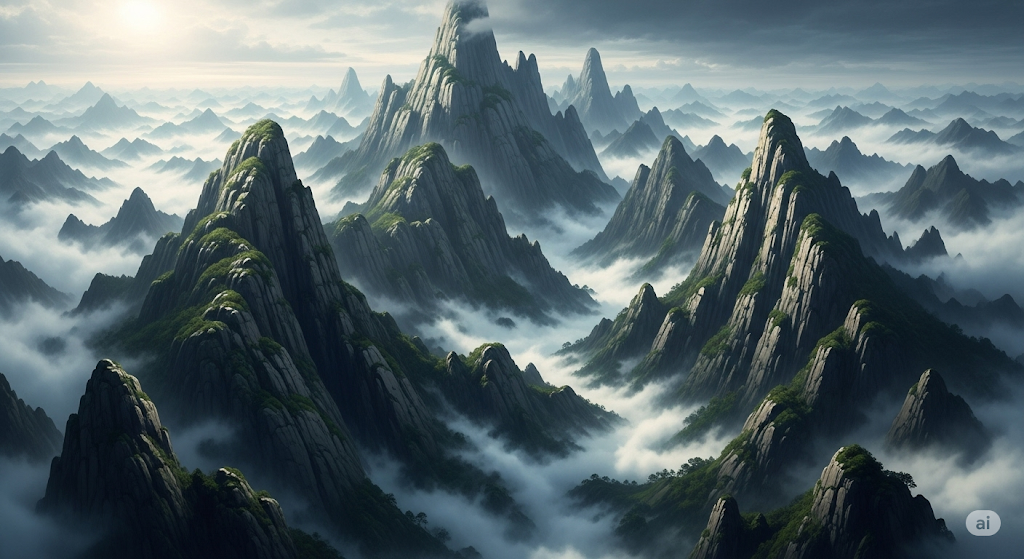
It is crucial to note that creation is described through profoundly physical acts like birth and excretion. This stands in stark contrast to the Judeo-Christian myth, where the world is created through ‘words’. The Korean creation myth showcases a primal natural view that values the earth and the body above all else.
However, as times changed, the sanctity of the earth mother deity was diminished. The western grandmother of Samcheok in Gangwon Province is depicted as a monster, and the creation goddess Mago has been reduced to ‘Magu Halmeom’. This reflects the mythological process of how indigenous female-centered beliefs were suppressed by male-centered Confucian ideology.
The Tragic Creator, Jeju Seolmundaehalmi
The richest stories of the giant goddess myth can be found in the tale of Seolmundaehalmi from Jeju Island. She is a tragic protagonist who carries deep sorrow beyond the power of creation.
- Hallasan and Oreums: She created Hallasan by carrying earth in her skirt, and the fallen earth fragments from a torn hole became 368 oreums.
- The Unfinished Bridge: She promised to build a bridge to the mainland if given 100 pieces of fine silk, but when only 99 were collected, her dream was shattered. This marks the moment when communication between gods and humans is regrettably severed.
- A Bowl of Grief (Legend of Obaekjanggun): While cooking porridge for her 500 starving sons, she falls into the pot and dies. Unaware of this, her sons eat the porridge containing their mother’s flesh, and upon discovering the truth, they all turn to stone in a tragic tale. This is the legend of the Obaekjanggun Rock in Hallasan.

The story of Seolmundaehalmi transcends mere geographical creation myths, encapsulating universal emotions of loneliness, motherhood, and sacrifice. As a result, the landscape of Jeju becomes a place imbued with the sorrow and pain of the divine.
Myth as Philosophy – Mago in the Book of Budoji
The Mago recorded in the Budoji presents a completely different image. It is a reinterpretation of the myth enriched with advanced philosophical and national thought from later generations.
- Utopia, Mago Castle: A perfect utopia where humanity lived without desire.
- Fall and Exile: Humanity, having tasted the forbidden fruit of ‘grapes’, awakens to sensory pleasure and is expelled from Mago Castle, losing its purity.
- In Search of Lost Nature (복본, 復本): The exiled humanity embarks on a grand journey to reclaim its lost nature, a mission that extends even to Dangun.
Mago in the Budoji attempts to weave a unified narrative from the creation of the universe to the founding of Gojoseon by combining the name of an indigenous deity with a Taoist worldview and nationalism.
Part 2: The First Betrayal and the Twisted World – Creation Song (창세가)
Now the stage shifts from a female creator to a male creator, focusing on the core theme of the Korean creation myth: ‘cosmic injustice’.
Maitreya, Creating Order from Chaos
The Creation Song from Hamgyeong Province tells the story of the first male deity, Maitreya (彌勒), who appeared amidst primordial chaos.
- Design of the World: He separates heaven and earth and supports them with copper pillars.
- Order of the Universe: He corrects the chaos where there were two suns and moons, leaving only one of each and creating stars from the rest.
- Birth of Humanity: A bug that came down from the sky grew into five pairs of couples, from whom humanity flourished, showcasing the ‘heavenly lineage’ concept.
The Divine Duel for World Domination
A challenger, Sakyamuni (釋迦), appears in the world created by Maitreya and proposes a duel for dominion over the world. Maitreya easily wins the first two contests (lifting a disease and freezing a river). However, the third and final contest marks the beginning of tragedy.
The Stolen Flower and the Contradictions of the World
The final contest was a competition to see who could make a flower bloom on their knee while sleeping.
- Despicable Deceit: While the honest Maitreya had a peony bloom on his knee, Sakyamuni, pretending to sleep, plucked Maitreya’s flower and placed it on his own knee when his did not bloom.
- Great Abandonment and Curse: Disillusioned by Sakyamuni’s treachery, Maitreya relinquishes the world and departs, cursing that the world he leaves behind will be a ’last age’ filled with all kinds of corruption and injustice.
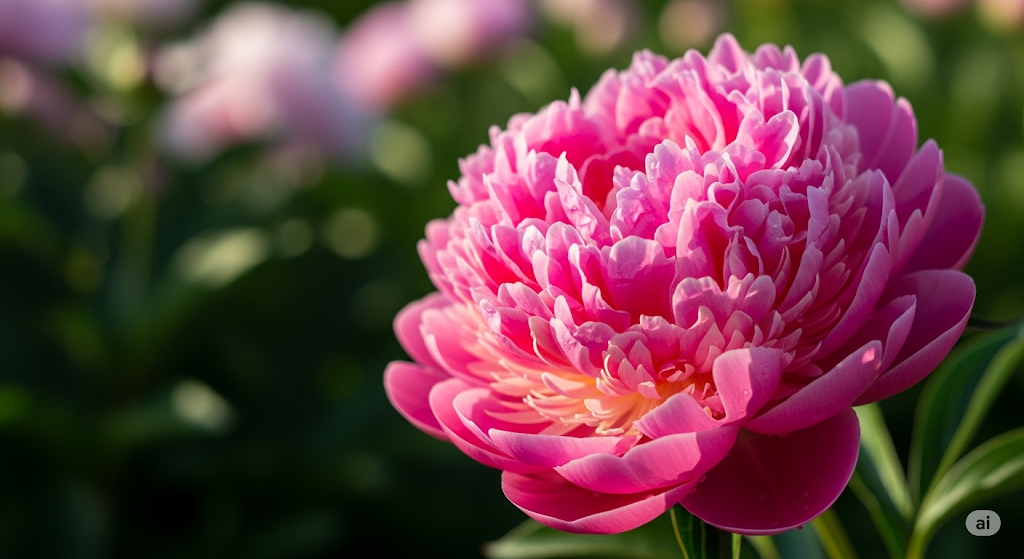
Personally, I found the motif of this ‘unjust victory’ to be the most intriguing. Why isn’t the world fair in proportion to our efforts? Our ancestors provided a remarkably realistic and critical answer: ‘Because even the god who rules the world won through deceit.’ What do you think about this mythological explanation?
Part 3: Why Are the Worlds of the Living and the Dead Separated? – Cheonjiwangbonpuri
The Cheonjiwangbonpuri from Jeju Island further develops the motif of competition into a more sophisticated structure, explaining the division of life and death.
The Twin Sons of the Heavenly King, Daebyeolwang and Sobyeolwang
The heavenly king Cheonjiwang descends to earth, forms a bond with the queen of the earth, and gives birth to twin sons, Daebyeolwang (the elder) and Sobyeolwang (the younger). They stabilize the world by shooting down the extra sun and moon that were disrupting the heavenly order.
The Repeated Tragic Competition of Brothers
Once order is established, a competition arises over who will rule the world of the living (이승) and who will rule the world of the dead (저승). The method of competition is once again ‘flower blooming’.
- The honest elder brother Daebyeolwang’s seed produces a beautiful ‘prosperity flower’.
- The ambitious younger brother Sobyeolwang’s seed produces a wilted flower.
- Realizing his defeat, Sobyeolwang takes advantage of his brother’s slumber to secretly switch their flowers.
The Living World Becomes Chaotic, the Underworld Remains Clear
Daebyeolwang knows of his brother’s deceit but silently accepts the outcome. This decision divides the universe into two orders.
- Sobyeolwang (the trickster) → Ruler of the Living World: As a result, the world we live in becomes filled with all kinds of chaos and absurdities like murder, theft, and lies.
- Daebyeolwang (the honest one) → Ruler of the Underworld: Consequently, the underworld becomes a fair world governed by clear laws and order.
This myth presents a cold reality regarding why good people suffer while the wicked prosper. Yet, it also offers a powerful consolation that ultimate justice is realized after death.
Comparison: Creation Song vs. Cheonjiwangbonpuri
Both competing stories have a similar structure but show significant differences in their conclusions.
| Feature | Creation Song (창세가) | Cheonjiwangbonpuri (天地王本풀이) |
|---|---|---|
| Transmission Region | Hamgyeong Province (North) | Jeju Island (South) |
| Protagonists | Maitreya (the Creator) vs. Sakyamuni (the Usurper) | Daebyeolwang (the elder) vs. Sobyeolwang (the younger) |
| Core Conflict | Dominion over the entire world | Governance of the Living and the Dead |
| Outcome | The unjust Sakyamuni wins and rules the world | The deceitful Sobyeolwang rules the Living World, while the honest Daebyeolwang rules the Underworld |
| Explanation of World Flaws | Because the ruler is a despicable usurper | Because the Living World is ruled by a trickster, while the Underworld is ruled by an honest person |
Conclusion
The creation myths of the Korean people contain unique and profound insights into the origins and contradictions of the world.
- Key Point 1: The world is depicted as a physical and vibrant space originating from the body of a great mother goddess.
- Key Point 2: The imperfections of the world are explained not as human original sin, but due to ‘unjust victories’ in the struggle for divine power.
- Key Point 3: The injustices of the Living World are balanced by the justice of the Underworld, providing comfort for the pains of life through a sophisticated moral cosmology.
These myths are not artifacts lying dormant in museums but are living stories reflecting the lives of all of us who navigate the world. This is indeed the great epic of creation deeply rooted in the soul of the Korean people.
References
- National Institute of Korean Studies Link
- Wikipedia Link
- YouTube Link
- International Brain Education Graduate School National Institute of Korean Studies Link
- Encyclopedia of Korean Folklore: Creation Myth Link
- Digital Korean Studies: Mago Halmi Link
- Namu Wiki: Mago Halmi Link
- Encyclopedia of Korean Folklore: Seolmundaehalmi Link
- Local N Culture Link
- Encyclopedia of Korean Ethnic Culture: Creation Song Link
- Encyclopedia of Korean Folklore: Creation Song Link
- Encyclopedia of Korean Folklore: Cheonjiwangbonpuri Link